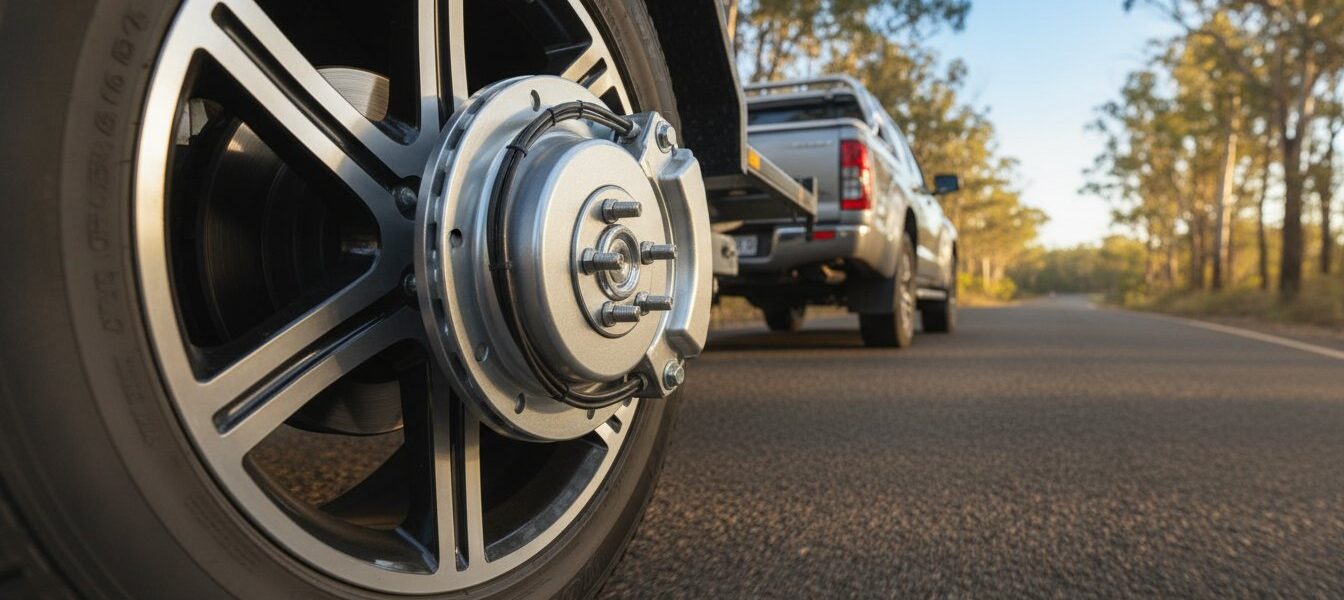
A mechanical override system often fails exactly when you need it most, especially during technical reverses on steep gradients. It’s a common frustration for owners who find their trailer wheels locking up under heavy loads or struggling to meet strict ADR 38/05 compliance. You need a setup that stops your gear without the jerkiness of outdated hardware, which is why 10 inch electric drum brakes are a standard choice for serious haulers. Every trailer over 750kg GTM requires a reliable braking solution to stay legal on Australian roads.
Choosing the right system is the difference between a smooth haul and a dangerous liability. We’ll compare these electric systems against mechanical alternatives to help you select a heavy-duty solution that handles local conditions. You’ll learn how to achieve 100% braking control from your driver’s seat and why certain components thrive where others fail. This breakdown covers technical specifications, maintenance requirements, and the specific performance benefits of upgrading your trailer’s stopping power.
Key Takeaways
- Compare the smooth deceleration of electromagnet actuation against the physical shunting felt with mechanical cable systems.
- Understand why 10 inch electric drum brakes are the industry standard for reliable performance on axles rated up to 1600kg.
- Identify correct technical specifications, including Ford or Landcruiser stud patterns and 4-bolt flange mounting requirements.
- Learn the essential maintenance schedule for inspecting magnet wear and brake shoe thickness to ensure long-term safety.
- Select heavy-duty galvanised or zinc-plated components designed to withstand the harsh Australian climate and prevent rust.
Understanding 10 Inch Electric Drum Brakes for Australian Trailers
10 inch electric drum brakes serve as the industry standard for single axles rated up to 1600kg. These systems rely on an electromagnet to actuate the brake shoes against the internal surface of the drum. Unlike mechanical systems, they require an in-car electric brake controller to function. This setup gives the driver independent control over the trailer. You can adjust braking intensity directly from the dashboard to suit the load weight or specific road conditions. This level of manual override is a critical safety feature when managing trailer sway or steep descents.
How the Electromagnet System Operates
When you apply the vehicle brakes, the controller sends an electrical current to the magnets inside the drum. This current creates a magnetic field that causes the magnet to attach itself to the rotating drum face. This friction pulls a lever arm, which then forces the brake shoes outward into the drum. The electric braking systems found on modern trailers depend entirely on this lever action to generate stopping power. The backing plate acts as the structural foundation for the entire assembly. It holds the shoes, springs, and magnets in precise alignment. High-quality axles require these components to be seated correctly to ensure even wear across the 2.25-inch shoe width. This mechanical simplicity makes the system easier to maintain than complex hydraulic alternatives.
Braking Regulations and ADR Compliance
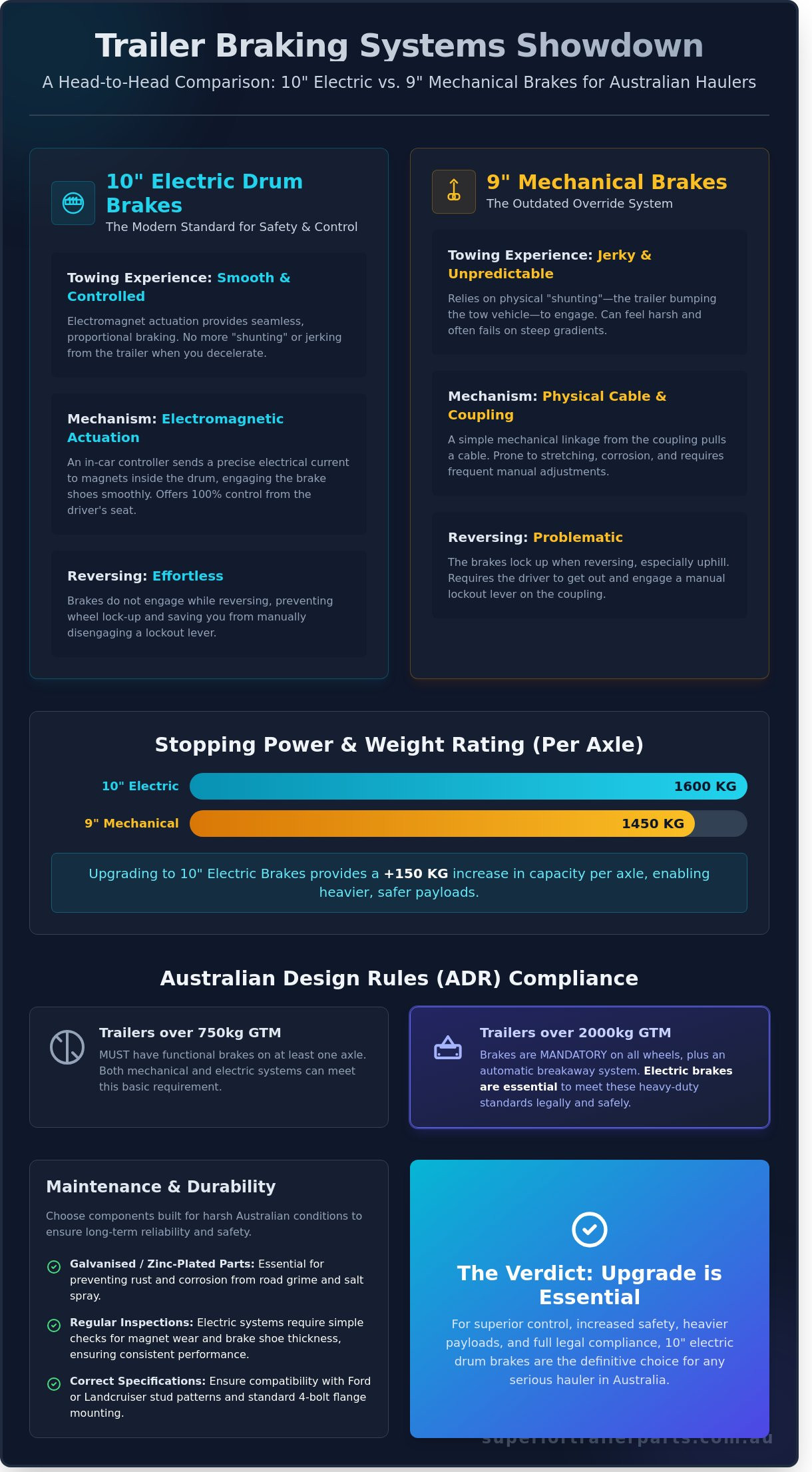
Australian Design Rules (ADR) set strict requirements for trailer safety across all states. Any trailer with a Gross Trailer Mass (GTM) over 750kg must have functional brakes on at least one axle. Once a trailer exceeds 2000kg GTM, the law requires brakes on all wheels along with an automatic breakaway system. This breakaway unit ensures the trailer brakes lock up if the hitch fails and the trailer disconnects from the tow vehicle. The 2000kg threshold is the specific point where electric brakes become essential for legal operation and safety. Using 10 inch electric drum brakes ensures your setup meets these heavy-duty standards while providing reliable performance in harsh Australian environments. If you need help selecting the right components for your specific build, you can contact us for expert advice from our technical team.
Comparing 10 Inch Electric vs 9 Inch Mechanical Brakes
Mechanical brakes rely on a physical cable or rod connected directly to the trailer coupling. It’s a simple design, but it has limits. 10 inch electric drum brakes use magnets to pull the brake shoes against the drum. This eliminates the “shunting” feel common with override couplings, providing a much smoother towing experience. You won’t feel the trailer “bumping” the back of the tow vehicle every time you lift off the throttle.
Stopping Power and Weight Ratings
9-inch mechanical brakes are generally restricted to a 1450kg limit per axle. Moving to 10 inch electric drum brakes bumps that rating to 1600kg. This 150kg increase in capacity allows for heavier payloads without compromising safety. Tandem axle trailers benefit significantly from electric systems because they ensure even braking force across all four wheels. This balance is critical to prevent jackknifing during emergency stops on wet or loose surfaces. Check our range of heavy-duty axles to ensure your foundation is solid. Compliance with Australian trailer braking regulations is mandatory for trailers over 750kg GTM. Electric systems provide the most flexibility for meeting these standards across various load weights.
Installation and Maintenance Complexity
Mechanical setups involve fewer electrical components but more physical upkeep. Cables corrode and stretch over time, requiring frequent manual adjustment to keep braking even. If the cable is too loose, your stopping distance increases. Electric brakes require an initial wiring investment and an in-car controller. After the first calibration, they provide “set and forget” reliability with consistent performance. We recommend using galvanised components to fight off Australian road grime and salt spray. As an Australian Owned and Operated specialist, we see the damage harsh conditions do to inferior parts. Reversing a mechanical system often requires a manual lockout lever on the coupling. If you forget it, the brakes lock as you push back. Electric brakes don’t engage while reversing. This saves time and prevents unnecessary wear on your transmission. If you’re planning a new build, browse our selection of trailer parts to find the right fit for your project.
Technical Specifications and Axle Compatibility
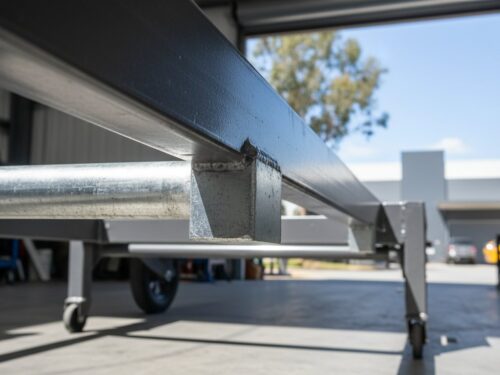
Installing 10 inch electric drum brakes requires precise hardware alignment to ensure safety and performance. Most systems utilize a 5-stud Ford or 6-stud Landcruiser bolt pattern to match common trailer wheels found across Australia. You must have a standard 4-bolt brake flange welded to your axle to mount the backing plates securely. These systems typically pair with 45mm square or 50mm square axles. These sizes provide the structural integrity needed for heavy-duty applications and standard 1600kg ratings per axle. All installations must adhere to the Australian Design Rule for Trailer Brakes to remain road legal and safe under load.
Matching Brakes to Your Axle Type
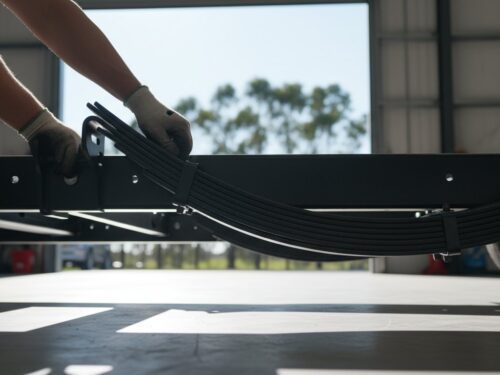
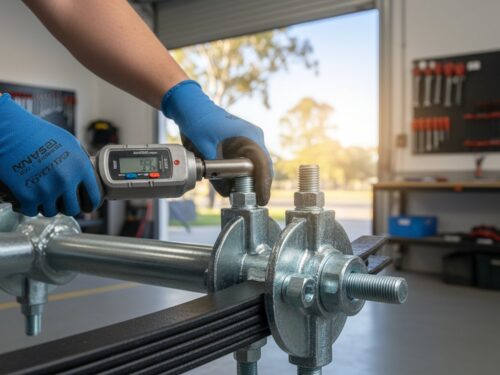
Bearing configuration is the most critical factor for drum fitment. Slimline bearings use a larger inner and smaller outer bearing, which is standard for most 1600kg rated axles. Parallel bearings use two identical large bearings to increase load capacity and durability for off-road use. The position of your brake flange dictates the drum offset. If the flange isn’t set at the correct distance from the hub face, the brake shoes won’t align with the drum surface. Once your axle and brakes are aligned, use high-quality u-bolt kits to secure the assembly to your leaf springs. This ensures the entire suspension system remains rigid during heavy braking events.
Wiring Requirements for Electric Systems
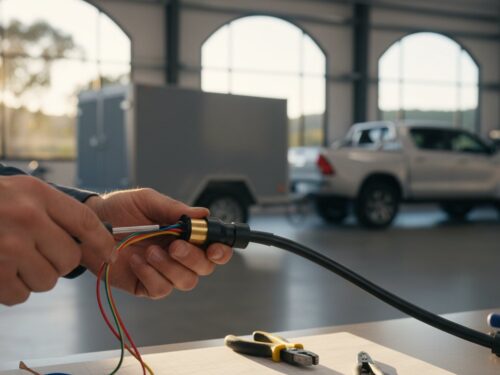
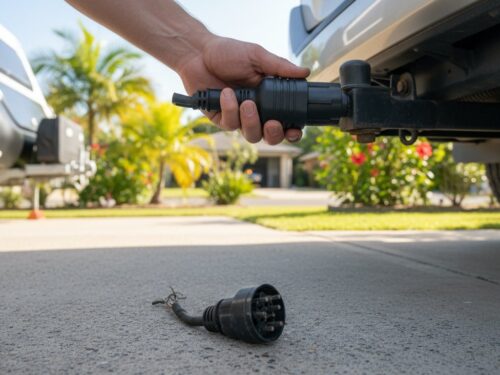
Electrical integrity determines how effectively your 10 inch electric drum brakes stop the trailer. Voltage drop is a common issue that reduces braking force, so always use 10-12 gauge automotive wire for the main power runs. Don’t rely on thin trailer light wiring for these components. A weak ground is a frequent cause of intermittent brake failure. Ensure a solid, clean ground connection directly to the trailer chassis. The 7-pin or 12-pin plug acts as the primary interface between the vehicle brake controller and the trailer magnets. Inspect these connections regularly for corrosion or loose terminals to maintain a consistent braking response on the road.
- Wire Gauge: 10-12 AWG for optimal current flow.
- Mounting: Standard 4-bolt flange (65mm x 65mm hole centres).
- Stud Patterns: Ford (5/114.3) or Landcruiser (6/139.7).
- Axle Compatibility: 45mm and 50mm square profiles.
Maintenance Guide for Electric Braking Systems
Regular upkeep ensures your 10 inch electric drum brakes perform reliably under heavy loads. Neglecting these components leads to reduced stopping power and costly road-side repairs. You must pull the drums and inspect the brake shoe thickness every 5,000km or every 12 months. Replace shoes if the lining thickness is less than 1.5mm. While the drum is off, examine the magnet face. A healthy magnet shows even wear across its surface. If you notice deep scoring or uneven “wedging” on the magnet, replace it immediately to prevent erratic braking.
Mechanical adjustment is the most overlooked task. Even self-adjusting systems benefit from a manual check. Use a brake tool or flat-head screwdriver to turn the star wheel until the shoes slightly drag against the drum, then back it off 3 to 5 clicks. This keeps the gap minimal and ensures instant engagement. Finally, trace your wiring from the hitch to the backing plate. Corroded terminals or frayed insulation cause voltage drops. Use heat-shrink connectors and loom protection to shield wires from road debris and salt spray.
Testing Magnet Strength and Performance
Use a digital multimeter to verify magnet health. Set the meter to ohms and touch the leads to the two magnet wires. A standard 10-inch magnet should read between 3.2 and 4.0 ohms. If the reading is higher, the internal coil is failing. If it’s zero, you have a short circuit. You can also perform a “hum” test. Have an assistant engage the manual override on the brake controller while you stand near the wheel. A functioning magnet will emit a distinct electromagnetic hum. If the magnet is silent but the wiring shows 12V at the hub, the magnet is dead.
Common Troubleshooting Steps
Brakes that grab or lock up often indicate grease on the linings or a controller gain set too high. Clean the internal drum surface with a dedicated brake cleaner if you find any residue. Intermittent signals are usually caused by a poor ground connection. 80% of electric brake faults stem from a weak ground at the trailer plug or the axle mounting point. If your trailer has been sitting for more than 90 days, surface rust will form on the drum face. Use 80-grit sandpaper to lightly scuff the friction surface before your next trip to ensure smooth operation.
Need to replace worn components? Browse our range of high-quality trailer parts to get your braking system back to peak performance.
Selecting High-Quality Trailer Components
Building a heavy-duty trailer requires parts that survive the Australian outback. Heat, dust, and salt air destroy inferior components quickly. Always choose galvanised or zinc-plated parts for your chassis. These coatings provide a critical barrier against oxidation. Rust weakens structural integrity and leads to expensive repairs. Superior Trailer Parts focuses on durability because a breakdown in the middle of the scrub isn’t an option.
Buying a complete kit for your 10 inch electric drum brakes usually offers the best value. Kits ensure that backing plates, drums, and bearings match perfectly. Mixing and matching separate parts often leads to fitment issues or uneven braking performance. You must also ensure your couplings are rated for the same ATM as your braking system. A 2000kg brake setup is useless if the coupling is only rated for 750kg. Match your components to your load requirements to maintain safety and legal compliance.
For those managing diverse fleets or seeking specific components that might be hard to find locally, exploring international suppliers can be beneficial. For instance, European specialists like Truckparts Corner offer a vast inventory of parts for various truck and trailer models, providing another avenue for sourcing high-quality gear.
Why Quality Matters for Off-Road and Highway Use
Brake fade is a serious risk during long descents or heavy highway hauling. High-quality 10 inch electric drum brakes dissipate heat faster than budget alternatives. When temperatures exceed 250 degrees Celsius, cheap drums can warp or crack. Superior Trailer Parts uses heavy-duty castings to maintain structural shape under extreme thermal stress. This engineering ensures consistent stopping power when you need it most. We provide reliable trailer parts with nationwide shipping across Australia. This allows builders in remote areas to access the same high-grade components used by professional fleet managers.
Final Checklist Before You Buy
Verify your technical specifications before placing an order. Small errors in measurement lead to significant downtime. Use this list to confirm your requirements:
- Confirm your stud pattern. Ford 5-stud and HQ are common, but they have different Pitch Circle Diameter (PCD) measurements.
- Measure your axle diameter. Standard 39mm round axles use different bearings than 45mm square or 50mm square axles.
- Check your in-car electric brake controller. It must be compatible with the specific number of braked axles on your trailer.
Our team provides expert advice to help you get the right fit the first time. Being Australian owned and operated means we understand the specific demands of local roads. We stand behind our products because we know they’re built for the long haul.
Upgrade Your Trailer Braking Performance
Selecting the right braking system depends on your specific load requirements and towing frequency. While 9 inch mechanical setups handle trailers under 750kg GVM, upgrading to a larger electric system provides the stopping power needed for trailers with a GVM up to 1600kg per axle. These systems allow for precise, adjustable control through an in-cab controller. This feature is vital for maintaining stability on steep descents or during sudden stops. Always verify your axle compatibility; these setups typically pair with 39mm round or 45mm-50mm square axles to ensure a secure fit.
Superior Trailer Parts is a 100% Australian Owned and Operated specialist. We offer nationwide shipping Australia Wide to ensure you get the parts you need without delay. Our team provides expert technical advice for DIY builders to help you navigate technical specifications and installation hurdles. Don’t settle for subpar hardware when safety is on the line. We provide heavy-duty components at competitive pricing to withstand extreme heat and corrosive coastal environments. Browse our range of 10 inch electric drum brakes and kits to find the right hardware for your next project. Get your trailer road-ready with gear that’s built to last.
Frequently Asked Questions
Do 10 inch electric brakes work on boat trailers?
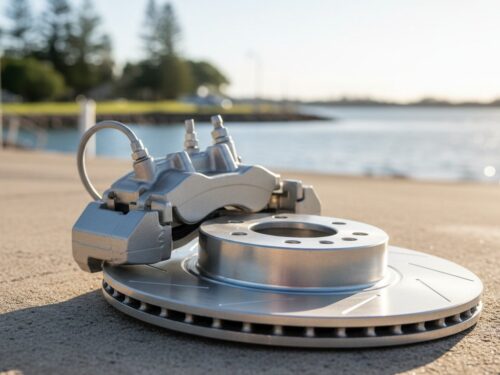
Standard 10 inch electric drum brakes aren’t suitable for boat trailers because salt water destroys the magnets and electrical connections. Corrosion begins within 24 hours of salt water exposure, leading to total system failure. Use galvanised mechanical or hydraulic disc brakes for marine environments instead. These systems resist rust and don’t rely on sensitive electromagnets that short out when submerged.
What is the maximum weight for 10 inch electric brakes?
A single axle equipped with 10 inch electric drum brakes has a maximum load rating of 1,600kg. For tandem axle configurations, this capacity increases to 3,200kg across both axles. You must pair these brakes with a 45mm square axle or a 50mm round axle to safely support these weight limits. Always check your VIN plate to ensure your total GTM doesn’t exceed these technical specifications.
How do I adjust 10 inch electric drum brakes?
Adjust your brakes by turning the star wheel adjuster located at the bottom of the backing plate. Use a brake adjustment tool to tighten the shoes until the wheel stops spinning, then back it off 3 to 5 notches. This process sets a 0.5mm gap between the shoe and the drum. Perform this maintenance every 5,000 kilometres to ensure even braking across all wheels.
Can I install electric brakes on a trailer that currently has no brakes?
You can install electric brakes if your current axle features a standard 4-bolt or 5-bolt brake flange welded behind the hub. Most 1,600kg axles include these flanges as a standard feature. You’ll need to bolt on the backing plates, fit compatible drums, and wire the system to a 7-pin plug. Your tow vehicle also requires a dashboard-mounted controller to operate the new 10 inch electric drum brakes.
What is the difference between 10 inch and 12 inch electric brakes?
The main difference is the load capacity and the physical size of the friction surface. 10 inch systems are rated for 1,600kg per axle, while 12 inch systems handle up to 2,250kg per axle. A 12 inch magnet provides 25 percent more surface area than a 10 inch magnet. This extra size is necessary for heavy-duty trailers like 3.5-tonne horse floats or large caravans.
Do electric brakes work if the trailer becomes uncoupled?
Electric brakes only function during an uncoupling if you’ve installed a dedicated breakaway kit. This kit uses an on-board 12V battery to engage the brakes if the pin is pulled from the switch. Australian Design Rules require these kits on all trailers with a GTM exceeding 2,000kg. Without a breakaway system, the trailer has no stopping power once the electrical cable disconnects from the tow vehicle.
How often should I replace the magnets in my electric brakes?
Replace your brake magnets every 20,000 to 30,000 kilometres or when the wear pips on the magnet face disappear. Inspect the magnets every 12 months for uneven wear or exposed copper wiring. If the magnet face has worn down by more than 1.5mm, it won’t provide the necessary grip to the inner drum. Using genuine replacement parts ensures your system maintains its original 1,600kg rating.
Is an electric brake controller mandatory for all trailers?
A brake controller is mandatory for any trailer with a GTM over 750kg that uses an electric braking system. The controller manages the power output to the trailer based on how hard you press the vehicle’s brake pedal. Vehicle Standards Bulletin 1 requires that trailers over 2,000kg have a braking system that can be operated by the driver from the normal driving position. Always use a proportional controller for the most reliable performance.