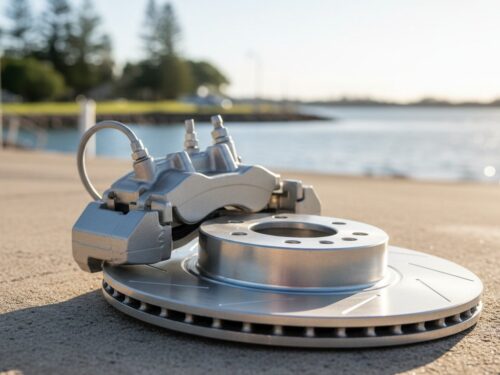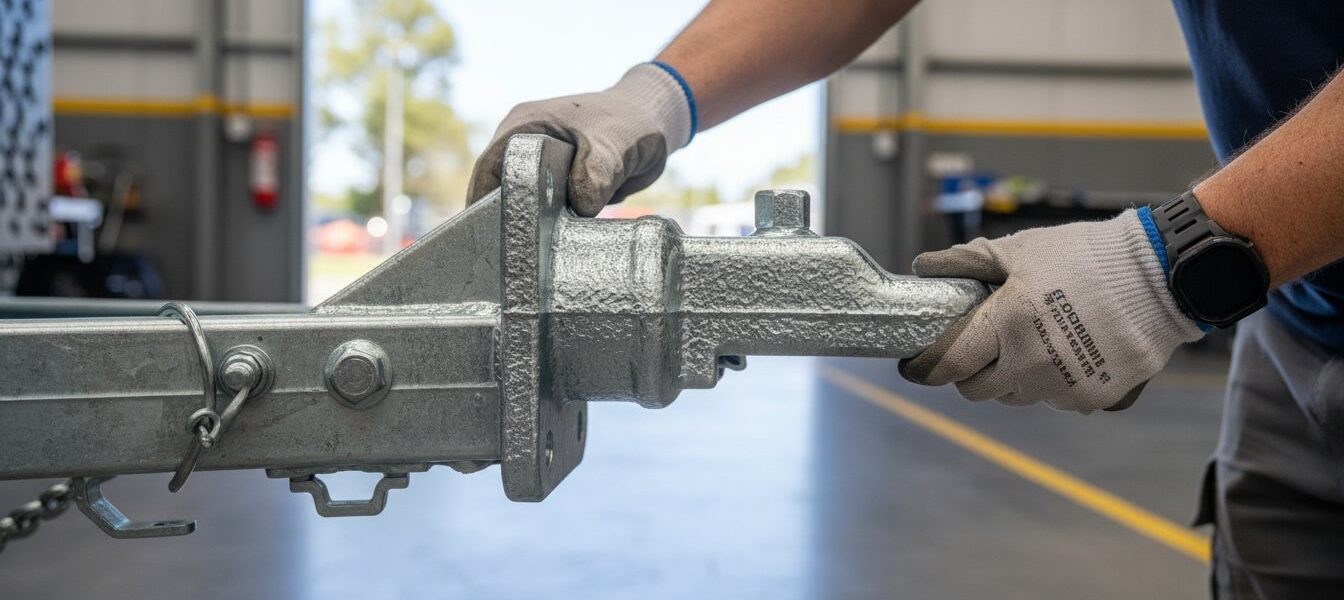
Choosing the right trailer coupling in Australia can be a tough job. Get it wrong, and you risk a non-compliant setup, a hefty fine, or worse, a dangerous failure on the road. The confusion around Australian Design Rules (ADR) and braking systems stops many good projects in their tracks. For trailers with a gross trailer mass (GTM) between 750kg and 2,000kg, the solution is often a robust mechanical braking system built around high-quality 4 hole over-ride couplings. These parts are essential for safe, legal towing, but selecting the correct one is critical.
This guide cuts through the noise to give you the straight facts. We’re here to provide the expert advice you need to get the job done right. In this complete 2026 buyer’s guide, we break down exactly how an over-ride system works, explain the specific ADR requirements for your trailer’s weight, and show you how to select a heavy-duty, compliant coupling built for tough Australian conditions. You will gain the confidence to purchase the right part, ensuring your setup is safe, legal, and reliable for the long haul.
Key Takeaways
- Understand the specific Gross Trailer Mass (GTM) thresholds that legally require trailer brakes under Australian Design Rules.
- Grasp the simple physics of how an over-ride coupling uses deceleration force to automatically and safely apply your trailer’s brakes.
- Learn to identify the critical features of a durable coupling, from galvanised finishes to heavy-duty construction, to make a smart investment.
- Confidently assess if your trailer’s drawbar is suitable for installation by understanding the mounting patterns for 4 hole over-ride couplings.
Understanding 4-Hole Over-Ride Couplings: How They Work
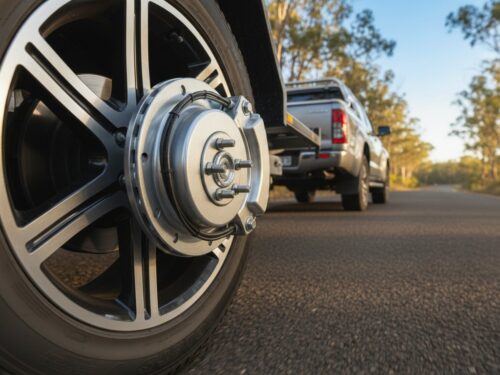
An over-ride coupling is a smart, self-contained braking system built directly into your trailer’s hitch. The “4-hole” design refers to its robust mounting pattern, an industry standard that guarantees a strong, stable connection to the trailer drawbar. Unlike electric brakes that require an in-cab controller, this device automatically applies the trailer’s brakes using simple physics. When your tow vehicle slows down, the trailer’s forward momentum pushes against the coupling, activating the brake mechanism. This makes it a straightforward and reliable solution for trailers with a Gross Trailer Mass (GTM) between 750kg and 2000kg.
This system is fundamentally different from a standard fixed coupling, which provides no braking assistance. It also differs from electric brake systems, which are mandatory for trailers exceeding 2000kg GTM. Over-ride couplings fill a critical gap, offering safe, compliant braking for a wide range of domestic and commercial trailers without complex wiring.
The Mechanical Action Explained
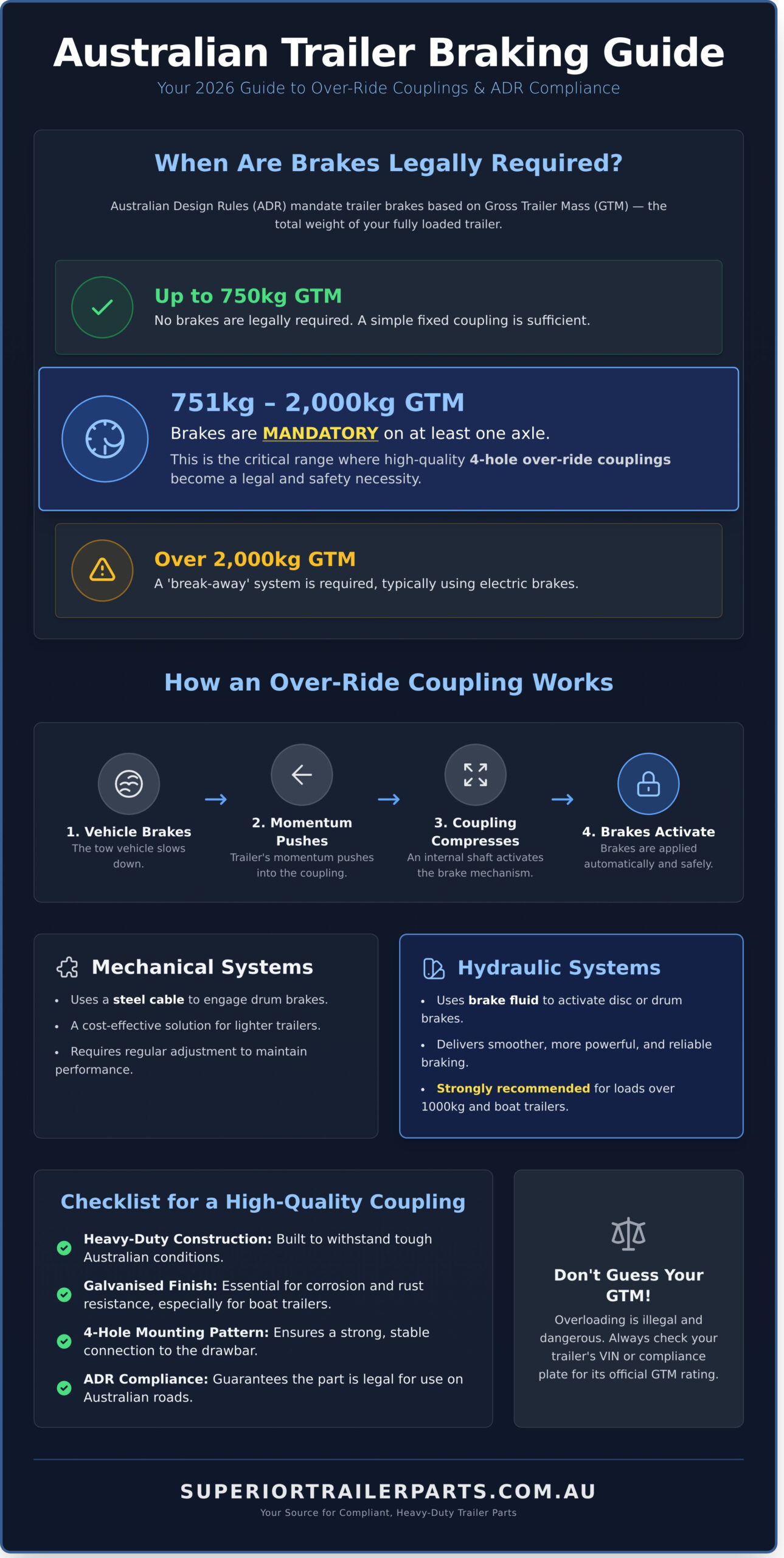
At the heart of an over-ride coupling is a sliding shaft mechanism. When you brake, the trailer’s momentum compresses this shaft into the main body of the coupling. Think of it like a heavy-duty shock absorber designed to activate brakes instead of just dampening bumps. This compression provides the necessary mechanical force. You can learn more about the fundamental principles of how over-run brakes work from this technical overview. This movement either pulls a steel cable or pressurises hydraulic fluid, directly engaging the trailer’s brakes with a force proportional to your deceleration.
Hydraulic vs. Mechanical Over-Ride Systems
The braking force generated by the coupling can be transferred in two ways:
- Mechanical Systems: These use a simple steel cable to connect the coupling to drum brakes. They are a cost-effective solution suitable for lighter trailers but require regular adjustment to maintain performance.
- Hydraulic Systems: These use brake fluid to activate disc or drum brakes via calipers. They deliver smoother, more powerful, and more reliable braking. Hydraulic 4 hole over-ride couplings are the standard for heavier loads (up to 2000kg), especially for boat trailers where components must resist corrosion.
For demanding Australian conditions, we strongly recommend hydraulic over-ride systems for any trailer over 1000kg. Their superior performance and durability provide a greater margin of safety on our roads.
Australian Regulations: When Do You Legally Need an Over-Ride Coupling?
In Australia, your trailer’s braking requirements are not a matter of choice. They are mandated by law. The Australian Design Rules (ADRs) set clear standards based on one critical figure: Gross Trailer Mass (GTM). Understanding these rules is essential for legal compliance, road safety, and ensuring you select the correct coupling for your setup.
The national standards for trailer brakes are straightforward and tiered by weight:
- Trailers up to 750kg GTM: No brakes are legally required. A simple fixed coupling is sufficient.
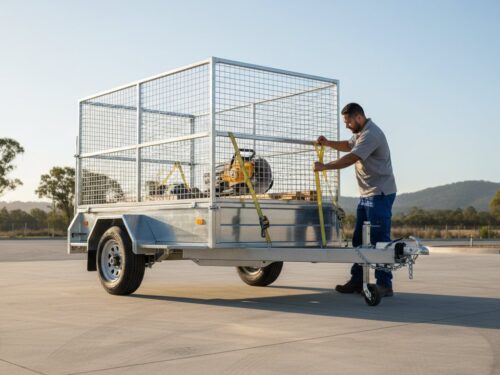
- Trailers from 751kg to 2000kg GTM: Brakes are mandatory on at least one axle. Over-ride mechanical or hydraulic brake systems are the most common, reliable, and cost-effective solution for this weight class. This is the range where durable 4 hole over-ride couplings become a legal necessity.
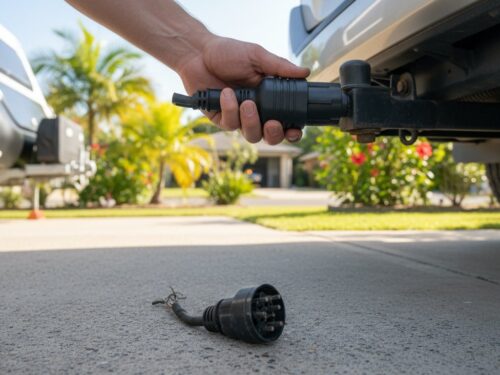
- Trailers over 2000kg GTM: Your trailer must have a ‘break-away’ system. This system automatically applies the trailer’s brakes if it detaches from the tow vehicle. This typically requires an independent power source and electric brake setups.
Decoding Gross Trailer Mass (GTM)
Gross Trailer Mass is the maximum weight of your fully loaded trailer when it is coupled to the tow vehicle. This includes the trailer itself plus everything you load onto it-tools, equipment, boats, or cargo. You can find your trailer’s GTM rating stamped on its compliance or VIN plate. Never estimate your load. Overloading is illegal, compromises braking performance, and puts dangerous stress on your entire towing setup.
Compliance and Safety Checks
Using the correct coupling and braking system is a fundamental roadworthy requirement. A non-compliant trailer is an unsafe trailer. In the event of an accident, an illegal setup can void your insurance policy, leaving you personally liable for significant costs and damages. While the ADRs provide a national baseline, it is always wise to check with your state or territory’s road authority for any specific local regulations. Ensure your rig is safe and legal before you hit the road.
This commitment to safety and compliance through the right equipment is a principle that applies across many business operations. Just as a compliant trailer is essential for road safety, accurate data is crucial for managing public spaces. For instance, businesses and venues often rely on people counting solutions from specialists like Footfall Australia to monitor visitor traffic and ensure safe occupancy levels.
Beyond the Basics: Critical Features of a High-Quality Coupling
Choosing the right coupling goes beyond just the weight rating. To get a reliable, long-lasting unit, you need to assess it like a professional. The difference between a basic painted hitch and a premium galvanised model becomes clear after one season in harsh Australian conditions. Here’s what to look for to ensure you get a product that works.
When inspecting any over-ride coupling, pay close attention to these critical features:
- Material and Finish: A basic painted finish offers minimal protection. For real durability, demand zinc-plated or hot-dip galvanised steel. This provides superior corrosion resistance, vital for boat trailers or anyone working near the coast.
- Handbrake Mechanism: The handbrake should feel solid and engage positively. A flimsy or poorly designed lever is a safety risk and a constant frustration. Look for a robust mechanism that is easy to operate and locks securely.
- ADR Compliance Stamp: This is non-negotiable. Every coupling sold in Australia must meet Australian Design Rules. Look for a clearly stamped plate on the coupling body with its rating and compliance details. No stamp means no guarantee of safety or legality.
The Importance of the Reversing Latch
An over-ride brake system works when the trailer’s momentum compresses the coupling. Reversing does the same thing, causing unwanted brake lock-up. A reversing latch is the simple, mechanical solution. It stops the coupling from compressing, preventing brake engagement. For all modern 4 hole over-ride couplings, this feature is essential for practical, hassle-free use and should be considered a standard requirement.
Assessing Build Quality and Durability
True quality is in the construction. Insist on solid steel construction; cheaper cast iron alternatives can be brittle and prone to cracking under stress. A well-placed grease nipple is another sign of a quality build, allowing for easy lubrication to extend the life of moving parts. On hydraulic models, a master cylinder protector guard is a valuable addition, shielding the brake system’s most critical component from damage.
Investing in a coupling with these features ensures better performance, greater safety, and a longer service life for your trailer. It’s the smart choice for anyone who relies on their gear day in and day out.
Installation & Maintenance Checklist for Over-Ride Couplings
Correct installation and regular maintenance are non-negotiable for the safety and performance of your trailer’s braking system. A properly fitted over-ride coupling provides reliable, automatic braking, but only when installed and maintained to a high standard. This straightforward checklist gives you the essential steps for a secure DIY installation and long-term upkeep.
Correct Installation Procedure
Fitting 4 hole over-ride couplings is a manageable task if your drawbar is prepared correctly. The key is ensuring a solid mechanical connection to the trailer frame. Follow these critical steps for a secure fit.
- Step 1: Verify Your Mounting Plate. Your trailer drawbar must have a mounting plate with the standard Australian 4-hole bolt pattern: 184mm x 54mm. If your drawbar is not pre-drilled or lacks a plate, one must be securely and professionally welded into position before proceeding.
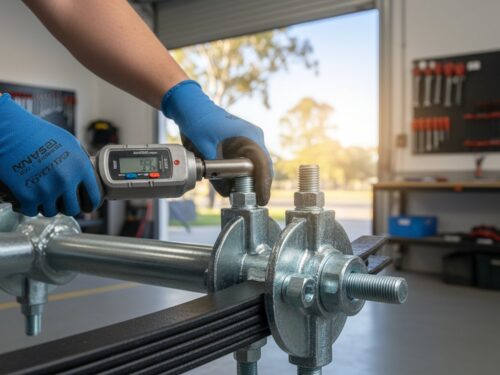
- Step 2: Use High-Tensile Bolts. Always use new, high-tensile Grade 8 (or metric equivalent 8.8) bolts, complete with nuts and washers. Do not compromise with lower-grade hardware, as it can shear under the heavy forces experienced during braking.
- Step 3: Torque to Specification. Tighten the mounting bolts to the manufacturer’s recommended torque settings. This prevents the coupling from loosening due to road vibration. Re-check the torque after your first trip.
- Step 4: Connect and Adjust Brakes. For mechanical systems, connect and adjust the brake cables for minimal slack. For hydraulic systems, connect the lines and bleed the system thoroughly to remove all air. Test to ensure the brakes engage smoothly as the coupling compresses.
Essential Maintenance Tips
Routine checks prevent on-road failures and extend the life of your coupling. A few minutes of inspection before a trip is a small investment for on-road safety. Focus on these key areas.
This level of care isn’t just for heavy-duty equipment. The principle of expert maintenance to ensure reliability applies to all valuable mechanical items, from trailers to timepieces. For those looking for professional servicing of another kind, you can visit Atoz Watch And Jewellery Repairs for specialised care.
- Grease the Main Shaft: Regularly apply a quality multi-purpose grease to the main shaft via the grease nipple. This ensures the coupling compresses and retracts smoothly without binding.
- Check Hydraulic Systems: For hydraulic 4 hole over-ride couplings, check the master cylinder’s fluid level and top up if necessary. Inspect all hydraulic lines and fittings for leaks, cracks, or corrosion.
- Test Handbrake and Reversing Latch: Before each journey, physically engage the handbrake to ensure it holds the trailer firm. Test the reversing latch or lockout mechanism to confirm it operates correctly, preventing the brakes from locking while you reverse.
For genuine heavy-duty couplings and expert advice on your specific trailer setup, browse our complete range. At Superior Trailer Parts, we provide the reliable components you need to get the job done right.
Why Choose Superior Trailer Parts for Your Coupling Needs
Understanding the difference between a fixed hitch and an over-ride system is critical. The next step is sourcing a high-quality part that won’t fail when you need it most. At Superior Trailer Parts, we specialise in providing heavy-duty, reliable components for trailers across Australia. We cut through the noise and deliver what works-durable couplings engineered for performance.
Our range includes premium 4 hole over-ride couplings designed for trailers with mechanical brakes up to 2000kg Gross Trailer Mass (GTM). We ensure every product we stock meets our high standards for strength and longevity, giving you complete confidence on the road.
Engineered for Australian Conditions
Australian roads are unforgiving. That’s why our couplings are built to withstand the harshest environments. Each unit features a robust zinc plating to resist corrosion from road grime, salt, and coastal air. We select models that include all the essential, practical features you rely on, from dependable reversing latches to sturdy, easy-to-engage handbrakes. Most importantly, every coupling is sourced to meet or exceed the stringent Australian Design Rules (ADR), guaranteeing your trailer is both safe and compliant.
Get The Right Part, Hassle-Free
Choosing the correct component is essential for safety and performance. Our expert team is ready to provide practical advice, helping you confirm the right coupling for your trailer’s specific GTM. Our online ordering process is simple and secure, with clear, competitive pricing and no hidden surprises. We follow it up with fast, reliable shipping Australia wide, ensuring you get back on the road with minimal downtime.
Stop searching and start towing with confidence. Equip your trailer with a genuine, heavy-duty coupling from a trusted Australian supplier.
Shop our range of ADR-compliant 4-hole over-ride couplings now.
Your Next Step: Secure the Right Coupling
Selecting the right coupling is a critical decision for safety and legal compliance on Australian roads. This guide has equipped you with the essential knowledge, from understanding how these mechanisms work to knowing when ADRs legally require them for trailers between 750kg and 2000kg GTM. Remember, the quality of your coupling-its materials, construction, and ADR approval-is not a place to cut corners. Proper installation and routine maintenance are just as vital for long-term performance and reliability.
Now you have the information to make a confident choice. The next step is to source a part that meets these high standards. For genuine, reliable 4 hole over-ride couplings built for tough Australian conditions, Superior Trailer Parts is your trusted source. We are proudly Australian Owned and Operated, offering expert advice to ensure you get the exact part you need. With fast, Australia-wide shipping, we get your project moving without delay.
Don’t compromise on quality or safety. Get the right ADR-compliant coupling for your trailer. Shop now. Equip your trailer with confidence and get the job done right.
Frequently Asked Questions
What is the difference between an over-ride coupling and electric brakes?
Over-ride couplings activate your trailer’s brakes using inertia. When your vehicle slows, the trailer’s momentum pushes into the coupling, which mechanically or hydraulically applies the brakes. It is a self-contained system. Electric brakes are controlled by an electronic unit in your tow vehicle. This gives the driver direct control over braking force, which is mandatory in Australia for trailers with a Gross Trailer Mass (GTM) over 2000kg. Electric brakes offer more precise and powerful braking for heavier loads.
How do I stop my trailer brakes from locking up when I reverse?
Most modern over-ride couplings have a reverse lockout mechanism. For mechanical couplings, this is typically a small lever or pin you engage manually before reversing. Hydraulic systems may have a similar manual latch or an electric solenoid wired to your vehicle’s reverse lights, which automatically disengages the brakes. If your brakes lock up, first ensure you are using the reverse lockout correctly. If the problem continues, your system requires inspection and service from a professional.
What does the 2000kg rating on an over-ride coupling mean?
The 2000kg rating is the maximum legal Gross Trailer Mass (GTM) the coupling is built to handle. GTM is the total weight of your fully loaded trailer carried on its axles. In Australia, any trailer with a GTM between 751kg and 2000kg must be fitted with a braking system, and over-ride brakes are a compliant and reliable solution. Exceeding the 2000kg rating is illegal, unsafe, and will cause premature failure of your braking components.
Can I replace a 2-hole fixed coupling with a 4-hole over-ride coupling?
Yes, this is a common upgrade when adding brakes to a trailer. Installing heavy-duty 4 hole over-ride couplings requires drilling new holes in your drawbar to match the wider bolt pattern. This 4-bolt mounting provides a stronger, more secure connection needed to handle braking forces. Before drilling, confirm your trailer’s drawbar is structurally sound enough to accommodate the new mounting holes and the forces applied by a braking coupling. Always use high-tensile bolts for installation.
How often should I service my hydraulic over-ride coupling?
Regular maintenance is crucial for safe operation. We recommend a comprehensive service by a qualified technician at least once every 12 months or 10,000 kilometres. This service should include checking and replacing brake fluid, bleeding the hydraulic lines, and inspecting all moving parts, seals, and the breakaway cable for wear. Before each trip, you should also perform a quick visual check to ensure the coupling moves freely and has sufficient brake fluid.
Is a mechanical or hydraulic over-ride coupling better for a boat trailer?
For marine use, a hydraulic over-ride coupling is the superior choice. Mechanical systems use steel cables that will rust and seize when repeatedly submerged in salt water, leading to brake failure. Hydraulic systems are fully sealed, protecting the brake fluid and internal components from water and corrosion. For maximum durability on a boat trailer, always select a hydraulic coupling with a heavy-duty galvanised or dacromet finish to withstand the harsh marine environment.
Do I need a special tow ball for an over-ride coupling?
No, a special tow ball is not required. Over-ride couplings are engineered to fit a standard 50mm tow ball, which is the Australian standard for all trailers with an Aggregate Trailer Mass (ATM) up to 3500kg. It is critical, however, that your tow ball is correctly rated for the load you are towing and is not excessively worn. A worn tow ball can cause a loose connection, affecting braking performance and overall safety on the road.