A single hairline fracture in your suspension can turn a routine haul into a costly roadside recovery. You need gear that stands up to the corrugated tracks and heavy loads common across Australia. Industry data suggests that over 60% of trailer suspension failures stem from incorrect weight ratings or neglected wear points. Choosing the right 4 leaf slipper springs is the difference between a reliable trailer and a dangerous mechanical failure.
You already know that a trailer is only as good as the steel supporting it. It’s frustrating when technical jargon makes a simple replacement feel like guesswork, especially when you’re comparing slipper designs to eye-to-eye alternatives. We’ll provide the expert advice you need to understand slipper spring mechanics, accurate load capacities, and essential maintenance steps. We’ll break down everything from measuring spring length to identifying wear in the tail-end hanger, ensuring your suspension remains roadworthy and reliable. This walkthrough gives you the confidence to select the correct heavy-duty components for your specific towing needs.
Key Takeaways
- Identify the mechanics of slipper springs and how the sliding rear hanger handles heavy-duty loads.
- Compare slipper designs against eye-to-eye alternatives to find the most reliable suspension for your trailer.
- Learn how to measure 4 leaf slipper springs accurately to ensure a perfect fit during your next replacement.
- Spot early warning signs of spring fatigue like sagging or corrosion to keep your equipment roadworthy.
- Select the right heavy-duty finish to ensure your suspension survives tough Australian road conditions.
Understanding 4 Leaf Slipper Springs and Their Role in Suspension
A slipper spring is a heavy-duty suspension component designed for simplicity and durability. This design features one fixed eye at the front and a flat tail at the rear. The tail slides freely within a rear hanger as the trailer moves over bumps. This sliding action allows the spring to flatten under load without the need for a swinging shackle link. It’s a preferred choice for many trailer parts systems because it has fewer moving components to wear out or maintain. This mechanical simplicity makes it ideal for trailers that face harsh Australian environments.
The Anatomy of a 4 Leaf Spring
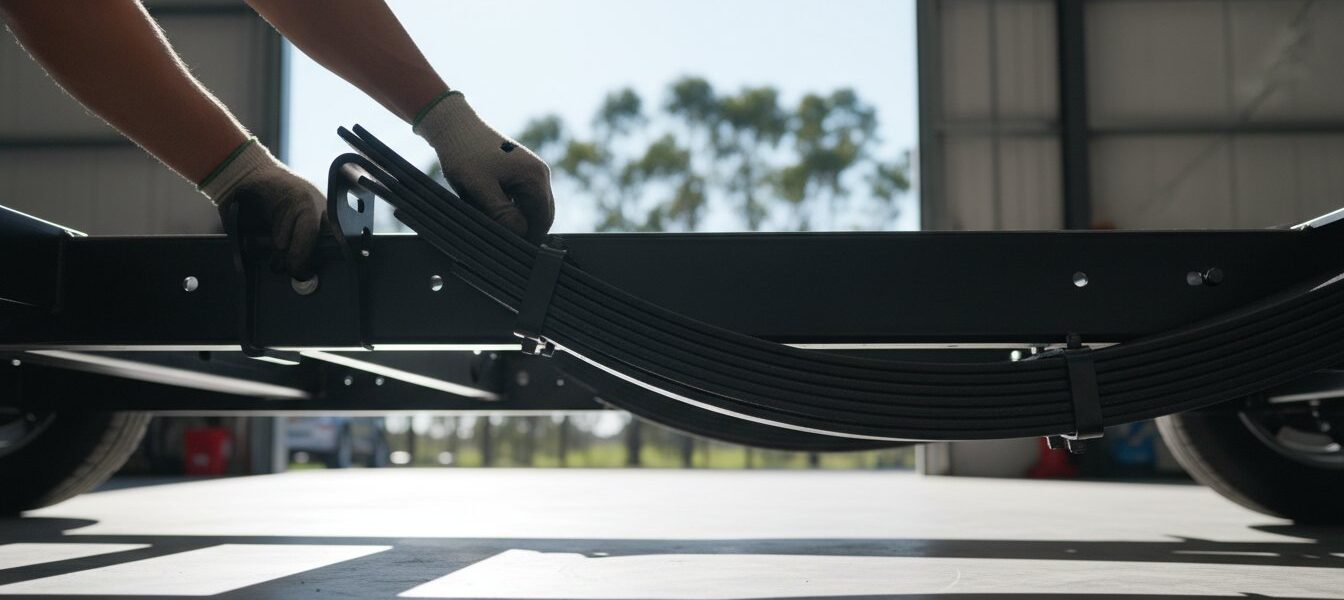
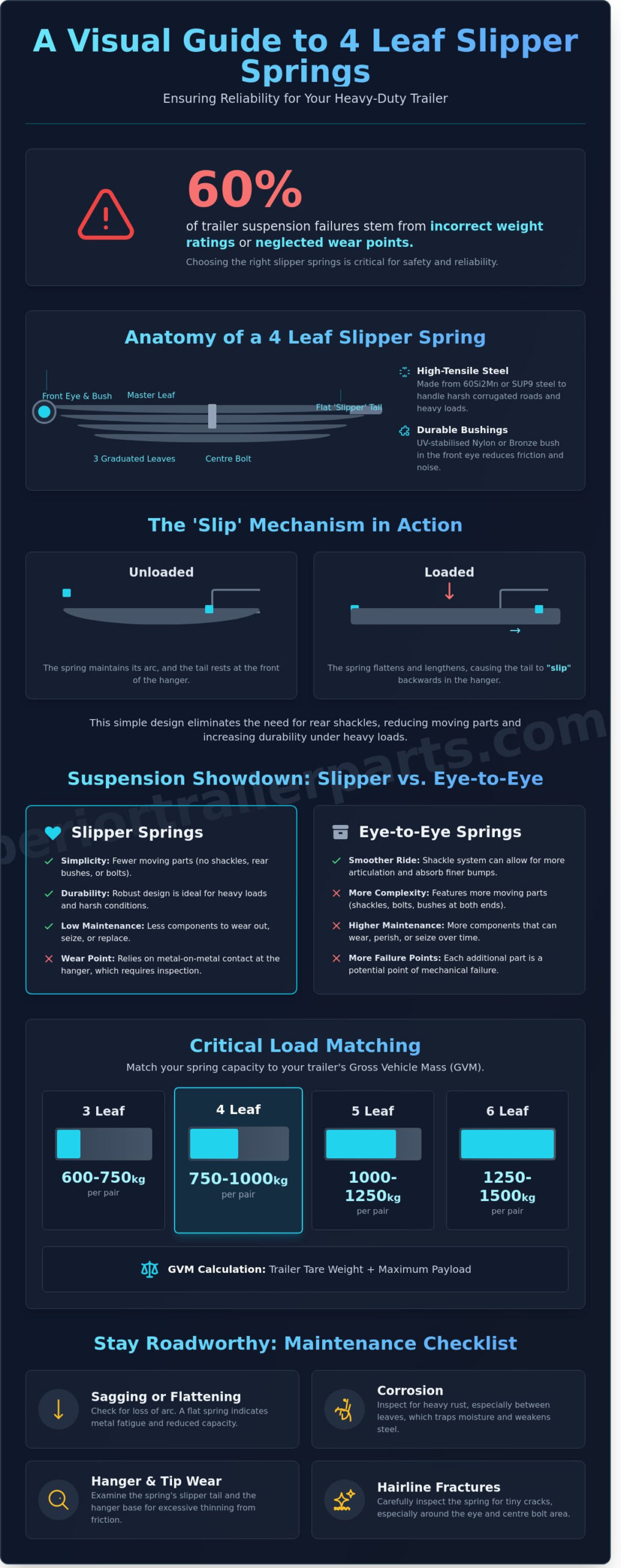
The 4 leaf slipper springs configuration consists of a primary master leaf supported by three additional leaves of graduated lengths. The master leaf features a rolled eye at the front, which houses a replaceable bush. Most Australian manufacturers use high-tensile spring steel, often rated to 60Si2Mn or SUP9 standards, to handle corrugated roads and heavy loads. The bush is typically made from UV-stabilised nylon or bronze to reduce friction and noise. These materials ensure the spring retains its shape and elasticity over thousands of kilometres. The stack is held together by a centre bolt, ensuring the leaves remain aligned during vertical compression.
Weight Capacity and GVM Considerations
Selecting the right suspension depends on your trailer’s Gross Vehicle Mass (GVM). A standard pair of 4 leaf slipper springs is usually rated between 750kg and 1000kg. This rating covers the total weight of the trailer plus its maximum cargo capacity. Each additional leaf increases the spring rate, which refers to the amount of weight required to compress the spring by a specific distance, usually measured in millimetres. Using springs with a lower rating than your load leads to sagging and potential axle damage. Conversely, an over-rated spring creates a bouncy ride that can damage the trailer frame.
To calculate GVM, add the tare weight of your trailer to the maximum payload you intend to carry. For example, if your trailer weighs 350kg and you carry a 500kg load, your GVM is 850kg. In this scenario, a 1000kg rated pair of 4 leaf springs provides a safe buffer. Typical load ratings for common leaf counts include:
- 3 Leaf: 600kg to 750kg capacity per pair.
- 4 Leaf: 750kg to 1000kg capacity per pair.
- 5 Leaf: 1000kg to 1250kg capacity per pair.
- 6 Leaf: 1250kg to 1500kg capacity per pair.
Superior Trailer Parts provides these components to ensure your trailer stays level and stable. Choosing the correct leaf count is the first step in building a reliable transport solution.
The Mechanics of Slipper Spring Suspension Systems
Slipper springs function through a combination of deflection and sliding movement. The front of the spring is secured to the trailer frame by a bolt through a nylon or brass bush. The rear end remains free, resting inside a steel hanger. As the trailer encounters road bumps, the 4 leaf slipper springs flatten out. This physical lengthening requires the rear tip to slide, or "slip," along the hanger surface. This mechanism eliminates the need for rear shackles, reducing the number of moving parts that can fail under heavy loads.
A 4-leaf configuration provides a progressive spring rate. Under light loads, the primary leaf handles minor vibrations. As the weight increases toward a typical 750kg capacity for a single axle, the additional leaves engage to provide greater resistance. This prevents the suspension from bottoming out on harsh Australian corrugated roads. Proper load distribution ensures the trailer remains level; this directly improves towing stability and braking efficiency.
Friction and Wear at the Slipper End
The rear hanger experiences constant metal-on-metal contact. This friction is a standard part of the design. In coastal environments, salt and road debris can act as abrasives within the hanger. Regular inspections are necessary to check for thinning of the spring tip or the hanger base. Despite this wear point, 4 leaf slipper springs remain a top choice for their mechanical simplicity. They require less maintenance than shackle systems because there are no rear bushes to perish or bolts to seize. For those building or repairing a rig, choosing high-quality leaf springs ensures the steel can withstand these high-friction conditions.
Spring Deflection and Rebound
The stack height of four leaves manages rebound energy effectively. A standard 710mm or 765mm spring length determines the arc and the flexibility of the ride. Longer 765mm springs generally offer more flex, which is better for sensitive cargo. You must maintain a minimum of 50mm to 75mm of clearance between the tyre tread and the trailer guard. This space allows for full deflection when the trailer hits a pothole at 100km/h. Without this gap, the tyre will strike the guard, causing heat buildup or immediate failure.
Slipper Springs vs Eye-to-Eye Springs: Which is Better?
Choosing the right suspension depends on your trailer’s weight and how often you want to crawl under it for maintenance. Slipper springs utilize a single eye at the front and a sliding tail at the rear. Eye-to-eye springs use shackle bolts and plates at both ends. Slipper designs win on mechanical simplicity. They have 50% fewer moving joints than eye-to-eye systems, which means fewer parts to grease or replace. For a standard utility trailer, the slipper design is the practical choice.
Maintenance requirements are a major factor for fleet owners and DIYers alike. Eye-to-eye springs provide a smoother ride for heavy-duty tandem setups, but they require constant monitoring of shackle bushes. If you miss a service, the bolts can flog out the hangers. 4 leaf slipper springs are more forgiving. They don’t rely on complex shackle geometry, making them a cost-effective solution for light-duty applications where reliability is the priority.
Pros and Cons of the Slipper Design
The primary advantage of the slipper design is its durability in harsh environments. Fewer moving parts translate to a lower initial purchase price and faster installation. It’s the standard for box trailers because it handles dirt and grit better than shackle setups. The main disadvantage is the noise. You’ll hear a clunk when hitting large potholes as the spring tail moves. Over time, the rear hanger will show wear where the spring slides, but these hangers are cheap and easy to replace if needed.
Why Choose the 4 Leaf Configuration Specifically?
The 4 leaf configuration is the industry sweet spot for trailers with a 750kg ATM. A 3 leaf spring is often too soft, causing the trailer to bottom out on uneven roads. A 5 leaf spring is typically too stiff for a single axle, which leads to the trailer bouncing when it’s empty. 4 leaf slipper springs provide enough tension to carry a full load of gravel or timber while maintaining enough flex to protect your frame from vibration. This setup is common across Australia. Whether you’re at a boat ramp or a construction site, finding a replacement leaf is straightforward because this is a national standard. It’s a reliable, no-nonsense choice for trade and domestic use.
Selection and Maintenance for Long-Term Reliability
Maintaining trailer suspension ensures safety on harsh Australian roads. Identifying wear early prevents expensive roadside breakdowns. Look for 4 leaf slipper springs that show signs of sagging or flattened arches. Rust between the leaves causes friction and eventual failure. If you see cracks in the steel or rusted-through stacks, replace the entire set. Secure your new assembly using high-quality galvanised U-bolts. These components anchor the axle to the spring. Loose or corroded U-bolts lead to axle shift and potential accidents. Don’t reuse old hardware when installing new springs.
Measuring Slipper Springs for Replacement
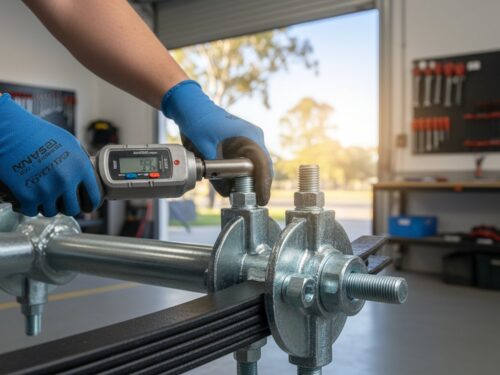
Accuracy is vital when ordering replacements. Measure the eye-to-end length along the flat side of the spring. An unweighted spring measures differently than one under load. If the trailer is weighted, the spring stretches and gives a false reading. Always measure both springs to check for uneven wear. Measure the width of the leaf next. Most Australian trailers use a standard 45mm width, but heavy-duty setups often require 60mm. Check the bolt hole diameter in the fixed eye. Common sizes include 1/2 inch or 9/16 inch. Ensure the new 4 leaf slipper springs match these specifications exactly to fit your existing hangers without modification.
Inspection and Lubrication Tips
Regular inspections keep your trailer moving. Check the fixed eye bush for ovalisation. A worn bush allows the bolt to move, which damages the hanger. Inspect the rear hangers for thinning metal or deep grooves where the slipper end slides. Friction wears these surfaces down over time. Clean all suspension components thoroughly after beach trips or salt water exposure. Salt accelerates corrosion on spring steel. Apply a marine-grade grease to the shackle bolts to reduce friction. This simple step extends the life of your suspension by 40 percent compared to neglected systems. It’s the easiest way to avoid premature replacement and maintain road worthiness.
Need to upgrade your suspension? Browse our range of heavy-duty leaf springs for reliable performance.
Sourcing High-Quality Leaf Springs in Australia
Choosing the right suspension determines if your trailer survives the corrugations of the Victorian High Country or the humidity of the Queensland coast. Australian roads subject 4 leaf slipper springs to constant vibration and high-frequency impacts. These forces fatigue low-grade steel quickly. Every trailer registered for road use in Australia must adhere to Vehicle Standards Bulletin 1 (VSB 1). This regulation ensures that suspension systems meet specific load-bearing and safety requirements. Selecting inferior components risks structural failure and legal liability.
Black steel springs remain the standard for dry-land applications like box trailers or tradesman tops. They offer a cost-effective solution for environments where salt exposure is minimal. However, the finish choice is the first line of defense against structural degradation. High-quality steel ensures the spring maintains its "arch" over thousands of kilometers, preventing the trailer from sagging or bottoming out on the axle.
Galvanised Springs for Marine and Coastal Use
Hot-dip galvanising is essential for boat trailer parts. This process involves dipping the steel into molten zinc at approximately 450 degrees Celsius. This creates a metallurgical bond that protects the steel from salt-induced oxidation. It specifically prevents "pack rust." This condition occurs when moisture becomes trapped between the leaves of the spring.
Untreated steel can expand by up to 10 times its original thickness when it rusts. This expansion forces the spring leaves apart and compromises the entire suspension unit. During installation, fitters should avoid heavy hammering on the leaves. Impact can crack the brittle zinc coating and leave the underlying steel vulnerable to the elements.
Ensuring your trailer is ready for a coastal trip is one thing, but planning the trip itself is another. For those heading to popular spots like the Brisbane area for a fishing trip or holiday, finding the right accommodation is key. You can learn more about Swasproperties for a range of short-term rental options perfect for a coastal getaway.
The Superior Trailer Parts Advantage
We focus on high-tensile steel and precision manufacturing to ensure every component lasts. Our leaf springs are built to withstand heavy-duty applications and harsh Australian environments. We provide nationwide shipping to every state and territory. This ensures regional workshops and DIYers get reliable parts without delay.
Accessing expert advice is a core part of our service. Our team helps you match your 4 leaf slipper springs to your specific axle and load requirements. This prevents the common mistake of over-springing a trailer. A trailer with too much spring capacity for its weight will bounce excessively. This leads to accelerated wear on tyres and bearings. We provide the technical support needed to get the job done right the first time.
Equip Your Trailer for Australian Conditions
Choosing the right suspension setup is critical for road safety and equipment longevity. 4 leaf slipper springs offer a heavy-duty, reliable solution for trailers carrying loads up to 1,000kg per axle. These components simplify maintenance while providing the resilience needed for harsh local terrain. Proper installation reduces wear on your tyres and frame; it keeps your trailer on the road longer. We provide the parts you need to get the job done right the first time. As an Australian owned and operated business, we understand the demands of our roads. We offer nationwide shipping on all trailer components and provide expert technical support for both DIY projects and trade professionals. Our team is ready to help you select the exact specifications for your specific build. Don’t risk a breakdown with inferior parts. Invest in durability and keep your load secure across every kilometre of your journey.
View our range of high-quality 4 leaf slipper springs
Frequently Asked Questions
How much weight can a pair of 4 leaf slipper springs carry?
A pair of standard 45mm wide 4 leaf slipper springs is rated for a capacity between 750kg and 1000kg. Steel grade and leaf thickness determine the exact limit, so check the manufacturer’s stamp before installation. A typical 6mm thick leaf configuration supports 750kg per pair. Ensure your total trailer weight doesn’t exceed the combined rating of your springs and axle to prevent dangerous mechanical failure.
Can I replace just one slipper spring if it breaks?
You should always replace slipper springs in pairs to ensure even weight distribution across the axle. If one spring fails from fatigue or rust, the other side is usually in a similar state of decay. Installing a single new spring causes uneven ride height and puts 15% more stress on the older component. This imbalance leads to rapid tyre wear and unpredictable handling during heavy braking.
How do I know if my 4 leaf slipper springs are worn out?
Check for flat or inverted leaves to determine if your 4 leaf slipper springs have lost their tension. Inspect the steel for cracks near the fixed eye and look for pack rust that separates the leaves by 2mm or more. If the rear hanger shows grooves deeper than 3mm where the spring slides, the system is worn out. These physical markers indicate the suspension is no longer safe.
Are slipper springs noisier than eye-to-eye springs?
Slipper springs are naturally noisier than eye-to-eye versions because the rear end slides against a metal hanger. This design causes a distinct clunking sound when you hit potholes or apply the brakes. It’s a standard characteristic, but noise increases if the hanger wears down to less than 4mm thick. If the sound becomes constant, your spring has likely lost its arch and needs an immediate inspection by a professional.
What is the standard width for 4 leaf slipper springs in Australia?
The standard width for slipper springs in Australia is 45mm for most light to medium trailers. Some older or heavy-duty builds use 60mm wide springs to handle larger loads and provide extra stability. You must measure your current spring width and the internal hanger space to ensure a precise fit. A gap of more than 3mm in the hanger allows too much lateral movement, which causes the trailer to sway.
Do I need to grease slipper springs?
Most slipper springs are designed to run dry, but applying heavy-duty chassis grease to the rear hanger reduces friction. This lubrication helps minimize the metal-on-metal grinding noise during transit. However, don’t use grease if you’re towing in sandy or dusty conditions. Grit sticks to the lubricant and forms an abrasive paste that can accelerate steel wear by up to 35% over 12 months of frequent use.