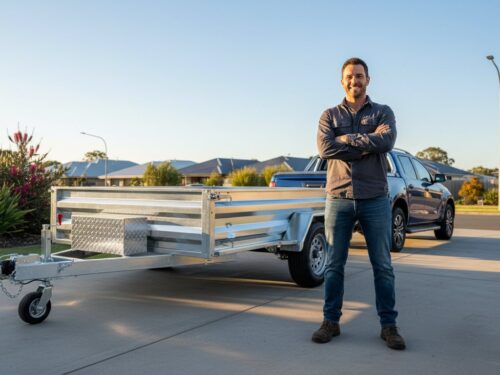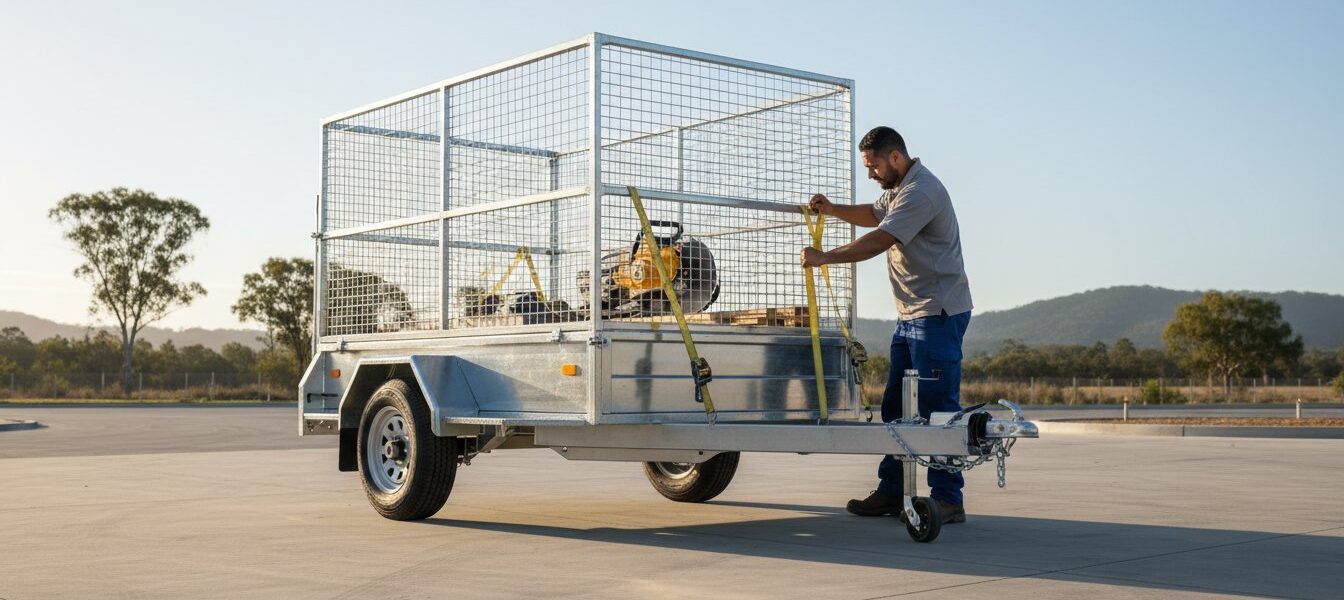
A trailer that sways at 100km/h isn’t just a nuisance; it’s a structural failure waiting to happen. Many operators discover too late that low-quality 8×5 tandem axle box trailers won’t hold up under the 2,000kg loads common on Australian job sites. You know durability is non-negotiable. Whether you’re hauling through coastal salt air or over harsh, corrugated tracks, undersized axles and thin steel lead to dangerous downtime and safety risks that no professional should accept.
This article shows you how to evaluate these units by focusing on the technical specifications that drive performance. You’ll learn to identify genuine heavy-duty components, from ATM ratings to hot-dipped galvanised finishes that prevent corrosion. We’ll break down the Australian Design Rules (ADR) and axle quality standards required for stable, legal towing. This information ensures you invest in a solution built for long-term resilience and maximum safety on the road.
Key Takeaways
- Understand how ATM ratings between 2000kg and 3000kg+ dictate your legal towing capacity and heavy-duty load requirements.
- Evaluate the stability and weight distribution benefits of 8×5 tandem axle box trailers for professional trade and transport applications.
- Identify why 50mm square axles and rocker roller suspension are the preferred choice for reliable load sharing on Australian roads.
- Learn why Hot Dipped Galvanised (HDG) finishes provide essential corrosion protection for trailers used in coastal regions.
- Discover how to customise your trailer with specific cage heights and heavy-duty ramps to suit your specific equipment needs.
Understanding the 8×5 Tandem Axle Box Trailer Platform
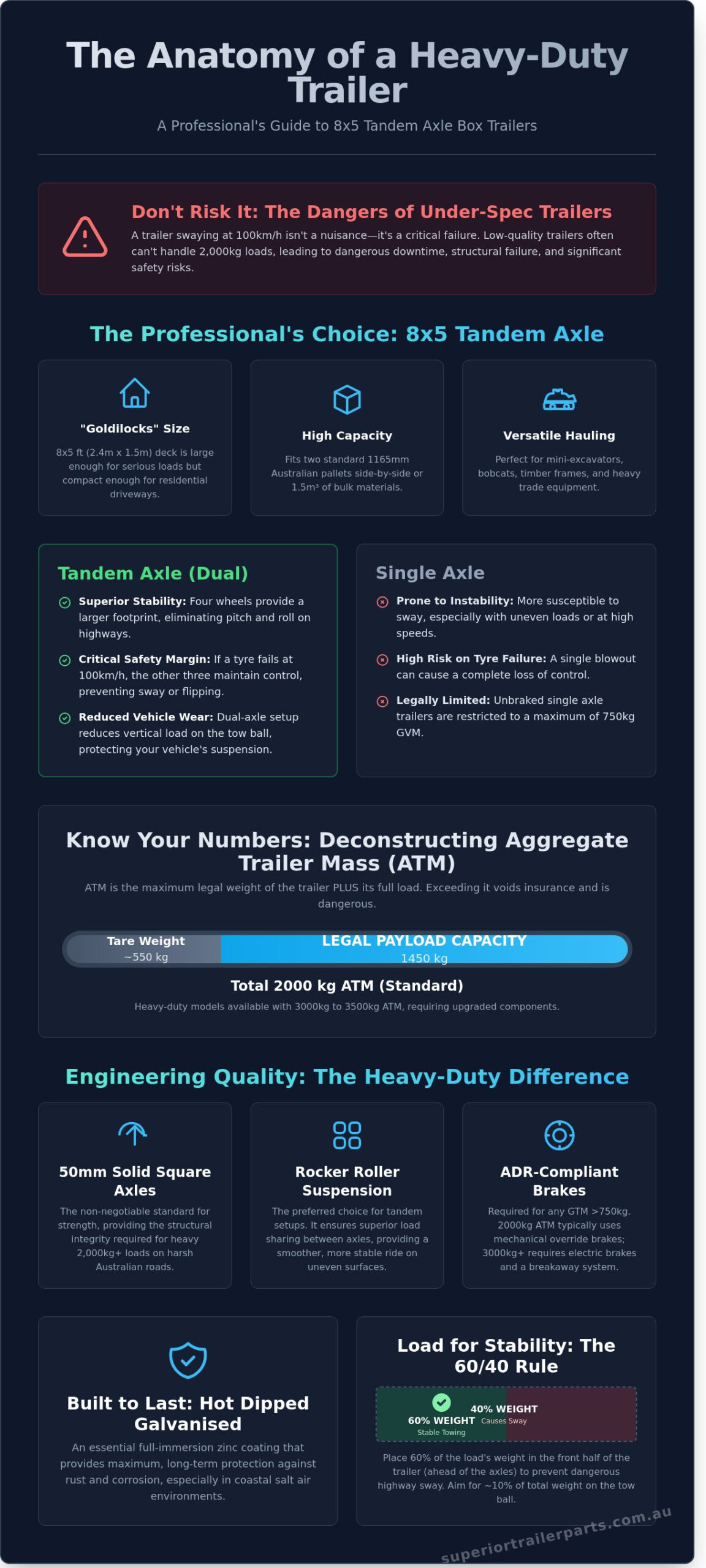
An 8×5 tandem trailer provides a 2.4m x 1.5m deck area designed for heavy-duty hauling. It uses two axles to spread the load across four wheels, which increases the Aggregate Trailer Mass (ATM) significantly. Most 8×5 tandem axle box trailers carry a standard rating of 2000kg, though specialized models reach 3500kg. This footprint is the “Goldilocks” size for Australian job sites. It’s large enough to fit two standard 1165mm Australian pallets side-by-side but remains compact enough to park in a standard 3.0m wide residential driveway. Trade professionals rely on this size for transporting mini-excavators, bobcats, or bulk landscaping materials like 1.5 cubic meters of wet sand.
Tandem vs Single Axle: Load Stability and Safety
Tandem axles eliminate the pitch and roll effect that often disrupts the towing vehicle. Four wheels provide a larger footprint, which keeps the trailer level during high-speed transit on Queensland highways. Understanding trailer vehicle basics shows that dual axles offer a critical safety margin for heavy loads. If a tyre fails at 100km/h, the remaining three tyres maintain contact and prevent the trailer from swaying or flipping. Any load exceeding the 750kg Gross Vehicle Mass (GVM) threshold requires a tandem setup to ensure braking efficiency and structural integrity. The dual-axle configuration also reduces the vertical load on the tow ball, which protects your vehicle’s rear suspension from premature wear.
Sizing Breakdown: Imperial 8×5 vs Metric Equivalents
The industry still uses imperial terms, but these units measure approximately 2400mm by 1500mm in the metric system. You must distinguish between internal and external dimensions before purchasing. A standard 50mm box section frame reduces the usable internal width to roughly 1400mm. This detail is vital for loading wide trade equipment or pre-built timber frames. Side walls typically sit at 300mm or 400mm heights. Higher sides increase volume but also raise the center of gravity. Most 8×5 tandem axle box trailers feature a tray height of 450mm to 500mm from the ground, which provides a stable platform for heavy machinery while maintaining enough clearance for uneven work sites.
Performance Specs: ATM Ratings and Weight Distribution
Aggregate Trailer Mass (ATM) is the most critical figure on your compliance plate. It specifies the maximum legal weight of the trailer plus its full load when it isn’t hitched to a vehicle. For 8×5 tandem axle box trailers, a 2000kg ATM is the standard industry benchmark. This rating provides a versatile balance for tradespeople and DIY users who need to move equipment without requiring a heavy-duty truck for towing.
To find your actual hauling capacity, subtract the tare weight from the ATM. A standard galvanised 8×5 tandem trailer typically weighs around 550kg. If the ATM is 2000kg, your legal payload is exactly 1450kg. Heavy-duty configurations can push this ATM to 3000kg or 3500kg, but these require upgraded components like 50mm square axles and electronic braking systems. Don’t guess your weights; exceeding the ATM voids your insurance and places dangerous stress on the chassis.
To ensure you stay within these legal limits, getting your loaded trailer professionally weighed is a wise precaution. For this, a provider like Independent Scale Service can offer certified, accurate measurements.
Defining ATM for Dual Axle Configurations
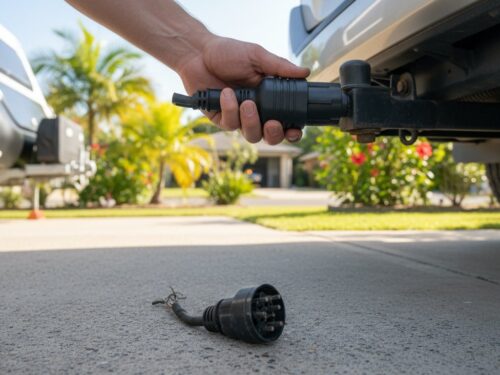
Tandem trailers offer better load sharing than single-axle units, but they come with specific legal mandates. Under the National trailer design standards, any trailer with a Gross Trailer Mass (GTM) over 750kg must be fitted with a functional braking system. Most 2000kg tandems utilize mechanical override brakes on at least one axle. If you step up to a 3000kg rating, Australian Design Rules (ADR) require brakes on all four wheels and a breakaway system. Always verify that your tow vehicle’s rated towing capacity matches the trailer’s ATM before hitting the road.
Balancing Your Load for Highway Stability
Stability at high speeds depends on the 60/40 rule. You must place 60% of the load weight in the front half of the trailer, centered ahead of the axle group. This prevents the trailer from “lifting” the rear of the tow vehicle, which causes dangerous sway or snaking. Aim for a ball weight that is approximately 10% of your total loaded mass. Tandem axles naturally compensate for slight load shifts better than single axles, but they aren’t a substitute for smart packing.
Drawbar length also plays a major role in performance. A longer drawbar, often 1500mm or 1600mm on premium 8×5 tandem axle box trailers, makes reversing easier and provides better leverage for the tow vehicle. It also allows more room for mounting toolboxes without restricting your turning circle. If you’re building or repairing a heavy-duty rig, sourcing the right axles and suspension components is the only way to ensure your trailer handles correctly under full load.
Engineering Quality: Axles, Brakes, and Suspension
The structural integrity of 8×5 tandem axle box trailers depends entirely on the components hidden beneath the chassis. When you’re hauling a 2,000kg load across Queensland, the axle and suspension system must perform without compromise. A failure at highway speeds isn’t just a mechanical issue; it’s a safety hazard. Prioritising heavy-duty engineering ensures your trailer remains a tool rather than a liability.
This principle of relying on specialized, high-performance parts is universal across all types of vehicles. For instance, in the world of high-performance motorcycles, specialists like Drive Systems USA are trusted for their durable drivetrain components because riders know that quality engineering is key to safety and performance. The same logic applies directly to your trailer’s running gear.
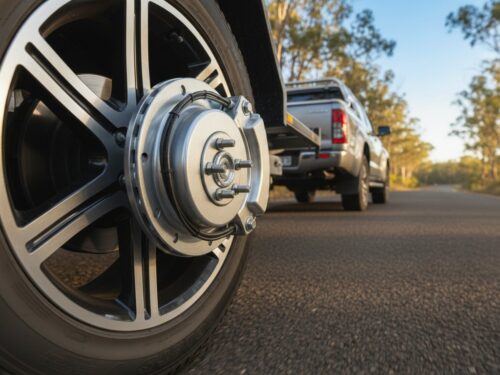
High-quality bearings are the first line of defence against roadside breakdowns. Heat buildup from friction is the primary cause of bearing failure, often leading to seized hubs. Using premium Japanese or Australian-made bearings reduces this risk by 60% compared to unbranded alternatives. Regular greasing every 5,000km or after any water submersion is a non-negotiable maintenance task for long-term reliability. Explore our range of heavy-duty trailer axles to find components built for these demanding conditions.
Axle Selection for Heavy-Duty Tandem Loads
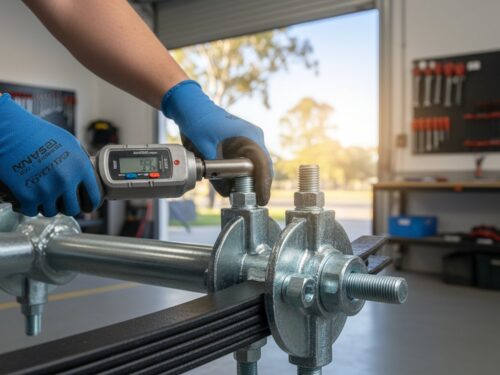
Axle thickness directly dictates your trailer’s legal and physical capacity. While 45mm square axles are common, 50mm square axles are the superior choice for dual-axle setups. A 50mm solid steel axle provides roughly 40% more load-bearing surface area than a 45mm version. This extra steel prevents the axle from bowing under maximum weight, which is a common issue with hollow alternatives. Solid steel axles offer the rigidity required for harsh Australian roads. Always look for genuine Australian-made axle components. These parts are engineered to meet local ADR standards and provide a precise fit for local hubs and brakes.
Braking Systems: Electric vs Mechanical Requirements
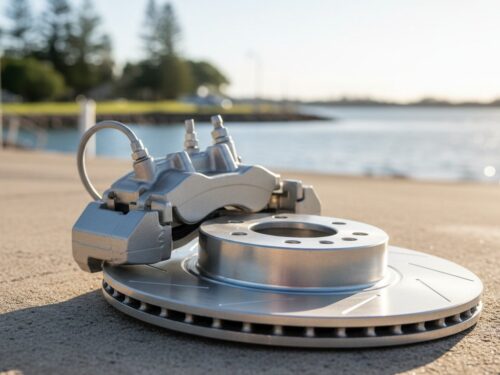
Braking requirements change once your trailer exceeds a 750kg GTM. For most 8×5 tandem axle box trailers rated at 2,000kg ATM, 9-inch mechanical drum brakes are a standard, reliable choice. They use a simple cable-pull system that requires 30% less technical maintenance than hydraulic setups. If you plan to upgrade to a 3,000kg or 3,500kg ATM, 10-inch electric brakes are mandatory. Electric systems provide maximum stopping power and allow the driver to control braking force from the vehicle cabin. This control is vital for maintaining safe towing practices during steep descents or sudden stops. Ensure you inspect brake shoes annually to guarantee even wear across all four wheels.
Suspension: Slipper vs Rocker Roller
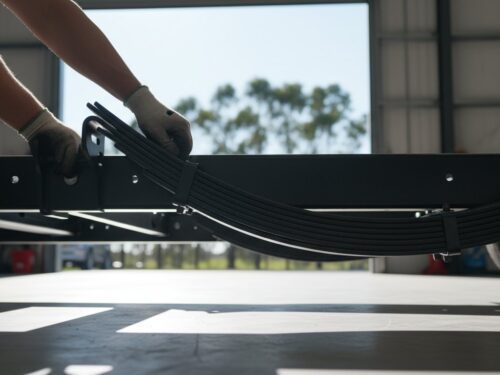
Suspension choice affects how the trailer tracks and how the load is distributed. Slipper springs are a cost-effective, durable option for standard use. However, rocker roller suspension is the preferred setup for tandem trailers. This system uses a central pivot point to share the load between the front and rear axles. If one wheel hits a 100mm pothole, the rocker arm transfers the impact, keeping all four wheels in contact with the road. This load-sharing capability reduces stress on the trailer frame by up to 25% and provides a much smoother ride for your cargo.
Durability Features: Galvanising and Construction
Choosing a trailer for the harsh Queensland climate requires a focus on material protection. Painted trailers often fail within 24 months in coastal areas like the Gold Coast because paint only sits on the surface. Scratch the paint, and the steel starts to oxidise immediately. Hot Dipped Galvanising (HDG) involves submerging the entire trailer frame into a bath of molten zinc at 450 degrees Celsius. This process creates a metallurgical bond that protects both the exterior and the interior of the steel tubes. For 8×5 tandem axle box trailers, this level of protection is a non-negotiable requirement for long-term value.
Hot Dipped Galvanised Finishes for Longevity
Internal coating is the only way to stop “hidden” rust. Many cheap imports use pre-galvanised steel where the ends are cut and welded, leaving raw steel exposed inside the box sections. A true HDG finish coats every square millimetre. When you inspect a trailer, look for a slightly dull, textured grey finish with a “spangle” pattern. Avoid trailers with excessive “zinc tears” or sharp drips, as these can indicate poor temperature control during the dipping process. You can view our welded galvanised tandem trailers to see the standard required for professional use.
Chassis and Drawbar Structural Integrity
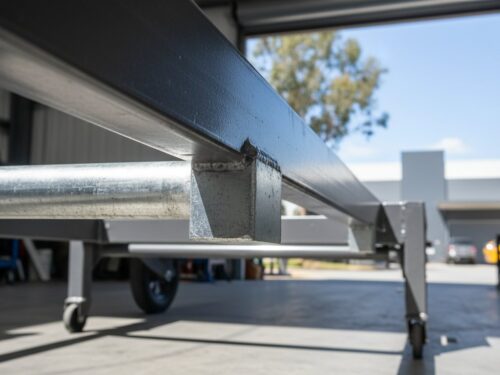
A fully welded chassis offers superior rigidity compared to bolt-together kits. Bolts can vibrate loose over thousands of kilometres on corrugated QLD roads. We recommend Rectangular Hollow Section (RHS) for drawbars because it provides better torsional stiffness than C-channel. High-stress points where the drawbar meets the chassis must include gusseting. This extra steel plating distributes the load and prevents frame cracking under heavy 2,000kg loads. Heavy-duty 8×5 tandem axle box trailers require this reinforcement to handle uneven weight distribution safely. Use this checklist when inspecting a potential purchase:
- Look for a “stacked dime” appearance in the weld beads.
- Ensure there is no “undercutting” where the weld meets the base metal.
- Check that welds are continuous, not just “tacked” in corners.
- Confirm the drawbar extends significantly under the first cross-member.
Superior structural integrity ensures your investment handles the 80% humidity levels common in South East Queensland without compromising safety. If the welds look messy or the galvanising is patchy, the trailer won’t last five years in local conditions. Stick to proven construction methods to ensure your gear stays on the road.
Customising Your 8×5 Trailer for Trade or Personal Use
Beyond commercial applications, a well-chosen trailer can be a vital tool for supporting family and community members. This might involve anything from helping someone move house to transporting bulky disability equipment. In situations where extra care and support are needed, having the right resources makes all the difference. For those navigating the NDIS, a provider like Im with you offers that crucial support, ensuring people get the quality care they deserve.
Standard 8×5 tandem axle box trailers provide a rugged foundation, but the right modifications turn them into specialised tools for your specific industry. Most owners begin with the cage. A 600mm cage height is usually sufficient for general garden maintenance or moving small equipment. If you handle high-volume loads like furniture or large amounts of green waste, the 900mm cage is a better investment. It provides the extra volume needed to secure tall items safely. Adding heavy-duty ramps is a priority for those transporting ride-on mowers or light machinery. Ensure these ramps feature a mesh or grip-strut surface to prevent slipping in wet conditions. You can customise your setup with premium trailer parts to improve the utility and safety of your rig on the job site.
Essential Upgrades: Cages, Ramps, and Spare Wheels
A swing-away jockey wheel is a non-negotiable for tandem trailers. This design allows the wheel to fold parallel to the drawbar, which prevents it from catching on speed bumps or steep QLD driveways. For better load access, install full-length side steps. These allow you to reach over the side of 8×5 tandem axle box trailers to adjust tie-down straps without climbing into the tray. When selecting tyres for a 2.0-tonne ATM, don’t use standard passenger car tyres. You need 185R14C light truck tyres with an 8-ply rating. These tyres provide the reinforced sidewalls required to manage heavy loads and the heat generated on long highway hauls.
Securing Your Gear with Integrated Toolboxes
Drawbar-mounted toolboxes keep your ratchet straps, jacks, and power tools secure and organised. Aluminium checker plate boxes are a popular choice because they are lightweight and naturally resistant to rust. Steel toolboxes offer higher impact resistance but add more weight to the drawbar. Always look for pinch-weld rubber seals and stainless steel T-locks. These components are vital for weatherproofing, as they prevent dust and Queensland’s heavy tropical rain from damaging your equipment. Check that the toolbox dimensions don’t interfere with your vehicle’s turning circle. If you need a specific size, browse our range of ute and trailer toolboxes to find a lockable solution that fits your drawbar configuration.
While toolboxes secure your smaller items, protecting the entire trailer and its valuable contents from theft requires a more robust approach. For professional electronic security solutions like GPS tracking or worksite surveillance, many businesses rely on the expertise of the Asset Resources Group.
Equip Your Business with Heavy-Duty Hauling Power
Choosing the right equipment means prioritising ATM ratings and weight distribution to ensure safe transport. High-quality 8×5 tandem axle box trailers often feature ATM ratings between 2000kg and 3500kg, relying on hot-dipped galvanised steel and precision-engineered axles to withstand harsh Australian environments. These technical specifications provide the durability needed for consistent daily use in trade or DIY applications. Focusing on heavy-duty construction reduces maintenance costs and extends the working life of your trailer.
Superior Trailer Parts is Australian owned and operated. We offer nationwide shipping and expert technical support to help you find the right mechanical solutions for your fleet. Our team understands the requirements of the local transport industry and provides practical advice for every build. Get your project moving with parts designed for resilience and performance.
Browse our range of heavy-duty 8×5 tandem trailers to find a reliable solution for your hauling needs. We’re ready to help you get the job done right.
Frequently Asked Questions
Do I need a special license to tow an 8×5 tandem axle trailer?
No, you don’t need a special license to tow an 8×5 tandem trailer in Queensland if you hold a standard C class driver’s license. Your vehicle and trailer combination must remain within the Gross Combination Mass (GCM) specified by your car manufacturer. It’s vital to ensure the loaded trailer doesn’t exceed the vehicle’s rated towing capacity. Exceeding these legal limits can result in fines and void your insurance coverage during an accident.
What is the difference between a 2000kg and 3200kg ATM rating?
The difference lies in the maximum legal weight the trailer can carry, including its own tare weight. A 2000kg ATM rating is standard for 8×5 tandem axle box trailers equipped with mechanical override brakes. Upgrading to a 3200kg ATM requires electric brakes on all four wheels and an emergency break-away system. This higher rating increases your payload capacity by 1200kg, provided your tow vehicle has a sufficient braked towing capacity.
Why are tandem trailers harder to reverse than single axle trailers?
Tandem trailers are harder to reverse because the two sets of wheels resist lateral movement through a process called tyre scrubbing. While a single axle pivots almost instantly, a tandem setup naturally wants to track in a straight line. You’ll need more physical space to initiate a turn and more steering input to overcome the friction of four tyres on the road. This resistance makes the trailer feel less responsive to small adjustments during tight manoeuvres.
Does an 8×5 tandem trailer require brakes on both axles?
Yes, an 8×5 tandem trailer requires brakes on both axles if the Aggregate Trailer Mass (ATM) exceeds 2000kg. Under Australian Design Rule (ADR) 38, any trailer with an ATM over 2000kg must have functional brakes acting on all wheels. If the trailer is rated at exactly 2000kg, brakes on a single axle are legally sufficient. However, dual-axle braking provides superior stopping power and safety when hauling heavy loads across varied Australian terrain.
Can I tow an 8×5 tandem trailer with a standard family SUV?
You can tow an 8×5 tandem trailer with a standard family SUV if the vehicle’s braked towing capacity exceeds the trailer’s loaded weight. Most mid-sized SUVs have a limit between 2000kg and 2500kg. If your trailer is fully loaded to a 2000kg ATM, a vehicle like a Toyota RAV4 with a 1500kg limit will fail. A larger 4WD like a Prado or Isuzu MU-X with a 3000kg limit is a safer choice. Always verify the compliance plate on your tow bar.
What maintenance does a tandem axle trailer require compared to a single axle?
Tandem axle trailers require twice the maintenance of single axle units because they have double the moving components. You must grease eight wheel bearings instead of four and monitor four tyres for uneven wear patterns. Check the rocker-roller suspension or equaliser arms every 5,000 kilometres for bush wear and tear. Neglecting these pivot points leads to poor tracking and accelerated tyre scrub, which increases your long-term operating costs and reduces safety.
Is hot-dipped galvanising worth the extra cost over a painted trailer?
Hot-dipped galvanising is worth the investment because it provides a 3.5 mil thick zinc coating that protects both the interior and exterior of the steel frame. In coastal Queensland environments, painted trailers often show surface rust within 12 months of use. A galvanised finish offers sacrificial protection that heals minor scratches and prevents structural decay. This durability ensures a higher resale value and a service life exceeding 15 years in harsh outdoor conditions.
What is the average tare weight of a fully galvanised 8×5 tandem trailer?
The average tare weight for a heavy-duty, hot-dipped galvanised 8×5 tandem trailer is approximately 520kg. Adding a 900mm high steel cage increases this weight by roughly 80kg, bringing the total unladen weight to 600kg. If you opt for a 2.5mm checker plate floor and a reinforced RHS chassis, expect the weight to sit at the higher end of this scale. Knowing this number is vital for calculating your remaining legal payload before you hit the road.