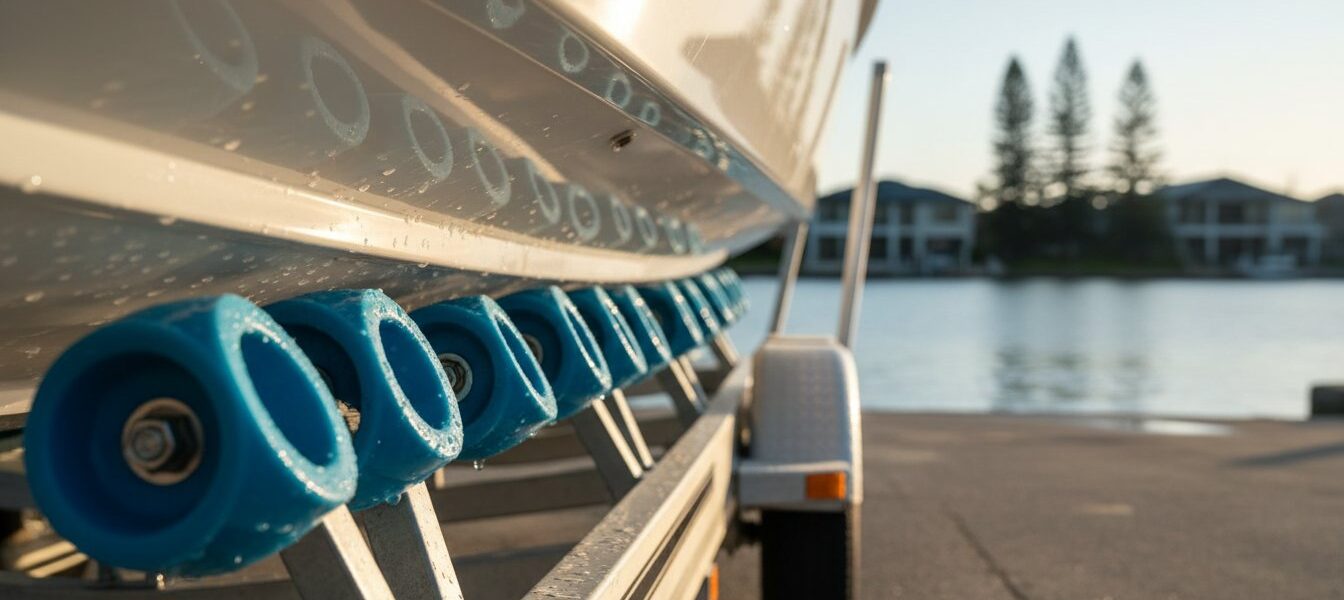
That scraping sound at the boat ramp isn’t just noise. It’s the sound of your hull’s gelcoat being compromised, one difficult launch at a time. You’ve invested in a good boat; the trailer supporting it must be just as reliable. Yet, many standard rubber rollers crack under the harsh Australian sun, develop flat spots from sitting, or have pins that seize solid with saltwater corrosion. These common failures lead directly to uneven pressure points, frustrating launches, and the kind of hull scratches that are expensive to fix.
It’s time to get the job done right with a system that works as hard as you do. This guide cuts through the noise to help you select the correct components from our range of heavy-duty boat trailer wobble rollers for sale. We’ll ensure you find the right parts to achieve effortless launching and even weight distribution, protecting your investment at any boat ramp in Australia. We’ll cover the critical differences between materials like polyurethane and rubber, how to identify the right roller profile for your hull, and what makes a roller truly marine-grade.
Key Takeaways
- Learn why marine-grade polyurethane rollers offer superior UV resistance and prevent marking on fibreglass hulls compared to traditional rubber.
- Understand how to correctly measure your roller pins to select the right bore size, typically 20mm or 22mm for Australian trailers.
- Discover simple maintenance checks that ensure your rollers spin freely, protecting your boat during launch and retrieval.
- Get the essential criteria for selecting from the best boat trailer wobble rollers for sale, focusing on hull support and correct weight distribution.
Understanding Boat Trailer Wobble Rollers and Hull Support
Your boat’s hull is its most critical structural component. Protecting it during transport is not optional. Boat trailer wobble rollers are heavy-duty, pivoting assemblies engineered to cradle your boat’s hull, providing essential support from the ramp to the highway. They are a core part of a reliable trailer system, distributing the vessel’s weight to prevent damage and ensure stability.
Unlike fixed bunks or simple keel rollers, wobble rollers articulate to match the specific shape of your hull. This dynamic support system is crucial for preventing point-loading stress, a major cause of gelcoat crazing and structural fatigue in both fibreglass and aluminium boats. Properly configured rollers reduce friction, making the demanding task of solo launching and retrieval significantly easier and faster. When you’re searching for boat trailer wobble rollers for sale, you’re not just buying a part; you’re investing in the longevity of your vessel.
The design of these rollers is simple but effective. Each roller or set of rollers is mounted on a bracket that allows it to pivot, or “wobble”. This action ensures constant, firm contact with the hull, even as the boat moves onto the trailer. While there are many types of boat trailers available in Australia, roller-based systems offer superior support for hulls with complex shapes and varying deadrise angles.
How Wobble Rollers Protect Your Boat
The self-adjusting pivot action is the key to hull protection. As your boat loads, each roller assembly automatically tilts to match the hull’s deadrise angle, which can range from 12 to over 24 degrees. This perfect fit cradles the boat, preventing it from shifting or slapping against the trailer frame during high-speed transit on uneven Australian roads. This even weight distribution prevents concentrated pressure points that can lead to structural cracking or distortion, especially in older or lighter hulls.
Wobble Rollers vs Keel Rollers
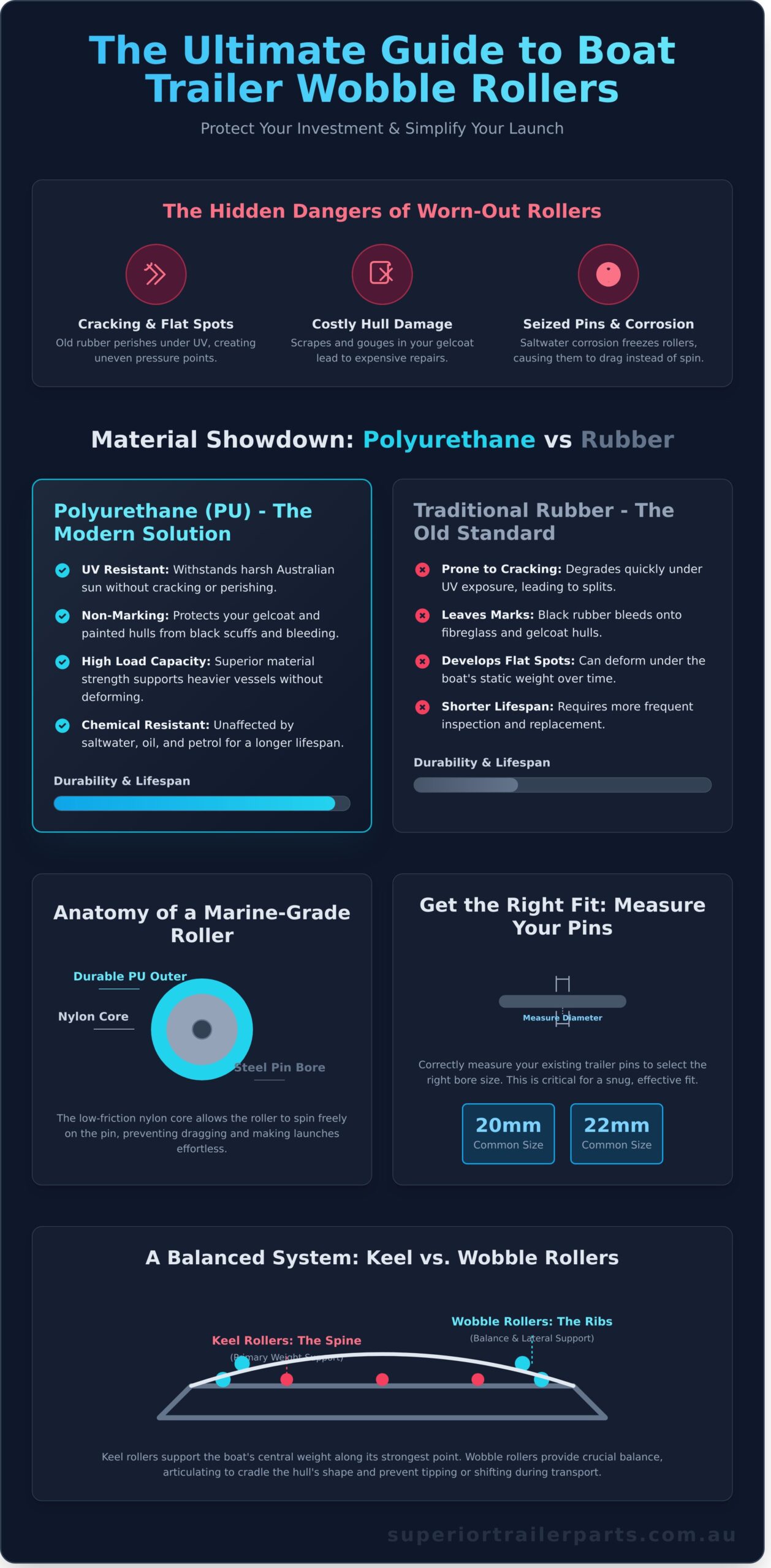
Think of your trailer support system in two parts. Keel rollers are the spine, taking the primary, concentrated weight of the boat along its strongest point, the keel. Wobble rollers act as the ribs, providing the crucial balance and lateral support. For smaller tinnies under 4.5 metres, wobble rollers alone may suffice. For larger vessels, a combination is essential. The keel rollers provide the foundation while the wobble rollers stop the boat from tipping and support the chines. Explore our full range of boat trailer parts for a completely balanced setup.
Ultimately, a correctly installed set of marine-grade wobble rollers reduces the physical effort needed at the boat ramp and provides peace of mind on the road. The system works together to guide your boat into the perfect position every time, protecting your hull from scrapes, gouges, and long-term structural damage. Finding the right boat trailer wobble rollers for sale is a critical step in building a trailer that is both reliable and safe for your specific vessel.
Polyurethane vs Rubber: Selecting the Best Roller Material
The material of your wobble rollers directly impacts your boat’s hull and the lifespan of your trailer parts. Your choice between traditional rubber and modern polyurethane is a critical one, especially in Australia’s harsh marine environment. While rubber has been a long-standing option, its performance limitations are clear. Polyurethane offers superior durability and protection for your vessel.
Standard black rubber rollers are prone to perishing. Under constant UV exposure, they crack, split, and lose their integrity. This degradation leads to black scuff marks and “bleeding” on fibreglass and gelcoat hulls, which can be difficult to remove. Choosing a durable material isn’t just about hull protection; it’s a key part of maintaining a trailer that meets official safety standards for roadworthiness. When searching for boat trailer wobble rollers for sale, selecting a high-grade material from the start prevents costly repairs and maintenance down the track.
Modern wobble rollers are built with a tough nylon core. This design provides a low-friction, self-lubricating surface for the galvanised steel pin. The result is a roller that spins freely under load, allowing your boat to glide on and off the trailer with minimal resistance. This reduces strain on your winch, your back, and your boat’s hull.
The Benefits of Polyurethane in Australian Waters
Polyurethane (PU) is the superior material for local conditions. Its non-marking properties are essential for protecting the value and appearance of white gelcoat or painted aluminium hulls. PU has a high resistance to chemicals, so it won’t degrade from contact with petrol, oil, or saltwater. Critically, high-density polyurethane has a superior load-bearing capacity, supporting your boat’s weight without compressing or deforming like recycled rubber often does.
When to Choose Ribbed Wobble rollers
A ribbed roller surface offers a distinct mechanical advantage. The ribs act like a gear, helping to “walk” the boat onto the trailer and keep it centred, especially in a strong crosswind or current. This design increases the surface area for better grip on wet or slick aluminium hulls. On steep boat ramps, the ribbed profile provides extra traction to help prevent the vessel from sliding back during retrieval.
Making the right choice ensures your boat is supported correctly every time you launch and retrieve. Our extensive stock of marine-grade polyurethane wobble rollers is engineered to withstand demanding Australian conditions, providing reliable performance for years.
Sizing and Measuring for Replacement Rollers
Selecting the correct wobble rollers is not a guessing game. Incorrect sizing leads to poor hull support, difficult launching, and potential damage to your boat and trailer. Measure twice to ensure you order the right parts once. Taking precise measurements of your existing setup is the most reliable way to find the right replacement boat trailer wobble rollers for sale.
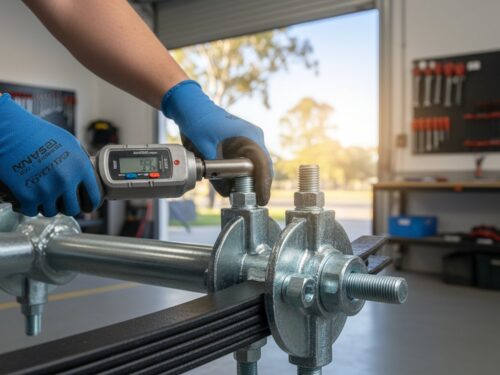
Use a vernier caliper for the most accurate results. Focus on these three critical dimensions before you buy:
- Bore Size (Internal Diameter): This is the most crucial measurement. The bore is the hole through the centre of the roller. It must match the diameter of your trailer’s existing steel pins. In Australia, the standard bore sizes are typically 20mm or 22mm. An incorrect bore size means the roller will either not fit or will be too loose, causing excessive wear and noise.
- Overall Diameter: Measure the full diameter of the roller from edge to edge. This determines how high the roller sits and how it contacts your boat’s hull. A roller that is too large may not spin freely within its bracket, while one that is too small won’t provide adequate support.
- Roller Width: Measure the width of the roller’s central hub. This dimension ensures the roller fits neatly inside its bracket without binding or having too much lateral play, which can cause uneven wear.
Matching Rollers to Trailer Brackets
Your trailer’s brackets dictate the roller size you can use. The roller must fit between the two uprights of the bracket with minimal side-to-side movement. Measure the internal width of the bracket and ensure your new roller’s width is slightly less to allow for free spinning. Also, identify your assembly type. Most trailers use single, twin, or quad roller assemblies on each wing. Finally, verify the pin length is sufficient to pass through the bracket and roller and be secured with a split pin or R-clip.
Determining the Number of Rollers Required
The weight and length of your boat determine the number of rollers you need. A heavier boat requires more rollers to distribute its weight evenly and prevent high-pressure points on the hull. If your boat is over 5 metres long or weighs more than 750kg, upgrading to quad-roller wings is a smart investment. Proper roller quantity and spacing are essential to prevent the hull from bottoming out and contacting the trailer’s steel frame during transit. A well-supported hull is fundamental to Good trailer care and protects your investment.
When you’re searching for boat trailer wobble rollers for sale, consider if a complete wing assembly upgrade is a better long-term solution than just replacing individual rollers. This ensures consistent support and can be more cost-effective for a major overhaul. Don’t compromise. Get the right fit for maximum reliability on the road.
Installation and Maintenance for Long-Term Reliability
Purchasing high-quality wobble rollers is only half the job. Proper installation and routine maintenance are critical for ensuring your boat launches and retrieves smoothly for years. Even the best polyurethane rollers will fail prematurely if fitted to corroded or seized hardware. A few extra minutes spent during installation will prevent costly damage and on-ramp delays.
Before you begin, lay out your new rollers and hardware. A successful installation relies on a solid foundation. Follow these core principles for a reliable, long-lasting setup.
- Inspect Roller Pins: Check every roller pin for signs of corrosion, pitting, or bending before fitting. A compromised pin can shear under load, causing the roller to detach. Use only heavy-duty, corrosion-resistant pins.
- Apply Marine-Grade Grease: Apply a thin layer of marine-grade grease to the internal bore of the roller and the surface of the pin. This specialised grease is formulated to resist water washout and inhibit corrosion, ensuring the roller spins freely. Standard automotive grease is not a suitable substitute.
- Secure with Correct Hardware: Use galvanised washers and stainless steel split pins to secure each roller. This combination prevents rust and ensures the pin cannot work its way loose during transit. Never reuse old, fatigued split pins.
- Confirm Free Movement: Once installed, check that every roller spins smoothly by hand. The entire wobble arm assembly should also pivot without obstruction. Any binding or stiffness indicates a problem that must be fixed before loading the boat.
Fitting Your New Wobble Rollers
Replacing old or damaged rollers is a straightforward task. First, use pliers to straighten and remove the old split pin, then slide the main roller pin out. The old roller should come free easily. Before installing the new one, use a wire brush to clean the bracket thoroughly. Remove all salt buildup, grime, and surface rust. This prevents moisture from being trapped against the new components. Finally, install the new roller, ensuring washers are placed correctly to prevent side-to-side play, and secure it with a new split pin.
Mounting Hardware and Accessories
Your rollers are only as strong as the hardware holding them. Always use hot-dip galvanised or stainless steel mounting components to combat rust in harsh marine environments. If your entire bracket assembly is showing significant corrosion, it’s wise to replace it. Check your U-bolt kits and brackets for integrity. Also, inspect the pivot arm itself. A seized pivot arm forces the roller to stay in a fixed position, creating flat spots and applying uneven pressure to your boat’s hull.
Correct installation is the key to getting maximum value when you find the right boat trailer wobble rollers for sale. Taking the time to clean, grease, and use the correct hardware ensures your investment is protected. For expert advice on the right components for your trailer, contact our Australian-based team today.
Premium Trailer Components for Australian Conditions
Your boat trailer works hard. It faces corrosive saltwater, intense UV radiation, and long hauls on rough Australian roads. Standard components often fail under this pressure, leading to costly damage and lost time on the water. Superior Trailer Parts supplies heavy-duty hardware engineered specifically for these challenges. We provide reliable solutions built for local boaties, ensuring your trailer performs safely and efficiently every time you launch.
From a single replacement roller to a complete tandem axle assembly, our inventory covers every requirement. We stock an extensive selection of marine-grade components, including galvanised brackets, stainless steel pins, and high-density polyurethane rollers. If you’re looking for quality boat trailer wobble rollers for sale, you need parts that won’t crack, fade, or seize after a few seasons. Our products are sourced to provide maximum durability and smooth operation, protecting your hull and making launching and retrieving your vessel effortless.
Why Choose Superior Trailer Parts
We are a 100% Australian owned and operated business based in Queensland. Our team understands the local environment because we live and work in it. This direct industry experience gives us an edge. You get direct access to a massive inventory of quality trailer parts, all backed by our commitment to competitive pricing. We deliver high-performance, marine-grade hardware without the inflated price tag, offering genuine value to our customers.
Getting your trailer fixed shouldn’t be a waiting game. We offer fast, Australia-wide shipping to get you back on the water sooner. Our logistics network ensures prompt delivery to major cities like Sydney, Melbourne, and Perth, as well as regional centres across the country. Order your parts online, and we’ll dispatch them directly from our warehouse. It’s a straightforward process designed for maximum efficiency. Don’t let a broken part ruin your weekend fishing trip.
Our range includes:
- Wobble Roller Assemblies: Complete kits with brackets, pins, and rollers.
- Individual Rollers: Blue, red, and grey polyurethane options in various sizes.
- Brackets and Hardware: Heavy-gauge galvanised steel for ultimate corrosion resistance.
- Spindles and Axles: Built to withstand heavy loads and demanding road conditions.
Whether you’re performing a simple repair or undertaking a full custom trailer build, having the right components is critical. We provide everything you need to upgrade or maintain your boat trailer, ensuring it meets the highest standards of safety and performance. When you see our extensive list of boat trailer wobble rollers for sale, you’ll know you’ve found a supplier that prioritises quality.
Get the Expert Advice You Need
Don’t guess when it comes to fitment. Our team possesses deep knowledge of Australian trailer standards and compliance requirements. We can help you select the correct parts for your specific trailer model and boat type. Visit our Arundel warehouse on the Gold Coast to see the products firsthand, or order online for convenient national delivery. For technical support, simply reach out via our contact page. We’re here to provide clear, practical advice.
Secure Your Hull with the Right Wobble Rollers
Choosing the right wobble rollers isn’t just an upgrade. It’s essential for protecting your boat’s hull and simplifying your time at the ramp. Remember, high-grade polyurethane rollers offer superior durability and won’t mark your vessel, making them a smart investment for harsh Australian marine environments. Accurate measurements ensure a perfect fit, preventing uneven pressure points and potential damage during transit.
When you’re looking for the best boat trailer wobble rollers for sale, quality matters. As an Australian Owned and Operated business, Superior Trailer Parts provides the heavy-duty, galvanised components you need. We offer reliable, Australia-wide shipping to get your trailer sorted quickly.
Shop our full range of marine-grade wobble rollers today and fit your trailer with parts you can trust. Get back on the water with confidence.
Frequently Asked Questions
How many wobble rollers does my boat trailer need?
The number of rollers depends on your boat’s length and hull weight. A good rule of thumb is to have one set of wobble rollers for every 1.2 to 1.5 metres of hull that contacts the trailer. This ensures the boat’s weight is distributed evenly, preventing hull damage. Always check your trailer’s Gross Vehicle Mass (GVM) rating and ensure your roller setup provides adequate support across the entire length of the keel and chines.
Can I use polyurethane rollers on an aluminium boat?
Yes, you can use polyurethane rollers on an aluminium boat. High-quality polyurethane is a non-marking material that won’t scratch or leave black scuffs on your hull. Avoid hard PVC or low-grade rubber rollers, as these are known to cause cosmetic damage to aluminium surfaces. For best results, select rollers specifically advertised as non-marking and suitable for alloy boats. This protects your boat’s finish during launch and retrieval.
Why are my boat trailer rollers getting flat spots?
Flat spots on your rollers are caused by prolonged, stationary pressure from the boat’s hull. This issue is common when a boat is stored on its trailer for months, especially during warmer weather which softens the material. Lower-quality PVC or rubber compounds are more susceptible to deforming under constant load. Upgrading to high-density polyurethane rollers significantly reduces the likelihood of flat spots due to their superior material memory and durability.
What is the best way to lubricate trailer rollers?
Most modern wobble rollers don’t need lubrication as they are made from self-lubricating materials like polyurethane. If your rollers are older or begin to bind, use a marine-grade silicone spray. Apply it sparingly to the roller pin or bushing. Do not use petroleum-based lubricants like grease or general-purpose oil. These products can degrade rubber and plastic components over time and will attract sand and grit, causing more wear.
How do I measure the bore size of a wobble roller?
Measure the bore size using a vernier caliper for the most accurate reading. Simply measure the inside diameter of the hole running through the roller’s centre. If you don’t have calipers, a quality ruler will work. Common bore sizes in Australia are 20mm and 25mm, so ensure you order the correct size to match your existing trailer pins or brackets. An incorrect bore size will result in poor roller function and premature wear.
Is it better to have more rollers or larger rollers?
The best setup depends on your boat’s hull. More rollers provide superior weight distribution, which is critical for protecting the hull from stress points, especially on fibreglass boats. Larger diameter rollers make launching and retrieving smoother as they roll more easily. For many Australian boaters, a combination is ideal: a sufficient number of rollers to support the weight, with a large enough diameter to ensure effortless operation at the boat ramp.
How often should I replace my boat trailer rollers?
Replace your rollers based on their condition, not a fixed schedule. Inspect them annually for deep cracks, severe flat spots, or if they no longer spin freely. In harsh Australian saltwater conditions, a typical lifespan is 3-5 years. When you find quality boat trailer wobble rollers for sale, look for products with high UV resistance, as sun exposure is a primary cause of degradation. Worn rollers can damage your hull, so proactive replacement is smart.
Do I need to replace the pins when I replace the rollers?
Yes, it’s highly recommended to replace the pins when you install new rollers. Your old pins, washers, and split pins are likely affected by corrosion and metal fatigue, particularly after use in saltwater. This can prevent your new rollers from spinning freely. A new set of galvanised or stainless steel hardware is an inexpensive way to guarantee your roller assembly works correctly. These kits typically cost between A$5 and A$10 per roller.