A new box trailer is a 10-year investment, not a weekend purchase. You’ve seen the cheap imports that look the part but buckle under a real Aussie workload, leaving you with a rusted frame and a failed axle. It’s frustrating to see your hard-earned money wasted on equipment that doesn’t last, creating safety risks and registration headaches.
This guide cuts through the sales talk. We’ll give you the expert knowledge to identify a high-quality box trailer for sale that is safe, compliant, and built to perform for over a decade. You will learn how to spot superior engineering so you can invest with confidence. We’ll cover the critical components to inspect, how to decode load ratings like ATM, and what you need for hassle-free registration, ensuring your next trailer is a genuine workhorse.
Key Takeaways
- Learn how to assess a trailer’s structural integrity by comparing fully welded chassis construction against bolted assembly.
- Calculate your required load capacity by correctly interpreting Aggregate Trailer Mass (ATM) and Tare Weight ratings.
- Confirm any box trailer for sale is fully ADR compliant, checking for mandatory features like load-rated safety chains and LED lights.
- Understand the benefits of buying from a specialised Australian manufacturer for reliable warranty support and easier access to genuine parts.
Understanding Box Trailer Quality and Australian Standards
The box trailer is the workhorse of Australian properties. It’s an essential, open-topped utility tool built for tough conditions. From hauling green waste on a weekend to moving tools and materials on a job site, its versatility is unmatched. Yet, not all trailers are created equal. When you’re searching for a box trailer for sale, understanding the difference between a durable, long-lasting unit and a cheap import is critical. The engineering choices in its frame and finish determine its performance on our demanding roads and in our harsh climate.
A quality trailer isn’t just a steel box on wheels; it’s a piece of equipment designed for safety, stability, and longevity. Key construction methods and protective coatings directly impact how it will handle everything from corrugated outback tracks to corrosive coastal air. Making the right choice upfront saves you money on repairs and ensures your trailer is a reliable asset for years to come.
Fully Welded vs. Bolted Frames
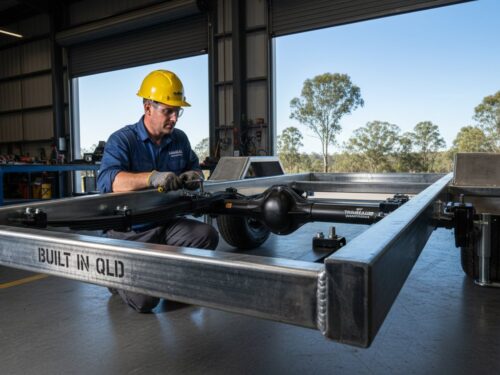
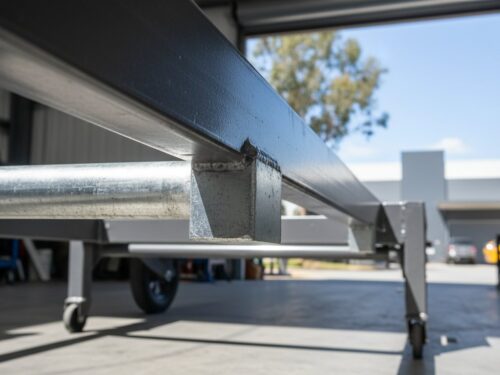
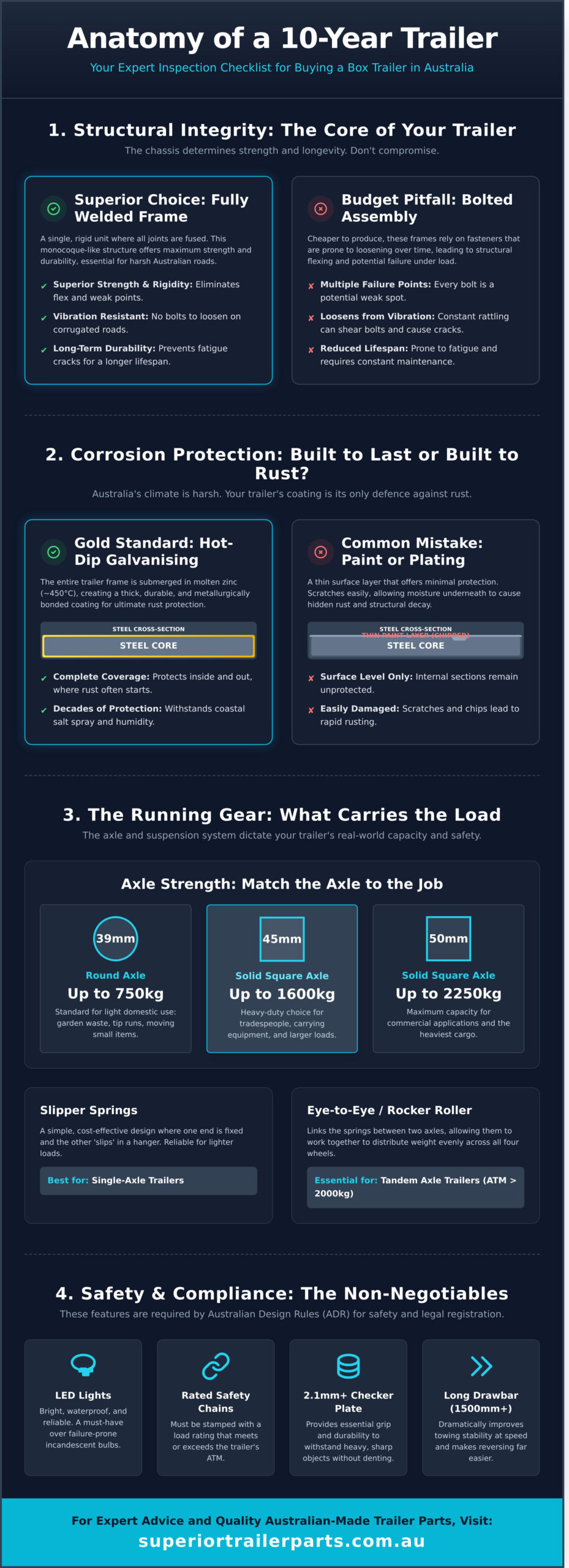
The structural integrity of a trailer begins with its chassis. Bolted frames, while often cheaper, rely on fasteners that can loosen over time due to vibration. On Australian corrugated roads, this constant rattling causes flexing, which can lead to fatigue cracks and sheared bolts. A fully welded body, in contrast, acts as a single, rigid unit. Every joint is fused, creating a monocoque-like structure that provides superior strength and eliminates points of failure. This robust construction is essential for handling heavy loads without compromising safety.
Look beyond the welds to the trailer’s geometry. The drawbar length is a critical factor in towing performance. A longer drawbar, typically 1500mm or more, increases stability at highway speeds and makes reversing significantly easier. Inside the trailer, the flooring must be up to the task. A 2.1mm or 2.5mm thick checker plate floor provides excellent durability and grip, preventing tools or equipment from sliding around and withstanding the impact of heavy, sharp objects.
The Role of Hot-Dip Galvanising
Rust is the number one enemy of any steel trailer in Australia. Many budget trailers use a thin “silver paint” or basic zinc plating, which offers minimal protection and quickly scratches or flakes away. True corrosion resistance comes from hot-dip galvanising. This industrial process involves submerging the entire fabricated trailer frame in a bath of molten zinc at approximately 450°C. This creates a thick, resilient coating that is metallurgically bonded to the steel.
The key advantage of this method over others is its complete coverage. The molten zinc flows inside the hollow box sections of the chassis, protecting the trailer from the inside out—where rust often starts unseen. This process is fundamental to the construction of many heavy-duty types of trailers designed for harsh environments. A hot-dip galvanised finish provides decades of protection, even for trailers stored outdoors or used frequently in coastal regions with high salt spray. It’s a non-negotiable feature for any serious buyer looking for a box trailer for sale that is built to last.
Evaluating Key Components: Axles, Springs, and Hubs
The undercarriage is your trailer’s foundation. It dictates how much you can carry and how safely you can carry it. The axle, springs, and hubs work together as a single, critical system. A failure in one component compromises the entire setup. Understanding these parts is essential before you commit to buying a new or used trailer.
Axle Selection: 39mm Round to 50mm Square
When you inspect a standard 6×4 box trailer for sale, it will likely feature a 39mm round axle. This is the industry standard for light-duty domestic work, rated for a Gross Trailer Mass (GTM) of 750kg. It’s perfectly adequate for tip runs, garden clean-ups, and moving light furniture. For anything heavier, you must upgrade. Heavy-duty or tandem axle trailers require a solid square axle for superior strength. A 45mm square axle can handle up to 1600kg, while a 50mm square axle is rated for loads up to 2250kg. Their solid steel construction provides the rigidity needed to prevent dangerous flexing under significant weight. For detailed technical specifications, view our full range of trailer axles.
Suspension Systems: Slipper vs. Eye-to-Eye Springs
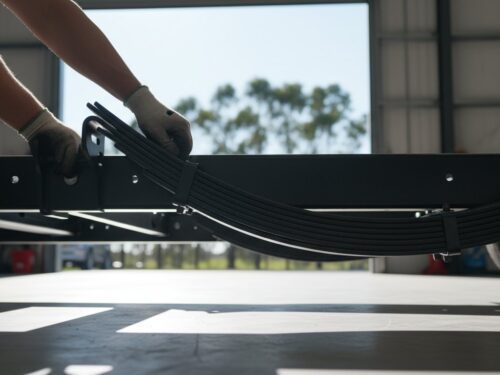
Your trailer’s suspension directly impacts ride quality and load distribution. For single-axle trailers, a set of 4 leaf slipper springs offers a reliable and cost-effective solution. This simple design has one end bolted to the chassis while the other “slips” in a hanger, absorbing road shock effectively for lighter loads. Tandem axle trailers, however, demand a more robust system. Eye-to-eye or rocker roller suspension links the springs between the two axles, allowing them to work in unison. This setup ensures weight is distributed evenly across all four wheels, which is vital for stability and safety when your Aggregate Trailer Mass (ATM) exceeds 2000kg.
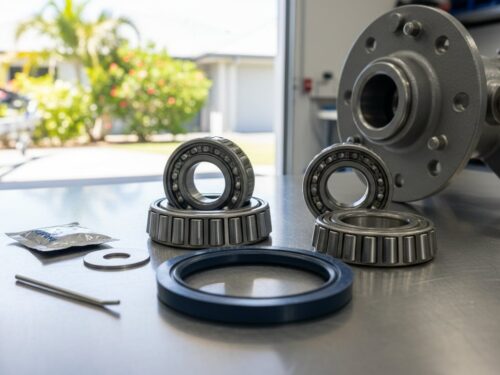
The hubs and bearings are the final, crucial link in the chain. They are a high-failure point if you choose cheap, low-quality parts. Always insist on marine-grade or premium sealed bearings. These units are engineered to resist water and dust ingress, extending their service life in harsh Australian conditions. A seized bearing can destroy a hub and axle in minutes. Your entire running gear assembly must be built with components that meet the strict safety benchmarks outlined in the Australian Design Rules (ADRs). This ensures your trailer isn’t just strong, but fully road-legal.
Choosing the right combination of axle, springs, and hubs isn’t about over-engineering. It’s about building a trailer that is fit for purpose. A well-matched undercarriage provides a stable tow, protects your cargo, and ensures long-term reliability. For tailored advice on matching components to your specific load requirements, the Superior Trailer Parts team offers expert, no-nonsense guidance.
Sizing and Load Capacity: From 6×4 to Tandem Axle
Selecting the right trailer size is about more than just fitting your cargo. It’s a critical decision for safety, legal compliance, and towing performance. Before you assess any box trailer for sale, you must understand the key specifications that define its capabilities. Getting this wrong can lead to fines, vehicle damage, or dangerous on-road situations.
Two terms are fundamental to this process: Aggregate Trailer Mass and Tare Weight. Understanding them is not optional.
- Aggregate Trailer Mass (ATM): This is the maximum legal weight of the fully loaded trailer, including the trailer’s own weight, when unhitched from your vehicle. This is the single most important rating.
- Tare Weight: This is the weight of the empty trailer.
Your legal payload is the difference between these two figures. For example, a trailer with a 750kg ATM and a 250kg Tare Weight can legally carry a 500kg payload. Always check your vehicle’s tow bar and owner’s manual for its maximum towing capacity; your trailer’s ATM must never exceed this limit.
Single Axle Trailers: 6×4 and 7×4 Models
For general domestic use, the single axle trailer is the undisputed champion. The 7×4 single axle box trailer is widely considered the Australian “all-rounder” for its perfect balance of manoeuvrability and capacity. These trailers are ideal for tip runs, moving camping equipment, or handling weekend DIY materials. Most are rated at 750kg ATM, the maximum legal limit for an unbraked trailer in Australia, making them compatible with almost any tow vehicle.
Tandem Axle and Tipper Trailers
When loads get heavy, a single axle isn’t enough. Dual axle tandem trailers distribute weight across four tyres instead of two, delivering exceptional stability at speed and significantly reducing sway. This design is essential for safely hauling equipment, building materials, or vehicles. For maximum utility, a hydraulic tipper trailer offers unmatched efficiency for tradespeople and landscapers, unloading bulk materials like soil or gravel in seconds.
Heavy loads require serious stopping power. Under Australian Design Rules, any trailer with a Gross Trailer Mass (GTM) exceeding 750kg must have an effective braking system. Trailers rated between 2000kg and 3500kg ATM require sophisticated electric or hydraulic brakes, often on all axles, and an in-cab controller. When you find the right box trailer for sale, ensure its braking system is built for its ATM rating.
Essential Safety Features and ADR Compliance
In Australia, trailer safety isn’t a recommendation; it’s the law. The Australian Design Rules (ADRs) are national standards that govern vehicle safety, emissions, and theft protection. Enforced under the Motor Vehicle Standards Act 1989, ADRs dictate how trailers must be built to be legally used on public roads. Any quality box trailer for sale must meet these strict criteria. Non-compliance makes a trailer unroadworthy and ineligible for registration.
Before purchase, verify the trailer has these mandatory features:
- Safety Chains: Two chains are required for trailers over 2.5 tonnes Aggregate Trailer Mass (ATM). They must be stamped with a rating compliant with AS 4177.4-2004, providing a failsafe if the coupling detaches.
- Load-Rated Shackles: The shackles connecting the chains to your vehicle must be rated to handle the trailer’s ATM. Look for a stamped Working Load Limit (WLL) on a certified D-shackle or bow shackle.
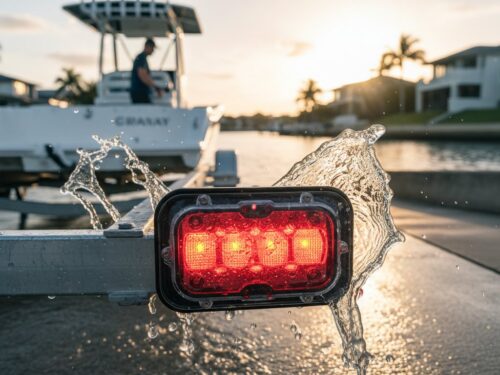
- LED Lighting: Modern trailers must have fully functional LED tail, brake, and indicator lights. They offer superior visibility, lower power consumption, and extreme durability compared to old incandescent bulbs.
A clearly visible Vehicle Identification Number (VIN) and compliance plate are non-negotiable. The compliance plate must display the manufacturer’s details, manufacture date, VIN, ATM, and Tare Mass. A trailer without this documentation is a significant liability and cannot be legally registered or insured.
Braking Systems and Couplings
Australian law requires brakes on any trailer with a Gross Trailer Mass (GTM) exceeding 750kg. For loads between 751kg and 2,000kg GTM, mechanical override brakes are a common and effective solution. For heavier applications over 2,000kg GTM, electric braking systems are mandatory, offering proportional and controlled stopping power managed from the tow vehicle. The coupling provides the primary physical link to your vehicle and must have a load rating that exceeds the trailer’s ATM. ADR 62/02 sets the minimum performance and construction standards for mechanical connections between vehicles, ensuring a secure and reliable link.
Lighting and Electrical Standards
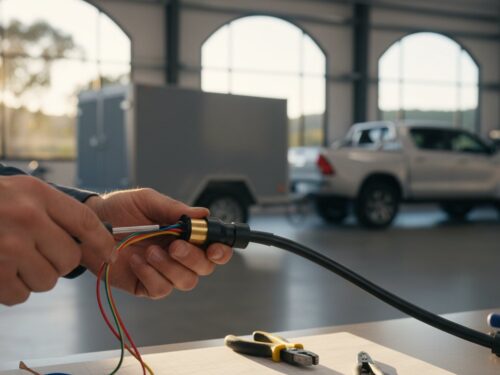
Submersible LED lights are now the industry standard for a good reason. They are fully sealed units, making them waterproof and highly resistant to the vibration and shocks common on Australian roads. The standard electrical connection is a 7-pin flat plug, though older 7-pin round plugs (both large and small) are still in use. Ensure the trailer’s plug is compatible with your vehicle’s socket. For visibility, all trailers require rear and side reflectors. Any box trailer for sale wider than 1.6 metres also needs front-facing side marker lights to define its width at night.
Verifying these safety components ensures your trailer is not only legal but also reliable for the tough jobs ahead. If you’re unsure whether a trailer’s components meet current standards, get expert advice from our team on fully compliant, heavy-duty parts.
Finding a Reliable Box Trailer for Sale in Australia
A quality box trailer is a long-term asset. Choosing the right supplier is the most critical decision you’ll make. Buying directly from a specialised manufacturer or a dedicated parts supplier ensures your trailer is built with standard, high-quality components. This guarantees that when you need a replacement bearing or a new light five years from now, the part is readily available. Generic importers often use non-standard parts, making future repairs difficult and expensive.
Support an Australian Owned and Operated business. You get more than just a trailer; you get local accountability. Warranty claims are handled here in Australia, not by an overseas agent. Our team understands the demands of Australian roads and harsh climate conditions. We provide genuine, practical advice based on decades of local experience. That’s a level of support you won’t find from a faceless online marketplace or a big-box retailer.
A professional website is often the first sign of a trustworthy local supplier, signaling that they invest in their business and customer communication. This is where a specialist agency can make a difference; for instance, the team at PurpleCow Digital Marketing focuses on building strategic websites for businesses that want to establish their credibility online.
Before you commit to any box trailer for sale, a thorough pre-purchase inspection is essential. Don’t skip these steps. They separate a reliable workhorse from a roadside liability.
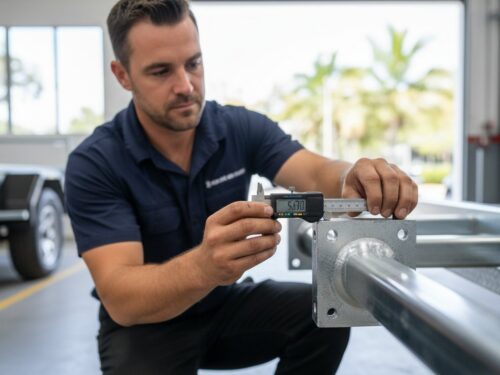
- Welds: Inspect every weld on the chassis and drawbar. Look for clean, continuous beads. Poor quality is obvious: excessive spatter, cracks, or undercutting are immediate red flags indicating structural weakness.
- Bearings: Grab the top of a wheel and try to rock it back and forth. Any significant play, wobble, or a grinding noise suggests the wheel bearings are worn or improperly fitted. Replacement is required.
- Tyre Ratings: Check the sidewall of each tyre. The load rating must meet or exceed the trailer’s specified Aggregate Trailer Mass (ATM). Under-rated tyres are illegal and dangerously prone to failure under load.
- Galvanising: For maximum corrosion resistance, insist on a hot-dip galvanised finish. A fully galvanised chassis, body, and drawbar will withstand rust far better than a painted trailer, especially in coastal areas.
Sourcing replacement parts should be a key factor in your buying decision. A trailer built with industry-standard components means you can easily find parts anywhere in Australia. When you buy from a manufacturer that also stocks a complete inventory of parts, you have a single, reliable source for long-term maintenance and upgrades.
Why Choose Superior Trailer Parts
We combine manufacturing expertise with one of Australia’s largest trailer parts inventories. We don’t just sell trailers; we build them and stock every genuine component needed to keep them running. Our nationwide shipping gets the right part to your door, fast. Whether you’re in regional WA or metro Sydney, we provide reliable support. For custom builds or expert advice on your next trailer, contact the expert team.
Long-Term Maintenance Tips
Proper maintenance is simple and effective. It protects your investment and ensures safety on the road. Focus on these key tasks. Regularly grease your wheel bearings, typically every 12 months or 10,000 kilometres. Check the tension of your U-bolts after the first 100 kilometres of use and then every six months. They can work loose. Learn to spot wear on critical parts like leaf springs or couplings before they fail. A flattened spring or excessive slack in the coupling means it’s time for a replacement. A well-maintained trailer is a safer, more valuable asset for years to come.
This principle of regular upkeep extends beyond your equipment to your property itself. After a big project that requires a trailer for hauling waste, or for routine home maintenance, getting professional help can save time and effort. For instance, a dedicated service like Maid for Geelong provides tailored cleaning solutions, ensuring your entire property is as well-maintained as your gear.
Protecting your investment also involves managing it financially. For business owners, claiming depreciation and understanding capital allowances for assets like trailers can provide significant tax benefits. Seeking advice from a chartered accounting firm like Gartly Advisory Pty Ltd can help maximise these advantages.
Just as you maintain your trailer, it’s important to look after your own physical health. The heavy lifting required to load and unload trailers can lead to strains and injuries, such as hernias. Understanding the risks is part of staying safe on the job. For answers to common questions about this specific type of injury, brisbaneherniaclinic.com.au offers a comprehensive FAQ page.
Find the Right Box Trailer for Your Next Job
Your search for a reliable trailer comes down to engineering, not just price. Always verify that any model is fully compliant with Australian Design Rules (ADR 62), as this is your baseline for safety and legal road use. The true value of a trailer is in its construction; look for a fully welded chassis and heavy-duty components like solid steel axles and quality springs. These elements determine its lifespan and performance under tough Australian conditions.
This focus on durable, purpose-built equipment is a principle shared by specialists in other demanding fields; for example, the Avalanche Pro Shop is known for equipping people for the unique challenges of the Alps.
When you need a box trailer for sale, choose a supplier that prioritises durability. As an Australian Owned and Operated business, we provide expert technical advice to ensure you get the right fit for your load capacity requirements. We make it simple to get the gear you need with nationwide shipping available direct to your door.
Don’t settle for second-best. View our range of heavy-duty box trailers and premium parts and invest in quality that works as hard as you do.
Frequently Asked Questions
Do I need a braked box trailer for a 750kg load?
Yes, you need brakes for any trailer with a Gross Trailer Mass (GTM) over 750kg. This is a legal requirement in all Australian states. An unbraked trailer is only suitable for loads under this 750kg threshold. For heavier cargo, your trailer must have an efficient braking system, like mechanical override or electric brakes, to ensure safe and compliant towing on public roads. Don’t risk a fine or an accident.
What is the difference between a 6×4 and a 7×4 box trailer?
The main difference is one foot in length. A 6×4 trailer has a load space measuring approximately 1.8 metres by 1.2 metres. A 7×4 trailer provides a longer bed at 2.1 metres by 1.2 metres. This extra 30cm of length is ideal for carrying longer items such as timber, ladders, or small motorbikes. You should consider your primary cargo when choosing between these two popular and practical sizes.
Can I tow a tandem axle trailer with a standard SUV?
Yes, most mid-to-large SUVs can tow a tandem axle trailer, but you must check your vehicle’s specific braked towing capacity. A common tandem trailer has an Aggregate Trailer Mass (ATM) of 2000kg. Vehicles like the Toyota LandCruiser Prado or Ford Everest typically have towing capacities between 2500kg and 3500kg, making them suitable. Always verify your vehicle’s rating in the owner’s manual before you buy or tow.
Why is hot-dip galvanising better than painted steel for trailers?
Hot-dip galvanising provides superior, long-term rust protection. The process submerges the entire steel frame in molten zinc, creating a metallurgical bond that coats every surface, inside and out. Painted steel only has a surface coating that can chip, scratch, or peel, exposing the steel to moisture and rust. For Australia’s harsh coastal and outback conditions, galvanising offers unmatched durability and a longer service life for your trailer investment.
What is ATM and how does it affect what I can carry?
ATM stands for Aggregate Trailer Mass. It’s the maximum legal weight of your trailer, which combines the trailer’s own weight (tare) plus its heaviest possible load. This measurement is taken when the trailer is unhitched from the tow vehicle. Your trailer’s ATM is a critical figure; it determines registration class, brake requirements, and whether your vehicle has the legal capacity to tow it. Exceeding the ATM is illegal and extremely unsafe.
Are LED lights mandatory on all new box trailers in Australia?
Yes, LED lights are a mandatory standard on new trailers built in Australia. Under Australian Design Rule (ADR) 13/00, all trailers manufactured from 1 July 2017 onwards must be fitted with compliant LED lighting systems. LEDs are brighter, more reliable, and draw less power than older incandescent bulbs. When looking at any new box trailer for sale, ensure it has ADR-approved LED lights for road safety and legal compliance.
How often should I service the wheel bearings on my box trailer?
You should service your trailer’s wheel bearings at least once every 12 months or after 10,000 kilometres, whichever comes first. We recommend a more frequent 6-month service interval for trailers used in demanding environments. This includes boat trailers frequently submerged in saltwater or trailers operating on dusty, unsealed roads. Regular inspection and greasing prevent bearing failure, which can be costly and dangerous on the highway.
What safety chain rating do I need for a 2000kg tandem trailer?
For a 2000kg tandem trailer, you need a safety chain rated to at least 3000kg. Australian Standard AS 4177.4 specifies that trailers with an ATM up to 2500kg must have at least one safety chain with a minimum breaking load of 1.5 times the trailer’s ATM. Always check that the chain is stamped with its rating. Using an underrated chain is a serious safety risk and is non-compliant with Australian road laws.