A snapped axle on the side of the highway is more than a nuisance; it’s a structural failure that 85% of trailer owners can avoid by matching their load to the correct steel profile. Choosing a 40mm square axle provides a reliable foundation for trailers with a 1000kg ATM, balancing weight and durability without unnecessary bulk. It’s the industry standard for a reason, yet many DIY builders still face uncertainty regarding the technical specs required for a safe legal rating.
You already know that a trailer is only as strong as its foundation, and getting the axle choice wrong leads to costly repairs or safety risks. We’ll clarify exactly how to confirm your 1000kg load rating and select the correct bearing configuration, whether you need Holden or Slimline compatibility. This overview compares common Australian sizes and explains why a hot-dipped galvanised finish is the only choice for marine environments.
Key Takeaways
- Understand why the 40mm square axle is the industry standard for 1000kg trailers. The solid steel square profile provides superior load distribution compared to round alternatives.
- Identify correct bearing compatibility and material finishes. Use Holden (LM) bearings and select hot-dipped galvanised steel for maximum corrosion resistance in harsh conditions.
- Compare common Australian axle sizes to find the right strength-to-weight ratio. See how this profile stacks up against 39mm round and 45mm square options.
- Ensure a secure installation by matching your U-bolts to the square profile. Learn the professional way to measure for new components to avoid fitment issues.
- Source high-quality, Australian-owned components designed for local roads. Get expert advice and fast nationwide shipping for all heavy-duty trailer parts.
Understanding the 40mm Square Axle and Its Role
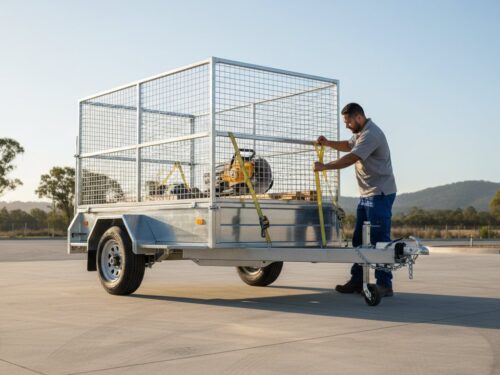
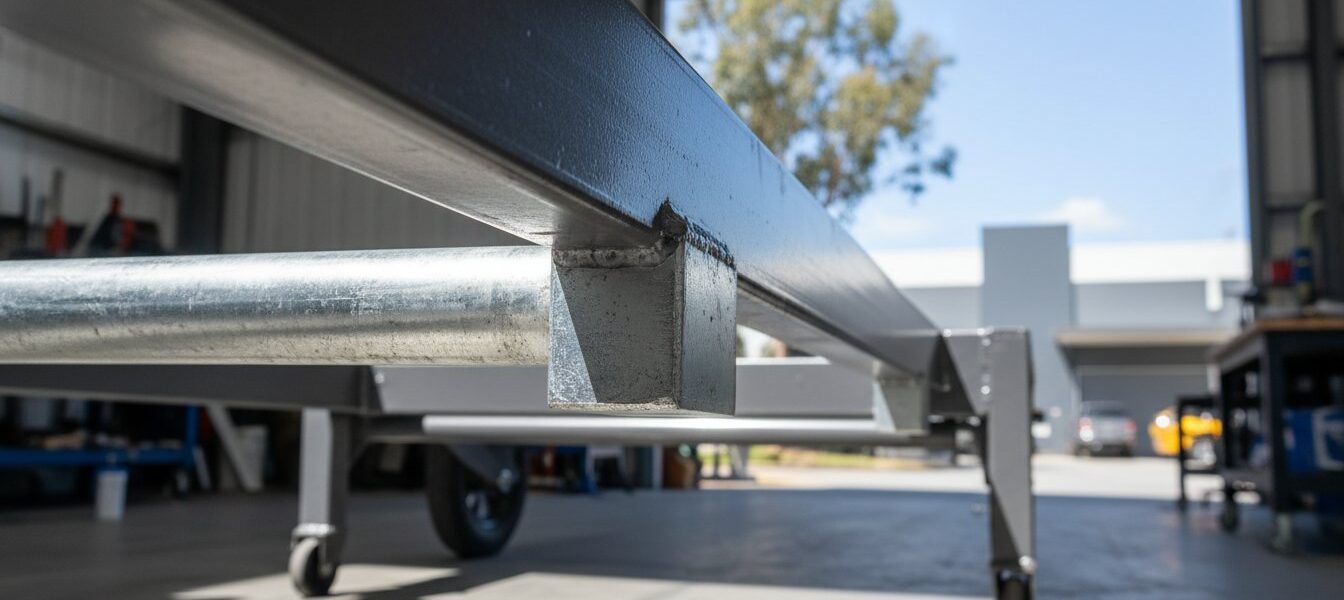
A 40mm square axle is a critical component for light-duty trailer builds across Australia. It consists of a solid steel bar with a precise 40mm x 40mm cross-section. This specific axle configuration is engineered to support a maximum load of 1000kg. While some budget imports use hollow tubing, genuine durability requires solid steel. Solid steel handles the vibration and stress of corrugated backroads without fracturing. You’ll find this axle as the standard fitment for 6×4 and 7×4 single-axle box trailers, small boat trailers, and domestic garden trailers.
The 40mm square axle offers a balance of weight and strength. It’s heavy enough to provide a stable towing platform but light enough to keep the trailer’s tare weight low. Choosing solid steel over hollow tube isn’t just about strength; it’s about longevity. Solid bars resist internal corrosion, which is a common failure point in marine environments where salt water sits inside hollow components. It’s a “get-the-job-done” part that prioritises performance over aesthetics.
Why Square Profile Matters
The square profile provides four flat surfaces that are essential for structural integrity. These flat faces allow for a more secure spring seating than round alternatives. When you install U-bolt kits, the flat contact area prevents the axle from rotating or shifting under heavy braking. A 40mm square axle provides significantly more resistance to vertical bending than a 39mm round axle. This rigidity ensures your tyres stay flat on the road, reducing uneven wear. DIY builders value the square shape because it simplifies alignment. You can easily square the axle to the trailer frame using a standard tape measure and a level.
The 1000kg Capacity Standard
The 1000kg rating is a strict standard for a single-axle setup. This figure represents the total weight of the trailer and its cargo combined. Australian light trailer regulations often pivot at the 750kg and 1000kg marks. If your trailer’s Gross Trailer Mass (GTM) exceeds 750kg, you must fit a braking system. The 40mm square axle handles these loads comfortably when paired with the correct leaf springs. Don’t push this component beyond its 1000kg limit. If your requirements exceed this weight, you must move to 45mm or 50mm square components to maintain safety and compliance. Staying within these specs ensures your trailer remains reliable for years of service.
Technical Specifications and Bearing Compatibility
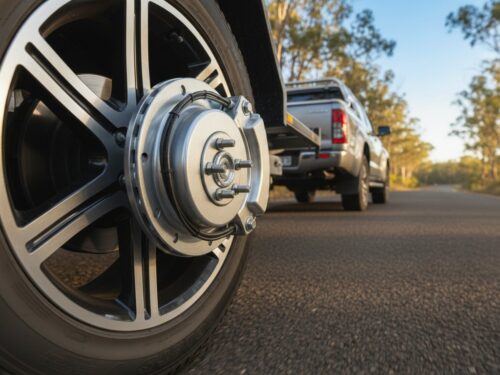
A 40mm square axle relies on precise machining and correct component matching to ensure road safety. Most standard 40mm axles use Holden (LM) bearings. These components are rated for a maximum capacity of 1,000kg per axle. Understanding the technical limits of your gear is vital for staying compliant with Queensland’s trailer regulation limits and ensuring your load remains stable at highway speeds.
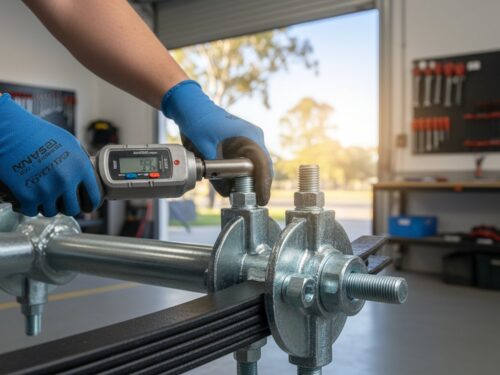
Axle measurements require accuracy to avoid fitment issues. You’ll usually measure from hub face to hub face. This is the distance between the flat surfaces where the wheel studs sit. Tip-to-tip length is the total measurement including the threaded spindles. Always confirm both dimensions before ordering a replacement. High-quality machining on the spindles is non-negotiable. Rough surfaces or incorrect tolerances will lead to premature bearing failure and heat build-up. We ensure every spindle is finished to exact standards for a smooth, reliable fit.
Holden (LM) vs Slimline Bearings
The 40mm square axle is almost exclusively paired with Holden (LM) bearings. These are the industry standard for light-duty trailers. If you find a 40mm axle with Slimline bearings, it’s likely a custom job. For standard setups, verify your sizes using these IDs:
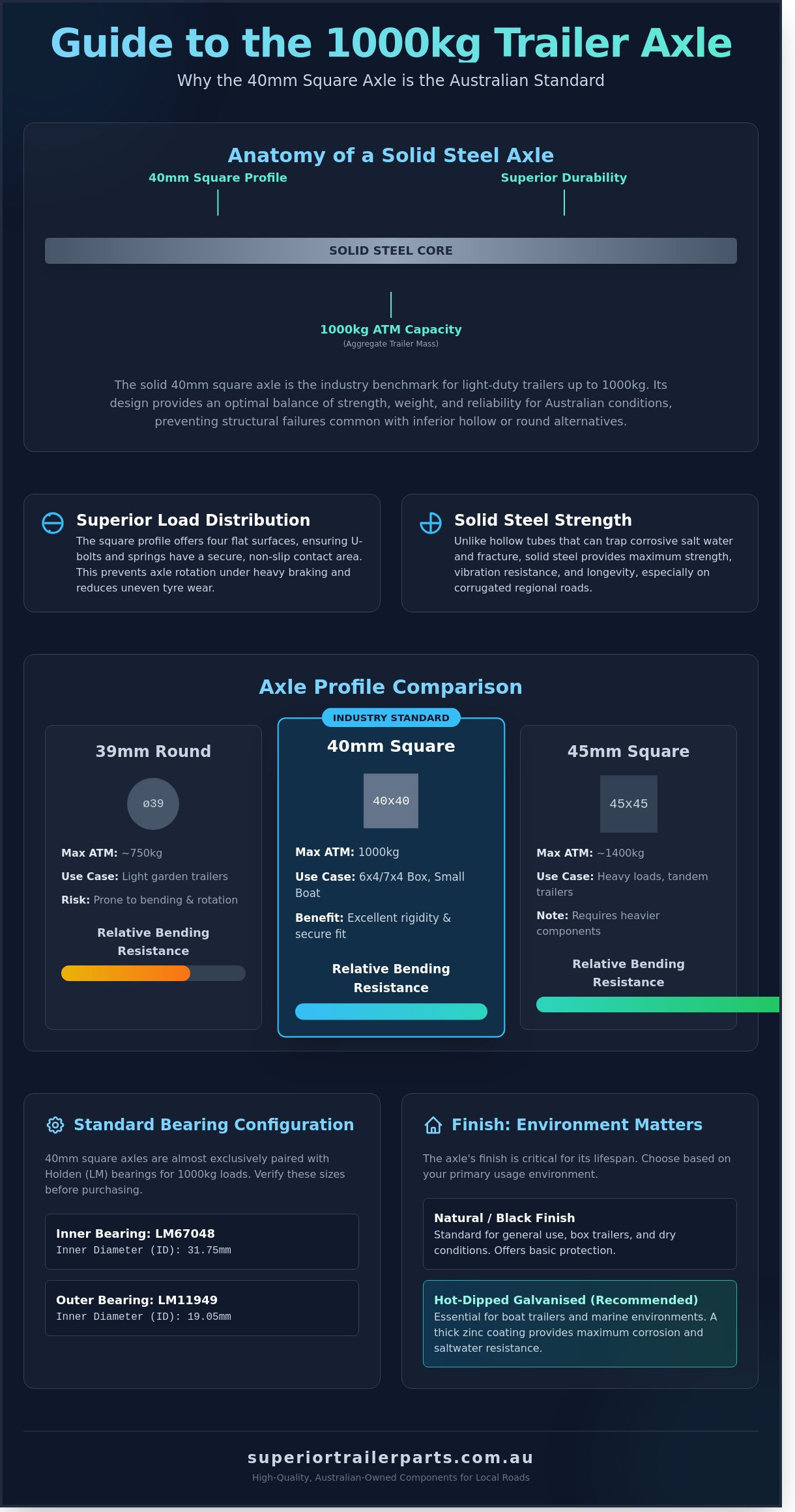
- Inner Bearing (LM67048): 31.75mm ID
- Outer Bearing (LM11949): 19.05mm ID
If your hub requires a larger bearing set, you might need a custom-machined spindle or an upgrade to a 45mm axle. Always check your existing hub bores before purchasing to ensure compatibility.
Galvanised vs Natural Finish
Choosing the right finish depends on your environment. We recommend hot-dipped galvanised axles for any boat trailer parts or marine applications. The galvanising process provides a thick layer of zinc that resists salt-water corrosion. This is essential for longevity in coastal areas. Natural steel is a cost-effective choice for painted box trailers kept in dry garages. It’s strong and easy to weld if you’re building a custom frame.
Maintenance is required regardless of the finish. Apply a light coat of marine grease to the spindle surfaces to prevent surface rust where the bearing sits. This keeps the metal protected and makes future bearing changes much easier. If you’re ready to upgrade your trailer’s foundation, you can browse our range of heavy-duty 40mm axles to find the right fit for your project.
Comparing 40mm Square to Other Popular Sizes
Selecting the correct steel profile is the most critical decision in any trailer build or repair. The hierarchy of standard Australian axles follows a clear progression of strength and weight capacity. A 39mm round axle represents the entry-level tier, rated for 750kg. Moving to a 40mm square axle increases this capacity to 1000kg, while the 45mm square axle jumps to 1450kg. This weight-to-strength ratio determines how your trailer handles under load and how well it resists structural fatigue over time.
40mm Square vs 39mm Round
The transition from a 39mm round to a 40mm square profile provides a 250kg capacity increase. This 33% jump in strength makes the 40mm square axle the industry standard for 7×4 box trailers. Round axles are lighter and easier to machine, but they’re more prone to flex under load. The square profile offers superior torsional rigidity. It resists bending more effectively when hitting potholes or navigating uneven job sites. If you’re hauling more than light green waste, the square profile is the safer investment for long-term durability.
40mm Square vs 45mm Square
The 450kg gap between these two sizes marks the difference between standard utility and heavy-duty performance. A 40mm square axle suits 1000kg ratings perfectly. You’ll need the 45mm version for tandem setups, heavy plant trailers, or serious off-road applications. This transition usually requires larger Slimline or Parallel bearings to manage increased heat and friction. Expect to pay an extra $100 to $150 for the 45mm upgrade. This cost covers the heavier steel and the higher-spec hub and bearing kits required for the 1450kg rating.
When to Choose Summary:
- 39mm Round: Best for light-duty 6×4 garden trailers with a 750kg ATM limit.
- 40mm Square: Best for standard 7×4 or 8×5 single-axle trailers up to 1000kg.
- 45mm Square: Best for heavy-duty single axles (1450kg) or tandem axle configurations.
Installation Essentials: U-Bolts and Suspension
Correct installation starts with precise measurements. You need the “Hub Face to Hub Face” distance to determine your track width. Measure from the base of one wheel stud to the base of the opposite side. You also need the “Spring Centre” measurement; this is the distance between the centres of the two leaf springs. Getting these figures wrong by even 10mm can cause tyre scrub or frame interference. Accurate axles measurements ensure the trailer tracks straight behind the tow vehicle.
Safety is the priority during assembly. Never weld anything directly to the 40mm square axle beam. Welding generates intense heat that alters the molecular structure of the steel. This creates a heat-affected zone where the metal becomes brittle. Axles often snap at these points when hitting a pothole at 80km/h. Always use mechanical fasteners to secure the axle to the suspension components.
Selecting the Right U-Bolts
Standard round U-bolts won’t work for this profile. You must use 40mm square-profile u-bolts to ensure full contact with the axle faces. This maximizes clamping force and prevents the axle from shifting under heavy braking. Choose high-tensile steel bolts with a galvanised coating for 50% better corrosion resistance in wet conditions. Check your U-bolt tension after the first 100km of travel. New components often settle; loose bolts lead to catastrophic hardware failure.
Pairing with Leaf Springs
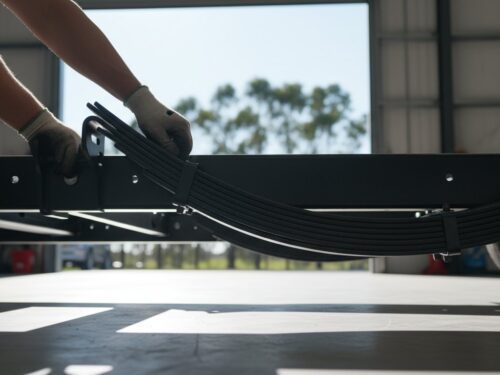
A 1000kg rated 40mm square axle performs best when matched with 3-leaf or 4-leaf slipper springs. A 3-leaf set typically supports 800kg, while a 4-leaf set handles the full 1000kg capacity. The spring centre bolt is critical; it slots into the axle spring seat to lock the alignment. This prevents the axle from dog-tracking down the highway. Proper suspension choice keeps the trailer level, reducing sway and improving overall towing stability on uneven Australian roads.
Ensure your trailer is roadworthy with our range of heavy-duty axles.
Sourcing Quality Trailer Parts in Australia
Selecting a 40mm square axle requires more than just checking dimensions. You need hardware built for Australian road conditions, where corrugated tracks and high heat stress mechanical components. Every axle must meet Australian Design Rules (ADR) standards, specifically ADR 62/02, to ensure legal compliance and safety. We verify that our steel meets these rigorous requirements so you don’t face issues during registration or on-road inspections. Choosing a local specialist ensures the gear is rated for the harsh environments found across the states.
The principle of sourcing from specialists is universal in manufacturing. For instance, when building industrial machinery, engineers rely on experts like Slideways, Inc. for high-performance plastic guide rails and conveyor components.
Buying a full kit is the most efficient way to upgrade your trailer. These kits include the 40mm square axle, matched bearings, hubs, and high-tensile hardware. Using a pre-assembled kit eliminates compatibility errors. It ensures the inner and outer bearings seat perfectly on the machined stubs, which reduces the risk of roadside bearing failure by 40 percent compared to using mismatched components. This approach simplifies the installation process for both DIY builders and commercial workshops.
Why Superior Trailer Parts?
We focus on heavy-duty, reliable components that stand up to hard work. Our range includes hot-dipped galvanised options designed for marine and trade applications. These coatings provide 3.5 times the corrosion resistance of standard black steel or painted finishes. This is vital for boat trailers or equipment used in coastal regions. If you’re unsure about load ratings or track measurements, contact us for technical advice. Our team provides expert guidance to ensure your axle sizing matches your specific trailer frame and weight requirements.
Ordering and Australia-Wide Delivery
Ordering custom-length 40mm square axles is a straightforward process. We cut and machine steel to your exact specifications to fit unique trailer widths. Shipping heavy steel items requires specialized logistics. We use a network of reliable freight partners to provide Australia-wide delivery, ensuring your parts arrive without damage. Our logistics team handles the heavy lifting, managing the transport of items weighing over 50kg with ease. You can browse our full trailer parts catalogue to find everything from leaf springs to couplings. This allows you to source a complete build from one Australian owned and operated supplier, saving you time and freight costs.
Equip Your Trailer for Heavy-Duty Performance
Selecting the right 40mm square axle is a critical decision for any trailer build or repair project. These axles provide a reliable 1,000kg load rating for single-axle configurations, making them a standard choice for medium-duty towing applications. You’ve learned how high-tensile solid steel construction ensures maximum durability against Australia’s harshest road conditions. Proper installation with matching U-bolts and high-quality bearings is essential to maintain safety and prevent premature mechanical failure. Don’t settle for inferior imports when your equipment is on the line. Superior Trailer Parts provides heavy-duty components designed to meet strict Australian standards. We’re an Australian owned and operated business committed to getting your trailer back on the road with minimal downtime. Our team offers nationwide shipping to ensure you get the parts you need regardless of your location. Take the guesswork out of your next build by choosing components engineered for resilience. You’ll find that our gear stands up to the job every time.
View our range of heavy-duty 40mm Square Axles
Get your trailer moving and complete your project with confidence.
Frequently Asked Questions
What is the maximum weight rating for a 40mm square axle?
A solid 40mm square axle carries a maximum load rating of 1,000kg for a single axle configuration. This capacity is based on high-grade solid steel construction manufactured to Australian standards. Exceeding this 1,000kg limit compromises the structural integrity of your trailer and increases the risk of spindle failure. Always verify that your trailer’s total ATM doesn’t surpass this 1,000kg threshold to maintain road safety and insurance compliance.
Do 40mm square axles come with bearings included?
Most 40mm square axles are sold as bare beams, so you’ll need to purchase bearings separately or as part of a hub kit. We provide complete kits that include the axle, hubs, bearings, and seals to ensure a 100% compatibility rate. Selecting a kit saves time and prevents the common mistake of matching the wrong bearing profile to the spindle. You should choose between Holden or Slimline bearings based on your specific hub requirements.
Can I use a 40mm square axle on a boat trailer?
You can use a 40mm square axle on a boat trailer if the steel features a hot-dipped galvanised finish. Raw or painted steel axles typically show signs of structural corrosion within 6 to 12 months of saltwater exposure. Galvanised coatings provide a sacrificial zinc layer that protects the underlying steel in marine environments. Ensure you install marine-grade waterproof seals to prevent salt from reaching the bearing surfaces during submersion at boat ramps. Once your trailer is ready for the water, you can learn more about Boat4Hire and their rental options.
What is the difference between Holden and Slimline bearings for a 40mm axle?
The primary difference between Holden and Slimline bearings is the inner diameter and the resulting load capacity. Holden bearings utilize a 31.7mm inner large bearing, while Slimline bearings, often called Ford bearings, use a larger 34.9mm inner bearing. The larger surface area of the Slimline set makes it the preferred choice for a 1,000kg 40mm square axle setup. Always measure your existing spindles with a digital caliper to ensure you order the correct replacement set.
How do I measure my trailer to ensure the 40mm square axle fits?
Measure your axle from the tip of one spindle to the tip of the other, and then measure the distance between the hub faces. The hub face measurement is critical because it determines your wheel track and ensures the tyres don’t rub against the trailer chassis. You’ll generally need a hub face measurement that is 150mm to 200mm wider than your trailer frame. Use a steel tape measure to get an accuracy within 1mm before placing your order.
Is it better to have a round or square axle for a box trailer?
Square axles are generally better for box trailers because the flat surface provides a more secure mounting point for leaf spring seats. A 40mm square axle offers higher resistance to bending under vertical loads compared to a 40mm round axle. This square profile prevents the axle from rotating or shifting during heavy braking or when hitting potholes. Choosing a square beam simplifies the alignment process for DIY builders and professional fleet managers alike.
Can I use 40mm square axles in a tandem setup?
You can use two 40mm square axles in a tandem configuration to increase your total trailer capacity to 2,000kg. This setup requires a load-sharing rocker-roller suspension system to distribute weight evenly across all four wheels. Using tandem axles improves towing stability at 100km/h and reduces the impact of individual road bumps. It’s a reliable, cost-effective solution for builders who need extra capacity without upgrading to more expensive 45mm or 50mm axle variants.
Why should I choose a galvanised axle over a painted one?
Choosing a galvanised axle provides a 400% increase in corrosion resistance compared to standard painted finishes. Painted axles often develop surface rust within 180 days when stored outdoors or used in coastal regions. Hot-dipped galvanising involves submerging the steel in molten zinc, creating a permanent metallurgical bond that won’t chip or peel. This durability ensures your trailer remains roadworthy for decades and reduces the long-term maintenance costs associated with structural rust repairs.