Submerging your trailer lights in saltwater is an act of mechanical sabotage unless you’ve installed the right gear. Most boaties accept blown bulbs and corroded wiring as an inevitable cost of ownership. It’s frustrating to reach the ramp at 4:00 AM only to find your boat trailer lights have failed again, potentially leading to a $400 fine before you even hit the water.
You deserve a fit-and-forget lighting solution that stands up to the corrosive QLD coastline. We’ll show you how to select, install, and maintain ADR-compliant hardware that handles harsh environments without flickering. This article examines heavy-duty LED options, marine-grade wiring techniques, and the specific Australian Design Rules required to keep your trailer road-legal and reliable for the long haul.
Key Takeaways
- Understand how saltwater and thermal shock cause standard lighting failure and why marine-grade components are essential for Australian conditions.
- Maintain road-legal compliance by following ADR 13/00 requirements for mandatory tail, brake, indicator, and licence plate lighting.
- Evaluate the performance of fixed LED submersible boat trailer lights against removable boards to find the most reliable solution for your launching frequency.
- Master heavy-duty installation techniques, including proper cable routing to prevent chafing against galvanised steel frames and electrical shorts.
- Protect your investment by matching high-quality lighting with corrosion-resistant hardware designed to survive harsh coastal environments.
Understanding the Challenges of Marine Trailer Lighting
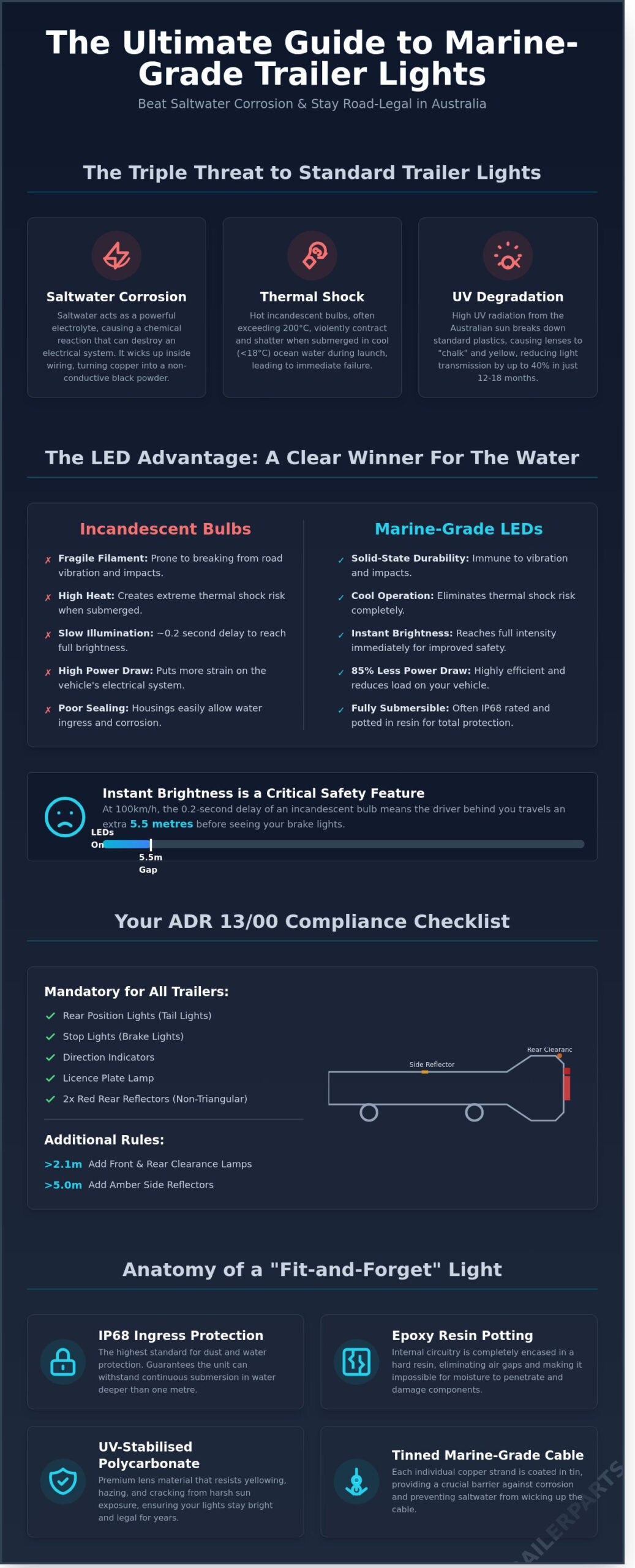
Boat trailers operate in one of the most hostile environments for electrical equipment. Unlike a standard box trailer, a boat trailer faces total submersion in corrosive saltwater. This environment creates a unique set of variables that standard boat trailer lights aren’t designed to handle. Saltwater acts as a powerful electrolyte. It facilitates a chemical reaction that can destroy an electrical system in a single season. Understanding these physical pressures is the first step toward choosing a lighting system that won’t fail you at the boat ramp.
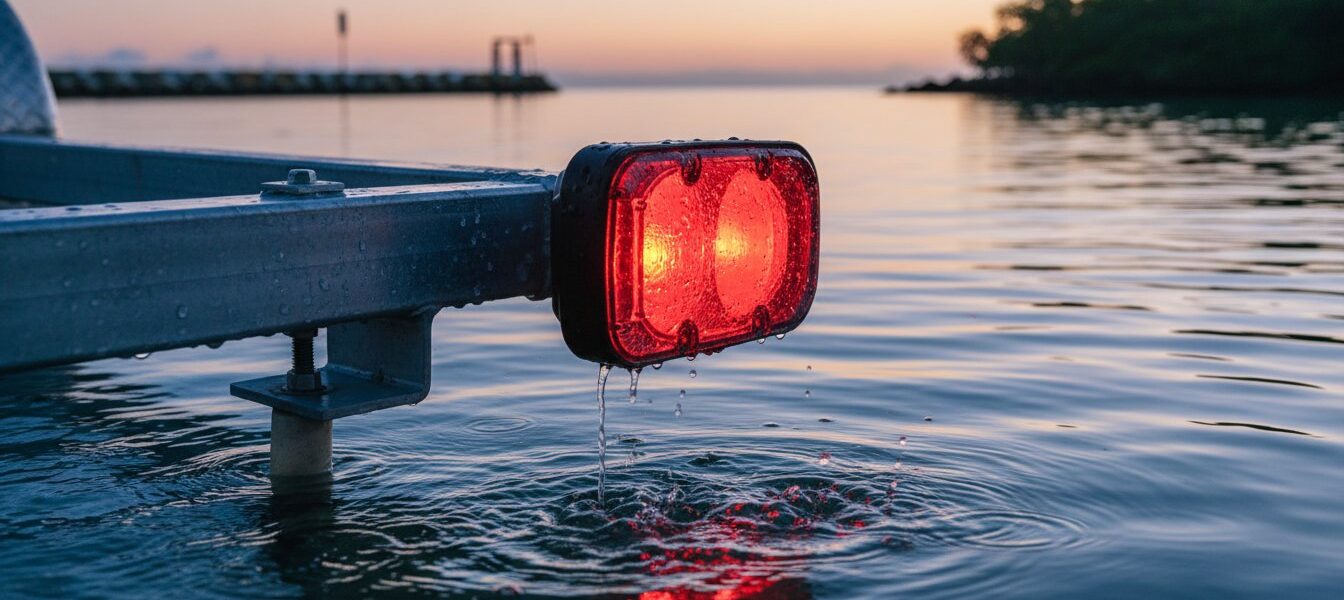
Traditional lighting systems rely on incandescent bulbs. These bulbs use a vacuum-sealed glass housing and a metal filament. While they’re adequate for dry land, they fail almost immediately during the launch process. This failure isn’t just about water entering the housing. It’s about thermal shock. When you drive to the ramp, your bulbs heat up to temperatures exceeding 200 degrees Celsius. Backing that hot glass into 18-degree ocean water causes the material to contract violently and shatter. Modern marine-grade LED units eliminate this risk entirely by using solid-state components that stay cool and sealed.
The Australian sun adds another layer of difficulty. High UV radiation levels break down the molecular bonds in standard plastics. This leads to “chalking” and yellowing of the light lenses. Within 12 to 18 months, a low-quality lens can lose up to 40 percent of its light transmission. This makes your trailer harder to see and can lead to fines for non-compliance with road safety standards. Professional-grade marine lights use UV-stabilised polycarbonate to ensure the housing remains clear and impact-resistant for years of service.
The Science of Saltwater Corrosion
Corrosion in marine electronics is often driven by electrolysis. When an electrical current meets saltwater and copper, the metal begins to dissolve. This process can wick saltwater up the inside of a wire’s insulation. It turns the copper into a black, non-conductive powder. This is why “waterproof” labels are often misleading. A light might be waterproof against rain, but it isn’t necessarily submersible. Understanding basic automotive lighting principles helps clarify why sealing is the priority for boat trailers.
To ensure longevity, look for an IP68 rating. This specific international standard means the unit is dust-tight and can withstand continuous submersion in water deeper than one metre. Most IP68 rated boat trailer lights are potted in a hard epoxy resin. This resin surrounds the internal circuitry, leaving no air gaps for moisture to occupy. It’s a heavy-duty solution for a heavy-duty environment.
Benefits of LED Technology for Boat Trailers
LEDs offer several mechanical advantages over old-fashioned bulbs. They have no fragile filaments, making them immune to the vibrations of corrugated roads or the impact of heavy waves. They’re built as solid-state units. This construction allows them to survive the jarring movements of a trailer being loaded or unloaded. They also draw roughly 85 percent less power than incandescent equivalents. This lower draw reduces the heat generated by the unit and puts less strain on your vehicle’s charging system.
Safety is the most significant benefit on Australian highways. LEDs reach full brightness instantly. A standard bulb takes about 0.2 seconds to glow to full intensity. When you’re travelling at 100km/h, that 0.2-second delay translates to 5.5 metres of extra travel for the driver behind you. That distance is often the difference between a safe stop and a rear-end collision. Switching to LED isn’t just about durability; it’s a critical safety upgrade for any Australian boat owner.
Australian Design Rules (ADR) for Boat Trailer Lights
Operating a trailer on Australian roads requires strict adherence to national standards. The primary regulation for lighting is ADR 13/00, which specifies the installation requirements for all light trailers. These rules ensure that every vehicle on the road communicates its intentions clearly to other drivers. For anyone installing boat trailer lights, compliance isn’t just a suggestion; it is a legal mandate that affects your insurance and road safety. You must fit mandatory lighting including rear position lamps (tail lights), stop lamps (brake lights), and direction indicators. Each of these components must function reliably to prevent rear-end collisions during transit.
Specific rules apply when your trailer exceeds a total width of 2.1 metres. In these cases, you must install front and rear clearance lamps to mark the extreme edges of the vehicle. This helps oncoming and following traffic judge your width in low-visibility conditions. Reflectors are another non-negotiable requirement. You need two red, non-triangular reflectors at the rear, spaced evenly. If your trailer is longer than 5 metres, you must also include amber side reflectors. These simple components provide a secondary safety layer if your electrical system fails while parked or moving.
The Australian Design Rules (ADRs) provide the technical framework that manufacturers and DIY builders must follow. Failing to meet these standards can result in significant fines or a grounded vessel. When you choose your equipment, prioritize marine-grade components that can handle frequent submersion. You can find a range of heavy-duty lamps for trailer applications that meet these rigorous local standards.
Visibility and Placement Requirements
Correct mounting is as vital as the lights themselves. Rear lamps must be positioned between 350mm and 1500mm above the ground. If the structure of the trailer makes 1500mm impossible, the limit extends to 2100mm. Geometric visibility is the next factor. Your indicators must be visible from 45 degrees inwards and 80 degrees outwards. This ensures a driver in your blind spot or at an intersection can see your signal. Your rear registration plate lamp must illuminate the entire plate. It must not project white light directly to the rear, as this can blind following motorists.
Compliance Marking and Legal Obligations
Identifying compliant gear is straightforward if you know what to look for. Check the lens for an “E” mark or a specific ADR approval number. These marks prove the light has passed tests for brightness, colour, and durability. Don’t risk your safety with “off-road only” lighting kits. These products often lack the necessary output or beam pattern required by law. Using non-compliant boat trailer lights can void your insurance policy in the event of an accident. It’s better to invest in genuine ADR-approved parts from the start to avoid costly rework later. ADR compliance for trailers means the lighting system meets the national safety standards set by the Australian Design Rules to ensure uniform performance and visibility on all public roads.
Comparing LED Submersible Lights vs. Removable Light Boards
Choosing the right boat trailer lights involves balancing upfront costs against long-term reliability. Fixed submersible LED units are the standard for modern trailers, providing a permanent solution that stays attached during launch and retrieval. Removable light boards remain a common sight on older trailers or smaller tinnies. The decision usually rests on how often you dunk the trailer in saltwater. Frequent offshore anglers typically prefer fixed LEDs to save time at the ramp. Casual weekend users might stick with a removable board to avoid electrical issues entirely, though this adds 10 minutes to every trip.
Vessel size dictates the practicality of your lighting setup. For boats over 5 meters, managing a long cable and a heavy timber or plastic board is a physical burden. Larger trailers benefit from fixed systems that integrate directly with the frame and axles to keep wiring protected. Small jet ski trailers or 3-meter tinnies can manage with boards, but the risk of forgetting to remove them before backing into the drink is high. A single accidental submersion can ruin a non-waterproof board instantly.
Fixed Submersible LED Units
Fixed LEDs offer a streamlined look and eliminate the need for storage. These units carry an IP68 rating, meaning they’re dust-tight and protected against continuous submersion. You must use 100% tinned copper wiring for these installations. Standard copper wire wicks saltwater and corrodes within 90 days, leading to flickering or total failure. Tinned copper resists this “green rot” for years. While a high-quality LED kit costs between A$120 and A$250, the convenience of driving straight into the water is a significant advantage for solo fishers.
Maintenance for fixed units focuses on the connection points. Even with waterproof housings, the join between the light and the main harness is a potential weak spot. Heat-shrink connectors with internal adhesive are mandatory here. Most professional setups run the wiring through the trailer frame for physical protection against road debris. This keeps the aesthetic clean and prevents the harness from snagging on submerged timber or rocks during launch.
Removable Trailer Light Boards
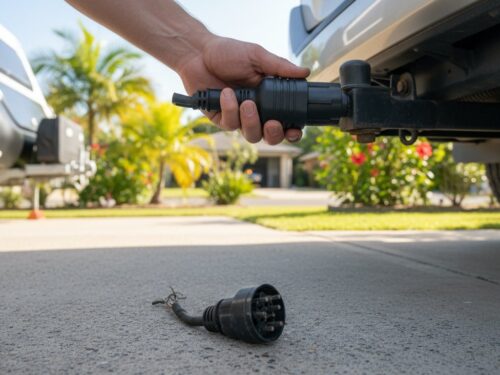
Removable boards are the go-to for trailers not originally designed for submersion. You’ll find these priced competitively between A$60 and A$110 at most Australian retailers. They’re reliable because they never touch the water. However, they require dedicated storage space in the back of the ute or inside the boat. Damage often occurs during transit when the board bounces around or when the 7-pin plug drags on the bitumen. These boards rely on a long lead that can easily tangle or fray over time.
The primary failure point for removable systems is the board-to-trailer connection. Constant plugging and unplugging wears down the pins in the socket. Before you head out, perform your boat trailer safety checks to ensure the indicators and brake lights are functioning correctly. Corrosion on the vehicle-side plug is common in coastal areas, so keep a can of contact cleaner handy. For those using older trailers with incandescent bulbs, switching to a board is often cheaper than rewiring the entire frame for LEDs.
- Fixed LED Pros: Permanent, time-saving, sleek appearance, high durability.
- Fixed LED Cons: Higher initial cost, requires tinned copper wiring, harder to troubleshoot.
- Removable Board Pros: Cheap, zero water contact, easy to replace.
- Removable Board Cons: Storage hassle, prone to physical damage, setup time.
Step-by-Step Installation and Saltwater Maintenance
Installing boat trailer lights requires a systematic approach to handle the corrosive marine environment. Start by preparing the trailer frame. Use a wire brush or 80-grit sandpaper to clear any scale or corrosion from grounding points. A clean metal-to-metal contact ensures the circuit completes without resistance. If your trailer is older, check the existing mounting holes for structural integrity before bolting on new LED units.
Route your cables through the internal box sections of the galvanised frame whenever possible. This protects the harness from road debris and UV exposure. Galvanised steel edges are often sharp enough to slice through standard PVC insulation during transit. Always use rubber grommets at every entry and exit point to prevent the frame from cutting into the wire. Secure the loom every 300mm using UV-stabilised cable ties. This prevents sagging and stops the wires from snagging on submerged obstacles at the boat ramp.
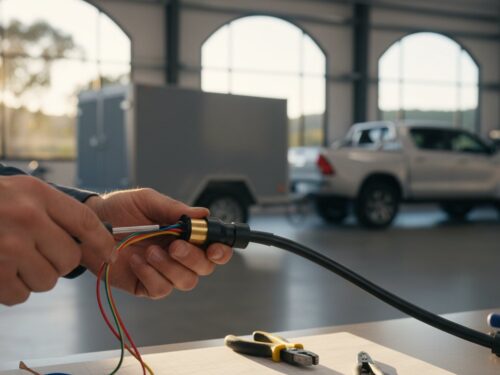
Electrical failure usually happens at the joins. Never rely on standard crimps or electrical tape. Use resin-filled, heat-shrink butt connectors for every connection. When you apply heat, the internal adhesive melts and creates a permanent waterproof seal that meets IP68 standards. This prevents salt capillary action from wicking moisture up the wire and rotting the copper core from the inside out. A single poorly sealed join can ruin an entire harness within 6 months of regular use.
Test the circuit before the boat hits the ramp for the first launch of the season. Use a multimeter to check for a consistent 12V at the light source. A simple visual check isn’t enough. Verify that the indicators, brakes, and tail lights all function simultaneously without dimming. If the lights flicker when you apply the brakes, it’s a sign of a weak ground or insufficient wire gauge. Fixing these issues in the driveway is much easier than dealing with a fine or a safety hazard on the highway.
Best Practices for Marine Wiring
Never use “twist and tape” joins on a boat trailer. These connections fail within 90 days in saltwater environments because they allow oxygen and brine to penetrate the copper. Use tinned copper wire for all installations. Standard automotive wire oxidises into a green powder quickly when exposed to the ocean. For trailers over 5 metres, use 2.5mm² gauge wire to minimize voltage drop over the long run. Connect your harness to the vehicle using heavy-duty trailer-parts and high-quality 7-pin or 12-pin plugs that provide a secure, rattle-free fit.
Routine Maintenance for Longevity
Salt is the primary enemy of your electrical system. Rinse the light housings and the plug assembly with fresh water after every single launch. This 5-minute task can extend the life of your equipment by 3 to 4 years. Inspect the polycarbonate lenses for hairline cracks monthly, as these allow moisture ingress that eventually kills the LEDs. Apply a liberal coating of dielectric grease to the plug pins and sockets every 90 days. This grease blocks moisture and stops the electrolysis that causes green crust to form on the terminals.
This focus on protecting assets from saltwater extends beyond just trailers. For instance, swimming pools in coastal areas also require specialized construction and renovation to prevent long-term damage. Ensuring a quality, lasting result means relying on an experienced team like Rod Cameron Pools who understand the local conditions.
Of course, it’s not just trailer wiring that’s at risk from saltwater. A day on the boat can easily lead to a water-damaged phone, and if the worst happens, it’s crucial to get it seen by a specialist. For expert help with these kinds of issues, you can visit SIMSIM Repairs.
Upgrade your boat trailer lights today
Choosing Reliable Trailer Components for Longevity
Reliability on the boat ramp starts with a cohesive build strategy. A trailer functions as a single unit; its performance is only as strong as its weakest component. Avoid the mistake of pairing a premium galvanised chassis with low-grade electricals. High-quality boat trailer lights must endure the same submersive forces as your rollers and axles. When you invest in professional-grade components, you reduce the risk of electrical shorts that often lead to roadside breakdowns or expensive fines. Matching the quality of your lighting to the rest of your trailer build ensures that every part reaches its expected service life without premature failure.
Coastal environments in Australia subject trailers to salt concentrations of roughly 35 grams per litre. This high salinity accelerates corrosion on inferior metals within 48 hours of exposure. You must use 316-grade stainless steel fasteners or hot-dipped galvanised brackets to secure your lighting clusters. These materials resist the pitting and oxidation that destroy standard zinc-plated hardware. Choosing heavy-duty hardware prevents your lights from vibrating loose on corrugated tracks or falling off during high-speed highway travel. Sturdy mounting is the first line of defence against water ingress in the light housing itself.
Australian-owned suppliers understand the unique rigours of local boat ramps better than overseas retailers. We deal with extreme UV indexes that frequently exceed 11 during summer months, which can perish cheap plastics in a single season. Selecting parts designed for the Australian climate ensures your wiring and housings don’t become brittle or cracked. Local suppliers also ensure all boat trailer lights comply with Australian Design Rule (ADR) 13/00, which dictates the visibility and placement of lamps. Staying local means you get products built for the heat, the salt, and the long distances common to Australian towing.
Custom trailer builds often present unique challenges that off-the-shelf solutions can’t always solve. Getting expert advice before you begin drilling or wiring saves hours of rework. Professionals can help you calculate the correct wire gauge for long-wheelbase trailers to prevent voltage drop. This technical support is vital when integrating modern LED systems with older vehicle electronics. A quick consultation can clarify whether you need load resistors or specific harness adapters to ensure your indicators blink at the correct legal rate.
Integrating Lights with Other Boat Trailer Spares
Proper clearance is vital for the safety of your vessel. Ensure at least 50mm of space exists between the light housing and the boat trailer rollers to prevent impact during retrieval. This is especially critical for jet-ski trailers where narrow frames offer limited mounting surface. Upgrading to LED during a total trailer refurbishment eliminates the recurring maintenance of incandescent bulbs. Modern LED units consume up to 85% less power, which significantly reduces the load on your vehicle’s alternator and wiring loom. Use tinned copper wiring to prevent the “wicking” of saltwater through the insulation.
The Superior Trailer Parts Advantage
We provide professional-grade LED submersible tail lights engineered for 100% water tightness and IP68 ratings. Our inventory supports DIY builders and fleet managers with durable solutions that meet all national safety standards. We offer Australia-wide shipping on all marine lighting and wiring components to keep your project moving regardless of your location. If you need specific technical specifications or mounting advice for a custom build, contact us for expert advice from our local team. We focus on providing genuine, reliable parts that withstand the harshest marine conditions.
Equip Your Trailer for the Australian Coast
Reliable boat trailer lights are essential for safety and legal compliance on every boat ramp in the country. Choosing LED submersible units with a certified IP68 rating ensures your electronics survive frequent saltwater submersion without failing. All installations must strictly adhere to ADR 13/00 standards to maintain roadworthiness and ensure visibility during night hauls. Regular application of lanolin-based sprays to terminals prevents the electrolytic corrosion that ruins standard lighting systems. We focus on heavy-duty parts that handle the constant vibration and high temperatures of long-distance towing. Superior Trailer Parts is Australian owned and operated; we understand exactly what our harsh environment demands from your equipment. We provide nationwide shipping and expert technical advice to ensure you get the right fit for your specific rig. Don’t risk a breakdown or a heavy fine when professional-grade solutions are readily available. Our team is ready to help you upgrade your trailer and get back on the water with confidence.
Browse our range of heavy-duty LED submersible boat trailer lights
Frequently Asked Questions
Are all LED trailer lights submersible?
No, only LED lights with a specific IP67 or IP68 rating are truly submersible. Standard LED units often rely on a sonic seal or “bell jar” design that traps air, but marine-grade units use epoxy potting to fully seal the internal electronics. Check the product specifications for a 100% waterproof guarantee before installation. Superior Trailer Parts stocks heavy-duty options designed specifically for frequent salt water immersion.
Do I need a special license plate light for my boat trailer?
Yes, Australian Design Rule (ADR) 48/00 requires your rear registration plate to be visible from 20 metres away at night. Many tail light units include an integrated clear lens on the underside to illuminate the plate. If your main light units don’t have this feature, you must install a separate ADR-approved LED number plate light. Failure to provide adequate illumination can lead to fines from transport authorities during roadside inspections.
Why do my trailer lights flicker when I hit a bump?
Flickering is usually caused by a loose ground connection or a corroded 7-pin plug. Check the white ground wire at the trailer frame first. Over 80% of trailer lighting faults stem from poor earthing where the wire meets the chassis. Ensure the connection point is free of rust and tightened securely with a galvanised bolt. If the problem persists, inspect the plug terminals for green copper oxide buildup that disrupts the current.
Can I mix LED and incandescent lights on the same trailer?
You can mix them, but it often causes issues with the vehicle’s flasher relay or bulb-failure sensors. LED lights draw roughly 10% of the current required by incandescent bulbs. This imbalance can lead to rapid flashing or “hyper-flashing” on your dashboard. For a reliable setup, upgrade all boat trailer lights to LED simultaneously. This ensures consistent performance and prevents your car’s computer from detecting a false bulb-out error.
What is the best way to prevent corrosion in trailer wiring?
Use tinned copper wire and adhesive-lined heat-shrink terminals to block moisture effectively. Salt water can wick up standard copper strands at a rate of 5 centimetres per month, causing internal rot that ruins the harness. Apply a liberal coating of dielectric grease to all plug terminals and bulb sockets. This creates a physical barrier against oxygen and water, extending the life of your heavy-duty wiring in harsh marine environments.
How do I know if my trailer lights are ADR compliant?
Check the lens of the light for an embossed “E” mark or a specific Component Registration Number (CRN). Australian Design Rules (ADR) mandate specific brightness levels and viewing angles for all road-going trailers. Buying from a reputable Australian Owned supplier ensures the parts meet these national safety standards. Non-compliant lights can result in fines exceeding A$400 and may void your insurance if you’re involved in a collision.
What wire gauge should I use for a 7-metre boat trailer?
Use 3mm automotive wire for a 7-metre boat trailer to prevent significant voltage drop over the distance. While 2.5mm is common for shorter utility trailers, the longer run to the back of a boat trailer requires a thicker gauge to maintain full brightness. This ensures your stop and indicator lights function at 100% intensity for maximum safety. Always choose marine-grade tinned wire to resist the corrosive effects of salt spray.
Do boat trailer lights need to be unplugged before launching?
Unplug your trailer from the vehicle’s power socket before the lights touch the water. Even with submersible LED units, the temperature difference between a hot light and cold water can cause seals to contract and fail. Disconnecting the power also prevents accidental short circuits if a housing is cracked or damaged. This simple 10-second task protects your vehicle’s sensitive electronics from potential surges or blown fuses during the launch.