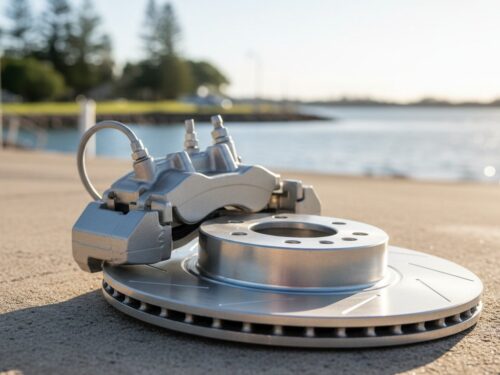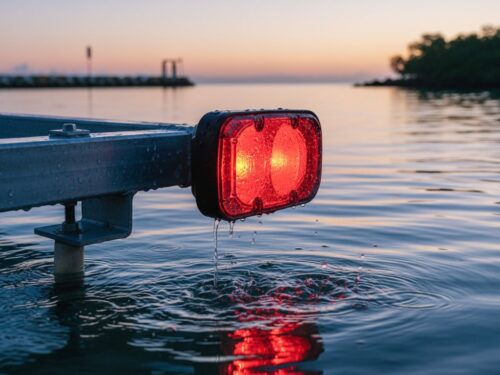
Is saltwater corrosion eating at your trailer frame? Are you fighting with seized rollers and flickering lights at the ramp? These common frustrations are serious warnings. They point to failing boat trailer parts that compromise your boat’s safety, your road legality, and your time on the water. Neglecting your trailer is a risk you cannot afford to take in harsh Australian conditions.
This guide provides the expert advice needed to master marine trailer maintenance. We cut through the confusion and deliver the technical facts. You will learn how to identify the correct roller materials for your hull, understand the critical upkeep for marine brakes, and source reliable, heavy-duty components from a trusted Australian-owned supplier. Get the job done right and protect your investment for years to come.
Key Takeaways
- Understand why standard components fail in marine environments and learn how to identify genuine marine-grade parts to prevent costly corrosion.
- Select the correct rollers and bunks for your specific hull type to prevent damage and ensure secure transport on Australian roads.
- Master the Australian Design Rules (ADR) for marine braking systems and identify the essential boat trailer parts required for safe, legal towing.
- Evaluate your winch and submersible lighting systems to ensure your trailer is reliable and ready for high-stress launch and retrieval situations.
Why Marine Environments Require Specialized Boat Trailer Parts
A standard trailer and a boat trailer are fundamentally different machines. The latter is engineered for constant immersion in corrosive saltwater, a uniquely harsh environment that destroys standard automotive components. Using generic trailer parts on your boat trailer is a costly mistake. Rapid oxidation and salt-creep will cause critical failures, often within a single season, compromising safety and leaving you stranded.
Genuine marine-grade boat trailer parts are built to a higher specification. They utilise superior materials, specialised coatings, and robust sealing systems designed to resist saltwater intrusion. Where an automotive bearing might rely on a simple dust seal, a marine hub uses a multi-lip, spring-loaded seal to keep grease in and saltwater out. This commitment to durability is what separates reliable marine equipment from premature scrap metal.
The Science of Saltwater Corrosion
Saltwater acts as an electrolyte, accelerating a process called galvanic corrosion when two different metals are in contact. This electrochemical reaction causes one metal to corrode at a much faster rate. To combat this, marine hardware and fasteners rely on materials like Grade 316 stainless steel, which contains molybdenum for superior corrosion resistance. Key high-risk zones on any boat trailer demand constant inspection:
- Axles and Hubs: Constant immersion and internal components are highly vulnerable.
- Brake Calipers: Complex parts with multiple metals create a prime spot for corrosion.
- Frame Joins and Welds: Points where coatings are thinnest and stress is highest.
Galvanised vs. Stainless Steel: Making the Right Choice
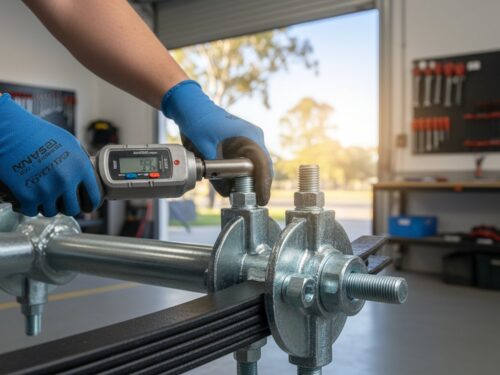
Choosing the right material involves a practical cost-to-benefit analysis. For large structural components like the frame, axles, and cross-members, galvanised steel offers the best protection for its cost. For smaller, high-contact parts like U-bolts, nuts, and bolts, Grade 316 stainless steel is the superior choice. Specialised components like leaf springs often use a Dacromet coating, which provides excellent protection without affecting the steel’s temper. Hot Dipped Galvanised (HDG) is the gold standard for Australian boat trailers, providing a thick, sacrificial zinc coating that guarantees structural integrity.
Choosing the Right Boat Trailer Rollers and Bunks for Your Hull
Your trailer’s rollers and bunks are the primary contact points protecting your hull during transport. They are not one-size-fits-all. Using the wrong type or density can cause serious damage, including hull deformation or “hooking,” especially on fibreglass boats. These essential boat trailer parts must be matched to your boat’s weight, hull material, and shape to ensure safe, damage-free towing.
Polyurethane vs. Rubber: Material Density Matters
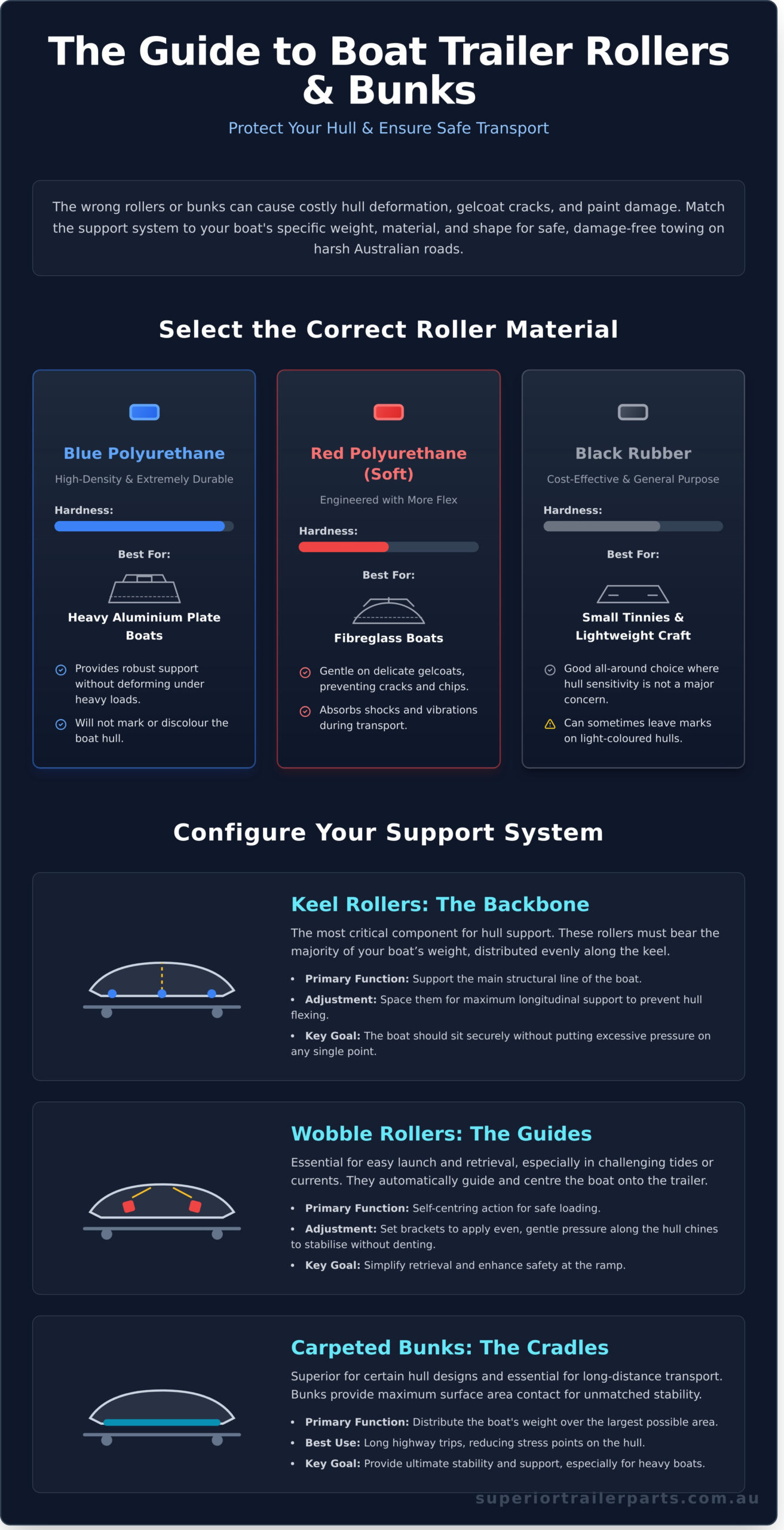
Selecting the correct roller material is the first step in a reliable trailer setup. Each material offers distinct levels of hardness and flexibility, designed for specific hull types. Get this choice right to prevent costly gelcoat or paint repairs.
- Blue Polyurethane Rollers: These are high-density and extremely durable. Their hardness is perfect for heavy aluminium (alloy) plate boats, providing robust support without deforming under load. They do not mark the hull.
- Red Polyurethane Soft Rollers: Engineered with more flex, these rollers are the ideal choice for fibreglass boats. They are gentle on delicate gelcoats, absorbing shock and preventing cracks or chips while still offering reliable support.
- Black Rubber Rollers: A cost-effective, general-purpose option. Black rubber is best suited for smaller tinnies and lightweight craft where hull sensitivity is less of a concern. Be aware they can sometimes leave marks on lighter-coloured hulls.
Keel Rollers, Wobble Rollers, and Bunk Setups
Correct configuration is as important as material choice. The keel rollers must support the majority of your boat’s weight. Space them to provide maximum longitudinal support along the keel, preventing the hull from flexing over the trailer frame. Adjust them so the boat sits securely without putting undue pressure on any single point.
In challenging QLD tidal currents, wobble rollers are essential. They automatically guide your boat onto the trailer, significantly easing retrieval. This self-centring action is a critical safety feature, a principle reinforced in guides like the Victorian Recreational Boating Safety Handbook, which details best practices for difficult launches. Adjust wobble roller brackets so they apply even, gentle pressure along the hull chines, stabilising the boat without denting it.
For long-distance transport or for certain hull designs, carpeted bunks are superior. Bunks distribute the boat’s weight over a much larger surface area than rollers, providing unmatched stability and support on long highway trips. This reduces stress on the hull, making them the preferred choice for many fibreglass boat owners.
Marine Braking Systems: Disc Brakes and Submersible Hubs
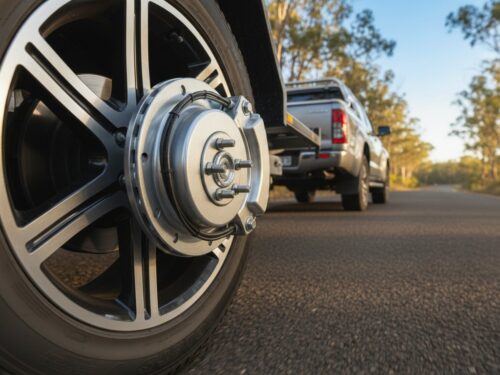
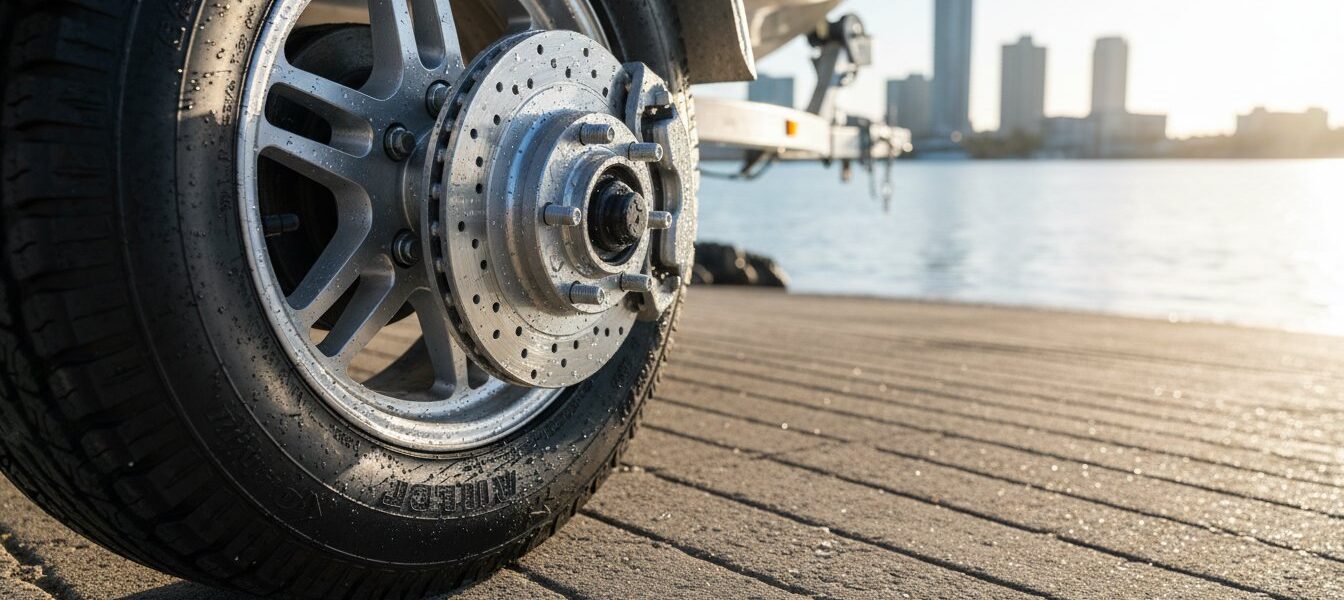
Your trailer’s braking system is its most vulnerable component. Direct immersion in saltwater during launch and retrieval puts immense stress on every part. Under Australian Design Rules (ADR), any trailer with a Gross Trailer Mass (GTM) over 750kg must be fitted with brakes. For comprehensive details on legal requirements, the South Australian Government’s boat trailer guide provides an excellent official resource. Without proper maintenance, salt crystals will form inside mechanical components, leading to seized brakes and catastrophic failure. That’s why high-quality marine braking systems feature dedicated wash-down ports, allowing you to flush corrosive salt out immediately after use.
Why Hydraulic Disc Brakes Beat Drum Brakes
For marine applications, hydraulic disc brakes are the superior choice. Unlike enclosed drum brakes that trap saltwater and debris, the open design of a disc brake system allows for easy and effective flushing. In coastal Queensland, investing in stainless steel calipers is a smart move for long-term reliability and corrosion resistance. These durable boat trailer parts withstand the harsh environment far better than standard components. Furthermore, hydraulic systems provide more consistent and powerful stopping power, which is critical for safely managing heavy offshore boats on steep boat ramps.
Of course, the trailer’s brakes are only half of the safety equation. Ensuring your tow vehicle is also up to the task with reliable components is just as critical. For those looking to upgrade their vehicle’s capabilities, Australian-owned automotive specialists like ANTZ Performance provide a range of high-quality performance parts.
Bearing Protectors and Waterproof Seals
Protecting your wheel bearings from water is non-negotiable. Spring-loaded bearing protectors, often known by the brand name Bearing Buddy, are essential. They use a spring mechanism to maintain positive pressure inside the wheel hub, constantly forcing grease out and preventing water from getting in. This system is only effective when paired with high-quality, triple-lip marine seals. These seals are mandatory for any trailer that sees the boat ramp. Regular checks are simple: inspect the grease. If it appears “milky” or grey, water has contaminated the hub. You must clean and re-pack the bearings immediately to prevent failure.
Winches, Lights, and Launching Gear: Enhancing Safety
Launching and retrieving your vessel are the most high-stress moments for your trailer’s components. A steep Queensland boat ramp is no place for equipment failure. A launch-ready trailer must have a fully functional winch and a reliable electrical system. Fortunately, the transition from traditional bulbs to modern LED technology has revolutionised marine lighting, while understanding how to select a winch based on your boat’s weight and ramp incline remains a critical skill.
Manual Winches vs. Electric Options
A winch’s gear ratio dictates the physical effort required to retrieve your boat. A 5:1 ratio means five turns of the handle equals one turn of the drum-a good balance for most tinnies. For heavier vessels, a 10:1 ratio significantly reduces strain. We always recommend marine-grade webbing straps over steel cables. They don’t rust, won’t develop sharp, dangerous frays, and are safer to handle. An electric winch becomes a smart investment for solo boaters or those with large vessels, turning a tough job into a simple button press.
LED Submersible Lights: Ending Electrical Failures
Dunking your trailer repeatedly exposes its wiring to saltwater. For marine use, “submersible” must mean IP68 rated with fully sealed, hard-wired cables. Plugs and sockets below the waterline will eventually fail. The benefits of upgrading your boat trailer parts to LED are clear:
- Lower Power Draw: Less strain on your vehicle’s electrical system and battery.
- Vibration Resistance: Solid-state construction means no fragile filaments to break on rough roads.
- Longevity: LEDs last for years, ending the frustrating cycle of replacing blown bulbs.
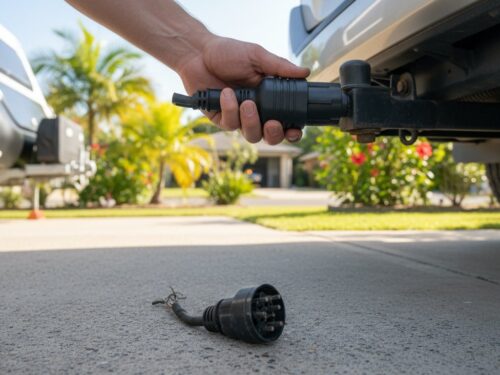
If your lights flicker or fail, check the trailer plug first. Over 90% of electrical faults occur at this connection due to corrosion or loose pins, not at the lamp itself. Keeping this plug clean and secure is vital. Find a complete range of heavy-duty winches and IP68-rated LED lights at superiortrailerparts.com.au.
Sourcing Quality Boat Trailer Spares in Australia
Finding reliable, marine-grade components is critical for any trailer maintenance project. Superior Trailer Parts offers a comprehensive range of spares specifically selected for harsh Australian marine environments. As an Australian-owned and operated specialist based in Queensland, we understand the unique demands of saltwater, humidity, and rough road conditions. We provide trade-quality solutions that get the job done right.
Our commitment extends beyond local service. We offer fast, Australia-wide shipping to ensure every boat owner, from Perth to the Gold Coast, has access to the parts they need. If you are unsure about compatibility, our team provides expert advice to guarantee you get the exact fit for your specific trailer brand, whether it’s a Dunbier, Mackay, or custom build.
Why Local Expertise Matters for Marine Safety
Your safety on the road is non-negotiable. That is why we stock components that meet or exceed Australian Design Rules (ADR). All replacement axles, couplings, and braking systems are fully compliant, giving you complete peace of mind. Our selection process prioritises heavy-duty durability, focusing on galvanised finishes and robust construction. For local customers, our physical warehouse in Arundel, QLD, is open for pickups and face-to-face expert consultations.
Ordering Your Boat Trailer Parts Online
Getting the correct boat trailer parts online is straightforward when you have the right information. Before you order, follow these simple steps to identify your requirements:
- Measure Your Axle: Record the hub face-to-face measurement and the chassis width.
- Check Your Stud Pattern: Identify the number of studs and the Pitch Circle Diameter (PCD).
- Identify Your Springs: Determine if you have slipper or rocker roller springs and measure their length.
Once you have your measurements, our online store makes it easy to find the corresponding part. We handle the logistics, offering reliable nationwide delivery even for heavy and oversized items like complete axle assemblies and leaf spring sets. Get your trailer back on the road faster with parts delivered directly to your door.
Browse our full range of marine-grade boat trailer parts and spares today.
Final Check: Equip Your Trailer for Australian Waters
Maintaining your boat trailer is not just about compliance; it’s about protecting your vessel and ensuring every launch is safe and hassle-free. The key takeaway is simple: Australia’s harsh marine environments demand specialised, corrosion-resistant components. Choosing the right rollers, bunks, and submersible brakes for your specific hull is non-negotiable for safety and longevity.
This principle of protection extends beyond the boat ramp. When your boat is parked at home, shielding it from the intense Queensland sun is just as crucial for preserving its value. For those considering shade solutions, from heavy-duty outdoor blinds to custom awnings, specialists like QLD Shade offer durable options designed for local conditions.
This focus on long-term protection against water and the elements is just as important for another major household asset: the swimming pool. Constant exposure can lead to the need for professional renovation. For homeowners looking to restore or build a pool, you can learn more about Rod Cameron Pools, specialists in the field since 1968.
Just as your trailer needs protection from saltwater and sun, so does your skin. After a day on the water, taking care of your own wellness is just as important as flushing the brakes. For those looking for Australian-owned natural beauty and wellness products, you can check out Ripple & Wave.
While this guide focuses on maintenance for safe transport, another key aspect of protecting your investment is security against theft. For a deeper dive into modern vehicle security options like GPS trackers, you can visit Safe & Sound Mobile for an excellent overview.
When it’s time to replace or upgrade, source your gear from a trusted expert. As an Australian Owned and Operated business since 2014, Superior Trailer Parts provides the genuine, heavy-duty boat trailer parts you need to get the job done. We offer nationwide shipping on all our marine-grade components and provide expert technical support for every DIY installation.
Don’t leave it to chance. Shop the full range of heavy-duty Boat Trailer Parts at Superior Trailer Parts today and launch with complete confidence.
Frequently Asked Questions About Boat Trailer Parts
What is the difference between blue, red, and black boat trailer rollers?
The colour of your boat trailer rollers indicates their material and hardness. Blue rollers are soft polyurethane, ideal for protecting fibreglass hulls from scuffs. Red rollers are a medium-density polyvinyl, offering a durable, all-purpose solution for both fibreglass and aluminium boats. Black rollers are the hardest, usually HDPE or hard rubber, designed for the rugged demands of heavy aluminium plate boats. Choosing the correct roller prevents hull damage and ensures smooth launching and retrieval.
How often should I service my boat trailer wheel bearings?
Service your boat trailer wheel bearings at least once a year or every 10,000 kilometres. If you frequently launch in saltwater, more regular inspections are essential for preventing premature failure. Always check bearings before a long trip by listening for grinding noises and feeling for excess heat from the hub. Proactive maintenance with quality marine-grade grease is the best way to avoid a costly and dangerous breakdown on the side of the road.
Do I need brakes on my boat trailer in Australia?
Yes, Australian regulations mandate brakes based on your trailer’s Gross Trailer Mass (GTM). If your trailer’s GTM exceeds 750kg, you are legally required to have an effective braking system on at least one axle. For trailers with a GTM over 2,000kg, the law requires a breakaway system and brakes on all axles. Ensuring your trailer is compliant is not just about rules; it is a critical safety measure for you and others on the road.
What is the best material for a boat trailer winch cable?
The best material depends on your priorities. Traditional galvanised steel cable is strong and cost-effective but can rust, kink, and develop dangerous broken strands. For superior safety and strength, many boat owners now use synthetic Dyneema rope. It is lighter, stronger than steel, and will not cause injury from sharp burrs. While it requires protection from UV and abrasion, its performance and handling make it the premium choice for hassle-free boat retrieval.
Can I use standard LED lights on my boat trailer?
You must not use standard automotive LED lights on a boat trailer. Boat trailers require fully sealed, submersible lighting systems designed to withstand repeated immersion in water. Look for lights with an IP67 or IP68 waterproof rating. Using non-marine lights will lead to rapid failure from water ingress and corrosion, resulting in an unsafe and illegal trailer. Invest in genuine submersible boat trailer parts for long-term reliability and compliance on the road.
Why are my boat trailer brakes seizing after use in saltwater?
Saltwater is extremely corrosive and is the primary cause of seized brakes. When submerged, salt residue crystallises inside brake calipers, pistons, and cables as they dry. This buildup prevents components from moving freely, causing them to lock up. The solution is diligent maintenance. Thoroughly flush your entire brake system with fresh water after every saltwater launch. Upgrading to stainless steel or galvanised brake components also provides superior resistance to corrosion.
How do I measure my boat trailer axle for a replacement?
To ensure a perfect fit for a replacement axle, you need two key measurements. First, the ‘Hub Face to Hub Face’ measurement, taken from the flat mounting surface of one hub to the same surface on the opposite hub. Second, measure the ‘Spring Centre to Spring Centre’ distance between the middle of each spring mounting plate on the axle. Accurate measurements are essential for correct wheel tracking and to prevent uneven tyre wear. Double-check your figures before ordering.
What are the benefits of using stainless steel hardware on boat trailers?
The primary benefit of stainless steel hardware is exceptional corrosion resistance, especially in saltwater environments. Stainless steel U-bolts, nuts, and bolts will not rust and seize like standard zinc-plated steel, extending the life of your trailer’s components and making future maintenance significantly easier. While the initial cost is higher than galvanised steel, the long-term reliability and reduced replacement needs make it a smart investment for any serious boat owner in Queensland.