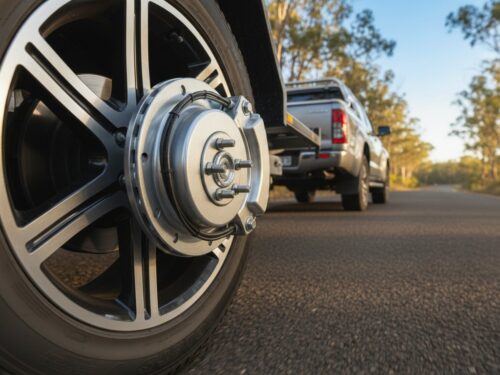
Choosing the wrong brake kit isn’t just an inconvenience. It’s a genuine safety risk on Australian roads and a complete waste of your hard-earned money. We know the frustration. You’re staring at your axle, trying to figure out if you need a Ford or Landcruiser stud pattern. You’re second-guessing bearing compatibility and worrying if the final setup will even be compliant with Australian Design Rules. Getting it wrong means your trailer stays off the road, costing you time and cash.
This essential guide delivers the confidence to get the job done right, the first time. We provide the straightforward, technical information needed to select the perfect 10 inch electric brake kit australia for your specific setup. You’ll learn exactly how to measure and identify your components, follow clear installation instructions, and perform the right maintenance to ensure powerful, smooth braking for any load. Let’s get your trailer equipped for reliable performance.
Key Takeaways
- Identify your axle profile and stud pattern correctly to select the right brake kit for your trailer the first time.
- Understand why electric brakes provide superior stopping power and control, especially when reversing, compared to mechanical systems.
- Properly install your 10 inch electric brake kit australia by learning the correct orientation and wiring to prevent voltage drop.
- Learn why sourcing a complete kit designed for harsh Australian conditions ensures all components are compatible and built to last.
Understanding 10 Inch Electric Brake Systems
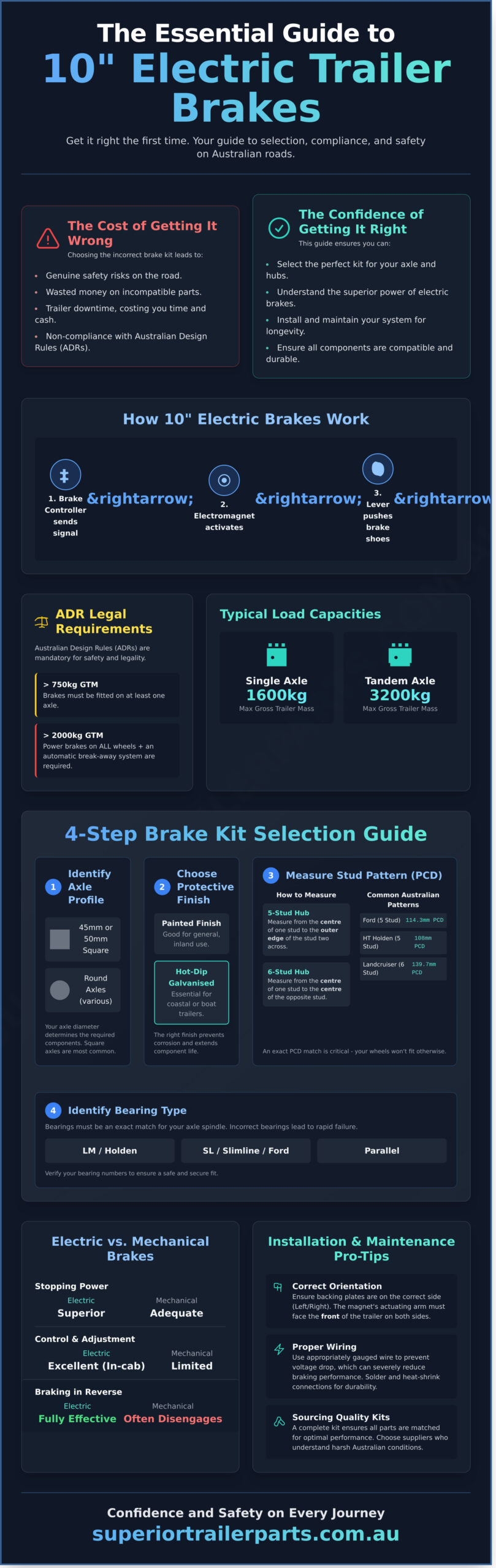
The 10 inch electric drum brake is the established industry standard for medium-duty towing across Australia. You’ll find this reliable system on everything from caravans and horse floats to heavy-duty tradie trailers. It is engineered to provide controlled, dependable stopping power for single-axle trailers rated up to 1600kg Gross Trailer Mass (GTM) or tandem-axle setups up to 3200kg GTM. Its simple, robust design handles tough Australian conditions with ease.
Electric brakes operate on a simple yet effective electromagnetic principle. When you apply your vehicle’s brakes, an in-car brake controller sends an electrical current to the brake’s electromagnet. This magnet activates, grabbing the rotating armature face inside the brake drum. The resulting friction forces an actuating lever to expand the brake shoes against the drum’s inner surface, slowing the trailer. The more power sent by the controller, the stronger the braking force. This direct control is fundamental to understanding how electric trailer brakes work. The trailer actively brakes itself, reducing the strain on your tow vehicle. This system cannot function without a compatible in-car electric brake controller.
Legal Requirements for Australian Trailers
Australian Design Rules (ADRs) mandate specific braking requirements for all trailers. Any trailer with a GTM over 750kg must be fitted with brakes. Once a trailer’s GTM exceeds 2000kg, the rules become stricter; you must have power brakes on all wheels, plus an automatic break-away system. This ensures the trailer brakes independently if it detaches from the tow vehicle. Using certified ADR-compliant trailer parts is not optional. It’s essential for road legality, insurance coverage, and on-road safety.
Components of a Standard Kit
A complete 10 inch electric brake kit australia provides all the necessary hardware for one axle. These kits ensure all parts are matched for optimal performance and straightforward installation. The core components include:
- Backing Plate Assemblies: Pre-loaded with magnets, shoes, springs, and levers.
- Brake Drums: The cast iron housing that the shoes press against to create friction.
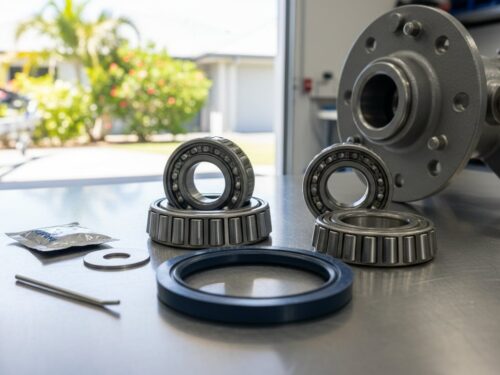
- Bearings and Seals: High-quality bearings are essential for smooth wheel rotation and protecting internals from dust and water.
Backing plates are specific to each side of the trailer. You need a left-hand (passenger side) and right-hand (driver side) assembly, as the magnet actuating arm must face forward on both. Each backing plate also includes a park brake lever for manual cable connection, allowing you to secure the trailer when it’s unhitched from your vehicle.
Selecting the Correct Kit for Your Axle and Hubs
Choosing the right 10 inch electric brake kit is a job of measurement, not guesswork. A precise fit ensures safe, reliable braking performance and simplifies installation. Before you purchase, you must verify four key details: your axle profile, wheel stud pattern, bearing type, and the required finish for your operating environment. Getting these specifications correct from the start saves you time, money, and workshop frustration.
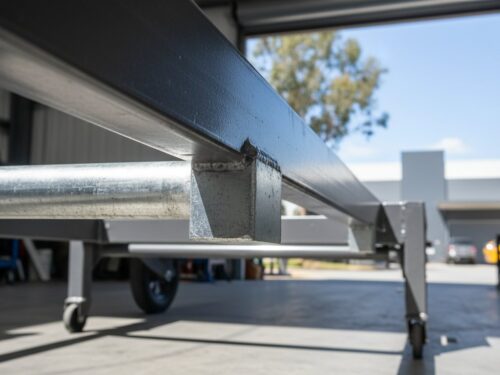
First, identify your axle. Most Australian trailers use either a 45mm or 50mm square beam axle, though round axles are also common. The diameter of your axle directly impacts the load capacity and the components required. Your trailer’s environment dictates the best protective finish. For general inland use, a quality painted finish is sufficient. If you operate near the coast or launch a boat, a hot-dip galvanised kit is essential to protect against corrosion from saltwater and humid air.
Stud Patterns and PCD Explained
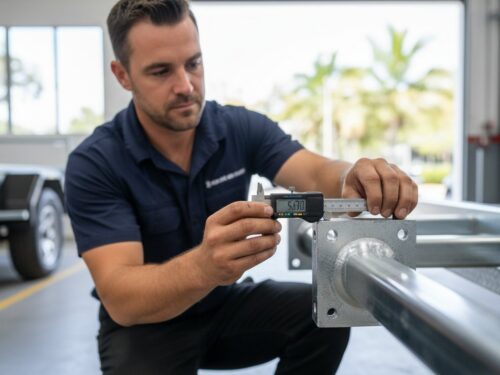
Your wheel’s stud pattern, or Pitch Circle Diameter (PCD), must match the new brake hub perfectly. An incorrect PCD means your wheels simply won’t fit. Measuring it is straightforward.
- For 5-stud hubs: Measure from the centre of one stud to the outer edge of the stud two positions across.
- For 6-stud hubs: Measure from the centre of one stud directly across to the centre of the opposite stud.
Common Australian patterns include Ford (5 studs with a 114.3mm PCD), HT Holden (5 studs with a 108mm PCD), and the heavy-duty 6-stud Landcruiser pattern (139.7mm PCD). Matching your trailer’s stud pattern to your tow vehicle is a smart move. It allows you to use a single spare tyre for both, which is invaluable during a roadside emergency.
Identifying Bearing Types: LM vs Slimline vs Parallel
Bearings ensure your hub spins freely and securely on the axle spindle. The fit must be exact. Using the wrong bearing set can lead to rapid failure and dangerous wheel detachment. Ensuring your components are correctly matched is a critical safety requirement, with standards referenced in resources like the National Heavy Vehicle Inspection Manual.
Here are the three main types used in Australia:
- LM (Holden) Bearings: Suited for lighter-duty applications, these bearings are typically found on axles rated from 750kg up to 1000kg. They are not usually paired with 10-inch electric brakes.
- Slimline (Ford) Bearings: This is the industry standard for most single-axle trailers with a Gross Trailer Mass (GTM) up to 1450kg. It’s the most common bearing profile for any 10 inch electric brake kit australia.
- Parallel Bearings: Designed for heavy-duty work, Parallel bearings use the same large inner bearing for both the inner and outer positions. This increases the load capacity to 1600kg per axle and they are often paired with robust 50mm square axles.
If you’re unsure about identifying your existing bearings or axle profile, our team can provide expert advice to match the right kit to your specific trailer setup. Verifying these details ensures you get a reliable, long-lasting braking system built for Australian conditions.
Comparing Electric Brakes vs. Mechanical Systems
Choosing the right braking system for your trailer is a critical decision. It directly impacts your safety, control, and confidence on the road. While mechanical (override) brakes are a common sight on lighter trailers, they have significant limitations compared to modern electric systems. Understanding these differences is key to making a sound investment in your towing setup.
The fundamental difference lies in control. Mechanical brakes are reactive; they engage only when the tow vehicle’s momentum pushes the trailer forward. Electric brakes are proactive. They are controlled directly from the driver’s seat, providing immediate and proportional braking power the moment you need it.
- Stopping Power: Electric brakes offer superior modulation. An in-cab controller allows you to adjust the braking force to match your load and road conditions. Mechanical systems are largely ‘on’ or ‘off’, which can lead to jerky stops or wheel lock-ups, especially in wet weather.
- Reversing: Electric systems make reversing simple. You can back up an incline without issue. Many mechanical systems require you to manually disengage a lock-out mechanism, a frustrating task on a busy boat ramp or worksite.
- Maintenance: Electric brakes have fewer external moving parts. There are no long steel cables to stretch, seize from rust, or snap. The wiring is protected, leading to greater reliability and less time spent on adjustments.
- Cost vs. Performance: The initial investment for a 10 inch electric brake kit australia is higher than for a basic mechanical setup. However, this cost is justified by significant gains in safety, reduced wear on your tow vehicle’s brakes, and greater overall control.
Why Upgrade to Electric?
Upgrading to an electric brake system offers immediate, practical benefits. The ability to independently control and apply the trailer’s brakes from your dashboard gives you unmatched authority over your load, particularly during emergency stops or on steep descents. This independent function also saves your vehicle’s brakes from premature wear. Modern electric systems are also designed to integrate with advanced safety features like Electronic Stability Control (ESC), a non-negotiable for many new caravans and heavy-duty trailers.
Performance in Heavy Towing Scenarios
Under heavy loads, performance is paramount. Electric brakes excel where mechanical systems struggle. An electric brake’s magnet provides consistent, even pressure across the entire brake shoe surface. This ensures predictable stopping power and better heat dissipation, reducing the risk of brake fade on long downhill runs. This is a primary reason why a quality electric setup is the professional’s choice for tandem axle box trailers and caravans. For a detailed breakdown of different systems, this guide to trailer brakes from RACQ provides excellent foundational knowledge. A reliable 10 inch electric brake kit australia is built for the tough conditions faced by serious haulers.
Installation and Maintenance for Longevity
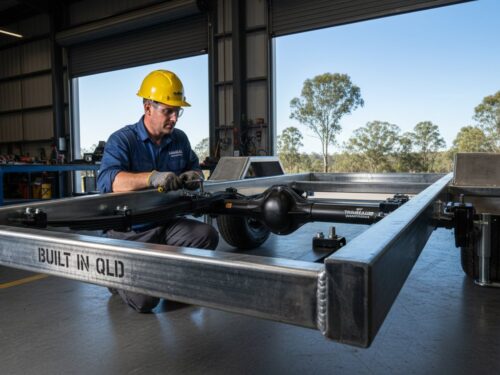
A high-quality brake kit is only as good as its installation. Get it right the first time. Correct setup and routine servicing are not optional; they are essential for safe, reliable braking performance and maximising the life of your components. This is a no-nonsense approach to fitting and maintaining your trailer’s stopping power.
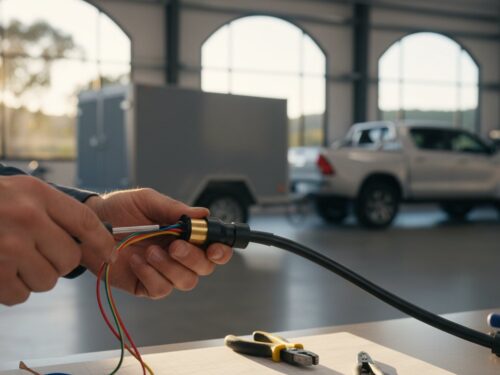
Proper wiring is the foundation of any electric brake system. Insufficient power means weak braking. We strongly recommend using a minimum of 4mm, or preferably 5mm, 2-core automotive cable for all brake wiring runs. Thinner cables cause voltage drop over the length of the trailer, starving the magnets of the current they need to actuate effectively. This results in spongy or delayed brake response, especially on longer trailers. Ensure all connections are soldered and sealed with heat shrink to prevent corrosion, a common failure point in Australian conditions.
Once installed, new brakes must be “burnished” or bedded-in. This process mates the new brake shoes to the drum surface for optimal contact and friction. To do this, find a safe, open area. Accelerate your rig to 40 km/h and apply the trailer brakes firmly using your controller’s manual override, slowing to 20 km/h. Do not come to a complete stop. Repeat this cycle 15-20 times to properly heat-cycle the components. Allow the brakes to cool completely before regular use.
Regular adjustment is critical. As shoes wear, the gap between the shoe and the drum increases, leading to delayed braking. Every 5,000 km, or at least every six months, jack up each wheel and access the star adjuster wheel through the slot in the backing plate. Tighten the adjuster until you feel a slight, consistent drag as you turn the wheel by hand. This ensures the brakes engage immediately when you need them.
Backing Plate Orientation and Fitment
Correct orientation is non-negotiable. On a typical 10-inch brake assembly, the smaller shoe (the leading or primary shoe) faces the front of the trailer. The actuating arm that the magnet pulls should point towards the rear. Installing the backing plate upside down or on the wrong side will severely compromise braking force. Also, confirm the brake mounting flange is welded perfectly square to the axle. An uneven flange causes tapered shoe wear and poor performance. Backing plate mounting bolts should be torqued to manufacturer specifications, typically between 40-60 Nm.
Routine Maintenance Checklist
A thorough inspection during adjustment is smart preventative maintenance. A well-serviced 10 inch electric brake kit australia will provide years of reliable service. Keep this checklist handy:
- Inspect Magnets: Check for even wear across the magnet face. Any deep grooves, cracks, or exposed copper coil windings mean the magnet needs immediate replacement.
- Clean Components: Use a dedicated brake cleaner to remove all dust from the drum interior and backing plate assembly. Brake dust buildup can cause glazing on the shoes, reducing their effectiveness.
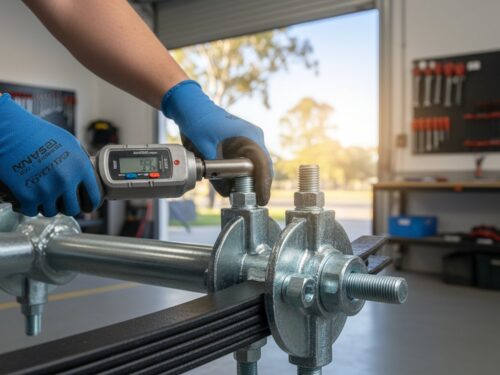
- Check Suspension Hardware: While the wheels are off, it’s the perfect time to check the tightness of your suspension. Ensure your U-bolt kits are torqued correctly and inspect springs and shackles for signs of wear or fatigue.
If your inspection reveals worn magnets, shoes, or other critical components, don’t delay the repair. Find genuine, heavy-duty replacement brake parts to keep your trailer safe and compliant on Australian roads.
Sourcing Quality Components for Australian Conditions
Australian roads aren’t forgiving. From the relentless vibrations of corrugated outback tracks to the high heat of a summer highway, your trailer’s braking system is under constant stress. Sourcing the right components isn’t just a matter of preference; it’s a critical safety decision. As an Australian Owned company, we engineer and select parts specifically to withstand these punishing environments. Our products are tested against local conditions, not just designed for smooth overseas motorways.
This principle of selecting robust systems for local conditions extends beyond just mechanical parts. It’s just as critical when considering power solutions for a caravan or property, where companies like G-Solar & Electrical specialize in solar installations designed to withstand the harsh Australian environment.
The simplest way to guarantee performance is by investing in a complete kit. Buying individual parts from different suppliers introduces risk. A brake magnet might not match the drum’s armature surface perfectly, or the shoe linings may not be compatible with the actuator’s force. A complete 10 inch electric brake kit australia from a single, reliable source eliminates these compatibility issues. It ensures every component, from the backing plate to the smallest spring, is designed to work together as a single, cohesive unit. This integrated approach delivers predictable, reliable braking power when you need it most.
Digging deeper, the quality of individual components like magnets and shoe linings is paramount. Generic, low-cost magnets often use inferior coil windings that can’t dissipate heat effectively, leading to fade and failure under heavy loads. Our heavy-duty magnets are built for higher thermal tolerance. Similarly, standard brake shoe linings can glaze over or wear rapidly when exposed to the fine bull-dust common across the country. We specify heavy-duty linings with friction materials formulated for superior grip and longevity in dusty, high-temperature settings. Don’t compromise on the parts that do the real work.
Ultimately, all trailer brake components sold in Australia must be compliant with Australian Design Rules (ADR). This isn’t just a guideline; it’s a legal requirement for road safety. At Superior Trailer Parts, we ensure our entire braking range meets or exceeds relevant ADR standards. This provides peace of mind that your equipment is safe, legal, and fit for purpose on any road in the country.
The Superior Trailer Parts Advantage
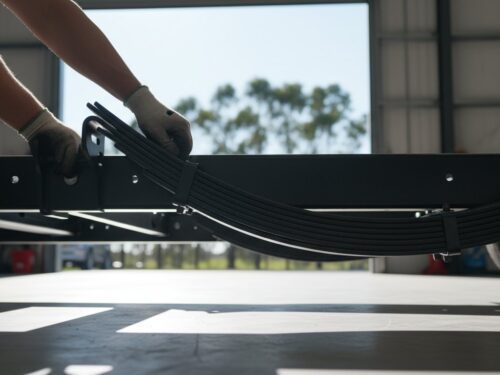
We provide direct access to expert advice for everyone, from DIY builders tackling their first project to fleet managers maintaining commercial trailers. Our commitment to durability is proven by our range of galvanised brake components, essential for marine trailers or rigs operating in humid, coastal environments. We ensure every 10 inch electric brake kit australia integrates seamlessly with our full range of axles and leaf springs for a complete, reliable undercarriage solution.
Nationwide Shipping and Support
Your trailer can’t afford downtime. We offer fast, reliable dispatch from our Queensland warehouse to all major cities and regional centres across Australia. Our streamlined process ensures a hassle-free transaction, getting you the critical parts you need for urgent repairs. Get your trailer back on the road sooner. Contact our team today for technical support on your brake upgrade.
Upgrade Your Trailer’s Stopping Power
Upgrading to electric brakes provides superior control and safety on Australian roads, a vital improvement over older mechanical systems. Getting the full benefit, however, depends entirely on choosing the correct components. You must precisely match the brake kit to your trailer’s specific axle profile and hub stud pattern to ensure a secure, reliable fit. Proper installation, followed by regular maintenance checks, is the only way to guarantee your brakes perform when you need them most, no matter the conditions.
Sourcing a quality 10 inch electric brake kit australia-wide is simple when you work with specialists. As a proudly Australian Owned and Operated business, Superior Trailer Parts provides the expert technical advice you need to get the job done right the first time. We stock durable, ADR-compliant parts built for our tough environment and offer fast, nationwide shipping to get them to your workshop quickly.
Don’t compromise on your trailer’s safety. Shop our ADR-Compliant 10 Inch Electric Brake Kits today and equip your trailer for the road ahead.
Frequently Asked Questions
Do I need a break-away system with my 10 inch electric brake kit?
Yes, a break-away system is legally required in Australia for any trailer with a Gross Trailer Mass (GTM) over 2,000kg. Since 10-inch electric brakes are often used on tandem axle trailers, your GTM will likely exceed this threshold. This system is a critical safety device. It automatically applies the trailer’s brakes if it detaches from the tow vehicle, preventing a serious accident. Always confirm your state’s specific road authority regulations for full compliance.
How do I know if I have LM or Slimline bearings?
You can identify your bearings by checking for part numbers stamped on them or by measuring their inner diameter. LM (Holden) bearings use an inner bearing with a 31.75mm ID (#L67048) and an outer bearing with a 19.05mm ID (#L11949). Slimline (Ford) bearings use a larger inner bearing with a 35.00mm ID (#L68149) and a different outer bearing with a 22.00mm ID (#L12749). Using callipers provides the most accurate measurement to ensure you order the correct parts.
Can I install 10 inch electric brakes on a boat trailer?
Yes, but you must use a marine-grade electric brake kit designed for submersion. Standard electric brakes will corrode and fail rapidly in salt or fresh water. Marine-specific kits feature stainless steel components, sealed wiring, and galvanised or Dacromet-coated backing plates for maximum corrosion resistance. Remember to rinse the entire brake assembly with fresh water after each use to extend its operational life and ensure reliable performance when you need it. For those involved in the wider marine industry beyond trailer maintenance, you can learn more about BTR Marine Services LLC for insights into vessel sales and acquisition.
What is the maximum weight a single axle with 10 inch electric brakes can carry?
A single axle fitted with 10-inch electric brakes is typically rated for a maximum Gross Trailer Mass (GTM) of 1,450kg. This rating depends on the combined capacity of the axle, bearings, and the brakes themselves. Exceeding this weight is illegal and severely compromises braking safety. For loads heavier than 1,450kg, a tandem axle configuration with brakes on at least one axle is required by Australian road laws.
How often should I adjust my electric trailer brakes?
You should inspect and adjust your electric trailer brakes every 10,000 kilometres or every 12 months, whichever comes first. When you first install a new 10 inch electric brake kit in Australia, it’s smart to re-check the adjustment after the first 500 kilometres of travel. This accounts for the initial “bedding-in” of the new shoes and magnets. Correct adjustment ensures responsive braking and prevents premature wear on your components.
Why are my electric brakes grabbing or locking up?
Your electric brakes are likely grabbing due to an incorrect setting on your in-cab brake controller or contamination of the brake shoes. First, try reducing the “gain” or “power” setting on your controller. If that doesn’t solve it, inspect the brake assemblies for leaking grease seals. Grease on the brake shoes or magnet face will cause aggressive and unpredictable braking. Worn components or faulty wiring can also be the cause and require a thorough inspection.
Do I need to change my coupling when moving to electric brakes?
No, you typically don’t need to change your coupling if it’s a standard 50mm ball coupling that’s correctly rated for your trailer’s GTM. Electric brakes are activated by an electrical signal from your tow vehicle’s controller, not by a mechanical surge or override mechanism in the coupling. You must, however, ensure the coupling’s stamped capacity (e.g., 2,000kg, 3,500kg) is greater than your trailer’s maximum loaded weight to remain legally compliant.