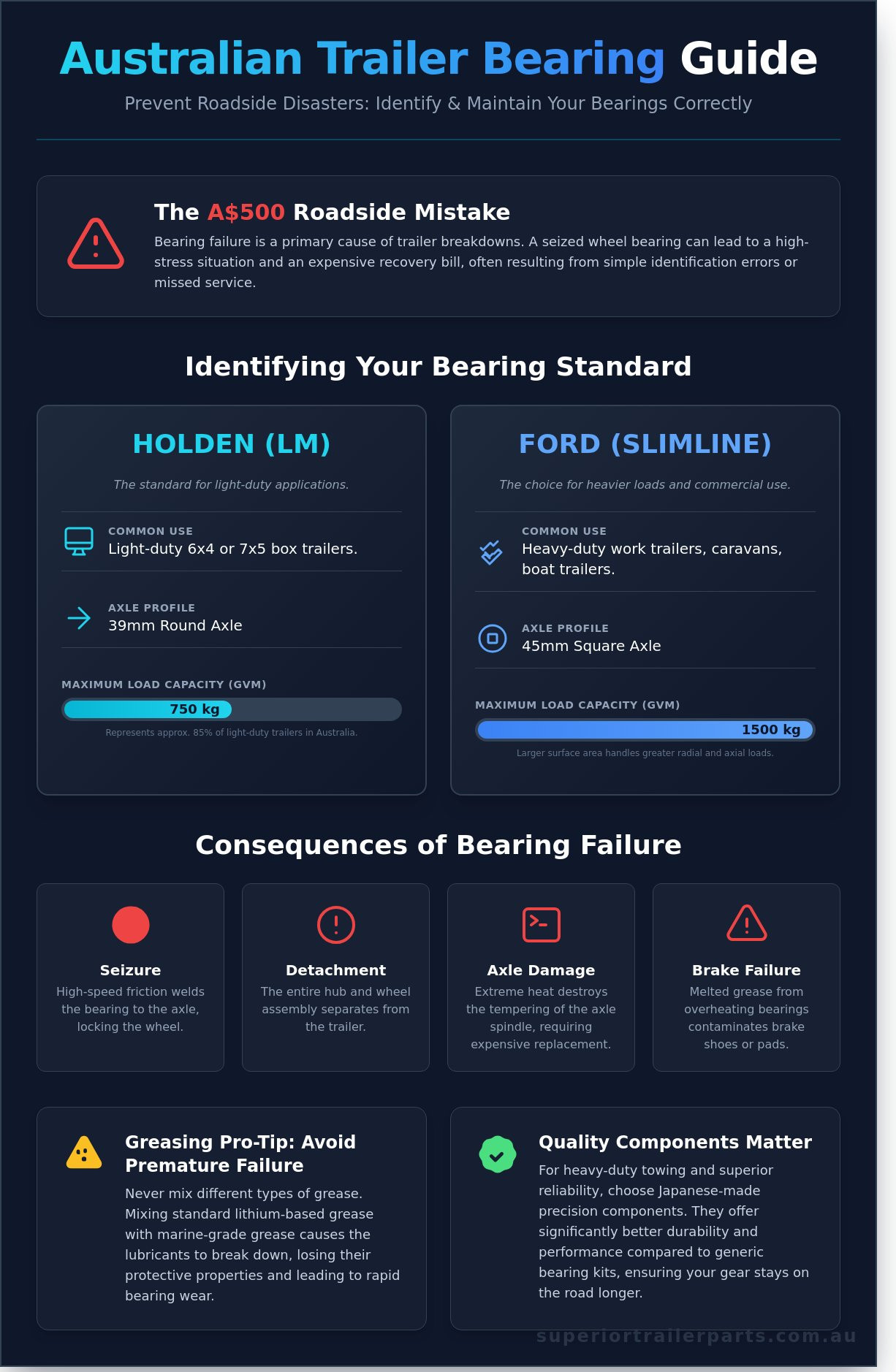
A seized wheel bearing on the side of the Pacific Highway can turn a simple weekend tow into an expensive A$500 recovery bill. It’s a high-stress situation that often results from simple identification errors or missed service intervals. Roadside data suggests that bearing failure remains a primary cause of trailer breakdowns across Australia.
This distinction is crucial for commercial operators, who must also consider the right type of trailer for specific jobs, such as transport or warehousing. For those interested in on-site warehousing solutions, you can find out more about Storage Trailers and their applications.
You likely understand that keeping your trailer roadworthy is about more than just checking the lights. It’s frustrating when you’re staring at a hub trying to figure out if it’s a Holden or Ford configuration while the sun is setting. You need a setup that fits the first time and grease that stays where it’s needed.
We’ll show you exactly how to identify your specific bearing kit and maintain it for heavy-duty use. You’ll gain the technical knowledge to perform a professional service and prevent roadside disasters. This ensures your gear stays on the road and out of the repair shop.
This article breaks down the sizing differences, explains the necessity of marine-grade seals for boat trailers, and provides a clear path to reliable towing performance.
Key Takeaways
- Understand how a wheel bearing reduces friction and supports your trailer’s load to prevent critical mechanical failure.
- Identify the correct bearing sizes for Australian axle standards, ensuring a precise fit for 750kg or 1500kg capacities.
- Master pre-trip diagnostic routines to catch excessive heat and wear before they lead to a roadside breakdown.
- Learn the technical requirements for greasing hubs, including why mixing lithium and marine-grade lubricants causes premature failure.
- Discover why Japanese-made precision components offer superior reliability compared to generic bearing kits for heavy-duty towing.
Understanding the Role of Wheel Bearings in Trailer Safety
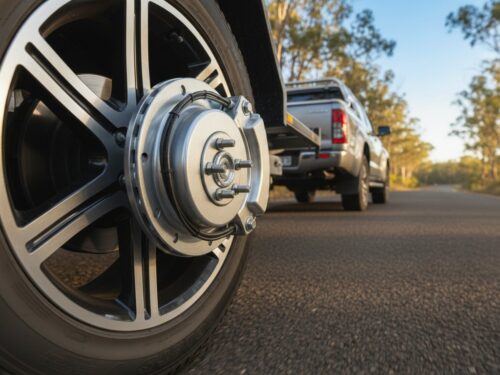
A wheel bearing is a critical mechanical assembly consisting of hardened steel rollers or balls secured within a metal ring. Its primary job involves reducing rotational friction while supporting the entire weight of the trailer. If you’re towing a 3,500kg caravan or a heavy-duty work trailer, those small steel components are the only things keeping your wheels turning under load. Understanding what are wheel bearings helps you appreciate the immense pressure they face during every trip. These parts must operate with high precision to ensure the hub rotates smoothly around the stationary axle spindle.
Trailers face unique challenges compared to daily-drive passenger vehicles. Data suggests most recreational trailers spend 85% of their life stationary. This inactivity allows grease to settle and moisture to collect on the bearing surfaces. When you eventually tow the unit at 100km/h, the sudden heat and friction can cause immediate failure if the lubricant has degraded or moved. Maintaining bearing health is the only way to prevent catastrophic axle damage on high-speed Australian roads. Regular inspections are vital because a trailer doesn’t provide the same tactile feedback as a car when a part begins to fail.
The link between the wheel bearing and road safety is absolute. A healthy bearing keeps the wheel aligned and the braking surface true. When a bearing degrades, it creates play in the hub. This wobble affects braking efficiency and puts uneven stress on the tyres. In the harsh Australian climate, where road temperatures often exceed 50 degrees Celsius, the demand on your lubrication is extreme. You can’t afford to overlook this component during your pre-trip maintenance schedule.
How Tapered Roller Bearings Work
Most trailers in Australia rely on tapered roller bearings because of their heavy-duty durability. This design consists of two main parts: the inner cone and the outer cup. The tapered shape allows the assembly to manage radial loads from the trailer’s weight and axial loads generated during cornering. The cone houses the rollers and fits into the cup to create a precise, low-friction interface for the hub to rotate. This setup ensures the wheel stays aligned even when navigating sharp turns on corrugated regional tracks.
The Consequences of Bearing Failure
Ignoring bearing maintenance leads to total mechanical failure. The most common “seizure” scenario occurs when heat builds up so rapidly that the metal expands and locks the wheel at highway speeds. This creates a dangerous skid and can weld the bearing race to the spindle instantly. In extreme cases, the entire hub assembly can detach from the axle, leaving the trailer supported by only three wheels. This failure often causes secondary damage to the braking system and requires an expensive spindle replacement or a completely new axle assembly, often costing upwards of A$600 in parts and labour.
- Seizure: High-speed friction welds the bearing to the axle.
- Detachment: The hub and wheel separate from the trailer entirely.
- Structural Damage: Heat destroys the tempering of the axle spindle.
- Brake Failure: Excessive heat melts grease, which then contaminates brake shoes or pads.
Identifying Common Trailer Bearing Types and Sizes in Australia
Australian trailer manufacturing relies on specific standards that differ significantly from North American or European markets. While international imports often use varied spindle tapers, local builds generally stick to Holden or Ford patterns. Choosing the right wheel bearing depends entirely on your axle’s load rating and spindle profile. Approximately 85% of light-duty box trailers rated at 750kg GVM use the Holden LM setup. If you’re hauling 1500kg on a single axle, you’ll almost certainly need Ford Slimline bearings. It’s vital to match these components to your specific axles to prevent uneven wear or hub seizure. Understanding how trailer bearings work helps you realize why a precise fit is non-negotiable for road safety and long-term durability.
Holden vs Ford Bearing Standards
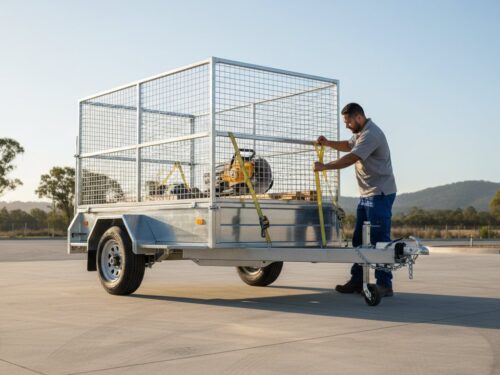
Holden (LM) bearings are the industry standard for 39mm round axles. These are most common on standard 6×4 or 7×5 box trailers found in suburban driveways across Australia. Ford (Slimline) bearings provide a larger surface area for 45mm square axles. This makes them the preferred choice for heavier loads and commercial applications. If you’re running a heavy-duty tandem trailer, you might encounter Parallel bearings. These setups use two large inner bearings of the same size instead of a smaller outer one. This configuration increases the load capacity to 1600kg or even 2250kg per pair. Always check your spindle diameter before you start the replacement process.
For companies running these commercial applications, operational efficiency is key. Just as choosing the right bearings prevents costly downtime, outsourcing order fulfillment to an expert like Pik Pak Logistics can streamline the entire business supply chain.
Marine vs Standard Road Bearings
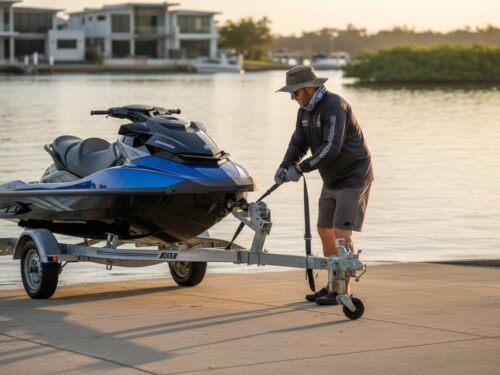
Boat trailers face much harsher conditions than standard road trailers. Saltwater ingress destroys a wheel bearing through rapid corrosion and grease emulsification. Marine kits solve this problem with specialized waterproof seals. These seals feature a stainless steel spring that won’t rust away after being submerged at the boat ramp. Standard road seals use mild steel springs. These fail quickly after saltwater exposure, leading to bearing failure within just a few trips. If you’re dunking your hubs, browse our range of boat trailer parts to find the correct marine-grade seals for your specific hub setup.
How to Measure Your Bearings
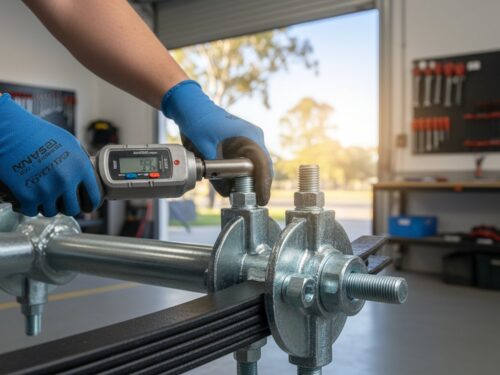
Don’t rely on visual checks alone. Use a digital vernier caliper to get an accurate reading. In the Australian market, the Holden inner bearing measures 31.75mm. The Ford Slimline inner bearing measures 35mm. This 3.25mm difference is the difference between a secure fit and a catastrophic hub failure on the highway. You can also find part numbers stamped directly onto the bearing race. Look for universal codes like LM11949 or L68149. These codes tell you exactly what size you need regardless of the brand. If the numbers are worn or rusted, measure the inner diameter of the bearing and the outer diameter of the race. If you’re unsure about the correct fit for your trailer, contact our team for expert advice on sizing and compatibility.
Matching the bearing to the axle capacity is the only way to ensure your trailer remains reliable under load. A 750kg axle cannot safely use bearings designed for a 1500kg setup, and vice versa. Each component is engineered to handle specific centrifugal forces and heat dissipation requirements. Using the wrong kit leads to excessive play in the hub, which eventually causes the seal to fail and the grease to leak out. This simple mechanical oversight is responsible for a high percentage of roadside trailer breakdowns in Australia.
Diagnostic Signs of Worn or Damaged Trailer Bearings
A solid pre-trip inspection saves money and time. It prevents a seized wheel bearing from ruining a haul. Start by checking the hubs every 80 to 100 kilometres during the first leg of a long trip. This allows you to catch temperature spikes before the metal deforms. Consistent monitoring ensures that small issues don’t turn into axle-snapping disasters in remote areas.
Routine maintenance is non-negotiable for Australian trailer owners. The harsh climate and long distances between towns make roadside repairs difficult and expensive. Check your seals for leaks before every trip. Look for grease sprayed on the inside of the wheel rim. This indicates a blown rear seal. A failed seal lets grease out and allows dust or grit in. This combination destroys bearings in a few hundred kilometres.
The “Touch Test” and Noise Identification
Safely check hub temperatures during every fuel stop. Use the back of your hand to tap the hub face. It should feel warm, similar to a cup of coffee. If it’s too hot to touch, you have a problem. Excessive heat usually stems from a lack of grease or a bearing that’s been adjusted too tight. Listen closely as you pull into the station. A high-pitched “chirp” suggests a dry roller. A heavy, low-frequency “rumble” or growl points to a damaged race. Distinguish this from brake drag by checking the drum. Brake drag heats the entire outer rim, while bearing failure focuses heat at the spindle centre.
Checking for Physical Play
Jack the trailer up until the tyre clears the ground. Place your hands at the 12 and 6 o’clock positions on the tyre. Shake the wheel firmly toward and away from the trailer frame. You’re feeling for a “clunk” or visible movement. Most tapered bearings require a minute amount of end play, usually between 0.025mm and 0.127mm. If the movement is distinct or audible, the bearing is likely worn or the spindle nut has backed off. Loose bearings lead to rapid tyre wear. You’ll often see scalloped edges or “cupping” on the tread. Check this trailer wheel bearing maintenance guide for specific technical tolerances and seating procedures. Professional fleet managers use these benchmarks to decide when to repack or replace components.
Grease tells the real story during a visual inspection. Pop the dust cap or Bearing Buddy and look at the lubricant consistency. New grease is translucent and bright. Black grease is a red flag. It means the lubricant has broken down due to high temperatures. If the grease looks like a milky latte, water has bypassed the rear seal. This is a common issue for boat trailers used in saltwater. Look for “glitter” or small silver flakes in the grease. These flakes are actual pieces of the bearing or race. If you see them, the assembly is failing. Don’t try to clean and reuse these parts. Replace the entire wheel bearing set to ensure safety on Australian roads.
Best Practices for Greasing and Servicing Trailer Hubs
Quality maintenance starts with selecting the correct lubricant for your specific towing conditions. Use a high-temperature lithium complex grease for standard road trailers to handle the heat generated during 100km/h highway speeds. Boat trailers require a dedicated marine-grade grease with high water-washout resistance. You must never mix different grease types. Chemical incompatibility between different soap bases often leads to grease liquefaction, which is responsible for 85% of premature wheel bearing failures in Australian trailers. If you’re switching brands, completely clean the hub and spindle with a solvent like kerosene to remove all old residue.
Service frequency depends on your environment. Road-going trailers should undergo a full service every 10,000km or 12 months. Boat trailers need more frequent attention, typically every 6 months or 2,500km, because salt water accelerates corrosion. Before starting, gather the essential tools. You’ll need a hub puller, a brass drift to avoid damaging metal surfaces, and a torque wrench. Always ensure your replacement parts meet Australian safety standards to guarantee performance under heavy loads during long-distance hauls across the Outback.
How to Correctly Pack a Bearing
The palm-packing method is the only reliable way to ensure total lubrication. Place a large glob of grease in your palm and repeatedly press the edge of the wheel bearing into the grease until it’s forced through the cage and emerges from the top. Surface smearing is a common mistake that leaves the internal rollers dry, leading to rapid heat buildup. Packing is the manual process of forcing grease into every internal cavity of the bearing to eliminate air pockets and provide a consistent lubricant film.
Installing Seals and Adjusting the Castle Nut
Place the rear seal into the hub and use a flat wooden block to tap it into position. It must sit perfectly flush without distorting the rubber lip. To set the preload, tighten the castle nut firmly while rotating the hub to seat the bearings. Back the nut off roughly 1/6th of a turn to allow for thermal expansion. This should result in approximately 0.1mm to 0.15mm of end play. Secure the position with a new galvanized split pin. Don’t reuse old pins, as metal fatigue can cause them to snap, allowing the nut to back off entirely.
Using Bearing Protectors (Bearing Buddies)
Spring-loaded protectors maintain a slight internal pressure of about 3psi inside the hub. This pressure prevents water and contaminants from being sucked past the rear seal when a hot hub is submerged in cold water. You must avoid over-filling these units. Pumping too much grease into the nipple will blow out the rear seal, which can contaminate your brake shoes or discs. While common on boat trailers, these protectors are also useful for trailers operating in dusty or muddy environments to keep the internals clean.
Maintaining your trailer shouldn’t be a guessing game. For reliable components that handle harsh Australian conditions, you can shop genuine trailer parts online and get expert advice for your next service.
Selecting High-Quality Replacement Bearing Kits and Components
Quality components are the only thing standing between your cargo and a roadside disaster. When you buy a replacement kit, don’t settle for just the bearings. A comprehensive kit must include the inner bearing, the outer bearing, two matching cups, and a high-quality rear seal. High-grade seals are vital for keeping grease in and contaminants out. Cheap kits often use inferior rubber seals that perish quickly under Australian heat. Check that your kit matches your specific axle profile before you start the job.
The performance of a new wheel bearing depends heavily on the quality of the steel. Japanese-made precision bearings from brands like NSK or NTN offer superior longevity compared to generic alternatives. These manufacturers use high-carbon chromium steel that undergoes specific heat treatment. Generic bearings often lack this level of metallurgical consistency. Data shows that premium bearings can last up to 40% longer under heavy loads than unbranded counterparts. Investing in quality upfront prevents the cost of frequent replacements.
Replacing the cup, also known as the race, is mandatory every time you install a new wheel bearing. Bearings and cups wear together as a matched set. If you put a new bearing into an old, worn cup, the contact surfaces won’t align perfectly. This creates localized friction points that generate extreme heat. This heat thins the grease and leads to premature metal fatigue. Always use a brass drift to drive out the old cups and press the new ones in evenly. Sourcing your trailer parts from Australian-owned specialists ensures you get components designed for our harsh environments.
The Superior Trailer Parts Advantage
We provide heavy-duty components built to survive the toughest Australian conditions. Our kits cater to everything from standard box trailers used for weekend hauls to marine-grade setups for jet ski trailers. We understand that salt water and red dust require specialized sealing solutions. If you’re working with a legacy axle or a difficult-to-identify hub, our team provides expert advice to find the exact fit. We focus on durability and performance because we know how much is at stake when you’re on the road.
Maintaining Your Spares Kit
Every long-haul traveller should carry a pre-greased spare hub assembly. A roadside hub swap takes about 15 minutes, whereas trying to seat new bearings in the dirt can take over two hours. Your spares kit needs to be ready for immediate use. Include these essentials in a dedicated weather-proof container:
- A pre-greased hub with bearings and seals already installed.
- A tub of high-temperature wheel bearing grease.
- Clean, lint-free rags and a bottle of degreaser.
- New split pins and a selection of basic hand tools.
- A spare dust cap and a rubber mallet.
Store your spare bearings in airtight, grease-packed bags. This prevents surface rust and dust contamination while the parts sit in your toolbox. Moisture is the primary enemy of polished steel surfaces. Check your spares kit every six months to ensure the grease hasn’t separated or the packaging hasn’t breached. Being prepared turns a potential breakdown into a minor inconvenience.
Maintain Your Hubs for Long-Distance Reliability
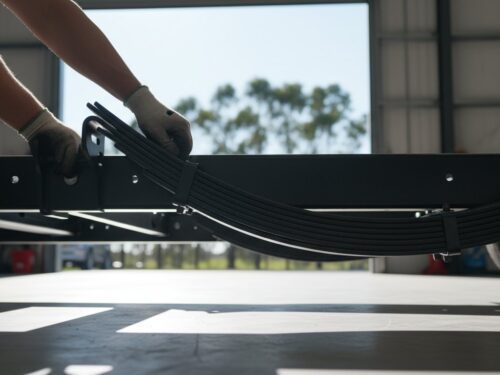
Regular maintenance prevents catastrophic axle failure and keeps your trailer moving safely. You must identify your specific size requirements, such as Slimline or LM sets, before starting any repair or replacement. Perform a physical hub inspection every 5,000km to check for excessive heat buildup or audible grinding. A full service with fresh marine-grade grease every 12 months or 10,000km is the standard requirement for Australian trailers. Selecting a premium wheel bearing kit ensures your equipment survives corrugated outback roads and heavy saltwater exposure at the boat ramp. Just as wheel bearings support your trailer’s load, proper suspension components like 4 leaf slipper springs distribute weight evenly across the axle to prevent stress fractures and maintain stability on rough terrain. We stock genuine, heavy-duty components built to withstand local conditions. Superior Trailer Parts is Australian owned and operated, providing fast nationwide shipping on our entire inventory of trailer components. Our staff offers expert technical support for DIY installers needing precise fitment advice or technical specifications. It’s the most efficient way to get your trailer back in peak condition with parts that actually last. Secure your load and hit the road with confidence.
Shop our range of heavy-duty trailer wheel bearing kits today
Frequently Asked Questions
How often should I grease my trailer wheel bearings?
Service your trailer wheel bearings every 12 months or every 10,000 kilometres, whichever occurs first. Boat trailers require more frequent attention due to saltwater exposure; grease these every 6 months or after 3 immersions. Regular maintenance prevents heat build-up and ensures the longevity of your hub assembly. Check for grease leakage or hub play every 2,000 kilometres to catch issues before they cause a breakdown.
What is the difference between Holden and Ford trailer bearings?
The primary difference lies in the inner and outer diameter measurements of the bearing sets. A standard Holden (LM) bearing kit uses a 31.7mm inner and 19mm outer bearing. A Ford (Slimline) kit uses a larger 35mm inner and 22mm outer bearing. You must match the kit to your axle’s machined surfaces to ensure a secure fit and proper weight distribution across the rollers.
Can I use car wheel bearing grease for my boat trailer?
Use marine-grade grease for boat trailers rather than standard automotive grease. Marine grease contains special additives that resist water wash-out and protect against saltwater corrosion. Standard car grease often emulsifies when submerged, leading to rapid wheel bearing failure within 48 hours of water contact. Invest in high-quality lithium-complex grease for maximum protection in harsh Australian coastal conditions.
Why do my trailer bearings keep failing after only a few trips?
Frequent failures often stem from over-tightening the castle nut or using low-quality seals. Approximately 70% of premature bearing failures occur because the hub lacks sufficient end play, causing excessive friction and heat. Ensure you leave 0.1mm of movement to allow for heat expansion during travel. Additionally, check that your dust caps are secure and your seals aren’t allowing grit to enter the race.
How do I know if I need a Slimline or a Standard bearing kit?
Measure the diameter of your axle and the internal bore of the hub to identify the required kit. Standard kits usually fit 39mm round or 40mm square axles with a 1,000kg rating. Slimline kits generally suit 45mm square axles rated for 1,450kg. Refer to the part numbers stamped on your existing bearings; LM12749 indicates a Holden set, while L68149 denotes a Slimline set.
Is it necessary to replace the bearing race every time I change the bearing?
Replace the bearing race every time you install a new bearing. Bearings and races wear together as a matched set; putting a new bearing on an old race causes uneven pressure and reduces lifespan by 50%. Use a brass drift to tap the old race out and press the new one in squarely. This ensures the rollers track correctly and maintain the integrity of your trailer’s suspension.
What causes a trailer wheel bearing to smoke or get hot?
Excessive heat or smoke usually signals a total lack of lubrication or a seized roller. If your hub temperature exceeds 60°C after a 20-minute drive, pull over immediately. This heat often results from a collapsed cage or a seal that has failed, allowing the grease to escape. Replace the entire assembly if you see blueing on the metal, as this indicates structural weakness from extreme temperatures.
Can I replace my own trailer bearings or do I need a mechanic?
You can replace your own bearings using basic hand tools like a hammer, drift, and pliers. Performing this task yourself saves approximately A$150 in labour costs per axle. Ensure you follow a systematic approach to cleaning and packing the grease. If you’re unsure about setting the correct preload, consult our expert advice to ensure your trailer remains safe for Australia wide travel.