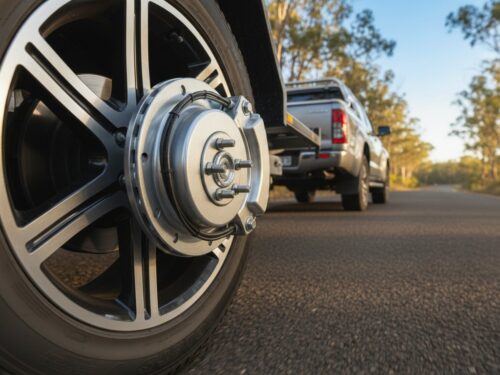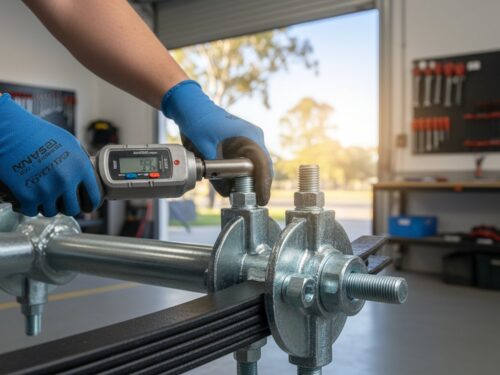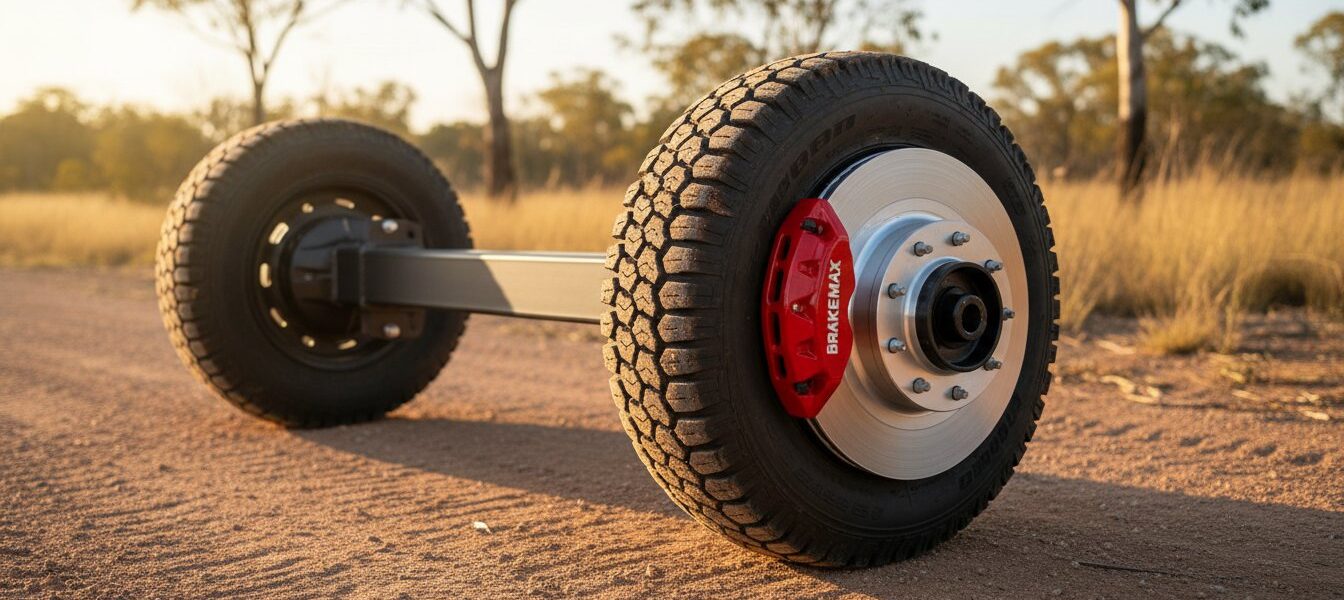
You’re 200 kilometres from the nearest town when you hear it: the grinding sound of a failed bearing on a corrugated track. Your heavy load isn’t going anywhere. This isn’t just an inconvenience; it’s a costly and dangerous failure that could have been avoided.
We get it. Your trailer is a workhorse, and its underframe is the backbone of every job. Choosing the wrong components for Australian conditions is a risk you can’t afford to take. When you’re looking for a heavy duty trailer axle for sale, you need absolute confidence in its strength and compliance. It’s about finding an axle that won’t bend, bearings that won’t quit, and a braking system that keeps you legal and safe.
This article delivers the practical, no-nonsense advice you need. We’ll show you exactly how to identify the right beam, specify the correct bearings, and source a complete axle kit that’s built tough for our roads.
Key Takeaways
- Learn why any trailer with a GTM over 750kg is classified as heavy-duty and legally requires a braking system in Australia.
- Compare the load ratings of 45mm and 50mm square axles to determine the right strength for your specific payload.
- Master the two critical measurements-Hub Face to Hub Face and Spring Centre to Spring Centre-to guarantee correct axle fitment.
- Identify the key specifications you need when searching for a heavy duty trailer axle for sale to match your trailer’s underframe.
Defining the Heavy Duty Trailer Axle for Sale
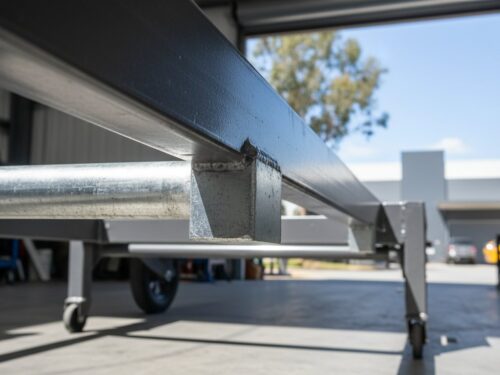
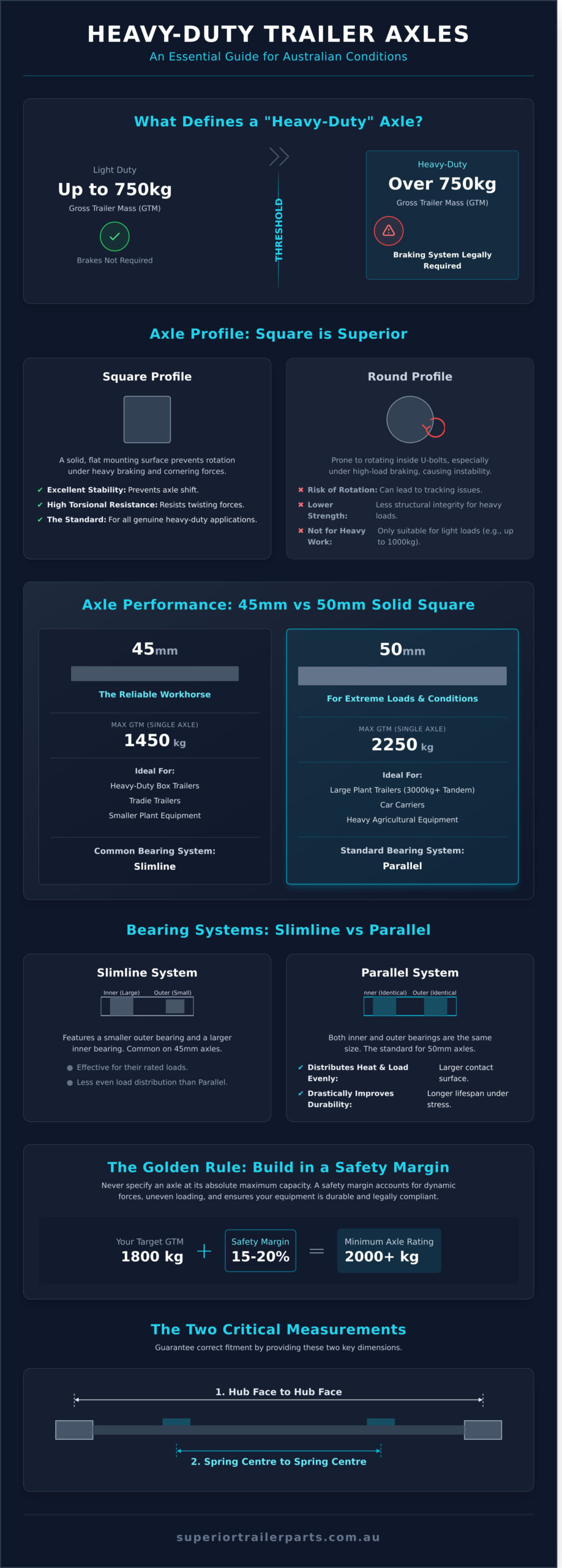
In Australia, a heavy-duty axle is any assembly rated for a Gross Trailer Mass (GTM) exceeding 750kg. This isn’t just an arbitrary number. It’s the legal threshold where braking systems become mandatory. Your simple, unbraked 6×4 trailer axle is for light-duty work. Once you pass that 750kg GTM, you enter a new class of engineering where strength, braking, and stability are paramount. The axle is the structural backbone of your trailer, responsible for carrying every kilogram of your payload safely. At its core, a basic axle is a central shaft for a rotating wheel. For a more technical overview, you can explore this resource on What is an axle?, but for practical applications, its strength is what matters.
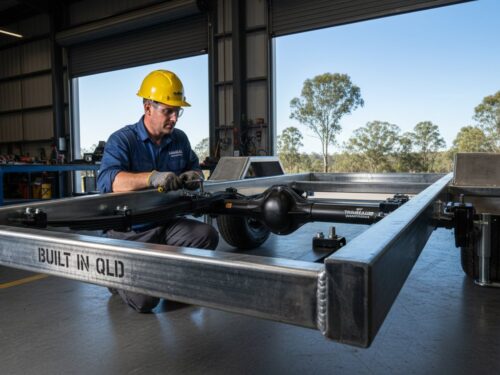
This is where material quality is non-negotiable. We build our axles with high-grade, Australian-made steel specifically to prevent axle flex under the harsh conditions our roads deliver. Inferior steel will bow under load, causing poor tyre wear, tracking issues, and potential failure. The axle assembly also makes up a significant part of your trailer’s ‘unsprung weight’-the mass of all components not supported by the suspension system. A well-engineered axle balances immense strength with optimal weight, improving stability and handling on uneven surfaces.
Round vs Square Axle Profiles
When you’re searching for a genuine heavy duty trailer axle for sale, the square profile is almost always the superior choice. The reason is pure mechanics. A square axle offers a solid, flat surface for mounting springs with U-bolts. This design prevents the axle from rotating or shifting under heavy braking and cornering forces, a common issue with round axles in high-load scenarios. While a 39mm round axle is sufficient for light loads up to 1000kg, it lacks the structural integrity for serious work. The geometry of a square beam provides far greater resistance to torsional stress, keeping your trailer tracking true.
Load Ratings and Safety Margins
Understanding trailer mass ratings is critical for safety and compliance. It’s vital to distinguish between two key terms:
- ATM (Aggregate Trailer Mass): The total weight of the fully loaded trailer when it is uncoupled from the tow vehicle.
- GTM (Gross Trailer Mass): The weight of the fully loaded trailer that is transferred to the ground by the axle group alone.
Your axle’s load rating is the foundation of your GTM. The most important rule is to never specify an axle at its absolute maximum capacity. Always build in a safety margin of at least 15-20%. For example, if your trailer’s target GTM is 1800kg, you need an axle rated for a minimum of 2000kg. This buffer accounts for dynamic forces and uneven loading, ensuring your equipment is both durable and legally compliant. The axle capacity is a core component of your trailer’s overall GVM (Gross Vehicle Mass) calculation, making it the single most important part to get right.
Comparing 45mm and 50mm Square Axle Performance
Choosing the right axle diameter is the most critical decision for your trailer’s performance and safety. The difference between a 45mm and a 50mm square solid steel axle dictates your load capacity, durability, and overall stability on the road. It’s not just a 5mm difference; it’s a significant step up in engineering and capability.
A 45mm square axle is a reliable workhorse for many applications. It is engineered to handle substantial loads, with a typical single axle setup rated to a Gross Trailer Mass (GTM) of 1450kg. This makes it ideal for heavy-duty box trailers, tradie trailers, and smaller plant equipment.
For the tradies relying on these trailers, equipping themselves properly goes beyond just transport. For example, professional painters can explore Painters workwear designed for durability and protection on the job site, ensuring every part of their setup is up to standard.
The 50mm square axle represents the next tier of strength. This is the solution for extreme loads and demanding conditions. While a single 50mm axle can be rated up to 2250kg, its true potential is unlocked in tandem configurations. A properly configured tandem setup using 50mm axles can achieve a GTM of 3000kg or more, depending on the braking system. This is essential for large plant trailers, car carriers, and heavy agricultural equipment. When you see a heavy duty trailer axle for sale, confirming its diameter and solid steel construction is your first quality check.
Axle thickness also directly impacts the maximum allowable wheel track width. A thicker 50mm beam resists flex and torsion far better than a 45mm beam. This allows for a wider, more stable trailer footprint without compromising structural integrity, a key factor for road handling under heavy loads. These specifications are not arbitrary; they are built to comply with the stringent National standards for vehicle safety that govern trailer construction in Australia.
Slimline vs Parallel Bearing Systems
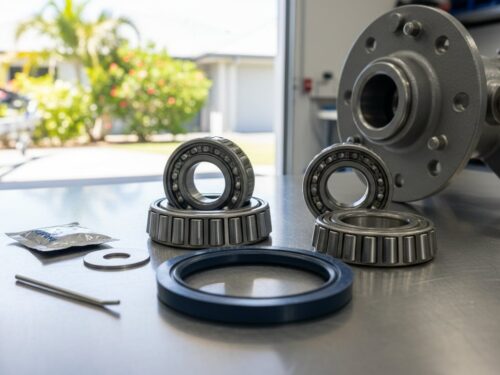
The bearings matched to your axle are just as important as the steel itself. 45mm axles commonly use a Slimline bearing set, which features a smaller outer bearing and a larger inner bearing. While effective for their rated loads, the 50mm axle standard is the Parallel bearing system. Parallel bearings are identical in size, providing a larger contact surface for both inner and outer positions. This distributes heat and load more evenly, drastically improving durability and reducing wear under constant heavy use.
For high-load bearings in dusty Australian environments, maintenance is non-negotiable. Regular inspection and re-packing with high-quality lithium grease are vital to prevent premature failure from dust and water ingress.
This principle of contamination control is vital for all moving parts. For the heavy machinery these trailers often carry, ensuring the cleanliness of hydraulic and lubrication systems is just as critical to prevent costly breakdowns. In these larger industrial applications, professional hot oil flushing services australia are a key part of a comprehensive maintenance strategy to ensure equipment longevity and reliability.
Tandem Axle Configurations
You should move from a single axle to a tandem setup when your required GTM exceeds 1450-2250kg or when you need superior stability and braking performance. Tandem axles spread the load across eight tyres instead of four, improving ride quality and safety.
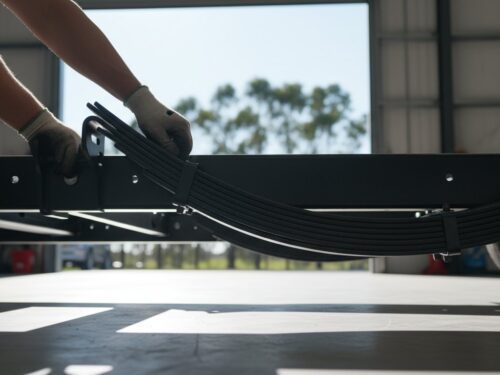
A true heavy-duty tandem system requires load-sharing suspension, like rocker-roller springs. This mechanism allows the axles to move and articulate, ensuring weight is distributed evenly between them when travelling over uneven ground. Without it, one axle could momentarily bear the entire load, leading to catastrophic failure. These principles are put into practice on expertly engineered welded galvanised tandem trailers designed for tough Australian jobs. If you need help matching the right heavy duty trailer axle for sale to your trailer’s GTM, our team provides the expert advice you need.
Braking Requirements for Heavy Duty Axle Assemblies
In Australia, trailer braking isn’t optional; it’s a legal requirement dictated by safety standards. Any trailer with a Gross Trailer Mass (GTM) exceeding 750kg must be fitted with an effective braking system on at least one axle. As the GTM increases, the braking requirements become more stringent. For any heavy-duty application, selecting the right axle and brake combination is critical for safety and Australian Design Rule (ADR) compliance.
The axle beam itself is the foundation of your braking system. It must be manufactured with brake flanges, which are square or round plates welded to the axle ends. These flanges provide the mounting points for the brake assemblies. When you’re searching for a heavy duty trailer axle for sale, verifying that it includes correctly positioned and welded flanges is a non-negotiable step. Without them, you can’t fit any brakes.
Your primary braking options for heavy loads include:
- Mechanical Brakes: Typically used for trailers between 750kg and 2000kg GTM. They are a simple, cost-effective override system activated by the trailer’s momentum pushing against the tow vehicle.
- Electric Brakes: The standard for trailers over 2000kg GTM. They offer powerful, controlled braking managed by an in-cab controller, providing excellent performance for heavy loads.
- Hydraulic Brakes: Common in marine applications. They use hydraulic fluid pressure to activate the brakes, a system well-suited to environments where electrical components would fail.
Electric Drum Brakes for Heavy Loads
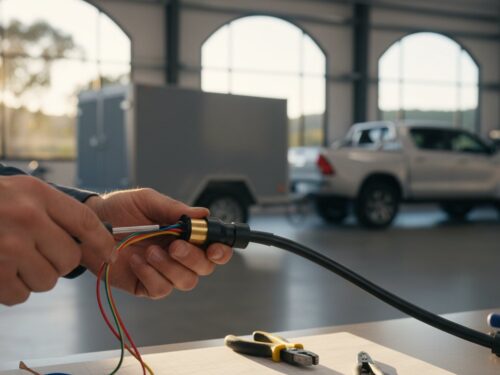
For 45mm square, 50mm square, and 60mm round axles, 10-inch and 12-inch electric drum brakes are the industry standard. Their robust design provides the stopping power needed for plant trailers, caravans, and commercial rigs. A key advantage is the use of an in-cab electric brake controller. This allows the driver to adjust braking force on the fly, perfectly matching the braking effort to the trailer’s load. This is essential for plant trailers carrying equipment of varying weights. Integrating these systems requires the right couplings and parts to ensure seamless operation.
Hydraulic Disc Brakes for Marine Use
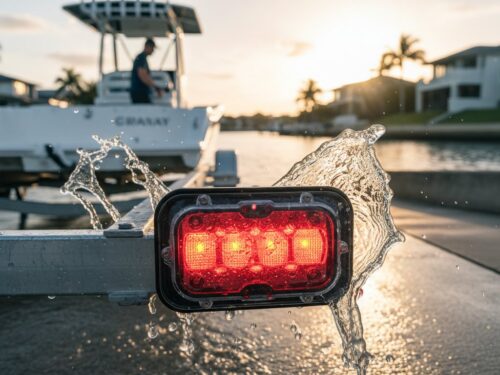
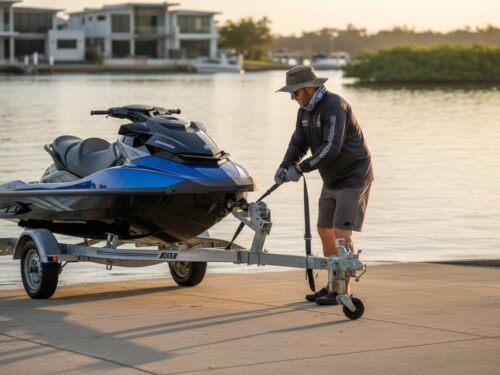
Boat trailers face a unique challenge: constant submersion in corrosive salt water. This environment quickly destroys standard electrical components. That’s why hydraulic disc brakes are the superior choice for marine use. Key components are often made from stainless steel or have a dacromet coating for maximum corrosion resistance. The sealed hydraulic lines protect the system’s integrity, providing reliable braking even after repeated launches. If you’re building or upgrading a boat trailer, investing in a quality hydraulic setup and other specialised boat trailer parts is crucial for longevity and safety.
Ultimately, your choice of braking system must align with your trailer’s GTM and intended use. Ensuring your entire setup, from the axle to the brake controller, is ADR compliant is the only way to guarantee safe, legal operation on Australian roads.
Measuring and Selecting Your Heavy Duty Axle
Correct measurements are not optional. They are essential for safety, tyre longevity, and reliable trailer performance. An incorrect axle leads to costly repairs and unsafe towing conditions. Follow these steps to get your measurements right the first time.
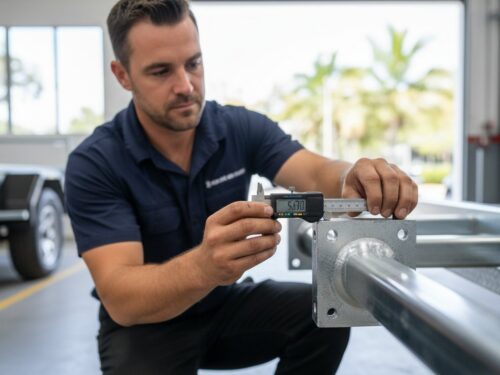
First, determine your required axle length by measuring the ‘Hub Face to Hub Face’ distance. This is the most critical measurement for finding a replacement or new axle. Use this simple process:
- Step 1: Remove both wheels from your old axle for clear access.
- Step 2: Place a long, straight edge flat against the mounting face of one hub (the surface the wheel bolts against).
- Step 3: Measure from the inside of your straight edge, across to the mounting face of the opposite hub. This total distance is your Hub Face measurement.
Next, you need the ‘Spring Centre to Spring Centre’ distance. This ensures the new axle’s spring pads align perfectly with your trailer’s chassis and suspension. Simply measure from the exact centre of one leaf spring to the centre of the opposite spring. An incorrect spring centre measurement will cause the trailer to track poorly behind your vehicle.
Finally, identify your wheel stud pattern, also known as Pitch Circle Diameter (PCD). Common Australian patterns include Ford (5-stud, 114.3mm PCD), Holden HQ (5-stud, 120.65mm PCD), and Landcruiser (6-stud, 139.7mm PCD). With these three measurements, you are ready to find the right heavy duty trailer axle for sale.
Your choice of finish depends on your trailer’s use:
- Natural (Raw Steel): Best for custom builds where you need to weld on brackets. It requires painting or coating immediately to prevent rust.
- Painted: A practical, cost-effective option for general-purpose trailers, providing a solid layer of protection.
- Galvanised: Hot-dip galvanising offers maximum corrosion resistance. It is the mandatory choice for boat trailers and trailers operating in coastal or wet environments.
The Importance of Precision Fitment
An axle that is too long forces tyres into the wheel guards; one that is too short causes tyres to rub on the chassis frame. Both errors cause accelerated, uneven tyre wear and compromise safety. The fitment of your U-bolts and kits is just as critical and must match the axle’s diameter (e.g., 45mm square, 50mm round) for a secure fit. Axle mounting is either underslung (axle sits on top of the springs for a lower deck height) or overslung (axle is mounted under the springs for greater ground clearance).
Axles for Specialized Trailers
Heavy loads demand specific axle configurations. For example, hydraulic tipper trailers endure severe dynamic load shifts, requiring a heavy duty trailer axle for sale with a high Aggregate Trailer Mass (ATM) rating. Plant trailers carrying concentrated loads like scissor lifts or excavators need solid square axles, typically 50mm or 60mm, paired with robust electric brake systems. Axle placement is also critical for balancing front-heavy equipment to maintain a safe tow ball weight, which should be 7-10% of the trailer’s total mass.
Armed with the right measurements, you can confidently select the correct axle. Explore our full range of heavy-duty trailer axles online for Australia-wide delivery.
Quality Heavy Duty Trailer Axles from Superior Trailer Parts
Finding the right axle is critical for your trailer’s safety and performance. At Superior Trailer Parts, we provide tough, reliable axles engineered for Australian conditions. As an Australian-owned and operated business, we understand the demands of our roads, from corrugated outback tracks to coastal highways. Our expertise is built into every part we sell.
Our core range of solid steel axles is designed to handle serious workloads. We stock and manufacture axles in the most common profiles required for trailers across the country:
- 39mm Round & 40mm Square Axles: The standard for lighter-duty applications. Perfect for 6×4 box trailers, tinnies, and camper trailers with an Aggregate Trailer Mass (ATM) up to 1000kg.
- 45mm Square Axles: A true workhorse. This is the most popular choice for single-axle tradesman trailers, caravans, and larger boat trailers, rated for capacities up to 1600kg.
- 50mm Square Axles: Built for maximum strength in tandem-axle setups. Ideal for heavy-duty plant trailers, car carriers, and large-scale custom builds requiring ratings up to 2250kg per axle.
Each axle is available in natural steel, Duragalv, or fully hot-dip galvanised finishes to combat corrosion. We supply them machined and ready to fit with your required stud pattern, including Ford, Holden, and Landcruiser PCDs.
Australia Wide Shipping and Availability
Our Queensland-based warehouse is the central hub for our nationwide distribution. We dispatch orders daily to every state and territory, from metro Sydney to regional Western Australia. We partner with trusted national freight carriers equipped to handle heavy and oversized components. Every axle is carefully packaged and strapped to prevent bending or surface damage, ensuring it arrives straight and ready for installation. We offer competitive direct-to-public pricing for DIY builders and dedicated trade accounts for businesses.
Expert Advice and Technical Support
Ordering the correct heavy duty trailer axle for sale requires precise measurements. Guesswork leads to costly mistakes and project delays. Our technical team is available to guide you through the process, ensuring you measure your hub-face-to-hub-face and spring-centre distances correctly. For trailers with unique widths or custom suspension setups, we offer a complete custom axle manufacturing service. We build axles to your exact specifications, delivering a perfect fit the first time. For a precise solution tailored to your trailer, you need expert advice. Contact Superior Trailer Parts for a technical quote today.
Secure the Right Axle for Your Trailer Build
Choosing the correct underframe is critical for safety and performance on Australian roads. Your key takeaways should be clear: match your axle capacity to your Gross Trailer Mass (GTM), adhere to braking regulations for any trailer over 750kg, and take precise hub-face-to-hub-face measurements. Finding the right heavy duty trailer axle for sale starts with getting these details right.
At Superior Trailer Parts, we provide quality components built for local conditions. As an Australian Owned and Operated business, we understand what your trailer needs to endure. We offer fast, nationwide shipping to get you the parts you need, wherever the job is. If you’re unsure about fitment, our team provides expert technical support for both DIY builders and trade professionals.
Don’t leave your build to chance. Browse our full range of heavy-duty trailer axles and equip your trailer with the strength and reliability it deserves. Get the job done right.
Frequently Asked Questions
What is the maximum load a 45mm square axle can carry?
A 45mm square axle is rated for a Gross Trailer Mass (GTM) of up to 1400kg. This capacity assumes the axle is fitted with appropriate bearings, such as Slimline or Parallel types. Exceeding this limit compromises safety and can lead to premature axle failure. Always ensure your trailer’s total weight stays within the axle’s specified rating for legal and safe operation on Australian roads.
Do I need electric brakes on a heavy-duty trailer axle?
Yes, Australian law requires brakes on any trailer with a GTM exceeding 750kg. For trailers with a GTM between 751kg and 2000kg, brakes must be fitted to at least one axle. Any trailer with a GTM over 2000kg needs a breakaway system and brakes on all axles. Electric brakes are a reliable and common solution for meeting these heavy-duty requirements.
What is the difference between Slimline and Parallel bearings?
The primary difference is their load capacity; Parallel bearings are rated for heavier loads than Slimline bearings. A Parallel bearing set uses the same large inner and outer bearing, giving it a capacity of up to 1600kg per axle. A Slimline set uses a smaller outer bearing, typically rating the axle for up to 1400kg. For maximum load-carrying ability, choose Parallel bearings.
Can I replace a round axle with a square axle on my existing trailer?
Yes, you can replace a round axle with a square one if the key measurements are compatible. Square axles offer greater resistance to bending under heavy loads, making them a common upgrade. You must ensure the new axle’s hub face-to-hub face length and spring centre positions match your trailer’s original specifications. This ensures correct wheel tracking and suspension alignment.
How do I measure my trailer axle length correctly?
Measure the hub face-to-hub face distance for an accurate length. This is the measurement from the flat wheel-mounting surface of one hub to the same surface on the opposite hub. You also need the spring centre measurement, taken from the middle of one spring seat to the middle of the other. Providing these two measurements is critical when ordering a new heavy duty trailer axle for sale.
What stud pattern should I choose for a heavy-duty trailer?
A 6-stud Landcruiser pattern is an excellent and popular choice for heavy-duty trailers in Australia. This pattern provides a high load rating and ensures a wide availability of compatible wheels and tyres. Other robust options include the 5-stud Landcruiser and Ford F-series patterns. Your selection should align with your trailer’s GTM and, if desired, match your tow vehicle’s stud pattern for an interchangeable spare.
Are galvanised axles better than painted ones for heavy-duty use?
Galvanised axles provide far superior corrosion protection and are the better choice for heavy-duty applications. The hot-dip galvanising process applies a thick zinc coating that resists rust, which is crucial in coastal or wet conditions. While painted axles are a functional, lower-cost option, they require more maintenance to prevent corrosion. For maximum durability and a longer service life, we recommend galvanised axles.
How often should I service the bearings on a heavy-duty axle?
We recommend servicing your axle bearings every 10,000 kilometres or every 12 months, whichever comes first. If you regularly submerge the trailer in water, like with a boat trailer, or operate in very dusty conditions, you should inspect them more frequently. Regular maintenance, including cleaning and re-greasing, is the best way to prevent bearing failure and ensure your trailer remains reliable and safe on the road.