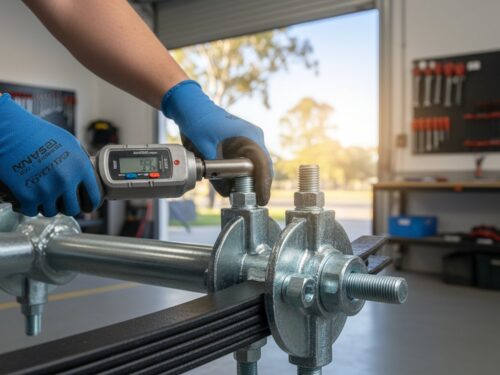
An undersized axle is a ticking time bomb for your trailer’s suspension and your safety on the road. Recent transport data suggests that nearly 15% of light trailer failures on Australian roads stem from mismatched axle ratings. Many owners find themselves overwhelmed by the technical gap between ATM and GTM ratings when choosing the right trailer axle. You’re likely worried about buying a heavy-duty replacement only to find it doesn’t match your existing hubs or won’t withstand corrosive salt spray. It’s a common concern. Precision matters here.
This article provides the expert advice you need to select a reliable, ADR-compliant solution for your specific load requirements. We’ll show you how to calculate the correct load rating and measure for a perfect fitment every time. You’ll gain the confidence to choose between 45mm square or 50mm round profiles and galvanised or marine-grade finishes to ensure long-term durability. We’ve mapped out the essential steps to ensure your trailer remains legal and roadworthy across Australia.
Key Takeaways
- Understand the critical difference between ATM and GTM to ensure your axle rating safely exceeds your intended payload.
- Compare the structural integrity of round and square steel profiles to determine the best fit for your trailer’s application.
- Select the appropriate galvanised or black steel finish to protect your components against saltwater corrosion or inland dust.
- Master precise tip-to-tip and hub-to-hub measurement techniques for choosing the right trailer axle for your specific frame.
- Prioritize ADR compliance and safety by sourcing Australian-designed axles built for local road conditions.
Determining Your Trailer Load Capacity and Axle Rating
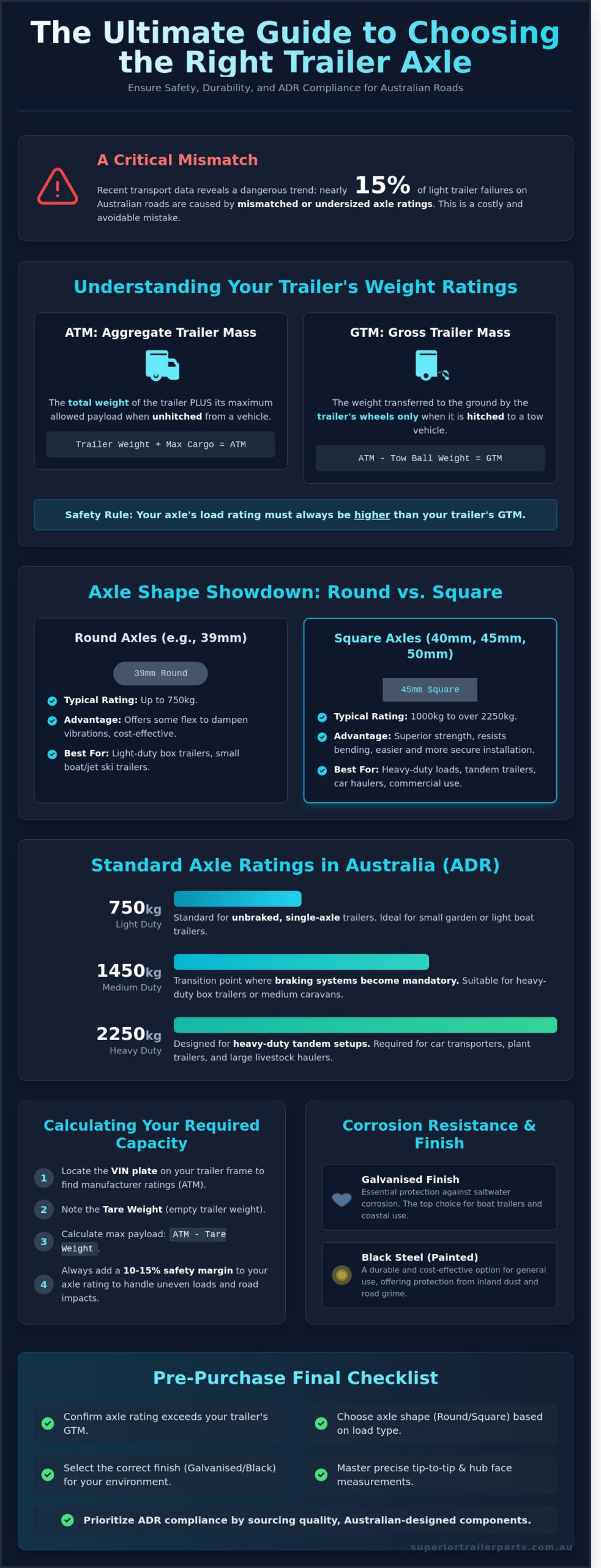
Choosing the right trailer axle requires a clear understanding of your specific load requirements. You must distinguish between Aggregate Trailer Mass (ATM) and Gross Trailer Mass (GTM). ATM is the total weight of the trailer and its maximum payload when it’s standing alone. GTM is the weight applied to the trailer’s wheels when it’s hitched to your towing vehicle. Understanding these trailer axle basics ensures you don’t exceed the physical limits of your equipment.
Safety depends on choosing an axle rated higher than your intended payload. An under-specced axle creates a high risk of snapping or bending under pressure. It also makes your trailer illegal on Australian roads. If you’re involved in an accident with an overloaded axle, insurance companies often deny claims based on non-compliance with Australian Design Rules (ADR). Using a higher-rated trailer axle provides a necessary buffer for the stresses of highway speeds and rough terrain.
Calculating Total Weight Requirements
Start by locating the VIN plate on your trailer frame. This plate lists the original manufacturer’s ratings. You must account for the tare weight, which is the weight of the empty trailer frame. Subtracting the tare from the ATM gives you your maximum payload capacity. Always factor in a safety margin of at least 10 percent. This protects the hardware from unevenly distributed loads or sudden impacts from potholes. Choosing the right trailer axle means preparing for these real-world stresses rather than just the weight of the cargo itself.
Standard Axle Ratings in Australia
Australian suppliers generally stock axles in specific weight brackets to meet ADR standards. These ratings dictate the type of bearings and hubs required for the build.
- 750kg Rating: This is the standard for light-duty, unbraked single axle trailers. It’s the go-to choice for small garden trailers or light boat trailers.
- 1450kg Rating: This is the transition point where braking systems become mandatory. These axles use larger bearings and are suitable for heavy-duty single axle box trailers or medium caravans.
- 2250kg Rating: These are designed for heavy-duty tandem setups. They provide the strength needed for car transporters, plant trailers, and large livestock haulers.
Using the correct rating ensures your equipment lasts longer and performs reliably in harsh Australian conditions. Don’t cut corners on weight capacity. A snapped axle on the side of the highway is a costly and avoidable mistake.
Comparing Axle Shapes: Round vs Square Configurations
Steel geometry determines how a trailer manages stress. Round and square configurations each offer distinct benefits based on the intended application. Choosing the right trailer axle requires an understanding of how these shapes respond to vertical loads and road vibration. Round axles are traditional for lighter setups; square axles provide the structural rigidity needed for commercial-grade hauling.
39mm Round Axle Characteristics
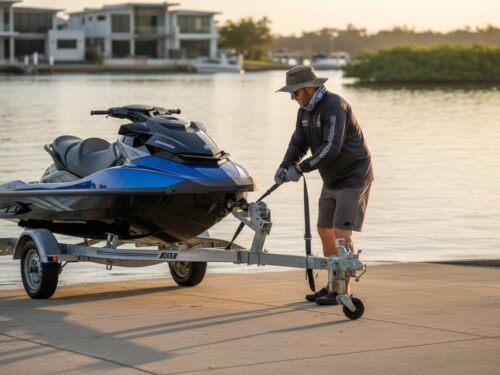
Standard 39mm round axles are the primary choice for light-duty trailers. These are most frequently found on 7×4 single axle box trailers and small jet ski trailers. A solid 39mm round axle typically supports a rating of 750kg. They offer a specific degree of flex that helps dampen vibrations on uneven roads. This flexibility prevents the trailer from bouncing excessively when empty. It’s a cost-effective solution for weekend tip runs or transporting light watercraft. If your load rarely exceeds 750kg, the round profile delivers reliable performance without unnecessary weight.
Square Axle Advantages for Heavy Loads
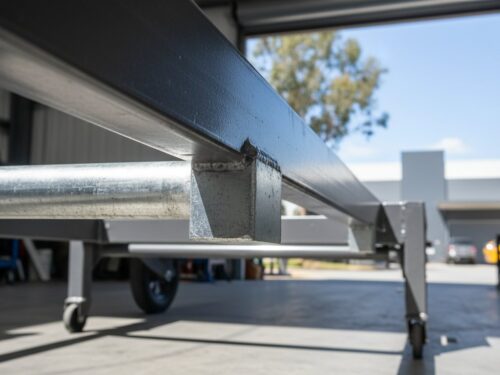
Square axles are designed for high-capacity tasks. The flat surface area provides a superior load-bearing interface for springs and U-bolts. While a 40mm square axle is a common upgrade for 1,000kg ratings, 45mm and 50mm square axles are the benchmarks for durability. These profiles offer high torsional strength and resist bending under extreme pressure. They’re the required standard for welded galvanised heavy-duty dual axle tandem trailers where stability is non-negotiable.
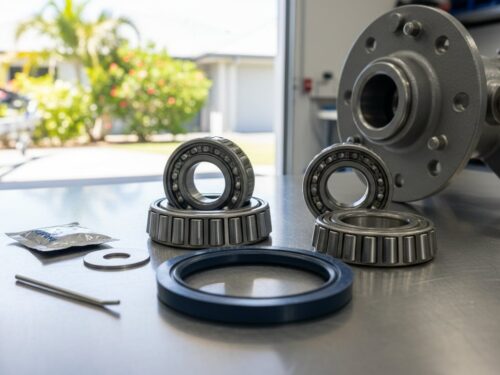
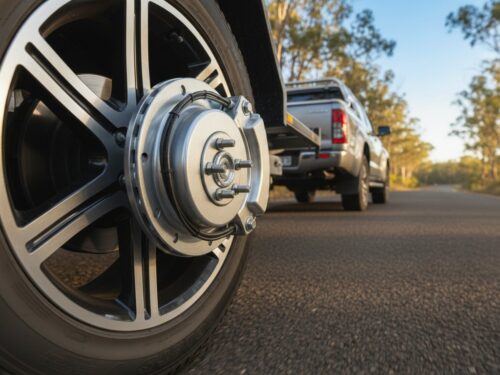
The flat edges of a square axle simplify the alignment process during installation. This configuration stays seated more securely than a round axle, which can rotate if U-bolts aren’t perfectly torqued. Adhering to federal axle weight limits is critical for safety and legal compliance on Australian roads. Standard 39mm and 40mm axles often use LM bearings, while 45mm square axles typically step up to Slimline or Parallel bearings to handle increased heat. Choosing the right trailer axle means ensuring your hubs and bearings match your load requirements. You can browse our range of heavy-duty trailer axles to find the exact fit for your chassis.
Material Selection and Corrosion Resistance
Choosing the right trailer axle requires a hard look at your operating environment. Material finish is your first line of defence against structural failure. In Australia, the harsh sun and coastal salt air make corrosion a primary concern for any fleet manager or DIY builder. Steel finishes determine how long the axle lasts before rust compromises its structural integrity. You have two primary choices: black steel or hot-dipped galvanised.
Galvanised Axles for Marine Applications
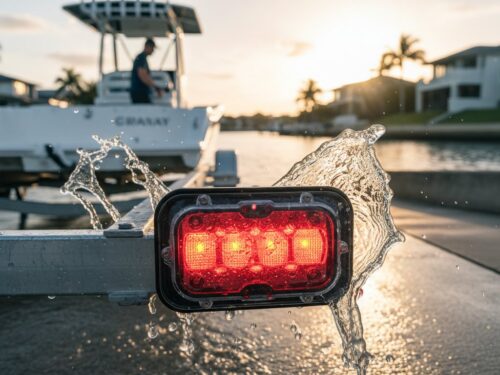
Boat and jet ski trailers face constant saltwater immersion. This makes galvanised axles non-negotiable for anyone launching at a ramp. The hot-dipping process involves submerging the steel in molten zinc at temperatures around 450 degrees Celsius. This creates a metallurgical bond that won’t peel or flake off. This coating acts as a sacrificial anode, stopping rust from reaching the core metal even if the surface gets scratched. You should always pair these components with high-quality boat trailer parts to ensure the entire assembly withstands corrosive environments. Saltwater can destroy untreated steel in less than 12 months. Protection for your bearings is equally vital. Use waterproof seals and grease-filled hubs to prevent internal corrosion. While these standards are rigorous, they align with broader safety expectations found in the Federal Motor Vehicle Safety Standards, ensuring your trailer remains roadworthy and safe under heavy stress.
Black Steel for Heavy-Duty Utility Use
Trailers used for inland construction or dry storage don’t always need the extra expense of galvanisation. Black steel is a cost-effective alternative for these conditions. It provides excellent strength-to-weight ratios for heavy-duty single axle box trailers. You can add protection by painting or powder coating the axle. This prevents surface rust from inland dust and occasional rain. A painted finish is easier to weld if you need to make modifications later. It’s a practical choice for tradespeople who operate far from the coast. A galvanised axle might cost 25% more upfront. For a trailer that stays dry, that money is often better spent on higher-rated springs or better tyres.
Maintenance requirements vary significantly between these two materials. Galvanised axles need a thorough freshwater rinse after every beach launch. Black steel axles need regular visual inspections for coating failure. Check your axle every 6 months for paint chips or signs of pitting. A quick touch-up prevents deep corrosion from taking hold. Choosing the right trailer axle involves balancing these maintenance tasks against your project budget and local climate. A well-maintained black steel axle can last 10 years in western Queensland, while it might fail in two years on the Gold Coast.
Technical Measurements and Fitting Requirements
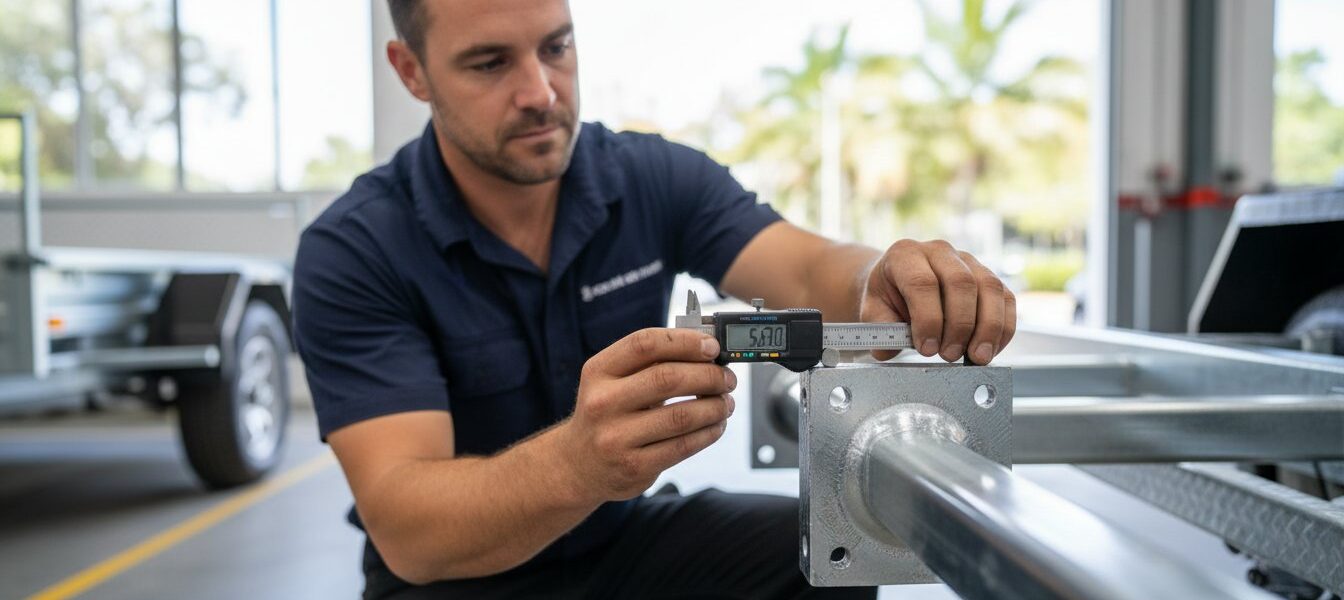
Precision is the baseline for trailer safety. Getting your measurements wrong by even 10mm can lead to tyre scrub, bearing failure, or the tyre hitting the chassis rail. When you’re choosing the right trailer axle, you need to move beyond generalisations and focus on three specific data points. These measurements ensure the axle tracks straight and carries the load as engineered.
- Tip-to-Tip: This is the total length of the axle from one threaded end to the other. It’s vital for ensuring the axle doesn’t exceed the legal Australian vehicle width limit of 2.5 metres.
- Hub-to-Hub (Face-to-Face): This is the most critical measurement for wheel clearance. It measures the distance between the two flat surfaces where the wheel rims bolt onto the hubs.
- Spring Centres: This measurement sits between the centres of the two spring seats. If this is off by even 5mm, the springs will be forced inward or outward, leading to premature bush wear and poor handling.
The Importance of Precision Measurement
Wheel-to-chassis interference is a common DIY mistake. You must maintain a minimum clearance of 50mm between the inner tyre sidewall and the trailer frame. To get this right, use a steel tape measure rather than a fabric one. Fabric tapes stretch and can lead to errors. If you’re measuring an existing axle for replacement, it’s best to do it while the axle is still bolted to the springs to maintain the correct alignment. If the axle is bent, measure from the hub face to the spring centre on both sides to identify the discrepancy.
Axle and Suspension Integration
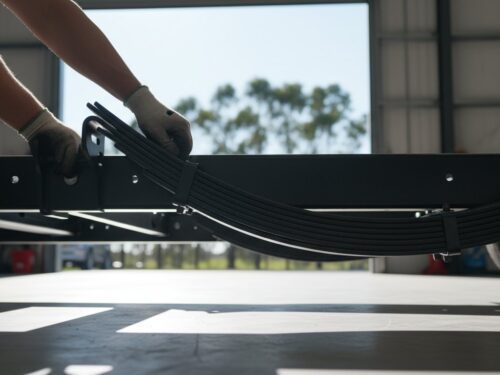
The axle doesn’t work in isolation. It must be perfectly integrated with your suspension system to handle Australian road conditions. Selecting the correct u bolts kits is essential. These must match your axle diameter exactly, whether you’re running a 39mm round axle or a 50mm square heavy-duty version. Loose or ill-fitting U-bolts allow the axle to shift, which ruins your alignment instantly.
Alignment requirements differ between slipper springs and eye-to-eye springs. Slipper springs are common on lighter trailers, while eye-to-eye setups provide better dampening for tandem configurations. Ensure your axle’s braking flanges match your chosen braking system. Electric brakes and mechanical disc brakes have different mounting patterns. Always double-check that your coupling’s load rating matches the axle’s capacity to prevent a weak link in your towing setup.
Sourcing Reliable Components and Professional Installation
Sourcing Australian-designed axles is the primary way to ensure your trailer complies with Australian Design Rules (ADR) and the VSB1 national standards. Generic, unrated imported axles often lack the engineering documentation required for registration and insurance coverage. When choosing the right trailer axle, you must prioritise components built for local conditions. A snapped spindle on a remote corrugated road can result in recovery costs exceeding A$2,500, which far outweighs any initial savings on cheaper parts. Australian-owned suppliers provide the accountability and technical support needed for long-term reliability.
Custom axle fabrication becomes necessary when standard track lengths don’t align with your chassis design. If your requirements exceed a 2,500kg GVM, off-the-shelf solutions might not suffice. Consulting an expert ensures the axle beam thickness and spindle size are calculated correctly for the intended load. Professional advice prevents the common mistake of underspecifying components, which leads to a 40% higher failure rate under maximum load conditions.
Identifying Quality Manufacturing
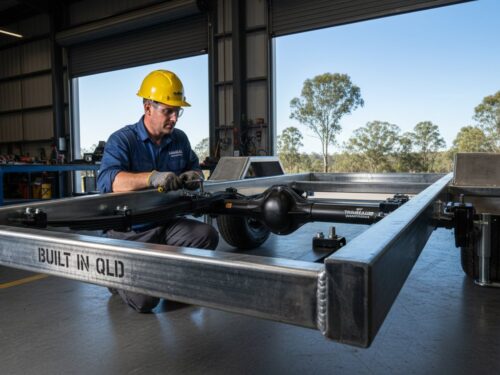
Quality manufacturing begins with the base material. Heavy-duty applications require high-tensile steel, typically 4140 grade or equivalent, to prevent bowing under weight. Inspect square axles for absolute straightness; a deviation of just 5mm can scrub out a set of tyres in less than 3,000km. Examine the weld quality where the spindle meets the beam. Clean, consistent welds without porosity indicate professional workmanship. Reviewing trailer axles technical specifications allows you to verify load ratings and material grades before purchasing. Ensure the galvanised coating is uniform to provide maximum corrosion resistance in marine environments.
Professional Verification and Safety
Professional installation is highly recommended for all braked axles. Correct alignment is a precision task; even a small degree of toe-in or toe-out causes significant drag and fuel inefficiency. After the initial 100km of travel, perform a comprehensive inspection of the assembly. Use a torque wrench to ensure wheel nuts are set to 125Nm for standard M12 studs. Check for bearing play by rocking the wheel; there should be zero lateral movement. Following box trailer for sale engineering standards ensures your vehicle remains roadworthy and safe for heavy hauling.
Final Safety Checklist:
- Verify the axle load rating matches or exceeds the trailer GTM.
- Check that U-bolts are tightened evenly to prevent axle shift.
- Ensure brake cables or hydraulic lines are secured away from moving parts.
- Confirm the hub face-to-face measurement provides adequate tyre clearance from the chassis.
- Lubricate bearings with high-temperature marine-grade grease for longevity.
Taking these steps ensures that choosing the right trailer axle results in a build that is both legal and durable. Professional oversight and high-quality sourcing are the best investments you can make for vehicle safety.
Secure Your Load with the Correct Axle Setup
Reliability on the road starts with a precise match between your trailer’s ATM and its axle rating. Selecting a 45mm slimline or a 50mm heavy-duty configuration depends entirely on your specific weight requirements. Square axles provide a flat surface for secure welding on high-capacity builds, while round axles remain a versatile choice for standard utility trailers. Don’t overlook material choice; galvanised finishes are essential for preventing rust in salt-heavy Australian environments. Choosing the right trailer axle ensures your equipment handles the stress of the road without premature mechanical failure.
Superior Trailer Parts is 100% Australian Owned and Operated. We provide the industry knowledge needed for both professional fleet managers and DIY owners. Our team offers expert technical advice to help you identify the exact measurements for your chassis. We offer nationwide shipping across all 8 states and territories, ensuring your parts arrive quickly so you can get back to work. We’ve built our reputation on providing genuine, reliable components that stand up to the toughest local conditions.
Browse our range of heavy-duty trailer axles and get your trailer project moving today. Your equipment is only as strong as its foundation.
Frequently Asked Questions
How do I know if I need a 39mm round or 40mm square axle?
Choose a 39mm round axle for light-duty trailers with a Gross Vehicle Mass (GVM) under 750kg. Use a 40mm square axle if you require a 1000kg load rating or a more stable welding surface for your leaf springs. Square axles provide better resistance to flexing under load. You should also check your bearing sizes; 39mm round axles typically use LM (Holden) bearings, while 40mm square axles often accommodate Slimline (Ford) bearings for increased durability.
What is the maximum load rating for a 45mm square axle?
A 45mm square axle has a maximum load rating of 1450kg when fitted with Slimline or Parallel bearings. This is the industry standard for medium-duty trailers and horse floats in Australia. Choosing the right trailer axle requires matching this 1450kg capacity to your specific trailer GVM. Ensure your springs, hubs, and tyres also meet this weight threshold to maintain safety. For loads exceeding 1450kg, you must upgrade to a 50mm square axle setup.
How do I measure my trailer axle for a replacement?
Measure your axle from hub face to hub face and tip to tip to ensure an exact fit. The hub face measurement is the distance between the flat surfaces where the wheel studs are located. The tip-to-tip measurement covers the entire length of the steel bar, including the threaded ends. Use a steel tape measure to get an accuracy within 1mm. These figures ensure your new axle fits the chassis width and provides enough clearance for tyres.
Do I need a braked axle for my 750kg trailer?
You don’t need a braked axle for a trailer with a Gross Vehicle Mass (GVM) of 750kg or less in Australia. Australian Design Rules (ADR) only mandate braking systems for trailers that exceed the 750kg GVM limit. If your loaded trailer weighs exactly 750kg, an unbraked axle is legally sufficient. However, if there’s any chance your load will push the total weight over this limit, install a braked axle to remain compliant with state transport regulations.
Can I use a round axle for a tandem trailer setup?
You can use round axles for a tandem setup, but square axles are the preferred choice for most Australian manufacturers. Square profiles provide a flat surface that prevents the axle from rotating in the U-bolts under heavy braking or suspension travel. Tandem trailers often carry loads between 2000kg and 3500kg. Using 45mm or 50mm square axles ensures the assembly remains rigid and aligned, which reduces tyre wear and improves towing stability on harsh roads.
What is the difference between a straight axle and a drop axle?
A straight axle is a solid horizontal bar that keeps the trailer at a standard height, while a drop axle features spindles welded higher than the axle beam to lower the ride height. Most drop axles provide a 63.5mm or 101.6mm reduction in the trailer’s centre of gravity. This makes loading easier for horse floats or car trailers. Choosing the right trailer axle involves deciding if you need maximum ground clearance or a lower, more stable loading height.
How often should I inspect my trailer axle for wear?
Inspect your trailer axle every 10,000 kilometres or every 12 months, whichever comes first. Check for physical cracks in the beam, signs of rust on galvanised surfaces, and any bending or misalignment. You should also grease your bearings and check for hub play during this inspection. For boat trailers used in saltwater, perform a visual check after every trip. Regular maintenance prevents catastrophic failure and ensures your trailer stays roadworthy for long-distance hauls.
Are galvanised axles stronger than black steel axles?
Galvanised axles aren’t stronger than black steel axles, as both are typically manufactured from the same grade of carbon steel, such as Grade 350 or 1045. The difference lies in corrosion protection. Hot-dipped galvanising adds a protective zinc coating that prevents rust, making it essential for marine environments and boat trailers. Black steel is a cost-effective option for dry-land trailers but requires painting. Both materials provide the same structural integrity and load-bearing capacity for your trailer.