A single millimeter of clearance in your trailer hardware can be the difference between a safe haul and a roadside catastrophe. You know that the harsh Australian environment, from salt spray to corrugated outback roads, eats through inferior components. Choosing the right u bolts is not just about size; it’s about ensuring your axle remains fixed under heavy loads. Industry data suggests that 15% of trailer-related breakdowns involve loose or corroded axle hardware, making your choice of fastener a critical safety decision.
It’s frustrating to buy parts only to find they don’t fit when you’re already under the chassis. We understand that you need hardware that stands up to the job without the hassle of returns or premature rust. This article shows you how to accurately measure, select, and install the correct hardware to keep your axle secure and road-legal. We will cover heavy-duty galvanised finishes, specific torque requirements, and the three precise measurements required to ensure your trailer stays on the road where it belongs.
Key Takeaways
- Understand how primary fasteners provide the clamping force necessary to prevent axle shift during heavy braking.
- Identify the three critical dimensions required to secure an accurate fit for any trailer axle.
- Follow a professional installation process to ensure correct alignment and maximum safety on the road.
- Select galvanised finishes to protect your u bolts against corrosion in harsh Australian coastal and inland conditions.
- Learn why hardware requires a “bedding in” check to maintain secure clamping force after your first few kilometres.
Understanding the Role of U-Bolts in Trailer Suspension
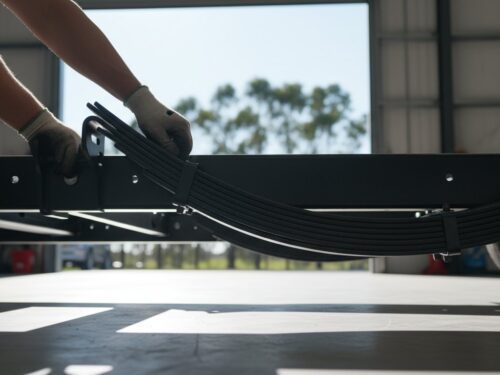
U-bolts are the primary fasteners that clamp the axle to the leaf springs. They are the only components keeping your trailer’s running gear aligned and secure. Under heavy loads or sudden braking, the forces exerted on these fasteners are immense. If they fail, the axle shifts instantly. This leads to catastrophic suspension collapse and a total loss of vehicle control on the road. High-quality hardware isn’t just a preference; it’s a requirement for meeting Australian safety standards and ADR regulations.
To get a better grasp of the engineering behind these parts, What is a U-bolt explains the basic design of these curved fasteners. In a trailer setup, they function as high-strength clamps that must withstand constant vibration and road shock. Using the correct u bolts ensures your trailer remains stable under various load conditions.
The Mechanics of Clamping Force
Tension in the bolt translates directly to friction between the axle and the spring pack. This friction is what actually holds the axle in place. High-tensile steel is non-negotiable for these applications. Standard mild steel will stretch and loosen under the stress of Australian road conditions. When you tighten a bolt, it stretches slightly to maintain its grip. If you stretch the metal beyond its elastic limit, it won’t snap back. This permanent deformation means the clamping force is gone, even if the nut feels tight.
When to Replace Your Existing Hardware
Inspect your suspension hardware every 5,000 kilometres or after heavy off-road use. You need to look for specific warning signs that indicate the metal is fatigued or damaged. Replace your hardware if you notice any of the following:
- Visible surface pitting or deep corrosion.
- Threads that are flattened, stripped, or cross-threaded.
- Any visible bending or distortion in the “U” bend.
- Evidence of the axle shifting against the spring center bolt.
Experts recommend a strict “one-use” rule for these fasteners. Once a bolt has been torqued and subjected to road heat and vibration, its structural integrity changes. Reusing old hardware significantly increases the risk of a roadside failure. It’s safer and more cost-effective to install fresh trailer parts during any suspension overhaul. This ensures your setup remains reliable and compliant with local towing laws.
How to Measure U-Bolts for an Accurate Fit
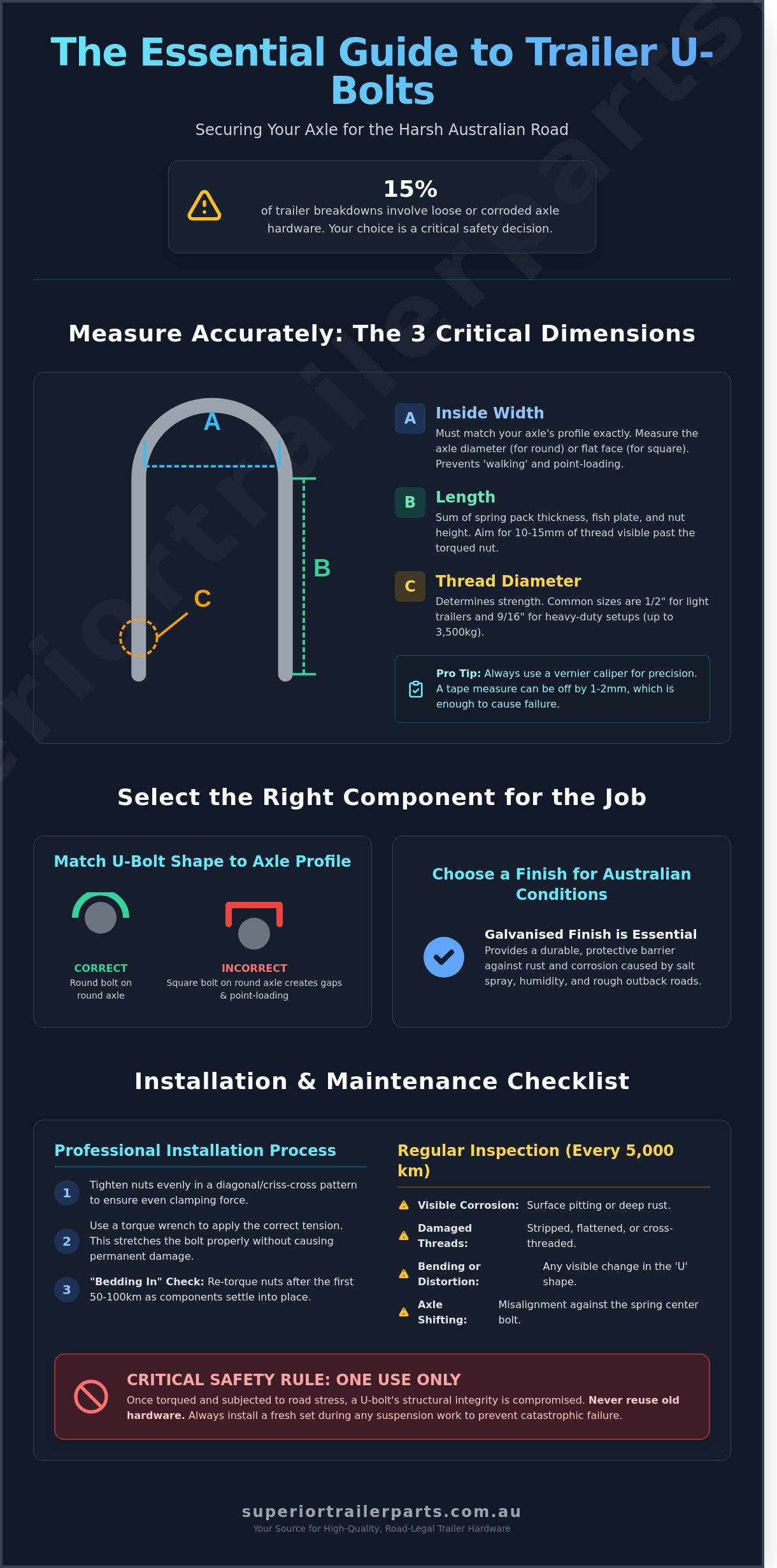
Accurate measurement is the only way to ensure a secure axle mount. Guessing lead to loose hardware and potential axle shift on corrugated Australian roads. You need three primary dimensions: inside width, length, and thread diameter. Measurements should always be taken with a vernier caliper for precision. A standard tape measure can be out by 1mm or 2mm, which is enough to cause fitment issues and premature wear.
Measuring for Round vs. Square Axles
Match the U-bolt shape to your specific axle profile to maintain a solid connection. To measure round axles, take the diameter reading across the widest part of the tube. A 39mm round axle is a standard Australian size and needs a bolt that fits tight against the radius without gaps. Using a square bolt on a round axle creates point-loading that can deform the tube.
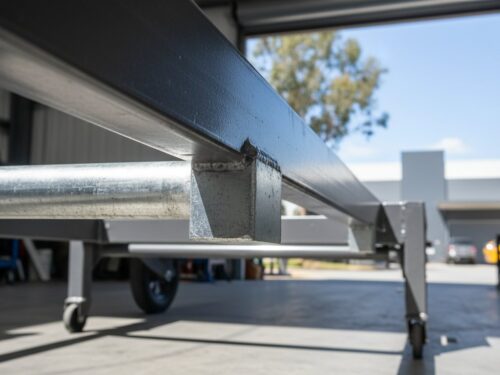
For square axles, measure the flat face from edge to edge. This prevents “walking,” where the bolt slides along the axle during heavy braking or cornering. Common Australian sizes include 40mm square and 45mm square axles. Ensure the internal width of the u bolts matches these measurements exactly to provide a flush fit against the steel surface.
Determining the Correct Length and Thread
Calculate the required length by measuring the spring pack thickness plus the fish plate and the height of the nuts. You want roughly 10mm to 15mm of thread visible past the nut once the assembly is fully torqued. Don’t leave too much excess thread hanging below the axle. It creates a clearance hazard that can catch on debris or rocks when driving off-road.
Thread pitch in Australia is typically 1/2 inch or 9/16 inch. Most u bolts for light trailers use the 1/2 inch standard, while heavier 3,500kg setups often require 9/16 inch hardware to handle increased stress. If you need assistance with specific dimensions for your build, our team provides expert advice to help you get the right fit the first time.
Step-by-Step Guide to Installing Trailer U-Bolts
Safety is the first priority for any trailer maintenance task. Park the trailer on a level concrete surface and chock the wheels that remain on the ground. Use jack stands rated for the trailer’s Gross Trailer Mass (GTM). Do not rely on a hydraulic jack to hold the weight while you work. Once the trailer is secure and the axle is supported, you can begin the removal of old hardware.
Preparation and Alignment
Clean the axle mounting surfaces thoroughly before fitting new hardware. Use a stiff wire brush to remove heavy rust, road grime, or old grease. This ensures a clean metal-to-metal contact that prevents the assembly from shifting. The head of the spring center bolt must seat perfectly into the hole on the axle perch or the axle seat. If this bolt is not aligned, the axle will sit crooked, causing poor tracking and rapid tyre wear. While the assembly is apart, inspect your leaf springs for signs of flattening or stress fractures. Replacing worn springs alongside your new u bolts ensures the entire suspension system operates at peak performance.
Tightening and Torquing
Position the u bolts over the axle and through the fish plate. Start all nuts by hand to ensure the threads are not crossed. You must use a diagonal “cross-pattern” tightening sequence to apply even pressure across the axle tube. This prevents the fish plate from tilting, which can lead to loose hardware later. Follow these specific steps for a secure fit:
- Tighten the front-left nut until it is finger-tight.
- Move to the rear-right nut and repeat.
- Tighten the front-right nut, then the rear-left nut.
- Repeat the pattern using a wrench until all nuts are firm.
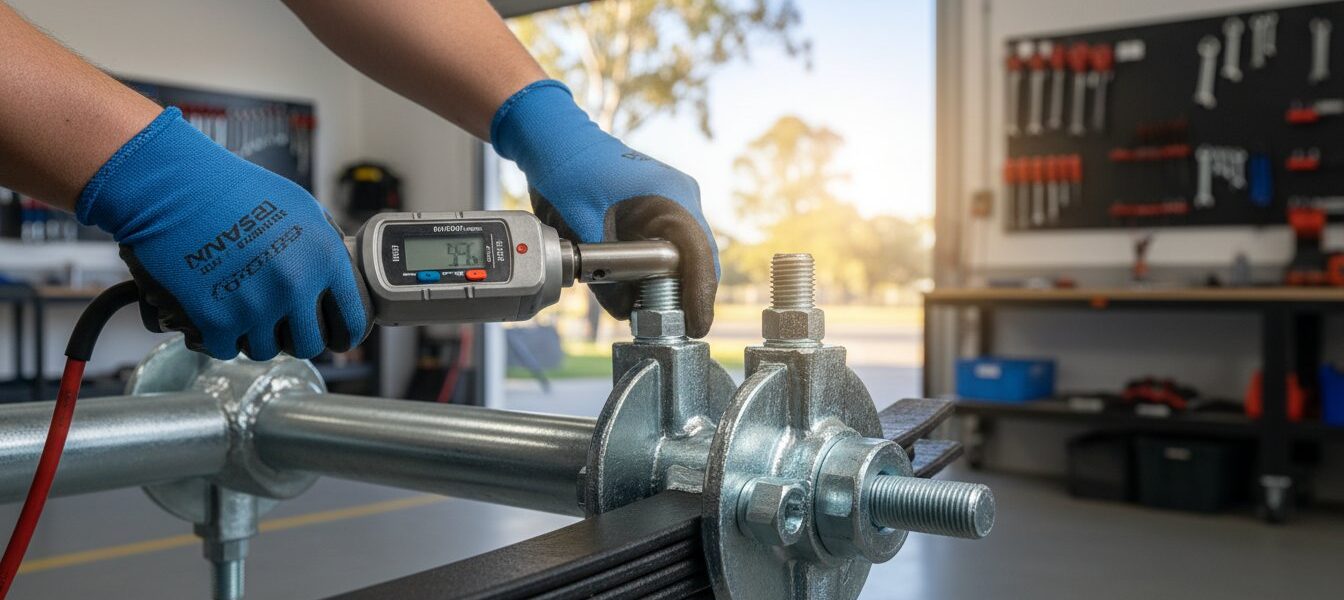
Use a calibrated torque wrench for the final stage. For standard 1/2 inch (12.7mm) diameter bolts, tighten to 65-80 foot-pounds (88-108 Nm). For 5/8 inch bolts, increase the torque to 100-120 foot-pounds. Don’t use an impact wrench for the final tighten. These tools provide inconsistent torque and can over-stretch the steel or strip the threads. High-speed friction from impact tools also causes “galling” on galvanised coatings, which welds the nut to the bolt prematurely. Re-check the torque after the first 100 kilometres of travel to account for initial settling.
Selecting the Right Finish for Australian Conditions
Australia has some of the most demanding environments for towing hardware. Coastal salt air accelerates oxidation; dry inland tracks subject components to abrasive dust. Selecting the correct finish for your u bolts is the difference between a reliable setup and a roadside breakdown. You need hardware that stands up to local conditions without failing when you’re 500 kilometres from the nearest town.
Galvanised vs. Zinc Plated Hardware
Hot-dip galvanising is the industry standard for Australian trailers. This process involves dipping the steel into molten zinc at approximately 450 degrees Celsius. It creates a thick, durable alloy layer that thrives in outdoor environments. Zinc plating uses an electrolytic method to apply a much thinner coating. While it looks shiny on the shelf, it offers minimal protection against the elements.
- Hot-Dip Galvanised: Best for salt air and heavy-duty loads. The coating “heals” minor scratches through sacrificial protection.
- Zinc Plated: Suitable for indoor storage or dry climates only. It’s often too thin for high-moisture areas.
- Stainless Steel: High corrosion resistance but requires careful engineering. It can be prone to thread galling and lower tensile strength.
In coastal regions, zinc-plated hardware often shows signs of red rust within 12 weeks of exposure. Galvanised coatings can last up to 50 years in inland areas and significantly longer than zinc in high-salt environments. We recommend using high-quality u-bolt kits with a hot-dip galvanised finish for any trailer stored outdoors.
Special Considerations for Boat Trailers
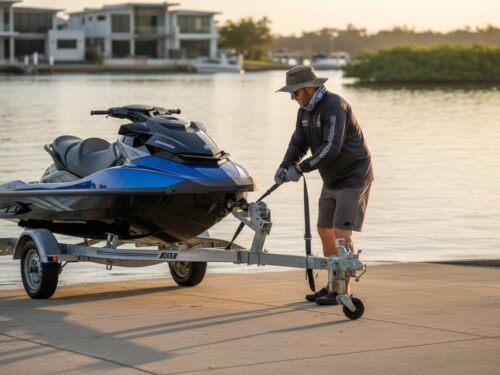
Boat trailers face the harshest conditions due to regular immersion in salt water. This environment demands marine-grade hardware. While stainless steel is an option for light-duty applications, it has limitations. Grade 304 or 316 stainless steel can suffer from stress corrosion cracking if the load is too high. For most boat trailers, hot-dip galvanised steel remains the superior choice for structural integrity and load-bearing capacity.
Maintenance is vital for longevity. Always rinse your boat trailer parts with fresh water after every ramp launch. Salt crystals trapped between the u bolts and the axle can cause pitting corrosion if left untreated. A five-minute washdown extends the life of your suspension components by several years. It’s a simple habit that prevents expensive repairs.
Need reliable hardware for your next project? Browse our range of heavy-duty galvanised u-bolt kits here.
Maintaining and Replacing Your Trailer Hardware
U-bolts carry the entire weight of your load across every bump and pothole. They aren’t set and forget components. Australian roads, especially corrugated inland tracks, put immense stress on suspension hardware. If you ignore maintenance, you risk axle misalignment or total fastener failure. High-tensile steel is durable, but it isn’t invincible against constant vibration and heavy GVM loads.
Regular inspection ensures your trailer remains roadworthy. You should look for signs of movement, such as clean metal patches where the axle meets the spring. These marks indicate the u bolts have loosened, allowing the components to shift. A quick visual check before every long trip saves you from a costly roadside breakdown.
This principle of proactive maintenance to manage stress and wear extends beyond mechanical engineering into fields like biochemical research. For those with a technical mindset also interested in how biological systems recover, Australian research suppliers are a valuable resource. For instance, Peptide Research AU provides in-depth information on compounds studied for their regenerative properties.
The 50km Critical Check
New hardware undergoes a bedding-in period. During the first 50km of towing, the fasteners and mounting plates settle against each other. Paint or galvanising on the surfaces can compress, which reduces the tension on the nuts. It’s vital to re-torque every nut to the specific foot-pound requirement after this initial trip. Don’t assume they’re still tight just because they look fine.
- Check for “stretch” in the bolt shank.
- Look for thread stripping caused by over-tightening.
- Verify that the fish plate hasn’t bowed under pressure.
Vibration is the primary enemy of fastener security. On unsealed roads, the constant high-frequency chatter can back off even the best-fitted nuts. If you’re planning a trip through the Kimberley or across the Nullarbor, check your hardware daily.
Long-Term Maintenance Tips
Inspect your hardware every 5,000km for standard highway use. Reduce this interval to 1,000km if you’re hauling heavy equipment off-road. Visual cues often tell you if your suspension is under-rated. If your leaf springs have lost their arch or if you see contact marks on the trailer frame, you’re likely exceeding the hardware’s capacity.
Applying anti-seize compounds is a common practice in marine environments to prevent rust. It makes future removal easier, but it changes the friction coefficient of the threads. If you use these lubricants, reduce your torque settings by 20% to avoid over-stretching the metal. If you notice any thinning of the bolt diameter or deep rust pitting, replacement is the only safe option. For complex builds or technical questions about your setup, get expert advice from our experienced team. We understand the demands of the Australian environment and can help you find the right u bolts for your specific trailer type.
Secure Your Trailer for Rugged Australian Roads
Selecting the right hardware keeps your trailer on the road and your load secure. Focus on precise measurements to ensure a tight fit. A 1mm discrepancy can cause unwanted movement in your suspension system, leading to premature wear. For Australian conditions, always opt for heavy-duty galvanised finishes to resist corrosion from salt spray and high humidity. Proper installation requires tightening nuts in a cross-pattern and re-checking torque settings after your first 100km of travel. This simple maintenance step prevents hardware from loosening under heavy vibration on corrugated surfaces.
Superior Trailer Parts provides the reliable components you need to get the job done right. We’re a 100% Australian Owned and Operated business committed to durability and performance. We offer nationwide shipping on all parts and provide expert technical support for every DIY project or fleet repair. High-quality u bolts are the foundation of a safe towing setup. Don’t compromise on your trailer’s structural integrity when you’re far from the nearest workshop.
Shop Heavy-Duty Galvanised U-Bolt Kits
Get your trailer back in service today with parts built for the toughest environments.
Frequently Asked Questions
Can I reuse my old U-bolts if they look okay?
No, you shouldn’t reuse old u bolts because the threads stretch during their initial installation. This physical deformation means they won’t maintain the required clamping force a second time. Professional mechanics replace them every time an axle is serviced. Reusing a bolt that has stretched by even 0.2mm compromises the integrity of your suspension. Invest in new hardware to ensure your trailer remains secure on corrugated Australian roads.
How tight should trailer U-bolts be?
Trailer u bolts should be tightened to specific torque settings based on their diameter and grade. For a standard 1/2 inch bolt, you typically aim for 60 to 80 Newton-metres of torque. Use a calibrated torque wrench rather than guessing with a spanner. Uneven tension leads to component failure. Check your nuts again after 100 kilometres of towing to account for initial settling and vibrations that occur during travel.
What is the difference between a round and square U-bolt?
The difference is defined by the shape of your axle beam. Round bolts fit circular axles while square versions secure square or rectangular beams. A 50mm round axle requires a matching 50mm round bolt to ensure 100 percent surface contact. Using the wrong shape creates point-loading gaps. This results in 40 percent less clamping efficiency and increases the risk of the axle shifting during heavy braking or sudden maneuvers.
Do I need a fish plate with my U-bolts?
You definitely need a fish plate or a base plate to distribute the clamping force evenly across the leaf spring. These plates prevent the bolts from bending inward or crushing the spring leaves. A standard 8mm or 10mm thick steel plate provides the necessary rigidity for most Australian trailers. Without this plate, the concentrated pressure can cause the spring pack to shift or crack under a full load.
Why do my U-bolts keep coming loose?
Your bolts come loose because of thread stretch or improper initial torque. New hardware often settles during the first 50 to 100 kilometres of use, which reduces the clamping pressure. Road vibrations from uneven terrain also contribute to nut movement. Always use nyloc nuts or spring washers to prevent backing off. If they continue to loosen, check for 1mm of wear on the axle or the spring seats.
How do I know what size axle I have?
Measure the diameter or width of your axle beam using a digital vernier calliper. Most Australian trailers use standard sizes like 39mm round, 45mm square, or 50mm square. Don’t rely on a tape measure for this task. A 1mm difference in measurement determines whether the hardware fits snugly or fails prematurely. Once you have the exact millimetre reading, select the hardware that matches that specific dimension exactly for safety.
Are galvanised U-bolts better than stainless steel?
Hot-dipped galvanised steel is generally superior to stainless steel for load-bearing trailer applications. Galvanised bolts offer the high tensile strength of Grade 8.8 steel, while stainless steel is often more brittle and prone to thread galling. Galvanising provides a 50-micron zinc coating that protects against salt-water corrosion in marine environments. For heavy-duty towing, the structural integrity of galvanised steel outweighs the aesthetic benefits of stainless options in harsh conditions.