A standard trailer cover can fail in less than 6 months when exposed to the 11+ UV index ratings common across the Australian interior. You understand that a flimsy tarp isn’t a solution; it’s a liability that leads to flapping, tearing, and water pooling. High-speed transit and harsh sunlight turn inferior materials brittle, risking your cargo and your professional reputation. We agree that equipment should work as hard as you do without requiring constant maintenance or replacement. Using the wrong gear often leads to a 40% decrease in material tensile strength after just one summer season.
This article shows you how to evaluate trailer cover materials, fitment styles, and essential hardware to ensure your load stays secure and protected from the elements. You’ll get expert advice on selecting waterproof, marine-grade fabrics and easy-to-use securement systems that provide a professional finish for business use. We examine the technical specifications of heavy-duty PVC and the specific hardware required to prevent fabric stretch and transit damage. It’s about finding a reliable, Australian-standard solution that performs under pressure and keeps your vehicle on the road.
Key Takeaways
- Evaluate material durability based on your specific use case, from high-speed highway hauling to long-term outdoor storage.
- Compare the waterproof capabilities of heavy-duty PVC against the rugged tear resistance of traditional ripstop canvas.
- Measure external frame dimensions and cage heights to ensure a secure fit that prevents material “parachuting” at speed.
- Install a trailer cover using essential hardware like bows and bungee loops to eliminate water pooling and fabric stretching.
- Implement cleaning protocols to remove road grime and salt air, extending the service life of your transport equipment.
Evaluating Trailer Cover Durability and Protection Requirements
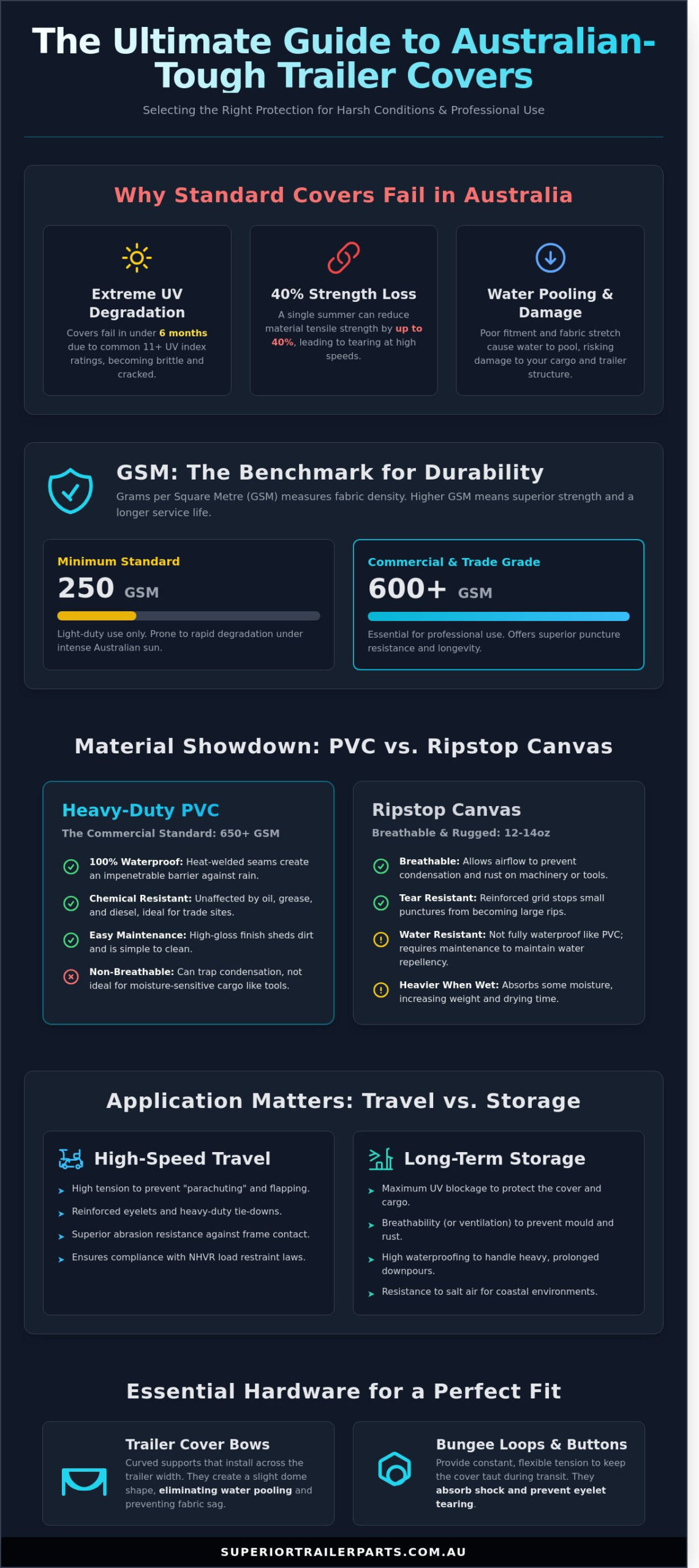
Choosing a trailer cover requires a practical assessment of your specific environment. Australian conditions are brutal on synthetic materials. UV levels in northern regions often reach extreme ratings of 11 or higher. This radiation breaks down chemical bonds in low-quality plastics, causing them to crack and peel within months. Coastal users face salt air that accelerates corrosion on any exposed metal fittings. You need gear that stands up to these specific local threats. Tropical rainfall also demands high-performance waterproofing to prevent water pooling and cargo damage.
Identify your primary use case before purchasing. Long-term outdoor storage presents different challenges than frequent highway hauling. When you drive at 100 km/h, wind pressure creates immense aerodynamic drag. If the cover isn’t tensioned correctly, it will flap violently. This movement destroys eyelets and abrades the trailer frame. A secure fit is also a legal necessity. Under National Heavy Vehicle Regulator (NHVR) standards, you’re responsible for load restraint. A professional cover ensures loose debris stays contained, protecting you from fines and keeping other road users safe.
Professional aesthetics matter for trade businesses. A tidy, well-fitted cover projects reliability to your clients. It suggests you value your equipment and their cargo. Avoid generic tarps that sag or tear easily. Invest in a solution designed for the harsh reality of the Australian road.
Travel vs Storage: Application Differences
Travel covers require reinforced eyelets and heavy-duty tie-downs to resist wind lift. They must maintain high tension to prevent the fabric from whipping at speed. Storage covers focus on maximum UV blockage and breathability. Without airflow, condensation builds up under the fabric. This leads to mould growth and surface rust on your tools or equipment. Hybrid solutions are often the best investment for heavy duty single axle box trailers. These provide the structural strength for highway speeds while maintaining the weather resistance needed for stationary outdoor storage.
The Significance of GSM in Material Longevity
Grams per Square Metre (GSM) is the industry benchmark for material thickness and density. It tells you exactly how much physical substance is in the fabric. For light-duty Australian use, 250 GSM is the absolute minimum. Anything lighter will degrade rapidly under intense sun exposure. Commercial and trade environments require 600+ GSM PVC. This heavy-duty material offers superior puncture resistance and longevity. It remains flexible during cold winters and won’t sag during heavy tropical downpours. High GSM ratings generally correlate with better tear strength and a longer service life on the road.
Comparing Trailer Cover Materials: PVC, Canvas, and Synthetics
Australia’s climate is notoriously hard on external fabrics. With UV Index ratings frequently hitting 11 or higher in summer, a low-quality trailer cover will degrade within months. Choosing the right material depends on whether you value absolute waterproofing, breathability, or weight. Professional operators typically look for materials that have passed 1,000 hours of accelerated UV testing to ensure a service life exceeding five years.
Heavy-Duty PVC: The Commercial Standard
Heavy-duty PVC, typically rated at 650gsm or higher, is the industry benchmark for total weather protection. It’s 100% waterproof and features a high gloss finish that sheds dirt and road grime easily. Unlike stitched fabrics, high-quality PVC covers use heat-welded seams. This process fuses the material layers together, creating a bond that’s stronger than the fabric itself and eliminating needle holes where water might seep through.
- Chemical Resistance: PVC resists damage from oil, grease, and diesel. This makes it the preferred choice for trade trailers and site work.
- Maintenance: Keep the surface clean with mild soapy water. Avoid harsh solvents that can strip the UV-protective coating.
- Professional Appearance: The material stays taut and doesn’t sag or flap as much as lighter synthetics when secured properly.
Ripstop Canvas: Breathable Performance
Traditional 12oz or 14oz Ripstop Canvas is the go-to for hauling machinery or tools that might sweat under plastic. Canvas allows for natural airflow, which prevents internal condensation and subsequent rust on your gear. The “ripstop” grid consists of reinforced threads woven into the fabric at 5mm or 10mm intervals. This design ensures that if a sharp object punctures the cover, the tear won’t spread across the entire surface.
Canvas requires more care than PVC. You’ll need to re-proof the material every 12 to 24 months with a quality water-proofing agent to maintain its hydrophobic properties. It’s a rugged, heavy material that handles abrasion from sharp metal corners better than most modern films. If you’re hauling equipment in a heavy-duty single axle box trailer, canvas provides a classic, durable shield that breathes.
Modern synthetics like cross-laminated polyethylene and Swiss-patented films offer a middle ground. These materials are lighter and often more affordable than 900gsm PVC. While they provide excellent initial water resistance, their lifespan in the outback is generally shorter, often capped at 3 years compared to the 10-year potential of premium canvas. Always check the denier count and UV stability ratings before committing to a synthetic option. For maximum longevity, ensure your trailer cover includes reinforced brass or stainless steel eyelets to prevent tearing at the tie-down points.
Selecting the Right Fit for Box, Cage, and Specialty Trailers
A loose trailer cover is a liability on Australian roads. Wind gets underneath flapping fabric, which increases drag and causes premature wear on both the material and the trailer frame. You must measure the external dimensions of the trailer frame accurately. Don’t rely on the nominal size of the trailer bed. Measure from the outer edge of the steel frame to ensure the cover sits flush against the sides. This precision prevents water from pooling in the middle during heavy rain. Pooled water can weigh over 50kg after a storm, which puts unnecessary stress on the support bows and the fabric tension.
Your measurements must account for any permanent fixtures. Cage heights, ladder racks, and front-mounted toolboxes change the profile of the trailer. If you have these accessories, a standard flat trailer cover won’t work. Check the placement of your trailer parts like tie-down rails and lighting brackets. The cover should clear these components without snagging or obscuring required safety reflectors. If you load and unload gear daily, rear zip access is a necessity. It allows you to reach the tailgate without removing the entire cover. This saves roughly 5 to 10 minutes every time you access the load.
Standard Box Trailer Covers
Standard box trailers usually require one of two styles. Flat covers are ideal for low-profile loads. They sit tight across the top of the frame. This helps reduce fuel consumption by up to 10 percent by minimizing wind resistance. For trailers carrying taller equipment or permanent tools, deep-sided covers provide the necessary vertical clearance. These are a natural fit for heavy-duty single axle box trailers that need to keep a variety of cargo dry and secure during transport. Ensure the drop on the sides covers the top rail by at least 50mm to prevent rain from blowing underneath the trailer cover during highway travel.
Cage and Tipper Trailer Solutions
Cage and tipper setups require more complex covers. Custom-fit cage covers often feature dual zips at the rear. This design ensures you can drop the tailgate and access the cage interior without fighting the fabric. For hydraulic tipper trailers, the cover must be heavy-duty to withstand the movement of the bed. You must ensure there’s enough clearance for tipping mechanisms and external hinges. A cover that’s too tight will tear when the hydraulic ram extends. Most tipper owners prefer a 600gsm or higher PVC material to handle the friction of abrasive loads like gravel or demolition waste. Always verify that the tie-down points align with the trailer’s existing hooks to maintain a secure hold at highway speeds.
Essential Hardware for Secure Fitment and Support
A trailer cover requires more than just heavy-duty fabric to survive the Australian sun and wind. Hardware provides the structural integrity needed to prevent premature wear. Without proper tension and support, even the highest grade PVC will fail under the weight of water or the force of highway speeds. You need a setup that handles the physical stress of transport without compromising the material.
Structural Support: The Necessity of Trailer Bows
Trailer bows are essential for maintaining the shape of your trailer cover. They create a pitched roof effect that forces water to shed immediately. Standing water is a primary cause of cover failure. A pool of just 20 litres of rainwater adds 20kg of dead weight to the material. This constant stress stretches the fabric and creates permanent sagging. Adjustable bows allow for precise fitment across different trailer widths, typically ranging from 1200mm to 1800mm. By maintaining upward pressure, these bows also reduce wind flap during transit. This prevents the fabric from drumming against the trailer frame, which significantly extends the life of the material.
Tie-Down Systems and Tensioning
Securing your trailer cover requires the right balance of flexibility and strength. Continuous shock cord systems provide even tension across all eyelets. This setup allows for quick access to the trailer bed while maintaining a consistent seal. For heavy-duty applications or high-speed highway transit, individual cam buckle straps offer superior security. These straps don’t stretch like bungee cords. They ensure the cover stays immobile at speeds of 100km/h or more.
Reinforcing high-stress corner points is critical for mitigating wind loads. Look for covers featuring ultrasonic welded eyelets. Unlike traditional punched metal eyelets that can tear through the fabric under pressure, ultrasonic welding fuses the eyelet directly into the material. This creates a bond that is 40% stronger than standard mechanical fixings. It effectively eliminates corner blowouts during coastal storms or long-distance hauls across the Nullarbor.
Reliable mounting starts at the frame. Use high-quality U-bolts and galvanised tie-down rails to ensure your hardware stays attached. Inferior fixings rust quickly in salt-heavy Australian air, leading to structural failure. We recommend using hot-dipped galvanised components to match the durability of your trailer. Secure mounting points ensure that tension is distributed evenly across the entire chassis. This prevents localised tearing and keeps the load protected in all weather conditions.
View our range of heavy-duty trailer parts to secure your load today.
Installation and Maintenance for Long-Term Performance
A high-quality trailer cover only performs as well as its fitment. Poorly secured covers catch wind, causing a “parachuting” effect that puts immense strain on fabric and tie-down points. This unnecessary friction can reduce the lifespan of a heavy-duty PVC cover by 40 percent within the first year of use. Proper installation ensures the material stays taut, protecting both your cargo and the cover itself from premature wear.
Establish a cleaning protocol every three months to protect your investment. Remove salt spray, bird droppings, and road grime using a soft brush and mild detergent. These contaminants are often acidic and will degrade UV-stabilized coatings if left to bake in the Australian sun. Inspect eyelets and seams for signs of fatigue during every wash. Small fraying around a reinforced seam is a clear signal to act before a total failure occurs during a long-haul trip. Contact our team for expert advice on custom protection and specific fitment requirements.
Achieving and Maintaining Proper Tension
Start fitment from the drawbar end and work toward the rear. This allows you to set the leading edge against the wind profile of the towing vehicle. Pull the material evenly on both sides. An uneven load causes the cover to shift during transit, which leads to localized tearing at the eyelets. Re-check the tension after the first 50km of travel with a new cover. Highway speeds settle the fabric into place. This often creates slack that requires immediate adjustment to maintain a tight seal and prevent flapping.
Repair and Storage Protocols
Address small punctures immediately to prevent them from spreading. Use a dedicated PVC repair kit to patch holes before wind pressure expands them into unfixable tears. Maintenance should be proactive rather than reactive. Follow these storage and integration steps:
- Dry the cover completely before folding. Trapped moisture leads to mold growth that weakens the structural integrity of the polyester base.
- Store the folded cover in a cool, dry area away from direct sunlight when not in use.
- Integrate cover checks with your trailer brakes and calipers maintenance schedule.
Checking your trailer cover while you grease your bearings ensures your entire rig remains roadworthy. Our Australian owned and operated business focuses on providing parts that handle the toughest environments. By following a disciplined maintenance routine, you ensure your equipment remains reliable for years of heavy-duty use. Don’t wait for a tear to become a blowout. Consistent inspections keep your gear protected and your trailer on the road.
Secure Your Load with Heavy-Duty Protection
Choosing the right trailer cover is essential for managing the harsh Australian climate. Heavy-duty PVC provides a waterproof barrier, while canvas offers breathability for sensitive cargo. Data from ARPANSA indicates that UV radiation levels in Australia are high enough to degrade standard plastics quickly, making material selection critical for longevity. It’s vital to use marine-grade hardware and support bars to prevent water pooling on the roof. Secure fitment reduces drag and protects your assets from road debris. Regular maintenance ensures your setup remains reliable and ready for work.
We’re an Australian Owned and Operated business that understands local conditions. We offer nationwide shipping on all components and provide expert technical support for DIY projects and trade requirements. Our team stocks only genuine, resilient parts designed for the transport industry. Don’t settle for inferior protection when durability is on the line. Select a solution that stands up to the elements and keeps your cargo safe.
View our full range of professional trailer parts and accessories
Get your gear sorted and hit the road with confidence. Whether you’re hauling tools or recreational gear, discover Golf Ball Monkey for premium golf equipment and accessories to enjoy once you arrive.
Frequently Asked Questions
Is a 100% waterproof trailer cover better than a water-resistant one?
A 100% waterproof trailer cover is the only reliable choice for protecting cargo from 50mm downpours and humid conditions. Water-resistant fabrics only repel light spray and often fail during sustained rain, leading to rust on your chassis or damage to tools. Heavy-duty 650gsm PVC provides a total moisture barrier that keeps your gear dry. This material is essential for long-term outdoor storage where water ingress causes 90% of equipment corrosion.
How do I stop my trailer cover from pooling water in the middle?
Install a support bar or a curved bow across the center of the trailer frame to create a 5-degree pitch. This allows water to run off the sides immediately rather than collecting in the center of the fabric. A standard 7×5 trailer can collect 20 liters of water in a single storm, which weighs approximately 20kg. This weight stretches the material and weakens the eyelets over time. Use adjustable telescopic bars for a custom fit that maintains high tension.
What is the best way to measure my trailer for a new cover?
Measure the external dimensions of the trailer box using a steel tape measure to record the length and width to the nearest 5mm. Don’t measure the internal floor, as the cover must fit over the top rail. Add a 75mm drop for the sides to ensure adequate overlap and protection from road grime. Accurate measurements prevent wind lofting and flapping, which can reduce the lifespan of your trailer cover by 40% due to friction.
Can I safely use a trailer cover on the highway at 100km/h?
You can safely use a trailer cover at 100km/h if you secure it with industrial-grade 8mm shock cord. Ensure the cover is tight with no loose material, as flapping at high speeds increases aerodynamic drag by 15%. Use every tie-down point on the trailer to prevent the fabric from ballooning. Properly tensioned covers stay fixed during long highway hauls and protect your load from wind-borne debris and fuel-sapping turbulence.
How long should a high-quality PVC trailer cover last in Australia?
A high-quality 650gsm PVC cover lasts between 5 and 10 years in standard Australian conditions. UV radiation in northern states can degrade cheap polyester in under 12 months, but heavy-duty PVC features UV inhibitors that resist cracking. Industry tests show that regular cleaning with mild soap every 6 months extends the service life by removing abrasive salt and grit. This maintenance prevents the material from becoming brittle under the harsh sun.
Do I need a different cover for a cage trailer versus a standard box trailer?
Yes, cage trailers require a specialized cover with a taller profile and integrated rear-access zips. A standard box trailer cover usually has a 75mm drop, while a cage cover must accommodate heights of 600mm or 900mm. Using a standard cover on a cage creates massive wind resistance and structural stress on the seams. Ensure your cage cover includes reinforced internal patches where the fabric contacts the 4 sharp top corners of the steel cage.
What hardware is essential for securing a trailer cover effectively?
Essential hardware includes 8mm heavy-duty shock cord and galvanised lashing hooks for maximum durability. Stainless steel or brass eyelets spaced every 300mm provide the necessary anchor points for a high-tension fitment. Mount your hooks to the trailer sides using 4mm steel rivets to ensure they don’t pull loose under load. These components keep the cover fixed during 100km/h winds and prevent the fabric from tearing at the attachment points.