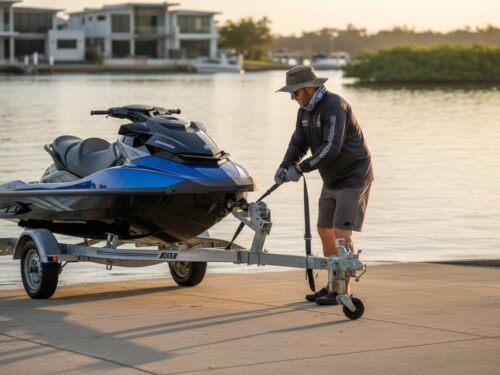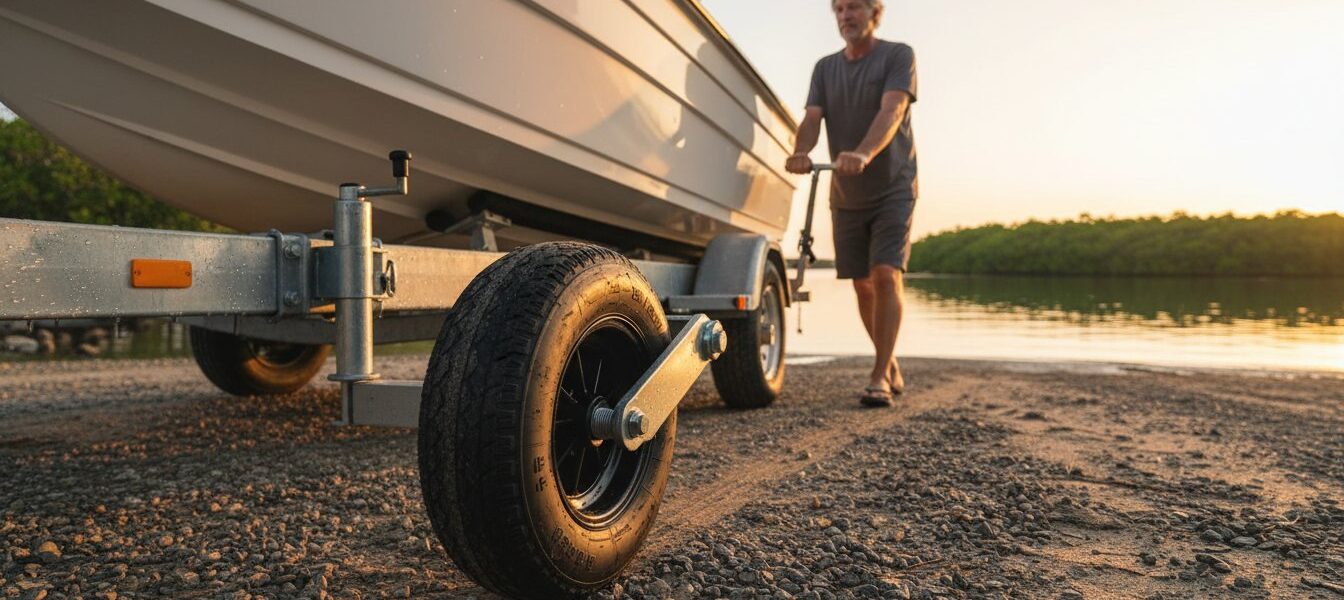
You’re at the boat ramp after a long day on the water. The trailer sinks into the soft sand, and the handle on your jockey wheel groans under the load. Worse, the winding mechanism is seized solid from salt corrosion, turning a simple pack-up into a frustrating ordeal.
It’s a familiar problem for trailer owners across Australia. A cheap or poorly suited part doesn’t just fail; it brings your entire day to a grinding halt. This article provides the technical, no-nonsense advice needed to select the right hardware for the job. You will learn how to master the specifications for a jockey wheel that ensures safe hitching, easy manoeuvring on difficult surfaces, and genuine durability in harsh marine or outback environments.
We cover critical factors like static load ratings, wheel materials for different terrains, and essential maintenance that prevents rust and mechanical failure for years to come.
Key Takeaways
- Understand the difference between static load capacity and total trailer weight to select a jockey wheel that will not fail under pressure.
- Determine whether a swing-up or bolt-on clamp system is the right mechanical fit for your drawbar to ensure ease of use.
- Learn how wheel diameter impacts rolling resistance on uneven ground and how to balance manoeuvrability with compact storage.
- Implement practical maintenance protocols to prevent seizing and corrosion, extending the life of your equipment in harsh Australian environments.
Understanding Jockey Wheel Ratings and Static Load Limits
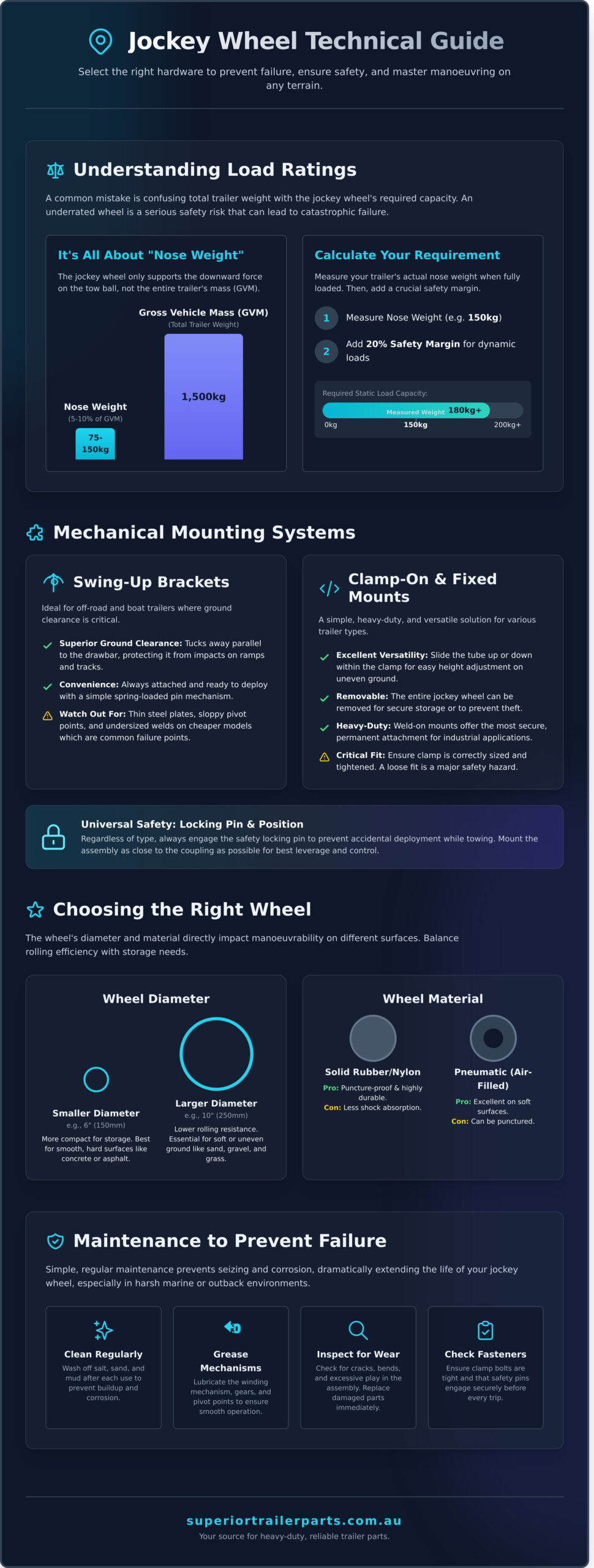
A jockey wheel is a simple, retractable mechanism. Its job is to support the trailer’s drawbar, allowing you to move the trailer when it’s unhitched and to correctly align it for coupling. A common mistake is to confuse the jockey wheel’s load rating with the trailer’s total weight or Gross Vehicle Mass (GVM). They are not the same. The component only needs to support the “nose weight” or “ball weight”-the downward force the fully loaded trailer exerts on the tow ball.
Getting this calculation wrong is a serious safety risk. An under-rated jockey wheel can bend under load, making it difficult or impossible to operate. In a worst-case scenario, it can suffer a catastrophic failure during hitching or unhitching, causing the drawbar to drop suddenly. This puts both you and your equipment in danger. Choosing the correct rating isn’t just about convenience; it’s about structural integrity and safe operation.
Calculating Your Required Load Rating
You must determine your trailer’s actual nose weight. For lighter trailers, you can use a set of bathroom scales with a block of wood to distribute the load. For heavier applications, a dedicated ball weight gauge provides an accurate reading. The goal is to measure the downward force at the coupling point when the trailer is loaded as it would be for a typical trip. A well-balanced trailer’s nose weight should be between 5% and 10% of its GVM. For a trailer with a 1,500kg GVM, expect a nose weight between 75kg and 150kg. We always recommend a safety margin. Select a jockey wheel with a static load capacity at least 20% higher than your measured nose weight. If your nose weight is 150kg, choose a unit rated for 180kg or more.
Static vs. Dynamic Load Considerations
The rating stamped on a jockey wheel refers to its static load capacity. This is the maximum weight it can safely support while the trailer is stationary. However, trailers are rarely perfectly still. When you manually manoeuvre a trailer, especially on uneven or soft ground, you introduce dynamic loads. These forces put significant stress on the wheel, the pivot mechanism, and the clamp. A sudden jolt from hitting a rock or dropping into a pothole can momentarily multiply the force exerted on the assembly. This is why fitting robust trailer parts that meet Australian standards is non-negotiable. Heavy-duty components are engineered to withstand the dynamic stresses of real-world use, ensuring your equipment performs safely and reliably every time.
Mechanical Mounting Systems: Swing-up vs. Bolt-on Clamps
On Australian drawbars, how you attach your jockey wheel is as important as the wheel itself. The two primary methods, swing-up brackets and bolt-on clamps, dictate how you use, store, and rely on your trailer’s support system. Your choice affects everything from ground clearance to the physical effort required to operate the mechanism.
Mounting position directly impacts leverage. A jockey wheel mounted too far back from the coupling requires significantly more force to lift the drawbar. The ideal position is as close to the coupling as possible without interfering with its operation. Always check for clearance around handbrakes, chains, and other essential couplings and parts before drilling or clamping. A crowded drawbar can restrict movement and create pinch points.
Regardless of the system, a robust safety locking pin is your first line of defence against accidental deployment while towing. This pin prevents the assembly from dropping or swinging down on rough roads. This simple component is non-negotiable for road safety, a standard upheld by organisations like the Caravan Industry Association of Australia who advocate for compliant and safe towing practices. Always check that the pin is engaged before you drive.
Swing-up Brackets for High Clearance
Swing-up brackets are the standard for off-road caravans and boat trailers. Their key benefit is superior ground clearance. A spring-loaded locking pin allows the entire assembly to rotate 90 degrees, tucking it up parallel with the drawbar. This keeps it safe from impact on steep boat ramps, creek crossings, and corrugated tracks. Cheaper swing-up hinges are a common failure point. Look for signs of poor quality, such as thin pressed-steel plates that can bend under load, sloppy pivot points with excessive play, and undersized welds that can crack from vibration.
Clamp-on and Weld-on Fixed Mounts
Fixed mounts offer a simple, heavy-duty solution. The most common type is a bolt-on clamp, which allows you to remove the entire jockey wheel for storage or security. This system provides excellent versatility for height adjustment; you can slide the outer tube up or down within the clamp to suit different tow vehicles or uneven ground. For extreme heavy-duty applications like industrial or plant trailers, a weld-on mount provides the most secure, permanent attachment. When using a clamp-on style, a secure fit is critical. Always use correctly sized and load-rated u-bolts kits to prevent the clamp from slipping under the trailer’s tongue weight.
Selecting the Right Wheel Diameter and Material
The wheel on your jockey wheel is more than just a roller. It’s the critical point of contact between your trailer and the ground. Choosing the right diameter and material determines how easily you can manoeuvre your trailer, especially when it’s fully loaded. A poor choice leads to frustration, hard work, and potential damage.
Wheel diameter directly impacts performance on uneven surfaces. A larger diameter wheel, such as a 250mm (10-inch) model, rolls over obstacles like cracks, gravel, and small rocks with significantly less effort than a smaller 150mm (6-inch) wheel. The trade-off is storage. Larger wheels require more clearance when retracted and can interfere with tailgates or rear doors on some tow vehicles. You must balance ease of movement with practical stowing.
For heavy caravans and large dual-axle trailers, a dual-wheel configuration is the industry standard. Two wheels distribute the high static tongue weight over a wider footprint. This reduces the ground pressure per square centimetre, preventing the wheels from sinking into soft ground and making the trailer much easier to pivot and position by hand.
Terrain Compatibility Framework
Matching your wheel to your typical ground surface is essential for reliable performance. Solid rubber wheels are the dependable workhorse for concrete, asphalt, and hardstand areas. They don’t puncture and handle heavy loads without deforming. For softer terrain like sand, mud, or unsealed tracks, a pneumatic (air-filled) tyre is non-negotiable. It provides flotation, spreading the load to prevent the wheel from digging in. A wide-profile solid wheel offers a compromise, providing better performance on soft Australian turf than a narrow wheel without the risk of a flat tyre.
Specialized Solutions for Marine Environments
Boat trailers face the ultimate corrosion challenge: salt water. Standard zinc-plated components will fail quickly. Your choice of materials must prioritise corrosion resistance. Look for high-quality galvanised steel on the main assembly and stainless steel for internal components like bearings and axles. These are critical boat trailer parts that ensure longevity. For the wheel itself, hard-wearing nylon is often the preferred material. It’s impervious to salt water and won’t degrade after repeated submersion on the boat ramp, giving you a reliable solution built to last.
Maintenance Protocols to Prevent Seizing and Corrosion
A heavy-duty jockey wheel is built for hard work, but it isn’t indestructible. Regular maintenance is the only way to ensure it performs reliably for years. Neglect leads to seizing, corrosion, and eventual failure, often when you can least afford it. Proactive checks prevent roadside problems and extend the life of your equipment.
This principle of proactive maintenance doesn’t just apply to your trailer. The vehicle doing the towing, especially when dealing with heavy loads, requires expert attention to ensure its engine, brakes, and transmission are up to the task. For owners of European models, specialists like Eurotech Automotive provide the dedicated servicing needed to keep your tow vehicle reliable and safe on the road.
Listen for the early signs of internal wear. A gritty, grinding noise when winding the handle is a clear signal of bearing friction or debris in the worm drive. This friction can increase the physical effort needed to lift the drawbar by up to 40%. If the handle becomes stiff or jerky, it’s time for an internal inspection. Don’t wait for it to seize completely.
Australian conditions are tough on trailer parts. Constant UV exposure degrades plastic and rubber components, while salt spray is the primary enemy of steel. Even a quality galvanised finish requires attention. In coastal areas, particularly within 5 kilometres of the ocean, salt-laden air aggressively attacks any exposed metal. The handle is often the first component to show rust, as its plating is worn away by regular use, exposing the raw steel beneath.
After any trip to the beach or down a muddy track, a proper cleaning routine is critical. Follow these simple steps to prevent long-term damage:
- Rinse Immediately: Use fresh water to hose down the entire assembly. Pay close attention to the wheel, axle, and swivel mechanism where salt and mud accumulate.
- Scrub and Clean: Use a stiff brush to remove any caked-on mud or sand. A mild, pH-neutral detergent can help break down grime.
- Dry Thoroughly: Wipe the unit down with a cloth or let it air-dry completely. Trapped moisture is the catalyst for rust.
- Apply Protectant: Once dry, apply a light coat of a water-dispersant spray like WD-40 or a lanolin-based lubricant to all moving parts and exposed metal surfaces.
Internal Lubrication and Greasing
The internal worm drive requires periodic lubrication. Access it by removing the top winding handle assembly or cap. Clean out any old, gritty grease before applying a fresh coat of high-quality, marine-grade grease. This type of grease is engineered to repel moisture and provides superior protection against corrosion. A well-lubricated thrust bearing is essential for a smooth winding action, as it handles the full tongue weight of the trailer during operation.
Troubleshooting Common Issues
If your clamp is slipping, don’t just overtighten the T-handle. This can crush or deform your trailer’s drawbar. First, inspect the clamp and handle threads for wear or stripping. A damaged wheel doesn’t mean you need a new unit. Most solid or pneumatic wheels are replaceable, saving you the A$100+ cost of a full assembly. Retire your jockey wheel if you see warning signs of structural fatigue, such as a bent inner or outer tube, cracks in the welds, or more than 10mm of lateral play in the swivel mechanism.
If you find stripped threads or a cracked wheel, you don’t always need a new unit. Browse our genuine jockey wheel replacement parts to get your trailer back in service.
Heavy Duty Jockey Wheels and Stands for Reliable Performance
For serious applications, your focus shifts from simple manoeuvrability to long-term structural integrity. Heavy loads and extended stationary periods demand more than a standard jockey wheel. They require a heavy-duty solution designed for static load-bearing and absolute stability. This is where high-capacity jockey stands and a systems-based approach to trailer setup become critical.
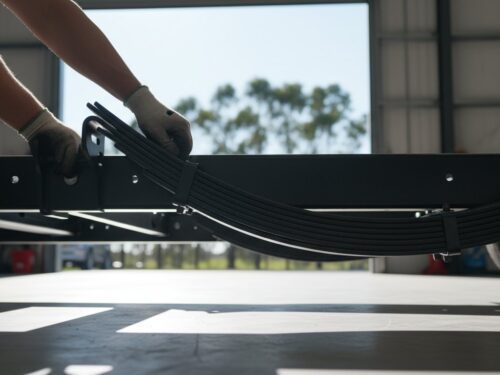
A correctly specified stand or heavy-duty jockey wheel doesn’t just support the drawbar; it works in concert with your trailer’s axles and suspension. An undersized component places immense stress on the A-frame and coupling, leading to premature wear and potential failure. The entire assembly must be balanced to distribute the load correctly, whether the trailer is hitched or parked. This ensures the chassis remains true and your investment is protected. For trailers regularly hauling heavy loads over rough terrain, pairing your jockey wheel with reliable 4 leaf slipper springs ensures your suspension system can handle the dynamic forces and weight distribution demands of Australian conditions.
Jockey Stands for Long-Term Stability
A rolling jockey wheel is designed for movement. A fixed jockey stand is built for stability. For heavy equipment, plant trailers, or caravans in storage for more than 30 days, a stand is the superior choice. Its flat footplate provides a large, stable contact patch that won’t sink into soft ground or creep on a slope. Removing the wheel assembly also eliminates a key failure point and enhances security during extended storage periods.
Thinking about long-term value extends beyond just equipment. Many Australians with a passion for collecting and tangible assets find interest in numismatics. For those exploring this field, Vintage Coins & Notes is a family-owned business specializing in rare coins and banknotes for collectors and investors.
As an Australian Owned and Operated business, we understand the unique demands of local trailer configurations. Our parts are specified for Australian conditions, from corrugated outback tracks to corrosive coastal air. This local expertise ensures you get components that fit right and perform reliably, without compromise. Don’t risk your setup on generic parts that weren’t built for our environment.
Before any trip, run through this final checklist for a secure and functional trailer:
- Check Load Capacity: Confirm the static load rating of your stand or wheel exceeds the calculated drawbar weight by at least 20%.
- Inspect the Clamp: Ensure the clamp is correctly torqued and the swivel mechanism is free of debris and operates smoothly.
- Examine Welds and Coatings: Look for any signs of stress fractures in welds or breaches in the galvanised coating that could lead to corrosion.
- Confirm System Balance: Ensure the trailer sits level when supported by the stand, indicating a balanced load across the axles.
Expert Advice and National Support
Superior Trailer Parts delivers durable, reliable components for the Gold Coast and beyond. We stand behind our products with genuine replacement parts and technical support available Australia Wide. Our team provides practical, no-nonsense advice to ensure you get the right part for the job. We’re here to keep you moving safely. Ready to secure your trailer? Contact our experts to find the right fit for your setup.
Fit the Right Jockey Wheel and Tow with Confidence
Selecting the correct jockey wheel is a critical decision for your trailer’s safety and operational reliability. It’s essential to match the static load rating to your trailer’s fully loaded weight to prevent mechanical failure. The right wheel material, whether solid rubber or pneumatic, directly impacts manoeuvrability on surfaces from soft ground to hardstand concrete. Remember, simple maintenance protocols are not optional; regular greasing and inspection are the best defence against corrosion and seizing, ensuring your equipment performs when you need it most.
Don’t let a faulty part leave you stranded. For over 10 years, Superior Trailer Parts has provided expert advice to trailer owners across the country. As a proudly Australian Owned and Operated business, we stock parts built for harsh local conditions. We ship our full range of heavy-duty components nationwide, direct from our Gold Coast warehouse. Browse our range of heavy-duty jockey wheels and trailer parts and equip your trailer for reliable performance.
Jockey Wheel: Frequently Asked Questions
How do I determine the correct load rating for my jockey wheel?
To determine the correct load rating, use your trailer’s Gross Trailer Mass (GTM). Your jockey wheel should safely support 10% to 15% of the GTM. For a trailer with a 2,500 kg GTM, you need a jockey wheel rated for at least 250 kg. Always select a rating that comfortably exceeds this calculated tow ball weight. This provides a crucial safety margin and prevents mechanical failure under static load.
Can I replace just the wheel if the frame is still in good condition?
Yes, you can replace just the wheel if the frame is structurally sound. It’s a practical, cost-effective repair. Before purchasing, you must measure your existing wheel’s axle bolt diameter and the hub width to ensure the new wheel will fit correctly. We offer a wide range of genuine replacement wheels, including solid rubber and pneumatic options, to get your equipment operational again with minimal downtime.
Is a pneumatic wheel better than a solid rubber wheel for sand?
A pneumatic wheel is far better than a solid wheel on sand and other soft surfaces. The air-filled tyre can be slightly deflated to create a wider footprint, which distributes the load and prevents the wheel from digging in. This makes manoeuvring much easier. Solid rubber wheels are maintenance-free and excel on hard surfaces like concrete or bitumen, where there’s no risk of a puncture stopping the job.
What is the advantage of a swing-up jockey wheel over a standard clamp-on?
The primary advantage of a swing-up jockey wheel is convenience and speed. It remains fixed to the drawbar and simply pivots from a vertical to a horizontal travel position, locking securely in place. A standard clamp-on model must be completely removed and stowed elsewhere before you can drive. For anyone coupling and uncoupling their trailer frequently, a swing-up design is the more efficient, get-the-job-done solution.
How often should I grease my trailer jockey wheel?
You should grease your jockey wheel at least once every 6 months or after every 4,000 kilometres of travel. If you operate a boat trailer in saltwater environments, we recommend greasing it after every third use to flush out salt and prevent corrosion. Use a quality marine-grade grease applied to the grease nipple until you see fresh grease emerge. This simple task ensures smooth winding and protects internal components.
Why does my jockey wheel handle become difficult to turn over time?
A handle that’s difficult to turn is most often caused by dirt, grit, or rust contaminating the internal screw thread. This build-up increases friction and causes the mechanism to bind. Another common cause is a failed thrust bearing or a lack of lubrication. Regular cleaning and greasing of the internal components is the best way to prevent this and ensure reliable, smooth operation when you need it most.
Do I need to remove my jockey wheel while driving?
You don’t need to remove a swing-up model, as it’s designed to be stowed securely in its horizontal travel lock. However, a standard clamp-on jockey wheel must be removed from its clamp and stored safely in your vehicle or trailer. If left on, road vibrations can cause it to work loose and fall off, creating a dangerous hazard for other road users. Always ensure it’s properly secured before transit.
What is the difference between a jockey wheel and a trailer stand?
The difference is function and mobility. A jockey wheel has a wheel that allows a single person to manoeuvre an unhitched trailer with relative ease. It’s designed for moving the trailer into position. A trailer stand, or stabiliser leg, has a flat metal footpad. It provides only static support and is used to keep a trailer level and stable during loading, unloading, or long-term storage. It offers no mobility.