A single pothole hit at 80 km/h can compromise your trailer’s entire structural integrity. Many drivers ignore subtle vibrations until a roadside breakdown forces a dangerous stop. Identifying the signs of a bent trailer axle early prevents expensive repairs and keeps your cargo secure. You shouldn’t have to deal with the stress of an unstable load or the recurring cost of replacing tyres prematurely.
We understand that your trailer is a utilitarian tool that needs to perform under pressure. It’s frustrating to see uneven tread wear on a set of heavy-duty tyres after only 3,000 kilometres of travel. As an Australian owned specialist, we provide the expert advice you need to diagnose structural issues before they become critical safety risks. You’ll learn how to perform a reliable alignment check and recognise the physical symptoms of a compromised beam.
We’ll walk through specific tyre wear patterns, including inside edge balding and feathering, which often indicate a camber or toe issue. We also provide a diagnostic reference for physical inspections of galvanised or torsion axles. By the end, you’ll know exactly how to confirm damage and where to source genuine replacement parts to restore your trailer’s performance and safety.
Key Takeaways
- Distinguish between natural manufactured camber and structural damage to understand your trailer’s engineering limits.
- Identify the critical signs of a bent trailer axle by inspecting tyres for uneven scuffing or feathering on the tread edges.
- Use simple diagnostic techniques with a straight edge on level ground to verify axle alignment and beam integrity.
- Prevent structural failure by managing Aggregate Trailer Mass (ATM) and avoiding high-impact road hazards.
- Understand why re-bending a fatigued axle is a safety risk and when to invest in a reliable replacement.
Understanding Trailer Axle Engineering and Natural Camber
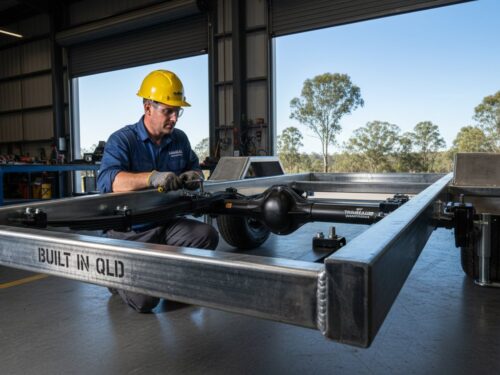
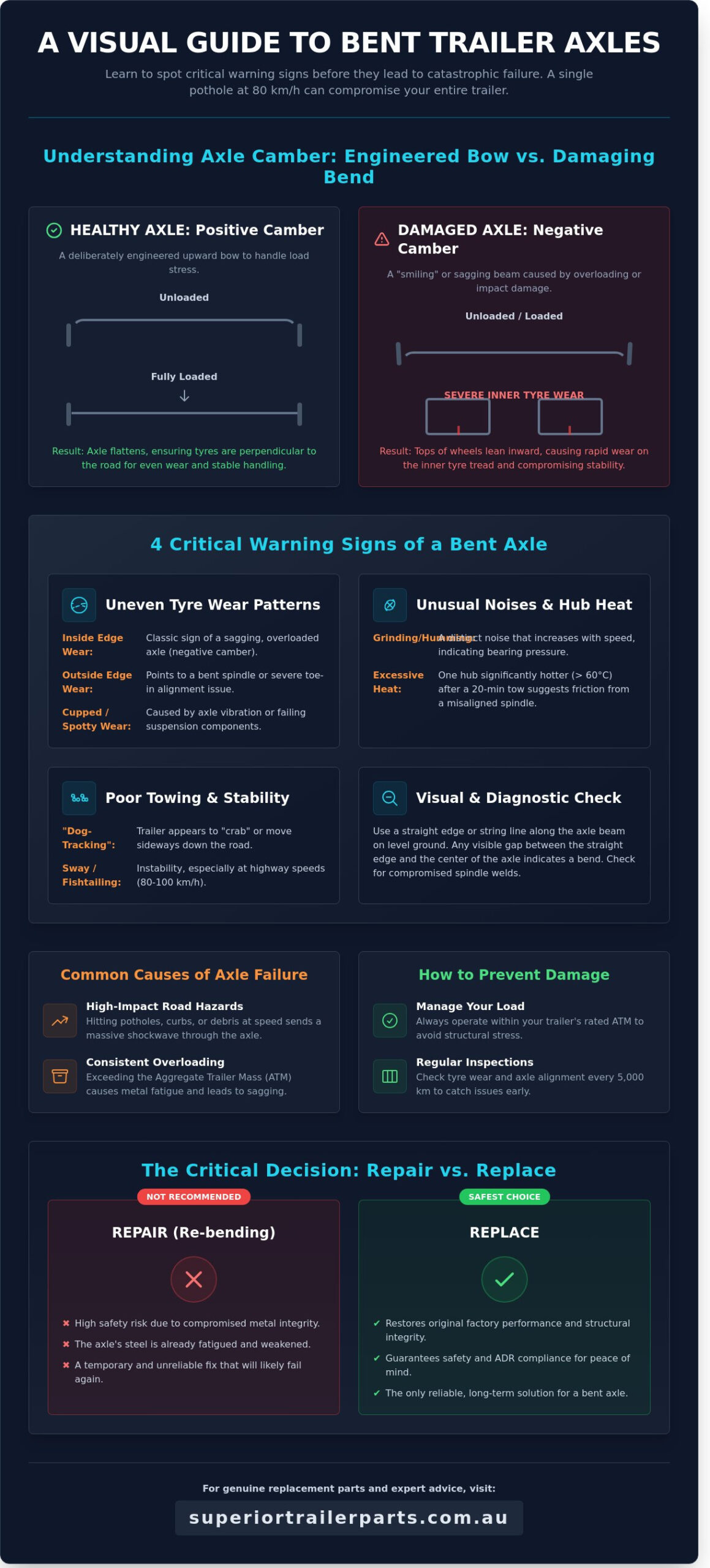
The trailer axle is the primary load-bearing component of your chassis. It carries the weight of the frame, the cargo, and the forces generated during braking or cornering. Reliable trailer axle engineering involves more than just a solid piece of steel. Most manufacturers build axles with a slight upward bow, known as positive camber. This intentional design allows the axle to flex downward under its maximum rated capacity.
When fully loaded, the axle should sit relatively flat. This ensures the tyres remain perpendicular to the road, providing a consistent contact patch and predictable handling. If the axle does not have this natural camber, the weight of the cargo can cause the beam to sag. This results in negative camber, where the tops of the wheels lean toward each other, causing premature wear on the inner tread.
The Role of the Axle Beam and Spindles
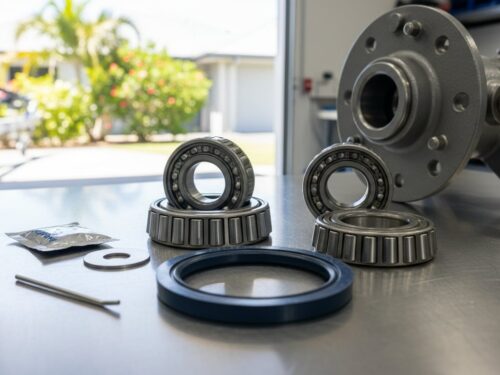
The axle assembly consists of the main beam and the spindles. The beam provides the structural strength, while the spindles are the machined components that house the bearings and hubs. Spindles dictate the precise alignment of your wheels. If the spindle is bent or the weld is compromised, the wheel will not track true. This leads to excessive heat in the bearings and uneven tyre wear. Using certified trailer axles ensures your build remains ADR compliant. Compliance ensures the spindles and beam can handle harsh Australian road conditions without permanent deformation.
Camber vs. Damage: Knowing the Difference
Distinguishing between a designed bow and a damaged beam is vital for trailer maintenance. A positive camber is a deliberate engineering choice. In contrast, a sagged or “smiling” axle indicates structural failure. If you notice the middle of the axle dipping toward the ground, the component is likely overloaded or fatigued. This is a common failure point on trailers used for heavy industrial or agricultural work.
Common signs of a bent trailer axle include tyres that lean inward at the top or scrub along the inner edge. An under-engineered axle might look straight when empty but fail to maintain its shape under pressure. This deformation alters the tyre contact patch, causing scrub and reducing fuel efficiency. Watch for these signs of a bent trailer axle during regular pre-trip inspections. Catching a bend early prevents catastrophic failure on the highway and keeps your maintenance costs manageable.
Primary Indicators and Symptoms of a Bent Trailer Axle
Identifying the signs of a bent trailer axle requires a keen eye for detail and a basic understanding of trailer geometry. The most immediate indicator is rapid or uneven tyre wear. When an axle loses its factory alignment, the tyres no longer sit flat against the road surface. You will often see scuffing or feathering on the inner or outer edges of the tread. This occurs because the tyre is being dragged across the bitumen rather than rolling cleanly. If you notice your tyres chirping on dry pavement during straight-line driving, the axle geometry is likely compromised.
Listen for unusual mechanical noises. A bent axle often puts extreme pressure on the wheel bearings. This leads to a distinct grinding or humming sound that increases with speed. Check your hub temperatures after a 20-minute tow. A bent spindle forces bearings out of alignment, creating excessive friction. If one hub feels significantly hotter than the others, typically exceeding 60 degrees Celsius, investigate the spindle immediately. Research into trailer suspension axles failure shows that overloading and impact with road debris are primary catalysts for these structural shifts.
Reading Tyre Wear Patterns
Tyre tread acts as a diagnostic map for your trailer’s health. Inside edge wear is the classic sign of a sagged or overloaded axle beam. This happens when the weight exceeds the axle’s load rating, causing the beam to bow downward. Outside edge wear usually indicates a bent spindle or severe toe-in issues. If you find spotty or cupped wear, it often suggests the axle is vibrating or bouncing due to a failure in the suspension components. Regular inspections every 5,000 kilometres can catch these patterns before a blowout occurs.
Towing Performance and Stability Issues
A bent axle directly impacts how the trailer tracks behind your vehicle. You might notice “dog-tracking,” where the trailer appears to “crab” or move sideways down the lane. This misalignment causes increased sway or fishtailing at highway speeds between 80 and 100 km/h. The trailer may also feel heavy or resistant to rolling during low-speed maneuvers in a car park.
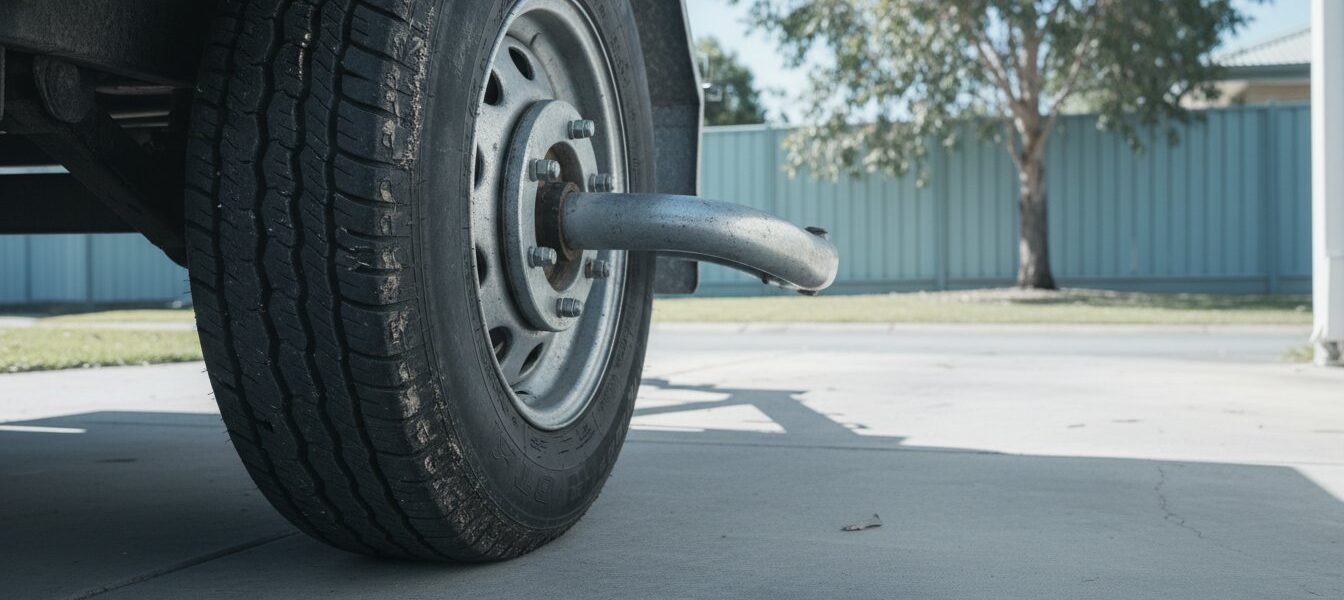
Perform a visual confirmation by parking on a level concrete surface. Stand 5 to 10 metres behind the trailer and look at the wheels. They should be vertical. If the wheels appear tilted (camber) or turned inward (toe), the axle is no longer true. If you find these symptoms on your rig, browse our range of heavy-duty trailer axles to find a reliable replacement. Addressing these issues early prevents expensive damage to your tyres and suspension system.
Diagnostic Methods: How to Measure for Axle Damage
Accurate diagnosis begins with a stable environment. Park the trailer on a perfectly level concrete slab. This is non-negotiable for precision. Chock the wheels to prevent any shifting during measurement. You need a clean, flat baseline to identify the physical signs of a bent trailer axle before committing to repairs. Use a chalk marker to highlight any visible impact marks on the beam or spindles before you start the technical checks.
The String Line and Straight Edge Test
Stretch a high-visibility string line from the front hub to the rear hub on one side. The string should barely touch the sidewall of both tires. Any significant gap or heavy pressure against the tire indicates a horizontal bend. Use a 1200mm carpenter’s level against the underside of the axle beam to verify vertical camber. Most straight axles feature a slight upward bow when they aren’t under load. If the level shows a flat or downward bow, the beam is compromised. Inspect the areas near the u-bolts or spring seats for “kinks.” These points often fail first when a trailer strikes a curb or a deep pothole at speed.
Measuring Toe and Camber with Precision
Grab a reliable tape measure for a center-to-center check. Measure the distance between the tire centers at the front of the axle. Repeat this measurement at the rear of the same axle. For standard Australian trailer setups, the toe-in should typically sit between 0mm and 3mm. If the front measurement is 5mm wider than the rear, you have a toe-out condition that will scrub your tires quickly. Diagnosing a Bent Trailer Axle requires checking these tolerances against manufacturer specifications. While a DIY check is effective for 750kg single-axle units, seek professional laser alignment for 3500kg ATM tandem setups where small errors multiply across four wheels.
Check spindle alignment using these steps:
- Place a speed square firmly against the hub face.
- Ensure the square is perpendicular to the spindle.
- Look for gaps at the top or bottom of the square.
- Compare the left hub measurements to the right hub.
Trailer axles are designed for symmetry. If the left side shows a 2mm deviation and the right side is flush, the axle is structurally unsound. Any permanent deformation in the beam means it’s time to source replacement axles to restore the trailer’s tracking and safety. Don’t rely on visual estimates alone. A spindle that looks straight can still be 3mm out of alignment, which is enough to destroy a new tire in less than 500 kilometers of travel.
Common Causes of Axle Failure and Prevention
Axles fail when you push them beyond their engineered limits. Overloading is the most frequent cause of structural damage. Every trailer has a specific Aggregate Trailer Mass (ATM) rating. If you exceed this rating by even 10 percent, you risk reaching the steel’s yield point. Once the metal yields, it won’t return to its original shape. This permanent deformation is one of the primary signs of a bent trailer axle. Uneven weight distribution also causes issues. If you secure a heavy load toward one side, you force a single spindle to carry 60 percent or more of the total weight. This creates a leverage effect that bends the axle beam over time.
Impact Damage and Road Hazards
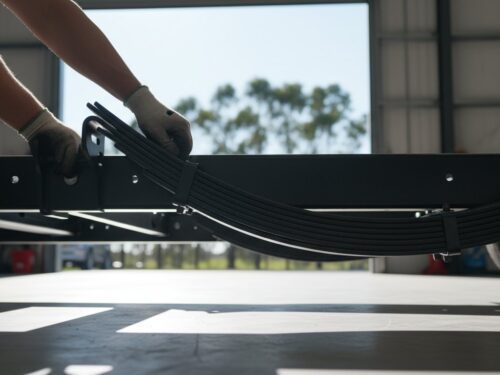
A single high-impact event can instantly ruin a straight axle. Hitting a 100mm deep pothole or a concrete kerb at 80km/h generates massive vertical force. A standard 39mm round axle has significantly less structural rigidity than a 50mm square axle. The square profile offers better resistance to bending under these sudden loads. Another hidden danger is “bottoming out” the suspension. If your trailer is heavily loaded and hits a bump, the leaf springs may compress fully. This allows the axle beam to strike the trailer frame directly. Always inspect your hardware for stress fractures or cracked welds after any significant road impact. Look closely at the spring seats and the areas around the U-bolts.
Corrosion and Maintenance Neglect
Corrosion weakens the structural integrity of your trailer. This is a major concern for boat trailer parts exposed to saltwater. Rust-jacking is a specific process where internal corrosion builds up inside hollow axle tubes. The expanding rust creates internal pressure that thins the metal walls and makes them prone to buckling. Maintenance neglect also plays a role. Loose hangers or worn bushings allow the axle to shift during transit. This movement causes fatigue in the metal over several thousand kilometres. We recommend checking your essential trailer parts every 10,000km to ensure everything remains tight and aligned. Regular inspections prevent minor wear from turning into a total axle failure on the highway.
Superior Trailer Parts is Australian owned and operated. We provide the heavy-duty components you need to keep your trailer on the road. Don’t wait for a breakdown to occur. Order a replacement heavy-duty axle today and ensure your trailer is fit for the harshest conditions.
Repair vs. Replacement: Choosing the Safest Path
Once you identify the signs of a bent trailer axle, you must decide whether to attempt a repair or invest in a replacement. The decision directly impacts the roadworthiness of your setup. Don’t fall for the common myth that an axle can be “cold bent” or hammered back into a straight line. Steel has a structural memory. Once the metal deforms beyond its elastic limit, the internal grain structure is permanently weakened. Forcing it back creates internal stress fractures that often lead to sudden, catastrophic failure when you hit a pothole at 100km/h.
The Dangers of DIY Axle Straightening
Attempting to straighten an axle using heat or hydraulic jacks is a major safety risk. Applying a torch to the steel ruins the factory heat treatment, making the metal either too soft or dangerously brittle. Cold bending causes work hardening, which increases the likelihood of the axle snapping under heavy loads. Beyond the mechanical risks, there are significant legal and insurance implications. Most Australian insurance providers will void a policy if they discover a trailer has been fitted with a “repaired” or modified axle beam. Replacing the entire beam is the only industry-standard method that ensures your trailer remains safe and compliant for public roads.
Selecting Your Replacement Axle
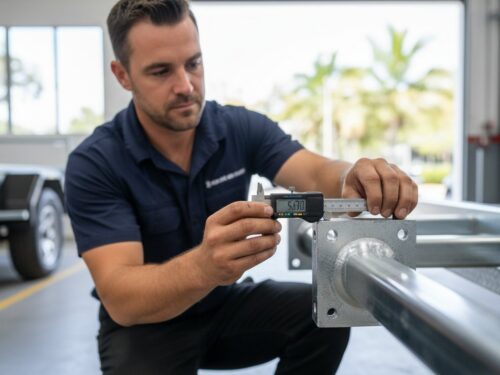
Choosing a new axle requires precise measurements to ensure a perfect fit and proper tracking. You need to record three specific data points before ordering. First, measure the “hub face to hub face” distance. This is the exact length between the flat surfaces where the wheel studs are located. Second, measure the “spring centers,” which is the distance between the centers of the two leaf spring seats welded to the axle. Finally, confirm the axle diameter and profile.
- Round vs. Square: Many owners choose to upgrade from round axles to square profiles for increased durability.
- Durability Upgrades: For those operating box trailers in harsh conditions, switching to a 45mm or 50mm square axle provides better resistance to bending.
- Compatibility Check: Verify that your new axle’s weight rating matches your trailer’s Aggregate Trailer Mass (ATM).
Before completing the installation, ensure your couplings and braking systems are compatible with the new axle’s capacity. While a new axle is an upfront cost, it is far cheaper than the price of ruined tyres, worn bearings, or a roadside recovery. Investing in a genuine, heavy-duty replacement ensures your trailer stays on the road and performs reliably across all Australian terrains.
Restore Your Trailer’s Structural Integrity
Ignoring the signs of a bent trailer axle leads to rapid tire scrubbing and increased strain on your wheel bearings. Monitoring tread wear patterns and checking for a loss of natural camber are the most effective ways to spot damage before a breakdown occurs. If your diagnostic measurements show a deviation of more than 5 millimeters from the center line, it’s time to consider a replacement. Straightening a damaged axle often weakens the metal’s structural integrity, making it unsafe for heavy-duty hauling. We provide reliable components designed to withstand harsh local conditions. Our team offers expert technical support to ensure you select the right galvanised or straight axle for your specific build. As a 100% Australian Owned and Operated business, we prioritize getting your trailer back on the road with minimal downtime. We offer nationwide shipping on all axles to ensure you have access to quality parts regardless of your location. Don’t risk a roadside failure when a dependable solution is available. Shop Heavy-Duty Replacement Axles and Parts today to keep your trailer tracking straight and true.
Frequently Asked Questions
Can I straighten a bent trailer axle?
You shouldn’t try to straighten a bent trailer axle because it compromises the metal’s structural integrity. Cold-bending steel can reduce its load-bearing capacity by up to 30 percent, making it prone to snapping under heavy loads. Heat treatment often ruins the temper of heavy-duty or galvanised steel. Replace the entire axle assembly to ensure your trailer remains roadworthy and safe for Australian conditions.
How much tyre wear is normal for a trailer?
Normal tyre wear should be perfectly even across the entire tread surface. If you notice the inside edge wearing 2mm faster than the outside, it’s one of the primary signs of a bent trailer axle. Correct alignment ensures your tyres last for their full rated mileage of approximately 45,000 kilometres. Check your tyre pressure weekly to rule out inflation issues before diagnosing axle damage.
Will a bent axle cause my trailer to sway?
A bent axle will cause your trailer to sway because the wheels no longer track parallel to the tow vehicle. Even a 1-degree deviation in spindle alignment forces the trailer to “dog-track” or pull to one side constantly. This instability increases significantly at speeds over 80 kilometres per hour, creating a dangerous situation for you and other road users. Identifying the signs of a bent trailer axle early prevents these handling issues.
How do I know if the spindle is bent or the whole axle?
Identify a bent spindle by placing a straight edge along the axle tube toward the hub assembly. If the gap between the straight edge and the tube increases as you reach the hub, the spindle is likely the damaged component. Whole-axle bends usually occur in the centre of the beam, often showing a visible vertical or horizontal bow of 5mm or more when measured against a string line.
What is the average lifespan of a trailer axle in Australia?
A high-quality Australian trailer axle typically lasts between 10 and 15 years with regular maintenance and standard use. Marine-grade galvanised axles used for boat trailers usually have a shorter lifespan of 5 to 8 years due to constant salt-water exposure and corrosion. Inspect your axle every 12 months for signs of fatigue or rust to ensure it remains capable of hauling its rated ATM.
Does insurance cover a bent trailer axle from a pothole?
Most comprehensive insurance policies in Australia cover axle damage if it results from a sudden impact like a large pothole or a kerb strike. You’ll need to provide photos of the road hazard and the damaged part to support your claim. Always review your specific Product Disclosure Statement to confirm that “accidental undercarriage damage” is a listed inclusion before you begin the repair process.
Can a bent axle damage my trailer brakes or bearings?
A bent axle causes significant damage to your trailer brakes and bearings by creating uneven pressure and friction. Misalignment leads to bearing temperatures exceeding 100 degrees Celsius, which liquifies the grease and causes the rollers to seize. This also forces brake shoes or pads to engage at an angle, reducing your total stopping efficiency by approximately 40 percent and causing rapid component wear.
Is it safe to drive with a slightly bent axle?
It’s never safe to drive with a bent axle, regardless of how minor the damage appears. A compromised axle can suffer a catastrophic failure at highway speeds, potentially leading to a lost wheel or a rollover. Research indicates that mechanical failures contribute to 15 percent of trailer-related accidents on Australian roads. Replace any damaged axle immediately to maintain the safety and reliability of your towing setup.