A suspension failure 200 kilometres from the nearest town is more than an inconvenience. It’s a critical equipment failure that costs you time, money, and puts your safety at risk. Getting your trailer’s suspension right from the start isn’t just a good idea; it’s essential for anyone hauling serious loads across Australia.
We know the challenges. You’re weighing up Rocker Roller against Slipper springs, trying to decipher complex braking requirements, and need absolute confidence your setup can handle corrugated outback roads or a corrosive marine environment. Getting it wrong means uneven tyre wear, poor handling, and the constant worry of a breakdown when you can least afford one.
This technical breakdown delivers the straightforward advice you need. It’s designed to help you select the correct tandem axle trailer suspension kits for your trailer’s Gross Trailer Mass (GTM) and intended use, ensuring long-term, reliable performance. We will cover the key differences between suspension types, explain how to match your kit to your braking system, and provide maintenance tips to maximise the life of your investment.
Key Takeaways
- Understand how to calculate your Gross Trailer Mass (GTM) to match your suspension kit’s capacity with your specific payload and trailer weight.
- Compare Rocker Roller and Slipper Spring systems to determine the best setup for load equalisation and towing stability in Australian conditions.
- Review the critical measurements for hanger placement to ensure correct axle tracking and minimise premature tyre wear.
- Identify the essential components of heavy-duty tandem axle trailer suspension kits to make an informed selection for your trailer build or upgrade.
Understanding Tandem Axle Trailer Suspension Kits
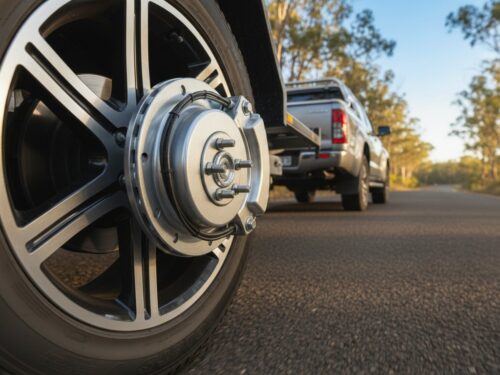
A tandem axle trailer suspension kit is a non-negotiable for serious hauling. The system distributes your trailer’s load across two separate axles and four wheels. This design isn’t just about adding more tyres; it’s a fundamental engineering solution for increasing your trailer’s Gross Trailer Mass (GTM) and improving towing stability. For any load exceeding 750kg, Australian regulations require brakes, and tandem axle setups are the standard for trailers with a GTM from 2,000kg up to 4,500kg.
The core principle is effective load sharing. Unlike a single axle, which transfers every shock directly through the chassis, a Tandem Axle configuration uses a rocker or equaliser bar between the springs. This mechanism transfers a portion of the impact from one wheel to the other on the same side, smoothing out the ride and keeping all four tyres in contact with the road. This is critical for maintaining control over long distances on uneven Australian roads, from corrugated outback tracks to patched-up regional highways. For heavy-duty applications like livestock transport or hauling machinery, a single axle simply doesn’t provide the required load capacity or safety margin.
Choosing the right tandem axle trailer suspension kits is an investment in safety, compliance, and performance. The right setup ensures your trailer handles predictably, reduces wear on your tow vehicle, and can legally carry the weight your job demands.
Benefits of Dual Axle Configurations
A dual axle setup offers practical advantages for any serious trailer owner. The increased stability and load capacity are backed by tangible safety and performance gains.
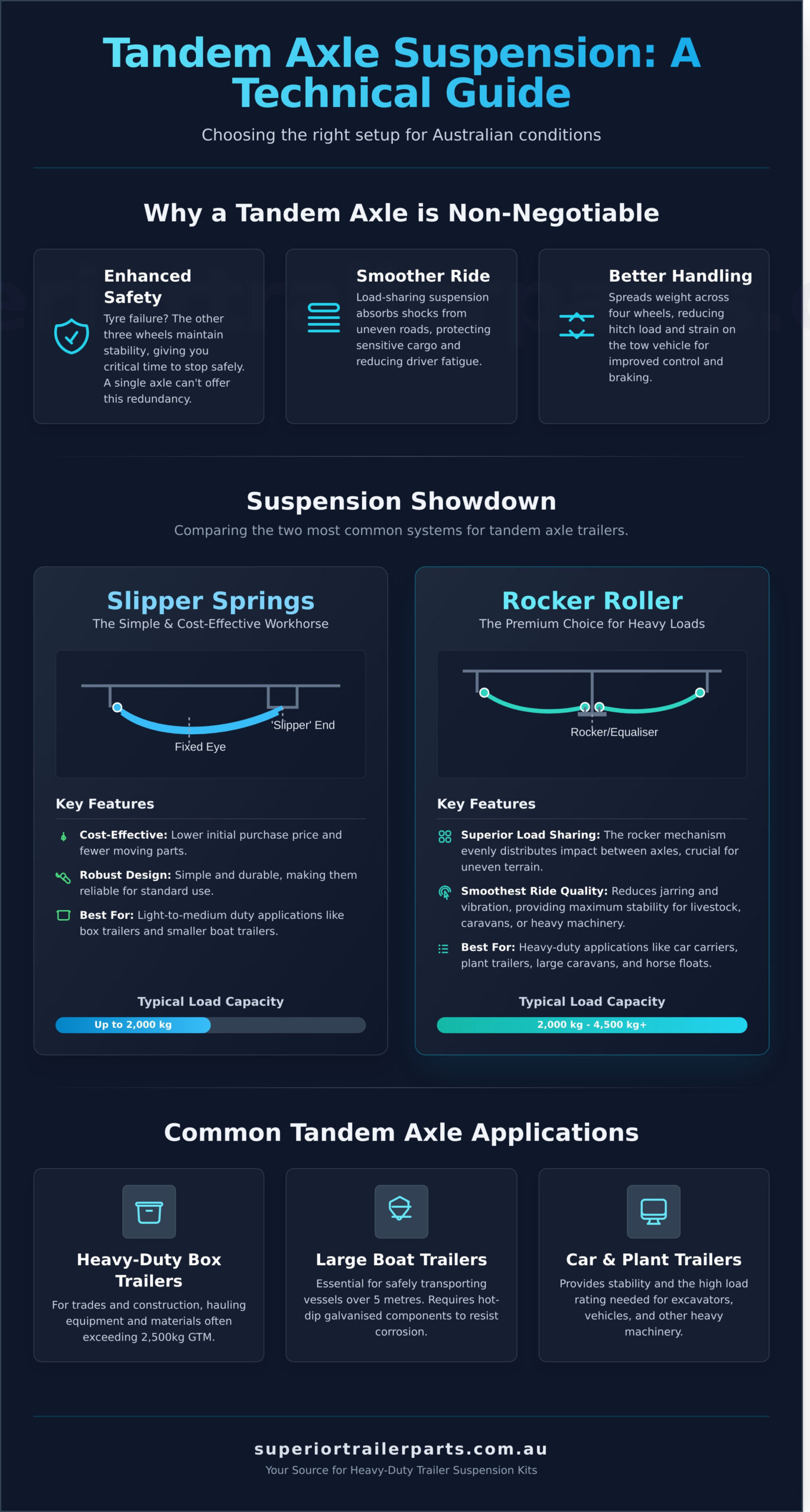
- Enhanced Safety: If you experience a tyre failure at 100 km/h, the remaining three tyres maintain trailer balance. This redundancy provides critical time to pull over safely, a feature a single axle trailer cannot offer.
- Smoother Ride Quality: The load-sharing suspension absorbs bumps and dips far more effectively. This creates a more stable ride, which is essential for protecting sensitive cargo and reducing driver fatigue on long trips.
- Greater Weight Distribution: By spreading the trailer’s weight across two axles, you reduce the direct downward force on the tow vehicle’s hitch. This improves the tow vehicle’s handling, braking, and reduces strain on its chassis.
Common Applications for Tandem Kits
These heavy-duty kits are the backbone for a wide range of commercial and recreational trailers across Australia. Their strength and reliability make them the default choice for demanding jobs.
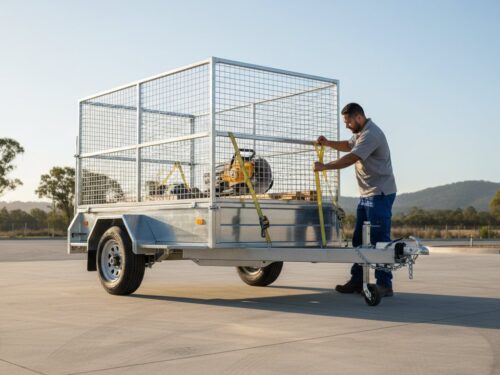
- Heavy-Duty Box Trailers: Essential for tradespeople and construction crews carrying tools, equipment, and materials with GTMs often exceeding 2,500kg.
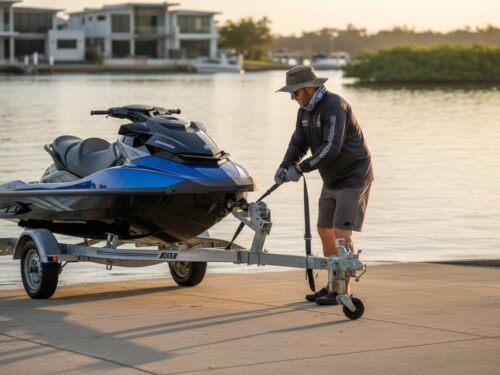
- Large Boat Trailers: Required for safely transporting vessels over 5 metres. These kits must feature marine-grade, hot-dip galvanised components to resist corrosion from saltwater exposure.
- Car Carriers and Plant Trailers: Provide the necessary stability and load rating for transporting vehicles, mini excavators, and other heavy machinery where a low centre of gravity and predictable handling are vital.
Essential Components of a Dual Axle Suspension Setup
A tandem axle suspension setup is an engineered system, not just a collection of parts. Its primary job is to distribute your trailer’s load evenly across four wheels, providing stability and a smoother ride. Understanding how each component functions is the first step in selecting the right tandem axle trailer suspension kits for your specific application, whether you’re hauling tools to a job site or a boat to the coast.
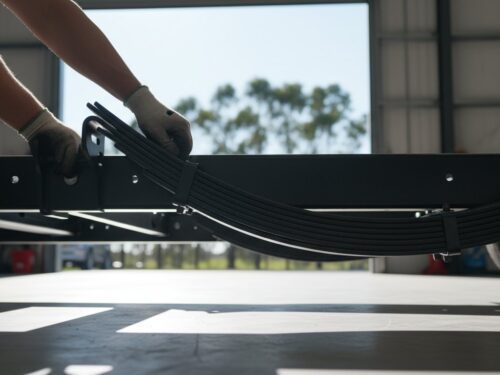
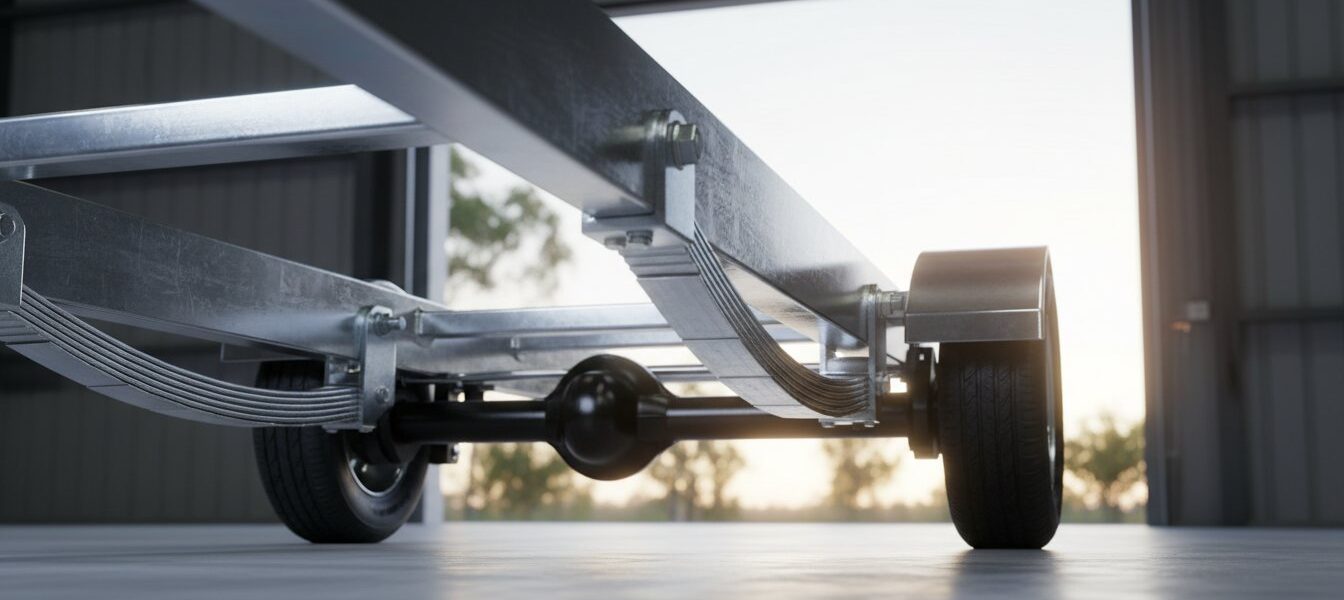
The core of the system is the leaf spring assembly. These stacked, flexible steel plates absorb road shock and directly support the trailer’s Gross Trailer Mass (GTM). The number of leaves in a spring, from a 4-leaf configuration for light loads up to a heavy-duty 9-leaf setup, directly dictates its load-carrying capacity. More leaves equal a higher rating and a stiffer ride.
Leaf Spring Varieties
In Australia, three main types of leaf springs dominate the market:
- Slipper Springs: A simple, robust design with one fixed mounting eye and one “slipper” end that rests in a hanger. They are cost-effective and ideal for light-to-medium duty trailers, typically up to 2,000kg ATM.
- Eye-to-Eye (Shackle) Springs: This traditional design features a mounting eye at both ends. It connects to the frame via shackles, offering a more controlled and consistent spring action compared to slipper springs.
- Rocker Roller Springs: The premium choice for heavy-duty load sharing. This system uses a series of rockers and rollers to create the smoothest load transfer between axles, making it essential for heavy plant trailers, caravans, and horse floats, especially on uneven Australian roads.
Connecting these springs are the shackle bolts and hangers. These are the critical pivot points that secure the entire assembly to your trailer’s chassis. The equaliser bar is the mechanical link between the two springs on each side. As one tyre hits a bump, the equaliser pivots, transferring a portion of the impact to the adjacent axle. This action keeps both tyres in better contact with the road, significantly improving stability and braking performance.
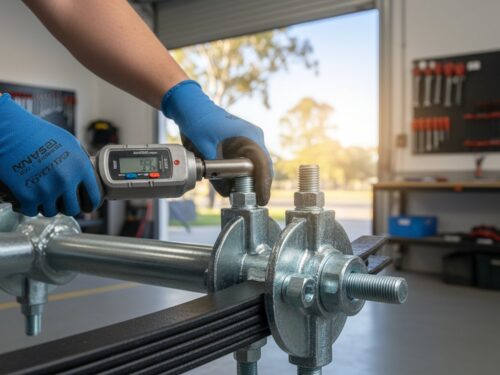
Finally, the suspension integrates with your trailer axles using axle seats and U-bolts. The axle seat is welded directly to the axle, creating a solid platform for the spring. High-tensile U-bolts then clamp the spring securely to this seat, locking everything into place. Correct U-bolt tension is non-negotiable for safety and performance.
Hardware and Fasteners
The reliability of your suspension depends entirely on the quality of its hardware. High-tensile shackle bolts are essential to withstand the constant shear forces of a moving trailer. We strongly recommend using greasable bolts; a quick application of grease every 10,000 km prevents seizure and can double the life of your shackle bushings.
Your choice of finish matters. For trailers used in coastal or marine environments, a hot-dip galvanised finish is the only reliable defence against corrosion. For general inland use, a quality dacromet or painted finish is often sufficient. The integrity of your U-bolt kits is just as vital, as they are responsible for maintaining precise axle alignment. Any stretching or loss of torque can lead to dangerous trailer sway and accelerated tyre wear. It’s critical that all parts meet or exceed established standards, such as the official Suspension System Safety Requirements, to guarantee your trailer is roadworthy. Building a dependable setup starts with choosing proven, high-quality suspension parts for the job.
Rocker Roller vs. Slipper Spring Systems
Choosing the right suspension is critical for your trailer’s performance. For tandem axle trailers, the debate often centres on two primary systems: Rocker Roller and Slipper Spring. Your choice directly impacts ride quality, tyre longevity, and overall stability under load. Slipper springs offer a simple, cost-effective solution for lighter applications. Rocker Roller systems provide superior load sharing, making them the standard for heavy-duty work across Australia.
The Mechanics of Load Sharing
A Rocker Roller system excels at distributing weight evenly across both axles. It achieves this through a central pivoting equaliser, or rocker bar, that connects the two leaf springs. When one tyre encounters a pothole or bump, the rocker bar pivots. This action transfers a portion of the vertical force to the adjoining spring, pressing the other tyre firmly onto the road surface. The “roller” component allows the spring to move smoothly during this compression and rebound cycle.
This mechanism is vital for preventing “axle hopping” during hard braking or on corrugated roads. Without effective load sharing, one axle can momentarily lift, causing its brakes to lock and tyres to skid. This controlled weight transfer is critical for maintaining grip, a principle detailed in extensive NHTSA Research on Trailer Stability, which shows balanced suspension is fundamental to preventing dangerous trailer sway. Over thousands of kilometres, this stability results in more even tyre wear and can contribute to better fuel efficiency.
Selection Criteria for Spring Types
Your trailer’s Gross Trailer Mass (GTM) is the most important factor in this decision. While slipper springs are a reliable choice for single-axle trailers, their performance on tandem setups is limited to lighter loads. They don’t have a mechanical link to equalise the load, meaning the front axle often carries a disproportionate amount of weight, especially on uneven ground.
Use this as your guide:
- Use Slipper Springs for budget-conscious builds with a GTM under 2000kg. They are a practical option for box trailers or small boat trailers used for local trips on sealed roads.
- Choose Rocker Roller for trailers with a GTM exceeding 2500kg. This system is essential for caravans, livestock floats, and plant trailers that undertake frequent long hauls or travel on unsealed regional roads. The initial investment of A$200-A$400 more for robust tandem axle trailer suspension kits is quickly offset by improved safety and reduced tyre replacement costs.
Before finalising any kit, you must verify the spring’s load rating. A spring set rated for 2000kg is unsafe and illegal on a 3200kg trailer. Always check our heavy-duty leaf springs for detailed specifications to find the correct match for your trailer’s GTM.
For Australian conditions, the application dictates the hardware. If you’re towing heavy machinery or crossing the Nullarbor, a Rocker Roller system isn’t a luxury. It’s a necessity for safe, reliable performance.
Selecting the Right Suspension Kit for Your Trailer Weight
Choosing the correct suspension capacity isn’t just about performance; it’s a fundamental requirement for safety and legal compliance on Australian roads. Your trailer’s weight dictates every component choice, starting with the suspension. Get this wrong, and you risk catastrophic failure, fines, and voided insurance.
First, you must understand your trailer’s weight ratings. There are two key figures:
- Gross Trailer Mass (GTM): The maximum weight that can be supported by the trailer’s axles when coupled to a tow vehicle.
- Aggregate Trailer Mass (ATM): The total mass of the loaded trailer when uncoupled from the tow vehicle. This includes the weight on the jockey wheel.
Your suspension kit’s capacity must meet or exceed your trailer’s intended ATM. Calculate this by adding your trailer’s empty weight (tare weight) to its maximum expected payload. For example, a trailer with a tare weight of 750kg carrying a 2500kg excavator requires a minimum ATM of 3250kg. You would therefore select a 3500kg suspension kit, not a 3000kg one. Always build in a margin of safety. Never under-spec your components.
Weight Rating Categories
Tandem axle trailer suspension kits are engineered for specific load ranges. Common categories in the Australian market include:
- 2000kg Kits: This rating is a popular choice for larger tradesman trailers, heavy-duty box trailers, and general-purpose tandem builds that don’t carry extreme weight.
- 3000kg – 3500kg Kits: This is the standard for serious commercial use. These heavy-duty kits are built for car carriers, plant trailers hauling mini-excavators, and large, fully-loaded trade setups.
- 4000kg+ Kits: For specialist applications, these kits provide the robust support needed for transporting industrial machinery, large farm equipment, or custom tiny homes. They represent the peak of load-carrying capacity for most on-road applications.
Braking and Compliance
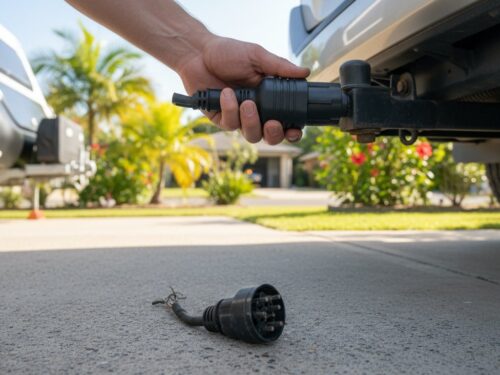
Australian Design Rules (ADR) are strict and clear. Any trailer with a GTM over 2000kg must be fitted with a breakaway braking system. This system is designed to apply the trailer’s brakes automatically if it becomes detached from the tow vehicle. It’s a non-negotiable safety feature mandated by law.
For these heavier tandem setups, electric drum brakes are the industry standard. They offer superior, proportional stopping power controlled directly from the tow vehicle, which is essential for safely managing a 3-tonne load. While mechanical disc brakes are effective for lighter trailers, they don’t provide the controlled performance needed for GTMs above 2000kg.
Your entire trailer setup must be rated consistently. A 3500kg suspension kit is compromised if paired with 2000kg rated couplings or wheels. Every component in the chain, from the coupling to the tyres, must meet or exceed your trailer’s ATM. Integrating robust braking systems with your suspension is not an option; it’s a legal necessity. For expert advice on matching components for your specific weight requirements, explore our full range of heavy-duty suspension kits.
Installation Basics and Long-Term Maintenance
A high-quality suspension kit performs only as well as it’s installed. Correct fitment is not just about performance; it’s a critical safety requirement. Proper installation ensures your axles track straight, your load is distributed correctly, and your trailer remains stable on Australian roads. Once installed, routine maintenance is essential to maximise the lifespan of your investment and prevent costly failures.
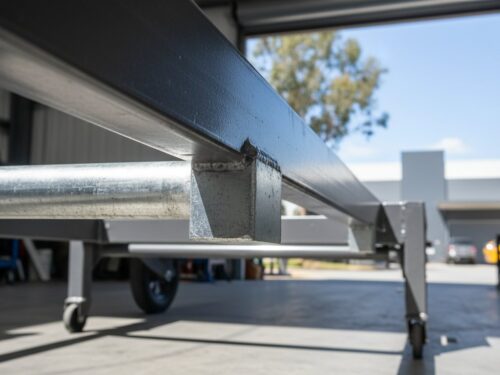
Hanger placement is the most critical step. Measurements must be exact. An axle that is out of square by even a few millimetres will cause the trailer to “crab” sideways, leading to accelerated tyre wear, poor fuel economy, and unsafe handling. Always measure diagonally from a fixed point at the front of the trailer chassis to ensure hangers are perfectly square before final welding. For structural integrity, welding suspension mounting points is the professional standard. While bolting may be sufficient for light-duty applications, a proper weld provides a permanent, rigid connection that won’t loosen under the constant stress of heavy loads and rough terrain.
Don’t neglect the initial break-in period. After the first 500 kilometres of travel, you must check and re-torque all U-bolts. New springs will settle into place, and this can create slack. Failure to re-tighten U-bolts can lead to a loose axle, which is a significant safety hazard. This simple check takes minutes but prevents catastrophic failure.
Installation Best Practices
Get the fundamentals right for a reliable setup. First, confirm the trailer frame is square before welding any hangers. Second, ensure equaliser bars are oriented correctly to pivot freely and that shackle plates hang vertically and parallel to the spring. Finally, for any tandem axle trailer suspension kits with greasable shackle bolts, apply a high-quality, high-pressure grease at installation and as part of your regular maintenance schedule to prevent seizure and wear.
A consistent inspection routine is the best defence against unexpected downtime. A visual and physical check of all suspension components should be part of your pre-trip checklist. Catching a small issue early prevents it from becoming a major roadside breakdown. Create a simple checklist and stick to it.
- Leaf Springs: Check for any cracks, fractures, or flattened leaves. A spring that has lost its arch is overloaded or fatigued and must be replaced.
- Hangers and Shackles: Inspect for cracks around welds or any signs of elongation in the bolt holes.
- U-Bolts: Ensure nuts are tight and that there are no signs of stretching or thread damage.
- Bushings: Look for perished or deformed nylon or brass bushings. Use a pry bar to check for excessive movement.
- Tyres: Uneven tyre wear is often the first sign of an alignment or suspension problem. Check for scalloping or excessive wear on one edge.
Identifying Wear and Tear
Knowing what to look for saves you money and keeps you safe. Check for flattened or cracked leaves in the spring steel; either condition warrants immediate replacement. Inspect nylon or brass bushings by trying to move the spring eye side-to-side. Any significant play indicates the bushing is worn out. Finally, examine the shackle bolts and the hanger holes. If a bolt hole looks oval instead of round, the bolt has worn and must be replaced before it causes a complete hanger failure.
These kinds of inspections are vital for trailers, but the trucks that tow them require just as much attention, especially for commercial use. When it comes to complex hydraulic repairs or custom upfitting for work trucks, seeking out experienced technicians is key. For those interested in the scope of professional truck services, you can learn more about Tim Halpin Equipment Corp, a family-owned specialist in the field.
Equip Your Trailer for the Toughest Jobs
Making the right choice for your trailer suspension comes down to two critical factors. First, you must match the kit’s Gross Trailer Mass (GTM) rating to your trailer’s maximum load. This isn’t just for performance; it’s essential for road safety. Second, your decision between a Rocker Roller or Slipper Spring system will directly impact ride quality and stability, so choose based on your specific hauling needs.
You now have the knowledge to make a confident investment in your trailer’s performance. For reliable, heavy-duty tandem axle trailer suspension kits built for harsh Australian conditions, Superior Trailer Parts has you covered. As a 100% Australian Owned and Operated business, we provide expert technical support for DIY builders and fleet managers alike. We get you the right parts fast with nationwide shipping on all suspension components.
Don’t settle for less. Shop Heavy-Duty Tandem Suspension Kits at Superior Trailer Parts and build a trailer that’s ready for work.
Frequently Asked Questions
Do I need a tandem axle suspension kit for a 7×4 trailer?
No, a 7×4 trailer typically does not require one of our tandem axle trailer suspension kits. Most 7×4 trailers in Australia operate under the 750kg Gross Trailer Mass (GTM) limit, which only requires a single axle. Tandem setups are designed for trailers with a GTM over 2000kg to legally and safely manage heavier loads. A single axle with the correct springs is the more efficient and cost-effective solution for a standard 7×4 trailer.
What is the difference between GTM and ATM for tandem trailers?
Gross Trailer Mass (GTM) is the maximum weight carried by the trailer’s axles, while Aggregate Trailer Mass (ATM) is the trailer’s total weight, including the weight on the tow ball. For example, if a trailer has an ATM of 3200kg and its tow ball mass is 200kg, its GTM is 3000kg. Understanding this distinction is critical for legal compliance and selecting components with the correct load rating for your setup.
Can I use different sized axles in a tandem suspension kit?
No, you must never use different sized axles in a tandem suspension setup. Both axles need identical load ratings, hub profiles, and braking systems to ensure correct load sharing and braking performance. Using mismatched axles causes uneven weight distribution, which leads to rapid tyre wear, suspension component failure, and dangerous instability on the road. Always install a matched pair of axles for a reliable and safe trailer.
How often should I grease my tandem trailer suspension?
You should grease your tandem suspension’s moving parts every 10,000 kilometres or at least every 12 months. For trailers used in harsh conditions, like marine or off-road applications, more frequent servicing is required. After immersion in saltwater, always flush components with fresh water and re-grease them. Consistent greasing of shackle pins and rockers is the best way to ensure the longevity and reliability of your suspension system.
Are Rocker Roller springs better for boat trailers?
Yes, Rocker Roller springs are an excellent choice for heavy boat trailers, particularly those with a GTM over 2000kg. This suspension design provides superior load sharing and a smoother ride than standard rocker springs, which reduces stress on both the boat hull and the trailer frame. For maximum durability in marine environments, always choose a galvanised Rocker Roller spring setup to provide superior resistance against saltwater corrosion.
What happens if my tandem trailer suspension is not load-sharing?
A non-load-sharing tandem suspension will dangerously overload one axle while the other remains underloaded. This creates severe safety issues, including excessive tyre wear, poor braking, and potential axle failure. When travelling over bumps or uneven surfaces, one axle can lift entirely off the ground, placing the entire trailer weight on a single axle and four springs. This makes the trailer highly unstable and unsafe to tow.
Can I upgrade my single axle trailer to a tandem setup?
Yes, upgrading a single axle trailer to a tandem axle is possible, but it is a major modification. The project requires significant chassis work, including welding on new spring hangers and reinforcing the frame to handle the increased load capacity. You will need a complete tandem axle trailer suspension kit and a second matching axle. This conversion must comply with Australian Design Rules (ADRs), and an engineer’s certification is often required.
Do I need electric brakes on both axles of a tandem trailer?
Yes, Australian law requires brakes on all axles for any trailer with a GTM exceeding 2000kg. For a typical tandem trailer rated at 3500kg ATM, both axles must be fitted with a functioning brake system, which is usually an electric brake setup. Equipping only one axle with brakes is illegal and creates a significant safety hazard due to insufficient stopping power. Always check your state’s specific vehicle standards for compliance.