A seized trailer brake isn’t just a mechanical failure. It’s a liability that compromises your safety and ADR compliance the moment you hit the highway. You likely know the frustration of backing a boat trailer into the surf only to find your brakes and calipers locked up a few months later. Saltwater corrosion is a relentless enemy, and it causes a high percentage of trailer component failures across Australia’s coastal regions every year.
Selecting the right system shouldn’t be a guessing game. Whether you’re managing a 750kg single axle or a 3,500kg heavy-duty setup, you need parts that meet Australian Design Rules and withstand local conditions. We’ll show you how to identify the best braking components for your specific weight rating and provide a practical maintenance routine to keep them functional. This ensures you get reliable stopping power and long-term durability from your investment, keeping your trailer legal and your cargo secure.
Key Takeaways
- Understand ADR compliance requirements for trailers with a GTM over 750kg to ensure your setup remains legal on Australian roads.
- Distinguish between mechanical cable-pull systems and hydraulic fluid-pressure setups to determine the most effective configuration for your towing needs.
- Learn how to select the right brakes and calipers for marine environments by prioritising galvanised and stainless steel components to resist saltwater corrosion.
- Identify early signs of pad wear and component fatigue through regular safety inspections to prevent expensive roadside repairs.
- Discover why heavy-duty, Australian-tested braking kits are essential for maintaining reliability and performance in harsh local conditions.
Understanding Trailer Brakes and Calipers for Australian Roads
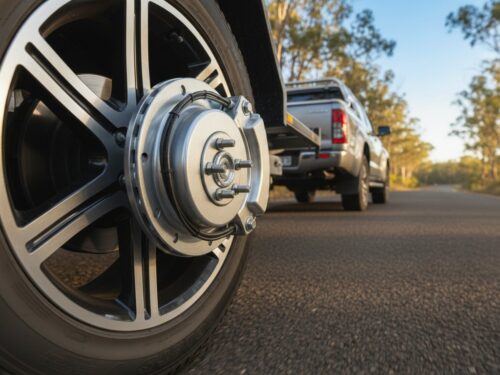
Australian Design Rule (ADR) 38 mandates specific braking requirements for any trailer with a Gross Trailer Mass (GTM) exceeding 750kg. Safety on local highways depends on reliable components that handle extreme heat and friction under heavy loads. Choosing the right brakes and calipers ensures your setup remains legal and functional across diverse terrain. Calipers serve as the primary clamping mechanism. They apply direct pressure to the disc rotors to slow the vehicle. While drum brakes remain common for specific utility uses, disc systems offer superior heat dissipation for heavy-duty towing. This makes them a preferred choice for boat trailers and caravans frequenting coastal or mountainous regions.
Reliable braking isn’t just a preference; it’s a legal necessity to meet Australian safety standards. Failure to maintain these systems can lead to catastrophic mechanical failure or heavy fines from transport authorities. You need gear that stands up to the salt, dust, and heat of the Australian environment. Superior performance requires high-quality materials like galvanised or stainless steel to prevent corrosion. Don’t settle for inferior imports that compromise your safety on the road. Professional fleet managers and DIY owners alike must prioritise durability when selecting their braking hardware.
The Role of the Caliper in Disc Braking
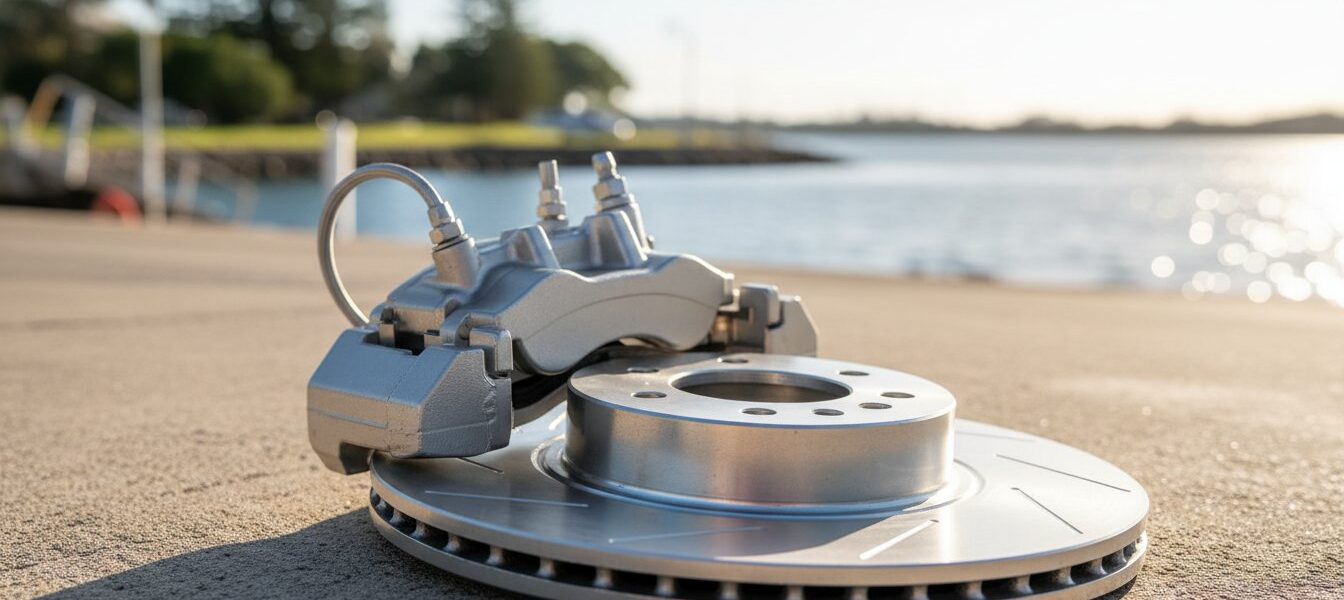
The caliper is the primary actuator in disc systems. It converts fluid pressure or mechanical leverage into stopping power. Hydraulic systems use internal pistons to push brake pads against the rotor surface. High-quality seals are vital in this process. They block dust and salt water from entering the cylinder. This prevents piston seizure, which is a common issue in marine applications. Mechanical versions rely on a lever arm to achieve the same result. Overrun brake systems often use these mechanical calipers for trailers under 2000kg GTM. If you’re towing in salt water, marine-grade calipers with stainless steel pistons are essential for longevity. Regular inspections ensure the pads wear evenly and the pistons retract fully after every application.
Legal Requirements for Trailer Braking Systems
Australian regulations are strict regarding weight thresholds and braking performance. These rules ensure that the towing vehicle can stop the combined mass safely within a controlled distance. You must understand these three primary GTM categories:
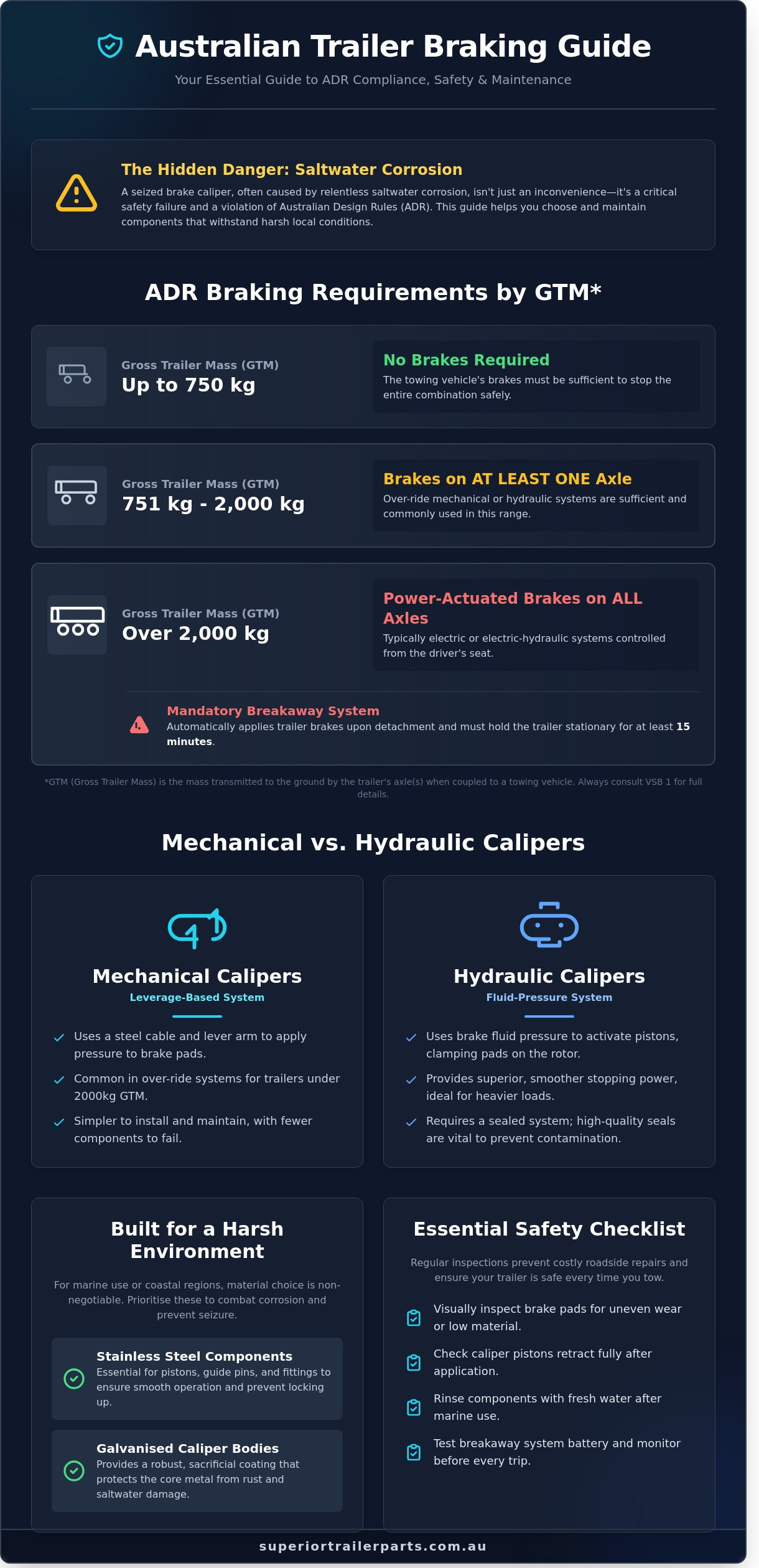
- Up to 750kg GTM: No braking system is legally required. The vehicle’s own brakes and calipers must be capable of stopping the combined load.
- 751kg to 2000kg GTM: Braking is mandatory on at least one axle. Over-ride systems, where the trailer’s momentum triggers the brakes, are sufficient in this range.
- Over 2000kg GTM: Power-actuated brakes are mandatory on all wheels. This typically involves electric or electric-hydraulic systems controlled from the driver’s seat.
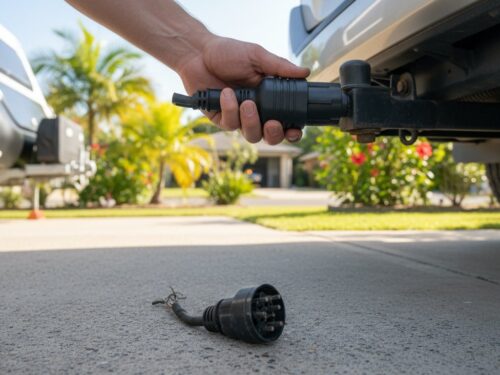
Trailers exceeding 2000kg GTM also require a breakaway system. This safety feature must automatically apply the trailer brakes if it detaches from the tow vehicle. Under VSB 1 (Vehicle Standards Bulletin 1), this system must remain capable of holding the trailer stationary for at least 15 minutes. It’s a critical fail-safe that prevents runaway trailers on public roads. Always check that your battery monitor for the breakaway system is functional before every trip. Keeping your trailer compliant with ADR standards protects your insurance coverage and keeps everyone on the road safe. For expert advice on selecting the correct system for your GTM, consult with a local specialist who understands Australian conditions.
For business owners, ensuring compliance isn’t just about vehicle standards; it’s also about managing the financial side of their assets. Keeping track of maintenance costs, asset depreciation, and related tax implications is crucial. Businesses in regions like North Queensland, for example, can get professional help from firms like Cairns Quality Accounting to ensure their fleet’s finances are as well-maintained as their brakes.
Mechanical vs Hydraulic Calipers: Technical Differences
Selecting the right setup for your trailer depends on the Gross Trailer Mass (GTM) and your specific towing requirements. Both mechanical and hydraulic systems serve the same purpose: converting the momentum of your trailer into controlled stopping power. However, the way they achieve this through the brakes and calipers differs significantly in terms of physics and maintenance. Understanding these technicalities ensures you choose a system that won’t fail when you’re hauling a heavy load through the Australian Outback or navigating steep coastal descents.
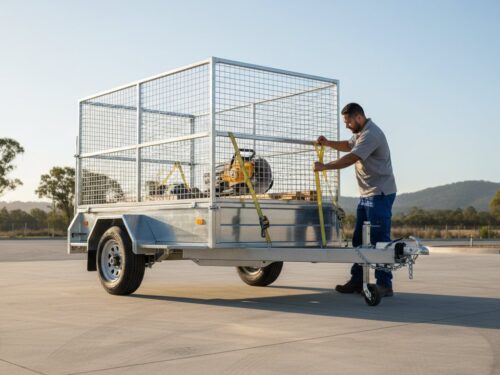
The choice is often dictated by legal requirements. In Australia, trailers with a GTM over 750kg must have brakes fitted to at least one axle. Once you exceed 2,000kg GTM, the requirements become more stringent, often necessitating a move from simple mechanical setups to more robust hydraulic or power-assisted systems. Your towing vehicle’s capacity also plays a role. A heavy-duty system is useless if the vehicle’s master cylinder or electronic controller isn’t matched to the trailer’s hardware.
Mechanical Caliper Characteristics
Mechanical calipers are the go-to choice for trailers within the 750kg to 2,000kg range. These systems operate on a simple cable-pull principle. When the towing vehicle slows down, the trailer’s momentum pushes against an over-ride coupling. This physical movement pulls a galvanized steel cable connected directly to the caliper lever. It’s a utilitarian design that doesn’t require complex plumbing or fluid management, making it highly cost-effective for light-duty applications like small boat trailers or domestic box trailers.
Simplicity comes with a trade-off in maintenance. Steel cables are prone to stretching, especially during the first 1,000 kilometres of use. You’ll need to perform manual adjustments frequently to ensure the brake pads maintain the correct clearance from the disc. If the cable is too loose, the braking response is delayed; if it’s too tight, the brakes will drag and overheat. Corrosion is another factor. Even with galvanised components, salt air and road grime can seize the cable inside its housing. You should inspect the tension and lubricate the pivot points every 5,000 kilometres to prevent failure.
Hydraulic Caliper Performance
Hydraulic calipers offer superior clamping force and much smoother modulation compared to their mechanical counterparts. Instead of a cable, these systems use a master cylinder located at the coupling to push brake fluid through a sealed network of lines. This fluid pressure acts on pistons within the caliper, pressing the pads against the disc with high precision. This setup is ideal for heavy-duty tandem trailers where consistent stopping power is non-negotiable. While Australian standards are the primary guide for local owners, referencing Federal brake inspection standards highlights the global importance of maintaining sealed systems to prevent air or moisture contamination.
Performance remains consistent regardless of the trailer’s length. Since fluid doesn’t stretch like a cable, the braking force applied at the coupling is delivered instantly to the brakes and calipers at the rear. This eliminates the “jerky” sensation often felt with mechanical over-ride systems. Maintenance involves regular bleeding of the lines to remove air bubbles and checking fluid levels every 10,000 kilometres. For those operating in marine environments, using stainless steel pistons and high-quality seals is essential to prevent the internal components from pitting. If you’re looking to upgrade your current setup for better reliability, you can view our range of heavy-duty calipers to find a compatible fit for your axle type.
Choosing Brakes for Marine and Heavy-Duty Environments
Saltwater is the primary enemy of trailer performance. For Australian boaties, a single dunking at the boat ramp starts a chemical reaction that can destroy standard steel components in weeks. Corrosion leads to seized pistons, pitted rotors, and total system failure. You cannot rely on standard automotive equipment when your trailer spends its life in and out of the ocean. Superior Trailer Parts provides specialised hardware designed to withstand these harsh conditions, ensuring your brakes and calipers remain functional season after season.
Heavy-duty applications like earthmoving or commercial transport require a different focus. These trailers deal with extreme weight and constant friction. Managing heat becomes the priority here. When you are hauling up to 4.5 tonnes down a steep range, heat soak can cause brake fade, leaving you with zero stopping power. High-performance hardware, including larger rotors and multi-piston calipers, is essential to maintain safety and control under load.
Managing heat is a priority not just for high-performance machinery, but for Australian homes and businesses as well. For professional climate control, you can visit Nature Carer Environmental Solutions to find advanced air conditioning options.
Marine-Grade Braking Solutions
Standard automotive calipers fail quickly on boat trailers because they use untreated cast iron and internal springs that snap when exposed to brine. We recommend DACROMET or hot-dipped galvanised finishes on all boat trailer parts. These coatings provide a sacrificial layer of protection that prevents the base metal from oxidising. A galvanised finish can extend the life of a hub or rotor by 300 percent compared to raw steel alternatives.
Using 316-grade stainless steel pistons is another critical upgrade. Unlike chrome-plated pistons that flake and seize, stainless steel remains smooth. This ensures the pads retract fully after every use, preventing drag and overheating. Reliability in the marine environment comes down to material choice. We stock components that prioritise these non-corrosive materials so you spend less time on maintenance and more time on the water.
Braking for Tandem and Tipper Trailers
Managing heat dissipation is the biggest challenge for heavy-duty dual axle tandem trailers. When two axles are working to stop a combined mass of several tonnes, the kinetic energy converts into massive amounts of heat. Ventilated rotors are the solution. These rotors feature internal vanes that act like a centrifugal pump, pulling cool air through the disc to lower surface temperatures by up to 150 degrees Celsius during heavy use. This prevents the brake fluid from boiling and keeps the pedal firm.
Safety is a legal requirement, not an option. Adhering to official brake system safety standards ensures that your heavy-duty setup meets the necessary mechanical thresholds for actuators, linings, and rotors. For high-tonnage hydraulic tippers, you must match caliper capacity to the pump output. A mismatch here results in poor clamping force or delayed response times. We provide expert advice to help you select 10-inch or 12-inch brakes and calipers that suit your specific ATM (Aggregate Trailer Mass) requirements.
Superior Trailer Parts focuses on durability and performance. We understand that Australian conditions are some of the toughest in the world. Whether you are launching a boat in North Queensland or hauling gravel in the Victorian High Country, our gear is built to last. We are Australian owned and operated, providing honest solutions for every trailer owner. Our range of heavy-duty and marine-grade hardware ensures your trailer stays on the road and out of the workshop.
Maintenance and Safety Inspections for Braking Systems
Routine maintenance keeps your trailer legal and safe on Australian roads. Skipping a check-up leads to catastrophic failure and expensive roadside repairs. Recovery for a seized hub on a highway often costs upwards of A$450, excluding the price of replacement parts. Perform a full system audit every 10,000 kilometres or every 12 months. If you operate a boat trailer in salt water, reduce this interval to every 3 months. Thorough inspections of your brakes and calipers ensure the trailer stops exactly when the tow vehicle does, preventing jackknifing incidents.
Check your brake pads first. They require replacement once the friction material wears down to 1.5mm. Look for uneven wear patterns across the set. If one pad is significantly thinner than its partner, your caliper slide pins are likely sticking. These pins need regular cleaning and a coating of high-temperature silicone grease to maintain even clamping force. Neglecting this causes one pad to drag constantly against the rotor. This dragging increases fuel consumption by up to 15% and can heat the rotor to over 300 degrees Celsius, leading to warped discs and reduced stopping power.
Hydraulic lines require a close look for physical damage or degradation. Inspect the entire length for cracks, kinks, or signs of corrosion. Look for “ballooning” or swelling while a partner applies the brakes. A line that expands under pressure reduces braking force by 20% or more. Steel lines in marine environments often show rust near the fittings; replace these immediately to avoid total pressure loss during emergency braking. Ensure all mounting brackets are secure to prevent vibration from fatiguing the lines over long distances.
Matching Brakes to Axle Ratings
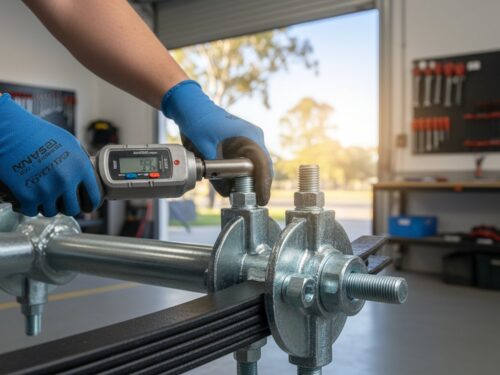
Compatibility is critical for safety and longevity. You must ensure your brakes and calipers match the specific load rating of your axles. A standard 39mm round axle typically supports up to 750kg, while 45mm square axles handle loads up to 1450kg. Using the wrong hub and rotor fitment causes misalignment between the disc and the caliper. This puts lateral stress on the bearings. Data shows that incorrect fitment causes bearing failure within the first 500 kilometres of heavy use, which can result in the entire wheel assembly detaching from the trailer.
Troubleshooting Common Braking Issues
Brake drag is a frequent problem that destroys components quickly. You can identify this by carefully touching the wheel rim after a short drive. If the metal is too hot to touch, the caliper isn’t releasing properly. This often stems from a seized piston caused by water ingress or a blockage in the hydraulic lines. Check your couplings if the brakes feel unresponsive or “wooden” during deceleration. Mechanical override systems fail if the trigger arm is bent or if the internal spring has lost its tension. A faulty coupling can increase your stopping distance by 12 metres when travelling at 80km/h, which is the difference between a near-miss and a collision.
Don’t wait for a breakdown to upgrade your setup. Shop our range of heavy-duty braking components to keep your trailer moving safely.
Reliable Trailer Braking Solutions from Superior Trailer Parts
Superior Trailer Parts stocks a comprehensive range of mechanical and hydraulic braking kits designed for maximum stopping power. We understand that Australian roads demand more from your equipment. Every component in our inventory is built to handle the unique challenges of our environment, from coastal salt spray to the extreme heat of the outback. Our parts meet all relevant Australian Design Rules (ADR) to ensure your trailer remains legal and safe on public roads. You can rely on our gear for heavy-duty performance under the heaviest loads.
Selecting the right brakes and calipers is critical for ensuring consistent friction and effective heat dissipation. We provide high-quality mechanical and hydraulic options that prevent brake fade during long descents or emergency stops. Whether you’re hauling a 5.5-metre boat trailer or a heavy-duty commercial flatbed, our components deliver the reliability you need. Our expert team is ready to help you navigate technical specifications to find the exact fit for your axle capacity and trailer weight. We don’t just sell parts; we provide technical solutions that keep your vehicle on the road.
Nationwide shipping ensures you get the parts you need, wherever you are located. We dispatch in-stock items within 24 hours to minimize your downtime. Our logistics network covers every state and territory, reaching both metropolitan hubs and remote regional areas. We’ve built our reputation on being an Australian owned and operated specialist that prioritizes customer service and product durability. If you have questions about compatibility or installation, our staff offers direct, no-nonsense advice based on years of industry experience.
Complete Braking Kits for DIY and Trade
We offer pre-assembled hydraulic and mechanical disc brake kits that simplify the installation process for both professional builders and DIY enthusiasts. These kits include every essential piece of hardware, such as mounting brackets and u-bolts, to ensure a secure fitment to your axle. We only stock genuine heavy-duty components that withstand high-stress applications. Our competitive pricing ensures you get professional-grade brakes and calipers without the inflated costs often found at general retailers. Each kit is designed for a 100% bolt-on fit, reducing the need for custom fabrication or specialized tools.
How to Order Your Trailer Parts
Ordering is straightforward through our secure e-commerce storefront. We’ve designed our online shop for quick information retrieval, allowing you to find technical specs and prices in seconds. If you’re near our Queensland warehouse, stop by for local pickup and face-to-face technical support from our team. For custom trailer builds or specialized requirements that aren’t listed online, contact our team via phone or email. We provide specialized advice to ensure your custom project meets all safety standards. We stand behind every product we sell with honest service and a commitment to quality.
Upgrade Your Trailer’s Stopping Power
Base your selection of brakes and calipers on your trailer’s ATM, as hydraulic systems are necessary for loads over 2,000kg. Use galvanised components for any marine application to stop salt corrosion before it starts. Perform a full safety inspection every 5,000km to ensure your pads and seals stay in working order. These simple steps prevent equipment failure and keep your cargo secure during long-haul transport across the state.
Superior Trailer Parts is a 100% Australian owned and operated specialist focused on durability and performance. We provide expert technical advice to ensure you get the right fit for your specific towing needs. Our inventory includes heavy-duty parts designed to survive the toughest local conditions. We provide fast nationwide shipping across Australia to ensure your vehicle spends less time in the shed and more time on the job. Our competitive pricing ensures you get professional-grade gear without the unnecessary markup. Trust our local knowledge to keep your fleet running at peak efficiency.
Shop our full range of heavy-duty trailer brakes and calipers
Get your trailer sorted today and hit the road with confidence.
Frequently Asked Questions
Do I need brakes on a trailer under 750kg?
No, you don’t legally require brakes in Australia if the Gross Trailer Mass (GTM) is under 750kg. Every trailer exceeding this 750kg limit must have an efficient braking system fitted to at least one axle. Check your tow vehicle’s manual; many smaller cars have unbraked towing capacities limited to 500kg or 600kg, making brakes a safety necessity regardless of the legal minimum.
What is the difference between disc brakes and drum brakes for trailers?
Disc brakes offer superior heat dissipation and simpler maintenance, while drum brakes provide a larger internal surface area for initial stopping power. Trailer brakes and calipers are the preferred choice for marine applications because they’re easier to rinse after salt immersion. Drum brakes are often cheaper to install but trap heat and debris inside the housing, which can lead to brake fade during long descents.
How often should I service my trailer calipers?
Service your trailer calipers every 12 months or every 10,000 kilometres to ensure reliable operation. If you’re dunking a boat trailer into salt water, perform a basic inspection after every trip and a full service every 6 months. Salt buildup causes 85% of caliper seizures in Australia. Clean the slide pins and check the piston boots for cracks to prevent expensive roadside failures.
Can I use car brake calipers on my trailer?
No, you shouldn’t fit standard passenger car calipers to a trailer. Automotive components aren’t designed for the long periods of inactivity or the harsh corrosion found in trailer environments. Dedicated trailer brakes and calipers feature galvanised or stainless steel coatings to resist rust. Trailer master cylinders also operate at different pressure ratios than car power-braking systems, so using car parts often results in poor stopping performance.
What are the signs that my trailer brakes are failing?
Look for increased stopping distances, pulling to one side, or grinding sounds during deceleration. If the trailer “pushes” your vehicle, it’s likely the brakes aren’t meeting the required 4.5 m/s² deceleration standard. Check the wheel hubs for excessive heat after a short drive. A cold hub after a long trip suggests the brakes aren’t engaging at all, while an over-hot hub indicates a dragging shoe or pad.
Why are my trailer brakes sticking or dragging?
Sticking brakes usually stem from corroded caliper pistons or seized mechanical linkages. In 70% of cases, a lack of marine-grade grease on the slide pins causes the assembly to hang up. Check your hitch coupling’s damper; if the damper is worn, the surge mechanism won’t return to the neutral position. This keeps the master cylinder compressed and maintains constant pressure on the brake lines.
Is a breakaway system required for my trailer?
Yes, a breakaway system is mandatory for all trailers with a GTM over 2,000kg across all Australian states. This system must automatically apply the trailer brakes and hold them for at least 15 minutes if the trailer becomes detached. It’s a critical safety feature that prevents a runaway trailer from causing a major accident. Test the battery monitor on your breakaway unit before every trip to confirm it’s fully charged.
Should I choose mechanical or hydraulic brakes for my boat trailer?
Choose hydraulic disc brakes for boat trailers to achieve the best longevity in wet conditions. Mechanical cables tend to stretch and corrode, losing 30% of their tension within the first year of marine use. Hydraulic systems are sealed, which protects the fluid from the atmosphere and ensures consistent pressure. Use stainless steel or dacromet-coated components to prevent the pistons from seizing after contact with salt water.