Your trailer’s biggest risk isn’t the open road. It’s the ‘add to cart’ button. Buying the wrong component can mean a failed rego check, a seized bearing on a remote track, or advanced rust after a single boat launch. We understand the frustration. When you search for trailer parts online Australia, you’re faced with a minefield of mismatched specs and questionable quality. It’s hard to know who to trust with your load.
This isn’t just another product list. It’s your practical guide to getting the right part, the first time. We will equip you with the knowledge to select genuinely heavy-duty components that are proven to withstand our harsh local environments, from corrosive salt spray to punishing outback tracks. We’ll cover how to verify axle and bearing compatibility, what to look for in marine-grade galvanised parts, and how to ensure every component meets Australian safety standards for total peace of mind.
Key Takeaways
- Learn how to correctly measure and select the right axle and suspension system to match your trailer’s specific load requirements.
- Meet Australian road safety standards by identifying the correct braking and coupling components required for your trailer’s GVM.
- Protect your investment by selecting hot-dipped galvanised parts designed to resist saltwater corrosion on boat and jet ski trailers.
- See why sourcing genuine trailer parts online australia from a local, Australian-owned specialist ensures you get reliable components and expert advice.
Essential Components for Australian Trailer Maintenance
A trailer’s reliability is measured by its weakest component. In Australia, that weakness is exposed quickly. Our conditions test every nut and bolt, from the salty air of the coast corroding galvanised finishes to the fine red dust of the outback infiltrating bearing seals. Keeping your trailer roadworthy isn’t just about avoiding fines; it’s about ensuring safety and operational integrity. The core of this responsibility lies in understanding the Essential Components for Australian Trailer Maintenance and fitting only genuine, Australian-standard parts. Using non-compliant components can void insurance claims and compromise safety, turning a simple haul into a serious liability. Your maintenance must account for three primary systems: running gear, hardware, and electrical. Each system demands high-quality parts to withstand our unique environment.
Running Gear: The Foundation of Your Trailer
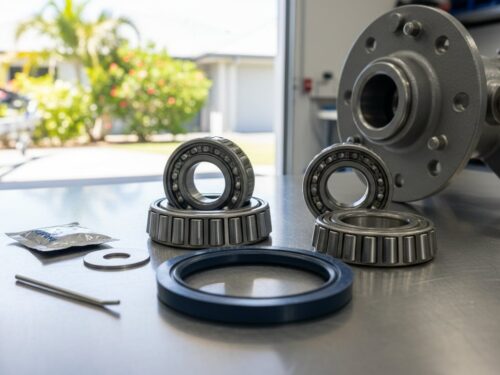
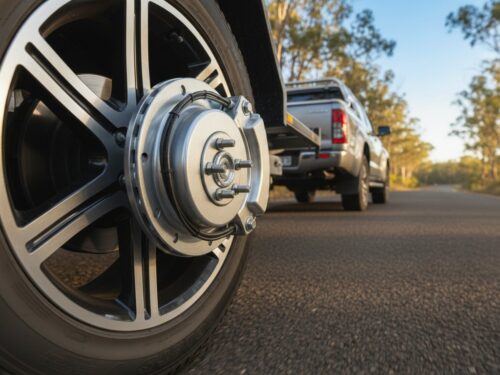
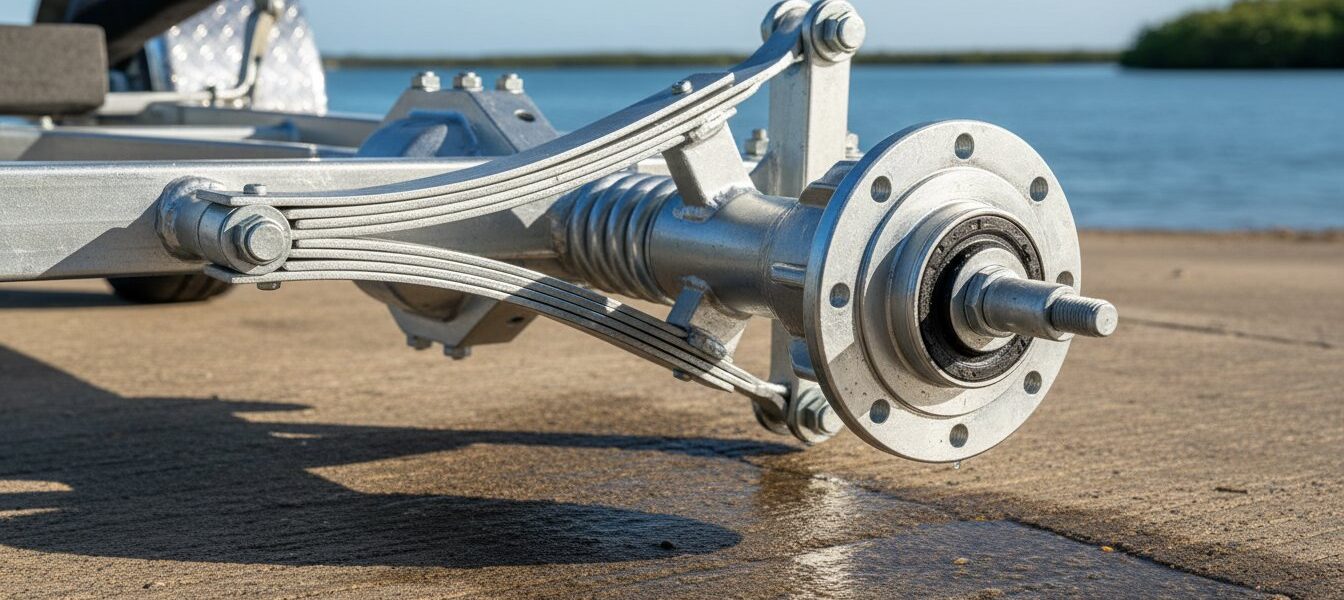
Your trailer’s running gear is its direct link to the road, a system where each part depends on the others. The axle provides core strength, hubs connect the wheels, and bearings allow smooth rotation. A failure in one, like a seized bearing from water ingress, often causes catastrophic damage to the hub and axle spindle. Regular inspection is non-negotiable. Check for wear on your suspension, whether it’s traditional leaf springs or a modern torsion system. Look for cracked leaves, worn bushes, or sagging. These are clear indicators that a failure is imminent. Brakes are another critical part of this system; worn pads or faulty electric brake magnets reduce stopping power dangerously. Most importantly, never compromise on load ratings. Every axle, spring, and tyre is rated for a maximum capacity. Exceeding this limit doesn’t just cause premature wear; it risks complete structural failure at highway speeds.
Hardware and Electrical Essentials
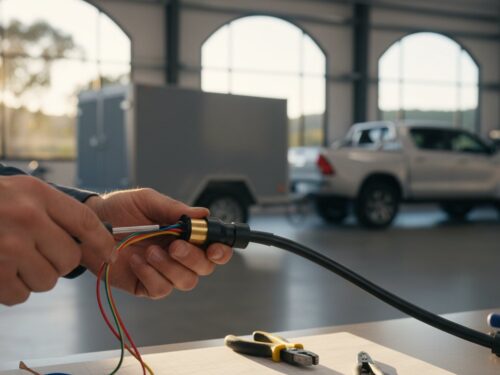
Secure towing starts with the coupling. A high-quality, correctly rated coupling is critical for stability and control, preventing dangerous sway and ensuring a solid connection. Your safety chains and breakaway system are your last line of defence and must be in perfect working order. For electrical systems, LED lighting is the industry standard for modern Australian trailers. LEDs are more resistant to vibration, draw significantly less power, and provide superior brightness for visibility. Your wiring, however, is the system’s most vulnerable point. In dusty or wet conditions, wiring integrity is paramount. Ensure all connections are sealed, preferably soldered and protected with heat-shrink tubing. The loom must be shielded from stone chips and abrasion. Regularly check your 7-pin plug for corrosion or loose pins, as a bad connection can disable your lights and brakes instantly.
Maintaining these core systems is the key to a long-lasting, reliable trailer. Proactive checks and the use of durable parts prevent costly downtime and dangerous situations on the road. When you need to replace worn components, sourcing the right trailer parts online australia ensures you get certified, heavy-duty equipment designed for local conditions. Don’t wait for a breakdown. Invest in quality parts and keep your trailer working as hard as you do.
Selecting the Right Axles and Suspension Systems
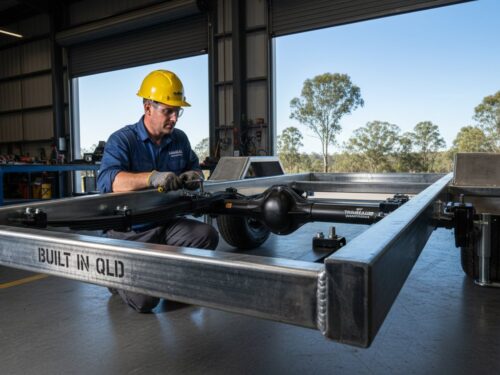
Your trailer’s axle and suspension are its foundation. They carry the entire load, absorb road shock, and keep your wheels firmly on the ground. Choosing the correct system isn’t just about performance; it’s a critical safety decision. A mismatched or underrated setup will fail under Australian conditions, leading to costly damage and dangerous situations on the road.
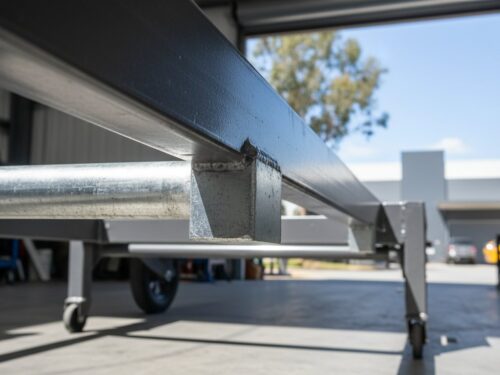
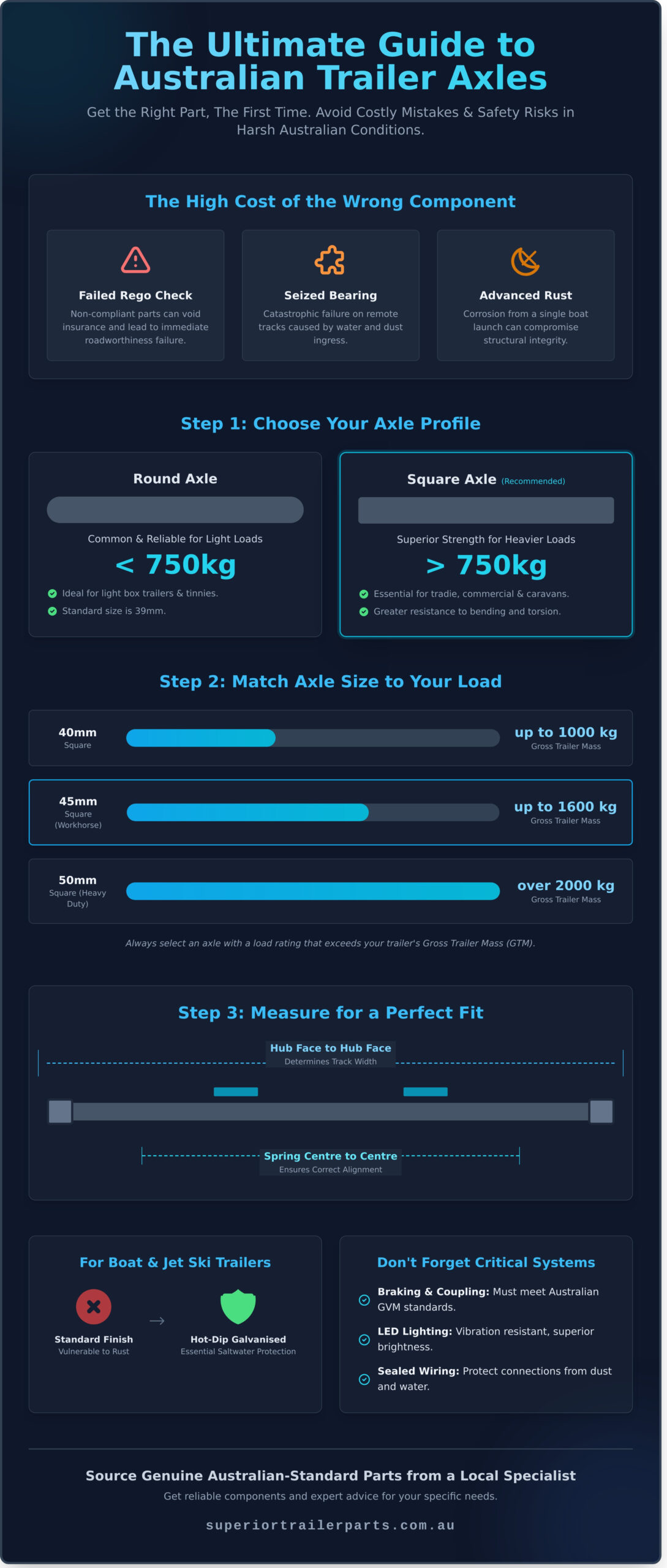
The first choice is often between round and square axles. For light-duty box trailers or tinnies under 750kg, a 39mm round axle is a common and reliable option. For anything heavier, a square axle is the superior choice. Its solid beam construction provides far greater resistance to bending and torsion under heavy loads, making it essential for tradie trailers, caravans, and commercial applications.
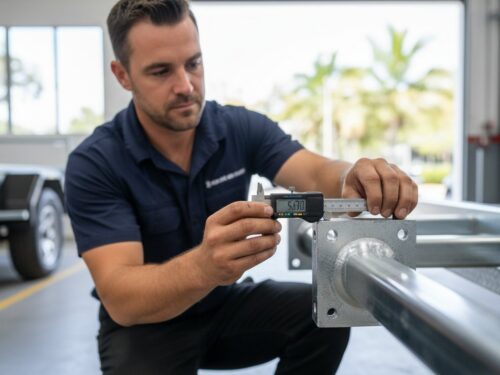
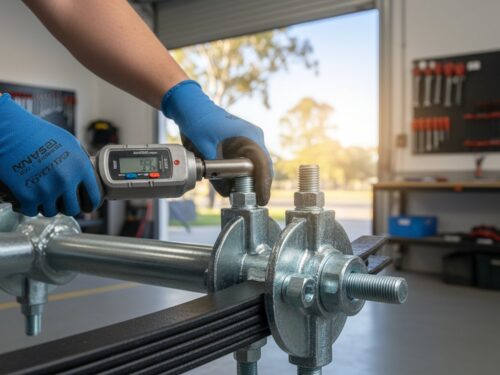
Correct measurement is non-negotiable. You need two key dimensions for a perfect fit. First, measure the hub face to hub face distance. This determines your trailer’s overall track width. Second, measure from the centre of one spring’s mounting position to the centre of the other. Getting these measurements right ensures your wheels track straight and your suspension functions correctly.
Axle Load Ratings and Specifications
Square axles come in standard sizes matched to specific load capacities. A 40mm square axle is typically rated for up to 1000kg. The 45mm axle is a workhorse, rated for loads up to 1600kg, making it a popular choice for serious applications. For heavy-duty trailers carrying over 2000kg, a 50mm square axle is required. Always choose an axle with a load rating that exceeds your trailer’s Gross Trailer Mass (GTM). For boat trailers or frequent use in coastal areas, a hot-dip galvanised finish is essential to prevent rust and ensure longevity. You can find full technical data on our complete range of axles to match your exact needs.
Suspension Solutions for Different Terrains
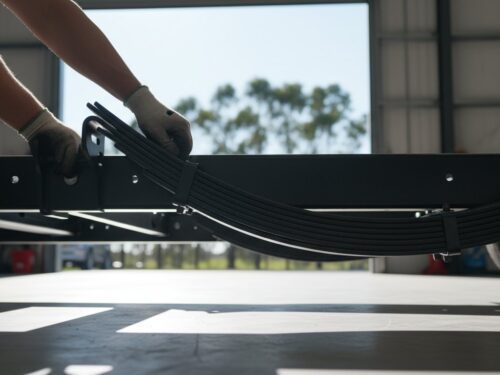
Leaf springs must be matched to your trailer’s weight. Slipper springs are a simple, cost-effective solution for single-axle trailers on sealed roads. For a smoother ride and better durability, especially on tandem trailers, eye-to-eye springs are the better option. They secure at both ends, offering more stability. Your entire system is held together by its fasteners; using high-tensile, correctly torqued galvanised U-bolts is vital. Adhering to component standards set by bodies like the Heavy Vehicle Industry Australia ensures your setup is safe and compliant. If your existing springs look flat or are bent downwards under load, they have lost their tension and must be replaced immediately.
For tandem axle trailers, upgrading to a rocker roller suspension system is a smart investment. This setup uses a central pivoting rocker to transfer load between the axles. When you travel over uneven surfaces like gutters or rough worksites, it prevents one axle from taking the entire shock load. This results in a much smoother ride, protects your cargo, and reduces stress on the trailer chassis.
Matching the right components is the key to building a reliable trailer that lasts. When searching for trailer parts online australia, getting the axle and suspension combination right from the start saves you time and money. If you need help matching components for your specific build, explore our complete suspension kits for a guaranteed fit.
Braking and Coupling Requirements for Road Safety
Your trailer’s braking and coupling system is not a place for compromise. It’s the critical link that ensures your load stays connected and stops safely with your vehicle. In Australia, these components are governed by strict legal standards based on your trailer’s Gross Vehicle Mass (GVM), which is the maximum total weight of your trailer when fully loaded. Failing to meet these standards isn’t just illegal; it’s a serious safety risk on the road.
Understanding the GVM thresholds is the first step to compliance. The rules are clear and non-negotiable:
- 0 – 750kg GVM: No brakes are legally required. A simple, fixed coupling is sufficient.
- 751kg – 2,000kg GVM: Brakes are mandatory on at least one axle. Mechanical or hydraulic over-ride brakes are the most common solution in this weight class.
- Over 2,000kg GVM: You must have brakes on all wheels. The system must be operable from the driver’s seat, making electric brakes the standard. A breakaway system is also required, which automatically applies the trailer brakes if it detaches from the tow vehicle.
All towing components must meet Australian Design Rules (ADR). These national standards ensure that parts have been tested for strength, durability, and performance. When you purchase trailer parts online australia, always confirm they are ADR-compliant. It’s your guarantee of quality and legality.
Braking Systems: Drums vs Discs
For caravans, horse floats, and heavy-duty box trailers in the 751kg to 2,000kg GVM range, 10-inch electric drum brakes are a reliable and cost-effective choice. They provide strong, controlled braking managed by an in-cab controller. For heavier loads exceeding 2,000kg GVM, hydraulic disc brake kits offer superior performance. They dissipate heat more effectively, reducing brake fade on long descents, and perform better in wet conditions, making them ideal for boat trailers.
Proper maintenance is essential. Regularly inspect brake pads for wear and replace them before the metal backing contacts the rotor. Ensure brake calipers can move freely and aren’t seized from rust or debris. For electric systems, check wiring for damage and keep connections clean to ensure a reliable signal.
Coupling and Hitch Selection
Choosing the right coupling is determined by your GVM. Standard fixed 50mm ball couplings are suitable only for light trailers under 750kg. For trailers up to 2,000kg, you’ll need an over-ride coupling that mechanically activates the brakes as the trailer pushes against the tow vehicle during deceleration. For serious off-road work, a poly block coupling is the superior choice. Its articulating design allows for extreme movement on uneven terrain without the binding or stress that can damage a standard ball hitch. You can find detailed specifications and compliance information for our full range of couplings and parts to ensure you select the correct, ADR-approved component for your setup.
Marine-Grade Parts for Boat and Jet Ski Trailers
Australian coastal conditions are unforgiving. Saltwater rapidly attacks standard steel, leading to rust that compromises your trailer’s structural integrity and safety. For any trailer submerged in the ocean, standard components simply don’t last. The constant exposure to salt spray, even when parked, demands parts engineered specifically for marine use. This isn’t about appearance; it’s about preventing dangerous failures on the road.
Hot-dipped galvanisation is the minimum standard for marine trailer frames and components. This process involves coating the steel in a layer of molten zinc, creating a durable, corrosion-resistant barrier that far outperforms simple paint or zinc plating. It protects the steel both inside and out. Always check that components meet the Australian Standard AS/NZS 4680 for galvanising to ensure maximum lifespan.
Protecting Your Boat Trailer Running Gear
Your trailer’s running gear is the first line of defence against water damage. Always use marine-grade bearings and waterproof grease seals, like Bearing Buddies, to prevent saltwater from entering the hub assembly. For hardware, Grade 316 stainless steel U-bolts, nuts, and bolts are a smart investment. While they cost more upfront, they won’t seize or rust, saving you from costly repairs down the track. Find all the specialised boat trailer parts you need to keep your rig reliable.
Winch and Roller Setup for Easy Launching
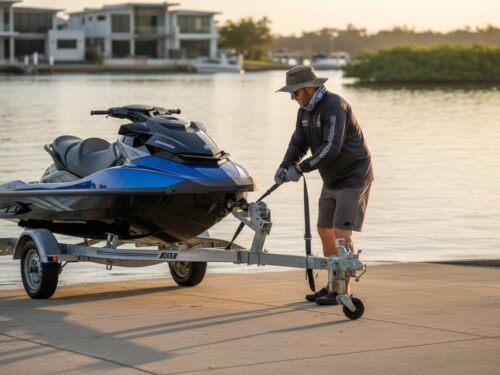
A proper launch setup saves time and prevents hull damage. Choose a manual boat winch with a gear ratio suited to your boat’s weight; a 5:1 ratio works for small tinnies, while a 10:1 ratio provides the mechanical advantage needed for heavier vessels. Arrange wobble rollers to cradle the hull evenly, preventing high-pressure points. For quick solo launches, well-placed bunk guides on jet ski trailers are essential for guiding the ski onto the rollers perfectly every time.
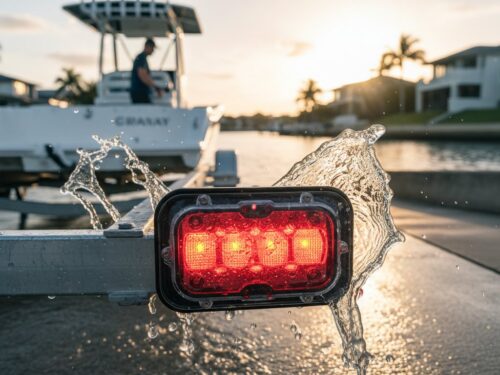
Even the best marine-grade equipment requires regular maintenance to withstand the harsh environment. Submersible LED lights are sealed, but their electrical connections remain vulnerable. Protect them with a coating of dielectric grease. Your winch also needs attention after every trip to the boat ramp.
- Rinse Everything: Wash your entire trailer, including the winch, rollers, and lights, with fresh water after each use. This removes corrosive salt deposits.
- Check Your Winch Strap: Inspect the winch strap or cable for signs of fraying or wear. A worn strap can snap under load.
- Test the Winch Pawl: Ensure the winch’s locking pawl engages correctly. A faulty pawl can lead to the boat rolling backward during retrieval.
Finding the right marine-grade trailer parts online in Australia is critical for safety and longevity. Don’t compromise on quality. A well-maintained boat trailer built with the right components ensures you spend more time on the water and less time on roadside repairs. Equip your trailer for the harsh Australian coast. Browse our full range of marine-grade trailer parts today.
Sourcing Quality Trailer Spares with Australia-Wide Delivery
Finding the right trailer parts is only half the job. You need a supplier who can get them to you quickly and reliably, backed by genuine expertise. Choosing an Australian-owned and operated specialist means you’re dealing with a team that understands local conditions, from corrugated outback roads to corrosive coastal air. They are accountable, accessible, and invested in providing durable solutions that work.
Compatibility is everything. Ordering the wrong part costs you time and money. Before you finalise a purchase, it’s critical to verify that the component fits your specific trailer. Our technical support team can confirm measurements, load ratings, and stud patterns over the phone. This expert check ensures you get the right part the first time, eliminating the frustration of returns and project delays.
When a trailer is off the road, every hour counts. Fast, efficient delivery is non-negotiable for urgent repairs. We prioritise rapid dispatch to all states and territories, ensuring your parts leave our warehouse promptly. A reliable supply chain is the key to minimising downtime and getting your equipment back to work. As a one-stop shop for trailer parts online australia, we provide everything from individual jockey wheels to complete, ready-to-register trailers, streamlining your entire procurement process.
Why Quality Matters for DIY Repairs
Cheap, non-standard imported parts often carry hidden costs. A bearing that saves you A$20 at purchase can fail prematurely, destroying a A$250 hub and axle assembly in the process. Poorly manufactured couplings or suspension components compromise safety on the road. Always invest in quality, tested parts. If you’re troubleshooting an issue, our expert advice can help diagnose the root cause, preventing you from replacing the wrong component. For situations where a full replacement is the most practical solution, our heavy-duty box trailers offer a durable, turn-key alternative.
This “quality over cost” mindset isn’t limited to industrial parts; it’s a growing trend in areas like personal style as well, where renting a high-quality designer piece for a special event is seen as a smarter investment than buying a cheap, one-off outfit. For those interested in this approach to fashion, you can learn more about Style Me Up, an Australian service specializing in luxury dress hire.
This principle of relying on expert craftsmanship for crucial components extends to other specialized fields as well. In dental prosthetics, for instance, the long-term reliability and comfort of dentures depend entirely on the precision of the fit, a service provided by a dedicated denture clinic Bulleen.
Getting the Most from Your Online Purchase
Check shipping details before you buy. Confirm delivery timeframes to your specific postcode, whether you’re in a capital city or a regional town. For major builds or fleet maintenance, bundling parts into a single order is the smartest way to save on freight. Consolidating axles, springs, hubs, and lighting into one shipment significantly reduces the total cost compared to multiple smaller purchases. Don’t guess. If you need help calculating weights or confirming parts for a large order, get in touch. For any technical assistance or to plan your next project, Contact Superior Trailer Parts today.
Equip Your Trailer for Australian Conditions
Selecting the right trailer components is more than a simple purchase; it’s an investment in safety and durability. Your trailer’s performance on Australian roads depends on having the correct axles and suspension to handle tough terrain. Likewise, compliant braking and coupling systems are non-negotiable for road safety. For those near the coast, choosing marine-grade, galvanised parts is the only way to fight corrosion and protect your boat or jet ski trailer.
Finding a dependable source for trailer parts online australia makes the difference between a quick repair and a long-term problem. As a proud Australian Owned and Operated company, we provide the heavy-duty components you need. We back our products with expert technical advice and offer national delivery on all spares to get you back on the road, faster. Don’t compromise on quality.
Shop the Full Range of Superior Trailer Parts Australia Wide and get the job done right.
Frequently Asked Questions About Trailer Parts
What trailer parts are required by law in Australia?
Australian law requires specific parts for trailer registration. Your trailer must have a compliant coupling, at least one safety chain, and fully operational tail, brake, and indicator lights. It also needs reflectors on the front, rear, and sides. Brakes are mandatory for any trailer with a Gross Trailer Mass (GTM) over 750kg. Ensure all components are ADR compliant to meet national road standards and avoid fines.
How do I know which axle size I need for my trailer?
Your trailer’s axle size is determined by its Gross Trailer Mass (GTM). For light-duty trailers up to 750kg GTM, a 39mm round axle is typically sufficient. For heavier loads up to 1450kg GTM, a 45mm square solid steel axle is the standard choice. Always match your axle’s load rating to your trailer’s maximum intended weight to ensure safe and reliable operation. Exceeding this rating is illegal and dangerous.
Do I need electric brakes on my trailer?
Yes, you need electric brakes if your trailer’s GTM exceeds 2000kg. Australian regulations mandate that trailers between 751kg and 2000kg GTM must have brakes on at least one axle. For any trailer over 2000kg GTM, a breakaway system and braking on all wheels are legally required. Electric brakes provide superior stopping power and control for these heavier loads, making them the industry standard for safety and performance.
What is the difference between slipper and eye-to-eye springs?
Slipper and eye-to-eye springs differ in their mounting and load handling. Slipper springs have one end in a hanger while the other end “slips,” making them a simple, cost-effective choice for single-axle trailers under 1000kg. Eye-to-eye springs mount with bolts at both ends. They offer a smoother ride and are essential for tandem-axle setups because they distribute the load evenly between axles, improving stability and reducing tyre wear.
How often should I service my trailer wheel bearings?
Service your trailer wheel bearings at least every 12 months or every 10,000 kilometres. This involves cleaning, inspecting for wear, and repacking them with fresh grease. If you own a boat trailer used in saltwater, you must inspect your bearings more frequently. Saltwater ingress is the leading cause of bearing failure, so checking them after every few trips to the boat ramp is critical maintenance for safety and longevity.
Can I use a standard trailer for a boat or jet ski?
No, you shouldn’t use a standard trailer for marine applications. Boat trailers require specific components to resist saltwater corrosion, including galvanised or aluminium frames, marine-grade sealed bearings, and submersible LED lights. A standard black steel trailer will rust quickly, leading to structural failure and creating a serious safety hazard. Using the correct trailer is crucial to protect your watercraft and ensure roadworthiness.
What does ADR compliant mean for trailer parts?
ADR compliant means a part meets the Australian Design Rules, which are national standards for vehicle safety. These rules ensure components like couplings, lights, and safety chains meet minimum performance requirements for legal road use. When you buy trailer parts online australia, always check for ADR compliance. This certification guarantees the product is tested, reliable, and legal for Australian roads, protecting you and other motorists.
How do I measure the stud pattern on my trailer hubs?
You can measure your stud pattern, or Pitch Circle Diameter (PCD), with a simple tape measure. For hubs with an even number of studs (like 4 or 6), measure from the centre of one stud to the centre of the stud directly opposite. For hubs with an odd number of studs (like 5), measure from the centre of any stud to the outside edge of the stud furthest across from it. This measurement ensures you order wheels that fit correctly.