An overloaded trailer on a corrugated Australian road isn’t a test of skill; it’s a test of steel. When that steel fails, your entire operation grinds to a halt. The difference between a reliable workhorse and a roadside liability often comes down to one critical component, yet confusion over bearing profiles or an incorrect face-to-face measurement can lead to catastrophic failure under industrial or marine loads.
This article provides the essential, no-nonsense advice needed to specify the correct 50mm square axle for your trailer’s Gross Vehicle Mass (GVM). We promise you’ll gain the confidence to select, install, and maintain an axle built for absolute reliability. You’ll learn the critical differences between Slimline and Parallel bearings, master accurate measuring techniques, and know how to secure a genuine, Australian-made component that fits your existing hubs perfectly.
Key Takeaways
- Understand why a square axle profile offers superior structural rigidity compared to round axles for heavy-duty applications.
- Identify the correct bearing profile for your axle to ensure you meet your trailer’s required load rating.
- Determine when to upgrade from a 45mm to a 50mm square axle for improved safety and reliability on high-capacity builds.
- Learn the correct installation procedures for axle alignment, including underslung vs. overslung mounting, to ensure safe towing.
The Role of 50mm Square Axles in Heavy-Duty Towing
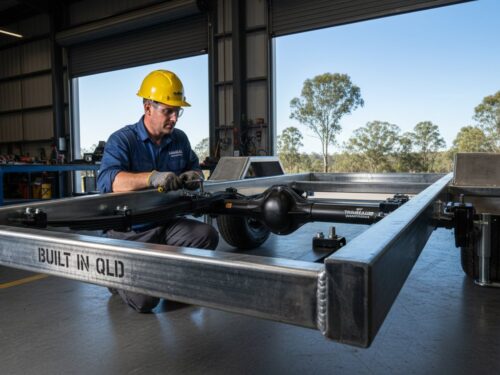
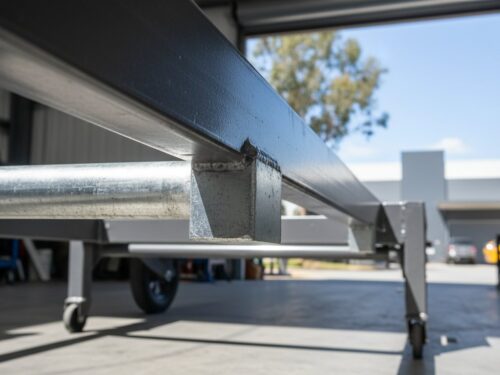
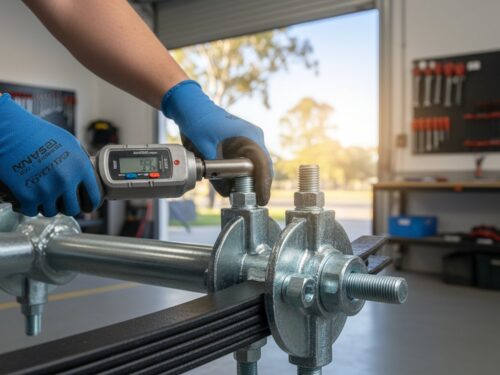
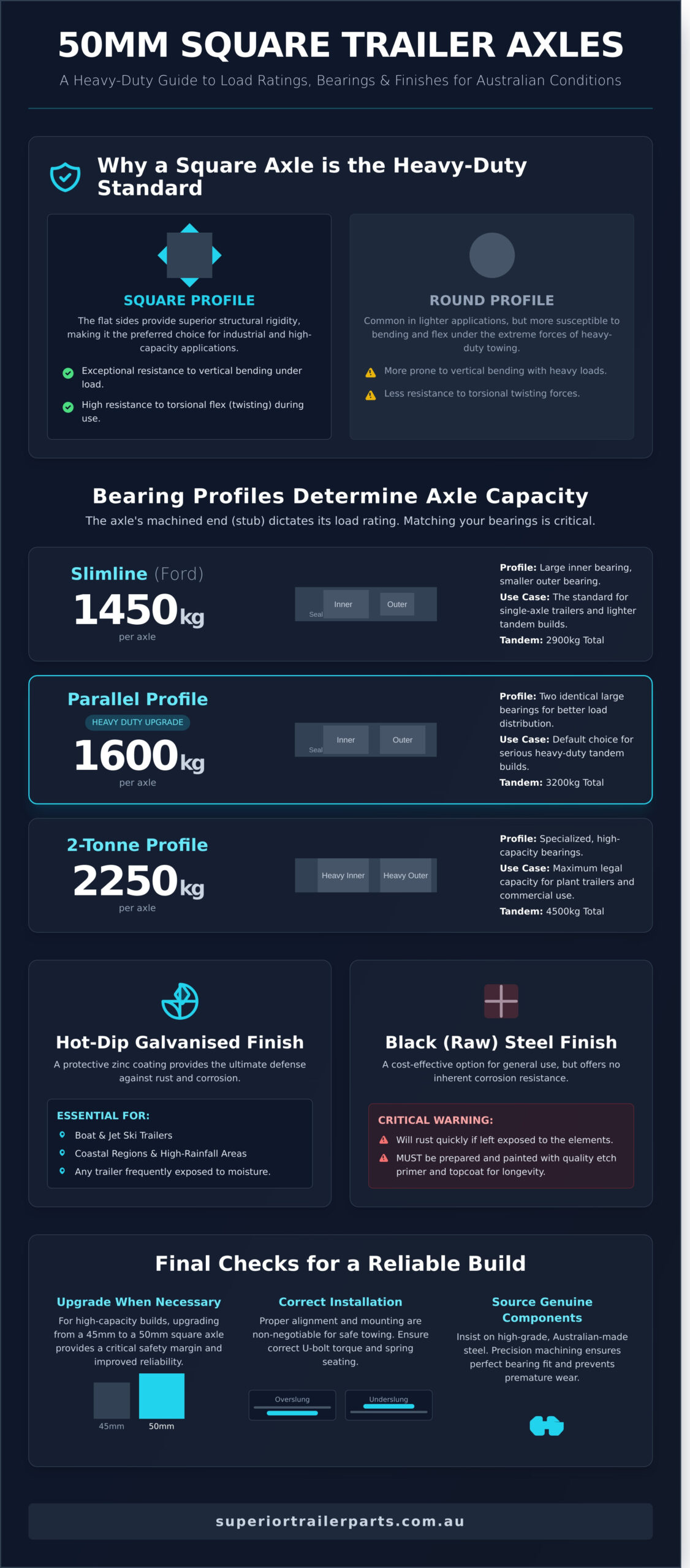
The 50mm square axle is the workhorse of the Australian heavy-duty trailer industry. It’s a solid steel beam engineered for high-capacity towing, forming the critical link between your trailer’s chassis and its wheels. While many types of vehicle axles are available, the square profile is preferred over round designs for one key reason: superior structural rigidity. The flat sides provide exceptional resistance to vertical bending and torsional flex, which is the twisting force an axle endures during acceleration, braking, and cornering.
This inherent strength makes the 50mm square axle the standard for demanding applications. You’ll find them on tandem car trailers, large horse floats, and heavy industrial tippers where load stability is non-negotiable. For reliable performance under peak loads, we recommend axles manufactured from high-grade, Australian-made steel. This ensures the beam has the tensile strength needed to withstand the punishing conditions of our local road networks without failure.
Load Ratings and Weight Capacity
Understanding axle capacity is critical for safe and legal towing. A 50mm axle’s rating is determined by the bearings it’s machined to accept. The two most common configurations are:
- Slimline Bearings: Rated to 1450kg per axle.
- Parallel Bearings: Rated to 2250kg per axle.
In a tandem trailer setup, these capacities are combined to achieve a high Gross Vehicle Mass (GVM). A tandem configuration using two 1450kg axles provides a total capacity of 2900kg, ideal for a 3.5T GVM trailer once the trailer’s own weight is factored in. For maximum capacity, a 4.5T GVM trailer will use two 2250kg axles for a combined 4500kg rating. It’s crucial to build in a safety margin, especially for trailers used on corrugated or unsealed Australian roads where dynamic forces can momentarily exceed the static load rating.
Galvanised vs Black Steel Finishes
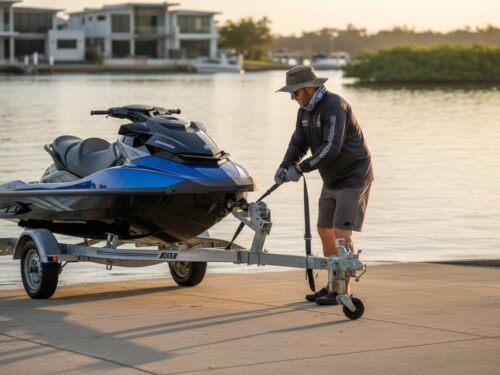
The axle’s finish directly impacts its lifespan and suitability for the job. For any trailer exposed to moisture, especially saltwater, a hot-dip galvanised finish is essential. This process coats the steel in a protective layer of zinc, preventing rust and corrosion. It is the only reliable choice for boat and jet ski trailers where the axle is frequently submerged.
Black steel, or raw steel, is a cost-effective option for general domestic or agricultural use. However, it offers no corrosion resistance on its own and will rust quickly if left exposed to the elements. If you choose a black steel axle for a utility trailer, it must be properly prepared and painted with a quality etch primer and a durable topcoat to ensure its longevity. Without a protective coating, its structural integrity will degrade over time, particularly in coastal regions or high-rainfall areas.
Bearing Profiles and Load Ratings for 50mm Axles
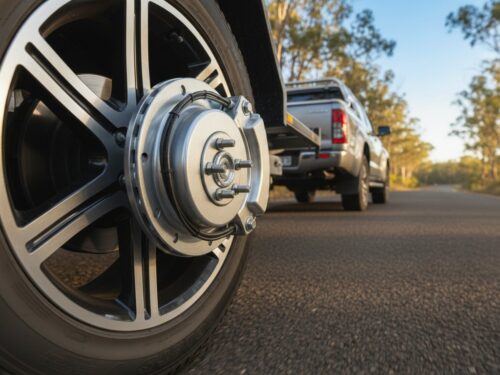
The solid steel of an axle beam provides structural strength, but it doesn’t set the load rating. The final capacity of any axle is determined by the bearing profile, also known as the “turn,” machined onto its ends. This profile dictates which bearings, hubs, and seals can be fitted. A high-quality axle features precisely machined journals, ensuring bearings fit perfectly. This precision prevents wobble and premature wear, keeping your trailer on the road and out of the workshop.
The end of the axle, or stub axle, is machined to different diameters. This “step-down” design creates specific seats for the inner bearing, the outer bearing, and the rear seal. For Australian trailers, there are three common profiles you’ll encounter:
- Slimline (Ford Profile): The standard for single axles rated up to 1450kg. It uses a smaller outer bearing and a larger inner bearing.
- Parallel Profile: A heavy-duty option using two identical, large inner bearings. This increases the load rating to 1600kg per axle.
- 2-Tonne Profile: A specialised, high-capacity turn engineered for loads up to 2250kg per axle.
Slimline vs Parallel Bearing Configurations
Slimline bearings are the workhorse for standard, single-axle trailers. While reliable for their intended loads, this configuration is often insufficient for the heavy-duty demands placed on a 50mm square axle in a tandem setup. Parallel bearings provide a direct upgrade. By using two large bearings instead of one large and one small, the load is distributed more effectively. This creates a tougher, more reliable setup rated for 1600kg and beyond, making it the default choice for serious heavy-duty builds.
High-Capacity Options: Dexter and 2-Tonne Turns
For maximum legal capacity on Australian roads, the 2-Tonne bearing profile is the solution. This turn is engineered to support a 2250kg rating per axle, making it essential for heavy plant trailers, commercial applications, and large caravans. We also machine axles with Dexter profile stubs. These are made to suit American-style hubs and drums, providing compatibility for specific trailer builds or imported component repairs. It’s critical that your hubs, bearings, and brake drums match your axle’s specific bearing profile. Mismatched parts simply won’t fit and will compromise safety.
A heavy-duty 50mm square axle is the foundation for a high-capacity trailer, but its performance hinges on the right bearing selection. The precision of the machined stub is non-negotiable for bearing life and on-road safety. If you’re unsure which bearing profile suits your trailer’s Gross Trailer Mass (GTM), our team can provide expert advice on the correct axle configuration. Investing in a correctly specified axle from the start prevents costly downtime later.
Comparing 45mm and 50mm Square Axles for Your Build
Choosing between a 45mm and a 50mm square axle is a critical decision in any trailer build. The choice directly impacts your trailer’s load capacity, durability, and on-road performance. While both are solid performers, they are engineered for different applications. The primary decision point is simple: the 1450kg mark. A standard 45mm square axle is typically rated for a maximum of 1400kg. Pushing past this limit compromises safety and invites failure.
This is where the over-engineering philosophy provides real value. Building a trailer to handle more than its intended load offers peace of mind. It creates a safety buffer for uneven loads or rough Australian roads. A 50mm square axle, with its higher load rating of up to 2250kg, provides that buffer. It’s a heavier, more robust component. The larger physical footprint isn’t just for show; it’s a direct measure of its superior strength and resilience.
The most significant performance difference is the reduction in beam flex. Under heavy loads, a 45mm axle can flex slightly. This changes the wheel’s camber, causing uneven and accelerated tyre wear, particularly on the inside edge during long hauls. A 50mm axle’s greater rigidity minimises this flex. Your wheels stay truer, your tyres last longer, and your trailer tracks better. It’s a practical upgrade that pays for itself in reduced running costs.
When to Upgrade to 50mm
Clear guidelines ensure you build a safe and compliant trailer. Don’t just meet the minimum requirement; build for the job ahead. Consider these rules non-negotiable for a reliable build:
- Single Axle Trailers: Upgrade to a 50mm axle for any trailer with an actual intended load exceeding 1200kg. This provides a safe working margin.
- Tandem Axle Trailers: A 50mm axle setup is mandatory for tandem trailers built for a Gross Vehicle Mass (GVM) of 3000kg or more.
- Wheel & Tyre Choice: Large diameter wheels or rims with a significant offset increase leverage and stress on the axle beam and stub. In these cases, a 50mm axle is the superior choice for structural integrity.
Cost vs Performance Analysis
A 50mm axle assembly does have a higher initial cost. The steel beam is heavier, and it requires larger, more expensive bearings and hubs. This upfront investment, however, translates directly into long-term performance and savings. You’ll face fewer maintenance issues related to bearing wear and axle fatigue. The enhanced durability also increases the trailer’s resale value, as buyers recognise a heavy-duty build. For those sourcing parts, you can find a full range of quality trailer axles with Australia-wide delivery, ensuring your project is built with reliable components from the start.
Installation Essentials: U-Bolts, Alignment, and Safety
A heavy-duty axle is only as strong as its installation. Proper mounting ensures your trailer tracks true, wears tyres evenly, and operates safely under load. Get this wrong, and you risk serious performance issues and component failure.
This focus on safety and compliance extends beyond individual builds to the entire road network. For those involved in larger-scale transport planning or development projects where vehicle interaction is a key concern, it’s wise to consult with experts; you can check out ML Traffic Engineers Pty Ltd to see how specialists approach these challenges.
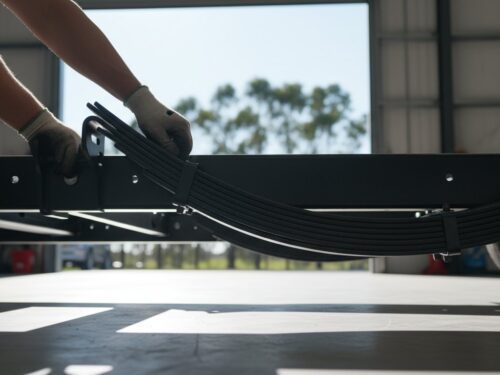
The first decision is mounting style. An overslung setup, where the axle sits under the leaf springs, provides greater ground clearance. An underslung setup, with the axle over the springs, lowers the trailer’s centre of gravity for improved stability. Your choice depends on your trailer’s intended use. The axle seat, or spring pad, is welded to the axle and is critical. It must sit perfectly flush with the spring to maintain correct alignment. Any gap or improper angle will compromise the entire suspension.
A 50mm square axle demands heavy-duty mounting hardware. Using undersized U-bolts or reusing old, stretched components is a false economy. Incorrect installation or mismatched parts will cause your trailer to “dog-track,” where the trailer body runs at an angle to the tow vehicle. This leads to rapid, uneven tyre wear and places immense stress on wheel bearings and suspension components.
The same principles of using the right equipment and focusing on safety apply to many other technical pursuits, including recreational shooting. For those who enjoy honing their marksmanship, using professional-grade training aids is key to improving proficiency. To see how quality paper targets can make a difference in your practice sessions, you can learn more.
Selecting the Right U-Bolts
For 50mm axles, you need high-tensile U-bolts of at least 1/2-inch (12.7mm) or, for extreme loads, 5/8-inch (15.9mm) diameter. Measure the internal width to match your axle’s 50mm profile and the leg length to accommodate the spring pack, axle, and mounting plate with enough thread for secure tightening. For boat trailers or applications in corrosive environments, our galvanised U-bolt kits provide superior protection against rust and degradation.
How to Measure Axle Length Accurately
Ordering the correct axle length is crucial. Don’t guess. There are two primary measurements: “Hub Face-to-Face” (HF-HF) and “Tip-to-Tip”. The HF-HF is the distance between the outer faces of the hubs where the wheel studs sit. This determines your wheel track. The Tip-to-Tip measurement is the total length of the axle beam itself.
For a new build, follow this 3-step process to calculate your required axle length:
- Step 1: Determine your desired overall trailer width, including guards.
- Step 2: Measure your wheel and tyre combination. Calculate the offset of your wheel rim and the width of your tyre.
- Step 3: Subtract the total width of both tyres and the required clearance for guards from your overall trailer width. The result is your target Hub Face-to-Face measurement.
Never measure just the old beam of a 50mm square axle and assume it’s correct, especially if you are changing wheels. The stub axles are welded on, and their length contributes to the final HF-HF measurement. Always calculate from your required wheel track. If you’re unsure about your measurements, it’s better to ask than to order the wrong part. Contact our team for expert advice to ensure you get the right fit the first time.
Beyond just axles, a trailer build requires a wide array of quality components. While local sourcing is common, global e-commerce platforms have made it easier to find specialized parts from international suppliers. For example, retailers like Truckparts Corner in the Netherlands provide a vast selection of truck and trailer parts that can serve as a reference for builders worldwide.
Sourcing Reliable Axles and Components in Australia
Selecting the right 50mm square axle is only half the job. Sourcing it from a dependable supplier ensures your trailer build or repair project stays on track and meets Australian standards. As an Australian-owned and operated business, Superior Trailer Parts offers the technical expertise and local support that large, faceless retailers can’t match. We understand the demands of Australian conditions because we operate right here.
Our physical warehouse in Queensland is stocked with a comprehensive inventory of axles and components. This means parts are on hand, ready for immediate dispatch. You aren’t waiting for stock to arrive from overseas. This direct access reduces lead times and gets your trailer back on the road faster. We have established a robust logistics network capable of shipping bulky and heavy items, including long axle beams, to every state and territory. From metro depots in Sydney to remote sites in Western Australia, we deliver Australia wide.
For maximum efficiency, we offer complete axle kits. These packages bundle everything you need for a full assembly, eliminating guesswork and compatibility issues. A typical tandem axle kit includes:
- Two 50mm solid square axle beams
- Electric or hydraulic brake assemblies
- Hubs, bearings, seals, and dust caps
- Rocker roller or slipper leaf springs
- U-bolts, fish plates, and axle pads
Bundling these components provides a cost-effective solution and guarantees that every part is designed to work together seamlessly.
Custom Axle Manufacturing Services
Off-the-shelf axles don’t suit every trailer frame. We provide custom axle manufacturing to your exact specifications. Simply provide your required tip-to-tip or hub-face-to-hub-face measurements, and our team will fabricate a precision-engineered axle. Most custom orders are manufactured and dispatched within 5-7 business days. For technical verification before you order, contact the expert team. We’ll confirm your measurements to ensure a perfect fit.
The Superior Advantage for Trade and Retail
We are a single-source supplier for all your trailer needs. Our inventory includes a massive range of heavy-duty trailer parts, from couplings and jockey wheels to lights and wiring. For trade customers, we offer competitive pricing on bulk orders to support fleet maintenance and large-scale manufacturing. Every 50mm square axle and component we sell is built for durability and complies with stringent Australian Design Rules (ADR), giving you total confidence in its safety and performance.
Equip Your Trailer for the Toughest Hauls
Choosing the right axle is critical for any heavy-duty build. A 50mm square axle provides the strength needed for significant loads, often rated up to 2250kg depending on the bearing profile selected. It’s a clear step up from the standard 45mm axle for serious applications where durability can’t be compromised. Remember that correct installation, from U-bolt torque to final alignment, isn’t just a recommendation; it’s essential for safe and reliable towing on demanding Australian roads.
When you’re ready to build, get parts you can depend on. As a proudly Australian Owned and Operated business, we offer Expert Technical Support right from our Queensland base and provide Nationwide Shipping on Bulk Components. We have the genuine parts you need to get back on the road. View our range of heavy-duty 50mm square axles and get the job done right, the first time.
Frequently Asked Questions
What is the maximum load rating for a 50mm square axle?
A 50mm square axle has a maximum load rating of 2250kg per axle. For a tandem trailer setup, this provides a total load capacity of 4500kg across both axles, provided the trailer’s other components like springs and couplings are also rated appropriately. This heavy-duty rating makes it a reliable choice for large boat trailers, caravans, and commercial trailers operating under demanding Australian conditions. Always check your trailer’s compliance plate to ensure you don’t exceed its Gross Trailer Mass (GTM).
Can I swap a 45mm square axle for a 50mm square axle?
Yes, you can upgrade a 45mm axle to a 50mm axle to increase your trailer’s load capacity. However, it’s not a direct swap. You must also upgrade your U-bolts, fish plates, and axle pads to match the larger 50mm profile. This is a common and effective upgrade for heavy-duty applications, but using the correct, corresponding hardware is critical for a safe and secure installation. It ensures the entire suspension system works together effectively.
What bearings do I need for a 50mm square axle?
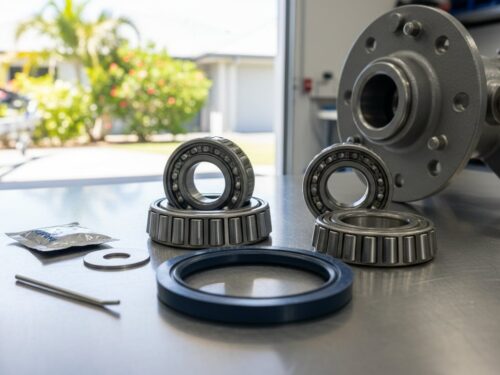
A 50mm square axle uses either a Slimline (Ford) or Parallel bearing combination. The Slimline profile uses an inner bearing (LM68149/10) and an outer bearing (L68149/10). The Parallel profile uses two identical inner bearings (68149/10), offering a higher load capacity. It’s essential to identify which profile your axle has before purchasing replacement parts. Check your existing bearings or axle stub for part numbers to be certain.
How do I know if my axle is Slimline or Parallel?
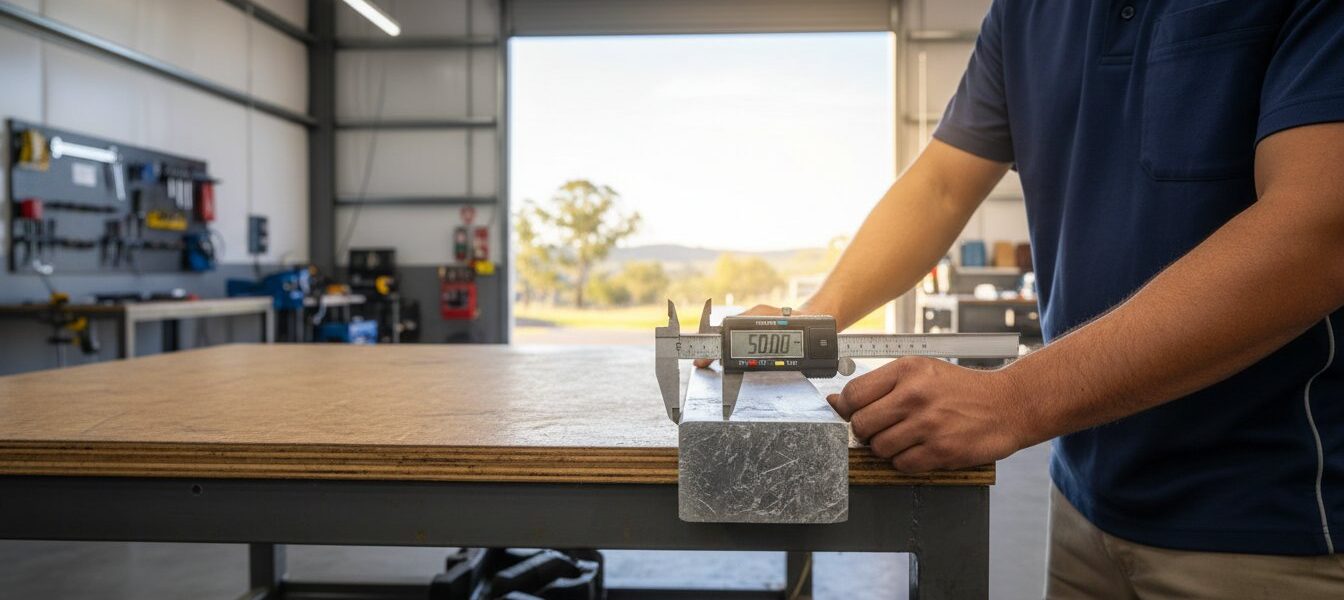
You can identify your axle profile by measuring the bearing journals on the stub axle with a set of calipers. A Parallel axle has two journals of the same diameter (45mm). In contrast, a Slimline axle has a stepped profile with a larger inner journal (50mm) and a smaller outer journal (31.75mm). This measurement is the most accurate way to distinguish between the two and ensure you order the correct hub and bearing kit for your setup.
Should I choose a galvanised or black steel 50mm axle?
Choose a galvanised axle for marine use or if your trailer is frequently exposed to coastal, high-corrosion environments. The hot-dip galvanised coating offers superior protection against rust and saltwater. For general road use and inland applications, a painted black steel axle is a durable and more cost-effective option. For any boat trailer, a galvanised 50mm square axle is the recommended standard for ensuring maximum longevity and structural integrity.
How do I measure my trailer for a new 50mm square axle?
You need two key measurements to order a new axle. First, measure the ‘Hub Face to Hub Face’ distance, which is from the outside face of one hub where the wheel studs are to the same point on the opposite hub. Second, measure your ‘Spring Centre’ distance from the middle of one spring to the middle of the other. Providing these two measurements ensures your new 50mm square axle is built to the exact specifications of your trailer.
Are 50mm square axles solid or hollow?
Standard heavy-duty 50mm square axles are manufactured from solid steel bar. This solid construction is essential for achieving the high load ratings required for heavy trailers, providing maximum strength and resistance to bending under load. While hollow axles exist for lighter applications, a solid beam is the only appropriate choice for a genuine heavy-duty tandem trailer configuration where safety and durability are paramount. All our heavy-duty axles are solid steel.
Do 50mm square axles come with electric brake flanges welded?
Yes, 50mm axles are typically available with electric brake flanges welded on as a standard feature. These flanges are positioned to Australian standards to suit 10-inch or 12-inch electric brake backing plates. You can also request axles be supplied without brake flanges for unbraked setups or for fitting hydraulic or custom brake systems. Always confirm your braking requirements when you place an order to ensure the axle arrives ready for installation.