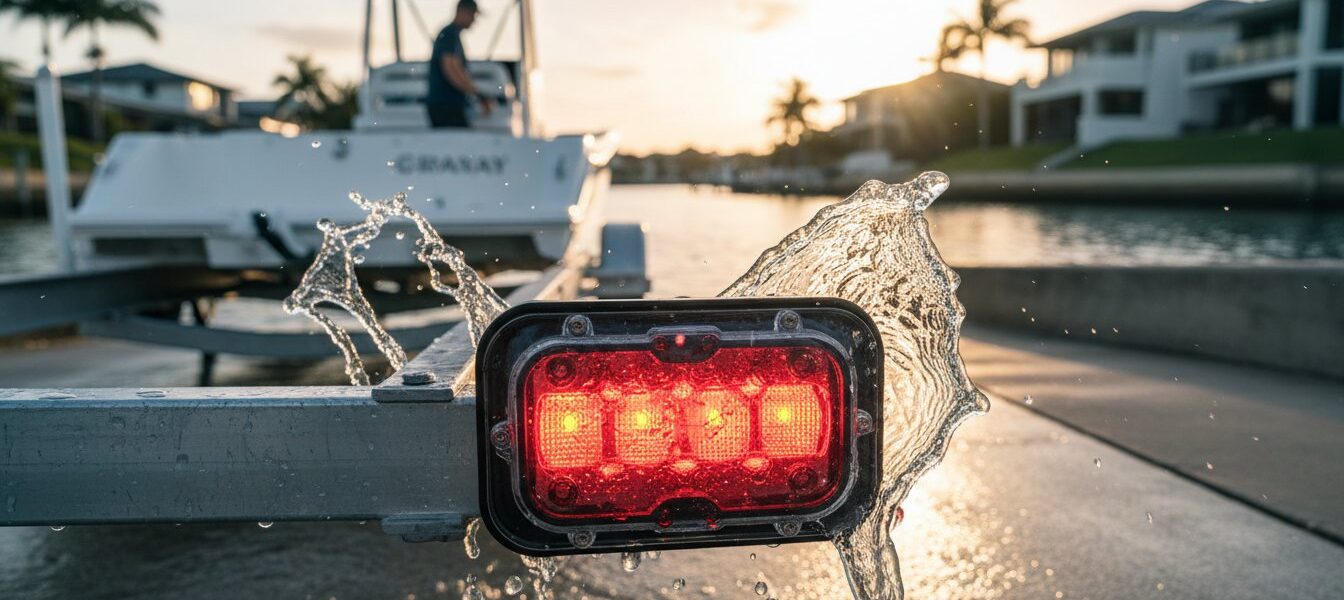
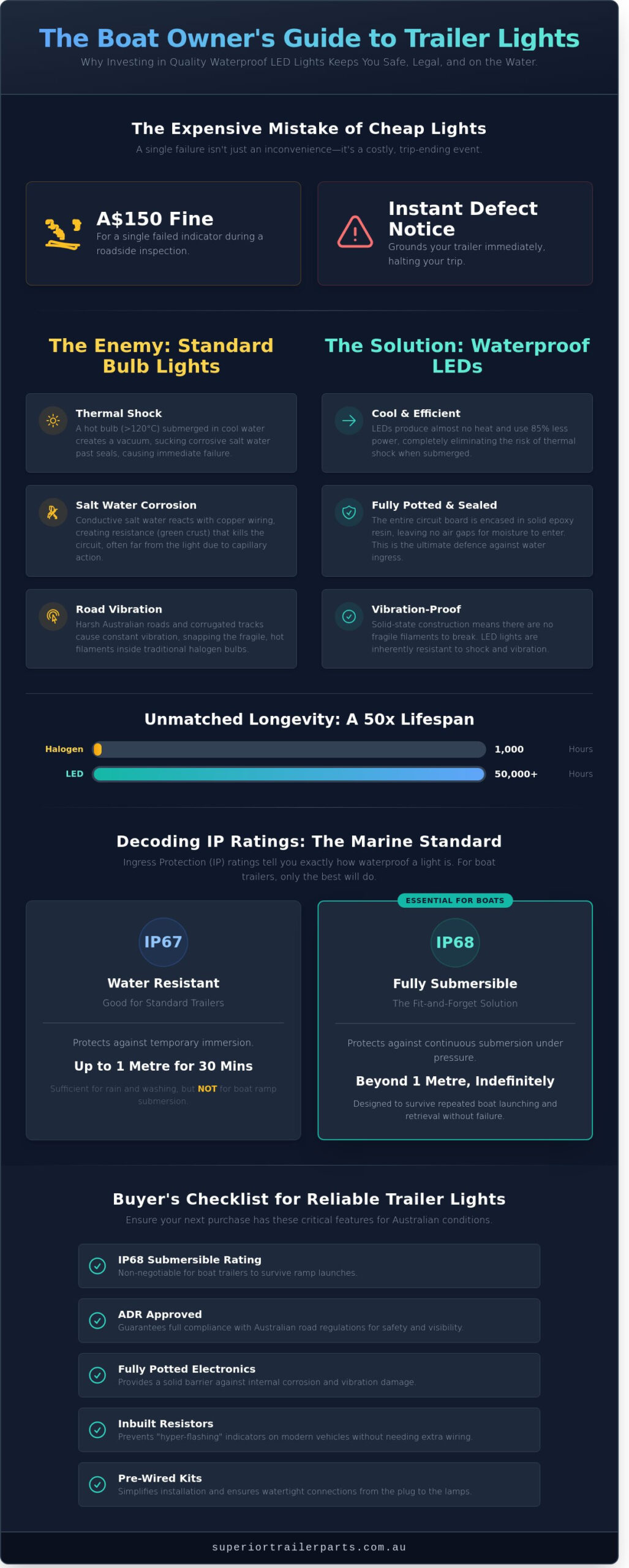
Buying cheap trailer lights is often the most expensive mistake a boat owner can make. A single failed indicator during a roadside inspection can result in a A$150 fine and a defect notice that grounds your trailer instantly. It’s a common frustration to see flickering LEDs or corroded wiring looms after only three trips to the boat ramp. You need heavy-duty gear that survives salt water and the intense vibration of Australian roads. Investing in high-quality waterproof led trailer lights ensures your equipment works every time you hit the highway.
We agree that your time is better spent on the water than rewiring a trailer in your driveway. You’ll learn how to identify genuine submersible lighting that withstands harsh marine environments without failing. We’ll cover the essential IP ratings, marine-grade housing materials, and wiring standards required for a fit-and-forget solution. This technical breakdown provides the knowledge you need to choose hardware that keeps you safe, visible, and fully compliant with Australian road regulations.
Key Takeaways
- Understand how salt water corrosion and thermal shock cause standard lighting to fail during boat ramp launches.
- Learn why IP68 protection is the essential standard for boat trailers compared to basic IP67 road lighting.
- Ensure road legality by selecting ADR-approved units with inbuilt resistors to prevent vehicle hyper-flashing.
- Identify the most reliable waterproof led trailer lights designed to endure harsh Australian road vibrations and coastal conditions.
- Evaluate the benefits of pre-wired kits versus individual lamp replacements to simplify your trailer maintenance and installation.
Understanding Why Trailer Lights Fail in Marine Environments
Standard trailer lights are often the first component to fail on a boat trailer. Salt water is highly conductive and corrosive. It reacts with standard copper wiring to create green copper oxide. This crust increases electrical resistance until the circuit fails completely. Thermal shock causes many of these failures. An incandescent bulb operates at temperatures exceeding 120 degrees Celsius. When you submerge that hot housing into 18 degree Celsius ocean water, the internal air cools rapidly. This creates a vacuum that sucks water past rubber seals. Once moisture enters the housing, the light is finished.
Australian road conditions add another layer of stress. Corrugated tracks in regional areas subject trailer components to constant high-frequency vibration. These vibrations fatigue the thin wire filaments found in halogen bulbs. A single deep pothole can snap a hot filament instantly. Modern waterproof led trailer lights solve these issues through solid-state construction. They don’t rely on fragile wires or heated gases to produce light. Understanding these risks is easier when you look at IP Ratings Explained; this system categorises how well a housing resists dust and liquid ingress.
The Problem with Standard Bulb Housings
Many trailers come fitted with “water-resistant” covers. These are not designed for submersion. They often feature a small weep hole at the bottom to let moisture out, but this also lets salt water in. Capillary action is a major threat here. This process pulls water into unsealed cables, where it travels between the wire strands like a straw. You might find corrosion two metres away from the light source because of this effect. The first signs of failure include flickering, dimming, or a white powdery residue inside the lens. If you see these signs, your boat trailer parts need an immediate upgrade to avoid a fine or an accident.
Why LED Technology is the Modern Standard
LEDs are the superior choice for any heavy-duty application. They draw up to 85 percent less power than traditional bulbs. This low power draw means they produce almost no heat, which eliminates the risk of thermal shock and seal expansion. The solid-state design is encased in a hard epoxy resin, making the unit completely air-tight and vibration-proof. Compare the lifespans to see the value. A standard halogen unit lasts roughly 1,000 hours. A high-quality set of waterproof led trailer lights is rated for 50,000 hours of operation. This durability makes them the most cost-effective option for long-term trailer maintenance.
- Heat Reduction: LEDs stay cool and won’t crack when submerged.
- Durability: No filaments to break on rough Australian roads.
- Sealing: Fully potted electronics prevent capillary water damage.
- Efficiency: Lower strain on your vehicle’s electrical system.
Deciphering IP Ratings and Submersible Standards
Ingress Protection (IP) ratings provide a clear metric for how well automotive lighting resists dust and moisture. These technical standards, established by the International Electrotechnical Commission (IEC), use a two-digit system to classify hardware durability. The first digit measures protection against solid objects like dust; the second digit measures water resistance. For anyone towing in Australian conditions, the second digit is the most critical factor for electrical longevity. High-quality waterproof led trailer lights typically carry a rating of 67 or 68 to ensure they withstand heavy rain and road spray.
IP67 vs IP68: Choosing the Right Protection
An IP67 rating signifies that the light unit can withstand temporary immersion in water up to 1 metre deep for 30 minutes. This level of protection is generally sufficient for standard box trailers that primarily face rain or high-pressure washing. However, boat trailers require a higher standard. IP68 units are rated for continuous submersion under pressure, making them essential for trailers that sit in the water during launching and retrieval. Choosing an IP68 light prevents the internal vacuum effect that often sucks moisture into lesser-rated housings when they cool down rapidly in the water.
The Importance of Fully Potted Electronics
Potting refers to the manufacturing process of encasing the entire electronic assembly in a solid, heavy-duty resin. This resin fills the internal cavity of the light housing, leaving no room for air or moisture. Potting is the ultimate defence against salt-water ingress. Even if a stray stone cracks the outer polycarbonate lens, the potting material keeps the printed circuit board (PCB) completely isolated from the elements. This method also provides superior vibration resistance, ensuring that internal solder joints don’t fail during long hauls on corrugated rural roads. It’s a standard feature in genuine marine-grade lighting.
This level of ruggedisation is common in high-stakes environments, and for those working with more complex systems, specialists like InstroDirect are a key source for genuine industrial automation components designed to withstand similar harsh conditions.
Testing procedures for submersible lights are rigorous to ensure they meet Australian road standards. Manufacturers place waterproof led trailer lights in pressurized tanks to simulate the weight of water at various depths. Many premium units also undergo thermal shock testing. This involves running the lights until they reach operating temperature and then immediately plunging them into cold water. This test replicates the exact conditions at a boat ramp, where hot LEDs hit cold ocean water. If you’re building a new rig, browse our range of marine-grade trailer parts to find lights that handle these harsh cycles without flickering or failing.
Comparing LED Trailer Light Kits and Individual Units
Choosing between a full kit and individual components depends on your current trailer setup. New builds benefit from pre-wired kits because they eliminate compatibility guesswork. You get matched components designed to work together from the start. If you’re repairing an old trailer, replacing a single lamp is a quick fix. However, upgrading the entire electrical loom is often a smarter long-term investment. Old wiring develops high resistance over time. Installing new waterproof led trailer lights on a corroded harness leads to flickering or premature failure. As an Australian owned and operated specialist, we recommend a full loom replacement if your existing copper shows signs of “black wire” corrosion.
Check your vehicle voltage before you buy. Most Australian passenger vehicles and 4WDs use 12V systems. Larger commercial trucks or imported heavy-duty rigs often run on 24V. Many modern LED units are multi-voltage, operating across a 10V to 30V range. This versatility is a major advantage for fleet owners who swap trailers between different tow vehicles. Lens durability is another factor to consider. Polycarbonate is the industry standard for impact resistance. It handles stone strikes and rough tracks better than acrylic, which tends to shatter under pressure. We provide expert advice to help you select the right materials for your specific towing needs.
What is Included in a Quality Light Kit?
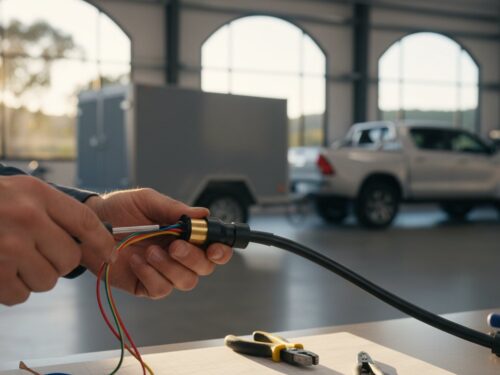
A professional kit must include tinned copper wiring. This is critical for boat trailers. Tinned copper resists the salt-driven oxidation that destroys standard automotive wire. You’ll also need to choose the right connection. Australian trailers typically use 7-pin flat or 7-pin round plugs. Proper trailer plug wiring ensures your indicators and brake lights function correctly every time. This prevents electrical shorts that can damage your vehicle’s expensive ECU. Most quality kits include the lamps, a pre-wired harness, and the trailer plug to make installation straightforward.
Material Selection for Longevity
Coastal towing demands high-grade hardware. Use stainless steel bolts for all mounting points. Zinc-plated hardware often shows rust within 12 months when exposed to salty air. Look for UV-stabilised plastics in the lamp housing. These materials prevent the lens from becoming brittle or yellowing after 2,000 hours of intense sun exposure. Safety is also a legal matter. Every light must meet the standards found in the Vehicle Standards Bulletin 1 (VSB 1). Quality waterproof led trailer lights feature integrated reflectors. This ensures your trailer remains visible and compliant even when it’s unhitched and parked in dark areas. We ship these heavy-duty components Australia wide to ensure your trailer stays on the road longer.
Key Features to Look for Before Purchasing
Selecting the right waterproof led trailer lights requires looking past the initial price tag. You need equipment that handles submersion and vibration without failing on the highway. Focus on technical specifications that guarantee both longevity and legal compliance on Australian roads.
- ADR Approval: Every light must meet Australian Design Rules (ADR) to be road legal. Look for the ADR compliance stamp or “E” mark etched into the lens.
- Inbuilt Resistors: Modern vehicles use CAN bus systems that monitor bulb resistance. LED lights draw less power than halogens, which often triggers “hyper-flashing” or dashboard error codes. Units with inbuilt resistors prevent these issues without requiring external load resistors.
- Wiring Style: Plug-and-play connectors allow for fast replacement and reduced labour. Hard-wired connections offer a permanent fix but require heat-shrink soldering to maintain a waterproof seal.
- Warranty Standards: A 12-month warranty is the industry floor. High-quality manufacturers provide 3-year to 5-year replacement guarantees. This reflects confidence in their epoxy sealing and housing durability.
Compliance and Safety Requirements
Safety isn’t just about visibility; it’s about staying legal. Check the lens for the ADR 13/00 or 6/00 certification marks. You must ensure the kit includes dedicated number plate lights and side markers if your trailer exceeds 2.1 metres in width. Using non-compliant lights is a liability risk. If you’re involved in a collision, an insurance assessor can void your claim if they determine your lighting didn’t meet Australian standards. This leaves you personally liable for damages and potential fines from transport authorities.
Ease of Installation and Maintenance
DIY installers should prioritise “go-to-whoa” wiring looms. These pre-wired kits reduce installation time by up to 60% compared to manual splicing. When inspecting the cable, ensure the manufacturer uses tinned copper wire. Standard copper wire suffers from “black wire disease” where moisture wicks up the jacket and corrodes the core. Tinned wire resists this oxidation, making it significantly easier to solder years down the line. If you’re retrofitting an older frame, check our specialised boat trailer parts for marine-grade mounting brackets that simplify the transition from old incandescent housings to modern LEDs.
Upgrade your setup with heavy-duty components.
Shop our full range of reliable trailer parts to ensure your gear stays on the road.
Shop our full range of reliable trailer parts to ensure your gear stays on the road.
Selecting Reliable Lighting for Your Australian Trailer
Australia’s harsh environment demands gear that doesn’t quit. Whether you’re backing into salt water at a local boat ramp or hauling 2 tonnes of gravel across corrugated inland roads, your lighting must remain functional. Selecting the right waterproof led trailer lights involves more than just picking the brightest option. You need to account for submersion depth, vibration frequency, and local ADR compliance. High-quality LEDs offer a lifespan of up to 50,000 hours, which is 50 times longer than traditional incandescent bulbs. This longevity is critical for trailers that spend months sitting in the sun before being pushed to their limits on a long haul.
Matching Lights to Trailer Type
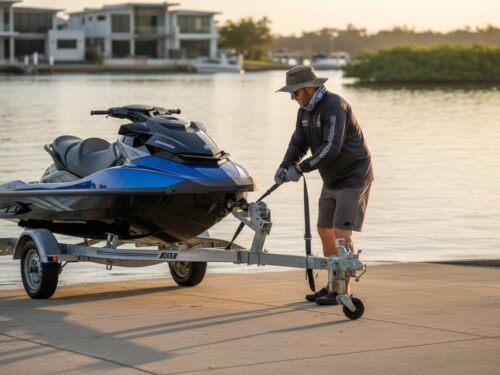
Your trailer’s primary job dictates the type of protection you need. For jet ski trailers, frequent submersion is a guarantee. You require units with a 100% hermetic seal and an IP68 rating, ensuring they remain bone-dry even when submerged under 1.5 metres of water. If you operate tandem axle trailers for commercial loads, the focus shifts to vibration resistance. Heavy-duty tandem setups often face significant road shock. Mounting your waterproof led trailer lights on rubber grommets or recessed brackets can reduce housing fractures by 35% over the life of the trailer.
Expert Support for Your Trailer Build
Wiring a 12V system isn’t always straightforward, especially when integrating modern LED technology with older vehicle electrical systems. Accessing technical support from an Australian owned and operated specialist ensures you receive advice tailored to our specific road conditions. Local experts understand that a “waterproof” light isn’t useful if the cable entry point isn’t properly shielded against red dust and salt spray. For specific hardware advice or help troubleshooting a complex wiring harness, you should contact Superior Trailer Parts directly. We provide the practical knowledge required to keep your fleet road-legal and safe.
Maintenance and Pre-Trip Checklist
Even the best marine-grade LEDs require basic care to perform at their peak. Follow this checklist before every major trip:
- Rinse thoroughly: Use fresh water to remove salt crystals from light housings after every launch.
- Inspect seals: Look for hairline cracks in the polycarbonate lenses that could allow moisture ingress.
- Check connections: Ensure the 7-pin or 12-pin plug is free from corrosion; use a dedicated contact cleaner if needed.
- Apply grease: Use a small amount of dielectric grease on terminals to prevent oxidation in humid coastal areas.
- Voltage test: Verify your battery is delivering a consistent 12.6V to ensure the LEDs trigger correctly without flickering.
Reliability on the road starts with the right components. By choosing heavy-duty, Australian-tested hardware, you eliminate the risk of mid-trip failures and costly fines. Stick to the basics: buy quality, install correctly, and maintain regularly.
Equip Your Trailer for Harsh Australian Conditions
Selecting high-quality waterproof led trailer lights is the best way to prevent electrical failure at the boat ramp. Australian coastal conditions require components with IP68 ratings to ensure they remain 100% submersible. Choosing a pre-wired LED kit can reduce your installation time by 50% while providing a more secure, corrosion-resistant connection. These heavy-duty units are designed to handle the constant vibration of corrugated roads and the thermal shock of hot lights hitting cold water.
We offer durable solutions that stand up to the elements. Superior Trailer Parts is Australian Owned and Operated, and we’re committed to supplying gear that won’t let you down. We provide Nationwide Shipping so you can get your trailer back in service quickly. If you’ve got questions about wiring or compatibility, we offer Expert Technical Advice to help you make an informed choice. Our focus is on providing reliable parts that keep your cargo safe and your trailer road-legal.
View our range of heavy-duty LED trailer lights and kits
Get your gear sorted today and hit the road with total peace of mind.
Frequently Asked Questions
Are all LED trailer lights waterproof?
No, not all LED trailer lights are waterproof. Standard units often carry an IP65 rating, which protects against rain but fails during submersion. For boat trailers, you must select units specifically labeled as submersible. These lights feature epoxy-sealed electronics to prevent water ingress. Approximately 40% of budget LED options lack this full hermetic seal, leading to premature failure when you back your trailer into a boat ramp.
Can I submerge LED trailer lights in salt water?
You can submerge waterproof led trailer lights in salt water if they feature a marine-grade rating. Saltwater is highly corrosive, so ensure the units have tinned copper wiring to prevent black wire corrosion. Always rinse your trailer with fresh water after every boat launch. This simple maintenance step extends the life of your seals by 50% compared to unwashed equipment. It keeps your heavy-duty components working longer in harsh coastal conditions.
Do I need a load resistor for my LED trailer lights?
You need a load resistor if your vehicle’s blinkers flash too fast or display dashboard errors. LED units draw significantly less current than 21-watt halogen bulbs, tricking modern CANbus systems into thinking a bulb is blown. About 90% of European vehicles and many late-model Australian utes require these resistors. You can install a 50W 6-ohm resistor in parallel to simulate the correct power draw for your towing system.
What is the best IP rating for a boat trailer?
The best rating for boat trailers is IP68. An IP67 rating ensures protection against immersion for 30 minutes at a depth of 1 metre. However, IP68 provides a continuous hermetic seal against high-pressure water and deeper submersion. Choose IP68-rated waterproof led trailer lights to ensure your electrical system survives the repeated pressure of deep-water boat launches. This rating guarantees 100% protection against dust and liquid ingress during every trip.
Can I mix LED and halogen lights on the same trailer?
You can mix them, but it isn’t recommended for performance or reliability. Halogen bulbs generate heat that can damage nearby plastic LED housings. The mixed current draw also confuses electronic flasher units in 75% of modern towing vehicles. For a dependable setup, replace all globes with LEDs simultaneously. This ensures uniform brightness and prevents 10-amp fuses from blowing due to inconsistent resistance levels across your trailer’s wiring loom.
How long do submersible trailer lights typically last?
Submersible LED lights typically last for 50,000 hours of operation. This lifespan is roughly 50 times longer than standard incandescent bulbs. While the LEDs themselves rarely burn out, the physical housing and seals usually last 10 years in heavy-duty marine environments. Using high-quality polycarbonate lenses reduces the risk of cracking by 30% compared to cheaper acrylic alternatives. This keeps the internal circuits dry and functional for the long haul.
Are LED trailer lights legal on Australian roads?
Yes, LED trailer lights are legal on Australian roads if they comply with Australian Design Rule (ADR) 13/00. Every light must display an E mark or a CRN to prove it meets local visibility and colour standards. Our Australian owned and operated business only stocks ADR compliant parts. Non-compliant lights can result in fines exceeding A$400 and may void your insurance if you’re involved in a road collision.