What’s the real cost of a hydraulic tipper kit that fails under a 5-tonne load? It isn’t just the price of a replacement ram. It’s lost time, potential equipment damage, and a major hit to your worksite’s productivity. Choosing the wrong system is a risk you can’t afford.
We know that navigating the options-from cylinder stages and lifting heights to power pack specifications-can be a challenge. The risk of selecting a system that can’t handle tough Australian conditions or fails to meet safety standards like AS1418.8 is a genuine concern for any operator. This overview delivers the practical, expert advice you need. We’ll show you how to select the correct hydraulic tipper trailer kit Australia wide, ensuring your setup has the power and durability to perform safely, job after job. You’ll gain a clear understanding of each component’s role and the confidence that your trailer is fully compliant.
Get ready to learn how to calculate lift capacity, match rams to your trailer’s geometry, and follow the essential steps for a correct and safe installation.
Key Takeaways
- Identify the essential components of a reliable hydraulic system, from the DC power pack to the hydraulic ram, to select the right parts for your build.
- Learn to compare cylinder stages and lifting capacities to ensure your hydraulic ram provides the required stroke and power for your specific load.
- Ensure your build meets legal requirements by understanding the key compliance standards, such as AS1418.8, for any hydraulic tipper trailer kit australia.
- Get practical advice on sourcing heavy-duty components and complete kits to build a durable, high-performance tipper trailer for Australian conditions.
Understanding Hydraulic Tipper Trailer Kits for Australian Conditions
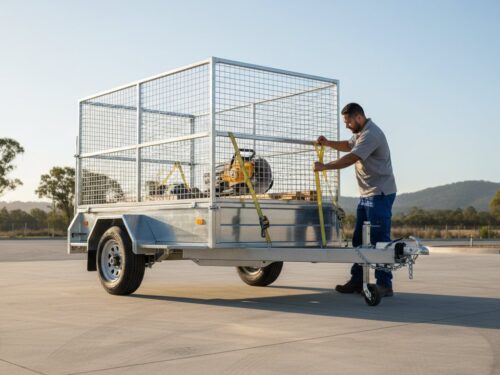
A hydraulic tipper trailer kit Australia-based businesses rely on is a complete, modular system engineered to convert a standard static trailer into a high-performance tipping unit. It replaces back-breaking manual work with mechanised efficiency. These kits are essential tools for Australian industries in landscaping, construction, and agriculture. They provide the power needed to transport and unload bulk materials like soil, gravel, and green waste with minimal effort.
The core of the system is a high-pressure hydraulic circuit. This circuit uses a compact power unit, typically running off your vehicle’s 12V or 24V battery, to drive a hydraulic ram. As the ram extends, it lifts the trailer bed, tipping the load cleanly and quickly. This entire process relies on the fundamental principles of hydraulic systems, where fluid under pressure generates immense lifting force. This technology transforms a simple trailer into a powerful piece of equipment, ready for serious work.
Australia’s environment demands more than standard off-the-shelf components. Our high-heat conditions, with temperatures regularly exceeding 40°C in many work regions, can degrade hydraulic fluid and seals. Fine outback dust can infiltrate and damage pumps and cylinders. A genuine, heavy-duty hydraulic tipper trailer kit will feature robust seals, high-temperature hydraulic hoses, and durable, corrosion-resistant coatings to withstand these harsh realities.
Why Upgrade to a Hydraulic Tipping System?
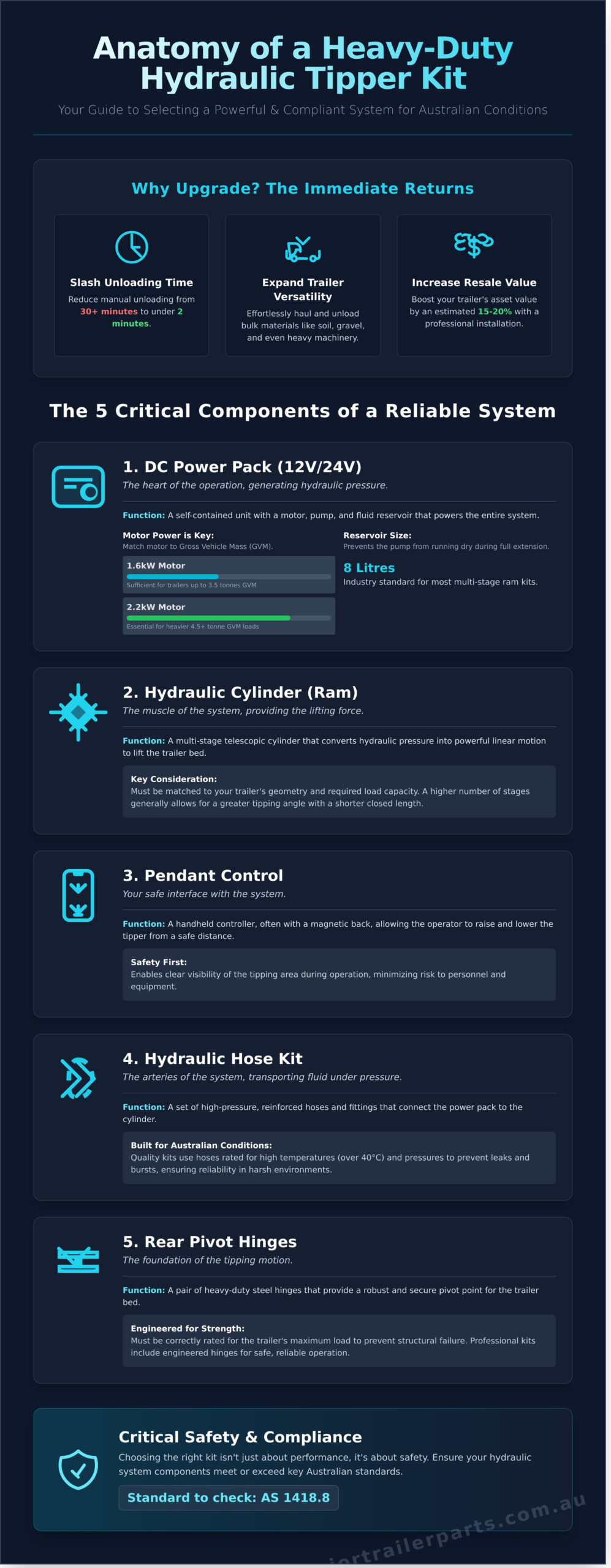
Upgrading delivers immediate, measurable returns. It eliminates the physical strain of shovelling, slashing typical unloading times from over 30 minutes down to less than 2 minutes. This efficiency boost allows for more jobs per day. The trailer’s versatility expands, enabling you to haul everything from heavy sand to awkward machinery. An installed hydraulic system is a significant asset, often increasing a trailer’s resale value by an estimated 15-20% by making it a more capable and sought-after piece of equipment.
The Role of Tipper Kits in Fleet Management
For small to medium Australian businesses, hydraulic tipper kits streamline operations. They improve on-site efficiency and provide reliable performance in remote areas where manual labour is impractical or unavailable. Adopting a standardised kit across a fleet simplifies maintenance. With interchangeable parts like pumps, hoses, and remotes, technicians can perform repairs faster, minimising vehicle downtime and keeping your projects on schedule.
Choosing the right hydraulic tipper kit isn’t just an upgrade; it’s an investment in operational strength. It equips your trailer to handle the demanding workloads and tough conditions found across Australia, ensuring you get the job done right, every time.
Essential Components of a Reliable Hydraulic System
A hydraulic tipper trailer is a system of powerful, interconnected parts. Its performance isn’t just about the biggest ram or the most powerful motor; it’s about how each component works together. A high-performance hydraulic tipper trailer kit australia relies on every part being correctly specified, durable, and built for the job. Get one part wrong, and you compromise the entire system’s safety and efficiency.
The core of any kit includes five critical elements:
- 12V or 24V DC Power Pack: This is the heart of the operation. It’s a self-contained unit housing the electric motor, hydraulic pump, and fluid reservoir that generates the hydraulic pressure.
- Hydraulic Cylinder (Ram): The muscle of the system. This multi-stage telescopic ram converts hydraulic pressure into the physical force that lifts the trailer bed.
- Hydraulic Hose Kit: The arteries of the system. These high-pressure, reinforced hoses transport hydraulic fluid from the power pack to the cylinder.
- Rear Pivot Hinges: The foundation of the tip. These heavy-duty steel hinges provide a robust, engineered pivot point for the trailer bed’s tipping motion.
Pendant Control: Your interface with the system. This handheld controller, with quality options available from specialists like Carbon Fox, allows the operator to raise and lower the tipper from a safe distance.
The Importance of the DC Power Pack
Selecting the right power pack is the first step to a functional tipper. The motor’s power rating must match your trailer’s Gross Vehicle Mass (GVM). A 1.6kW motor is typically sufficient for trailers up to 3.5 tonnes. For heavier applications, such as 4.5-tonne GVM trailers, a 2.2kW motor is essential to provide reliable lifting power without strain. The reservoir size is just as critical. An 8-litre reservoir is the standard for most kits, ensuring there is enough hydraulic fluid to fully extend a multi-stage ram without the pump running dry. Finally, for Australian conditions, the power pack must have a durable steel or high-impact polymer protective housing to shield it from dust, water, and UV damage.
Safety Features: Hose Burst Valves and Remote Access
A tipper trailer carries immense weight, making safety non-negotiable. Reputable suppliers, often aligned with standards from the Commercial Vehicle Industry Association of Australia (CVIAA), build their kits with non-negotiable safety features. Hose burst valves are a prime example. These simple valves act as an emergency brake, automatically locking the cylinder in place if a hydraulic hose fails and pressure is lost. This prevents a catastrophic, sudden drop of the tipper bed.
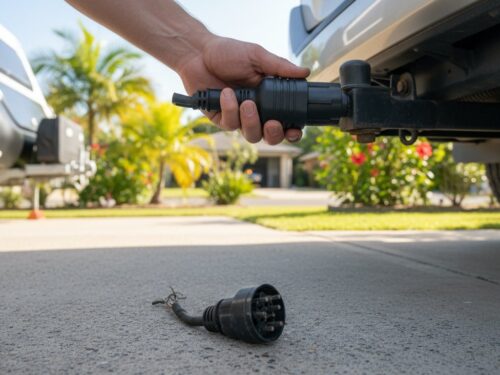
Operator safety is also paramount. While a standard wired pendant control is reliable, a wireless remote option provides a significant safety advantage. It allows the operator to move up to 30 metres away, offering a clear view of the entire tipping area and keeping them out of the immediate danger zone. When selecting a hydraulic tipper trailer kit australia, also look for motors with thermal overload protection. This feature automatically cuts power if the motor overheats during frequent use, preventing permanent damage and ensuring long-term reliability. Matching the right power pack to your cylinder and load requires expertise. If you’re unsure about the specifications for your build, our team can provide expert advice on configuring a complete system.
Comparing Cylinder Stages and Lifting Capacity
The hydraulic cylinder is the heart of your tipper system. Its performance dictates how high and how much you can lift. Understanding its specifications isn’t just about power; it’s about safety, efficiency, and getting the job done right the first time.
Cylinder stages refer to the individual telescopic sections housed within the hydraulic ram. A greater number of stages allows for a longer stroke (extended length) from a more compact closed height. This is critical for trailers where underbody space is limited. In Australia, tipper kits commonly use 4-stage, 5-stage, or 6-stage cylinders. The cylinder’s stroke length directly determines the maximum tipping angle of your trailer bed. A longer stroke delivers a steeper angle, ensuring a clean and complete discharge of materials like soil, gravel, or mulch.
Selecting the Right Stroke Length
Calculating your required stroke is straightforward. You need a tipping angle of at least 45 degrees for most materials to slide off freely. For a standard 8×5 trailer (2.4m deck length) with an underbody cylinder mounted 1.2m from the rear pivot point, you’ll need a vertical lift of 1200mm to achieve that 45-degree angle. This basic geometry is fundamental to selecting the right components.
The cylinder’s mounting position dramatically affects your needs:
- Underbody Mount: The most common setup. The cylinder pushes at an angle, so it requires a longer physical stroke to achieve the necessary vertical lift.
- Front-Mount: Positioned vertically at the front of the tipper bed. This provides a more direct lift, often requiring a shorter stroke for the same angle, but it takes up deck or drawbar space.
Finally, check the closed height. This is the cylinder’s length when fully retracted. It must be less than your trailer’s chassis-to-ground clearance to avoid damage. A 6-stage ram might offer a 1500mm stroke with a closed height of just 450mm, making it ideal for low-slung trailers.
Weight Ratings and Load Distribution
Every hydraulic cylinder has a maximum lifting capacity. This rating must be matched to, or exceed, your trailer’s Aggregate Trailer Mass (ATM). When choosing a hydraulic tipper trailer kit australia suppliers offer, matching the cylinder to your trailer’s ATM is the first critical step. Never install a 4-tonne kit on a trailer rated for 6 tonnes, even if you don’t plan to carry that much weight.
Overloading doesn’t just mean the trailer won’t tip. It puts extreme stress on hydraulic seals, leading to leaks and catastrophic pressure loss. In severe cases, it can cause the cylinder walls to buckle or the mounting hardware to shear off. These are serious safety risks on any worksite.
Load placement also has a major impact. The force needed to start the lift, known as the ‘breakout force’, is highest when the load is concentrated at the front of the trailer bed. A tonne of wet sand piled against the headboard requires far more hydraulic pressure to move than the same load spread evenly. Always account for these worst-case loading scenarios when selecting your kit’s weight rating.
Compliance, Safety Standards, and Selection Criteria
Installing a hydraulic tipper kit is more than a mechanical upgrade. It’s a modification that must meet stringent Australian safety and compliance standards. Failure to comply doesn’t just risk fines; it compromises the safety of the operator and other road users. Every component, from the cylinder to the chassis mounts, must be fit for purpose and correctly installed.
For any commercial application, adherence to Australian Standard AS 1418.8 is non-negotiable. This standard governs the design and operational safety of hoists, which includes the lifting mechanisms in tipper trailers. Furthermore, critical safety components like pilot-operated check valves are mandatory on many systems. These valves lock the hydraulic cylinder in position, preventing the tipper body from crashing down if a hose fails under pressure. It’s a simple part that provides essential protection against catastrophic failure.
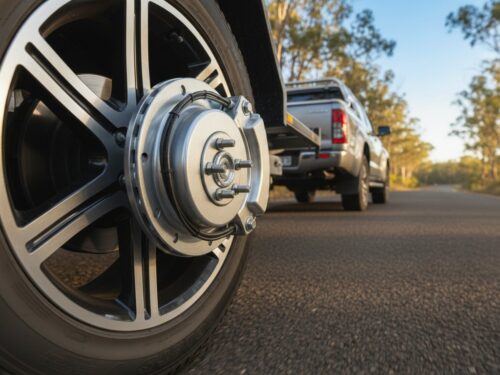
When you’re choosing a hydraulic tipper trailer kit in Australia, you must also consider the trailer’s braking capacity. Any trailer with a Gross Trailer Mass (GTM) exceeding 2000kg requires an effective braking system on all wheels. The added weight of a tipper kit can easily push a trailer over this threshold, legally requiring a brake system upgrade. Finally, the structural integrity of the installation is paramount. Pivot hinges must be professionally welded to the trailer chassis, as these points bear the entire load during a tip cycle. A failed weld means a failed trailer.
Australian Design Rules (ADR) for Tipper Trailers
The Australian Design Rules dictate national standards for vehicle safety. When fitting a tipper kit, you must ensure the total weight of the kit doesn’t push your trailer’s axle group load beyond its legal rating. ADR 38/05 mandates specific braking performance, including anti-lock systems for certain heavy vehicles, which directly impacts the design of trailers over 4.5 tonnes GTM. For maintenance, a heavy-duty, mechanically-locking safety stay or support prop is required to secure the tray in the raised position, protecting anyone working on the chassis.
Installation Best Practices
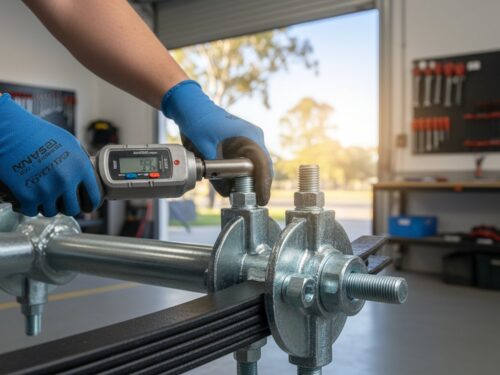
A quality kit requires a quality installation. Securing the tipper sub-frame to the chassis demands high-grade components. Use correctly rated, high-tensile u-bolts torqued to manufacturer specifications to prevent any movement under load. For the 12V power supply, avoid voltage drop by using heavy-gauge electrical cable, especially on longer trailers. A weak current will starve the hydraulic pump, leading to poor performance and overheating. After assembly, you must bleed the hydraulic system of all air. Trapped air causes spongy and erratic lifting, so cycle the system several times to ensure smooth, reliable operation.
Getting these details right ensures your tipper is not only powerful but also safe and legally compliant on Australian roads. For expert advice on selecting the correct, compliant components for your build, contact our technical team today.
Sourcing Quality Hydraulic Tipper Components in Australia
Building or upgrading a tipper trailer requires components that can withstand demanding workloads. Your project’s success depends on the quality of the parts you choose. At Superior Trailer Parts, we provide heavy-duty hydraulic components engineered for Australian conditions. We stock everything from individual rams and power packs to complete, ready-to-install kits. This gives you the flexibility to repair an existing setup or build a new one from the ground up.
Choosing an Australian-owned specialist offers a distinct advantage. Our team understands the unique challenges of local transport, from corrugated regional roads to strict compliance standards. You get direct access to technical support from people who know these products inside and out. We don’t just sell parts; we provide practical advice to ensure you get the right fit for your build.
No matter your location, we get the parts to you. Our nationwide shipping network ensures every workshop, farm, and job site has access to reliable components. From Perth to Brisbane, your project won’t be held up waiting for parts. We make sourcing a genuine hydraulic tipper trailer kit australia straightforward and efficient.
Customising Your Build
A powerful hydraulic system needs a solid foundation. We help you integrate tipper functionality with the right trailer chassis, ensuring it’s built to last.
- Trailer Integration: Our kits are designed for straightforward installation on new or existing frames, including heavy-duty box trailers built for tough work.
- Load Capacity Upgrades: Adding a tipper system increases weight and stress. Upgrading to the correct heavy-duty axles and suspension is not optional; it’s essential for safety and performance.
- Professional Finish: Complete your project with the right trailer parts. We stock everything from galvanised hinges and latches to compliant LED lighting kits for a professional, road-ready finish.
Expert Advice and Support
Getting the right advice saves you time and money. Our team has the technical knowledge to match a hydraulic tipper kit to your specific trailer dimensions and intended use. We’ll help you confirm that the ram stroke, power pack capacity, and mounting hardware are correct for your GVM and chassis design. This prevents costly mistakes and ensures reliable operation from day one.
Our support doesn’t end after the sale. We provide ongoing access to essential maintenance components, including replacement seals, hydraulic fittings, and other hardware to keep your tipper in peak condition. For any questions about building or maintaining your trailer, our team is ready to help.
Contact Superior Trailer Parts for expert guidance on your tipper project.
Equip Your Trailer for Heavy-Duty Work
Selecting the right hydraulic system comes down to a few key factors. You must match the cylinder stage and lifting capacity to your typical loads for efficient operation. It’s also critical to ensure every component meets Australian safety and compliance standards. This isn’t just about regulations; it’s about building a trailer that’s safe and reliable for years of hard work.
When you need a dependable hydraulic tipper trailer kit australia wide, quality is non-negotiable. As an Australian Owned and Operated company, we supply parts engineered to handle demanding local conditions. We stock the heavy-duty components you need to get the job done right.
Ready to start your build or upgrade? View our range of Hydraulic Tipper Trailer Kits and Parts. If you need help, our team is here with expert technical advice. With nationwide shipping, your project doesn’t have to wait. Let’s build something that lasts.
Frequently Asked Questions
What is the difference between a 4-stage and a 6-stage hydraulic cylinder?
The main difference is the number of telescoping sections, which affects the total stroke length and final tipping angle. A 6-stage cylinder has more sections, giving it a longer stroke from the same closed length. This achieves a higher tip angle, ideal for longer trailers. A 4-stage ram is common for standard tippers, offering a robust lift with fewer moving parts. The right choice depends on your trailer’s length and required angle.
Do I need a specific battery to run a 12V hydraulic tipper kit?
Yes, you need a heavy-duty, deep-cycle battery. A standard car starter battery isn’t designed for the high current draw of a hydraulic pump. We recommend a deep-cycle battery with a minimum of 100Ah (Amp hours), such as an AGM or quality lead-acid type. This ensures you have reliable power to complete multiple lift cycles without draining the battery or damaging the pump’s electric motor.
Is a hose burst valve mandatory for tipper trailers in Australia?
Yes, a hose burst valve is a mandatory safety feature for hydraulic tipper trailers under Australian Design Rules (ADRs). This critical component automatically locks the hydraulic cylinder if a hose fails, preventing the tray from suddenly dropping. It’s a non-negotiable part of a compliant and safe system. Always verify its presence and proper installation to ensure your trailer is road-legal and safe for operation.
Can I install a hydraulic tipper kit on a single-axle box trailer?
Yes, you can install a hydraulic tipper kit on a single-axle box trailer, provided the chassis is strong enough to handle the lifting forces. A standard light-duty trailer will likely require significant chassis reinforcement to prevent twisting or structural failure under load. We recommend consulting a qualified trailer fabricator to assess your trailer’s suitability and ensure a safe, reliable installation for years of hard work.
How much weight can a standard 800mm stroke hydraulic kit lift?
A standard 800mm stroke kit’s lifting capacity typically ranges from 3 to 5 tonnes. The exact capacity depends on the cylinder’s diameter and the system’s hydraulic pressure. For example, a 4-stage cylinder with a 4-inch first stage operating at 2500 PSI can lift approximately 4.5 tonnes. Always check the manufacturer’s specifications for the specific hydraulic tipper trailer kit australia you are considering to match it to your trailer’s GVM.
What maintenance does a hydraulic tipper system require?
A hydraulic tipper system requires regular inspections of fluid levels, hoses, and electrical connections. Check the hydraulic oil level monthly and top up with the specified fluid. Visually inspect all hoses for cracks, leaks, or abrasion, and ensure electrical connections are clean and tight. It’s also good practice to lubricate all pivot points and ram pins every 6 months to ensure smooth operation and prevent premature wear.
Does installing a tipper kit affect my trailer’s legal load capacity?
Yes, installing a tipper kit adds weight to the trailer, which directly reduces its legal payload capacity. The weight of the power pack, cylinder, hoses, and any chassis reinforcement must be subtracted from the trailer’s Aggregate Trailer Mass (ATM). If a kit adds 80kg, your payload is reduced by 80kg. You must not exceed the original ATM rating listed on the trailer’s compliance plate.
Where can I find replacement parts for my hydraulic power pack?
You can find replacement parts like solenoids, pendant controllers, and seal kits from specialised Australian trailer parts suppliers. Reputable suppliers stock a comprehensive range of components for common power packs. It’s best to identify the brand and model of your unit before ordering. Our team can provide expert advice to help you find the correct part for your hydraulic tipper trailer kit australia, ensuring a perfect fit.