How much is a ruined hull worth to you when a simple hardware failure at the ramp causes A$3,000 in gelcoat damage? Investing in the best boat trailer rollers australia offers is the only way to prevent seized hardware from turning a quick launch into a difficult struggle. You’ve likely dealt with cheap rollers that crack after just 18 months of UV exposure or black rubber versions that leave stubborn marks on your white fiberglass. These failures don’t just make retrieval difficult; they actively damage your investment every time you hit the water.
Superior Trailer Parts provides the heavy-duty solutions you need for local marine environments. We’ll show you how to select and maintain the right boat trailer rollers to protect your hull and ensure effortless launching at any Australian boat ramp. This article examines the durability of marine-grade polyurethane, the mechanics of self-centering rollers, and the exact maintenance steps to stop rust before it starts. Get the technical knowledge required to keep your trailer hardware rolling smoothly for years to come.
Key Takeaways
- Protect your boat’s hull and gelcoat by understanding how rollers distribute weight evenly across the trailer frame.
- Select the right combination of keel and wobble rollers to ensure maximum support and effortless launching at the ramp.
- Choose between polyurethane, rubber, and nylon materials to find the most durable boat trailer rollers australia provides for your marine environment.
- Master the DIY replacement process by learning how to measure spindles and bores for a precise, secure fit.
- Discover the benefits of using heavy-duty galvanised components designed to withstand harsh Australian saltwater conditions.
The Role of Rollers in Protecting Your Boat Hull
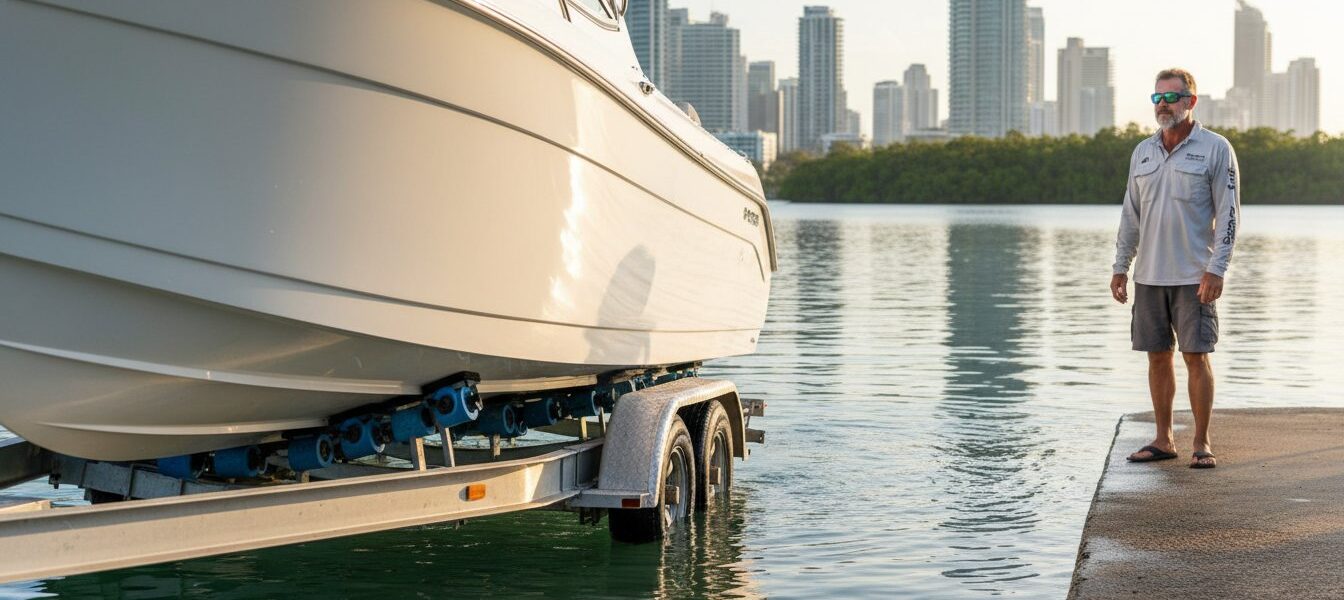
Rollers serve as the critical interface between a vessel and its trailer frame. Their primary function is to distribute the deadweight of the hull across multiple contact points. For a standard 5.5-metre fiberglass boat, this weight often exceeds 1,500kg. Without a functional roller system, this mass creates localized pressure points that can lead to structural fatigue or “hooking” in the hull. High-quality boat trailer rollers australia are designed to handle these loads while minimizing friction during the launch and retrieval process. Understanding boat trailer basics helps owners realize that rollers aren’t just wheels; they are load-bearing components that maintain the geometric integrity of the boat.
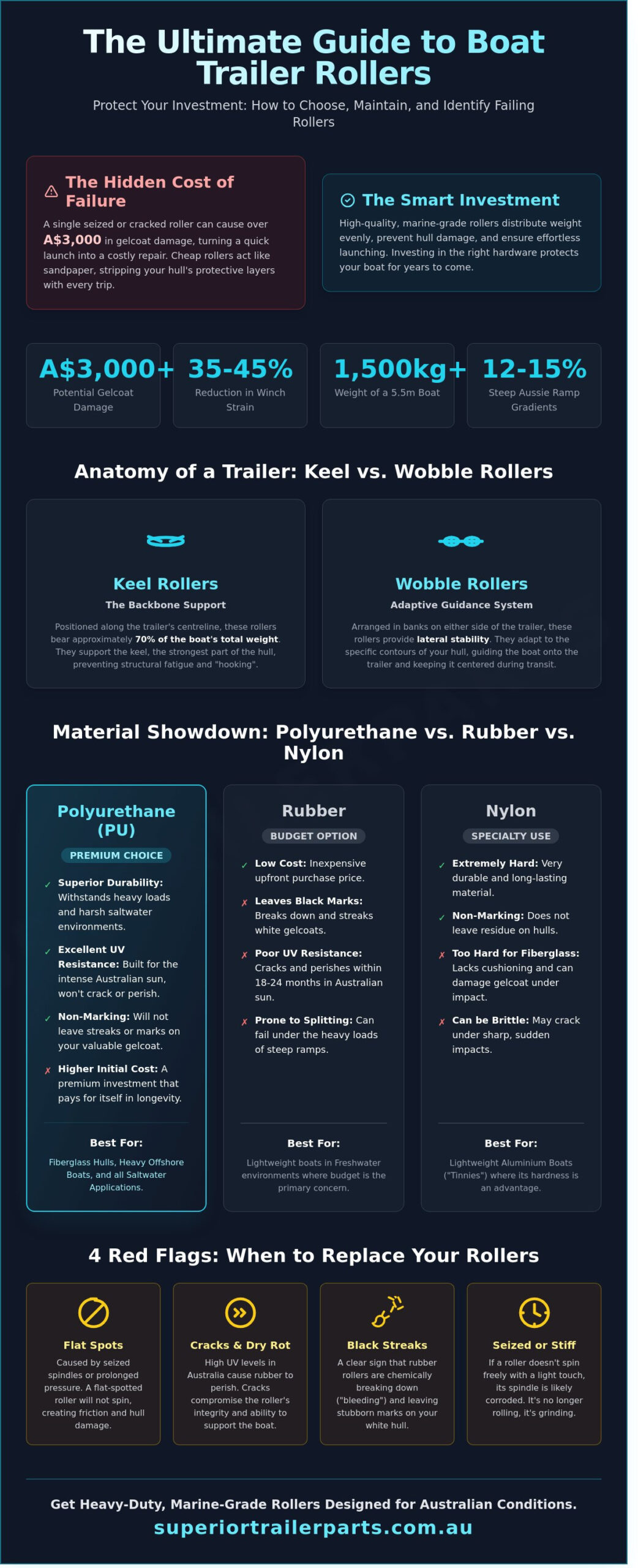
Worn or seized rollers cause immediate damage to the gelcoat. When a roller fails to spin, it acts like sandpaper against the hull every time the boat moves. This friction generates heat and abrasive force that strips away protective coatings. In the harsh Australian marine environment, where salt and heat accelerate corrosion, a seized spindle can ruin a hull surface in a single trip to the ramp. You must distinguish between support rollers and retrieval aids. Support rollers, usually located along the center or keel line, bear the vertical weight. Retrieval aids, such as wobble rollers, guide the boat into the correct position. Mixing these roles or using inadequate parts leads to uneven loading and potential transit accidents.
Australian boat ramps present unique challenges that demand high-performance components. Many coastal ramps feature gradients of 12% to 15%, which is significantly steeper than many international standards. These inclines place massive axial loads on the rear rollers during retrieval. If the rollers aren’t rated for these specific forces, they can split or collapse under pressure. Choosing the right boat trailer rollers australia ensures your hardware can withstand these local conditions without failing at the water’s edge.
Why Quality Rollers Matter for Safety
Safety on the road starts with how the boat sits on the trailer. Quality rollers prevent hull deformation during long-distance towing, such as 800km trips up the coast. If the rollers are soft or poorly spaced, the hull can shift, changing the trailer’s center of gravity. This leads to dangerous trailer sway at highway speeds. On the ramp, high-performance rollers reduce winch strain by approximately 35% to 45%. This reduction in tension makes the retrieval process safer for the operator and prevents winch cable snaps. A well-maintained roller set ensures the boat stays centered during transit, even when navigating roundabouts or uneven road surfaces.
Common Signs of Roller Failure
Flat spots are the most frequent indicator of failure. These occur when a roller stays in one position under a heavy load for too long or when the internal spindle has seized due to salt crystallization. You should also check for dry rot. Australian UV index levels frequently exceed 11 during summer, causing standard rubber to crack and perish within 24 months. If you notice black streaks or “bleeding” on your white gelcoat, the rubber is breaking down chemically. Hardened rollers lose their ability to absorb road shock, transferring every bump directly into the boat’s stringers. If a roller doesn’t spin freely with a light touch, it requires immediate replacement to avoid a 5,000 AUD repair bill for hull refinishing.
Comparing Keel Rollers and Wobble Rollers
Efficiency on the boat ramp depends on your trailer’s hardware. Keel rollers and wobble rollers serve different but equally critical roles. Keel rollers support the heaviest part of the vessel. This is the structural backbone of your boat. Wobble rollers, often called rocker rollers, provide lateral stability and adapt to the hull’s specific contours. Getting the right mix ensures you don’t damage your gelcoat or aluminum during transit. High-quality boat trailer rollers australia wide are essential for durability in harsh salt-water environments.
Keel Rollers: The Backbone of the Trailer
Keel rollers carry roughly 70% of the boat’s total weight. They sit directly under the keel, which is the strongest point of the hull. Standard sizes in the Australian market include:
- 100mm (4-inch): Best for small aluminum tinnies and light watercraft.
- 150mm (6-inch): Suitable for mid-sized runabouts and fiberglass boats.
- 200mm (8-inch): Required for heavy offshore plate boats and large vessels.
V-cut profiles suit sharp, deep-V hulls, while straight profiles work best for flatter hulls or near the rear of the trailer. Most Australian trailers use 16mm or 20mm pins for these components. You can find specific brackets and high-tensile pins in our range of boat trailer parts to ensure a secure fit for your specific trailer frame.
Wobble Rollers: Effortless Launching and Retrieval
Wobble rollers don’t carry the primary load. Their job is to guide the boat and keep it centered during recovery. Ribbed wobble rollers provide 40% more grip than smooth surfaces. This is vital when you’re winching a heavy fiberglass hull against a crosswind. These rollers move independently on a pivot, allowing them to hug the hull as it moves. It’s especially useful on steep or uneven boat ramps where the trailer might sit at an awkward angle. For fiberglass boats, a bank of 16 to 32 wobble rollers distributes pressure evenly across the hull. This prevents hull deformation or stress cracks during long trips on corrugated roads. Polyurethane rollers are the standard for fiberglass because they don’t mark the hull and offer longer life than traditional rubber.
A multi-roller setup combines both styles for maximum efficiency. Use keel rollers for weight distribution and wobble rollers for balance. Don’t forget the bow roller. This sits at the front of the trailer and secures the vessel into the winch post. It prevents the boat from moving forward during sudden braking. Proper trailer maintenance is a legal requirement. The official boating safety handbook highlights that well-maintained equipment reduces risks on the water. A faulty roller can cause a boat to shift, creating a dangerous imbalance while towing at 100km/h on the highway.
If your current rollers are flat-spotted or squealing, it’s time for a replacement. We supply marine-grade boat trailer rollers australia can rely on to resist UV damage and salt corrosion. Check our stock for heavy-duty trailer components to get back on the water quickly. Our parts are designed for Australian conditions, ensuring your boat stays secure from the driveway to the ramp.
Material Selection: Polyurethane vs Rubber vs Nylon
Selecting the correct material for your boat trailer rollers australia wide is the difference between a smooth launch and a damaged hull. Australian marine environments are brutal. High UV levels and saltwater corrosion destroy inferior plastics within 12 months. You need materials engineered for local conditions. Polyurethane, rubber, and nylon each serve specific roles based on boat weight and hull composition.
This focus on durable, weather-resistant materials extends beyond boating equipment. Protecting any significant outdoor investment requires choosing components designed for the local climate. For instance, just as Australian boat owners need UV-stabilised rollers, spa owners in colder regions rely on specialists like Northern Hot Tub Covers for high-quality covers that can withstand extreme weather and protect their investment.
Similarly, in the home improvement sector, companies like Shutters Factory specialize in manufacturing durable plantation shutters that provide long-lasting protection against the elements for homes across the UK and Europe.
Polyurethane rollers are the industry standard for modern trailers. They come in two primary grades: red and blue. Red polyurethane is a softer compound, typically featuring a Shore A hardness rating of 75. This flexibility allows the roller to contour slightly to the hull, providing a cushioned ride for lighter fiberglass boats. Blue polyurethane is harder, often rated at Shore D 55. This density prevents the roller from flattening under the weight of 2,000kg offshore cruisers. Both poly types are UV-stabilised to withstand 40-degree summer heat without cracking or turning brittle.
Black rubber rollers remain a functional choice for specific setups. They offer the highest level of shock absorption, which is vital when towing aluminium boats over corrugated rural roads. Rubber is roughly 40% cheaper than polyurethane, making it a budget-friendly option for smaller tinnies. However, rubber leaves black scuff marks. Never use rubber on a fiberglass boat. The friction creates heat that transfers black carbon onto the gelcoat, which is nearly impossible to remove without heavy compounding.
Polyurethane Rollers for Fiberglass Hulls
Fiberglass boats require non-marking materials to maintain their resale value. Polyurethane is chemically inert and won’t leach pigments onto your gelcoat. Use soft red poly for boats under 5.5 metres to ensure maximum grip during winching. For larger vessels, hard blue poly provides the structural support needed to prevent the roller from binding against the bracket. Maintenance is simple but critical. Wash your boat trailer rollers australia after every saltwater dip. Salt crystals act like sandpaper between the roller and the hull. Inspect the internal bores every 6 months for signs of wear or grit buildup. A quick spray of marine-grade lubricant keeps the internal sleeves spinning freely.
Rubber and Nylon: The Workhorses
Rubber rollers are the go-to for aluminium hulls where marking isn’t a primary concern. They provide a “sticky” surface that helps keep the boat centered during crosswind launches. While rubber has a shorter lifespan than poly, usually lasting 3 to 5 years in Australian sun, its low cost makes replacement affordable. For commercial applications or massive 3-tonne vessels, nylon is the only viable option. Nylon has zero flex and a high load capacity, often rated for 2,500kg per set. It’s incredibly slippery, allowing heavy boats to slide off the trailer with minimal effort. If you’re rebuilding an entire sub-assembly, you can source high-quality trailer parts to ensure your brackets and spindles match the strength of your new rollers. Nylon won’t flat-spot even if the boat sits in storage for 2 years, making it the most durable choice for long-term support.
How to Replace and Align Boat Trailer Rollers
Maintaining your trailer is a necessity for any boat owner. Worn or seized rollers cause unnecessary friction during launch and retrieval. This friction often leads to gelcoat scratches or structural stress on the hull. When you source boat trailer rollers australia wide, you must ensure the installation is as high-quality as the parts themselves. This process requires a methodical approach to ensure the weight of your vessel is distributed correctly across the trailer frame.
Start by gathering the right tools for the job. You will need a heavy-duty hydraulic jack, sturdy timber blocks for hull support, a set of pliers, a 19mm socket or spanner, and a hammer. Safety is the priority. Never work under a boat supported only by a jack. Use the timber blocks to take the weight of the hull once it is lifted clear of the rollers you intend to replace.
Measuring Spindles and Brackets
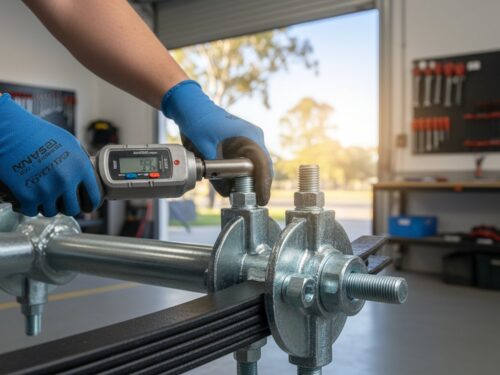
Accuracy during the measurement phase prevents return trips to the shop. Australian boat trailers generally utilise three standard spindle diameters: 16mm, 20mm, and 21mm. Use a vernier caliper to measure the diameter of the existing shaft. If you find the spindle is heavily pitted or rusted, it’s time for a replacement. A seized roller often indicates a compromised spindle. Inspect your brackets for any signs of bending or metal fatigue. If the bracket is compromised, use galvanised U-bolts to mount new hardware securely to the trailer cross-members. These provide the heavy-duty clamping force required for offshore conditions.
The bore of the roller must match the spindle size. A 20mm spindle requires a roller with a 20mm internal bore. If the fit is too loose, the roller will wobble and wear unevenly. If it’s too tight, it won’t spin freely under load. Always check the width of the bracket to ensure the roller has 2mm to 3mm of lateral play. This prevents the roller from binding against the bracket arms when the boat’s weight is applied.
Alignment for Smooth Retrieval
Proper alignment ensures your boat tracks straight every time you pull it onto the trailer. Focus first on the keel rollers. These must be perfectly centered along the trailer’s spine. If a keel roller is even 10mm off-center, the boat will pull to one side during retrieval. Once the keel is set, adjust your wobble roller banks. These should be level and mirror each other’s height on both sides of the trailer. If one side sits higher, the boat will list, putting uneven pressure on the hull. This can lead to long-term structural deformation of the fiberglass or aluminium.
Hardware choice is critical for longevity. Never reuse old split pins. Always install new, heavy-duty galvanised split pins and oversized washers. The washer provides a smooth bearing surface that prevents the pin from tearing into the side of the roller. Standard zinc-plated hardware won’t last in salt water; it will corrode and fail within months. Using marine-grade galvanised components ensures your boat trailer rollers australia setup remains reliable for years of service.
Test your work at the local ramp. Observe how the hull interacts with the first set of rollers. The boat should center itself immediately without manual correction. If you notice the boat shifting, stop and adjust the roller height by 5mm or 10mm increments until the tracking is true. A well-aligned trailer makes solo launching a simple, stress-free task.
Upgrade your setup today with heavy-duty trailer parts from a trusted Australian supplier.
Sourcing Quality Boat Trailer Rollers in Australia
Sourcing the right boat trailer rollers australia requires a clear understanding of the harsh salt environments found from the Gold Coast to the Top End. Local conditions demand hardware that survives 35-degree heat and high-salinity boat ramps. Australian-owned suppliers understand these variables better than international retailers because they test products against local UV levels and water conditions. Choosing heavy-duty, UV-stabilised polyurethane or high-grade rubber ensures your rollers don’t split or flat-spot after six months of use.
Durability starts with the hardware supporting the roller. Hot-dipped galvanised brackets are mandatory for any marine application. While standard zinc plating might fail after 50 hours of saltwater exposure, a genuine hot-dipped galvanised finish typically provides a coating exceeding 85 microns. This thickness offers years of corrosion resistance and prevents the roller assembly from seizing. A seized roller doesn’t just make launching difficult; it can cause significant structural damage to a fiberglass or aluminium hull during retrieval.
Rollers function as part of a larger mechanical ecosystem. If your rollers are misaligned or worn, they create uneven pressure on the trailer frame. This imbalance often leads to accelerated wear on your trailer axles and suspension components. Maintaining a synergistic relationship between your rollers, axles, and braking system ensures the trailer remains stable at highway speeds. Always verify that roller spindles match your bracket holes exactly. A 2mm discrepancy is enough to cause vibration and premature wear on the roller bore.
- Polyurethane Rollers: Best for fiberglass boats; high split resistance.
- Rubber Rollers: Ideal for aluminium hulls; provides necessary grip.
- Galvanised Hardware: Essential for salt protection and structural integrity.
- Self-Centring Designs: Reduces the effort required for solo boat retrieval.
Superior Trailer Parts: The Gold Coast Specialist
Based in Arundel on the Gold Coast, Superior Trailer Parts operates a warehouse stocked with thousands of marine-grade components. We focus on heavy-duty hardware designed for loads ranging from 750kg to 4,500kg. Our technical expertise comes from over 15 years of industry experience, helping boat owners select the correct fitment for specific trailer brands. We don’t deal in generic parts that fail prematurely; we provide durable solutions built for the Australian coastline.
If your trip to pick up parts takes you through the area, you might be looking for a good place for breakfast or lunch. For those passing through nearby Brisbane, you can get a great, locally sourced meal if you check out The White Bird.
Ordering and Australia-Wide Delivery
Our online store facilitates quick parts retrieval for boat owners across the country. We offer Australia-wide delivery, with most regional orders arriving within 3 to 5 business days. This efficiency helps get your boat back on the water without unnecessary downtime. Whether you’re performing a DIY replacement or building a custom trailer from the ground up, our team provides the technical data needed for a successful project. Contact us for expert trailer advice to ensure your setup is road-legal and water-ready.
Equip Your Trailer for the Australian Coast
Choosing the right boat trailer rollers australia offers is the most effective way to prevent hull delamination and ensure effortless launching. High-density polyurethane rollers provide superior UV resistance compared to standard rubber, while nylon options offer the rigidity needed for heavy fiberglass hulls. It’s essential to pair these rollers with 100% marine-grade galvanised hardware to stop rust before it starts. Proper alignment across your keel and wobble rollers distributes weight evenly, which prevents pressure points from damaging your vessel during transport.
Superior Trailer Parts is an Australian owned and operated specialist. We stock heavy-duty components designed specifically for our harsh saltwater environments. We provide fast Australia wide shipping from our QLD facility to ensure you aren’t left waiting at the ramp. Our range focuses on durability and genuine performance for every DIY project or fleet requirement. Don’t risk a seized roller when you’re heading out for a day on the water.
Shop Heavy-Duty Boat Trailer Rollers
Invest in quality gear today and keep your boat in peak condition for years to come.
Frequently Asked Questions
How do I know what size boat trailer roller I need?
Measure the width of your current roller and the diameter of the spindle it sits on. Most Australian boat trailer rollers come in standard widths like 100mm, 150mm, or 200mm. Check the internal bore size to match your existing 16mm or 20mm shafts. Proper fitment prevents lateral movement and ensures the weight of the vessel distributes evenly across the trailer frame.
Will blue poly rollers mark my fiberglass boat?
Hard plastic rollers like blue HDPE or polypropylene can mark or scratch fiberglass hulls if sand or grit gets trapped between the surfaces. These rollers lack the flexibility of rubber and are better suited for aluminium boats. For fiberglass boats, choose high-grade polyurethane rollers. These provide a softer contact point and reduce the risk of gelcoat damage during launch and retrieval.
What is the difference between a 16mm and 20mm roller bore?
The difference lies in the internal diameter of the roller hole, which must match your trailer’s spindle size. A 16mm bore fits standard light-duty spindles, while a 20mm bore is designed for heavy-duty 20mm shafts found on larger trailers. Using a 20mm roller on a 16mm shaft creates 4mm of play. This causes uneven wear and can lead to mechanical failure at the boat ramp.
How often should I replace my boat trailer rollers?
Replace your rollers every 2 to 4 years or as soon as you notice flat spots, cracking, or seizing. UV exposure and salt water degrade even the best marine-grade materials over 48 months of regular use. Inspect your rollers before every trip. If a roller doesn’t spin freely by hand, it creates friction that can damage your hull and increase the effort required for winching.
Can I use wobble rollers on an aluminium boat?
You can use wobble rollers on aluminium boats, provided they are made from a material that won’t cause abrasion. Many boat owners prefer wobble rollers because they self-align to the hull’s shape. Ensure the rollers are spaced to support the internal ribs of the boat. This setup prevents the 2mm to 4mm aluminium skin from flexing or denting under the weight of the engine.
What is the best way to lubricate seized trailer roller spindles?
Apply a high-quality marine-grade grease or a penetrating oil to the ends of the spindle to break down salt crust. If the roller remains stuck, use a hammer and a drift to tap the spindle out of the bracket. Clean the shaft with 180-grit sandpaper to remove rust before reassembling. Regular maintenance with waterproof grease prevents 90% of seizing issues in harsh coastal environments.
Do I need to replace the brackets when I change the rollers?
Replace your brackets if you see structural rust, thinning metal, or 15% loss of original material thickness. While rollers wear out faster, galvanised brackets eventually succumb to salt water corrosion. Inspect the mounting bolts and U-bolts for signs of fatigue. Buying new boat trailer rollers Australia wide often involves upgrading to heavy-duty galvanised brackets to ensure the entire support system remains reliable.