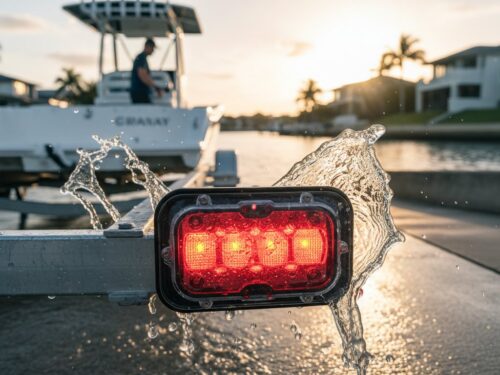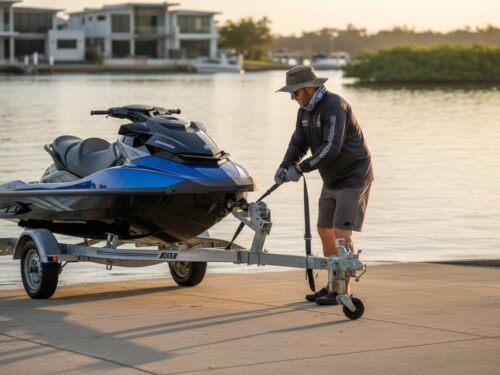
You’ve just backed your boat trailer into the salt at a local ramp, but before you even reach the highway, your left indicator has failed due to water ingress. It is a frustrating reality for many owners of the 2.9 million registered trailers in Australia, where faulty lighting remains a primary cause for roadside safety fines. You need gear that works the first time and survives the harshest conditions our coastline throws at it.
We will show you how to identify genuine marine-grade trailer lights that meet Australian Design Rules (ADR) and withstand total submersion. You will learn how to interpret complex wiring configurations and implement a reliable maintenance schedule to prevent terminal corrosion. This resource breaks down the selection process for heavy-duty LEDs and provides a logical, five-point troubleshooting sequence to ensure your trailer stays road-legal. We focus on durable, galvanised solutions that keep you moving without the risk of a A$150 infringement notice.
Key Takeaways
- Switch to high-efficiency LED technology to improve visibility and ensure long-term reliability in harsh environments.
- Stay road-legal by adhering to Australian Design Rules (ADR 13/00) for mandatory amber and red trailer lights configurations.
- Protect your equipment with marine-grade submersible units designed to withstand salt water pressure and seal failure at the boat ramp.
- Identify and fix common wiring faults like flickering or dimming by maintaining a clean, dry connection at the trailer plug.
- Select heavy-duty, UV-stabilized components to prevent housing degradation and avoid the cost of frequent replacements or fines.
Understanding Trailer Light Types and Technologies
Trailer lights function as an integrated safety system designed for signal clarity and vehicle visibility. This system ensures your intentions are clear to other road users, reducing the risk of rear-end collisions. Reliability is the primary requirement for any towing setup. The foundational principles of Automotive lighting apply here, but trailer environments are often more demanding than standard vehicle mounts. Most modern trailers have moved away from traditional glass-and-filament bulbs. High-efficiency LED technology is now the industry standard for trailer lights across Australia. These units handle the constant vibration of corrugated tracks and unsealed roads without failing. They provide a crisp, instant light that improves reaction times for following drivers by roughly 200 milliseconds compared to older tech.
Australian owners face unique challenges. Corrugated outback roads destroy standard filaments in hours. Heavy-duty LED housings use solid-state electronics that lack fragile parts. This makes them immune to the physical shock that kills traditional bulbs. Our focus remains on these resilient designs to ensure your gear stays on the road. Marine environments demand even higher standards. Saltwater ingress causes immediate electrolytic corrosion in unsealed units. Look for lamps with an IP67 or IP68 rating. These units are often fully potted with resin to keep moisture away from the circuit board. This level of protection is essential for boat trailers that experience frequent submersion.
LED vs. Incandescent Trailer Lamps
Performance differences between these two technologies are stark. A standard incandescent bulb typically lasts 1,000 hours before the filament breaks. In contrast, heavy-duty LED units offer a lifespan of 50,000 hours. This longevity makes them a fit-and-forget solution for most owners. Power consumption is another critical factor. LEDs draw up to 85% less current than traditional bulbs. A typical LED stop light draws about 0.2 amps, while an incandescent version requires 2.1 amps. This lower draw reduces the load on your vehicle’s alternator and prevents overheating in older wiring looms. LEDs also generate minimal heat. This prevents lens cracking when a hot lamp hits cold water at a boat ramp.
Combination Lamps and Multi-Function Units
Space is often limited on narrow utility trailers or jet ski setups. Combination lamps solve this by housing multiple signals in a single heavy-duty unit. A standard 3-function lamp includes stop, tail, and indicator lights. Higher-specification 5-function units add a reverse light and a built-in reflector. Some models also include an integrated license plate light on the underside. This eliminates the need for extra wiring runs and separate mounting brackets. Using these multi-function units simplifies the installation process and reduces potential failure points. Every connection is a potential source of corrosion; fewer components lead to a more reliable electrical system.
Australian regulations require specific visibility angles and light intensities. All trailer lights sold by reputable suppliers must meet these ADR standards to remain road legal. Choosing the right unit depends on your trailer width and the specific environment, such as marine or heavy-duty industrial use. Competitive pricing doesn’t mean sacrificing quality. We provide expert advice to help you choose between individual component lights and integrated units. Individual components allow for easier replacement if one lens is damaged. However, integrated units offer a cleaner look and faster mounting. Most professional fleet managers prefer the simplicity of the 5-function combination lamp for its streamlined maintenance profile. We are Australian owned and operated, providing parts that stand up to local conditions.
Australian Design Rules (ADR) and Legal Requirements
Every trailer on Australian roads must comply with the Australian Design Rule (ADR) 13/00. This technical standard dictates the installation and performance of lighting and light-signalling devices. Compliance isn’t a suggestion; it’s a legal obligation that ensures road safety for everyone. If your trailer lights don’t meet these specific requirements, you risk heavy fines, insurance claim rejections, or a grounded vehicle after a roadside inspection. The rules are rigid because they provide a universal language for drivers. When a following driver sees an amber flash, they know exactly what’s happening. Using the wrong colors or poor-quality housings disrupts this safety system.
Mandatory light colors are strictly defined by law. Your indicators must produce an amber light to signal turns. Stop lights and tail lights must always be red. These colors remain consistent across all states and territories to prevent confusion. Visibility is the next hurdle. Australian law requires that your lights are visible from specific angles to account for varying driver heights and positions. Specifically, rear lights must be visible 15 degrees above and below the horizontal axis. They must also be visible 45 degrees to the left and right. If your trailer frame or a load obstructs these angles, you’re operating outside the law. For a detailed breakdown of these standards, refer to the Australian trailer lighting regulations to verify your current setup.
You must look for the “E” mark or an ADR compliance stamp on every light assembly you buy. This mark is proof that the component passed laboratory testing for brightness, color consistency, and durability. Cheap, unbranded lights often fail these tests and won’t stand up to the vibrations of a corrugated road. Professional fleet managers prioritize these stamps because they guarantee the product meets the minimum luminous intensity required for daytime visibility. Using non-compliant gear is a liability you can’t afford. High-quality, ADR-approved LED trailer lights provide the best protection against both electrical failure and legal trouble. These units are built to endure the 40-degree heat and salt-heavy coastal environments common across the country.
Mandatory Light Placement and Spacing
Tail lights must be mounted between 350mm and 1500mm from the ground. They need to be positioned within 400mm of the trailer’s extreme rear edge. If your trailer is over 6 meters long, you must install side marker lamps. These markers should be spaced no more than 3 meters apart to define the vehicle’s length to other drivers at night.
Reflectors and License Plate Illumination
Standard trailers require two red, non-triangular reflectors at the rear. Triangular reflectors are generally reserved for heavy vehicle combinations and can lead to a defect notice on a standard trailer. You also need a dedicated white light for the registration plate. This light must make the plate readable from a distance of 20 meters. Trailers wider than 1.6 meters also require white front position lamps.

Marine and Submersible Lights for Boat Trailers
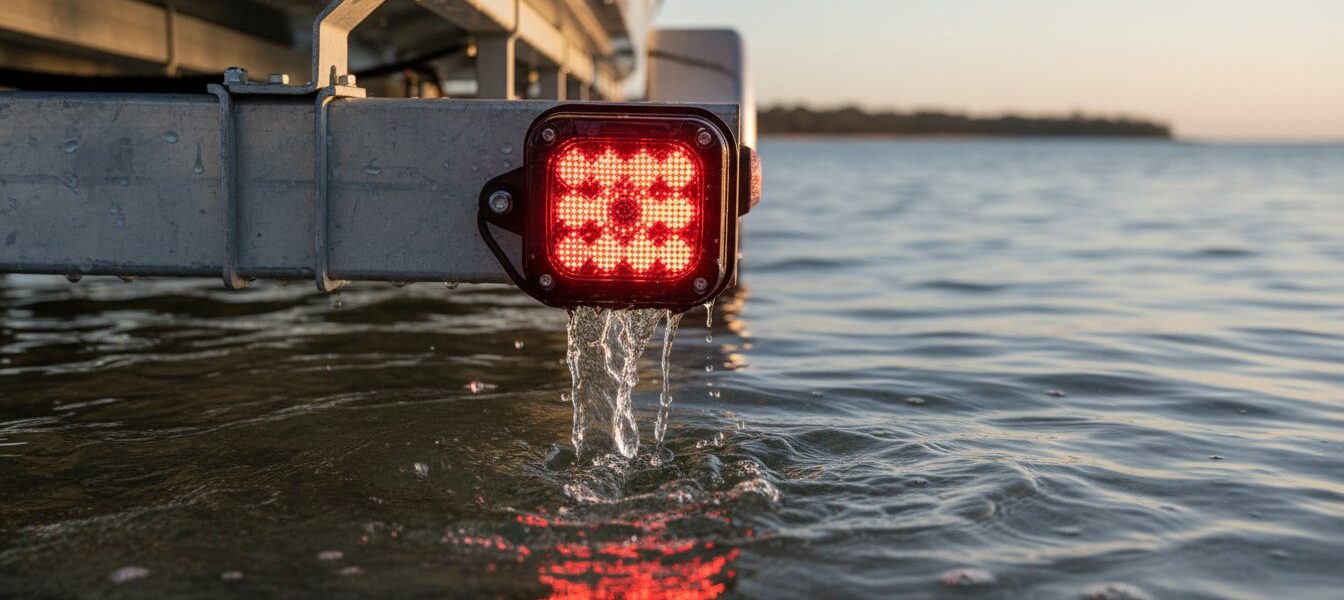
Submerging a trailer into salt water is the most demanding environment for any electrical system. Salt water is approximately 100 times more conductive than fresh water. This high conductivity causes immediate short circuits if even a single drop of moisture penetrates the light housing. Standard trailer lights often labeled as “waterproof” are designed to withstand heavy rain or road spray; they are not built for the hydrostatic pressure of a boat ramp. Reversing a warm light into cold water causes the internal air to contract. This creates a vacuum that sucks water through the seals or along the wiring harness.
Corrosion is the second major threat to your electrical system. Standard copper wiring is prone to “green rot,” where salt air and moisture travel up the wire through capillary action. This oxidation can destroy an entire harness within 12 months. Superior marine-grade lights use tinned copper wiring. Each individual strand of copper is coated in tin to resist chemical reactions. This ensures your 12V system remains reliable in harsh coastal conditions. To keep your rig compliant and safe, ensure your setup adheres to the Australian Design Rule 13/00 for lighting installation and visibility.
Decoding IP Ratings for Marine Use
Understanding Ingress Protection (IP) ratings is vital for component longevity. An IP67 rating means the light can withstand temporary immersion up to 1 metre for 30 minutes. While this sounds sufficient, the surge pressure of a moving trailer often exceeds these test parameters. IP68 is the gold standard for submersible trailer lights. This rating signifies the unit is dust-tight and protected against continuous submersion at depths over 1 metre. Manufacturers test these units by placing them under pressure for extended periods to ensure the seals hold. For boat trailers, always choose IP68 to avoid the “aquarium effect” inside your lenses.
Submersible Light Construction
The best marine lights use potted electronics. This involves filling the entire internal cavity with a specialized epoxy resin. This resin encases the circuit board and LEDs, making it physically impossible for water to touch the electrical components. Even if the outer lens cracks, the light will continue to function. Ultrasonic welding is another critical feature. It uses high-frequency vibrations to fuse the lens and housing into a single, seamless piece of plastic. This is far more reliable than traditional glue or rubber gaskets which perish over time in the Australian sun.
Lens material matters for long-term durability. Polycarbonate lenses offer 250 times the impact resistance of glass and are significantly tougher than standard acrylic. They won’t shatter when hit by road debris or during a bumpy launch. Maintenance is still required regardless of the build quality. Always rinse your lights and connectors with fresh water after every salt water launch. This simple 5-minute task prevents salt crystals from building up and eating through the seals, potentially saving you A$180 in replacement costs. If you need to upgrade your current setup, browse our range of heavy-duty boat trailer parts to find components built for Australian conditions.
Troubleshooting and Trailer Wiring Maintenance
Electrical faults in trailer lights usually follow predictable patterns that you can diagnose with a systematic approach. Flickering often indicates a loose connection or a wire vibrating against the chassis. Dimming suggests high resistance; this is frequently caused by undersized cables or heavy corrosion at the terminals. Total failure typically stems from a disconnected plug, a blown fuse in the tow vehicle, or a broken main earth. You must keep the connection point between the vehicle and trailer clean. Road grime, salt, and moisture create a conductive path that leads to short circuits and rapid terminal decay.
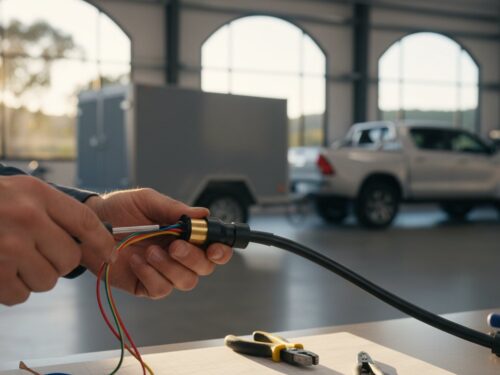
Don’t rely on visual inspections alone. You need a basic diagnostic kit to find hidden breaks. A 12V test light is the fastest tool for checking power at the plug pins. For more precision, use a digital multimeter to measure voltage drop across long cable runs. Carry wire strippers, a crimping tool, and heat-shrink connectors for field repairs. If your existing harness shows signs of brittle insulation or multiple patches, it’s safer to replace the entire run. You can source high-quality trailer parts and replacement wiring looms to restore your system to factory standards.
Reliable performance from your trailer lights starts with the physical integrity of the copper. In the harsh Australian climate, 90% humidity or coastal salt spray can oxidise unprotected wiring in months. Inspect the entire length of the loom for sagging sections that might snag on debris. Secure loose wires using UV-stabilised cable ties every 300mm along the frame. This prevents mechanical stress on the solder joints and terminals, which are the most vulnerable points in any mobile electrical circuit.
Solving Earthing Problems
The earth circuit accounts for roughly 85% of trailer electrical failures. Many older trailers rely on the hitch ball for a ground connection, but this is unreliable and dangerous. You must run a dedicated white earth wire to a clean, bare metal point on the trailer frame. Secure this wire with a stainless steel bolt and an internal-tooth star washer to bite through paint. If your test light flickers when touched to the chassis, your ground is insufficient.
Trailer Plug and Socket Care
Standard 7-pin plugs handle basic lighting, while 12-pin configurations provide extra capacity for electric brakes and fridge power. Ensure the physical fit is tight; loose pins cause arcing and heat damage. Apply dielectric grease to every terminal to block moisture and prevent green copper corrosion. When wiring a replacement, follow the Australian standard colour code precisely. Pin 3 is always the dedicated earth. Cross-circuiting can trigger fault codes in modern tow vehicle ECUs.
Maintain your equipment to avoid roadside fines and safety risks. If your current setup is beyond simple repair, upgrade to components designed for Australian conditions.
Selecting Quality Components for Long-Term Performance
Buying cheap components is a false economy. A generic A$15 light unit often lacks proper internal sealing, which leads to terminal corrosion within 12 weeks of coastal use. Replacing these units twice a year costs more in labor and downtime than a single heavy-duty purchase. Roadside fines for faulty trailer lights in states like Queensland can exceed A$130 per infringement. Investing in high-grade equipment ensures your trailer remains visible and legal at all times.
Housing materials determine the lifespan of your lighting system. Standard plastics degrade quickly under the Australian sun, where UV index levels regularly hit 11 or higher. Low-grade covers become brittle and yellow within 18 months. You should look for UV-stabilized polycarbonate or die-cast aluminium. Polycarbonate offers 5 times the impact resistance of standard acrylic, preventing cracks from stone chips on unsealed roads. Metal housings provide superior heat dissipation for the internal circuitry, which is vital when operating in 40-degree Celsius ambient temperatures.
Sourcing parts from a specialist Australian-owned supplier offers a distinct advantage. Local experts understand the specific challenges of the domestic landscape, from extreme heat to corrosive salt air. Overseas retailers often sell products that fail Australian Design Rule (ADR) compliance. If you use non-compliant lights, you risk voiding your insurance policy after an accident. If you aren’t sure which component fits your specific harness, contact us for expert technical advice before you buy.
Heavy-Duty Lighting for Work Trailers
Commercial box trailers endure constant vibration and physical impact. You need to protect your trailer lights by mounting them within recessed channels or using steel light guards. A 10mm steel barrier prevents lens damage during forklift loading or tight reversing maneuvers. Upgrading to high-output LEDs is a smart move for any work vehicle. These units provide 30% better visibility in direct sunlight compared to traditional incandescent bulbs. They also feature a 100,000-hour lifespan, meaning you won’t waste time changing blown globes on the job site.
Superior Trailer Parts Value Proposition
Our commitment is simple: we provide ADR-compliant, heavy-duty lighting solutions that don’t quit. Every product in our range is tested to meet strict Australian standards for brightness and durability. We operate from our Queensland warehouse, offering reliable nationwide shipping. Most customers receive their orders within 3 to 5 business days. We don’t just sell parts; we provide components designed for the harsh Australian environment. Our team knows exactly what works for local conditions, ensuring you get a reliable fit at a competitive price.
Equip Your Trailer for Australian Road Conditions
Maintaining functional trailer lights is a critical safety requirement for every Australian road user. Adhering to ADR 13/00 standards ensures your vehicle remains visible and legal across all states. High-performance LED units offer a lifespan of 50,000 hours, significantly outlasting traditional bulbs while providing superior vibration resistance on corrugated roads. For marine applications, selecting components with an IP68 waterproof rating prevents salt-water corrosion and electrical failure during launching. Regular wiring inspections help you avoid common faults and potential fines that often exceed A$400. As an Australian Owned and Operated specialist, we supply heavy-duty parts built for the toughest environments. We offer Australia-Wide shipping on all parts and provide expert technical advice to ensure you get the right fit the first time. Our focus is on durability and reliable performance for professional contractors and weekend towers alike.
Shop our range of ADR-compliant LED trailer lights today
Get your trailer back on the road with components you can trust.
Frequently Asked Questions
Why are my trailer lights flickering when I drive?
Flickering is usually caused by a poor earth connection or a loose pin in the plug. Check the white wire for corrosion where it attaches to the trailer frame; a weak ground causes 80% of intermittent lighting failures on Australian roads. Ensure the pins on your 7-pin plug have a tight fit. Use a wire brush to clean the contact points to restore a reliable electrical flow.
Do I need LED lights for my boat trailer?
You should use submersible LED lights for any boat trailer to prevent water ingress and immediate bulb failure. Standard incandescent bulbs often shatter when hot glass hits cold water during launching. High-quality marine-grade LEDs feature epoxy potting to protect internal circuits from salt. They offer a life span of 50,000 hours compared to the 1,000 hours provided by traditional bulbs.
What is the legal color for trailer indicator lights in Australia?
Trailer indicator lights must be amber in Australia to comply with national safety standards. Red indicators are illegal on trailers and can lead to fines exceeding A$200 depending on your state. Your trailer lights must be clearly visible from 30 metres in normal daylight. Ensure the lenses are clean and free from fading to maintain this visibility and stay road legal.
Can I mix LED and incandescent lights on the same trailer?
You can mix them, but it’s not recommended because LEDs draw significantly less current than incandescent bulbs. This difference often causes modern vehicle computers to trigger bulb out dashboard warnings or hyper-flashing. If you mix units, you’ll likely need to install a load resistor or an LED-compatible flasher relay to balance the circuit. For the most reliable performance, replace all units with genuine LED kits.
How do I know if my trailer lights are ADR compliant?
Look for an E mark or a CRN (Component Registration Number) etched into the light lens. These markings prove the product meets Australian Design Rule 13/00 for lighting installation. Every light sold by Superior Trailer Parts undergoes rigorous testing to ensure it meets these heavy-duty standards. Non-compliant lights can void your insurance claim in the event of a rear-end collision, so always check for the stamp.
What is the difference between a 7-pin and a 12-pin trailer plug?
A 7-pin plug handles basic lighting functions like indicators, brakes, and tail lights. A 12-pin plug includes these same seven pins but adds five larger pins for high-current accessories. These extra pins support 35-amp loads for internal caravan lights, fridge power, or battery charging. Choose a heavy-duty 12-pin setup if you’re towing a modern caravan with an electric brake controller or an onboard battery system.
How do I prevent water from getting into my trailer lights?
Install IP68-rated submersible lights that feature a factory-sealed housing. Use heat-shrink connectors and tinned copper wiring to prevent wicking, where water travels inside the wire insulation. Apply a layer of dielectric grease to the plug terminals to repel moisture. This simple maintenance step reduces corrosion-related failures by 90% in harsh coastal environments.
Are side marker lights mandatory for all trailers?
Side markers are mandatory for any trailer exceeding 6 metres in length or 2.1 metres in width. These trailer lights must be amber at the front and red at the rear to indicate the vehicle’s footprint to other drivers. Even if your trailer is smaller, adding markers improves safety during night towing. Check your specific trailer dimensions to ensure you meet the ADR requirements for your setup.