Last Saturday, a Queensland boat owner discovered that a single rusted A$45 bearing kit can turn a weekend trip into an A$1,500 roadside recovery bill. It’s a common story for many of the 700,000 registered trailer owners across Australia. You understand that regular maintenance keeps you safe, but the frustration of ordering the wrong axle size or a mismatched hub pattern often leads to unnecessary downtime. Finding the right trailer parts shouldn’t be a gamble against saltwater corrosion or confusing GTM regulations.
We’re here to help you get it right the first time. This resource provides expert advice on selecting heavy-duty components designed for harsh Australian conditions, ensuring your setup remains road-legal and reliable. We’ll examine how to verify technical specifications for hubs and brakes, the benefits of high-quality galvanised finishes, and how to meet specific compliance standards for different weight ratings. You’ll get the practical information needed to finish the job and get back on the road fast.
Key Takeaways
- Master Australian Design Rules (ADR) to ensure your towing setup meets all local safety and compliance standards.
- Compare round and square axle profiles to choose a structural foundation built for heavy-duty Australian conditions.
- Select the right trailer parts for braking systems over 750kg GTM, balancing mechanical simplicity with electric performance.
- Source marine-grade rollers and galvanised spares to prevent saltwater corrosion on boat and jet ski trailers.
- Implement a routine maintenance schedule to identify failing wheel bearings and worn components before they lead to costly repairs.
Understanding Essential Trailer Components and Compliance
Safe towing relies on the integrity of your running gear. This category includes axles, hubs, bearings, and suspension systems that support the weight of your load. These trailer parts must endure constant vibration and road impact. In Australia, all trailers must comply with the Australian Design Rules (ADR). Specifically, ADR 62/02 dictates the standards for mechanical connections between vehicles. Every component you install must meet these safety regulations to remain road legal. Failure to comply results in fines or insurance claim rejections during an accident.
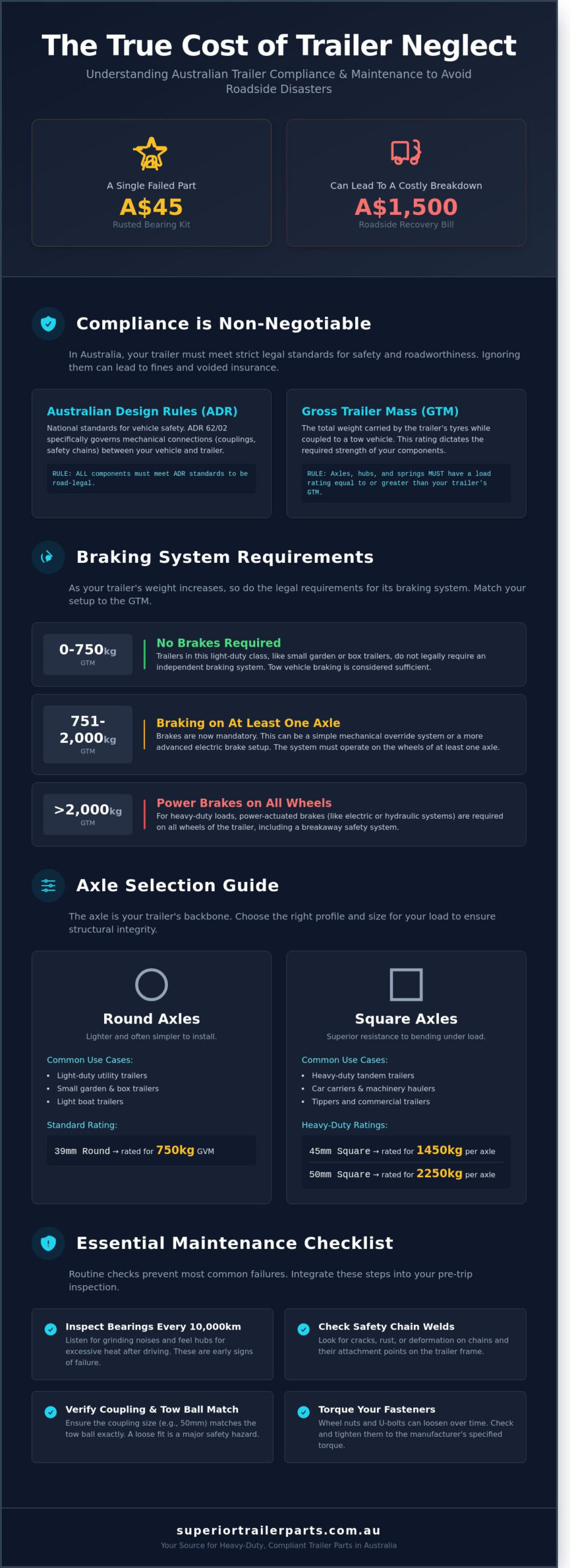
You must match component ratings to the Gross Trailer Mass (GTM). The GTM represents the weight transmitted to the ground by the trailer tyres when coupled to a towing vehicle. If your trailer has a 2,000kg GTM, your axles and springs must support at least 2,000kg. Using a detailed Trailer Components Overview helps identify the specific requirements for couplings and braking systems required by law. Always check the load rating stamped on the component before installation.
Durability is a priority in the harsh Australian climate. Galvanised steel is the industry standard for longevity. Hot-dip galvanising creates a metallurgical bond that protects steel from corrosion for decades. Marine-grade materials are mandatory for boat trailers. These parts feature specialized seals and coatings to resist salt water damage. Choosing high-quality materials reduces maintenance costs over the life of the vehicle.
Identifying Your Trailer Type and Load Rating
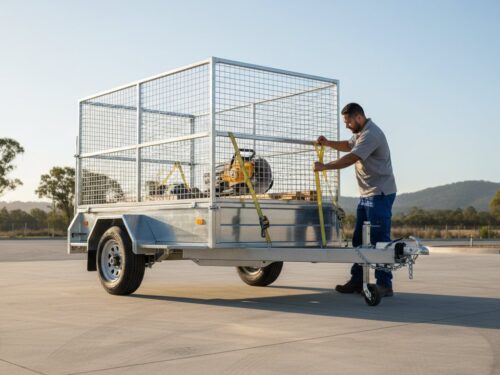
Trailer configurations determine how you select replacement trailer parts. Single axle trailers are common for light loads up to 750kg GTM. These usually don’t require independent braking systems. Tandem axle setups provide better stability and higher weight capacities. If your load exceeds 2,000kg GTM, Australian law requires power-actuated brakes on all wheels. Calculate your capacity by subtracting the tare weight from the Aggregate Trailer Mass (ATM). A standard 7×4 box trailer often has a 750kg ATM, while heavy-duty hydraulic tippers can reach 3,500kg. Always verify your trailer category before ordering hardware.
The Role of Quality Hardware in Towing Safety
Cheap components often lead to roadside failures. A snapped shackle or a seized bearing can cause a total loss of control at highway speeds. Australian-owned companies test their gear in local conditions to ensure they handle corrugated roads and high temperatures. Look for trust markers like genuine load ratings and heavy-duty construction. High-quality hardware uses Grade 70 safety chains and cast-iron hubs for maximum resilience. Follow these steps to ensure safety:
- Inspect bearings for heat or noise every 10,000km.
- Check safety chain welds for cracks or deformation.
- Verify that the coupling matches the tow ball size exactly.
- Ensure all fasteners are tightened to the correct torque specifications.
Buying reliable gear saves money. Professional fleet managers avoid budget imports because the downtime costs more than the initial part. Stick to proven brands that offer expert advice and Australia-wide support. This approach ensures your trailer stays on the road and performs under pressure. Get the job done right the first time by choosing components built for the task.
Selecting Running Gear: Axles and Suspension Systems
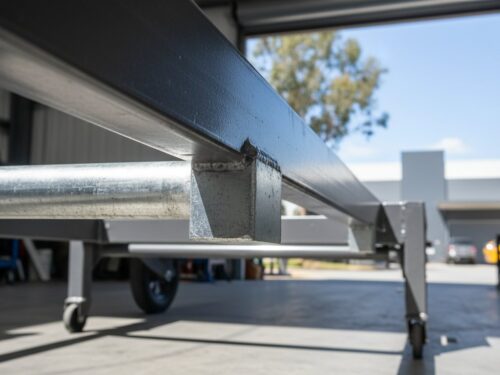
The axle acts as the structural foundation of your trailer. It carries the entire load and maintains wheel alignment while you’re on the move. Choosing between a round or square axle profile depends on your specific application. Round axles are typically lighter and easier to install for standard utility trailers. Square axles provide a flat surface that simplifies mounting and offers superior resistance to bending under heavy loads. This structural rigidity is essential when hauling machinery or heavy materials over rough terrain.
To replace your axle accurately, you need two critical measurements. First, measure the Hub Face to Hub Face distance. This is the length between the flat surfaces where the wheel studs sit. Second, determine the Spring Centre distance. This is the measurement between the centres of the spring seats. Getting these numbers right prevents tyre scrub and frame interference. Even a 10mm error can lead to significant tracking issues on the highway.
Matching Axle Size to Your Trailers Weight
Selecting the right trailer parts starts with understanding your weight requirements. 39mm round axles are the industry standard for light-duty 750kg GVM setups. They’re reliable for small garden trailers or light boat trailers. When moving to heavy-duty tandem trailers, 45mm and 50mm square axles are required. A 45mm square axle is rated for 1450kg, while 50mm square axles handle up to 2250kg per axle. You can find a range of heavy-duty axle products designed for Australian conditions that meet these strict load ratings.
Choosing the Right Leaf Springs
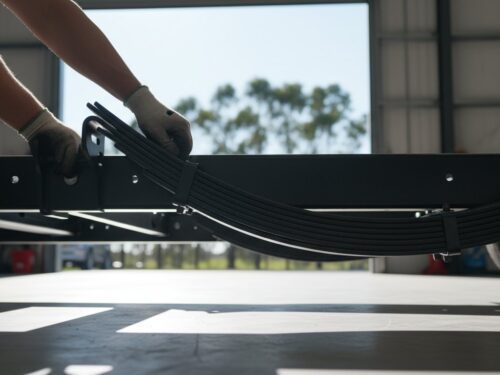
Suspension absorbs road shock and protects your cargo from damage. Slipper springs are common for single axles because they’re durable and low maintenance. Eye-to-eye sets offer better movement for a smoother ride. Choosing between 4 leaf and 5 leaf configurations depends on your load requirements. A 5 leaf spring provides the stiffness needed for 1500kg ratings. For tandem setups, rocker roller spring sets are the best choice. They allow the axles to move independently, ensuring even weight distribution across all four wheels. Check our selection of leaf springs to ensure your trailer handles correctly under load.
Securing the Load with U-Bolts
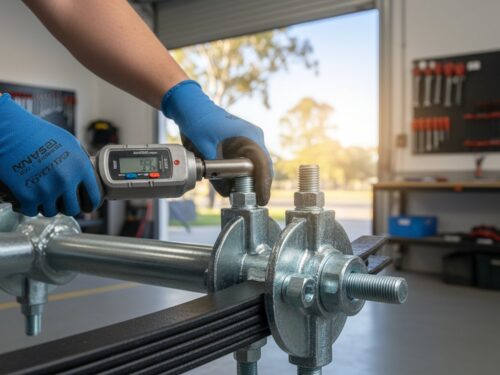
These small components are critical for axle security. Always choose galvanised U-bolts to prevent corrosion, especially if you’re near the coast or using a boat trailer. Proper torque is essential for safety. Loose bolts lead to axle shift, while over-tightened bolts can snap under pressure. While local standards are the priority, referencing international benchmarks like the Federal Coupling and Towing Regulations highlights the importance of structural integrity in all running gear components. Using high-quality U-bolt kits ensures your running gear stays locked in place. Don’t reuse old bolts; they stretch once torqued and won’t provide the same grip a second time.
If you’re unsure which trailer parts are right for your specific ATM, contact our expert team for technical advice and reliable solutions.
Braking Systems and Couplings: Safety Requirements
Safety on Australian roads starts with the right braking setup. Any trailer with a Gross Trailer Mass (GTM) over 750kg must have an efficient braking system installed. Once you hit the 2,000kg GTM threshold, the law requires brakes on all wheels and a breakaway system. This setup prevents catastrophic accidents if the trailer disconnects from the tow vehicle. You need high-quality trailer parts to meet these standards. Following NHTSA Trailer Safety Regulations and local Australian Design Rules (ADR) 38/05 ensures your equipment remains compliant and safe for heavy-duty use. Failure to comply can result in heavy fines or voided insurance claims after an incident.
Electric vs Mechanical Braking Solutions
Mechanical drum brakes rely on a straightforward cable-pull system. They’re cost-effective for trailers between 750kg and 2,000kg GTM. A 9 inch mechanical setup provides reliable stopping power without complex wiring. Electric brakes offer more precision. Most 10 inch electric brakes allow the driver to adjust braking force from the cabin. This is essential for varying loads. Check your brake magnets for uneven wear every 5,000 kilometres. Replace brake shoes when the lining thickness drops below 1.5mm. Use marine-grade grease on moving parts to fight corrosion.
Coupling Types and Fitment
The coupling connects your trailer to the tow ball. It must match your trailer’s ATM (Aggregate Trailer Mass). Standard 2 hole and 3 hole fixed couplings suit trailers under 750kg where brakes aren’t required. For trailers between 750kg and 2,000kg, use a 4 hole over-ride coupling. This unit uses the trailer’s own momentum to compress a master cylinder or pull a cable. You can find a range of heavy-duty couplings and parts designed for Australian conditions. Ensure the bolt pattern matches your drawbar to maintain structural integrity.
Stability is the final piece of the puzzle. A heavy trailer can lift the front wheels of your tow vehicle, reducing steering control and braking efficiency. Weight distribution hitches (WDH) use spring bars to level the load across all axles. This prevents the “sag” often seen in heavy caravans or car trailers. A properly tensioned WDH reduces trailer sway by 25% to 40% in high winds. It’s a necessary investment for anyone hauling over 2,500kg. Using genuine trailer parts for your hitch assembly ensures the locking pins and bars won’t shear under stress. Always check that your tow ball is a standard 50mm Australian size before hitching up.
Regular maintenance of these systems is non-negotiable. Inspect your coupling’s internal spring and locking handle for play every six months. Zinc-plated or galvanised finishes are preferred for trailers exposed to salt water or heavy rain to prevent seizing. Tighten all mounting bolts to the manufacturer’s specified torque, usually around 90Nm for standard Grade 8 bolts. Keeping these components in top condition ensures your trailer remains a reliable tool rather than a road hazard. If you notice any clicking sounds or delayed braking response, pull over and inspect the system immediately.
Specialized Spares for Boat and Jet Ski Trailers
Saltwater is the most aggressive environment any piece of machinery can face. Within 48 hours of exposure, salt crystals begin to form and corrode untreated steel. Sourcing the right trailer parts for marine use requires a focus on high-grade galvanisation and corrosion resistance. Most standard trailers use a 45-micron zinc coating, but marine-grade components should feature hot-dipped galvanisation with a thickness of at least 85 microns. This extra layer provides a sacrificial barrier that extends the life of your chassis and axle components by 5 to 10 years compared to standard finishes.
Optimizing Your Boat Trailer Setup
The choice between polyurethane and rubber rollers impacts both your hull and your effort at the boat ramp. Poly rollers are 3 times harder than rubber and don’t split or flat-spot over time. They’re the industry standard for fiberglass hulls because they offer a low-friction surface that allows the boat to slide off with minimal force. Rubber rollers are softer and provide better grip for aluminum boats, but they leave black scuff marks that are difficult to remove.
Wobble rollers are essential for larger vessels as they pivot to match the hull’s shape, distributing weight across 12 to 24 points of contact. This prevents hull deformation during long hauls on rough Australian roads. Your winch setup also needs to match your boat’s dry weight. For boats exceeding 1,200kg, a manual winch with a 10:1 or 15:1 gear ratio is necessary. This mechanical advantage reduces the physical strain of retrieval, making it a one-person job. You can find these heavy-duty components in our range of boat trailer parts.
Marine Electrical and Lighting
Electrical failure is the leading cause of trailer breakdowns in Australia, with 70% of issues stemming from saltwater ingress into the wiring loom. Traditional bulb-based lights rely on gaskets that eventually perish. Upgrading to LED submersible tail lights is a non-negotiable step for any serious boatie. These units are vacuum-sealed and carry an IP68 rating, meaning they’re dust-tight and protected against continuous submersion in water deeper than 1 metre.
Protection doesn’t stop at the light housing. You must use tinned copper wiring rather than standard bare copper. Saltwater travels up standard wire through capillary action, a process called "wicking," which turns the internal wire black and brittle within months. Tinned wire resists this oxidation, ensuring your indicators and brake lights work every time you hit the road. For those managing smaller watercraft, specialized setups for jet ski trailers often require shorter wiring looms and compact LED units to fit narrower frames.
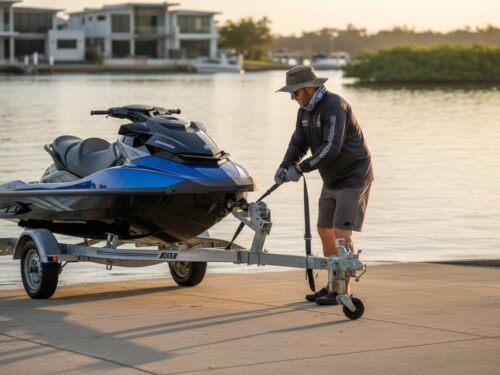
Customizing your setup for single or dual jet skis involves more than just frame width. A dual jet ski trailer carries roughly 800kg to 1,000kg, requiring a 1,200kg rated axle and 13-inch wheels to handle the load. Proper weight distribution is key; ensure 10% of the total trailer weight sits on the tow ball to prevent dangerous swaying at highway speeds. Using high-quality trailer parts ensures your weekend isn’t cut short by preventable mechanical failure.
Trailer Maintenance and Sourcing Reliable Spares
Trailers endure harsh conditions on Australian roads. Dust, salt water, and heavy loads take a toll on every component. Regular maintenance prevents roadside breakdowns and ensures your load remains secure. It’s a matter of safety and protecting your investment. A trailer that sits idle for six months often develops more issues than one used daily. Seized bearings and perished tyres are common problems for occasional users. You need a proactive approach to keep your equipment roadworthy and reliable.
DIY Maintenance Checklist
Effective maintenance starts with a systematic approach. Inspect your trailer every 5,000 kilometres or before any long haul. Focus on these critical areas to keep your gear moving safely.
- Wheel Bearings: Jack up the trailer and spin each wheel. Listen for grinding noises. Wobble the wheel from top to bottom. If there’s more than 2mm of movement, your bearings need adjustment or replacement. Use high-quality marine-grade grease for boat trailers to prevent water ingress.
- Leaf Springs: Look for cracks in the individual leaves. Check for flattened springs that reduce ground clearance. Rusty “bleeding” between leaves indicates friction and wear. Replace any spring that shows signs of stress or sagging to prevent axle misalignment. For single axle trailers requiring reliable load distribution, 4 leaf slipper springs provide the durability needed for Australian conditions.
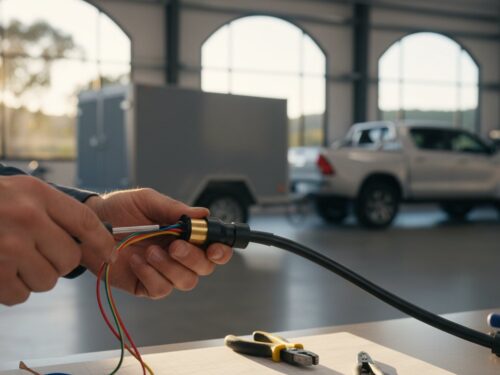
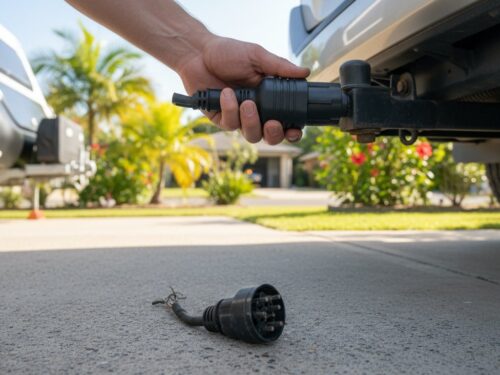
- Lighting and Electrics: Test your 7-pin or 12-pin plug for corrosion. Clean the terminals with a wire brush or contact cleaner. Ensure all LED or bulb-based lights function correctly. Faulty wiring accounts for approximately 40% of trailer-related road infringements in Australia.
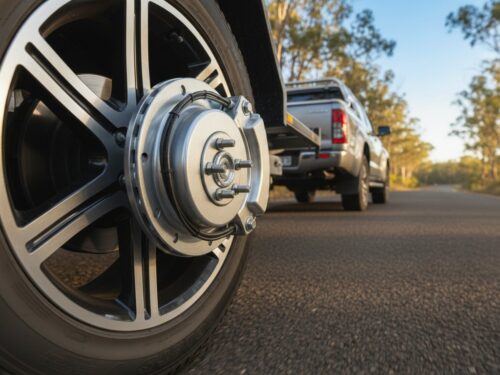
Identifying worn wheel bearings before they fail is a vital skill for any owner. Feel the hub assembly after a 20-minute drive. It should be warm, not hot. If a hub is too hot to touch, the bearing is likely failing. Excessive grease leaking from the rear seal is another warning sign. Don’t ignore these signals. A seized bearing can weld itself to the axle; this turns a simple repair into a costly recovery and axle replacement job. Check tyre pressures every 30 days. Maintain the PSI levels indicated on the tyre sidewall to prevent uneven wear and blowouts.
Where to Buy Quality Trailer Parts
Sourcing the right components shouldn’t be a guessing game. Buying from an Australian specialist ensures you get gear designed for our local environment and regulations. Our warehouse in Arundel, QLD, serves as a hub for professional grade equipment. You can walk in and speak with experts who understand technical specifications. We stock everything from galvanised axles to heavy-duty couplings. Seeing the products in person helps you verify the build quality and fitment before you start the job.
The principle of sourcing from dedicated Australian specialists extends beyond just mechanical parts. In highly technical fields like scientific research, for example, having access to high-purity laboratory supplies is just as critical for achieving reliable results. For those in the scientific community, you can discover Peak Haven, a provider of such specialized materials.
For those outside South East Queensland, we provide fast shipping across Australia. We ship 95% of orders within 24 hours to ensure your downtime is minimal. Whether you need a single shackle bolt or a full braking system, we deliver to remote and regional areas. You can browse our full range of trailer parts online to find exactly what you need. If you’re unsure about compatibility, contact us for technical support. Our team provides the expert advice required to get your trailer back in peak condition. We stand behind every product we sell with honest, no-nonsense service.
Keep Your Trailer Road-Ready and Compliant
Maintaining a safe tow requires components that meet strict ADR 62/02 standards. Choosing heavy-duty 45mm square axles or electric brakes rated for 3,500kg ATM ensures your vehicle handles the stress of Australian highways. Regular checks on your marine-grade galvanised hubs and leaf springs prevent small issues from turning into expensive roadside failures. Investing in premium trailer parts isn’t just about repairs; it’s about ensuring your equipment survives the salt, dust, and heat of the local environment. Our staff provides expert technical advice to help you identify the exact specifications required for your specific build or repair project.
We’re a 100% Australian owned and operated business committed to keeping your fleet moving. With nationwide shipping, we deliver the hardware you need directly to your door, no matter where you’re located. Don’t settle for gear that doesn’t measure up to the job at hand. Shop our range of high-quality trailer parts with Australia-wide shipping and get back to work with total confidence. Your next trip depends on the quality of your gear.
Frequently Asked Questions
What are the legal requirements for trailer brakes in Australia?
In Australia, you must fit brakes to any trailer with a Gross Trailer Mass (GTM) exceeding 750kg. For trailers between 751kg and 2,000kg, you can use over-run braking systems. Once the GTM exceeds 2,000kg, Australian Design Rule (ADR) 38/05 requires independent power-operated brakes on all wheels and a breakaway system that activates if the trailer disconnects.
How do I measure my trailer axle for a replacement?
Measure your trailer axle using two primary dimensions: the overall length and the hub face distance. Measure from the tip of one thread to the tip of the other for the total length. Then, measure from the flat surface where the wheel studs sit on one side to the same point on the opposite side to find the hub face measurement. This ensures your new trailer parts align with your chassis and wheel offsets.
Do I need a 7-pin or 12-pin trailer plug?
Choose a 7-pin plug for standard utility trailers that only require basic lighting like indicators, brakes, and tail lights. Upgrade to a 12-pin plug if you’re towing a caravan or heavy-duty trailer that needs high-current power for internal batteries or refrigerators. The 12-pin configuration includes five additional large pins capable of handling up to 30 amps each.
What is the difference between slipper springs and eye-to-eye springs?
Slipper springs feature a single eye at the front and a flat tail that slides through a rear hanger. They’re a cost-effective, durable choice for simple box trailers. Eye-to-eye springs have eyes at both ends and connect to the chassis via shackle bolts and plates. This design provides better suspension travel and a smoother ride for tandem axles or heavy-duty setups.
How often should I service my boat trailer wheel bearings?
Service your boat trailer wheel bearings every 6 months or 5,000 kilometres, whichever occurs first. Saltwater immersion causes rapid corrosion; check for grease contamination after every launch. Use marine-grade grease and consider installing bearing protectors to maintain internal pressure and keep water out of the assembly.
Can I use a 50mm coupling on a 2000kg trailer?
You can use a 50mm ball coupling on a 2,000kg trailer provided the component is specifically rated for that capacity. Check the casting for a stamped rating of 2,000kg or 3,500kg. If your trailer’s ATM hits exactly 2,000kg, ensure your coupling and safety chains meet the AS 4177.1 standard for heavy-duty towing.
Why are LED trailer lights better than bulb-based lights?
LED trailer lights are superior because they’re vibration-resistant and draw 80% less power than traditional bulbs. They feature sealed housings with an IP67 or IP68 waterproof rating, making them ideal for boat trailers. A standard LED light lasts up to 50,000 hours, whereas a filament bulb often fails after 1,000 hours due to road shock or water ingress.
What is GTM and why does it matter for parts selection?
Gross Trailer Mass (GTM) represents the maximum weight the trailer’s axles can carry when it’s hitched to a vehicle. It excludes the weight supported by the tow ball. Knowing your GTM is vital for selecting the correct trailer parts, such as axles, tyres, and leaf springs, to ensure they aren’t overloaded during transit.