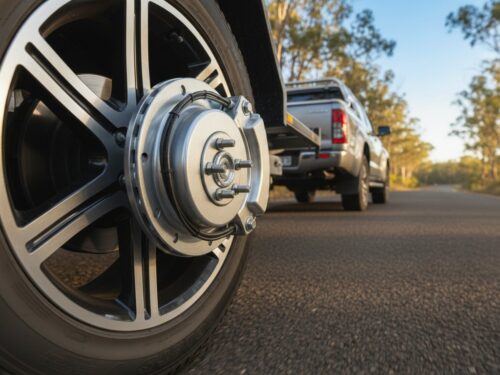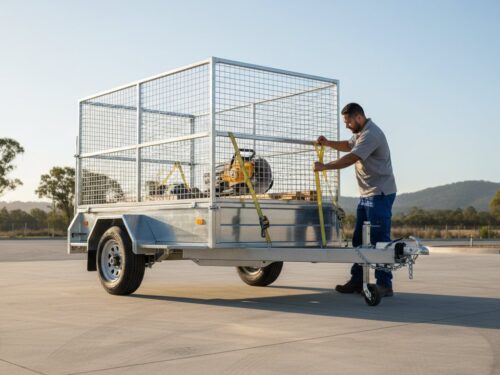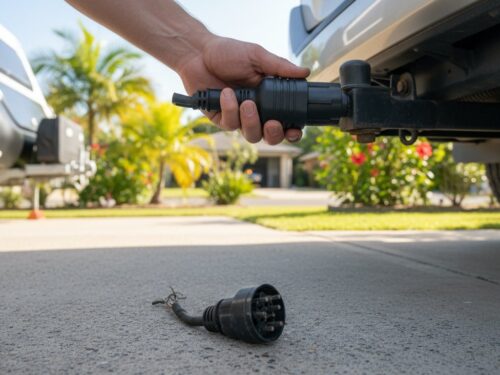
You’re miles from the nearest town, navigating a rough track, and the last thing you need is a catastrophic coupling failure. Hitching up on uneven ground is a struggle, and the confusion around legal ADR requirements only adds to the stress. For any serious 4WD adventure, your standard 50mm ball hitch is a weak link waiting to break. Choosing the right off road trailer coupling Australia-wide isn’t just an upgrade; it’s an essential safety requirement for protecting your investment and your family.
Of course, your coupling is just one part of a trail-ready rig. Ensuring your vehicle’s tyres and wheels are also up to the task is equally critical. For those preparing for adventures in Far North Queensland, the team at Tuff Tyres FNQ provides expert solutions for tough conditions.
This guide cuts through the noise. We get straight to the facts. You will learn the critical differences in articulation between models, how to select a fully ADR-compliant hitch that matches your trailer’s Gross Trailer Mass (GTM), and the simple maintenance required to keep your poly block coupling in prime condition. Master the technical requirements and ensure your trailer is equipped to handle Australia’s harshest terrain. Get the job done right and tow with complete confidence.
Key Takeaways
- Understand why a standard 50mm ball hitch is unsafe for the outback and the specific “binding” effect that leads to failure on rough terrain.
- Compare the main types of off road trailer coupling Australia offers, including poly block and drop-on styles, to correctly match the coupling to your trailer’s Gross Trailer Mass (GTM).
- Identify genuine ADR 62/02 compliant couplings and learn the key differences between a certified hitch and a dangerous, non-compliant import.
- Learn the correct installation procedure for an off-road coupling, including the critical importance of using high-tensile Grade 8.8 bolts for maximum security.
Why Standard 50mm Ball Hitches Fail in the Australian Outback
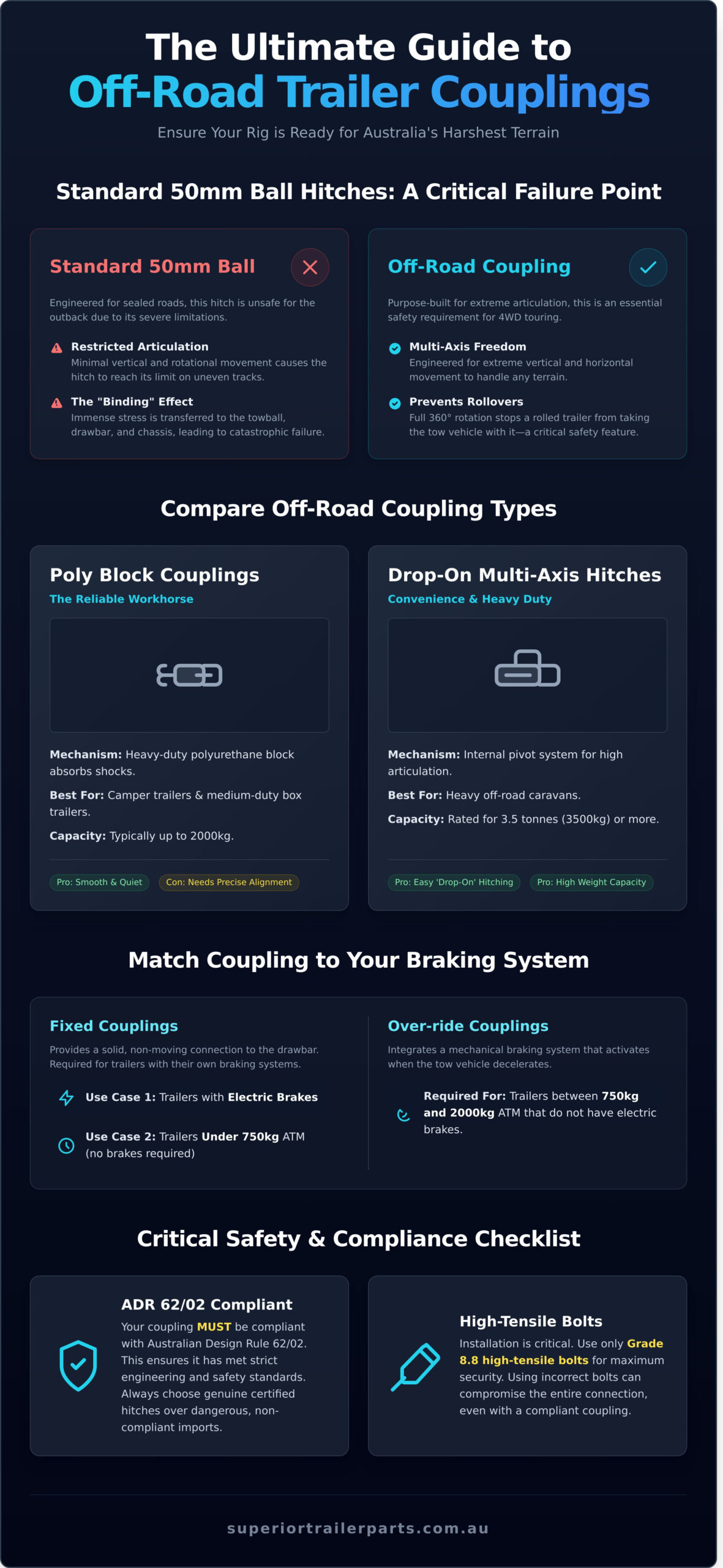
The standard 50mm ball hitch is a reliable workhorse for on-road towing. It is engineered for sealed roads and predictable inclines. However, its design has critical limitations that become dangerous in the rugged terrain of the Australian outback. The fundamental issue is a restricted range of motion. This limitation is a primary reason why a dedicated off road trailer coupling australia is not a luxury, but a necessity for serious 4WD touring.
Standard ball hitches permit very little vertical and rotational movement. When traversing a steep washout or a heavily rutted track, the hitch can reach its angular limit. This is known as “binding.” A bound hitch transfers immense stress directly to the towball shank, the trailer drawbar, and the vehicle’s chassis. The result is often a snapped towball or a bent drawbar, leaving you stranded miles from help. Furthermore, the constant, high-frequency vibrations from corrugated roads cause metal fatigue in the cast iron components common in standard hitches, leading to unexpected failure.
The Physics of Articulation
A genuine off-road coupling is a multi-axis hitch. It is engineered for extreme articulation to keep your rig safe. This includes:
- Vertical Articulation: Allows the trailer to handle steep entry and exit angles of dry creek beds and dunes without binding.
- Horizontal Rotation: Full 360-degree rotation is the industry standard. This prevents a rolled trailer from taking the tow vehicle with it, a critical safety feature on off-camber tracks.
Understanding the different tow hitch types and classes is crucial, but for Australian conditions, full articulation is non-negotiable.
The Cost of Failure in Remote Locations
A coupling failure in a remote area is more than an inconvenience; it’s a serious safety risk. A bound hitch can bend a vehicle’s chassis, causing thousands of dollars in structural damage. A snapped drawbar on a technical track makes recovery incredibly difficult and expensive. Standard recovery gear may not be sufficient, and professional help can be days away.
Many insurance policies for 4WDs and camper trailers also contain clauses regarding vehicle use. Using a standard on-road hitch in an aggressive off-road environment could be viewed as improper use, potentially voiding a claim in the event of an accident. Investing in a purpose-built off road trailer coupling is a small price to pay for safety, reliability, and peace of mind.
Types of Off-Road Trailer Couplings Available in Australia
When you need a reliable off road trailer coupling, Australia presents a few core designs to choose from. The right choice depends on your trailer’s weight, your vehicle’s tow bar, and the terrain you plan to tackle. It is critical to match your coupling’s weight rating to your trailer’s Gross Trailer Mass (GTM). All couplings sold here must also meet the strict engineering standards outlined in the Australian Design Rule 62/02 for legal road use. At Superior Trailer Parts, we specialize in high-durability poly block and fixed off-road solutions designed for these demanding conditions.
Poly Block Off-Road Couplings
The poly block coupling is a reliable workhorse. It uses a heavy-duty polyurethane block to absorb shocks and vibrations from corrugated roads, resulting in a quieter, smoother tow. The design features a simple pin and U-clip mechanism. While this is incredibly secure, it can require precise alignment, making solo hitching more challenging. They are an excellent, low-maintenance choice for camper trailers and medium-duty off-road box trailers up to 2000kg.
Drop-On Multi-Axis Hitches
For convenience and heavy-duty capacity, drop-on hitches are a popular choice. They function much like a standard 50mm ball coupling, allowing you to simply lower the hitch onto the receiver. Instead of an external poly block, these units use an internal pivot system to achieve high levels of articulation. This robust design makes them the go-to option for heavy off-road caravans, especially those rated for 3.5 tonnes (3500kg) or more.
Fixed vs. Over-ride Off-Road Options
Your trailer’s braking system determines whether you need a fixed or over-ride coupling. A proper setup ensures safe and compliant towing on any surface.
- Fixed Couplings: Used for trailers with electric brakes or those under 750kg ATM with no brakes. They provide a solid, non-moving connection to the drawbar.
- Over-ride Couplings: Integrate a mechanical braking system that activates when the tow vehicle decelerates. These are essential for trailers between 750kg and 2000kg ATM that don’t have electric brakes.
Always ensure you match the coupling’s mounting plate to your drawbar’s hole pattern, typically a 2-hole, 3-hole, or 4-hole configuration for a secure fit.
ADR Standards and Legal Requirements for Off-Road Towing
Choosing the right hardware is more than a matter of performance-it’s a legal requirement. In Australia, all mechanical connections between vehicles are governed by strict Australian Design Rules (ADRs). For towing, the key standard is ADR 62/02, which mandates minimum strength, testing, and marking requirements to ensure public safety. A failure on the road is not an option.
Any legal off road trailer coupling australia wide must comply with this standard. Genuine, compliant couplings are subjected to rigorous dynamic and static load testing. They are stamped with technical ratings like D-Value and V-Value, which are calculated values representing the coupling’s certified strength. Cheap, untested imports often lack these verified ratings, presenting a serious risk. Choosing an Australian owned and operated supplier means you are dealing with a business accountable to local laws and testing regimes, not an anonymous overseas seller.
Reading the Compliance Plate
A compliant coupling must be clearly marked with its specifications. This is your proof of legality and capacity. Look for these mandatory markings stamped directly onto the coupling body:
- Manufacturer’s Name or Trademark
- The Maximum Rating (e.g., 3500kg)
- ADR 62/02 Compliance Stamp
Towing with a non-rated, modified, or damaged coupling is illegal. In the event of an accident, it can void your insurance and lead to severe penalties. Remember, your coupling is part of a system. It must be paired with correctly rated safety chains and D-shackles to be fully compliant.
GTM vs. ATM: Calculating Your Load
The rating stamped on your coupling refers to the trailer’s Aggregate Trailer Mass (ATM)-its total weight when fully loaded. You must never exceed this rating. Off-road conditions introduce immense shock loads from bumps, dips, and corrugations, which place far greater stress on the coupling than smooth highway towing. For this reason, selecting a robust off road trailer coupling australia made for these conditions is critical.
For long-term durability, it is smart to choose a coupling with a capacity well above your trailer’s ATM. If your trailer has an ATM of 2200kg, fitting a heavy-duty 3500kg coupling provides a significant safety and endurance margin, ensuring it withstands the toughest tracks without fatigue or failure.
Installation and Maintenance: Surviving the Red Dust
A heavy-duty coupling is only as reliable as its installation. In the abrasive red dust and on punishing corrugated tracks, a poorly fitted hitch will fail. Proper fitting and routine maintenance are not optional; they are critical for safety and performance. Follow these steps for a secure, trail-ready setup.
Replacing your standard ball hitch is a straightforward job with the right tools. The process involves:
- Remove the Old Coupling: Unbolt and discard your old 50mm ball coupling and its hardware.
- Prepare the Mounting Surface: Thoroughly clean the trailer’s A-frame mounting plate. A clean, flat surface is essential for a secure fit.
- Position the New Coupling: Align the new coupling with the bolt holes. Before tightening, check for maximum clearance. Ensure your vehicle’s tailgate or rear door can open without obstruction, even at full articulation.
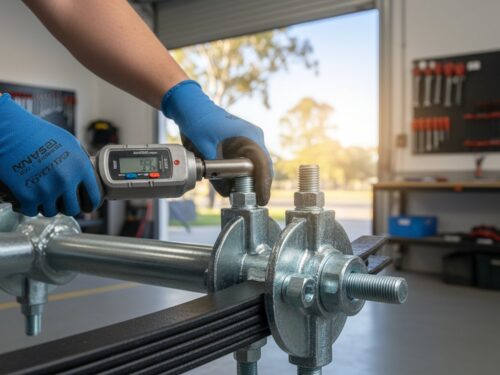
- Secure with Correct Hardware: Use new, high-tensile Grade 8.8 (or higher) bolts and matching nyloc nuts. This hardware is designed to resist intense vibration and shear forces. For any off road trailer coupling australia installation, using the correct fasteners is non-negotiable.
Maintenance Checklist for 4WDers
Regular maintenance prevents “hitch groan” and catastrophic failure. Add these checks to your pre-trip and post-trip routine.
- Clean Components: After every trip, wash dust and grit from poly blocks and articulation points. Fine outback dust acts like a grinding paste, accelerating wear.
- Lubricate as Required: Some couplings have grease nipples that require attention. Others are designed to run dry. Always consult the manufacturer’s guide to avoid attracting more dust.
- Inspect for Cracks: After long trips on rough tracks, carefully inspect all welds and castings for hairline stress fractures. Early detection prevents disaster.
Hitching Up on Uneven Ground
Connecting your trailer on an angled track is a common off-road challenge. These tips make it easier and safer.
- Solo Traveller Tips: Use your reversing camera’s grid lines for alignment. Alternatively, a simple guide stick or magnetic marker placed on the drawbar can help you line up perfectly on the first try.
- Manage Pin Alignment: On poly block hitches, use the jockey wheel to raise or lower the drawbar. This allows you to align the bolt holes precisely without physical strain.
- The Final Safety Check: Always physically check that the locking pin, latch, or cap is fully engaged. Listen for the audible ‘click’ and give the coupling a solid tug to confirm it is secure before you drive off.
Selecting the Best Off-Road Coupling for Your Next Adventure
Choosing the right off road trailer coupling in Australia comes down to where you plan to tow. For coastal adventures on Fraser Island or tracks involving frequent river crossings, a hot-dip galvanised coupling is non-negotiable for fighting corrosion. For the punishing dust and corrugations of desert routes like the Oodnadatta Track, a fully sealed, articulating hitch provides superior protection against grit and ensures maximum trailer mobility.
Equipping your rig for the destination goes beyond just the coupling. For expert guides on other essential gear like 4WD awnings, digital hubs like Adventurerz are an excellent resource for any serious tourer.
Your coupling is a critical safety component. Before you hit the tracks, run through this final checklist to ensure your setup is safe, legal, and prepared for the demands of the Australian outback.
- Rating: Your coupling’s Aggregate Trailer Mass (ATM) rating must meet or exceed your trailer’s fully loaded weight. Never compromise on capacity.
<li><strong>Compliance:</strong> Verify the coupling is ADR-approved and clearly stamped with its rating and manufacturer details. This is a legal requirement for towing on Australian roads.</li>

<li><strong>Condition:</strong> Before every major trip, inspect your hitch for cracks, excessive wear, and seizing. Ensure all moving parts are clean and correctly lubricated.</li>
Why Buy From Superior Trailer Parts?
As an Australian-owned and operated business based in Queensland, we understand local conditions. We provide expert advice and competitive pricing on a huge range of heavy-duty, marine-grade, and off-road components. With reliable national shipping, we deliver the best off road trailer coupling parts right to your workshop or door, no matter where your adventure starts.
Ready to Upgrade Your Hitch?
Find the right heavy-duty hitch for your trailer in our extensive range of poly block and off-road couplings. If you need expert advice on fitment or matching existing hole patterns, our team is ready to assist. Get your rig ready for any track and tow with complete confidence. Browse our ADR-Approved Off-Road Couplings today.
Secure Your Rig: The Right Coupling is Non-Negotiable
Your safety in the Australian bush hinges on the connection between your 4WD and trailer. A standard 50mm ball hitch cannot provide the articulation or strength needed for corrugated tracks and steep inclines. Choosing a dedicated off-road coupling that meets Australian Design Rules (ADR) is the only way to ensure a secure and legal towing setup. For any serious trip, selecting the right off road trailer coupling australia offers is your most important decision.
Don’t risk your adventure on inferior hardware. At Superior Trailer Parts, we supply heavy-duty, ADR 62/02 compliant couplings built to withstand the toughest conditions. As an Australian owned and operated business, we ship reliable parts nationwide from our Queensland base. Equip your rig correctly the first time. Shop Heavy-Duty Off-Road Couplings at Superior Trailer Parts and tackle the outback with complete confidence.
Frequently Asked Questions
Do I need a special towbar for an off-road coupling?
Most off-road couplings fit a standard 50mm tow ball mount receiver. However, the critical factor is clearance for articulation. Some hitches require a specific tongue or adapter to achieve full movement without fouling the vehicle’s bumper or rear door. Always check the coupling manufacturer’s specifications to ensure compatibility and uninhibited motion. Your towbar’s load rating must also exceed your trailer’s ATM.
Are poly block couplings noisy when towing on the highway?
A correctly maintained poly block coupling should be quiet. Noise like clunking or squeaking usually indicates a problem, such as a worn block, a loose pin, or a lack of lubrication. Regular inspection and greasing of the pin and other moving parts are essential for silent, reliable operation on and off the road. If noise persists, inspect the polyurethane block for excessive wear and replace it if needed.
Can I use an off-road coupling with a weight distribution hitch?
Compatibility depends entirely on the coupling’s design. Many modern articulating hitches, like the Cruisemaster DO35 or McHitch Automatic Coupler, are specifically engineered to work with weight distribution hitches (WDH). However, most traditional poly block couplings are not compatible, as a WDH can restrict their articulation. Always confirm WDH compatibility with the coupling manufacturer before installation to ensure safe operation.
How often should I replace the poly block in my hitch?
There is no fixed replacement schedule; it depends on usage and conditions. Inspect the polyurethane block before each major trip for signs of perishing, cracking, or significant deformation. If you notice excessive play or movement in the coupling when connected, the block is likely worn and requires immediate replacement. For heavy-duty use in harsh Australian conditions, consider replacing it every few years as preventative maintenance.
Is it legal to use a non-ADR approved hitch in Australia?
No, it is illegal and unsafe. All trailer components sold and used in Australia, including couplings, must comply with Australian Design Rules (ADR). Using a non-compliant hitch can void your vehicle and trailer insurance and lead to significant fines. When choosing an off road trailer coupling australia, always verify it has been tested and certified to meet the relevant ADR standards for your trailer’s Aggregate Trailer Mass (ATM).
What is the difference between a 2-hole and 4-hole coupling mount?
The difference lies in the bolt pattern and load capacity. A 2-hole mount is common for lighter trailers, typically those under 2000kg. A 4-hole mount uses four bolts to provide a stronger, more secure connection to the drawbar, making it the standard for heavier-duty off-road trailers and caravans. The bolt pattern on your trailer’s A-frame must match the coupling you choose. Always select a coupling rated for your trailer’s ATM.
Can I install an off-road coupling myself or do I need a mechanic?
Installation can be done by a mechanically competent person with the correct tools, including a torque wrench. The process involves unbolting the old unit and fitting the new one with new, high-tensile bolts torqued to the manufacturer’s specifications. However, this is a safety-critical component. If you have any doubt about the process, we strongly recommend professional installation by a qualified mechanic to ensure it is done correctly.
What happens if my off-road hitch gets clogged with mud or sand?
Mud, sand, and dirt can jam the locking mechanism, preventing it from engaging or disengaging correctly. This is a serious safety risk. Before hitching or unhitching, always inspect and clean the coupling head. Use a brush and water to remove all debris from moving parts and locking indicators. A quality off road trailer coupling australia is built for these conditions, but regular cleaning is non-negotiable for safe operation.