Choosing the right trailer axles can be a tough job. You’re faced with technical jargon like ATM and GTM, complex Australian brake regulations, and the constant worry of buying an incorrect or unsafe part. Getting it wrong costs time, money, and compromises safety on the road. It’s enough to stop any project in its tracks. This guide is here to get you moving again.
We’ve created the definitive Australian buyer’s guide to cut through the confusion. Here, you get the no-nonsense, expert advice you need for your build. We break down everything from calculating your trailer’s legal weight rating to understanding the difference between beam and torsion axles. You’ll learn exactly when brakes are legally required and gain the confidence to source a heavy-duty, reliable axle that is built for Australian conditions. Let’s get the job done right.
Key Takeaways
- Matching your axle’s capacity to your trailer’s total weight (ATM) is the most critical decision for safety and compliance.
- Use our guide to quickly determine the correct axle dimensions required for your trailer’s specific weight rating.
- Understand the non-negotiable Australian law that dictates exactly when your trailer legally requires brakes.
- Learn to select the right heavy-duty trailer axles designed to handle demanding Australian conditions and your specific load.
Understanding the Basics: What is a Trailer Axle?
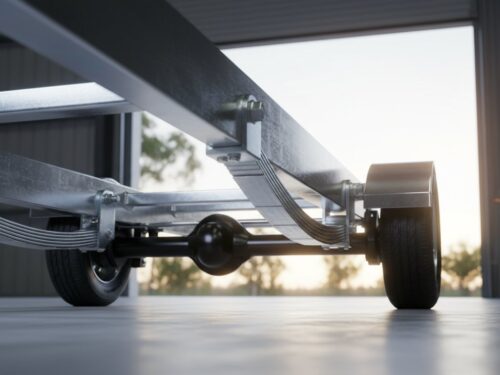
A trailer axle is the central shaft that connects the wheels. It is a critical component engineered to bear the entire weight of your trailer and its load. The integrity of your axle is non-negotiable for safety, stability, and reliable performance on demanding Australian roads. At its core, understanding what a trailer axle is involves recognising its direct impact on your trailer’s load-bearing capacity and overall handling.
The main types of trailer axles you will encounter are straight beam, drop, and torsion axles. Each design serves a specific purpose, from standard hauling to providing a lower ride height or independent suspension. Before choosing a type, however, it is essential to understand the basic construction profiles available.
Round vs. Square Axles: What’s the Difference?
The profile of an axle-round or square-directly relates to its strength. Round axles are typically used for lighter-duty applications, often found on trailers with a Gross Trailer Mass (GTM) of 750kg or less. For heavier loads, square axles are the superior choice. Their profile provides greater rigidity and resistance to bending under stress, making them essential for commercial, agricultural, or heavy-duty personal trailers. Your choice depends entirely on the trailer’s intended load capacity.
Solid Beam vs. Hollow Tube Axles
Axles are manufactured from either a solid steel beam or a hollow steel tube. Solid beam axles are the traditional standard, known for raw strength and maximum durability. They are a proven, heavy-duty solution for the toughest jobs. Modern engineering also offers hollow tube axles, which provide high tensile strength with significantly less weight. This can improve fuel efficiency and payload capacity. Both solid and hollow axle types are fully compliant with Australian standards when rated correctly for the intended load.
The Most Critical Factor: Axle Capacity & Weight Ratings (ATM/GTM)
When selecting trailer axles, one factor stands above all others: weight capacity. Getting this calculation right is the difference between a reliable workhorse and a dangerous liability. Overloading an axle leads to premature failure of bearings, springs, and the axle beam itself. It compromises braking, handling, and overall safety. Understanding your trailer’s specific weight ratings-ATM and GTM-is not just good practice. It is a legal and structural necessity.
What is Aggregate Trailer Mass (ATM)?
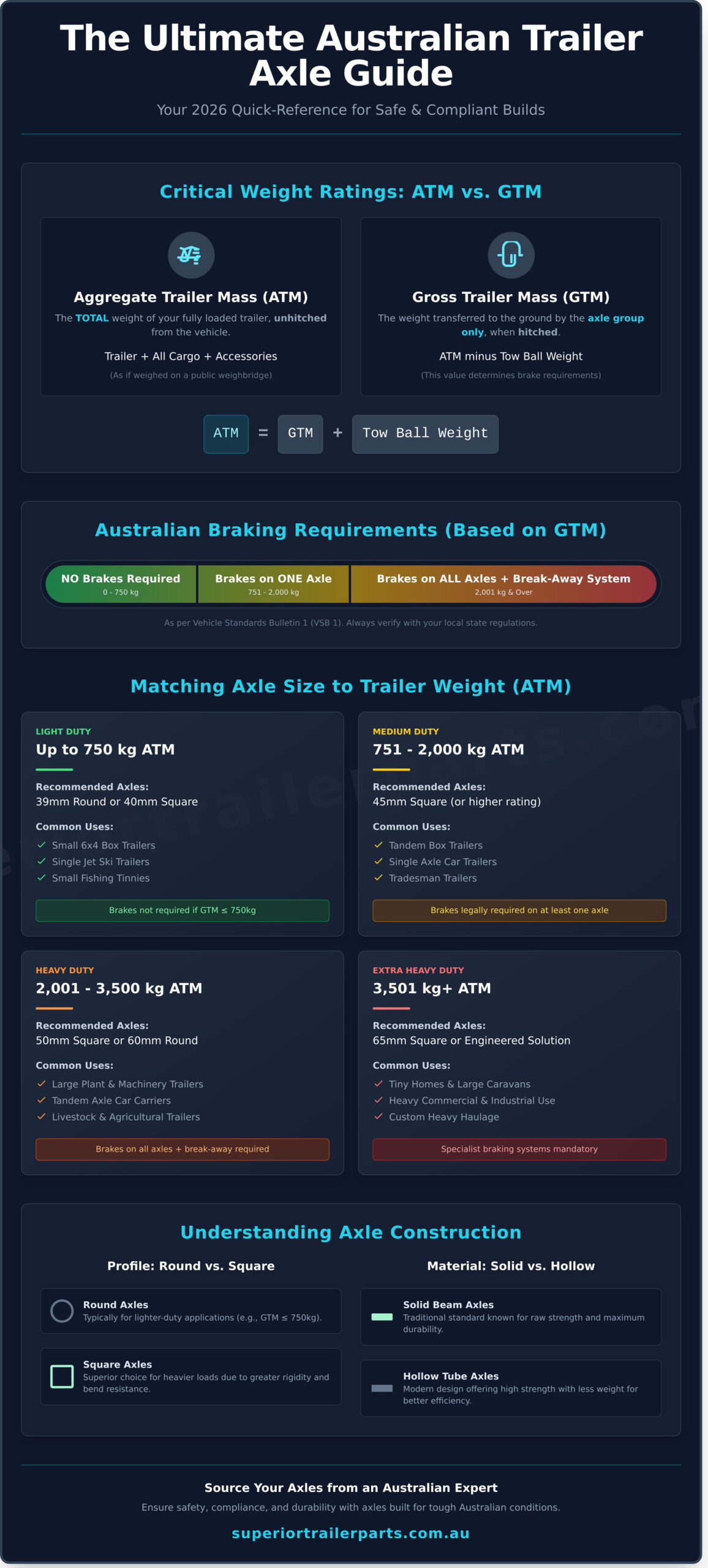
Aggregate Trailer Mass is the maximum legal weight of your trailer when fully loaded. Imagine driving your loaded trailer onto a public weighbridge and unhitching it-the total weight displayed is the ATM. This figure includes everything: the trailer’s own structure, your cargo, water tanks, toolboxes, and any other fitted accessories. This rating is permanently marked on your trailer’s compliance or VIN plate.
Your axle setup must be rated to handle this total mass. For a single-axle trailer, the axle’s capacity must equal or exceed the ATM. For tandem or tri-axle setups, the combined capacity of all axles must meet or exceed the ATM. Never cut corners on this rating.
What is Gross Trailer Mass (GTM)?
Gross Trailer Mass is the weight transferred to the ground by the trailer’s axle or axle group. Crucially, it excludes the weight that is carried by the coupling on your tow vehicle (the tow ball weight). This rating is fundamentally important for legal compliance, as it is the specific figure used to determine braking requirements in Australia. As outlined in the official Vehicle Standards Bulletin 1 (VSB 1), a trailer with a GTM over 750kg legally requires brakes.
The formula connecting these ratings is straightforward:
ATM = GTM + Tow Ball Weight
Understanding this helps you correctly specify not only your axles but also your braking system and coupling, ensuring your trailer is safe, compliant, and built to last under tough Australian conditions.
Matching Axle Size to Your Trailer’s Weight: A Practical Guide
Selecting the right trailer axles is not just a recommendation-it’s critical for safety and legal compliance on Australian roads. An axle must be rated to handle your trailer’s Aggregate Trailer Mass (ATM) to prevent mechanical failure and ensure stable towing. This practical guide matches common axle dimensions to their recommended weight capacities, helping you get the job done right.
Light Duty (Up to 750kg ATM)
For light domestic jobs and recreational use, a 39mm Round or 40mm Square Axle is the industry standard. These axles provide reliable performance for smaller trailers without adding unnecessary weight. Under Australian regulations, brakes are not legally required for trailers with a Gross Trailer Mass (GTM) of 750kg or less.
- Recommended Axle: 39mm Round or 40mm Square Axle
- Common Uses: Small 6×4 box trailers, single jet ski trailers, small tinny trailers.
- More Info: For a closer look at these components, see our guide to 39mm round axles.
Medium Duty (751kg – 1400kg ATM)
When you need to haul heavier loads, stepping up to a 40mm or 45mm Square Axle is essential. These solid steel axles provide the structural strength needed for tradie trailers, larger campers, and general-purpose trailers carrying significant weight. Once your trailer’s GTM exceeds 750kg, brakes are mandatory on at least one axle.
- Recommended Axle: 40mm or 45mm Square Axle
- Common Uses: Heavier box trailers (7×5+), small caravans, single-axle tradie trailers.
- More Info: Unsure which is right for you? Compare 40mm vs 45mm square axles here.
Heavy Duty (1401kg – 4500kg+ ATM)
For serious commercial and agricultural loads, heavy-duty axles are non-negotiable. This category uses robust 50mm Square, 60mm Round, or even larger parallel bearing axles. To manage these high weights, trailers almost always use a tandem (dual-axle) configuration for superior load distribution and stability. Understanding when to use a dual axle setup is key, as explained in this helpful RAC WA guide to axle types. High-performance braking systems, like electric or hydraulic brakes, are mandatory on all wheels.
- Recommended Axle: 50mm Square or 60mm Axles (often in tandem sets)
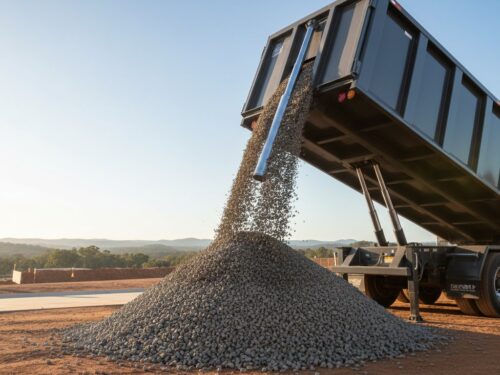
- Common Uses: Large tandem trailers, car carriers, livestock trailers, plant equipment trailers, and hydraulic tippers.
Braked vs. Unbraked Axles: Australian Legal Requirements
Choosing between a braked and an unbraked axle is not just about performance-it is a critical legal decision. In Australia, the requirement for trailer brakes is determined by your trailer’s Gross Trailer Mass (GTM). GTM is the maximum weight imposed on the trailer’s axles when it is fully loaded and coupled to the tow vehicle. This is the key figure for legal compliance, not the Aggregate Trailer Mass (ATM).
Understanding these rules is essential for road safety and avoiding heavy fines. The regulations are clear and non-negotiable, ensuring every trailer on the road can stop safely and effectively under load.
When Are Brakes Legally Required?
Australian law specifies braking requirements based on strict GTM weight categories. Your trailer must be equipped to match its load capacity.
- 0 – 750kg GTM: No brakes are legally required. These light-duty trailers typically use simple, unbraked ‘lazy’ axles.
- 751 – 2000kg GTM: A braking system is mandatory on at least one axle. Common systems in this range include mechanical override brakes or simple electric drum brakes.
- 2001kg+ GTM: Brakes are required on all axles. The system must also include an automatic ‘breakaway’ device. This engages the trailer’s brakes independently if it detaches from the tow vehicle, a crucial safety feature for heavy loads.
Integrating Brakes with Your Axle
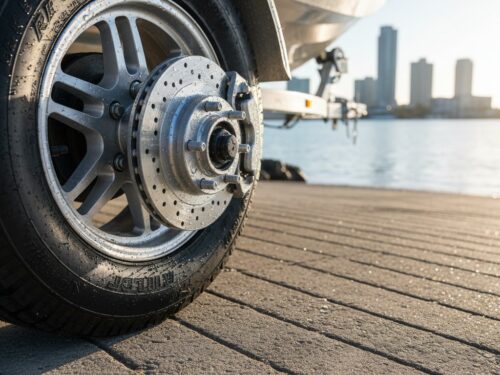
The axle you choose dictates your braking options. A braked axle is manufactured with welded mounting plates, also known as brake flanges. These plates are engineered to accept a brake caliper or a drum brake backing plate, providing a secure foundation for your braking system. In contrast, an unbraked axle is a ‘lazy axle’-a simple beam with a hub for mounting the wheel, offering no provision for brakes.
When upgrading or building a trailer, it is vital to match your components. Brake kits are sold to suit specific axle diameters and load ratings. For reliable performance and guaranteed compliance, ensure your chosen braking system is compatible with your trailer axles. If you need expert advice on matching the right components, our team is here to help. Find the right heavy-duty parts for your build at superiortrailerparts.com.au.
Source Your Trailer Axles from an Australian Expert
Choosing the right axle is the most critical decision in any trailer build or repair. It dictates your load capacity, ensures legal compliance, and guarantees safety on the road. A high-quality, correctly rated axle is not just another component; it is the foundation of a reliable trailer. Getting this choice wrong means risking costly damage, fines, and serious accidents.
At Superior Trailer Parts, we take the guesswork out of the equation. As a proudly Australian-owned and operated business, we specialise in providing robust, dependable parts built for local conditions. From our Queensland warehouse, we supply a comprehensive range of solid steel axles, including standard 39mm round, 40mm square, 45mm square, and heavy-duty 50mm square options, shipping them directly to you, Australia-wide.
Why Choose Superior Trailer Parts?
We are more than just a supplier; we are your partner in building a better, safer trailer. Our commitment is to provide genuine quality and straightforward service. Here’s why trade professionals and DIY builders across Australia trust us:
- Built for Australian Conditions: Our axles are manufactured to withstand harsh roads and heavy workloads. They are built to meet or exceed Australian Design Rules (ADR) for total peace of mind.
- No-Nonsense Expert Advice: Unsure which axle profile or rating you need? Our team provides clear, practical advice to ensure you get the right part the first time, saving you time and money.
- Competitive and Convenient: We offer competitive pricing on all our high-grade components. With fast, reliable delivery across Australia, you get the parts you need without the hassle.
Find the Right Axle for Your Project
You now have the knowledge to select the correct components for your build. The next step is to source a reliable part that matches your exact specifications. Our online store makes it simple to find precisely what you need to get your project moving.
If you’re ready to get started, you can browse our full range of trailer axles online now. For those who are still unsure or have a custom requirement, don’t hesitate to contact our team. We’re here to provide the expert advice you need to get the job done right.
Get the Right Axle for the Job
Your trailer’s performance and safety hinge on the right foundation. This guide has shown that selecting an axle is about more than just fit; it’s about correctly matching the capacity to your trailer’s ATM and GTM, and strictly adhering to Australian laws for braked and unbraked systems. Mastering these details ensures your trailer is both legal and reliable for years to come.
When you’re ready to invest in quality, you need parts built for our unique environment. Superior Trailer Parts is your source for heavy-duty trailer axles engineered to handle tough Australian conditions. As a proudly Australian Owned and Operated company, we stand behind our products with expert advice from real professionals. We offer fast, reliable shipping Australia-wide, so you can get the job done without delay.
Build it right the first time and tow with complete confidence.
Frequently Asked Questions About Trailer Axles
How do I measure my existing trailer axle for replacement?
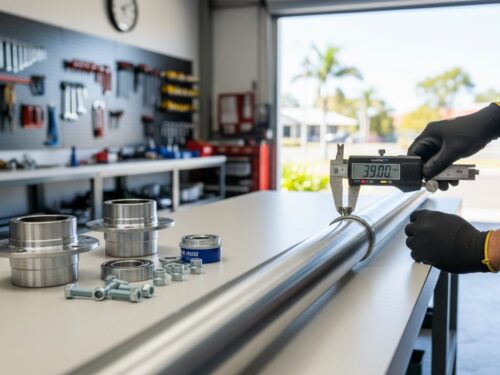
To ensure a correct fit, you need two key measurements. First, measure the hub face to hub face distance. This is the total length from the flat surface on one hub where the wheel bolts on, to the same surface on the opposite hub. Second, measure the spring centre distance, from the middle of one spring to the middle of the other. These two dimensions are critical for ordering a direct replacement axle that aligns perfectly with your trailer’s chassis and wheels.
What’s the difference between a single axle and a tandem axle trailer?
A single axle trailer has one axle with a wheel on each side. It is simpler, more affordable, and easier to manoeuvre in tight spaces, making it ideal for lighter loads. A tandem axle trailer uses two axles, providing four wheels. This design distributes weight more evenly, offers greater stability at speed, and has a significantly higher load capacity. Tandem setups are essential for heavy-duty commercial, caravan, or machinery transport applications where safety and capacity are paramount.
Are hollow axles as strong as solid axles?
No. For any given diameter, a solid steel axle is significantly stronger and more durable than a hollow one. While hollow axles offer weight savings, they cannot match the load-bearing capacity and resistance to bending of a solid axle. For the tough Australian conditions and for your peace of mind, we always recommend a heavy-duty solid axle. It provides the reliable performance and longevity required for both commercial and recreational use, ensuring your trailer is built to last.
What is the difference between Ford and Holden stud patterns on trailer hubs?
The key difference is the Pitch Circle Diameter (PCD), which is the diameter of the circle that passes through the centre of the wheel studs. The common Ford pattern is 5 studs with a PCD of 114.3mm. The common Holden HT pattern is 5 studs with a 108mm PCD, while the Commodore pattern has a 120mm PCD. It is critical to match your hub’s stud pattern to your wheels to ensure a secure and safe fitment. Always measure your existing pattern if you are unsure.
How much does a new trailer axle cost in Australia?
The cost of a new trailer axle varies based on its specifications. A basic 39mm round unbraked axle might start from A$150. A 45mm square galvanised axle suitable for a boat trailer could be around A$250 to A$400. For a complete braked axle assembly with electric brakes and hubs, expect to pay between A$600 and A$1,000 or more, depending on the load rating and features. At Superior Trailer Parts, we deliver competitive pricing on all our genuine, heavy-duty parts.
Can I install a new trailer axle myself?
Yes, if you have the right tools and solid mechanical knowledge, you can install an axle yourself. The job requires safely jacking and supporting the trailer chassis, removing the old U-bolts and axle, and fitting the new one. It is crucial that all components are torqued to the correct specifications and the axle is properly aligned. If you have any doubt about the process, we recommend seeking professional installation to guarantee safety and correct function on the road.
What are the signs that my trailer axle needs replacing?
Visible signs of a failing axle include a noticeable bend or bow in the axle beam, or visible cracks from stress. Another clear indicator is uneven or excessive tyre wear, which points to a bent axle causing misalignment. Listen for grinding or rumbling noises from the hubs, which suggest severe bearing failure that may have damaged the axle spindle. For boat trailers, significant corrosion can compromise the strength of trailer axles, making replacement a critical safety measure.