The 39mm round axle 750kg is the backbone of the Australian light-duty trailer market, but its reliability depends entirely on precision measurement. It’s the standard choice for most unbraked trailers, yet many owners still struggle with incorrect lengths and mismatched stud patterns. You’re likely looking for a dependable solution for a 6×4 or 7×4 box trailer where durability matters more than flashy features. We understand that accuracy is the difference between a trailer that tracks true and one that fails under load.
This article provides the technical clarity you need to select the right axle length, match your PCD correctly, and stay compliant with Australian Design Rules. We’ll walk through the process of measuring face-to-face distances and explain why the LM bearing combination is the standard for this weight class. It’s important to remember that these axles are designed for unbraked applications only. If your GTM exceeds the 750kg limit, a heavier square axle is required. We’ll give you the facts to ensure you get the right fit the first time so you can get back to work.
Key Takeaways
- Understand the specific weight limits of a 39mm round axle 750kg and why it remains the industry standard for unbraked light-duty trailers.
- Learn the correct method for measuring your replacement axle to ensure proper wheel clearance, focusing on the hub-face-to-hub-face distance.
- Identify the correct stud pattern and bearing combination to prevent fitment issues and ensure long-term hub reliability.
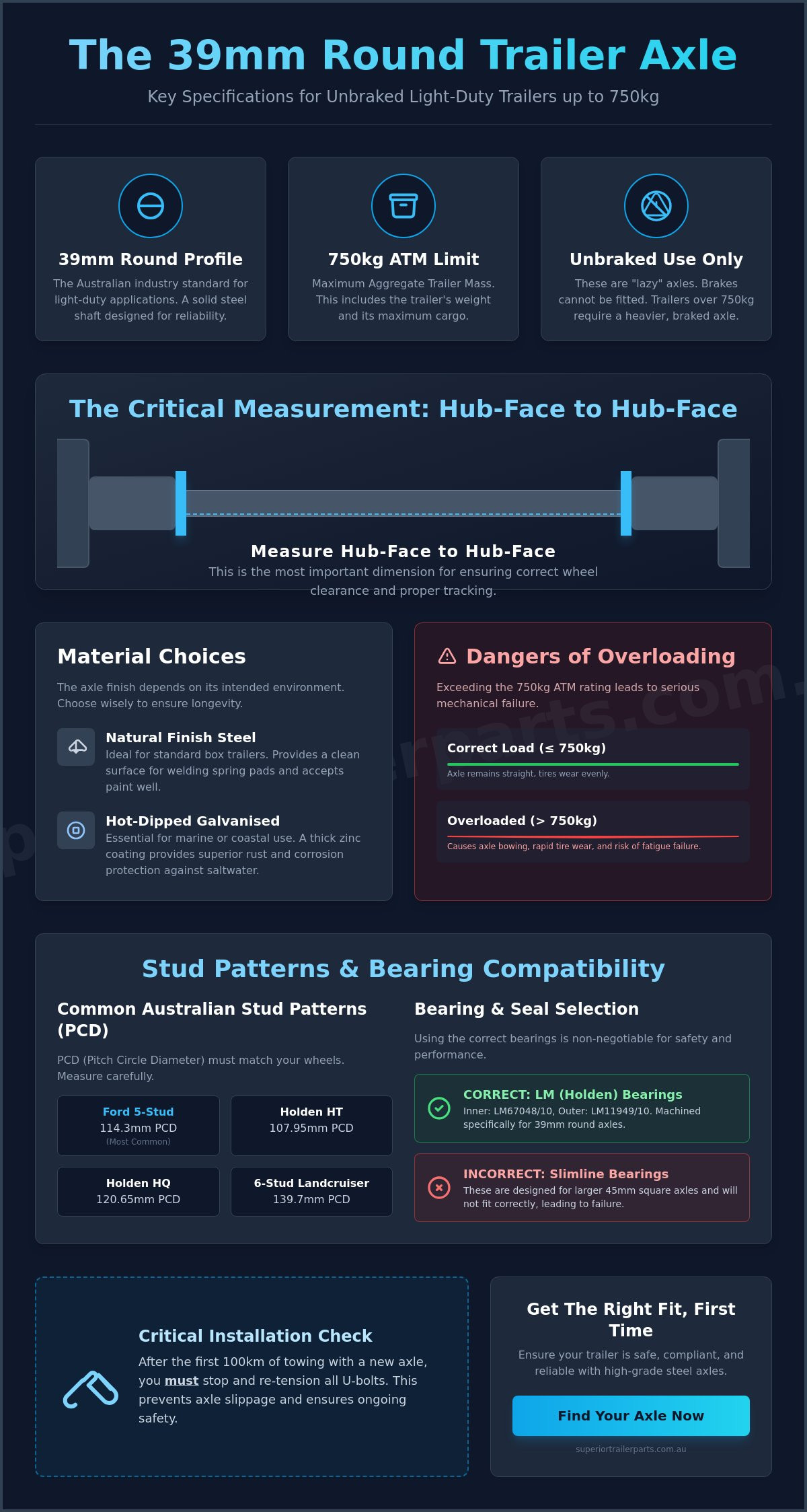
- Discover essential installation and maintenance steps, including the critical first check of U-bolt tension after the initial 100km of towing.
- Ensure your trailer stays ADR compliant by selecting axles manufactured from high-grade solid steel that meet Australian safety standards.
Understanding the 39mm Round Axle for 750kg ATM
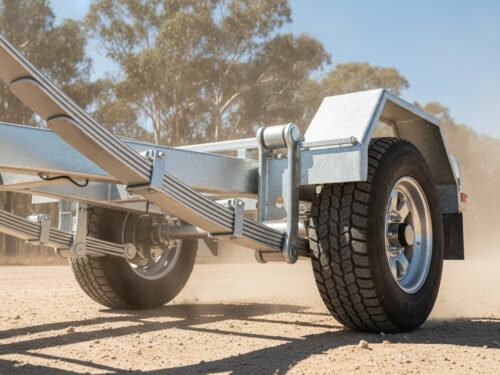
A 39mm round axle 750kg is a solid steel shaft engineered for light-duty towing requirements. Understanding what is an axle helps you appreciate why diameter and material grade are vital for safety. For light-duty applications, the 39mm round profile is the Australian industry standard. It offers a reliable and cost-effective solution for 6×4 box trailers and single jet ski trailers. These axles are valued for their simplicity and ease of fitment on trailers that don’t require complex braking systems.
The 750kg Aggregate Trailer Mass (ATM) rating is a hard limit. In Australia, any trailer with an ATM up to 750kg doesn’t require a braking system. These are commonly called “lazy” axles. The 39mm round axle 750kg is designed specifically for these unbraked setups. You can’t safely fit mechanical or electric brakes to a 39mm round shaft. If your trailer’s total weight exceeds this 750kg threshold, you must upgrade to a 40mm or 45mm square axle with appropriate brake mounts to remain ADR compliant.
Load Ratings and Weight Distribution
Precision is required when calculating your trailer’s total mass. This includes the weight of the steel chassis, the floor, the cage, and the maximum cargo you intend to carry. Exceeding the 750kg rating on a 39mm shaft leads to axle bowing. When the shaft flexes, your wheels lean inward. This causes rapid, uneven tire wear and can eventually lead to metal fatigue. Axle placement also dictates how the load is carried. Positioning the axle slightly behind the center of the trailer bed ensures better tracking, but it also places more weight on the tow ball. Always aim for a balanced load to prevent unnecessary stress on the axle journals.
Material Choice: Natural Steel vs. Galvanised
Your choice of finish depends on the environment. Natural steel is the standard for painted box trailers. It provides a clean surface for welding spring pads and takes paint well. For any marine application, hot-dipped galvanised steel is the only viable choice. Saltwater environments trigger rapid oxidation on raw steel. A galvanised version of this shaft features a thick zinc coating that prevents rust and extends the lifespan of the trailer. Note that galvanising can occasionally leave residue on the bearing journals. You must ensure these surfaces are smooth and clean before pressing on your LM bearings. Visit our axles section to compare available finishes for your build.
Stud Patterns and Bearing Compatibility
Common Stud Patterns (PCD) in Australia
The Pitch Circle Diameter (PCD) is the diameter of the imaginary circle that passes through the center of all the wheel studs. For a 39mm round axle 750kg, the Ford 5-stud pattern is the most frequent choice. It features a PCD of 114.3mm. You’ll find this on the majority of modern box trailers. If you’re restoring an older unit, you might encounter Holden patterns. The HT pattern uses a 107.95mm PCD, while the HQ pattern uses 120.65mm. These are distinct and are not interchangeable.
If your old hubs are missing, identify the pattern by measuring the distance between two adjacent studs and applying a conversion formula. For those running larger tires on a light-duty chassis, Landcruiser 5-stud (150mm PCD) or 6-stud (139.7mm PCD) hubs are available. Matching your trailer wheels to your tow vehicle’s wheels is a practical strategy for carrying fewer spares. You can browse our range of trailer parts to find hubs that match these common Australian standards.
Bearing and Seal Selection
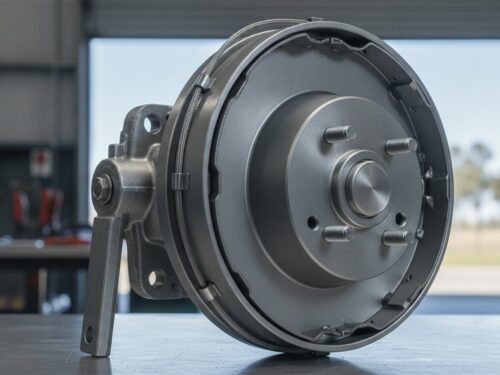
The 39mm round axle journals are specifically machined to accept LM bearings, also known as Holden bearings. These consist of an inner bearing (LM67048/10) and an outer bearing (LM11949/10). Don’t confuse these with Slimline bearings, which are designed for larger 45mm square axles. Using the wrong bearing set will prevent the hub from seating correctly or cause immediate mechanical failure. It’s a simple check that prevents a major roadside breakdown.
Safety remains the primary focus for any transport component. While Australian regulations are specific, looking at international benchmarks like the Federal Motor Vehicle Safety Standards (FMVSS) highlights the global importance of bearing integrity and hub retention. Your seal choice is equally important. Standard rubber seals work for dry road use. If you’re building a boat trailer, upgrade to marine-grade stainless steel seals with a double lip. These prevent saltwater ingress from corroding the spindle. Always install quality dust caps to keep road grime out of the grease. A small investment in protectors significantly extends the service life of your assembly.
How to Measure Your Trailer Axle for Replacement
Ordering a replacement 39mm round axle 750kg requires precise dimensions. Most owners make the mistake of measuring the total length of the steel bar from end to end. While this “Tip-to-Tip” measurement is useful for overall clearance, it doesn’t determine where your wheels will sit in relation to the trailer frame. The industry standard for ordering is the “Hub-Face-to-Hub-Face” measurement. This dimension dictates the wheel track and ensures your tires don’t rub against the chassis or the mudguards. Accuracy here is the difference between a smooth install and a wasted afternoon.
Hub-Face-to-Hub-Face refers to the distance between the two flat surfaces where the wheel actually bolts onto the hub. This is the most accurate measurement because different hub brands have varying offsets. By providing this specific number, you ensure the new axle maintains the same wheel position as the original. Even a small error of 10mm can lead to significant fitment issues or uneven load distribution. You’ll need a reliable tape measure, a marker, and a set of jack stands to perform this task safely. Don’t guess; measure twice to avoid the hassle of a return.
The Step-by-Step Measurement Process
Follow these steps to get the correct dimensions for your new axle. Always perform measurements on a flat surface with the trailer safely supported on stands.
- Step 1: Jack up the trailer and secure it. Remove the wheels and hubs entirely. This exposes the bare axle ends and the machined journals where the bearings sit.
- Step 2: Place your tape measure against the flat vertical surface of one hub face and measure across to the other. If the hubs are already removed, measure the distance between the shoulders where the inner bearings seat.
- Step 3: Verify the “Tip-to-Tip” length. This is the total length of the 39mm round axle 750kg from the very end of one thread to the other. It confirms the axle fits within the total width of your mudguards.
Calculating Spring Centres
Your axle is secured to the trailer via leaf springs. The “Spring Centre” distance is the measurement between the centers of the two springs. This is where the axle seats or spring pads are welded onto the shaft. If these are positioned incorrectly, your U-bolts won’t align with the spring holes. This makes installation impossible without cutting and re-welding. Measure from the center of the bolt on the left spring to the center of the bolt on the right spring. Double-check this figure against your chassis width to ensure everything remains square. For more technical details on different configurations, refer to our Guide to Trailer Axles. Getting these numbers right the first time prevents the need for costly modifications.
Installation, Safety, and Maintenance
Proper installation is the final step in ensuring your trailer remains roadworthy. A 39mm round axle 750kg is only as reliable as the hardware securing it to the chassis. In Australia, trailers with an ATM up to 750kg do not require brakes, but they must adhere to strict safety standards regarding hitches and chains. You must use a rated coupling, such as a 2-hole or 3-hole fixed coupling, and a safety chain that complies with AS 4177. These components work together to ensure that even if a mechanical failure occurs, the trailer remains attached to the tow vehicle.
U-Bolt and Spring Alignment
Securing a round axle requires specific hardware that matches the 39mm profile. You cannot use U-bolts designed for square axles, as they won’t provide the necessary clamping force around the circumference of the shaft. Always use high-quality Galvanised U-Bolt Kits to prevent rust from seizing the threads. Axle seats, also known as spring pads, must be welded to the axle at your measured spring centers. These pads provide a flat surface for the leaf springs to sit on, preventing the axle from rotating under load. Ensure the center bolt of the leaf spring drops into the hole in the axle seat to lock the assembly in place.
Routine Bearing Maintenance
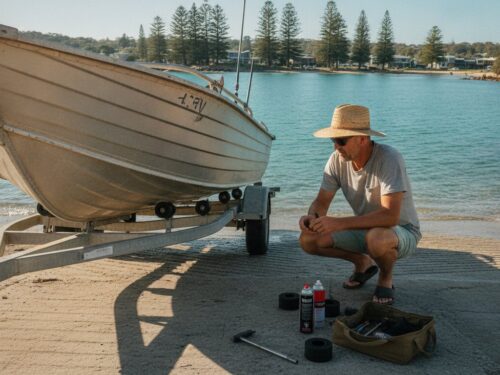
Bearings are the most common point of failure on light-duty trailers. You should repack your LM bearings with high-temperature wheel bearing grease at least once every twelve months. If you use the trailer frequently or in coastal environments, increase this frequency. Corrosion is a major threat in high-humidity areas. Even a 39mm round axle 750kg with a galvanised finish needs protection at the spindle. Replace your hub seals immediately if you notice grease leaking onto the back of the hub. This leakage indicates that water can get in, which will quickly destroy the bearing surfaces.
Watch for warning signs of axle fatigue during your pre-trip inspections. Uneven tyre wear often points to a bowed axle or misaligned springs. Feel the hubs after a long drive; excessive heat buildup is a clear indicator of bearing or seal failure. If you find your current setup is showing signs of stress, it might be time to replace your hardware. You can find everything required for a full suspension overhaul in our trailer parts store.
Why Source 39mm Axles from Superior Trailer Parts
Selecting a 39mm round axle 750kg requires a supplier that understands the harsh Australian environment. We don’t just sell components; we provide engineered solutions designed for longevity. Our team sources high-grade solid steel that meets rigorous Australian safety standards. This ensures every shaft can handle its rated load without compromise. Reliability is our priority because we know a trailer failure isn’t just an inconvenience; it’s a safety risk and a loss of productivity. We maintain a constant stock of unbraked axles to ensure you get what you need when you need it.
Logistics shouldn’t be a barrier to quality hardware. We offer national shipping capabilities across the entire country, reaching both metropolitan hubs and regional work sites. Whether you’re a fleet manager in a capital city or a farmer in a remote area, you have access to the same professional-grade equipment. Our distribution network is built for speed and reliability, mirroring the fast-paced needs of our customers. You get technical support from experts who actually know how these parts perform on local roads.
Australian Owned and Operated Expertise
Choosing an Australian owned specialist gives you a distinct advantage. With over a decade of experience in the transport sector, we’ve refined our inventory to include only the most durable hardware. Every 39mm round axle 750kg undergoes strict quality control processes before it reaches our shelves. We verify journal tolerances and finish quality so you don’t have to worry about fitment issues during installation. This commitment to excellence has made us a trusted ally for individual builders and commercial manufacturers alike. You can Explore All Trailer Parts in our inventory to see the depth of our range.
Complete Trailer Solutions
Efficiency in the workshop is vital for any project. We provide more than just the bare axle. Our inventory includes a comprehensive selection of supporting hardware to help you finish the job. You can source a full inventory of Leaf Springs, U-bolts, and hubs all in one place. We also offer pre-assembled axle kits. These kits come with hubs and bearings already fitted, which significantly saves installation time and reduces the chance of assembly errors. It’s a proactive approach to trailer maintenance that ensures every component works in harmony.
We stand behind every product we provide. If you’re unsure about measurements or need to verify compatibility for a custom build, our technical team is ready to help. We prioritize clear, honest advice over marketing rhetoric. Get the right parts the first time and ensure your trailer is built to last. Contact us for technical advice on your axle replacement today to discuss your specific requirements.
Secure Your Trailer with Precision Hardware
Selecting the correct 39mm round axle 750kg is a matter of safety and long-term compliance. You now have the technical knowledge to measure hub-face-to-hub-face distances and identify the correct LM bearings for your hubs. These unbraked axles remain the standard for light-duty towing as long as you stay within the 750kg ATM limit. Regular maintenance of your seals and checking U-bolt tension after your first trip will keep your trailer tracking true. Superior Trailer Parts has been Australian owned and operated since 2014, and we understand the demands of local towing conditions. We engineer our components for resilience and offer nationwide shipping on all axle components to keep your projects moving. Don’t settle for guesswork when it comes to your suspension. View our range of 39mm round axles and trailer parts to find the right fit for your build. Proper fitment ensures a safer towing experience every time you hit the road.
Frequently Asked Questions
Can I use a 39mm round axle for a trailer rated over 750kg?
No, you cannot safely use this axle for trailers exceeding the 750kg Aggregate Trailer Mass (ATM) limit. The 39mm round axle 750kg is engineered specifically for light-duty applications and unbraked configurations. Exceeding this weight rating violates Australian Design Rules and risks permanent axle deformation or spindle failure. If your trailer’s total laden weight is higher, you must upgrade to a 40mm or 45mm square axle with an integrated braking system to remain compliant.
What is the difference between a 39mm round and a 40mm square axle?
The primary difference lies in the beam’s rigidity and its application for brakes. A 40mm square axle offers more material at the corners, providing higher resistance to bowing under heavy loads compared to a round profile. While both can be rated for 750kg, square axles are easier to fit with brake flanges. Round axles are the standard choice for simple, unbraked box trailers where a cost-effective and lightweight solution is required.
How do I know if my 39mm axle has Holden or Ford bearings?
Check the bearing part numbers stamped on the races or measure the spindle diameter with a vernier caliper. Most 39mm round axles in Australia use LM (Holden) bearings, which consist of an LM67048 inner and an LM11949 outer bearing. Ford (Slimline) bearings are larger and are typically reserved for 45mm square axles. If your inner bearing journal measures approximately 31.7mm, you are using a standard Holden bearing configuration.
Do I need brakes on a 39mm round axle?
Brakes are not legally required in Australia for any trailer with a Gross Trailer Mass (GTM) of 750kg or less. Since the 39mm round axle 750kg is designed for this weight class, it is almost always sold as a “lazy” or unbraked axle. If your trailer’s weight exceeds this threshold, even by a small margin, you must install brakes. In that scenario, you would typically switch to a heavier square axle with brake mounts.
Why is my 39mm round axle bending in the middle?
Axle bowing is almost always a result of consistent overloading or a significant impact. When the trailer carries more than its 750kg rating, the solid steel shaft flexes downward, causing the tops of the tires to lean inward. This misalignment leads to rapid tire wear and puts excessive stress on the wheel bearings. Once an axle has permanently bent, it loses its structural integrity and must be replaced to ensure safe towing.
How do I measure the stud pattern on my existing 39mm axle hub?
Measure the Pitch Circle Diameter (PCD) by calculating the distance between the wheel studs. For a 5-stud hub, measure from the outside of one stud to the center of the third stud. A Ford pattern will measure 114.3mm, while a Holden HT pattern is 107.95mm. Identifying the correct PCD is vital to ensure your wheels seat flush against the hub face. This prevents wheel wobble and protects the studs from shearing.
Is a galvanised axle necessary for a box trailer?
Galvanisation is not mandatory for standard box trailers kept in dry conditions, but it is highly recommended for longevity. Natural steel axles require painting to prevent surface rust, which can eventually lead to pitting. If you use your trailer in coastal areas or for marine purposes, a hot-dipped galvanised finish is essential. The zinc coating provides a sacrificial barrier that prevents saltwater from corroding the steel and seizing your bearings or U-bolts.
What U-bolt size fits a 39mm round axle?
You must use 39mm round U-bolts specifically designed to wrap around the circular profile of the shaft. Using square U-bolts or the wrong diameter will result in a loose fit, allowing the axle to shift on the springs during transit. This movement can snap the spring center bolts or cause the trailer to dog-track. Always pair your U-bolts with the correct axle seats (pads) to ensure a flat, secure mounting surface against the leaf springs.