A static trailer parts catalogue pdf is often the fastest way to order the wrong axle for your build. You’ve likely dealt with the frustration of downloading a file only to find the specifications for 45mm square axles or 10-inch electric drum brakes are outdated or incorrect. Relying on obsolete data doesn’t just waste time; it puts your trailer’s roadworthiness at risk under the current Australian Design Rules (ADR). In an industry where a millimetre makes the difference between a perfect fit and a mechanical failure, you need data that’s as reliable as the hardware itself.
We understand that precision matters when you’re maintaining a heavy-duty fleet or finishing a custom project. You need access to a comprehensive breakdown of components like rocker roller spring sets, poly block off-road couplings, and LED submersible tail lights that meet mandatory safety standards. This resource provides the technical reference list you need to identify exact replacement parts and understand the latest ADR requirements for Australian towing. We’ll walk through the specific measurements for axles and couplings while clarifying the braking system rules that keep your trailer legal on the road.
Key Takeaways
- Learn how to align your trailer build with current Australian Design Rules to ensure roadworthiness and safety across all states.
- Use precision measurement techniques to identify the correct dimensions for axles, couplings, and braking systems before you place an order.
- Identify visual signs of fatigue in components like galvanised U-bolts and slipper springs to prevent mechanical failure on the road.
- Discover why a live digital inventory offers more reliability than a static trailer parts catalogue pdf for sourcing specific hardware like rocker roller sets.
- Streamline your maintenance schedule by categorising trailer components into functional groups for more efficient and thorough annual servicing.
The Role of a Technical Trailer Parts Resource in Australian Towing
Maintaining a trailer requires more than a visual inspection and a grease gun. You need technical documentation that provides exact specifications for every bolt, bearing, and bracket. In the Australian transport sector, the harsh environment demands hardware that lasts. Using the wrong component doesn’t just lead to mechanical failure; it can lead to legal liability. A reliable resource helps you cross-reference SKU data against physical measurements, ensuring every replacement part fits the first time. This precision is what separates a professional repair from a temporary fix.
Understanding Australian Design Rules (ADR)
Compliance is a non-negotiable part of Australian towing. Every component from fixed or over-ride couplings to LED submersible tail lights must meet national standards. These standards dictate how a trailer behaves under load and during braking. To stay legal, you must verify that your hardware is ADR-approved. Using a technical resource allows you to check essential Trailer Components and Terminology against the required safety ratings. If your 10-inch electric drum brakes don’t meet the specified performance metrics for your trailer’s ATM, you risk fines or insurance rejection. Safety on the road starts with verified hardware.
Digital vs. Static PDF Catalogues
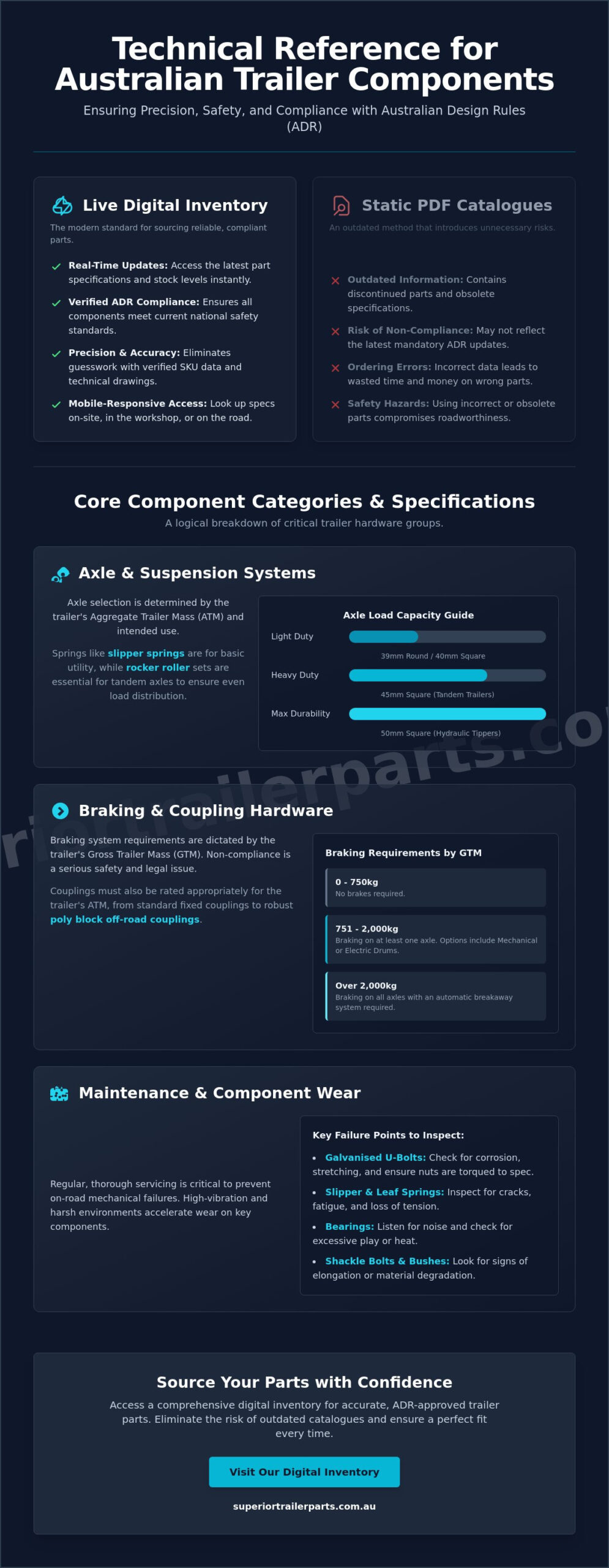
Many operators still rely on a downloaded trailer parts catalogue pdf found on an old industry forum. This is a mistake. Static files become outdated the moment they are saved. They often contain discontinued parts or incorrect technical drawings that lead to ordering errors. A live digital inventory is a superior tool for the modern workshop. It provides real-time updates on axle sizes and load capacities, ensuring you never order a 39mm round axle when your build requires a 50mm square alternative. Digital resources are mobile-responsive and accessible in the workshop or on the road.
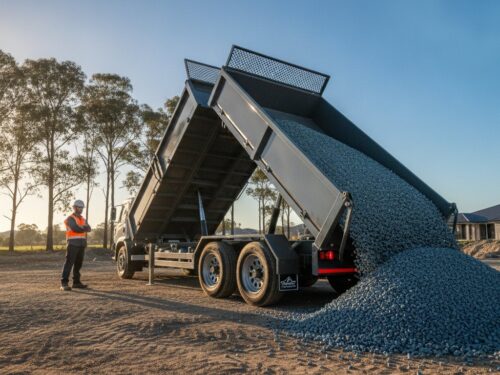
The transition from printed manuals to digital databases has streamlined trailer maintenance. You can pull up technical specs on a smartphone while standing under a 10×5 tandem axle hydraulic tipper trailer. This speed is critical for fleet managers who need to minimize downtime. A live database ensures you are looking at current ADR compliance data and verified SKU information. It replaces the guesswork of traditional printed manuals with high-precision technical facts. Relying on a static trailer parts catalogue pdf often means working with yesterday’s information, which is a risk you don’t need to take.
Core Categories in a Professional Trailer Inventory
Organising a workshop starts with a logical breakdown of hardware. A standard trailer parts catalogue pdf often groups items by their mechanical role: suspension, braking, and electrical systems. This structure helps you move from identifying a symptom to finding the exact part number. If a tandem axle trailer is tracking poorly, you’ll look directly at the suspension category to check your rocker roller spring sets or shackle bolts. High-quality inventory management ensures you don’t overlook small but critical fasteners like galvanised U-bolts that secure the entire assembly. These small components are the primary failure points in high-vibration environments.
Axle and Suspension Systems
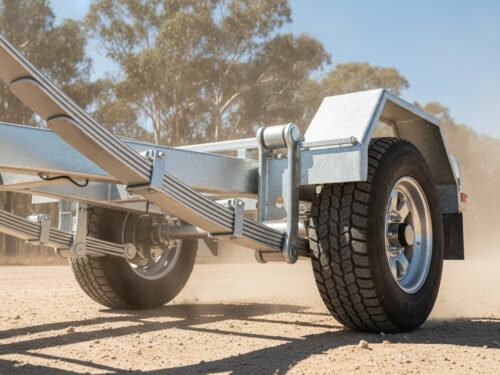
The foundation of any trailer is its axle. Selection depends on the intended load and the harshness of the terrain. Light-duty builds typically use 39mm round axles or 40mm square options. As the ATM increases, so does the requirement for thicker steel. Heavy-duty applications, such as 8×5 tandem trailers or 10×5 hydraulic tippers, require 45mm square or 50mm square axles to handle the stress. You must also choose the right spring type. 4-leaf slipper springs are effective for basic utility, while rocker roller sets are necessary for tandem setups to ensure even load distribution across both axles. Technical markers for 50mm axles include larger bearings and increased wall thickness for maximum durability.
Braking and Coupling Hardware
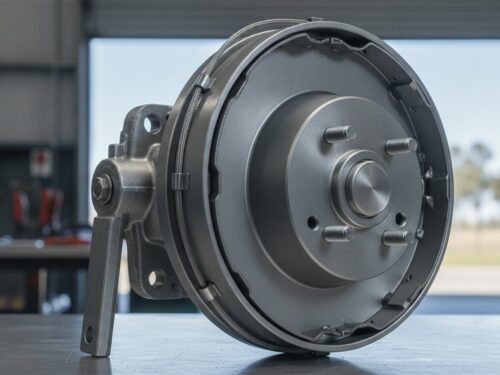
Stopping power is governed by the trailer’s weight. For trailers between 750kg and 2,000kg, you can choose between 9-inch mechanical drum brakes or 10-inch electric systems. Electric brakes offer better control from the tow vehicle; mechanical over-ride systems are simpler to maintain for occasional use. In marine environments, corrosion is the primary enemy. You should look for hydraulic disc brake kits specifically designed for salt-water exposure. These components are often listed in the National Heavy Vehicle Inspection Manual as critical points for safety checks. Proper maintenance here prevents brake fade and ensures the trailer remains roadworthy under full load.
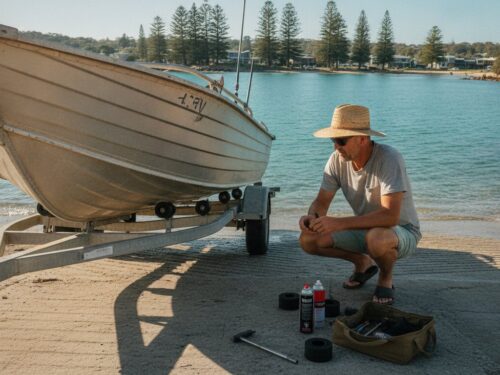
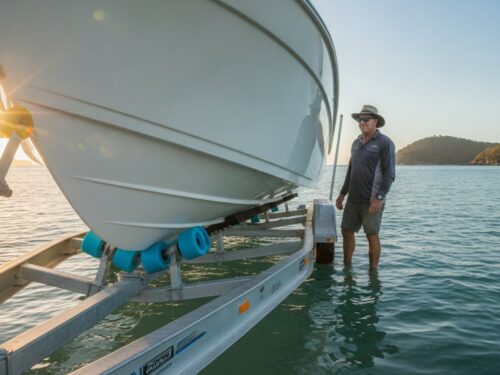
Coupling choice is equally vital for safety. A 2-hole or 3-hole fixed coupling works for light trailers, but heavier loads require 4-hole over-ride couplings or poly block off-road couplings for better articulation. For boat trailers, don’t forget the rollers. Wobble rollers and keel rollers must be inspected for flat spots or cracks to prevent hull damage during launch. Ensuring you have the right hardware ensures these components stay fixed under constant vibration. If you’re building or repairing, you can browse our full range of heavy-duty trailer components to find the exact match for your technical specifications.
Technical Specifications: How to Measure and Select Parts
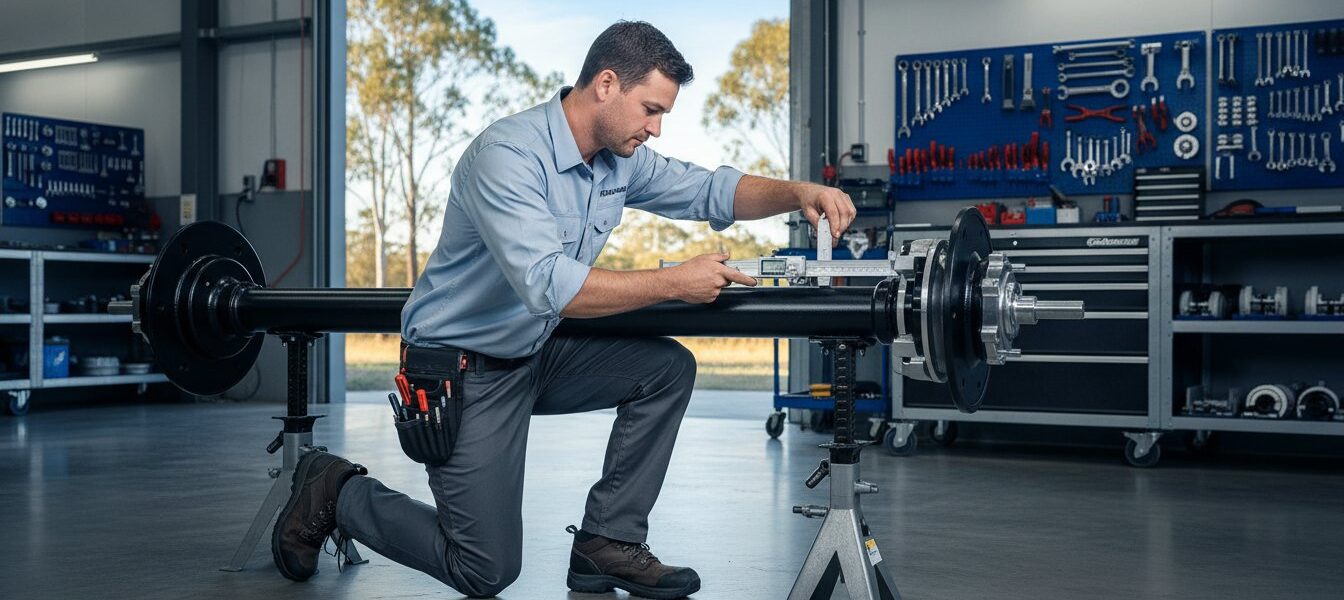
Precision is the only way to ensure a safe trailer build. Adopting a “measure twice, buy once” rule prevents the costly mistake of ordering incompatible hardware. While a trailer parts catalogue pdf provides essential technical drawings and load ratings, you must verify these against your physical chassis. Use professional tools like digital calipers for measuring axle thickness and a high-tension steel tape measure for lengths. Relying on a standard ruler or visual estimation leads to fitment issues that compromise road safety.
Determining Load Capacity and ATM
Component selection begins with the Aggregate Trailer Mass (ATM). This figure represents the total weight of the trailer plus its maximum load. Every part in the assembly must meet or exceed this rating. For example, leaf springs must be matched to the total load to prevent sagging or snapped leaves. A trailer rated for 2,000kg requires a tandem setup with 45mm square axles, as 39mm round axles lack the necessary shear strength. Check the load rating plate on your existing trailer or calculate the intended capacity before selecting suspension sets.
Sizing Axles and U-Bolts
Measuring an axle requires two specific dimensions. First, measure from hub-face to hub-face. This determines the track width and ensures your tyres won’t rub against the chassis. Second, measure tip-to-tip to confirm the overall length including the threads. Once you have the axle size, you must select the corresponding U-bolt kits. A 50mm square axle requires a U-bolt with a 51mm internal width to allow for a secure fit without stripping the threads. Common pitfalls include failing to measure the distance between spring hangers or ignoring the outer diameter of bushings. Accurate measurements ensure the suspension geometry remains correct under full load.
Reading technical drawings is a skill every fleet manager should master. Drawings in a trailer parts catalogue pdf show the exact placement of grease nipples, split pin holes, and bearing journals. Compare these dimensions to your worn parts to identify signs of stretching or thinning. If a journal has worn down by even half a millimetre, the bearing will not seat correctly. This leads to heat buildup and eventual hub failure. Replace components based on data, not guesswork, to maintain a reliable towing setup.
Maintenance Schedules and Identifying Component Wear
Proactive maintenance prevents roadside breakdowns and costly emergency repairs. You should use your trailer parts catalogue pdf as a technical checklist during annual inspections to compare current component conditions against factory specifications. Visual inspections aren’t enough for high-stress parts. You need to look for specific indicators of fatigue that suggest a component is nearing the end of its service life. If you find a discrepancy between your hardware and the technical drawings, it’s time to consider a replacement. Delaying these decisions often leads to secondary damage across the entire chassis.
Inspect your trailer axles for any signs of bowing or hairline fractures near the weld points. A bent axle causes uneven tyre wear and puts unnecessary strain on your wheel bearings. If the axle’s galvanised coating is flaking off in large chunks, it often indicates the steel underneath is beginning to oxidise. While surface rust is common, deep pitting compromises the structural integrity of the metal. If you can’t verify the straightness of the beam with a straight-edge tool, you’ve moved from a simple repair to a mandatory replacement scenario.
Identifying Wear in Bearings and Springs
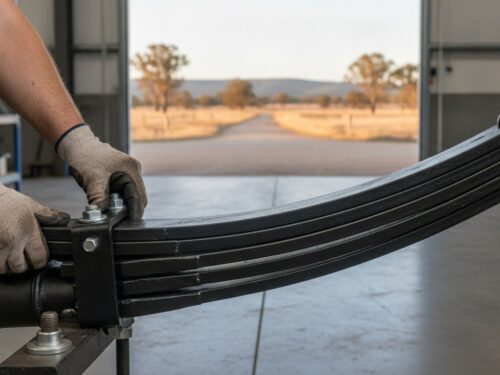
Wheel bearings are the most frequent failure point on Australian roads. Jack up the trailer and check for play by rocking the wheel vertically and horizontally. Any noticeable movement or a grinding sound indicates the races are pitted or the grease has been contaminated. Similarly, examine your leaf springs for signs of de-tempering. If the leaves have flattened out or have shifted out of alignment, they can no longer provide adequate shock absorption. Replace rusted fasteners with high-quality galvanised U-bolts to ensure the spring pack remains securely clamped to the axle seat.
Lighting and Electrical Troubleshooting
Electrical faults usually stem from corroded terminals or pinched wires. Check your trailer plug wiring for 7-pin or 12-pin systems to ensure all signals are reaching the lamps. If you’re tired of replacing bulbs after every boat ramp launch, upgrade to LED submersible tail lights. These units are sealed against moisture and handle the vibration of corrugated roads far better than traditional incandescent globes. Inspect the wiring loom for any brittle insulation or exposed copper, as these lead to short circuits that can damage your tow vehicle’s electronics.
Effective maintenance keeps your trailer legal and reliable for the long haul. Don’t wait for a component to snap before you take action. If your inspection reveals worn shackle bolts or a loose coupling, contact our technical team for advice on the correct replacement parts. We provide the hardware you need to ensure your trailer remains roadworthy under the toughest Australian conditions.
Accessing the Superior Trailer Parts Digital Inventory
Relying on a static trailer parts catalogue pdf often leads to ordering components that are no longer in production or have updated technical standards. Our live online store functions as a dynamic resource that reflects real-time data. This ensures you always have access to the most accurate information regarding load ratings, material composition, and ADR compliance. Whether you are searching for 50mm square axles or specific hydraulic disc brake kits, our digital inventory provides the precision required for professional trailer maintenance. You don’t have to guess if a part is compatible with your chassis because the technical specifications are updated as soon as new engineering data becomes available.
Nationwide Shipping and Trade Support
Logistics are a primary concern for fleet managers and individual operators alike. We distribute high-quality trailer parts to every region in Australia, ensuring that even remote workshops can maintain their equipment. We provide dedicated support for trade customers who require bulk components for manufacturing or large-scale repairs. Our streamlined ordering process allows you to secure large quantities of galvanised U-bolts, rocker roller spring sets, or LED submersible tail lights without the delays associated with traditional procurement. This operational efficiency helps you keep your trailers on the road instead of waiting in the workshop.
Custom Orders and Expert Technical Advice
Standard components don’t always fit specialized builds. If you are working on custom box trailers or unique marine configurations like jet ski trailers, you need more than just a part number. You need expert advice. Our team of Australian-owned specialists understands the harsh conditions your hardware must endure. We offer custom manufacturing options for non-standard axle lengths and specialized suspension setups that you won’t find in a basic trailer parts catalogue pdf. This technical support ensures that your build remains structurally sound and fully compliant with national safety standards.
Secure Your Trailer’s Performance with Technical Precision
Effective trailer maintenance relies on accurate data and high-quality hardware. You’ve seen why relying on an outdated trailer parts catalogue pdf leads to mechanical errors and potential legal risks. Precision measurements of your 45mm square axles and 10-inch electric brakes are the only way to guarantee a safe build. Every component must align with Australian Design Rules to keep your fleet or personal trailer roadworthy under heavy loads.
Superior Trailer Parts is an Australian-owned and operated business with long-standing experience in the transport sector. We provide hardware engineered to handle the harshest regional conditions. We offer nationwide shipping across Australia to ensure you get the components you need without unnecessary delay. Our team stands behind every axle, coupling, and spring we sell. We prioritize durability and technical accuracy in everything we provide to the transport industry.
Don’t leave your safety to guesswork. Browse the Live Superior Trailer Parts Inventory to access our current technical reference list and secure the parts you need. Get your trailer back on the road with total confidence in your equipment.
Frequently Asked Questions
Where can I download a trailer parts catalogue PDF for Australian trailers?
You can access our live digital inventory as a more reliable alternative to a traditional trailer parts catalogue pdf. Static files often contain outdated pricing or discontinued specifications that lead to ordering errors. Our online store provides real-time data on 45mm square axles, rocker roller spring sets, and electric drum brakes. This ensures you have the most current technical information for your repair or custom build project.
How do I know if a trailer part is ADR compliant?
Check the product specifications for a clear statement of compliance with Australian Design Rules (ADR). Critical components like couplings, safety chains, and LED submersible tail lights must meet these national standards to remain roadworthy. Look for stamps or markings on hardware like 4-hole over-ride couplings. If the technical data does not explicitly mention ADR standards, you should verify the rating with a specialist before installation.
What is the difference between ATM and GTM when looking at parts?
ATM (Aggregate Trailer Mass) is the total weight of the trailer and its load when uncoupled from the tow vehicle. GTM (Gross Trailer Mass) is the weight transmitted to the ground by the trailer tyres when it is coupled to the vehicle. You must select components like 50mm square axles or weight distribution hitches based on the ATM. This ensures the hardware can support the maximum possible weight of the unit safely.
Can I buy individual trailer components for a custom build?
Yes, you can purchase individual parts ranging from galvanised U-bolts to complete hydraulic disc brake kits. We supply separate components for those building custom 6×4 single axle box trailers or specialized jet ski trailers. Buying individual hardware allows you to tailor the suspension and braking systems to your specific load requirements. This is often more effective than relying on a pre-assembled kit that might not fit your chassis dimensions.
How do I measure my trailer axle to ensure I order the right replacement?
Measure from hub-face to hub-face to determine the track width and from tip-to-tip to find the overall length. These two dimensions are critical for ensuring the wheels clear the trailer frame and the bearings seat correctly. Use a steel tape measure for the lengths and calipers to confirm if you have a 39mm round or a 45mm square axle. Correct measurements prevent ordering errors that lead to project delays and extra shipping costs.
Do you provide technical diagrams for trailer wiring plugs?
We provide technical specifications for standard Australian 7-pin and 12-pin trailer plug adapters. These details help you correctly wire your LED submersible tail lights and electric brake controllers. Referencing a technical diagram ensures the indicators, brake lights, and auxiliary power lines are connected to the correct terminals. This prevents electrical shorts and ensures your trailer communicates properly with your tow vehicle’s electrical system during operation.
Are your boat trailer parts suitable for saltwater use?
Our marine-specific hardware is designed to resist corrosion in harsh saltwater environments. We sell hot-dipped galvanised U-bolts, wobble rollers, and keel rollers that handle repeated submersion. For braking, we recommend hydraulic disc brake kits over mechanical drums for boat trailers because they are easier to wash down. You should always rinse your hardware with fresh water after every launch to maximize the longevity of the galvanised coating and moving parts.
How often should I consult a parts resource for trailer servicing?
You should consult a technical parts resource at least once a year during your annual trailer service. Comparing your current components against the specifications in a trailer parts catalogue pdf or our live inventory helps you identify wear before it leads to failure. Check for play in wheel bearings and thinning in leaf springs. Regular cross-referencing ensures you replace parts with the correct ADR-compliant hardware before your next long-distance trip.