The physical size of your trailer is a poor indicator of its actual hauling capacity. While a 7×4 footprint offers plenty of deck space, the real answer to how much weight can a 7×4 trailer hold depends entirely on the ATM rating and the mechanical limits of its hardware. A standard unbraked 7×4 box trailer typically has an Aggregate Trailer Mass (ATM) of 750kg and a Tare weight of roughly 285kg. This leaves you with a maximum payload of approximately 465kg. Exceeding this limit risks mechanical failure and expensive legal penalties.
It’s common to feel uncertain when balancing a heavy load against strict Australian towing regulations. You’ll learn how to calculate your exact payload capacity and identify which specific components, such as 45mm square axles or electric drum brakes, are necessary to increase your hauling potential. We’ll break down the legal definitions of GTM and ATM to ensure your setup remains compliant and safe on the road. This guide provides the technical clarity you need to tow with confidence.
Key Takeaways
- Identify the difference between Aggregate Trailer Mass (ATM) and Tare weight to calculate your true payload. Knowing these figures prevents accidental overloading and mechanical strain.
- Determine how much weight can a 7×4 trailer hold by checking its specific configuration and braking setup. While 750kg ATM is standard for unbraked units, braked versions allow for heavier domestic and trade loads.
- Evaluate your trailer’s weakest link, as capacity is determined by the lowest-rated component like the axle or springs. Upgrading to 45mm square axles or electric drum brakes can significantly improve performance.
- Ensure legal compliance by matching your load to the ratings on the trailer plate. Proper use of rated D-shackles and safety chains is mandatory for safe transit on Australian roads.
- Prioritize longevity by selecting galvanised components designed for harsh regional conditions. High-quality hardware reduces maintenance and ensures your 7×4 trailer remains a reliable workhorse.
Understanding 7×4 Trailer Weight Ratings: ATM, Tare, and Payload
A trailer’s physical dimensions tell you how much volume you can fit, but they don’t dictate its strength. Many owners assume a 7×4 tray automatically handles a specific load. This is a mistake that leads to overloaded axles and roadside fines. To determine how much weight can a 7×4 trailer hold, you must look past the 7ft by 4ft measurements and examine the compliance plate. The legal capacity is governed by trailer weight ratings that define the structural limits of the chassis, suspension, and hitch.
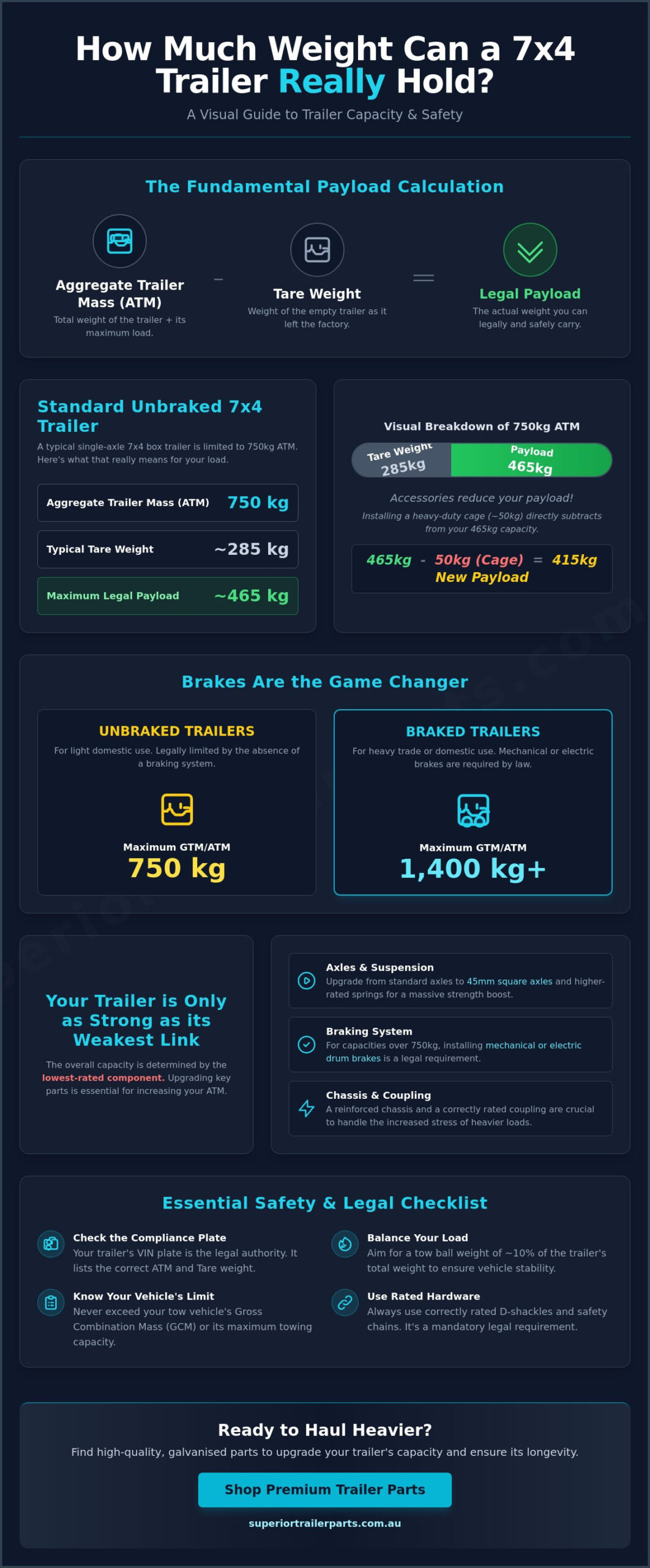
Three core terms define your hauling limits. Aggregate Trailer Mass (ATM) is the total weight of the trailer plus its maximum load when it is not coupled to a tow vehicle. Tare weight is the mass of the trailer as it left the factory, completely empty. Payload is the difference between the two. It represents the actual weight of the gear, dirt, or tools you can legally carry. A standard 7×4 single axle box trailer is often rated at 750kg ATM, but high-spec models with upgraded components can reach much higher ratings.
Calculating Your Actual Payload
Calculating your capacity is straightforward but requires accuracy. If your 7×4 trailer has a 750kg ATM and a Tare weight of 285kg, your payload is exactly 465kg. You must account for everything added to the trailer after purchase. Installing a steel cage or heavy-duty toolboxes increases the Tare weight and directly reduces your remaining payload. If a cage weighs 50kg, your 465kg capacity drops to 415kg. Always verify these figures on the VIN plate located on the drawbar. This plate is the legal authority for your specific trailer’s limits.
The Role of the Tow Vehicle
Your trailer’s rating is only half of the equation. The tow vehicle often sets the real-world limit. You must check your vehicle’s Gross Combination Mass (GCM), which is the maximum allowable weight of the car and trailer combined. If your car is rated to tow only 600kg, you cannot legally pull a 7×4 trailer loaded to its 750kg ATM. Stability is also affected by tow ball weight. Too much weight on the hitch lifts the front wheels of your car, reducing steering control. Keep your load balanced to ensure the tow ball weight stays within the vehicle manufacturer’s recommended range, typically around 10% of the total trailer weight.
Standard Load Capacities for 7×4 Trailers in Australia
Most 7×4 trailers on Australian roads fall into the light-duty category. These units are built for domestic tasks like green waste removal or moving light furniture. To understand how much weight can a 7×4 trailer hold, you must first identify if the unit is equipped with a braking system. The majority of 7×4 models are sold as unbraked units, which strictly limits their legal capacity regardless of how much space is available in the tray.
Structural choices also impact your available payload. A trailer with 300mm sides and a 2.5mm checker plate floor is significantly heavier than a basic model built with thin sheet metal. While thicker steel and deeper sides offer better durability for trade use, they increase the Tare weight. This extra weight subtracts from your legal carrying capacity, meaning a “tougher” trailer might actually carry less weight legally than a lighter one if both share the same ATM rating.
750kg ATM vs. Heavy Duty Braked 7x4s
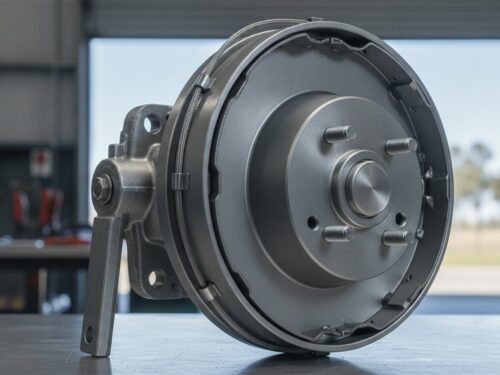
The 750kg ATM rating is the standard for a basic 7×4. This limit is a legal threshold in Australia; any trailer with a Gross Trailer Mass (GTM) exceeding 750kg must have functional brakes. If your trailer lacks a braking system, your total weight including the trailer itself cannot exceed 750kg. For those needing to haul heavier equipment or materials, heavy-duty 7×4 models can reach ratings of 1,400kg or more. These higher ratings require a reinforced chassis and the installation of 9 inch mechanical drum brakes or electric braking systems to meet safety standards.
Visualising the Load: What Fits in a 7×4?
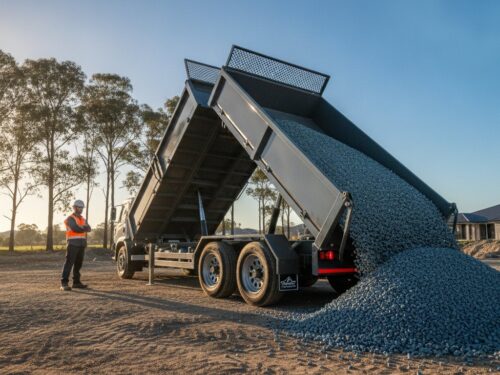
If you fill a standard 750kg rated trailer with sand, the load alone is nearly double the legal limit before you even account for the 285kg weight of the trailer. The “if it fits, it ships” mentality leads to snapped axles and compromised braking distances. Always calculate the density of your materials before shovelling. If your work involves moving soil or aggregates daily, upgrading to heavy-duty single axle box trailers with higher-rated suspension and brakes is the only way to stay compliant and safe.
How Components Determine Your Trailer’s Strength
A trailer is only as strong as its lowest-rated part. While a chassis might look indestructible, the mechanical hardware underneath dictates the true limit. When assessing how much weight can a 7×4 trailer hold, you must identify which component will fail first. If you install a 1,450kg rated axle but keep 750kg rated springs, your legal and safe capacity remains capped at the lower figure. Professional operators check every part of the driveline to ensure the system is balanced for the intended load.
The axle serves as the primary weight-bearing component. It bears the brunt of every pothole and corrugated road surface. Beyond the axle, your suspension and tyres act as the secondary support system. If any of these parts are mismatched, you risk catastrophic failure. It’s not just about what the trailer can carry on a flat road; it’s about how these components perform under the dynamic stress of highway speeds and sudden braking.
Axle Ratings: 39mm Round to 45mm Square
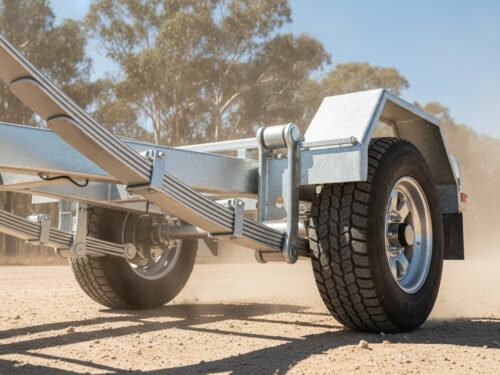
The difference between a standard and a heavy-duty 7×4 often comes down to the axle profile. A 39mm round axle is the industry standard for 750kg ATM trailers. It is lightweight and cost-effective for domestic use. However, upgrading to a 45mm square axle increases the component rating to 1,450kg. Axle thickness and material density directly correlate to how weight is distributed across the hub face, preventing the steel from bowing under heavy stress. Upgrading your axles is the most effective way to increase structural integrity, provided the rest of the hardware matches the new rating.
Suspension and Springs
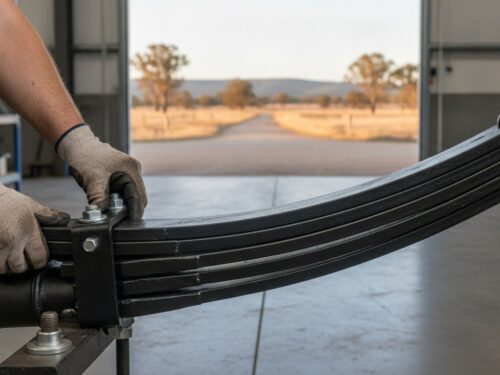
Suspension choice determines how the trailer handles a load. Many entry-level 7×4 trailers use 4 leaf slipper springs, which provide a basic suspension setup for light loads. For trade or heavy-duty applications, 5 leaf eye-to-eye sets offer better dampening and load sharing. Spring fatigue is a common issue for trailers that are stored while fully loaded. Look for sagging or a loss of arch in the leaf springs, as this reduces ground clearance and puts extra strain on the hangers. Regularly inspect your galvanised U-bolts for signs of stretching or rust, as these small fasteners keep the entire axle assembly secured to the chassis.
Don’t overlook the tyres. Every tyre has a load index printed on the sidewall that specifies its maximum weight capacity at a certain pressure. Light truck tyres are generally preferred for trailers because they have stiffer sidewalls and higher load ratings than standard passenger tyres. If your tyres are rated for 400kg each, your total capacity is limited to 800kg, regardless of how strong your axle or springs are. Always match your tyre rating to your trailer’s ATM to avoid blowouts under load.
Legal and Safety Considerations for Towing 7×4 Loads
Legal compliance is non-negotiable for anyone operating a trailer on Australian roads. If you exceed the ATM listed on your compliance plate, you are operating an unroadworthy vehicle. This decision carries heavy consequences. You risk significant fines, the loss of your insurance coverage, and increased liability in the event of an accident. When calculating how much weight can a 7×4 trailer hold, the number stamped on that VIN plate is the only figure that matters to law enforcement. Safety is built on these legal foundations.
Every trailer with an ATM over 750kg must have an effective braking system. This is a strict requirement under the Australian Design Rules (ADR). Failure to maintain your trailer brakes puts immense strain on your tow vehicle’s stopping power. Beyond brakes, you must use rated safety chains and D-shackles. A common mistake is using a standard hardware-store shackle that lacks a load rating. Always use a shackle with a visible rating that matches or exceeds your trailer’s ATM. This ensures that the trailer remains attached to the vehicle even if the coupling fails.
Australian Design Rules (ADR) Compliance
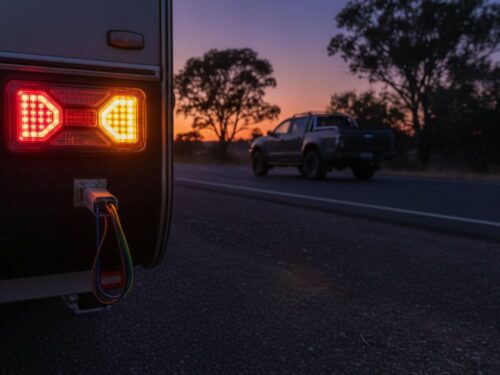
All trailers must comply with ADR standards to be road legal. These rules govern everything from the chassis construction to the couplings used to secure the trailer to your vehicle. A worn or under-rated hitch is a primary point of failure. Ensure your coupling is correctly rated for your ATM and that the locking mechanism is functional. For wider 7×4 loads, ADR also dictates specific lighting and reflector placements. Your LED submersible tail lights must be visible and properly wired to ensure other drivers can see your intentions in all weather conditions.
Safe Loading Practices
How you pack the trailer is just as important as how much you pack. Follow the 60/40 rule: place 60% of the load weight in the front half of the trailer, positioned directly over or slightly ahead of the axle. Placing heavy items at the very rear of a 7×4 tray causes the trailer to lift the rear of the tow vehicle, leading to dangerous trailer sway. Secure every load using rated tie-down points and high-quality straps. An unsecured load shifting mid-turn can instantly change your centre of gravity and cause a rollover. If you need to upgrade your hardware to meet these safety standards, contact our team for expert advice on compliant components.
Selecting High-Quality Parts for Your 7×4 Trailer
Superior Trailer Parts stands as a reliable partner for those who depend on their gear every day. We provide Australian-made components designed to withstand the unique stresses of regional roads and heavy trade use. While the compliance plate gives you a legal limit, the quality of your hardware determines the real-world answer to how much weight can a 7×4 trailer hold over the long term. Using premium parts ensures that your trailer remains a functional asset rather than a mechanical liability.
A trailer is a significant investment. Protecting that investment requires a focus on structural integrity and material quality. Professional operators know that cutting corners on small components like fasteners or bushings leads to expensive downtime. We focus on providing hardware that meets or exceeds national standards, ensuring your 7×4 setup is prepared for the job at hand.
Quality Components for Durability
Corrosion is the primary enemy of trailer longevity. In harsh coastal or industrial environments, untreated steel components will quickly lose their structural strength. Using galvanised U-bolts is a simple but effective way to prevent rust from compromising your axle assembly. These fasteners are the only things keeping your suspension attached to the chassis. If they fail due to rust, the results are catastrophic. Professional-grade axles are a far better investment than generic imports. High-quality steel handles heat cycles and road vibration without the risk of cracking or bowing under load.
For those who need a trailer for daily trade or commercial work, standard domestic models often fall short. We offer heavy-duty single axle box trailers that feature reinforced frames and higher-rated suspension systems. These units are built to handle the maximum legal payload consistently. When you start with a heavy-duty foundation, you have more flexibility in how much weight can a 7×4 trailer hold while staying within safe operating margins.
Ongoing Maintenance and Support
Mechanical parts wear down regardless of build quality. Regular maintenance is the only way to preserve your trailer’s carrying capacity and safety. Check your wheel bearings every 12 months or 10,000km. If you notice grease leaking from the hub or if the hub feels hot to the touch after a short drive, the bearings require immediate attention. Heat is a clear sign of friction, and friction leads to seized wheels on the highway.
Inspect your leaf spring bushings for signs of perishing or excessive play. Worn bushings allow the axle to shift, which ruins tyre alignment and makes the trailer difficult to tow. If you are planning a custom build or need to upgrade your current 7×4 trailer to handle more weight, don’t guess the specifications. Reach out to us for technical parts support. Our team provides the expert advice needed to select the right axles, brakes, and springs for your specific hauling requirements.
Optimising Your 7×4 Trailer for Reliable Hauling
Understanding how much weight can a 7×4 trailer hold is the first step toward safer towing. You now know that the legal limit is defined by the compliance plate, not just the physical dimensions of the tray. A standard unbraked 7×4 unit is restricted to 750kg ATM, but upgrading to heavy-duty axles and braking systems can significantly increase your capacity. Always prioritise mechanical balance. Your trailer is only as strong as its weakest component, whether that’s the leaf springs, the coupling, or the tyre load index.
Superior Trailer Parts is an Australian owned and operated business committed to keeping your gear on the road. We supply high-quality components that meet strict Australian Design Rules to ensure your setup remains compliant. Whether you need a 45mm square axle or a new set of electric drum brakes, we offer nationwide shipping across Australia to get your parts delivered quickly. We stand behind the durability of our hardware so you can tow with confidence.
Browse our range of heavy-duty 7×4 trailer parts and axles to start your next upgrade. Maintaining your equipment with professional-grade hardware ensures years of reliable service and safety. Get your trailer ready for the next big load today.
Frequently Asked Questions
Can I carry 1 tonne in a standard 7×4 trailer?
No, you cannot safely or legally carry 1 tonne in a standard unbraked 7×4 trailer. Most of these units have an Aggregate Trailer Mass (ATM) of 750kg. Once you subtract the Tare weight of roughly 285kg, your remaining payload is approximately 465kg. Attempting to carry 1,000kg of cargo would exceed the structural and legal limits of the axle and chassis by more than double.
What happens if I overload my 7×4 trailer?
Overloading leads to immediate mechanical risks such as snapped axles, leaf spring failure, or tyre blowouts. It also compromises your vehicle’s braking efficiency and steering control. Legally, an overloaded trailer is unroadworthy. This voids your insurance policy and makes you liable for heavy fines or prosecution if you are involved in a road accident while exceeding the rated capacity.
How do I find the Tare weight of my trailer?
The Tare weight is typically stamped on the VIN or compliance plate located on the trailer drawbar. This figure represents the mass of the empty trailer as it was manufactured. If the plate is missing or you have added heavy modifications like a steel floor, you should take the empty trailer to a public weighbridge to get an accurate measurement of its current weight.
Does a 7×4 trailer need brakes in Australia?
A 7×4 trailer only requires brakes if its Gross Trailer Mass (GTM) exceeds 750kg. Most standard domestic trailers stay under this limit to avoid the cost and maintenance of a braking system. However, if you intend to increase how much weight can a 7×4 trailer hold beyond the 750kg threshold, you must install mechanical or electric brakes to comply with Australian Design Rules.
Will a 7×4 trailer fit a pallet of bricks?
While the physical dimensions of a 7×4 tray can accommodate a standard 1.2m x 1.2m pallet, the weight is usually too high. A full pallet of bricks typically weighs between 1,200kg and 1,500kg. This is nearly three times the payload capacity of a standard 750kg ATM trailer. You would need a heavy-duty braked trailer with a reinforced chassis to move this much weight safely.
How does cage weight affect my payload capacity?
Can I upgrade my 750kg trailer to a higher ATM?
Upgrading is possible but requires replacing key components to meet higher safety standards. You must install a rated axle, stronger leaf springs, and a functional braking system. After the mechanical work is finished, the trailer must be inspected by a qualified engineer or transport authority to be issued a new compliance plate reflecting the increased weight rating.
What is the best axle for a heavy-duty 7×4 trailer?
A 45mm square axle is the best choice for a heavy-duty 7×4 setup intended for trade or commercial use. It provides significantly more strength than a 39mm round axle and is rated for up to 1,450kg. This component is essential for anyone looking to maximise how much weight can a 7×4 trailer hold while ensuring the assembly remains rigid under the stress of heavy loads and regional road conditions.