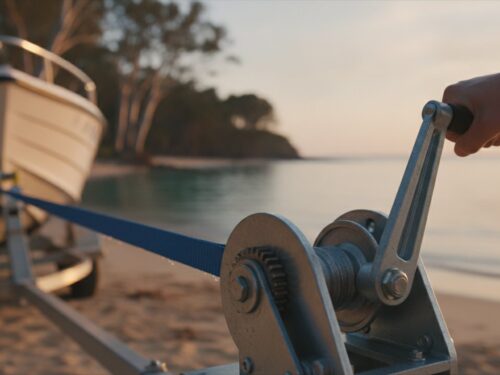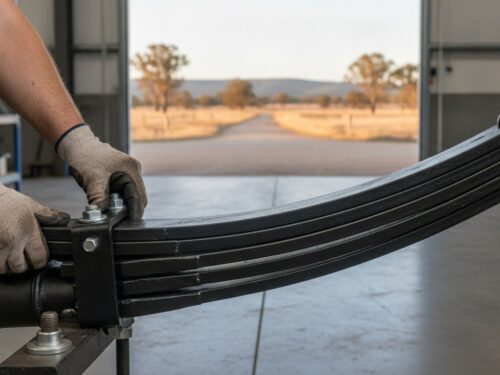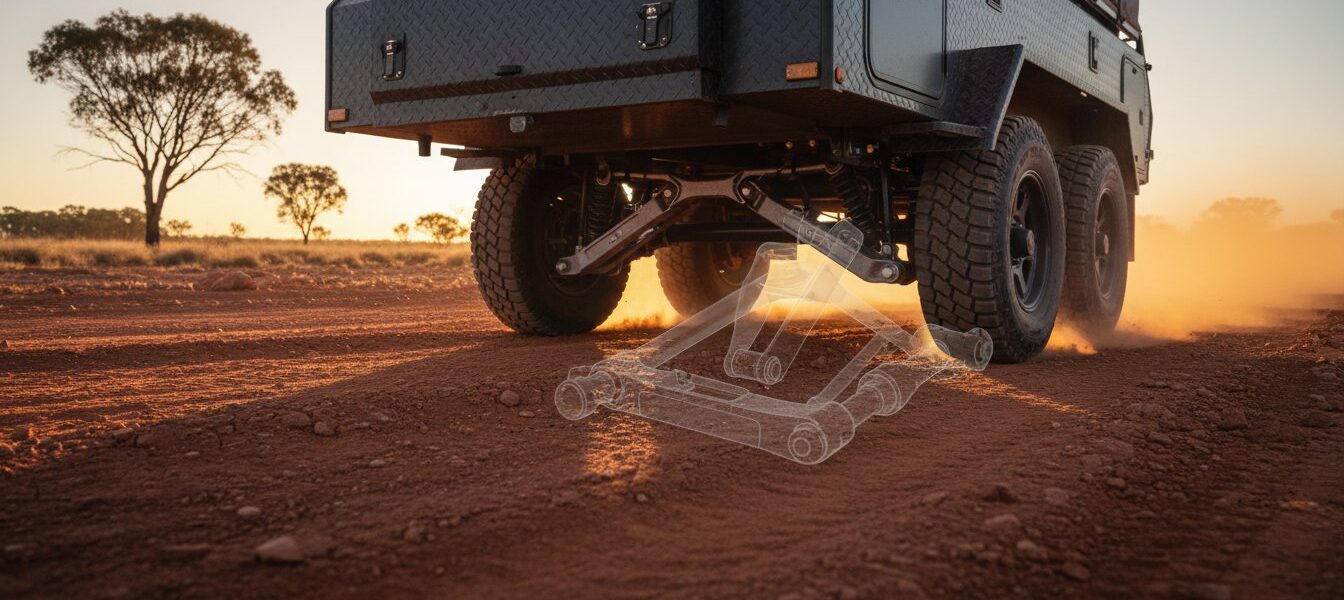
A single broken spring leaf on a remote Australian track is more than an inconvenience; it is a recovery mission that can cost you thousands. You know that corrugated roads and heavy loads do not care about your trailer’s brand name. If your suspension cannot manage vibration or share weight properly, you will eventually face uneven tyre wear, damaged equipment, or a snapped hanger. Choosing between slipper springs vs rocker roller suspension is the most critical decision you will make for your trailer’s longevity.
We understand that navigating technical specs is frustrating when you just need a setup that works. This guide provides a clear technical comparison to help you select a system that survives the harshest conditions. You will learn how each setup handles weight distribution and compliance under the July 2025 VSB 1 Revision 6 standards. We cover everything from the 1,990kg limit of slipper springs to the 4,500kg capacity of heavy duty rocker roller systems. We will examine the mechanical advantages of each to ensure your trailer remains stable, legal, and ready for the bush.
Key Takeaways
- Understand the fundamental mechanical differences between simple sliding tail designs and advanced pivoting rocker arms.
- Evaluate slipper springs vs rocker roller suspension based on how load-sharing technology impacts tyre longevity and towing stability.
- Learn to calculate accurate ATM and GTM figures to ensure your trailer remains compliant with July 2025 Australian standards.
- Discover why standard ball couplings can be a weak link and how to match your suspension with off-road poly block alternatives.
- Get practical advice on installation safety and the structural requirements for replacing hangers on heavy duty trailers.
Trailer Suspension Systems: Slipper Springs and Rocker Roller Mechanics
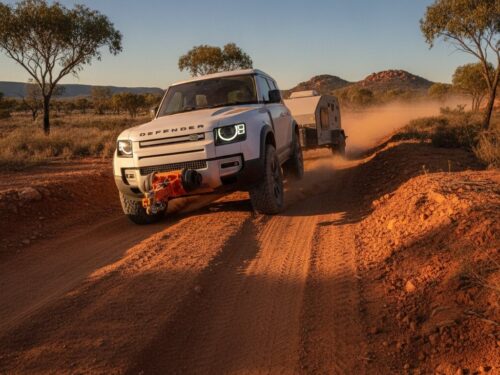
Corrugated roads across the Australian Outback are the ultimate test for any trailer. High-frequency vibrations from these tracks cause rapid metal fatigue and component failure in systems that cannot manage impact. Choosing the right setup between slipper springs vs rocker roller suspension depends entirely on your trailer’s weight and the terrain it must traverse. While both systems rely on fundamental leaf spring mechanics, they manage load and movement in very different ways.
The Mechanics of Slipper Leaf Springs
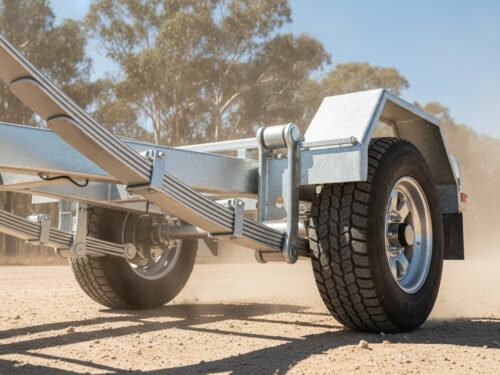
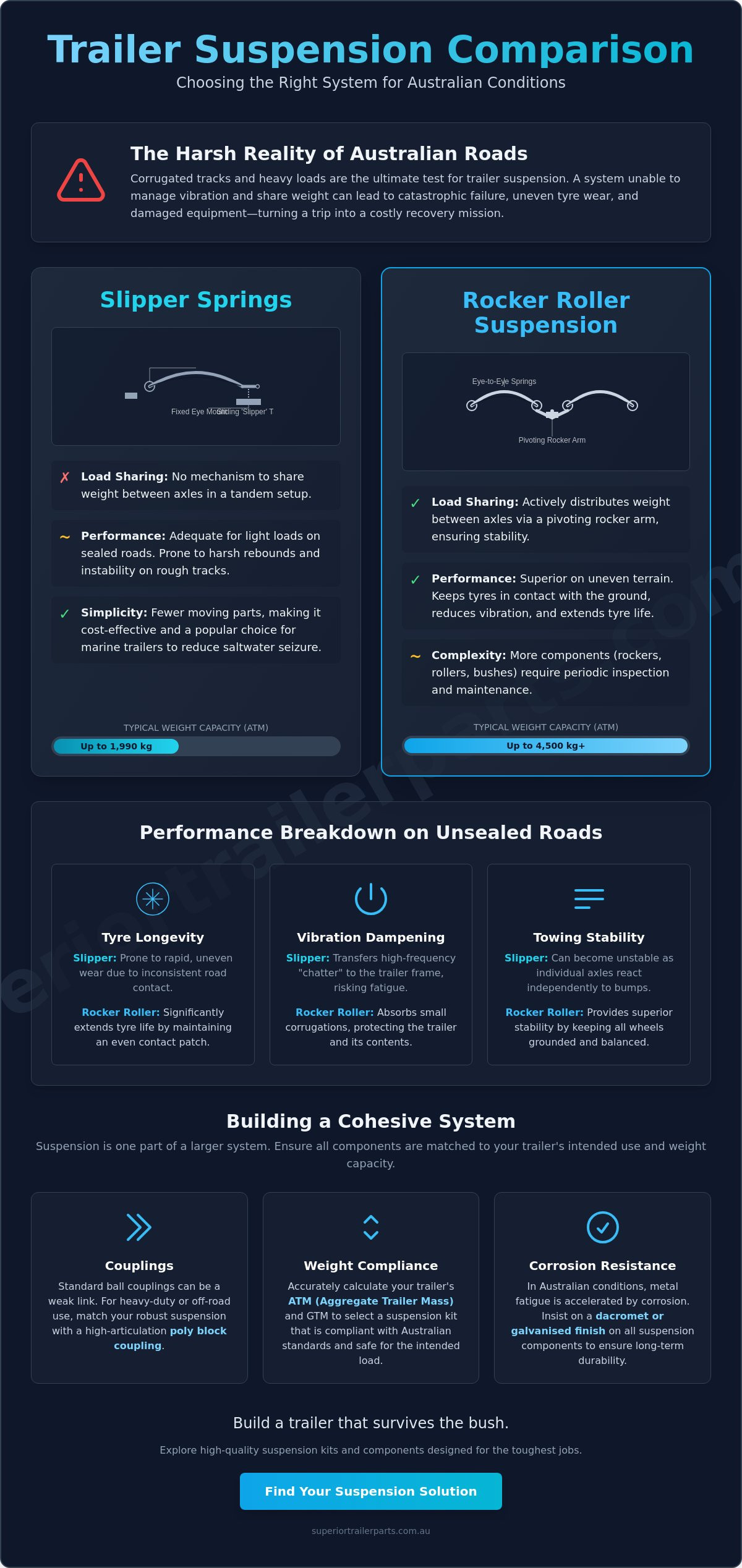
The slipper design is defined by its simplicity. It features a single “eye” at the front where the spring is bolted to a fixed hanger. The rear end of the spring is not fixed; it is a flat “tail” that slides inside a slipper hanger as the spring compresses and expands. This design is highly preferred for leaf springs on marine trailers because it has fewer moving parts to seize in salt water. However, slipper springs have significant limitations on rough tracks. Because they do not share load in a tandem setup, hitting a large pothole or washout can momentarily put the entire trailer weight on a single spring. This often leads to snapped leaves or damaged hangers on remote tracks where help is far away.
How Rocker Roller Systems Distribute Load
Rocker roller suspension is a more sophisticated setup for tandem axle trailers. Instead of individual hangers for every spring end, the springs are connected by a central rocker arm that pivots on a middle hanger. This mechanism allows the axles to move independently while sharing the load. When the front tyre climbs a rock or drops into a hole, the rocker arm pivots to transfer weight to the rear axle. This keeps all four tyres in contact with the ground, providing better traction and towing stability. The “roller” component is a steel bush that allows the spring to move with minimal friction. This reduces stress on the spring steel and helps the suspension absorb smaller corrugations that would otherwise vibrate through the entire trailer frame and damage your gear.
Slipper Springs vs Rocker Roller Suspension: Performance Comparison
Performance on unsealed roads is where the technical gap between slipper springs vs rocker roller suspension becomes most apparent. Slipper springs are essentially a passive system. They provide basic suspension but offer no mechanism to equalise weight between tandem axles. When towing on corrugated tracks, this lack of load sharing leads to rapid tyre wear. If the front axle hits a bump, it carries a disproportionate amount of the trailer’s weight until the rear axle catches up. In contrast, rocker roller systems actively manage weight distribution. By pivoting on a central hanger, they ensure that each tyre maintains a consistent contact patch with the road, significantly extending the life of your rubber during long-distance outback touring.
Vibration dampening is another critical differentiator. High-frequency corrugations create “chatter,” which can loosen bolts and fatigue the trailer frame. While slipper springs are cost-effective, they are prone to harsh rebounds. Many global federal suspension system regulations highlight the necessity of secure mounting to prevent component displacement. For Australian conditions, using a dacromet or galvanised finish is non-negotiable to prevent the corrosion that accelerates metal fatigue in these high-stress environments.
The Advantage of Eye-to-Eye Rebound Springs
A major weakness in basic suspension is the lack of rebound control. When a trailer hits a deep washout, the spring stores energy. Without a rebound leaf, the axle “hops” violently as the spring snaps back to its original shape. Eye-to-eye springs, often used in rocker roller kits, solve this by using a secondary leaf to control the upward movement. These setups often feature a “military wrap,” where the second leaf wraps around the main eye. This provides a critical safety backup; if the main leaf snaps on a remote track, the second leaf keeps the axle attached to the trailer. If you are building for reliability, you can browse our range of leaf springs to find heavy-duty options with these features.
Durability on Corrugated Australian Tracks
Slipper springs have a dangerous tendency to “jump” out of their hangers during extreme rebounds on rough terrain. Because the rear of the spring is not bolted, a massive vertical jolt can cause the tail to clear the hanger entirely. Rocker roller systems are captive, meaning the springs are bolted at both ends to the rocker or the frame. This ensures the suspension remains intact regardless of the terrain. To survive the dust of the Kimberley or the Pilbara, these systems should be fitted with greaseable shackles. These allow you to flush out grit and keep the bushes lubricated, preventing the “dry” friction that leads to premature bush failure and squeaky, inefficient suspension.
Selecting the Correct Weight Capacity for Your Suspension Kit
Calculating the correct weight capacity is not just about meeting legal requirements. It’s about physical survival on the track. You must distinguish between Aggregate Trailer Mass (ATM) and Gross Trailer Mass (GTM) before purchasing a kit. ATM is the total weight of your trailer when fully loaded and uncoupled. GTM represents the weight transmitted to the ground through the tyres when the trailer is hitched to your vehicle. Because your suspension carries the GTM, this is the figure that dictates your choice between slipper springs vs rocker roller suspension.
Don’t rely solely on the manufacturer’s tare weight. Real-world touring involves full water tanks, extra fuel, and heavy recovery gear. Underestimating this total leads to flattened springs and failed hangers. Conversely, “over-springing” is a common mistake. If you install a 9-leaf kit on a trailer that only weighs 1,000kg, the suspension will be too stiff to compress. This causes the trailer to bounce violently, which can shake cabinet work apart and cause the tyres to lose traction on corrugated bends. Match your spring rating to your actual loaded weight to ensure the suspension can cycle through its full range of travel.
Single Axle vs Tandem Axle Off-Road Configurations
Single axle trailers offer superior manoeuvrability on tight, winding tracks. However, for loads exceeding 1,990kg, a tandem setup is necessary for stability and compliance. Rocker roller systems are the preferred choice for welded galvanised tandem trailers because they prevent axle overloading. When one tyre hits a ledge, the rocker pivots to ensure the weight is shared with the second axle. This prevents the frame from twisting and keeps the trailer level, which is essential for safe braking performance on loose surfaces.
Understanding Leaf Count and Spring Rate
The number of leaves in your spring pack determines its load capacity and its “rate,” or how much force is needed to compress it. Adding more leaves, such as moving from a 5-leaf to a 9-leaf setup, increases the load rating but results in a firmer ride. When researching trailer suspension spring types, you’ll find that longer springs generally offer better shock absorption. A longer spring has a greater distance to flex, which allows it to soak up the “chatter” of dirt roads more effectively than short, stiff packs. For off-road use, aim for a leaf count that matches your maximum GTM with a modest safety margin to account for dynamic loads during heavy impacts.
System Synergy: Matching Springs with Axles and Couplings
Alignment is equally critical for long-term reliability. Heavy-duty U-bolts are the only components keeping your axle attached to your springs. Use galvanised, high-tensile U-bolts and check their torque regularly, especially after the first 500km of a trip. Vibration from corrugations can loosen nuts, causing the axle to shift and ruining your tyre alignment. This puts immense lateral pressure on your spring bushes. Pair your setup with high-quality wheel bearings and marine-grade seals to prevent fine red dust from entering the hubs and grinding your bearings to a halt.
Axle Compatibility: 45mm Square vs 50mm Square
Heavier suspension kits require trailer axles with larger diameters to handle increased GTM. While a 39mm round axle might suffice for a light slipper setup, tandem rocker roller systems generally demand 45mm or 50mm square axles for structural rigidity. Ensure your fish plates and U-bolts match the specific width of your spring pack. Using mismatched hardware creates gaps that allow for movement. This movement eventually shears the centre bolt of the leaf pack and causes the entire axle to move out of square.
Off-Road Couplings and Articulation
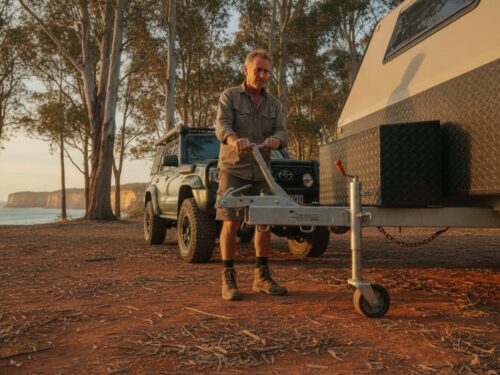
Poly block couplings are the ideal partner for off-road suspension. These specialised couplings allow for 360-degree rotation and extreme angles of articulation. This freedom of movement ensures the trailer doesn’t try to roll the tow vehicle when navigating offset ruts. For larger tandem setups, a weight distribution hitch can help level the load on the bitumen. However, these are typically removed when you hit the tracks to allow the suspension to cycle freely. You can find everything you need to complete your build in our full range of trailer parts.
Installation and Long-Term Maintenance for Australian Conditions
Upgrading from a slipper setup to a rocker roller system is a significant structural modification. You cannot simply bolt the new springs into the old hangers. A rocker roller kit requires three hangers per side: a front, a rear, and a central pivot hanger. This means you must grind off the existing slipper hangers and precisely weld the new ones to the chassis. When deciding on slipper springs vs rocker roller suspension for a DIY upgrade, factor in the complexity of this alignment. If the hangers are even a few millimetres out of square, the trailer will “crab” down the road. This leads to rapid tyre wear and poor fuel economy.
Safety is paramount during this process. Structural welding on trailer hangers and frames should only be performed by experienced operators or qualified tradespeople. A weld that looks clean on the surface might lack the penetration needed to withstand the constant pounding of unsealed roads. Once the installation is complete, perform a post-trip inspection after every major journey. Look for hairline stress cracks around the hangers and check for ovalised holes in the bushings. Catching these issues early prevents a total suspension collapse in the middle of the bush. Your outback spares kit should always include a spare shackle bolt, a set of bushes, and a spare leaf to ensure you aren’t stranded by a minor failure.
Field Maintenance Checklist for Outback Travellers
Daily visual inspections are mandatory when you are off the bitumen. Check your spring hangers and shackle bolts for signs of movement or shiny metal, which indicates a loose fit. Pay close attention to your U-bolt kits; these can stretch under the strain of heavy corrugations. Carry a torque wrench and verify bolt tension after the first 500km of unsealed road travel. If your system uses greaseable pins, stick to a strict lubrication schedule. Pumping fresh grease into the bushes flushes out the abrasive red dust that acts like sandpaper on moving parts.
Sourcing Quality Replacement Parts
Reliability starts with the quality of the steel. Choosing an Australian-owned specialist ensures you get technical support from people who understand local conditions. When a leaf eventually fatigues, ensure the replacement matches the existing spring rate and length exactly. Mixing different spring rates on a tandem setup will cause the trailer to pull to one side and put uneven stress on the rocker arm. If you are unsure about the specifications for your upgrade or repair, Contact Superior Trailer Parts for expert advice on your off-road build.
Secure Your Build for the Australian Outback
Deciding between slipper springs vs rocker roller suspension is a choice that ultimately determines whether your trailer returns from the track in one piece. For light-duty single axle trailers, the simplicity and low maintenance of a slipper set remain effective. However, for tandem setups tackling heavy corrugations, the load-sharing mechanics of a rocker roller system are essential for tyre longevity and frame integrity. Always match your spring rate to your actual GTM and ensure your axles and couplings are rated for the same environmental stress.
As specialists in heavy-duty and off-road components, we provide the hardware required for a professional-grade build. We are proudly Australian owned and operated, offering nationwide shipping across Australia to keep your project moving. View our full range of heavy-duty trailer parts and suspension kits to find the right gear for your requirements. Get your setup right the first time and tow with confidence knowing your trailer is built to survive the harshest conditions in the bush.
Frequently Asked Questions
What is the main difference between slipper springs and rocker roller suspension?
The primary difference lies in how each system manages weight distribution on tandem axles. Slipper springs feature a free-sliding “tail” in a rear hanger, which provides no mechanism for load sharing between axles. Rocker roller suspension uses a central pivot arm to equalise the load. This ensures that weight is shared across both axles even when the ground is uneven, providing superior stability for slipper springs vs rocker roller suspension comparisons.
Can I upgrade my existing box trailer from slipper springs to rocker roller?
Yes, you can upgrade, but it is a major structural task rather than a simple bolt-on project. You must grind off the original slipper hangers and weld new front, rear, and centre pivot hangers to the trailer chassis. Precise measurement is essential during this process. If the new hangers are not perfectly square, the trailer will not track correctly, leading to rapid tyre wear and increased fuel consumption.
Are rocker roller systems worth the extra cost for highway towing?
Rocker roller systems are worth the investment for highway use because they significantly improve towing stability. By equalising the weight across both axles, the system reduces trailer bounce and ensures more consistent braking performance. This results in a smoother ride for the tow vehicle and extends the life of your tyres compared to non-load-sharing slipper setups.
Why do slipper springs sometimes jump out of their hangers?
Slipper springs can jump out of their hangers when the trailer experiences a violent vertical rebound on rough tracks or deep washouts. Since the rear end of the spring is not bolted to the hanger, a massive jolt can lift the tail clear of the slipper housing. This is a dangerous failure that can lead to the axle shifting. It is a primary reason why off-roaders prefer the captive eye-to-eye design found in rocker roller kits.
How many leaves do I need for a 2000kg tandem axle trailer?
A 2000kg tandem axle trailer typically requires a 5-leaf spring set when using a rocker roller system. Each leaf pack is engineered to carry a specific portion of the Gross Trailer Mass. It is vital to check the manufacturer’s load rating for the specific spring pack you select. Avoid installing a 9-leaf kit on a light trailer, as the ride will be too stiff and cause excessive vibration.
What are rebound springs and why are they recommended for off-road use?
Rebound springs include a secondary leaf positioned on top of the main spring pack to control upward axle movement. They are recommended for off-road use because they prevent the axle from “hopping” after hitting a hole or ledge. This keeps the tyres in contact with the track and protects the trailer frame from the violent shock damage caused by uncontrolled spring snap-back.
Do I need a special axle to install a rocker roller suspension kit?
You don’t need a special axle, but you must ensure your axle diameter is rated for the suspension’s capacity. Heavier rocker roller kits generally require 45mm or 50mm square axles to handle the increased load. You must also verify that your U-bolts and fish plates are the correct size for both the axle diameter and the width of the spring leaves.
How often should I grease the shackle bolts on my off-road trailer?
Grease your shackle bolts every 5,000km for highway use, or weekly when travelling in high-dust environments. If you are navigating unsealed outback roads, frequent lubrication is mandatory. Pumping fresh grease into the pins flushes out the abrasive red dust that acts like sandpaper. This prevents the dry friction that leads to premature bush failure and snapped shackle pins.