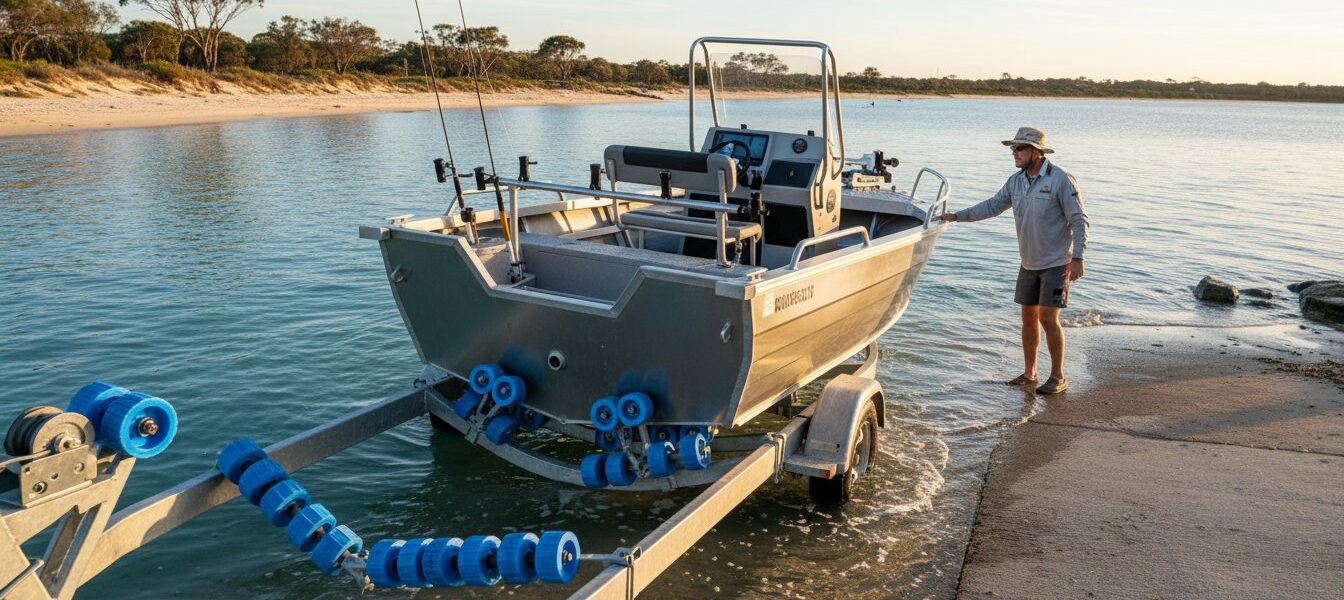
Your trailer rollers are the only thing standing between a seamless solo launch and a permanent black scar across your hull. Many boat owners settle for factory-standard rubber that perishes in the sun or leaves stubborn marks that won’t scrub off. It’s a common problem that turns a quick trip to the ramp into a frustrating ordeal. Finding the best boat trailer rollers for aluminum boats is the most effective way to ensure your boat stays centered and your hull remains undamaged.
We know you value hardware that works as hard as you do. You need rollers that won’t split under pressure or seize up after a few months in the salt. You’ll discover the most durable, hull-safe roller materials and configurations specifically engineered for aluminium boats in Australian marine environments. We’ll examine why high-density polyurethane is the standard for non-marring performance and how the right keel and wobble rollers make launching effortless.
Key Takeaways
- Identify the best boat trailer rollers for aluminum boats to distribute weight correctly and prevent structural stress on the hull.
- Learn why polyurethane is the preferred material to prevent hull marring and withstand harsh UV exposure.
- Understand the specific roles of keel rollers for weight support and wobble rollers for lateral stability during transport.
- Get practical steps for aligning your trailer setup to ensure effortless solo launches and retrievals.
- Discover essential maintenance routines to prevent salt crystallization from seizing your roller axles in saltwater conditions.
Why Aluminium Hulls Require Specific Trailer Rollers
Aluminium boats are prized for their light weight and durability, but they present unique challenges when sitting on a trailer. Unlike fiberglass hulls, which feature a thick, rigid gelcoat, aluminium is more flexible and prone to “point-loading.” This occurs when the boat’s weight concentrates on a small surface area, leading to permanent dents or “hooking” in the hull. Selecting the best boat trailer rollers for aluminum boats involves finding hardware that balances support with material safety. You need a setup that distributes pressure across the strongest parts of the boat, specifically the keel and the chines.
Environmental factors also play a massive role. Different boat trailer types use varied support systems, but for aluminium, a roller-based setup is often preferred for ease of launch. However, raw alloy is highly reactive. If you use low-quality rollers with exposed metal components, you risk galvanic corrosion where the hull meets the trailer. Australia’s harsh UV conditions also degrade standard black rubber quickly. It cracks, perishes, and loses its structural integrity within a few seasons. High-quality boat trailer parts must be UV-stabilised to survive the local climate without splitting.
Understanding Hull Marring and Material Hardness
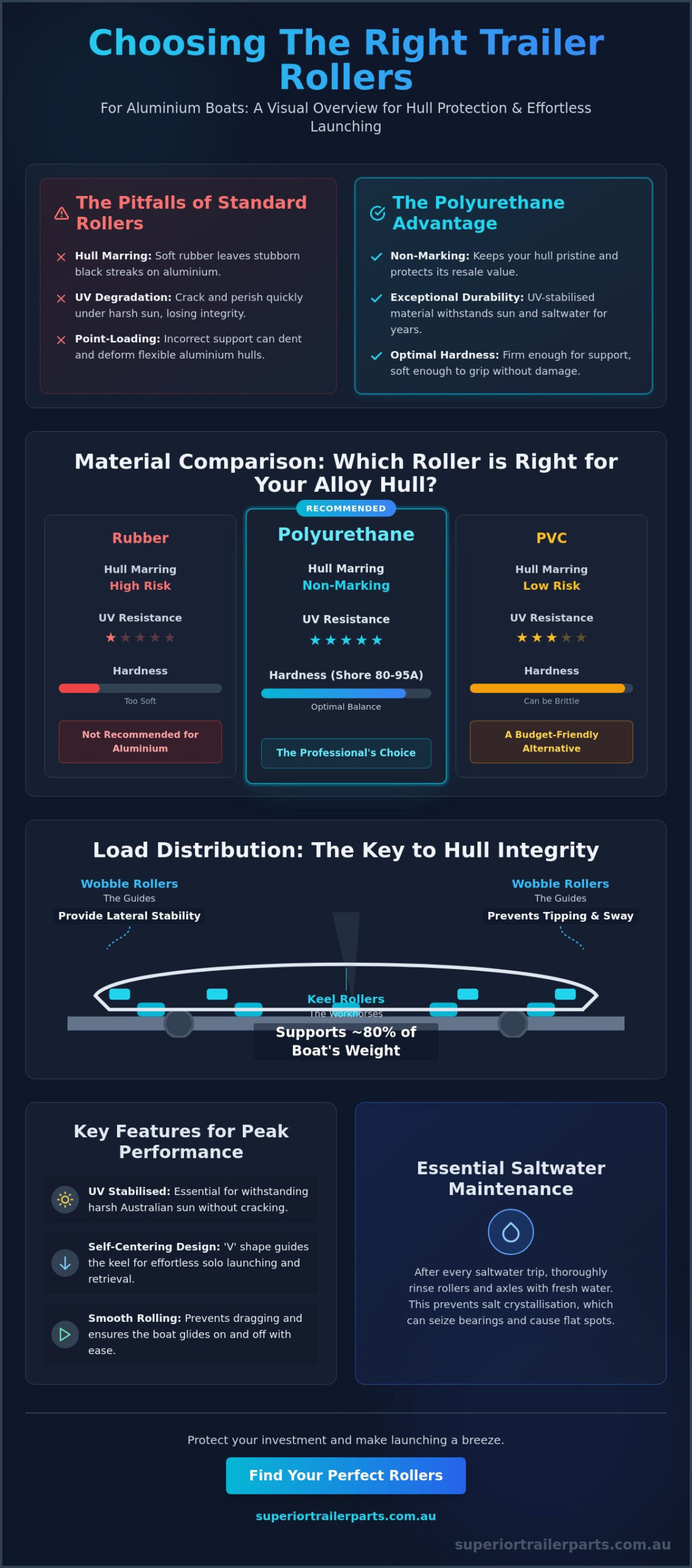
Hull marring is the transfer of roller material onto the boat’s surface. Soft black rubber rollers are the primary culprits. They leave stubborn, greasy streaks on raw aluminium that are nearly impossible to remove without abrasive cleaners. This isn’t just an aesthetic issue; it can hide structural cracks or corrosion. To avoid this, industry experts look at the Shore hardness scale. Polyurethane rollers typically sit between 80A and 95A on this scale. This provides enough “give” to grip the hull without being so soft that they leave marks. Non-marking polyurethane is the most critical feature for any alloy boat owner who wants to maintain their vessel’s resale value.
Load Distribution and Structural Integrity
Correct load distribution keeps your hull straight. Aluminium boats rely on the central longitudinal beam, or keel, for structural strength. Your keel rollers should carry about 80 percent of the boat’s total weight. If these rollers are misaligned or made of inferior materials, the hull will flex every time you hit a bump on the road. Wobble rollers serve a different purpose. They shouldn’t carry the main load. Instead, they provide lateral stability. By distributing pressure along the chines, they prevent the boat from tipping during transit. This dual-action approach prevents the “hooking” effect where the hull deforms around a single, overloaded roller. It’s a simple mechanical solution to a potentially expensive structural problem.
Essential Roller Types for Marine Trailer Configurations
A functional trailer setup relies on more than just high-quality parts. It requires a coordinated system where every component matches the vessel’s hull geometry. The best boat trailer rollers for aluminum boats don’t just sit under the hull; they actively guide the boat during retrieval and hold it steady during highway transit. For aluminium owners, the priority is high-density support that prevents the hull from flexing or denting. This system typically includes keel rollers, wobble rollers, and bow blocks, each serving a distinct mechanical purpose.
Retrieving a boat alone in a crosswind or heavy current is a common headache for many fishers. This is where self-centering rollers prove their value. These components use a deep ‘V’ shape to capture the boat’s keel and force it into the center of the trailer frame. Modern polyurethane roller materials have evolved to provide the necessary Shore hardness for these high-pressure tasks while remaining completely non-marking. If your current setup requires multiple attempts to get the boat straight, upgrading to self-centering hardware is the most effective solution.
The Role of Keel Rollers in Hull Support
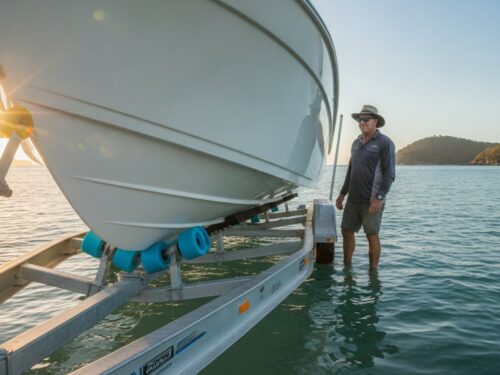
Keel rollers are the workhorses of your trailer. They carry roughly 80 percent of the boat’s weight by supporting the central longitudinal beam. For aluminium boats, wider keel rollers are essential. A wider surface area distributes the weight more effectively, reducing the risk of point-loading that can cause hull deformation. Tapered self-centering designs are particularly useful for solo operators because they eliminate the need for manual centering. For heavy plate boats, consider rollers with an aluminium centre. These provide a rigid, unyielding core that won’t compress or flat-spot under significant weight during long-haul trips. If you’re rebuilding an old trailer, browsing a range of boat trailer parts can help you identify which keel roller width fits your specific frame brackets.
Wobble Rollers and Side Stability
While keel rollers handle the weight, wobble rollers manage the balance. These rollers are designed to pivot on their brackets, allowing them to adjust to the specific deadrise of your aluminium hull. This flexibility ensures maximum contact between the roller and the metal surface. Using multiple contact points is the best way to prevent hull denting. A standard 5-meter aluminium boat usually requires at least four wobble rollers per side, though heavier vessels may need more to spread the lateral load. By distributing pressure along the chines, these rollers keep the boat from rocking during transport, which protects both the hull and the trailer’s suspension system. Check your roller spacing regularly to ensure the load remains even across all points.
Material Selection: Polyurethane vs. PVC vs. Rubber
Material choice determines how long your trailer remains functional and how well your hull is protected. For alloy owners, the goal is a non-marking surface that handles high point-loads without deforming. The best boat trailer rollers for aluminum boats are almost always made from high-grade polymers rather than traditional rubber. Rubber perishes quickly in the Australian sun and leaves black marks that are difficult to remove from raw aluminium hulls. Switching to modern materials is a practical upgrade that pays for itself through reduced maintenance and better hull preservation.
Hardness is measured on the Shore Durometer scale, a technical detail often overlooked by general retailers. For aluminium boats, you need a material that is hard enough to support weight but resilient enough to absorb road vibration. Most high-quality Keel Rollers utilize polyurethane with a hardness rating between 80A and 95A. This range ensures the roller maintains its shape under the heavy pressure of a plate boat keel while providing a slick surface for launching.
Polyurethane: The Professional Choice
Polyurethane is the industry standard for a reason. It is chemically resistant to fuel, oil, and saltwater degradation. Unlike rubber, it has excellent “memory.” If a boat sits on the trailer for months, poly rollers resist developing permanent flat spots. This prevents the “thumping” sensation often felt when towing a trailer that has been in storage. Market colour coding typically helps identify the specific compound:
- Red Polyurethane: Usually the hardest grade (around 95A). Use these for keel support where maximum weight bearing is required.
- Blue Polyurethane: Often slightly more flexible (85A to 90A). These are excellent for Wobble Rollers because they can conform slightly to the hull’s shape.
- Yellow Polyurethane: Frequently used for specialized self-centering rollers that require a balance of grip and slide.
Rubber and PVC: Pros and Cons
Don’t use black rubber for aluminium hulls. It’s too soft and the carbon black filler transfers to the metal. PVC is a hard plastic alternative that is often found on budget trailers. While PVC won’t mark the hull, it lacks the resilience of polyurethane. In high-UV areas, PVC becomes brittle and can shatter under sudden impact. Hard plastic also causes “chatter” or high-frequency vibrations when towing on corrugated roads. This vibration can eventually stress hull rivets or welds. For high-performance launching, some owners opt for HDPE (High-Density Polyethylene) or Teflon-coated rollers. These provide the lowest friction possible, allowing even heavy boats to slide off the trailer with minimal winch effort.
Optimising Your Trailer Setup for Easy Launching
Installing the best boat trailer rollers for aluminum boats is only the first step. To achieve a truly effortless launch, you must calibrate the trailer geometry to match your hull’s specific dimensions. Aluminium hulls are rigid yet susceptible to deformation if the weight isn’t distributed precisely across the frame. A poorly adjusted trailer makes solo retrievals a chore and can lead to structural fatigue over time. Follow these steps to ensure your hardware performs as intended.
- Step 1: Align the keel rollers. These must be perfectly centered on the trailer’s cross-members. They support the boat’s backbone. If they’re off-center, the boat will never track straight during retrieval.
- Step 2: Set wobble roller height. Adjust these so they sit flush against the hull’s chines. They shouldn’t lift the boat off the keel rollers, but they must provide enough tension to prevent lateral rocking.
- Step 3: Test friction. Before heading to the ramp, release the winch slightly and see if the boat moves freely. If it sticks, your rollers might be misaligned or the pins might need lubrication.
- Step 4: Lock the hardware. Check every bracket for interference. Ensure that no metal parts of the trailer can contact the hull as the rollers compress under load.
Achieving the Perfect Balance
A common mistake is over-tightening side rollers. We recommend a 60/40 weight distribution strategy for most aluminium setups. The keel rollers should take 60 percent of the load to maintain structural integrity, while the wobble rollers provide the remaining 40 percent in stability. If you see the hull flexing where a roller makes contact, the roller is set too high. This creates a pressure point that can lead to permanent hull damage. Adjust the brackets downward until the contact is firm but the weight is shared across the entire roller bank. This ensures the boat sits deep enough in the trailer for a low center of gravity during transport.
Hardware and Brackets
The rollers are only as reliable as the pins and brackets holding them. In Australian saltwater environments, corrosion is your primary enemy. Use galvanised steel or stainless steel pins to prevent the rollers from seizing. Standard split pins and washers are small components, but they’re vital for safety. A lost split pin can cause a roller to slide off the axle during transit, leaving your hull exposed to the bare metal frame. When replacing worn hardware, choose high-quality boat trailer parts designed for heavy-duty marine use. Check your U-bolts and brackets for signs of rust every six months to maintain a secure setup.
Ready to improve your launching experience? Browse our selection of heavy-duty rollers and hardware to find the right fit for your boat.
Maintenance and Longevity in Australian Saltwater
The Australian marine environment is one of the most demanding on earth. High salinity and intense UV levels mean that even the best boat trailer rollers for aluminum boats require a strict maintenance schedule. Salt crystallisation is the primary cause of roller failure. As saltwater evaporates inside the roller bush, it leaves behind abrasive crystals. These crystals act like sandpaper, grinding down the internal pins and eventually seizing the roller entirely. A seized roller doesn’t just make launching difficult; it creates a friction point that can wear through your hull’s protective oxide layer.
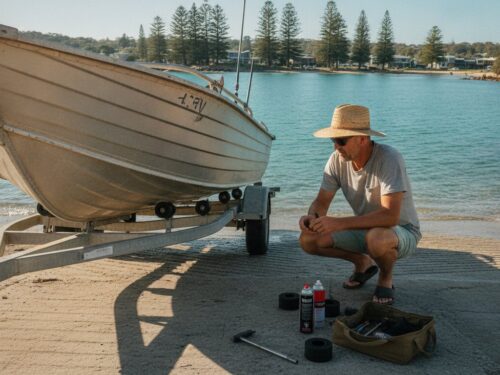
Regular freshwater wash-downs are non-negotiable. After every trip, use high-pressure water to flush the gap between the roller and the pin. This removes salt before it can harden. For lubrication, only use high-quality marine-grade grease. Avoid thin aerosol lubricants like WD-40 for long-term protection, as they wash away quickly in the surf. A thick, water-resistant grease stays on the pin, ensuring the roller spins freely even under the heavy load of a plate boat.
Seasonal Inspection Checklist
Before the summer season begins, perform a thorough physical inspection of your trailer. Look for these specific signs of wear or failure:
- Check for ‘slop’: Grab each roller and wiggle it. Excessive play indicates the internal bush has worn down and the roller needs replacement.
- Identify rust streaks: If you see orange streaks bleeding from the centre of the roller, the internal galvanised pin is corroding. This will eventually cause the roller to seize or the pin to snap.
- Inspect for flat spots: While polyurethane resists flat-spotting better than rubber, heavy boats can still cause deformation if left sitting for years. A flat spot creates a “thump” during transport that stresses your trailer’s suspension.
- Look for UV cracking: Examine the edges of the rollers for small hairline fractures. This is a sign the material is becoming brittle and may shatter during your next launch.
The Superior Trailer Parts Advantage
We understand that downtime means missed days on the water. Our commitment to stocking heavy-duty trailer parts ensures you have access to hardware that can withstand the harshest coastal conditions. Whether you are replacing a single keel roller or rebuilding an entire wobble roller bank, we provide the industrial-grade components required for a reliable setup. If you’re unsure about which roller hardness or diameter fits your specific trailer frame, our team offers expert advice through our contact page. We provide nationwide shipping for all marine trailer components across Australia, getting you back to the ramp with minimal delay.
Secure Your Hull for the Long Haul
We are specialists in heavy-duty marine components and understand the harsh conditions of the Australian coast. As an Australian-owned and operated business, we provide the reliable hardware you need for a hassle-free day on the water. Finding the best boat trailer rollers for aluminum boats shouldn’t be a guessing game. We offer nationwide shipping across Australia to ensure you have access to the right parts exactly when you need them.
Shop our range of high-performance boat trailer rollers and get your trailer ready for the next season. Enjoy the confidence of a seamless launch every time you hit the ramp.
Frequently Asked Questions
Will polyurethane rollers scratch my aluminium boat?
No, polyurethane rollers won’t scratch your aluminium boat if you maintain them correctly. These rollers feature a Shore hardness that balances structural support with surface safety. Scratches usually occur when salt crystals or sand become trapped between the roller and the hull. Regular freshwater wash-downs ensure the roller surface remains smooth and safe for raw alloy hulls during every launch.
How many wobble rollers do I need for a 5-metre aluminium boat?
A 5-metre aluminium boat typically requires at least four wobble rollers per side to provide adequate lateral stability. This configuration creates eight contact points across the chines to distribute pressure evenly. Heavier plate boats or those with deep-V hulls often benefit from six rollers per side. This setup prevents the hull from rocking during transport and reduces the risk of point-loading damage on the road.
Why do my black rubber rollers leave marks on my hull?
Black rubber rollers leave marks because they contain carbon black filler that transfers to the metal under friction. As the rubber degrades from UV exposure, it becomes softer and more prone to “bleeding” onto the aluminium. These marks are stubborn and difficult to remove from raw metal. Switching to non-marking polyurethane is the most effective way to eliminate this problem and keep your hull clean.
Can I use self-centering rollers on a flat-bottom tinny?
Self-centering rollers are less effective on flat-bottom tinnies because they rely on a defined keel to guide the boat into the center. These rollers use a ‘V’ shape to capture the boat’s backbone. If your boat has a very shallow or flat entry, standard cylindrical rollers are often a more practical choice. Ensure your trailer is submerged at the correct depth to assist with manual centering during retrieval.
What is the difference between red and blue boat rollers?
The difference between red and blue rollers usually relates to material hardness. Red rollers are typically harder, often around 95A on the Shore Durometer scale, and are used for keel support where weight-bearing is the priority. Blue rollers are often slightly more flexible, usually between 85A and 90A. This makes them better for wobble rollers that need to conform slightly to the hull’s shape for better grip.
How often should I replace my boat trailer rollers?
You should replace boat trailer rollers when you notice physical signs of failure like deep cracks, flat spots, or seizing. In high-UV and saltwater environments, standard rollers often last three to five years. If a roller no longer spins freely after cleaning and greasing, the internal bush is likely worn. Replacing them early prevents damage to your hull and ensures your winch doesn’t have to work harder than necessary.
Is it better to have more rollers or longer skids for an alloy boat?
Rollers are generally better for aluminium boats because they significantly reduce friction during launch and retrieval. While skids provide a larger surface area, they can trap sand and salt which acts like sandpaper against the hull. The best boat trailer rollers for aluminum boats provide high-density support at the keel while allowing the boat to roll off the trailer with minimal effort, even on shallow ramps.
Do I need to grease my boat trailer roller pins?
Yes, you should grease your boat trailer roller pins to prevent them from seizing due to salt crystallization. Use a high-quality marine-grade grease that won’t wash away in saltwater. Apply grease to the internal pin and ensure the roller spins freely. This simple maintenance task prevents the pins from wearing down the roller bushes and extends the life of your trailer hardware in harsh coastal conditions.