Buying a cheap, mass-produced trailer often costs more in structural repairs over its first three years than building a heavy-duty tandem unit from the ground up. You already know that skimping on materials leads to cracked welds and failed axles when you’re under a full load. Still, fluctuating steel prices and complex Australian Design Rules (ADR) make it difficult to pin down a realistic budget. We provide a transparent breakdown of the cost to build a 8×5 trailer australia so you can plan your project without financial surprises.
This resource delivers a practical shopping list of essential components. We cover everything from galvanised RHS steel to marine-grade hubs and heavy-duty braking systems. You’ll gain a clear understanding of material expenses and the specific compliance costs required for registration. We’ve laid out the technical requirements to ensure your DIY build is road-legal and capable of handling harsh Australian conditions. Follow this breakdown to move from a pile of parts to a reliable, hardworking piece of equipment.
Key Takeaways
- Identify the three primary budget pillars: steel fabrication, mechanical components, and ADR compliance. This structure ensures a transparent view of the total investment required for a heavy-duty build.
- Select mechanical parts that align with Australian Design Rules to ensure safety and road-legality. Use our breakdown to estimate the cost to build a 8×5 trailer australia based on your specific load requirements.
- Evaluate the trade-off between steel thickness and tare weight to maximise your trailer’s payload capacity. High-quality galvanised materials are essential for long-term durability in local conditions.
- Navigate the registration process and VSB1 requirements to move your project from the workshop to the road. Understanding these compliance steps prevents unexpected fees and inspection failures.
- Weigh the time investment of a DIY project against the financial cost of a pre-assembled trailer. Building your own allows for total control over component quality and heavy-duty specifications.
Understanding the 8×5 Trailer Build Budget in Australia
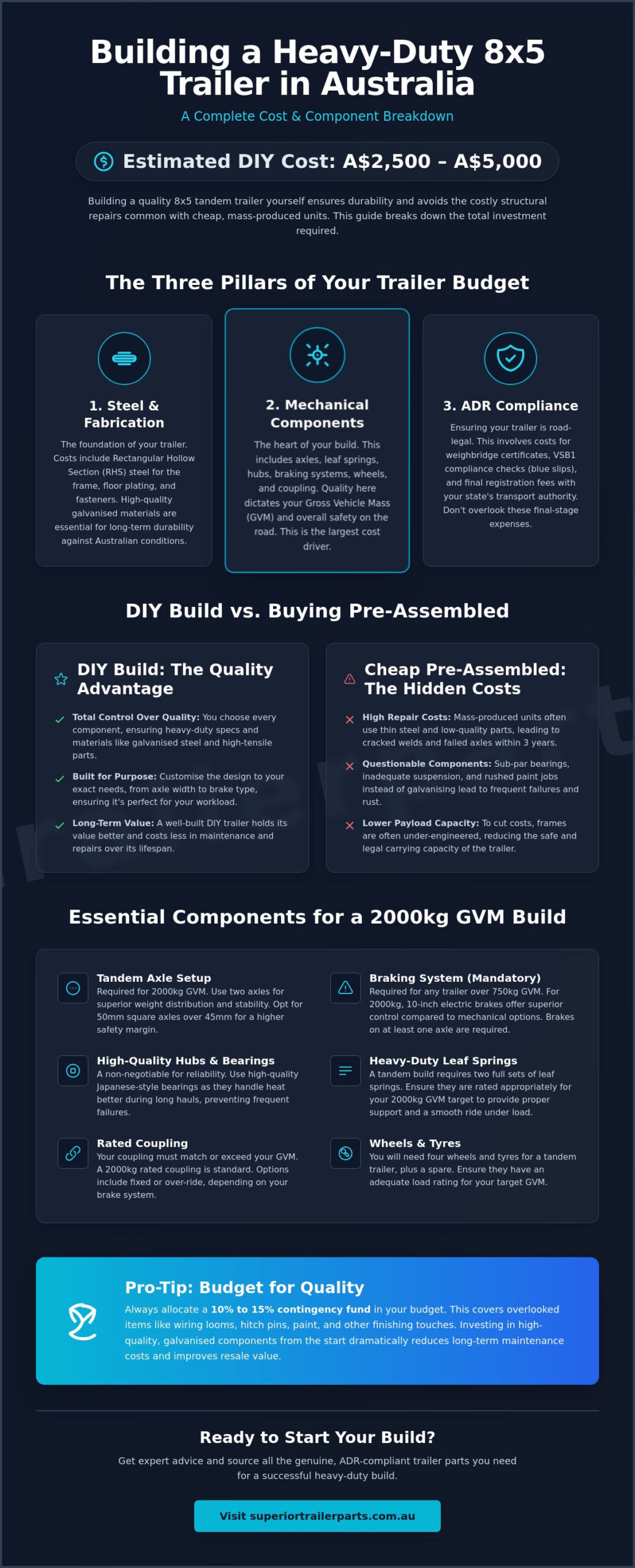
The 8×5 tandem trailer is the Australian standard for heavy-duty hauling. It provides the necessary deck space for construction materials, machinery, or landscaping supplies. While a Trailer (vehicle) can come in many configurations, the 8×5 size is the most popular choice for professionals and serious DIYers. The cost to build a 8×5 trailer australia fluctuates based on three main pillars: raw materials, mechanical components, and government compliance.
Most 8×5 builds target a 2000kg Gross Vehicle Mass (GVM). This capacity requires a tandem axle setup. Using two axles improves weight distribution and stability at highway speeds. A single axle on a frame this size often leads to poor handling and structural failure under load. Expect DIY costs to range between A$2,500 and A$5,000. Low-end estimates cover basic painted steel and standard suspension. High-end budgets account for hot-dipped galvanised frames, electric brakes, and high-tensile components.
- Materials: Steel RHS, floor plating, and fasteners.
- Mechanical: Axles, leaf springs, hubs, and braking systems.
- Compliance: Weighbridge certificates, blue slips, and registration fees.
Tandem Axle vs Single Axle Cost Differences
Building a tandem trailer increases the parts list significantly. You’re buying four wheels, four tyres, and two sets of leaf springs. Brakes are also mandatory for trailers over 750kg GVM. A tandem setup usually requires brakes on at least one axle, though many builders opt for all-wheel braking to ensure safety. This doubling of mechanical parts is the largest cost driver between a small utility trailer and a heavy-duty 8×5 tandem.
Setting a Realistic Budget for Quality
Quality determines longevity. A “budget” build might use thinner wall RHS steel or second-hand wheels. These choices often lead to cracked frames or frequent bearing failures. Professional-grade builds use Australian-spec steel and genuine trailer parts to handle harsh road conditions. Don’t cut corners on safety components. Always allocate a 10% to 15% contingency fund. This covers hardware like hitch pins, wiring looms, and finishing touches that are easy to overlook during the planning phase. High-quality components reduce long-term maintenance costs and improve resale value.
Itemising Essential Mechanical Components and Parts
The mechanical kit is the heart of your build. It dictates the Gross Vehicle Mass (GVM) and determines how much weight you can legally carry on Australian roads. Choosing the right components ensures your project meets Australian Design Rules (ADR) for safety and registration. For the cost to build a 8×5 trailer australia, hardware quality is where you shouldn’t cut corners. Galvanised hardware is essential. It resists corrosion in harsh coastal environments and muddy job sites across the country. Our team provides expert advice to ensure your mechanical kit is fit for purpose.
Axles, Hubs, and Bearings for a 2000kg GVM
A standard 8×5 tandem trailer typically aims for a 2000kg GVM. You must choose between 45mm square axles and 50mm square axles. While 45mm axles are common, 50mm axles provide a higher safety margin for heavy-duty use. High-quality Japanese-style wheel bearings are a non-negotiable requirement for longevity. They handle heat better than cheaper alternatives during long hauls. You need to calculate your axle width precisely before ordering to ensure correct track width and wheel clearance. Check the axles page for current specifications and technical data.
Braking Systems and Couplings
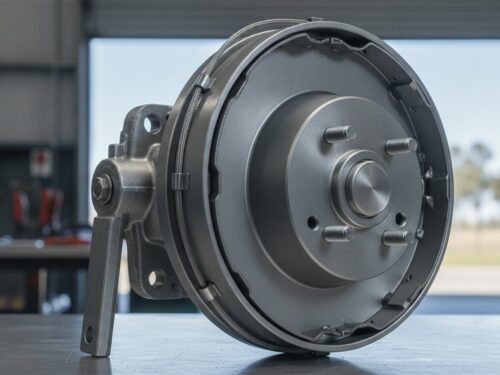
Australian law requires functional braking systems on any trailer exceeding 750kg GVM. For a 2000kg 8×5 build, you have several options. Mechanical drum brakes (9-inch) are a cost-effective choice for many. However, 10-inch electric brakes offer superior control and are often preferred for heavy tandem setups. Your coupling must match your GVM rating. A 2000kg rated coupling is standard. You can choose between fixed or over-ride options depending on your braking system. Browse couplings and parts to find the right fit for your drawbar configuration.
Suspension: Leaf Springs and Rocker Roller Sets
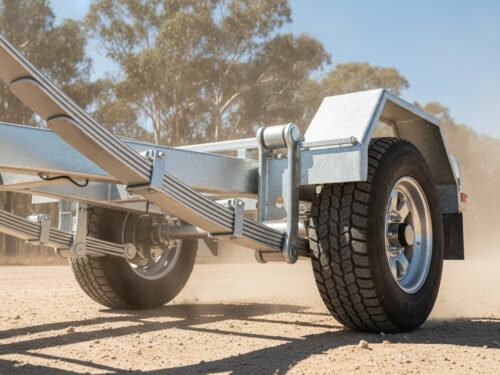
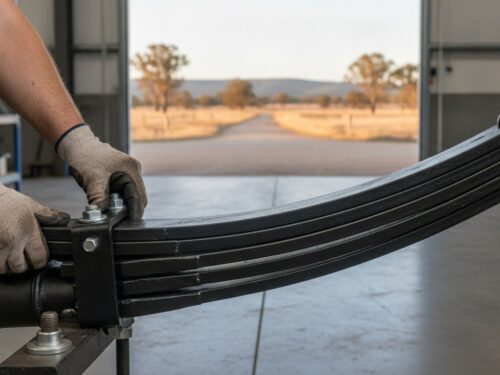
Tandem 8×5 trailers perform best with rocker roller spring sets. This design allows the load to distribute evenly across both axles when driving over uneven terrain. A 5-leaf eye-to-eye spring set is the industry standard for 2000kg setups. Don’t forget the essential hardware. You’ll need high-tensile U-bolts, shackle bolts, and hangers to secure the assembly to your chassis. When calculating the total cost to build a 8×5 trailer australia, factor in these smaller but vital components. View leaf springs for tandem kits to see the full range of heavy-duty options available.
- Durability: Galvanised parts prevent rust and extend trailer life.
- Safety: ADR compliance is mandatory for all road-going trailers.
- Performance: Rocker roller suspension improves towing stability.
Selecting the right mechanical components is about more than just fitting parts together. It’s about building a tool that works as hard as you do. Using Australian Owned and Operated suppliers ensures you get parts designed for our specific conditions.
Steel Fabrication and Finishing Costs
Steel represents the largest portion of your raw material budget. It often accounts for up to 50 percent of the total expense when you factor in the chassis, drawbar, and flooring. Choosing the right material thickness is a balancing act. Thicker steel sections provide superior strength but increase the trailer tare weight. This reduces your available payload. Most builders opt for 3mm wall thickness to ensure a high strength-to-weight ratio. You must also account for fabrication supplies. Budget for welding wire, grinding discs, and gas bottle refills. Safety gear like gloves and welding lenses are essential costs that many DIYers overlook.
Sourcing and Budgeting for Australian Steel
Local steel merchants typically sell Rectangular Hollow Section (RHS) and Square Hollow Section (SHS) in standard 6.5-metre or 8-metre lengths. Buying full lengths is significantly more cost-effective than requesting pre-cut pieces. For an 8×5 build, you will need RHS for the main frame and SHS for the drawbar and uprights. The floor requires a 2400mm x 1500mm sheet of checker plate. Selecting 2.1mm or 3.2mm checker plate depends on your intended load types. Australian steel prices vary by region; however, sourcing from a dedicated steel distributor rather than a general hardware chain can save you 20 percent on the total cost to build a 8×5 trailer australia.
- RHS: Used for the main chassis rails to provide longitudinal strength.
- SHS: Ideal for cross members and the drawbar assembly.
- Checker Plate: Provides a non-slip surface and protects the structure from impact.
The Cost of Corrosion Protection
Corrosion protection is the most critical decision for long-term durability. Hot-dip galvanising is the preferred method for Australian conditions. Galvanising plants calculate costs based on the final weight of the fabricated steel. This process involves submerging the entire frame in molten zinc. It creates a bonded coating that protects both internal and external surfaces. While this adds to the initial cost to build a 8×5 trailer australia, it eliminates the need for future rust repairs and increases resale value.
DIY painting is an alternative for those on a strict budget. You can use cold-galvanising primers and industrial topcoats to finish the metal. This method is cheaper upfront but demands extensive surface preparation. Paint is prone to chipping and does not protect the inside of the hollow steel sections. Professional galvanising remains the benchmark for heavy-duty single axle box trailers. It ensures your investment survives coastal salt air and wet weather for decades. Always factor in the transport costs to and from the galvanising plant when finalizing your budget.
Navigating ADR Compliance and Registration Fees
Building the frame is just the start. Your project only becomes a trailer once it’s road-legal. In Australia, every custom build must comply with Vehicle Standards Bulletin 1 (VSB1). This document is the national standard for light trailers. It covers everything from dimensions and braking requirements to drawbar strength. If your build doesn’t meet VSB1 specifications, you won’t get a VIN. Without a VIN, you can’t register the trailer. This makes the compliance phase a critical part of the cost to build a 8×5 trailer australia.
The process starts with a structural assessment. You must ensure your welds are professional and your materials meet the required thickness for the intended Gross Vehicle Mass (GVM). Don’t guess the measurements. Use a tape measure and a level at every stage. Australian roads are harsh. Compliance isn’t just about paperwork; it’s about ensuring your 8×5 doesn’t fail at 100km/h on the highway.
Mandatory Lighting and Electrical Kits
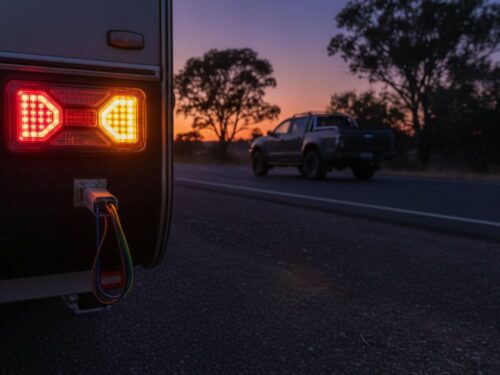
Visibility is a legal requirement. You need ADR-approved LED submersible tail lights and side markers. LEDs are the industry standard because they handle vibrations better than traditional bulbs. They’re also sealed against dust and water. A basic electrical kit includes the lights, reflectors, and a wiring loom. You must choose between a 7-pin or 12-pin plug. A 7-pin plug is sufficient for standard lighting. A 12-pin plug is necessary if you’re running internal power or electric brakes. For correct installation, refer to these trailer plug wiring diagrams. High-quality electrical components usually cost between A$90 and A$210 depending on the plug type and wire gauge.
Inspection and Registration Fees
Budgeting for government and administrative fees is mandatory. You can’t skip the weighbridge. A weighbridge certificate confirms the tare weight of your empty trailer. Most public weighbridges charge between A$30 and A$55 for this service. This certificate is required for your registration application. Next, you need a safety inspection. In New South Wales, this is a Blue Slip. Other states use different names, but the purpose is the same. These inspectors verify the build quality and check the VIN.
If your trailer is a new build, you’ll need to apply for a VIN allocation. State authorities or authorized inspectors provide this service. Fees for VIN allocation and plate stamping typically range from A$40 to A$110. Once the inspection is passed, you pay the annual registration fee and Compulsory Third Party (CTP) insurance. These costs vary by state but generally sit between A$160 and A$320 for a standard 8×5 box trailer. Factoring these numbers into the cost to build a 8×5 trailer australia ensures no surprises at the finish line.
Ready to get your project moving? Shop our range of ADR-compliant heavy-duty trailer parts to ensure your build meets Australian standards.
DIY Build vs Buying a Pre-Assembled 8×5 Trailer
The Labour-to-Savings Ratio
Fabricating a high-quality tandem trailer is a significant undertaking. A standard 8×5 tandem build requires between 40 and 60 hours of labour for cutting, welding, and assembly. For a hobbyist, this work might stretch over several months. When you calculate your own hourly rate, the financial gap between DIY and retail often narrows. In many cases, it’s more efficient to purchase a welded galvanised tandem trailer directly. These units come hot-dipped and road-ready, saving you the hassle of sourcing raw steel and managing the galvanising process yourself.
Component Quality: The Superior Advantage
The hidden value of DIY is the ability to select every bolt and bearing. Many mass-produced imports reduce costs by using second-hand tyres or generic bearings. These parts frequently fail under heavy loads or in harsh coastal environments. By building your own, you ensure the use of heavy-duty, marine-grade components that handle Australian roads. Expert advice is essential during this phase. Choosing the right mechanical kit prevents roadside breakdowns and extends the trailer’s lifespan. Before you start, follow this final checklist:
- Verify the ATM (Aggregate Trailer Mass) requirements for your intended use.
- Select a galvanised chassis for maximum corrosion resistance in Australian conditions.
- Source genuine Australian-spec axles and hubs for easy maintenance.
- Confirm all lighting and safety chains meet ADR (Australian Design Rules) standards.
Get Your 8×5 Trailer Project Moving
Calculating the cost to build a 8×5 trailer australia requires a clear breakdown of heavy-duty steel, mechanical components, and mandatory compliance fees. ADR standards dictate specific requirements for lights, reflectors, and safety chains that every builder must follow. Registration costs are another essential factor. For instance, a private light trailer registration in New South Wales currently costs A$72 plus the initial inspection fee. Choosing galvanised components and marine-grade fittings prevents corrosion and extends the life of your investment.
Superior Trailer Parts is Australian Owned and Operated. We provide nationwide shipping on all components to keep your project on schedule. Our team offers expert technical advice for DIY builders who value durability and performance. We focus on heavy-duty parts that withstand tough local conditions. Browse our range of high-quality trailer parts and start your build today. Grab your tools and build a trailer that lasts for years.
Frequently Asked Questions
Is it cheaper to build or buy a 8×5 trailer in Australia?
Building can save between A$500 and A$1,200 depending on your skill and source of materials. If you value your time at a standard mechanical rate of A$80 per hour, buying a mass-produced unit often costs less. Custom builds allow for higher-grade components like heavy-duty suspension and thicker RHS steel; retail units often skip these to save money.
What is the minimum axle size required for a 2000kg 8×5 trailer?
A 2000kg GTM rating requires a 45mm square or 50mm round axle as a minimum standard. For tandem setups, two 40mm square axles are often sufficient to meet the load rating. Always ensure your axle capacity exceeds the GTM; this accounts for dynamic loads and uneven weight distribution across the trailer bed.
Do I need electric brakes for an 8×5 tandem trailer?
Yes, Australian Design Rule (ADR) 38 requires efficient brakes on all wheels for trailers with a GTM over 2000kg. If your 8×5 tandem trailer has a GTM between 751kg and 2000kg, you must have brakes on at least one axle. Electric brakes are the industry standard for trailers over 2000kg. They provide the driver with cab-controlled stopping power.
How much does hot-dip galvanising cost for a standard box trailer?
Professional galvanising plants in Australia typically charge between A$2.50 and A$4.50 per kilogram of steel. For a standard 8×5 box trailer frame weighing approximately 350kg, expect a bill between A$875 and A$1,575. This process provides a zinc coating that prevents rust in harsh marine or coastal environments.
Can I use second-hand car tyres on my DIY trailer build?
You can use second-hand tyres if they meet the load rating and speed category required for the trailer’s GTM. Each tyre must have a minimum tread depth of 1.5mm and show no signs of sidewall cracking. Using light truck tyres is a better choice for heavy-duty builds. They handle high pressures and heavy loads more reliably than standard passenger car tyres.
What are the legal requirements for a DIY trailer drawbar?
VSB1 mandates that the drawbar must be a continuous piece of steel extending from the front of the trailer to the suspension mounts. It must be strong enough to withstand towing forces without permanent deformation. For an 8×5 trailer, using 100mm x 50mm x 3mm RHS steel is a common standard. This ensures compliance with structural integrity requirements.
How do I get a VIN for a trailer I built myself?
You must apply for a Vehicle Identification Number (VIN) through your state’s transport authority. Once you submit the application and pay the fee, the department issues a 17-character code. You must then stamp this VIN into a non-removable part of the trailer chassis. This is usually done on the drawbar using 5mm high characters.
What type of steel is best for a heavy-duty trailer chassis?
Rectangular Hollow Section (RHS) Grade C350LO is the best material for a heavy-duty chassis. This cold-formed steel offers a high strength-to-weight ratio and is easy to weld. Using C350LO steel ensures your cost to build a 8×5 trailer australia project results in a durable frame. It won’t crack under heavy loads on corrugated roads.