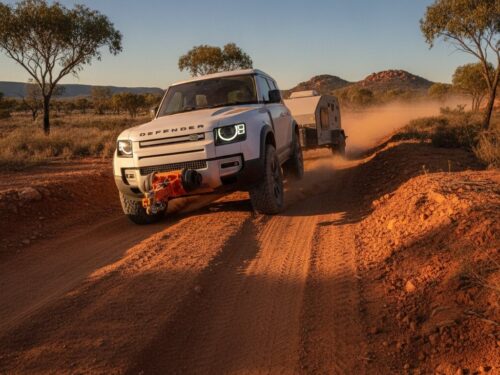
You are maintaining 100km/h on the highway when a passing road train creates a sudden pressure wave, and your trailer starts to fishtail. It is a heart-stopping moment that can lead to a jackknife or a total loss of control in seconds. Learning how to stop trailer swaying is essential for any driver, as even a 5 percent error in weight distribution can compromise your stability on the bitumen.
We agree that confusion over ball weight and hitch height shouldn’t ruin your trip. You deserve a stable towing experience and total confidence in your heavy-duty hardware. This guide explains the mechanical causes of sway and provides the practical steps required for a safe tow across Australia. We will examine the specific loading techniques and genuine parts that ensure your trailer tracks straight. Get the expert advice you need to secure your load and protect your vehicle today.
Key Takeaways
- React correctly to snaking by maintaining a firm steering grip and avoiding the natural urge to slam on your vehicle brakes.
- Learn how to stop trailer swaying by performing essential hardware checks on your trailer axles and suspension components.
- Implement the 60/40 loading rule to maintain correct tongue weight and ensure rear-axle stability on the tow vehicle.
- Identify when to upgrade to a Weight Distribution Hitch or electric brakes for safer long-distance towing across Australia.
- Understand the physics of trailer oscillation to prevent a minor wobble from developing into a dangerous pendulum effect.
Understanding Trailer Sway: Why Your Load Starts Snaking
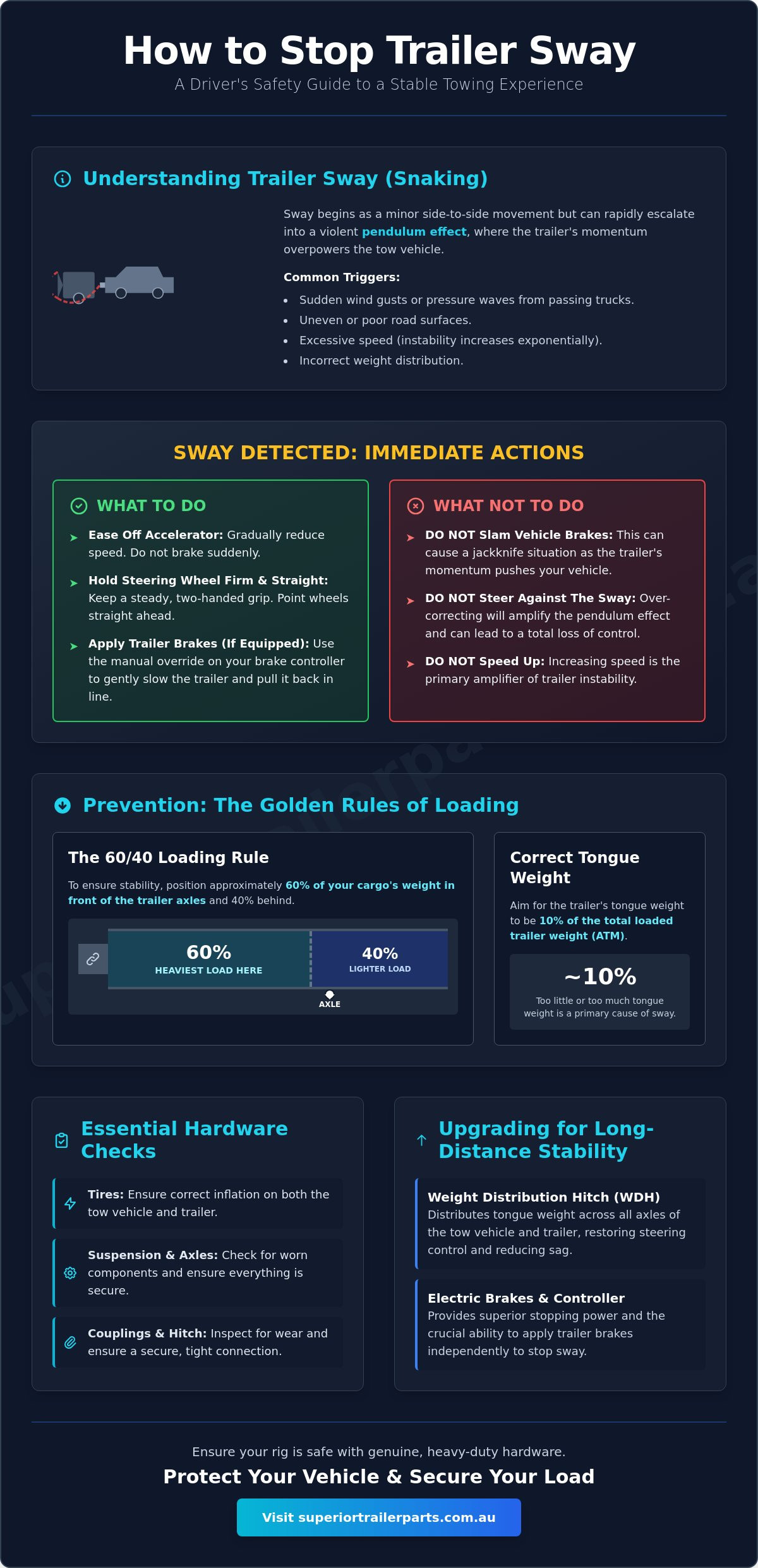
Trailer sway, commonly known as snaking, is the lateral oscillation of a trailer behind a tow vehicle. It begins as a minor side-to-side movement but can rapidly escalate into a violent pendulum effect. This happens because the trailer acts as a lever, pivoting on the tow ball and applying force to the rear of your vehicle. Understanding towing mechanics is essential for any driver hauling heavy loads across Australia. While minor instability feels like a slight tug on the steering wheel, critical fishtailing is an uncontrollable event where the trailer’s momentum overpowers the tow vehicle’s grip. Knowing how to stop trailer swaying is critical for safety on the road.
Several external factors trigger these oscillations. High-speed wind gusts on open plains or uneven road surfaces often initiate the first wobble. These forces are amplified if your equipment is not maintained. Ensuring you have reliable couplings and parts helps maintain a secure connection, but even the best hardware cannot overcome poor physics. You must distinguish between a momentary nudge and a sustained sway that requires immediate intervention.
The Role of Speed and Aerodynamics
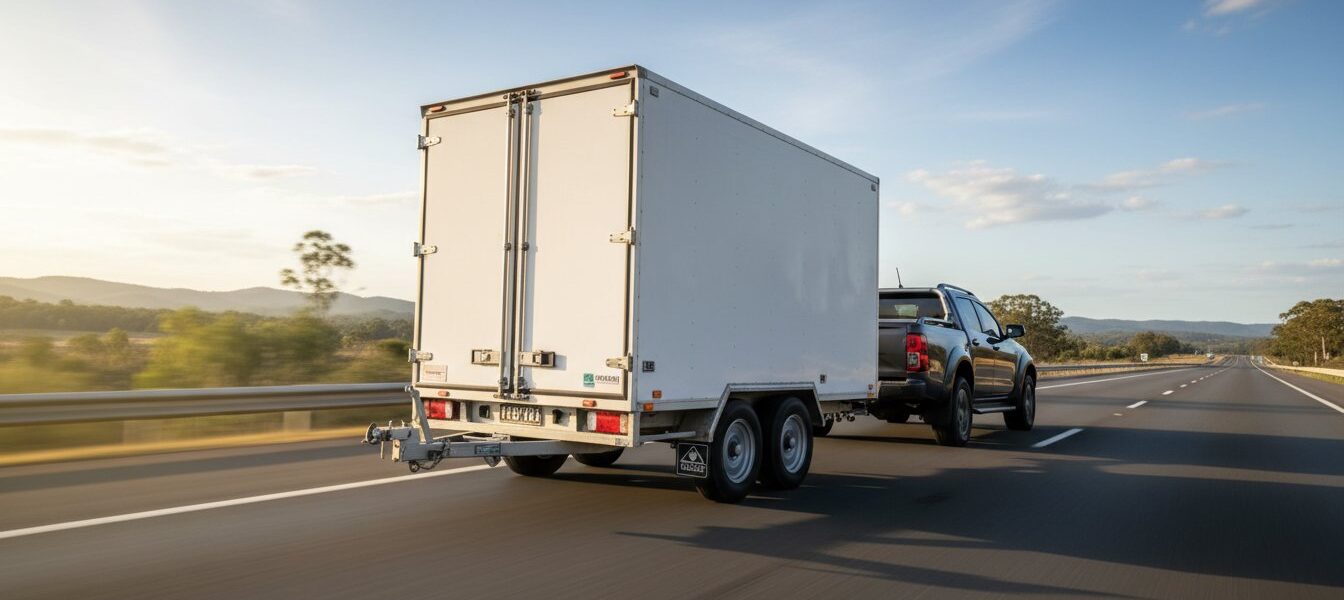
Speed is the primary amplifier of trailer instability. A setup that feels stable at 80km/h may become dangerous at 100km/h. As velocity increases, the aerodynamic forces acting on the trailer grow exponentially. Large heavy vehicles, such as B-doubles, create a “bow wave” of high-pressure air. When a truck passes you on the highway, this air pushes the trailer away and then sucks it back toward the truck as it passes. High-sided caravans and enclosed trailers are particularly susceptible to these pressure changes due to their large surface area. Learning how to stop trailer swaying involves managing your speed relative to these environmental conditions.
Why “The Tail Wags the Dog”
Stability depends heavily on the mass ratio between the tow vehicle and the load. If the trailer is too heavy for the vehicle, it begins to “wag the dog.” Australian safety standards generally recommend a ball weight of approximately 10% of the total loaded trailer weight. Lighter tow vehicles often struggle with heavy, unbraked trailers because they lack the mass to resist the trailer’s lateral energy. You must match your load to the vehicle’s Aggregate Trailer Mass (ATM) and Gross Combination Mass (GCM). Overloading or poor weight distribution shifts the centre of gravity too far back, which is a guaranteed recipe for instability. Always prioritise a balanced load to keep the trailer tracking straight.
Immediate Actions: What to Do When Sway Starts
When you feel the trailer start to oscillate, your first instinct is often the most dangerous. Knowing how to stop trailer swaying requires overriding your panic response. Keep a firm, steady grip on the steering wheel. Don’t jerk the wheel or try to steer out of it. Sudden movements at 100 km/h can turn a minor sway into a total loss of control. Lift your foot off the accelerator slowly. Don’t slam on the vehicle brakes. Heavy braking on the tow vehicle causes the trailer’s momentum to push against the rear of the car. This often leads to a jackknife situation.
- Keep your eyes on the road ahead.
- Maintain a firm, two-handed grip on the steering wheel.
- Avoid the urge to hit the vehicle brake pedal.
- Use the manual override on your brake controller if you’re equipped.
- Allow the vehicle to slow down by coasting.
The Hazard of Over-Correction
Steering against the sway is a common mistake that amplifies the pendulum effect. If the trailer swings left, your instinct is to steer right. This timing is almost always off. It causes the next swing to be more violent. Keep the steering wheel pointed straight ahead. This allows the vehicle’s forward momentum to help stabilize the load. Research into how to stop trailer swaying shows that over-correction is a primary factor in many highway accidents. Focus on maintaining your lane and letting the speed drop naturally. Don’t attempt to correct the trailer’s path with the steering wheel. Let the physics of the tow hitch do the work.
Using Trailer Brakes Independently
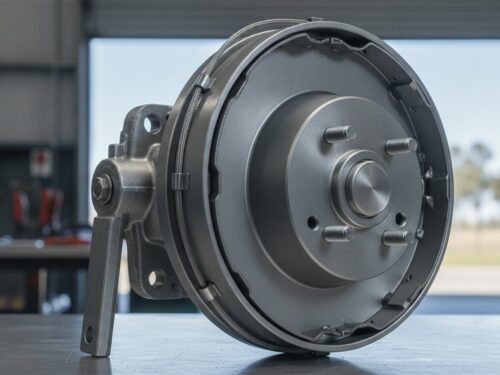
If your rig has an electric brake controller, use the manual override slide immediately. This is the most effective tool for regaining stability. Applying the trailer brakes independently stretches the combination. It pulls the trailer back into line by creating drag at the rear while the tow vehicle continues forward. Reliable components like 10 Inch Electric Drum Brakes are essential for this maneuver. They provide the necessary friction to slow the trailer without involving the tow vehicle’s braking system. Once the sway stops and the rig is straight, gradually slow down and pull over to a safe area. Check your load distribution, hitch weight, and tyre pressures before you get back on the road. For those looking to upgrade their setup for better control, browsing quality trailer parts can ensure your equipment is up to the task.
The Mechanics of Stability: Essential Hardware Checks
Learning how to stop trailer swaying requires a thorough inspection of your trailer’s foundation. If the mechanical hardware is compromised, no amount of careful driving will fix the problem. Stability starts with the trailer axles and the suspension system. Worn or mismatched components create permanent instability that leads to dangerous oscillations at highway speeds. Regular maintenance of the undercarriage is non-negotiable for safe towing on Australian roads. You must check for “dog-tracking,” which is when the trailer does not follow the car in a straight line. This usually indicates a structural or alignment failure that requires immediate attention.
Axles and Alignment
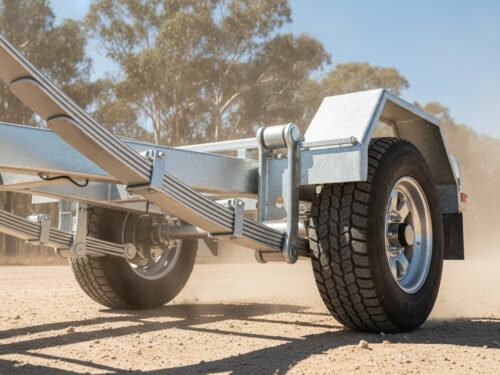
A bent or misaligned axle causes the trailer to pull constantly to one side, creating a natural pivot point for sway to begin. For heavier loads, the difference between light-duty 39mm round axles and heavy-duty 45mm square axles is critical for maintaining structural integrity. Square axles provide a larger surface area for U-bolts to grip, which prevents the axle from shifting under braking loads. Verify that all U-bolts are torqued correctly and the axle is seated perfectly on the spring center bolts. A shift of just 5mm on one side can cause the trailer to crab, making it nearly impossible to control during a crosswind.
Suspension and Tyre Pressure
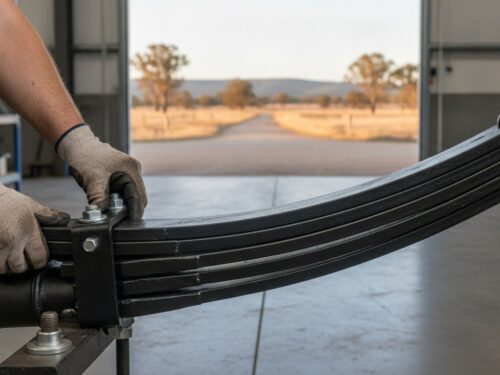
Check your leaf springs for signs of flattening or broken leaves. A collapsed spring on one side causes an uneven lean, shifting the trailer’s center of gravity and inducing sway. Mismatched tyre pressures are another common culprit. A 5 PSI difference between the left and right tyres can cause the trailer to track off-center. Inspect your shackle bolts and bushes for excessive play. If you notice more than 2mm of movement in the bush, it’s time for a replacement. Worn bushes allow the entire axle assembly to move laterally, which is a primary cause of high-speed instability.
Couplings and Hitch Integrity
Inspect the couplings for internal wear that allows the hitch to “bounce” or “shuck.” This mechanical play translates directly into side-to-side movement. For those heading off-road, Poly Block couplings offer a much tighter fit with significantly reduced play compared to traditional ball hitches. Ensure your tow ball size perfectly matches the coupling housing. A 50mm ball in a worn or poorly adjusted housing creates a loose connection that amplifies every minor vibration into a potential sway event. Don’t ignore a noisy hitch; it’s often the first sign that your hardware is failing to provide the rigid connection needed for a stable tow.
Practical Prevention: Loading and Hitching Strategy
Loading determines stability. Follow the 60/40 rule to maintain control. Place 60% of your cargo weight in the front half of the trailer, closest to the tow vehicle. This keeps the center of gravity forward of the axle. It is the most effective way to understand how to stop trailer swaying before you leave the driveway. The remaining 40% should be distributed evenly behind the axle. This setup creates a stable lever that resists wind gusts and road ruts.
Excessive weight at the rear causes the trailer to act like a pendulum. If the rear of your tow vehicle sits too low, your steering becomes light and unresponsive. Use a Weight Distribution Hitch (WDH) to level the load. A WDH uses heavy-duty spring bars to tension the hitch, shifting weight back onto the front tires of the tow vehicle. This restores steering geometry and braking efficiency. Secure every item with high-quality tie-downs. Shifting loads mid-turn cause sudden weight transfers that even the best drivers cannot recover.
The 10% Rule for Ball Weight
Aim for 10% of the total loaded trailer weight on the tow ball. If your trailer weighs 2,500kg, you need 250kg of downward pressure on the hitch. This is a critical step in learning how to stop trailer swaying at highway speeds. Tail-heavy trailers lack sufficient ball weight, leading to high-speed oscillation. You can check this at home using a dedicated ball weight scale. For a DIY method, use a heavy-duty bathroom scale and a sturdy wooden beam lever to calculate the weight. Ensure the trailer is level during this measurement for an accurate reading.
Loading Different Trailer Types
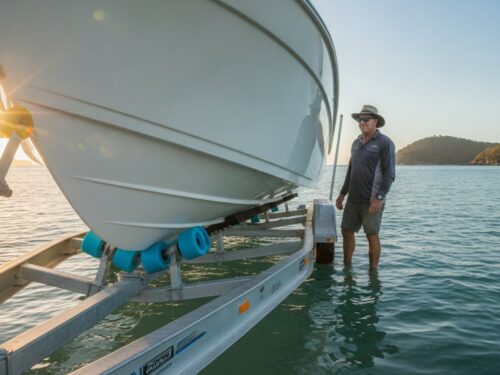
Different setups require specific strategies. Boat trailers often carry massive outboard engines at the very rear. Off-set this by moving the winch post forward or keeping fuel tanks full if they sit near the bow. For box trailers, keep the center of gravity low. Stack heavy building materials or tools on the floor. Avoid placing heavy gear on top of high cages. Balance the load side-to-side. A 5% weight difference between the left and right wheels causes the trailer to lean, which increases tyre wear and pull during braking. This imbalance makes the trailer more susceptible to crosswinds.
Ready to secure your setup for the long haul? Browse our range of heavy-duty couplings and parts to ensure a reliable connection every time you tow.
Upgrading Your Setup for Long-Distance Stability
Long-distance towing puts massive strain on your equipment. Standard factory setups often struggle with the dynamic forces of highway speeds and heavy wind gusts. Upgrading to electric brakes is one of the most effective ways to manage instability. These systems allow for manual override, giving you the ability to apply trailer brakes independently to pull the unit back into line during a sway event. This immediate control is far superior to relying on the tow vehicle’s brakes alone.
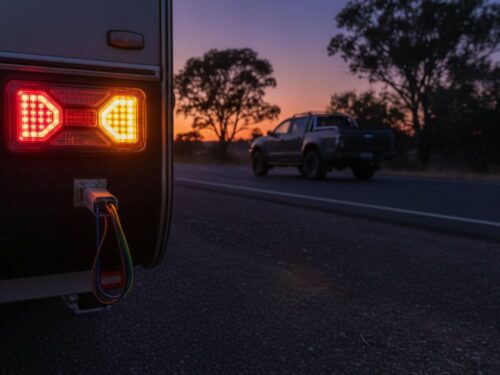
You should also consider heavy-duty suspension upgrades. Replacing worn or undersized leaf springs with higher-rated kits ensures the trailer stays level under load. This prevents the “seesaw” effect that often leads to loss of control. Reliable wiring is just as critical for safety. Clear LED signaling ensures other drivers see your intentions early, reducing the risk of sudden maneuvers that trigger sway. A well-maintained electrical system is the backbone of trailer safety.
- Upgrade to electric brakes for independent trailer control.
- Install heavy-duty leaf springs to handle consistent, heavy loads.
- Check all wiring and connectors to ensure clear signaling.
- Use high-quality couplings to maintain a secure connection.
Selecting a Weight Distribution Hitch
A Weight Distribution Hitch (WDH) is a vital tool for heavy caravans or tandem trailers. It works by using spring bars to leverage weight off the rear axle of the tow vehicle and onto the front wheels. This restores proper steering geometry and braking efficiency. If you notice your tow vehicle’s rear end sagging or the steering feels light and “floaty,” you need a WDH. Proper installation requires high-quality mounting hardware. Using U-bolt kits ensures your hitch components remain securely fastened under high tension. This mechanical intervention is a primary solution for anyone wondering how to stop trailer swaying on the open road.
The Value of Genuine Parts
Australian roads are notoriously harsh. Cheap, imported components often fail when subjected to corrugated tracks or extreme heat. Using genuine, Australian-tested hardware provides the durability needed for local conditions. We prioritize strength and fit because a failed bolt or snapped spring in the middle of the Nullarbor isn’t just an inconvenience; it’s a safety crisis. Choosing reliable parts gives you peace of mind during long hauls. Visit our trailer parts shop for expert advice and components built to last. Understanding how to stop trailer swaying starts with a setup you can actually trust.
Master Your Towing Stability
Learning how to stop trailer swaying is a critical skill for any driver hauling heavy loads across Australia. Focus on the 60/40 rule by placing 60% of your cargo weight in the front half of the trailer to keep the center of gravity stable. If the trailer starts to snake, don’t hit the vehicle brakes. Use your electronic brake controller manual override to straighten the load while keeping your steering wheel steady. These simple mechanical steps improve safety on the highway.
High-quality hardware is your best defense against instability. We are an Australian Owned and Operated business that understands local towing conditions. Our team provides expert technical support and nationwide shipping on all heavy-duty components. Whether you need galvanised fittings or marine-grade hardware, we stock the parts required to get the job done right. Shop heavy-duty trailer parts for a safer tow and enjoy the peace of mind that comes with a reliable setup. Drive safe and keep your gear secure.
Frequently Asked Questions
Is trailer sway always caused by wind?
No. Wind is only one factor. Poor weight distribution and incorrect tyre pressure are more frequent causes. Research shows high speeds and aerodynamic interference from passing heavy vehicles also trigger instability. You must balance your load to maintain control on the road.
Can a weight distribution hitch stop all trailer sway?
No, a weight distribution hitch (WDH) levels the tow vehicle but doesn’t eliminate all sway. It moves weight to the front wheels to improve steering and traction. To learn how to stop trailer swaying effectively, you need to combine a WDH with mechanical sway controllers or electronic stability systems for active protection.
What is the most common cause of trailer sway in Australia?
Incorrect weight distribution is the primary cause of sway on Australian highways. Data shows that placing heavy items at the rear of the trailer reduces tow ball mass and creates a pendulum effect. Keep your heaviest gear centered over the axles or slightly forward. This ensures the trailer tracks straight behind your vehicle.
Should I speed up to pull the trailer out of a sway?
No, never speed up to correct a sway. Accelerating adds kinetic energy and makes the oscillations more dangerous. Stay calm and lift your foot off the accelerator. Use the manual override on your electric brake controller to apply the trailer brakes independently. This tension pulls the trailer back into line safely.
How much weight should be on the front of my trailer?
You should maintain a tow ball weight between 5% and 15% of the total loaded trailer mass. If your caravan weighs 3,000kg, aim for 150kg to 450kg on the hitch. Always check your vehicle’s compliance plate for the maximum allowable ball weight. Accurate measurement with a ball weight scale prevents dangerous instability.
Can worn shock absorbers on my car cause my trailer to sway?
Yes, worn shock absorbers are a major contributor to towing instability. Dampers that have lost 50% of their hydraulic pressure allow the tow vehicle to pitch and roll. This movement transfers directly to the trailer hitch and triggers sway. Inspect your suspension every 20,000 kilometres to ensure your vehicle can handle the load.
Do tandem axle trailers sway less than single axle trailers?
Yes, tandem axle trailers provide better natural stability than single axle designs. The additional set of tyres creates more friction against the road and resists side-to-side movement. They handle better at highway speeds and during sudden maneuvers. However, they still require correct tyre pressures and balanced loading to remain safe.