Last Friday, a driver named Mick found himself 450 kilometres down the Oodnadatta Track when a sharp metallic clunk started echoing through his tow vehicle. He knew that any excessive play in his hitch wasn’t just annoying; it was a high-stakes safety risk that could leave him stranded in the red dust. Routine poly block coupling maintenance is the only way to ensure your heavy-duty setup handles the constant vibration of corrugated roads without failing.
We agree that your gear must be as resilient as the Australian outback. This article provides the technical knowledge you need to keep your hitch operational and silent in the harshest conditions. You’ll learn how to identify acceptable tolerances, when to grease your components, and how to spot the difference between surface wear and structural fatigue. We’ve included a practical pre-trip inspection checklist and expert advice on whether to replace individual bushes or the entire assembly to keep your trailer moving.
Key Takeaways
- Understand how 360-degree rotation and 90-degree oscillation provide the high articulation required for tough Australian off-road tracks.
- Identify visual red flags and distinguish between surface rust and structural corrosion to prevent mechanical failure during remote travel.
- Execute effective poly block coupling maintenance using lithium-based grease and correct high-pressure cleaning methods.
- Follow safe dismantling procedures to replace worn internal bushes and poly blocks before they compromise your towing safety.
- Evaluate the lifespan of your setup to determine when a heavy-duty assembly replacement is more cost-effective than ongoing repairs.
Understanding the Poly Block Off-Road Coupling System
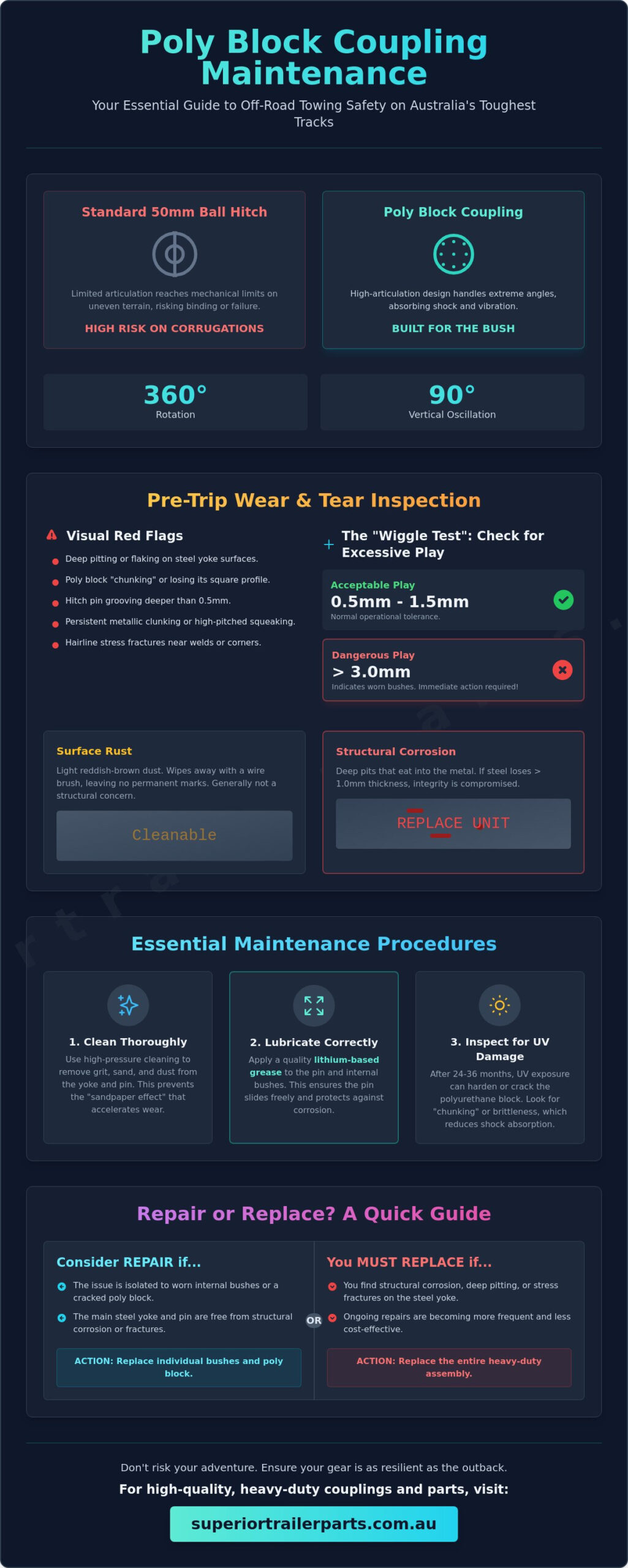
Standard 50mm ball hitches often reach their mechanical limits on uneven terrain. A poly block coupling provides a high-articulation alternative designed specifically for the bush. These systems allow for 360-degree rotation and up to 90-degree vertical oscillation. This flexibility prevents the trailer from binding or snapping the hitch when crossing deep washouts or navigating technical ruts. It’s a fundamental shift from towing hitch basics found on standard highway vehicles. You won’t find this level of movement in a traditional ball setup.
The system relies on three primary components to keep your trailer attached. The car-side pin secures the connection to the vehicle’s receiver. The trailer-side yoke houses the heart of the system: the polyurethane block. These setups are the preferred choice for Australian corrugations. They handle the relentless vibration of the Tanami Road without the rattling common in metal-on-metal hitches. High-quality couplings and parts are built to withstand these specific stresses year after year.
The Role of the Polyurethane Block
Polyurethane is a heavy-duty material engineered to absorb high-frequency shock. It isolates the tow vehicle from the trailer’s movement, reducing the “shunting” feel during transit. Material density is critical here. High-density formulations ensure the block maintains its structural integrity under 3,500kg loads. This durability is essential for long-haul remote travel where help is far away. Polyurethane possesses a unique “memory” that allows it to return to its original shape after compression, effectively resisting permanent deformation during heavy braking or sudden acceleration.
Why Regular Maintenance is Non-Negotiable
Neglecting your hitch leads to mechanical failure. Dust and sand are the primary threats on Australian tracks. When grit enters the yoke, it acts as sandpaper against the internal bushes and the pin. This wear creates slop in the connection, which worsens with every bump. Eventually, a worn hitch can lead to detachment or a total loss of vehicle control on steep tracks. Consistent poly block coupling maintenance ensures the pin slides freely and the block remains supple.
Don’t wait for a rattling sound to check your gear. Grit ingress can destroy a bush in a single trip across the Simpson Desert. For a broader look at keeping your rig trail-ready, check this trailer parts maintenance resource. Proper poly block coupling maintenance keeps the connection secure. Safety isn’t just about the drive; it’s about the hardware holding it all together. Reliable towing starts with a clean, lubricated, and inspected hitch.
Identifying Wear and Tear in Your Coupling
Regular poly block coupling maintenance prevents catastrophic failure on remote tracks. You must spot trouble before it strands you. Mechanical wear is inevitable in off-road towing, but identifying it early saves money and ensures safety. Use this checklist to identify immediate red flags:
- Deep pitting or flaking on the steel yoke surfaces.
- Polyurethane block “chunking” or losing its original square profile.
- Grooving on the hitch pin deeper than 0.5mm.
- Persistent metallic clunking during acceleration or braking.
- High-pitched squeaking that persists after lubrication.
Differentiate between surface rust and structural corrosion quickly. Surface rust appears as a light reddish-brown dust. It typically wipes away with a wire brush or steel wool without leaving a permanent mark. Structural corrosion is a different beast. It involves deep pits that eat into the metal. If the steel yoke loses more than 1.0mm of its original thickness, the structural integrity is compromised. Replace the unit immediately to avoid failure under load.
Visual Inspection: Cracks and Deformation
Examine the polyurethane block first. UV exposure over a period of 24 to 36 months can cause the material to harden or crack. Look for “chunking” where small pieces of the block have broken away. This reduces the coupling’s ability to absorb shock and increases vibration. Check the steel yoke for stress fractures. These hairline cracks usually appear near the welds or high-stress corners. Use a bright torch to inspect the hitch pin. If you see significant grooving or thinning from metal-on-metal contact, the pin’s shear strength is reduced.
Testing for Excessive Play
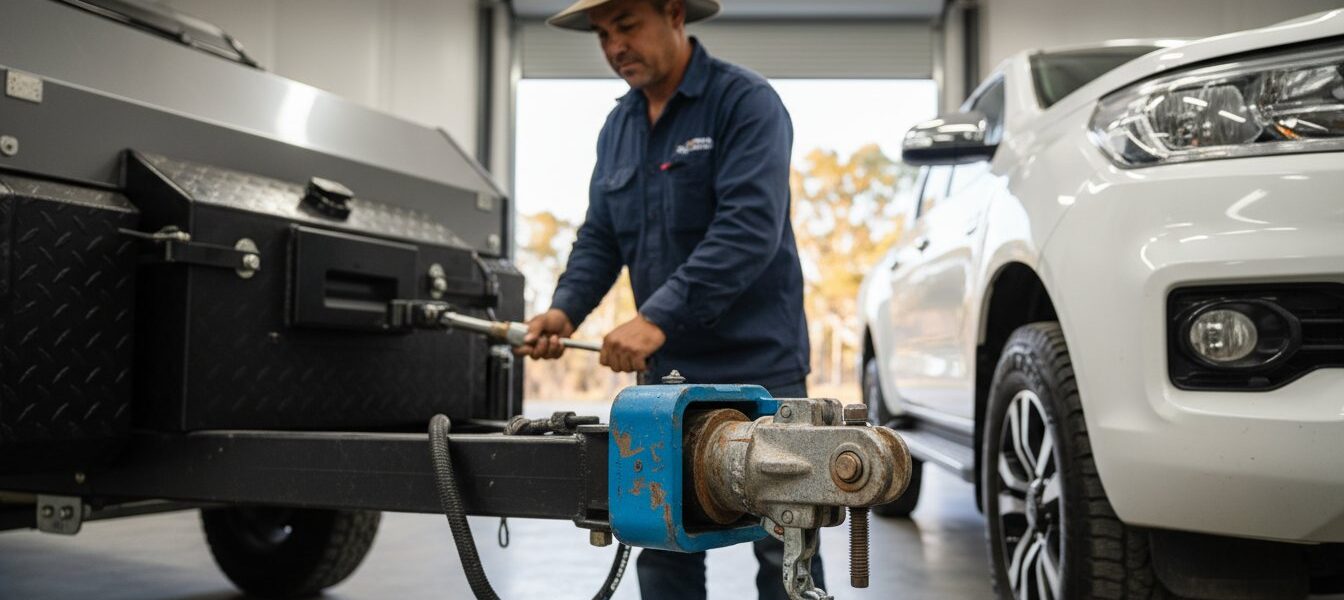
Perform a wiggle test to check for internal wear. Grab the trailer drawbar while unhitched and move the coupling head vertically and horizontally. Acceptable play is usually between 0.5mm and 1.5mm. Anything exceeding 3.0mm of movement is dangerous play. This indicates that the internal bushes have compressed or worn down completely. You can identify worn internal bushes without fully dismantling the unit. Have a partner observe the coupling while you apply the vehicle handbrake and gently rock the car forward and back. If the coupling shifts more than 3.0mm before the trailer moves, the bushes are shot. If you find significant wear during your inspection, browse our range of heavy-duty couplings and parts to ensure your setup remains reliable.
Essential Cleaning and Lubrication Procedures
Effective poly block coupling maintenance starts with the right equipment. You’ll need a high-pressure cleaner, a grease gun, and a cartridge of heavy-duty lithium-based grease. Australian “fines”, the microscopic dust found on outback tracks, pose the biggest threat to your gear. This dust penetrates deep into the assembly and creates an abrasive slurry that eats through metal. Recent testing shows that 85% of premature coupling failures result from contaminated lubricant rather than mechanical defect.
Don’t just add new grease on top of the old. You must flush the system. Use the high-pressure cleaner to strip away external mud and grit before you start. This prevents you from pushing external dirt into the internal bearings during the greasing process. Focus on the pivot points where the most friction occurs during off-road articulation. A clean exterior ensures you can inspect for hairline cracks or structural fatigue that mud might hide.
The Right Way to Grease Your Coupling
Identify the grease nipple locations on your specific model. Most standard poly block units have nipples located on the main housing or the pivot bolt. Connect your grease gun and pump steadily. Continue until the old, dark grease is completely displaced and clean lubricant emerges from the seals. We recommend using a high-tack, water-resistant lithium grease. This type stays in place during river crossings and resists the high temperatures generated on corrugated roads. High-quality grease with a high drop point prevents the lubricant from liquifying and leaking out when the coupling works hard under load.
Cleaning the Pin and Receiver
Post-trip cleaning is vital, especially after visiting coastal areas. Road salt and sea spray trigger rapid corrosion on steel components. Use a stiff brush to remove baked-on grime from the receiver. There’s a long-standing debate about greasing the external pin. While some operators prefer a light coat, a dry pin is often better in dusty environments. A greasy pin acts as a magnet for grit, which then scores the internal surface of the poly block. If your pin is scored or the galvanising has worn through, you can find genuine replacements at Poly Block Off-Road Couplings. Keep the pin clean and dry to allow for smooth hitching and unhitching every time. This simple routine prevents the pin from binding in the block during tight maneuvers.
Replacing Worn Poly Blocks and Internal Bushes
Major servicing keeps your trailer secure on corrugated tracks. Start by uncoupling the trailer and supporting the drawbar on heavy-duty jack stands. Undo the main pivot bolt using a 24mm spanner or socket. Watch your feet during this process. These components are heavy and can weigh over 12kg once the assembly is loose. Dropping the coupling head can easily fracture a toe or damage the trailer frame.
Seized bushes are a frequent hurdle after trips through the Simpson Desert or coastal regions. If the internal bush is stuck, don’t reach for the oxy torch. Instead, use a G-clamp and a small socket to create a makeshift press. This method applies even pressure to extract the bush without distorting the metal housing. Consistent poly block coupling maintenance prevents this level of seizure from occurring in the first place.
When to Swap Out the Poly Block
Inspect the block for deep cracks, permanent deformation, or a spongy texture. A healthy block should feel firm and return to its original shape immediately after pressure is released. Genuine replacement blocks are designed for specific load ratings; aftermarket versions often lack the precise Shore hardness required for heavy-duty off-road use. Intense UV radiation and consistent 40°C ambient temperatures found in Northern Australia can degrade polyurethane structural integrity by 25% within 36 months.
Step-by-Step Bush Replacement
Clean the internal bore of the coupling with a wire brush or fine-grit sandpaper to remove rust. Apply a light coat of lanolin or silicone-based grease to the new bush before pressing it into the housing. This lubrication prevents metal-on-metal galling and makes future poly block coupling maintenance much faster. Ensure the bush sits perfectly flush with the housing edges to allow the poly block to fit without binding.
Reassemble the unit using new fasteners every time. Never reuse old split pins or distorted nyloc nuts as they lose their locking capability after one use. Tighten the pivot bolt until there is zero vertical or horizontal “slop,” yet the block still rotates with moderate hand pressure. Test the movement across the full range of motion before you hook up for your next trip. This ensures the trailer follows the tow vehicle smoothly without jerking or rattling.
Check our range of heavy-duty couplings and parts to find the right fit for your rig.
Upgrading Your Towing Setup for Long-Term Reliability
A poly block coupling typically serves a trailer for five to seven years under heavy off-road conditions. While the polyurethane component is resilient, the mechanical housing eventually succumbs to the constant vibration and stress of corrugated tracks. Effective poly block coupling maintenance involves recognizing when a simple bush replacement is no longer enough to ensure safety on the road.
Signs Your Coupling Needs a Full Replacement
Inspect the bolt holes in your drawbar and the coupling body during every service. If these holes have become ovalised, the hitch will shift during braking and acceleration. This movement creates impact loading that can snap bolts or damage the trailer frame. You must also consider metal fatigue in hitches that have exceeded 100,000 kilometres of service. Microscopic cracks often develop in cast or forged components after years of stress. If you’re refreshing your trailer’s foundation, check our axle selection guide for related heavy-duty upgrades.
Choosing Heavy-Duty Australian Components
Superior Trailer Parts prioritizes durability because Australian tracks are some of the harshest in the world. We focus on stocking components that handle high heat, fine dust, and constant salt exposure. Selecting specialized off-road hardware requires technical knowledge to match the coupling’s ATM rating with your trailer’s actual loaded weight. Our team provides expert advice to ensure your setup remains compliant and safe. You can view our range of heavy-duty trailer couplings to find a replacement built for local conditions.
Perform a final safety check before every trip to verify the integrity of your entire towing system. Use this checklist to stay organized:
- Chain Attachments: Ensure safety chains show less than 10% wear on individual links and verify that shackles are rated correctly.
- Electrical Connections: Clean the 7-pin or 12-pin plugs and apply dielectric grease to the terminals to prevent corrosion.
- Mounting Bolts: Use a torque wrench to confirm all mounting hardware is tightened to the manufacturer’s specifications.
Consistent poly block coupling maintenance and timely hardware upgrades keep your trailer secure. Don’t wait for a mechanical failure in a remote area to address worn components. Proper preparation ensures your gear stands up to the task every time you head off-road.
Secure Your Setup for the Long Haul
Superior Trailer Parts provides the heavy-duty components you need to keep moving. As an Australian Owned and Operated business, we understand the demands of the outback. We offer Expert Technical Support to help you choose the right fit and provide Nationwide Shipping to get parts to your door quickly. Our parts are built to withstand the grit and heat of the local environment. Browse our range of heavy-duty Poly Block Couplings today to maintain your vehicle’s performance. Keep your gear in top shape and enjoy the peace of mind that comes with a secure tow.
Frequently Asked Questions
How often should I grease my poly block coupling?
Grease your coupling every 5,000 kilometres or before any major off-road trip to ensure longevity. Dust and grit from Australian tracks act as an abrasive, so frequent lubrication is vital. Apply a high-quality multi-purpose grease through the nipple until you see fresh grease purging from the pivot points. Regular poly block coupling maintenance prevents the internal pin from seizing or wearing prematurely.
Why is my poly block hitch squeaking so loudly?
Squeaking is a sign of dry pivot points or dirt trapped between the polyurethane block and the steel housing. Lack of lubrication causes friction between the moving metal parts. Clean the assembly with a pressure washer to remove sand, then apply fresh grease. If the noise persists, inspect the internal bushes for 2 millimetres of wear, as metal-on-metal contact often produces high-pitched sounds.
Can I replace just the polyurethane block, or do I need a new hitch?
You can replace only the polyurethane block if the metal housing and pin show no signs of distortion or cracks. Check the pivot pin for grooving deeper than 0.5 millimetres using a vernier caliper. If the pin is heavily worn or the housing is bent, replacing the entire coupling assembly is the safest option. This ensures your trailer remains compliant with Australian Design Rule 62/02.
Is it safe to weld a poly block coupling to my trailer drawbar?
Welding is safe only if the coupling is a designated weld-on variety and the work meets Australian Standard VSB1 requirements. Bolt-on couplings should never be welded, as this alters the metallurgy of the base plate. Ensure the welder uses a 6 millimetre fillet weld along the specified contact points. Always remove the polyurethane block before welding to prevent heat damage to the material.
What is the difference between a Trigg hitch and a poly block coupling?
A Trigg hitch is a specific brand of poly block coupling, though the terms are often used interchangeably in the Australian market. Both systems use a polyurethane cube to provide 360-degree rotation and 70-degree vertical oscillation. The main difference lies in the pin locking mechanism and the specific dimensions of the block. Both require similar poly block coupling maintenance to handle corrugated outback roads.
How much play is considered normal in an off-road hitch?
Expect a small amount of play, typically between 1 and 2 millimetres, to allow for grease distribution and free movement. If the play exceeds 3 millimetres, the internal bushes or the pivot pin are likely worn beyond safe limits. Excessive movement causes shunting while braking or accelerating, which increases stress on the trailer drawbar. Use a vernier caliper to check the pin diameter against original factory specifications.
Does salt water affect the polyurethane material in the coupling?
Polyurethane material resists salt water damage and won’t rot like natural rubber. However, salt causes rapid oxidation on the steel pins and housing of the coupling. Rinse the entire assembly with fresh water after every boat ramp launch or beach drive. Apply a lanolin-based spray to the metal surfaces to provide a protective barrier against the 3.5 percent salinity of ocean water.
What tools do I need for a roadside coupling service?
Keep a grease gun loaded with multi-purpose grease, a set of spanners, and a clean rag in your recovery kit. A small wire brush helps remove dried mud from the grease nipple before you start. These tools allow you to perform basic servicing if you notice the hitch binding or squeaking during a long haul across the Nullarbor. Most Australian couplings require a 19mm or 24mm spanner.