A single sheared U-bolt or an underrated axle can turn a routine tip run into a dangerous roadside failure on the Pacific Highway. You know that a dependable trailer is only as strong as its weakest component. It’s common to feel frustrated when trying to navigate axle weight ratings or sourcing a reliable 6×4 trailer parts list that meets strict ADR requirements. You need heavy-duty parts that handle the heat and corrugated roads of the Australian landscape without failing under load.
We’ve compiled this breakdown to remove the guesswork from your next build or maintenance project. You will gain the confidence that your trailer is road-legal and built to last using high-quality, galvanised components. We provide a clear checklist of every essential item, from 39mm round axles and leaf springs to the small but vital bushes and shackles that keep you moving. This guide ensures you have the right gear to finish the job properly the first time.
Key Takeaways
- Build a durable foundation by selecting heavy-duty galvanised steel components designed to withstand harsh Australian conditions.
- Identify the essential running gear, including axles and springs, needed to achieve a standard 750kg ATM rating for single-axle trailers.
- Ensure your build meets Australian safety standards by selecting the correct legal couplings and safety chains for unbraked box trailers.
- Improve visibility and longevity with professional-grade LED lighting systems that comply with mandatory road regulations.
- Use this essential 6×4 trailer parts list to source every component required for a VSB1-compliant build or maintenance project.
Core Chassis and Frame Components for 6×4 Trailers
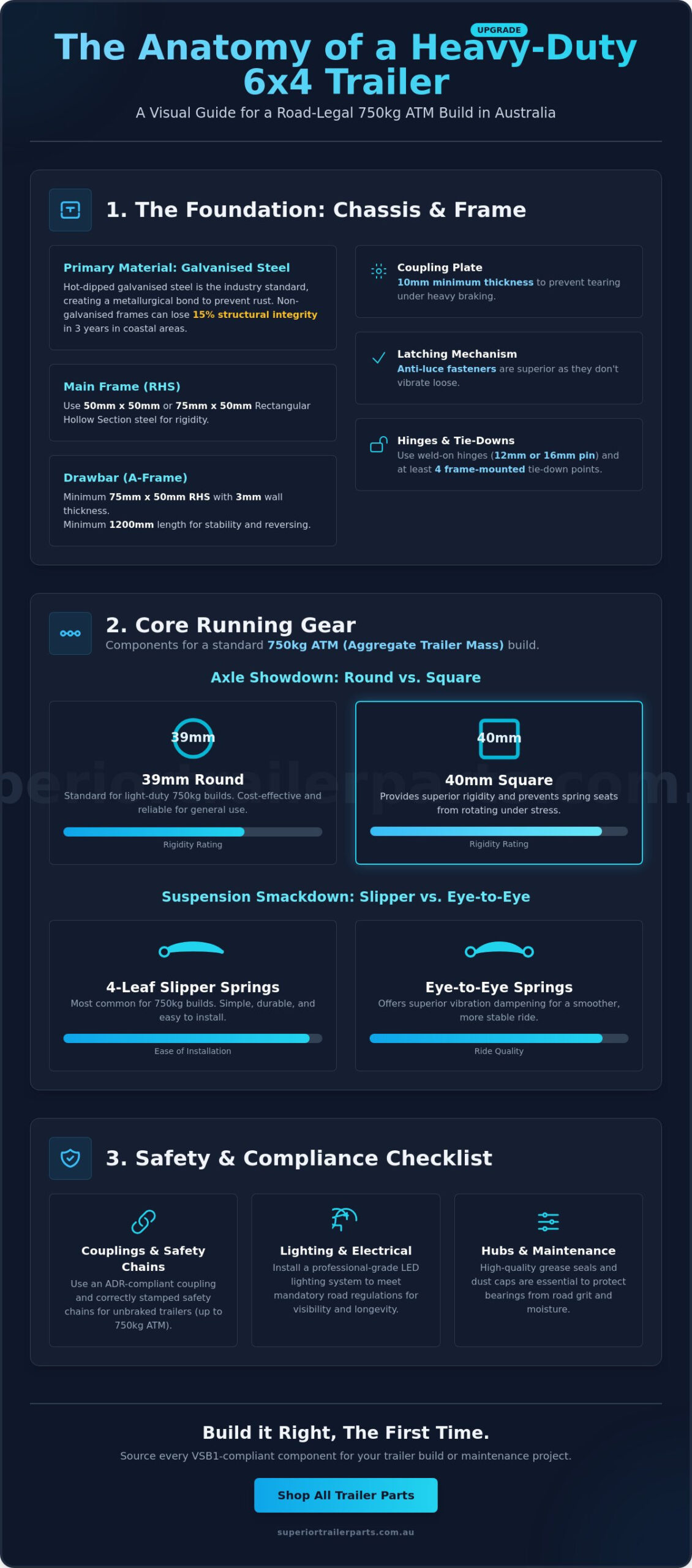
Every reliable trailer starts with a solid foundation. The chassis must withstand heavy loads and harsh terrain without flexing or warping. When you build or repair, your 6×4 trailer parts list should start with Australian-standard steel. Hot-dipped galvanised steel is the industry standard for a reason. It creates a metallurgical bond that protects against rust even if the surface is scratched. In coastal regions, non-galvanised frames can lose 15% of their structural integrity within three years due to rust. This protection is essential for maintaining the resale value and safety of your equipment.
The main frame typically consists of 50mm x 50mm or 75mm x 50mm Rectangular Hollow Section (RHS) steel. This provides the necessary rigidity for a standard box trailer. High-quality trailer components ensure the frame remains square under load. If you’re looking for design inspiration or technical benchmarks, reviewing heavy-duty single axle box trailers will show you how professional manufacturers reinforce critical joints and crossmembers.
Drawbar and Coupling Plates
The drawbar is the most critical stress point of the entire build. It handles every bump, turn, and braking force. Most 6×4 trailers use an A-frame design for better stability and tracking. Use a minimum of 75mm x 50mm RHS steel with a 3mm wall thickness for the drawbar rails. Ensure the drawbar length is at least 1200mm from the front of the box to allow for easy reversing and better weight distribution. The coupling plate is equally vital. It needs a 10mm minimum thickness to prevent the coupling from tearing the steel under heavy braking. Weld this plate securely to the top of the A-frame apex.
Body Hardware: Hinges, Latches, and Tie-Downs
Don’t cut corners on the small parts. Heavy-duty hinges are essential for the rear tailgate. Standard gate hinges won’t survive the constant vibration of a trailer on corrugated roads. Use weld-on hinges with a 12mm or 16mm pin for maximum durability. For the latching mechanism, anti-luce fasteners provide a quick and secure locking system. These are superior to basic pins because they don’t vibrate loose during transit. Secure your cargo by installing at least four tie-down points. Bolt or weld these directly to the main frame crossmembers rather than just the sheet metal floor to ensure they don’t rip out under tension. A comprehensive 6×4 trailer parts list should always include these high-tensile hardware items to ensure the box remains secure and rattle-free.
Running Gear: Axles, Springs, and Hubs
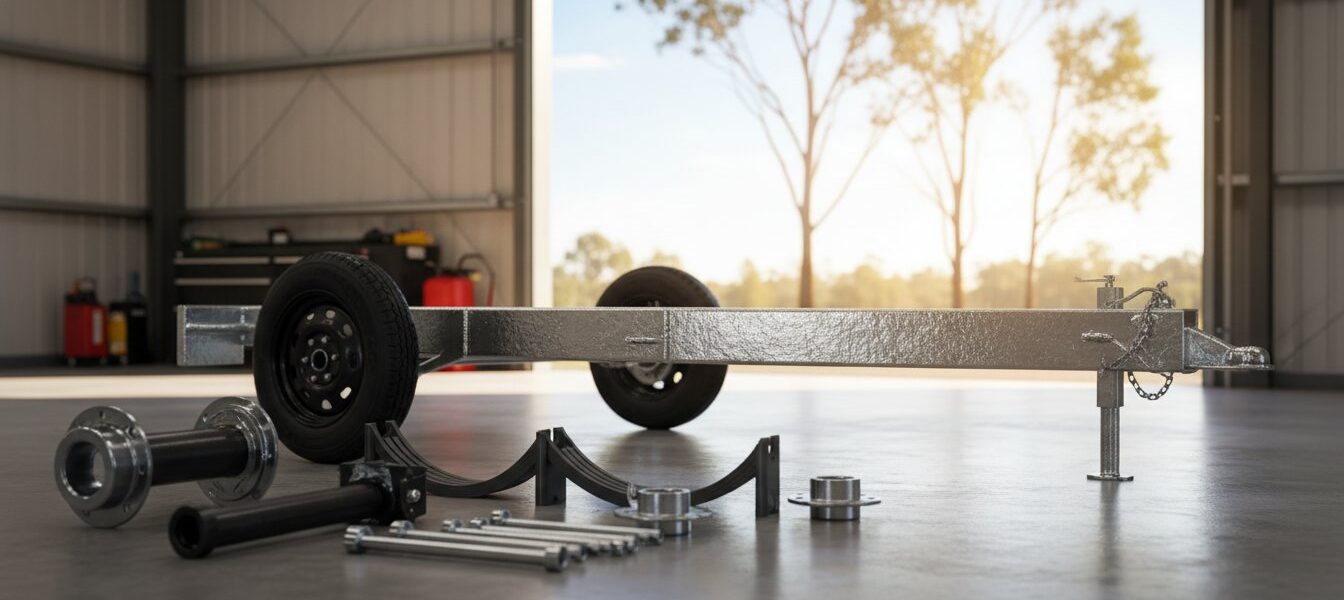
The running gear is the core assembly that supports your trailer’s weight and manages every bump on the road. It consists of the axle, suspension system, and hub assemblies. For a standard 6×4 single-axle trailer, a 750kg Aggregate Trailer Mass (ATM) is the primary target. This rating is standard because it allows for a practical payload without the legal requirement for independent braking systems under Australian regulations. Choosing the right components for your 6×4 trailer parts list ensures the trailer remains stable and safe at highway speeds.
Ride height is another critical factor. It’s determined by the relationship between your spring length and the axle position. A well-configured setup prevents the trailer from tilting too far forward or back when hitched. Maintenance shouldn’t be an afterthought. High-quality grease seals and dust caps are essential to protect the internal components from road grit and moisture. For specific technical data on load ratings, you can view our axle technical specifications.
Axle Selection: 39mm Round vs 40mm Square
Axle profile impacts both strength and ease of installation. 39mm round axles are the standard choice for 750kg light-duty builds. They’re cost-effective and perfectly suited for general domestic use. If you need more rigidity, 40mm square axles provide a flat surface that prevents the spring seats from rotating under stress. When ordering, you must measure the axle correctly. Measure from hub face to hub face to ensure the wheels clear the trailer frame. You can find various lengths in our axles category to suit your specific frame width.
Suspension: Leaf Spring Types and Hardware
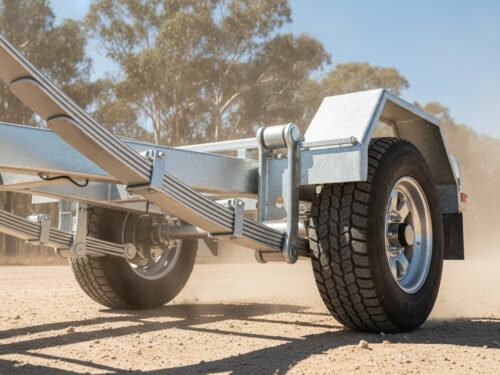
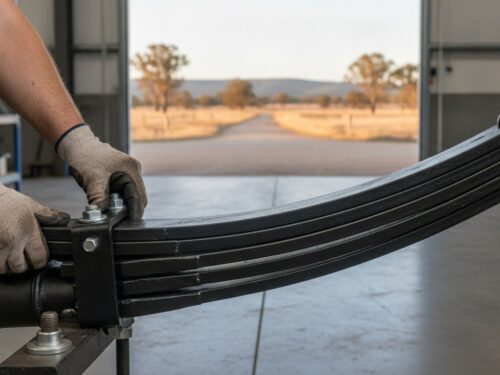
Most 6×4 trailers use leaf springs for their durability and simplicity. 4-leaf slipper springs are the most common for 750kg builds. They’re easy to install and require minimal maintenance. If you want better vibration dampening and a smoother ride, eye-to-eye spring sets are a reliable alternative. Always use high-quality leaf springs designed for Australian road conditions. You’ll also need a full hardware kit. This includes shackle bolts, hangers, and bushes. Worn bushes lead to poor tracking, so check these components during your annual maintenance routine.
Hubs and Bearings
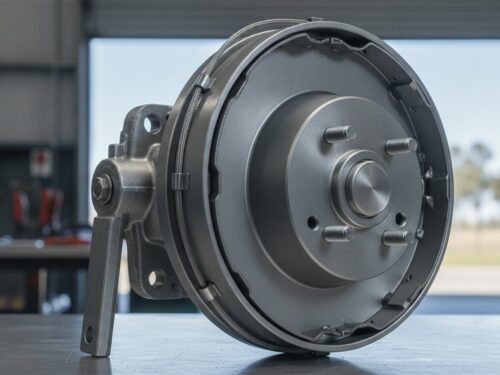
The hub is a critical component on any 6×4 trailer parts list. You must match the hub stud pattern to your wheels. In Australia, Ford and Holden patterns are the most frequent choices. Don’t settle for low-grade bearings. Japanese bearings from brands like NSK or Koyo are preferred because they handle the heat of long-distance towing much better than cheaper alternatives. If you plan to take your trailer near water, marine seals are mandatory. These seals feature a double-lip design that keeps water out and grease in. For those starting a new build, you can get expert advice on matching your hubs to your intended tyre size from our team.
Couplings, Safety Chains, and Braking Requirements
Australian law dictates strict standards for how trailers connect to tow vehicles. All couplings and parts must comply with Australian Design Rule (ADR) 62/02. This ensures the hardware survives the vibration and stress of local road conditions. When compiling a 6×4 trailer parts list, identifying the correct Aggregate Trailer Mass (ATM) is the first step. This rating determines whether you need a braking system or specific chain grades.
Most 6×4 box trailers remain unbraked because they fall under the 750kg ATM threshold. In Australia, any trailer with an ATM exceeding 750kg must have an efficient braking system. Since a standard 6×4 is typically used for light-duty domestic or garden tasks, staying under this limit simplifies the build. However, if you plan to haul heavy machinery or construction materials, you must upgrade to a braked axle and an override coupling. Using ADR-approved components isn’t just a safety choice; it’s a legal requirement for registration and insurance coverage.
Standard 2-Hole and 3-Hole Fixed Couplings
Fixed couplings are the standard choice for unbraked 6×4 trailers. A 2-hole zinc-plated coupling is common for light loads, while 3-hole patterns provide extra mounting security. These units are designed for 50mm tow balls and usually carry a 2,000kg rating, which is more than enough for a 6×4 frame. Look for models with quick-release handles to make hitching and unhitching faster. Maintenance is simple but vital. You should grease the internal ball housing and the spring-loaded locking pin every six months to prevent rust and seizing.
Safety Chains and D-Shackles
Safety chains act as a fail-safe if the coupling disconnects. According to Vehicle Standards Bulletin 1 (VSB1), safety chains must be permanently fixed to the trailer drawbar by welding. For trailers up to 2,500kg ATM, the chain must be at least 8mm in diameter and stamped with a load rating. Your 6×4 trailer parts list should also include a rated D-shackle. Never use unrated hardware. A rated shackle features a colored pin and a stamped load limit, ensuring it won’t snap under sudden tension. Adjust the chain length so it’s long enough to allow tight turns but short enough to catch the drawbar before it hits the ground. Crossing the chains under the drawbar creates a cradle that provides better control during a disconnection event.
Electrical Systems and Road Lighting
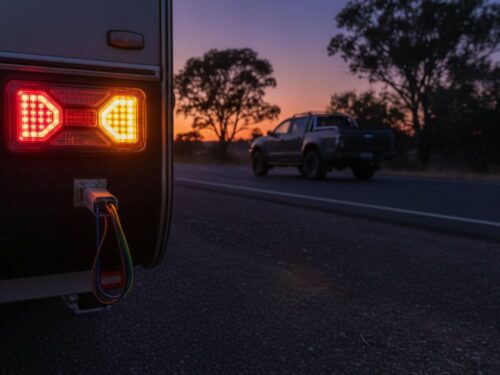
Safety on Australian roads starts with visibility. Your 6×4 trailer parts list must prioritize a legal and functional electrical system. Under Vehicle Standard Bulletin 1 (VSB1), all trailers must feature rear position lamps, stop lamps, and direction indicators. These components ensure other drivers see your intentions clearly. Modern LED tail lights offer a massive advantage over traditional bulb units. LEDs draw up to 80% less current and don’t have fragile filaments that break on corrugated terrain. A quality LED unit can last 50,000 hours, whereas standard incandescent bulbs often fail after 1,000 hours due to constant road vibration.
Standard Australian wiring follows a specific 7-pin configuration. This setup manages everything from your brake lights to your indicators. If you’re wiring a new build or repairing an old one, follow the Trailer Plug Wiring guide for accurate diagrams. Correct wiring prevents blown fuses in your tow vehicle and ensures your trailer remains road-legal. Using high-quality tinned copper wire protects the circuit from corrosion, which is a common failure point in coastal regions.
LED Submersible Tail Light Kits
Choose submersible ratings even if you don’t own a boat trailer. An IP67 rating ensures the light remains sealed against heavy rain and fine dust ingress on unsealed roads. High-quality kits integrate the number plate light into the main housing to simplify your 6×4 trailer parts list. Don’t forget side reflectors. VSB1 regulations require amber side reflectors to be visible at night. This simple addition provides a 200% increase in side-on visibility, helping prevent accidents in low-light conditions.
Trailer Plugs and Wiring Harnesses
Australian tow vehicles typically use either a 7-pin flat or a 7-pin round plug. Flat plugs are standard on most late-model SUVs and utes, while large 4WDs often use heavy-duty round connectors. Using a pre-wired harness reduces installation time by roughly 60% and eliminates the need for complex soldering. Most lighting failures are not actually bulb issues. Instead, 90% of circuit problems stem from poor earthing. Ensure your earth wire is secured to a clean, unpainted section of the galvanised chassis to maintain a reliable connection and prevent flickering.
Need durable components for your next build? Browse our range of heavy-duty trailer parts to get the job done right.
Wheels, Mudguards, and Compliance Standards
Finalising your build requires strict adherence to the Vehicle Standards Bulletin 1 (VSB1). This document serves as the national standard for light trailers in Australia. You cannot simply use any spare wheels found in the garage. Every component on your 6×4 trailer parts list must meet these safety benchmarks to ensure the unit is road-legal and safe for other drivers. Following these rules prevents fines and ensures your insurance remains valid in the event of an accident.
Tyre and Rim Selection
Standard passenger car tyres are often insufficient for a hardworking 6×4 box trailer. Use Light Truck (LT) tyres instead. These tyres feature reinforced sidewalls designed to handle the 750kg Gross Vehicle Mass (GVM) common in single-axle builds. Match your rim offset to your axles carefully. A zero offset rim is the standard choice for most 6×4 setups. This ensures the tyre does not rub against the trailer side or chassis. Maintain tyre pressure between 35 and 45 PSI. Correct pressure prevents trailer sway and reduces heat buildup during long hauls.
Mudguards and Flaps
Australian law dictates that mudguards must cover the entire width of the tyre tread. They need to extend at least 30 degrees forward and 50 degrees rearward from the vertical centre of the wheel. Galvanised steel mudguards provide the best protection against stone chips and heavy debris. Plastic mudguards are a viable alternative if you live near the coast, as they will not rust. Secure your guards using heavy-duty bolts and large washers. This mounting technique prevents vibration fatigue, which can cause metal guards to crack over time. You can find high-quality mounting hardware in our range of trailer parts.
VIN Plates and Registration
Every home-built trailer requires a Vehicle Identification Number (VIN). Apply for this number through your state road authority, such as Transport for NSW or VicRoads, before booking an inspection. You must permanently fix a metal VIN plate to the drawbar or chassis. This plate acts as the trailer’s identity and must include specific data points:
- Manufacturer name
- Full 17-character VIN
- Tare weight (the weight of the empty trailer)
- Gross Vehicle Mass (GVM)
- Recommended tyre pressure
Perform a final safety check before the first tow. Torque all wheel nuts to 125Nm for steel rims. Check that the safety chain is either welded to the drawbar or secured with a rated shackle. Verify that all LED lights function correctly, including the indicators and brake lights. A thorough inspection ensures your 6×4 trailer is ready for years of reliable service on Australian roads.
Build a Reliable Trailer Today
Browse our range of high-quality trailer parts and kits to find exactly what you need. Let’s get your trailer road-ready with parts you can trust.
Frequently Asked Questions
Do I need brakes on a 6×4 trailer?
You don’t need brakes if the Aggregate Trailer Mass (ATM) is 750kg or less. According to Australian Design Rule 38/05, any trailer exceeding 750kg GTM must have an efficient braking system fitted to at least one axle. Most standard 6×4 box trailers stay under this limit, but if you’re hauling heavy materials like wet sand or blue metal, fitting mechanical disc brakes is a smart safety upgrade.
What is the best axle for a 6×4 box trailer?
A 39mm round or 40mm square solid steel axle is the industry standard for a 6×4 box trailer. These axles provide a reliable 750kg rating that suits most items on a standard 6×4 trailer parts list. For those tackling corrugated inland roads, upgrading to a 45mm square galvanised axle offers superior rigidity and better protection against rust and bending under stress.
How many leaf springs should a 6×4 trailer have?
A standard 6×4 trailer setup requires two leaf spring sets, with one positioned on each side of the axle. For a 750kg ATM, a 3-leaf or 4-leaf slipper spring kit is the most common choice for balancing cost and performance. If you’re building a heavy-duty version, 5-leaf eye-to-eye springs provide better dampening and a more stable tow when the trailer is empty or fully loaded.
Can I use second-hand car wheels on my 6×4 trailer?
You can use second-hand car wheels if the Pitch Circle Diameter (PCD) matches your trailer hubs and the load rating is sufficient. Common Australian patterns like Ford 5-stud or Holden HT are frequent choices for DIY builds. Always check that the tyres are light truck (LT) rated, as these have thicker sidewalls designed to handle the vertical loads and scrubbing forces common in trailer applications.
What is the legal length for a 6×4 trailer drawbar?
Australian regulations don’t mandate a specific length, but the drawbar must meet the structural requirements of Vehicle Standards Bulletin 1 (VSB1). Most builders use a length between 1,200mm and 1,800mm from the front of the trailer bed to the coupling. This range provides a good balance between towing stability and a tight turning circle, ensuring the trailer doesn’t strike the tow vehicle during a 90-degree turn.
How do I wire a 7-pin flat plug for my trailer?
Follow the standard Australian wiring code to ensure your lights function correctly and safely. Connect the yellow wire to pin 1 for the left indicator and the blue wire to pin 2 for electric brakes if fitted. Pin 3 is the white earth, pin 4 is the green right indicator, pin 5 is the brown tail lights, and pin 6 is the red stop lights. Use pin 7 for the black auxiliary power line.
Do 6×4 trailers need a safety chain?
Every trailer towed in Australia must have at least one safety chain permanently attached to the drawbar by welding or a rated bolt. For trailers up to 2,500kg ATM, the chain must comply with the AS 4177.4-2004 standard for steel link chains. It’s vital to use a rated D-shackle to connect the chain to your vehicle, ensuring the trailer stays attached if the coupling ever fails on the road.
What is ATM and how does it apply to my parts list?
Aggregate Trailer Mass (ATM) is the total weight of the trailer plus its maximum payload when it’s not connected to a tow vehicle. This figure is the most critical entry on your 6×4 trailer parts list because it dictates the required strength of every component. From the 50mm ball coupling to the leaf springs and tyres, every part must have a load rating that meets or exceeds the ATM stated on your trailer’s compliance plate.