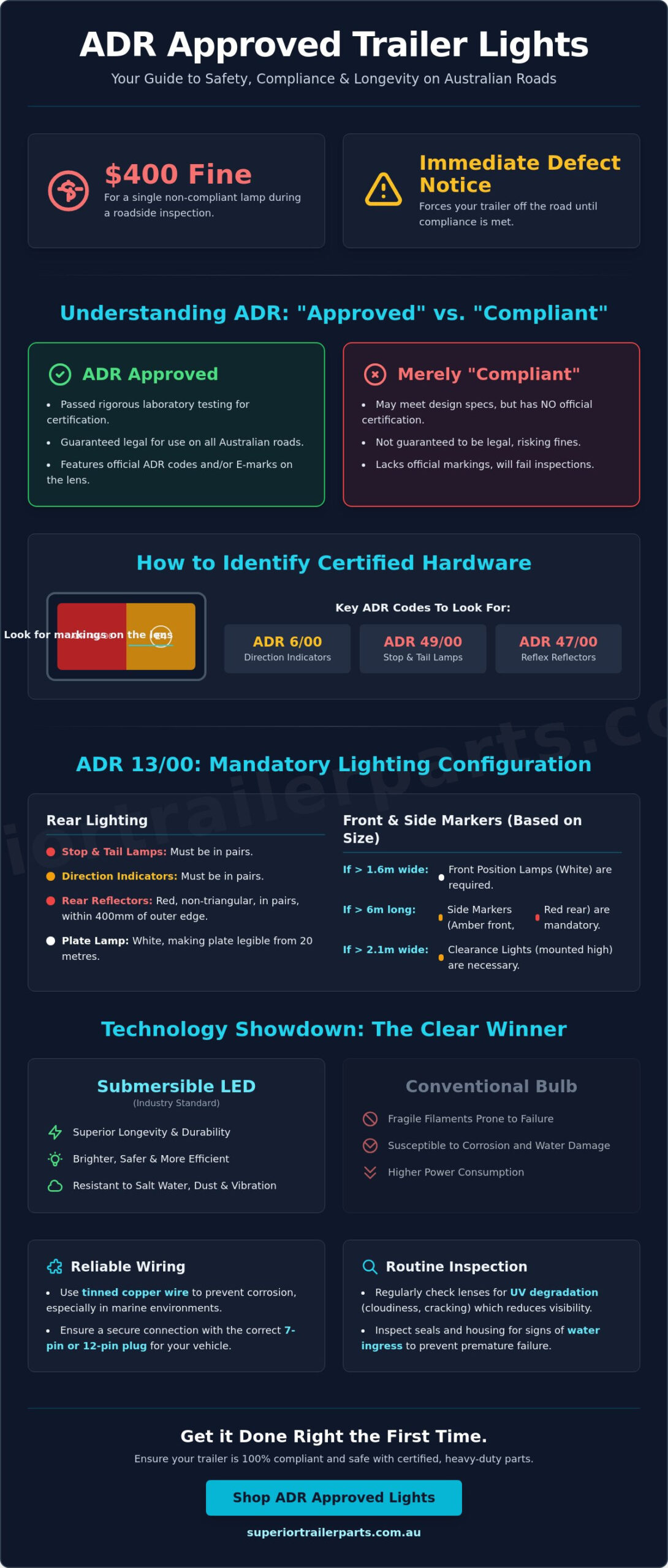
A single non-compliant lamp can lead to a $400 fine and an immediate defect notice during a roadside inspection. It’s a common frustration. Salt water corrosion often turns a simple trip into a legal headache for Australian haulers. You know that keeping your gear roadworthy is a constant battle against the elements and strict regulations. Installing ADR approved trailer lights is the only way to ensure your vehicle meets the mandatory visibility standards required by law. These ADR 13/00 standards dictate everything from the exact placement of reflectors to the 15 degree vertical visibility angle required for rear position lamps.
We’ll help you understand the essential legal requirements and technical standards to keep your trailer safe on the road. You’ll learn how to identify genuine heavy-duty hardware that withstands harsh marine environments. We also provide expert advice on wiring techniques that prevent premature failure. This ensures your trailer remains compliant for the long haul. Get the job done right the first time.
Key Takeaways
- Ensure your vehicle meets mandatory safety standards by installing ADR approved trailer lights that comply with ADR 13/00 regulations.
- Discover why submersible LED technology is the heavy-duty industry standard for superior longevity and performance in harsh Australian conditions.
- Identify the technical requirements for reliable wiring, including the advantages of tinned copper and choosing between 7-pin and 12-pin plugs.
- Learn routine inspection steps to detect UV degradation and water ingress before they compromise your trailer’s roadworthiness.
What are ADR Approved Trailer Lights?
ADR stands for Australian Design Rules. These are the national standards for vehicle safety, anti-theft, and emissions. For anyone towing a load, Automotive lighting standards are non-negotiable. ADR approved trailer lights ensure that your trailer is visible to every road user. Compliance is mandatory for all trailers on public roads. If you operate a trailer without certified lighting, you face heavy fines and potential insurance rejection. In states like New South Wales or Queensland, towing an unroadworthy trailer can result in immediate defect notices.
There is a technical difference between “compliant” and “approved” hardware. A “compliant” light might meet the design specs, but it hasn’t undergone official certification. “Approved” hardware has passed rigorous laboratory testing to earn its certification. You can identify these products by looking for specific markings on the lens. These marks usually include a series of numbers or an E-mark. If the lens is blank, it’s likely not legal for Australian road use. Genuine hardware will always display these marks clearly to assist with registration inspections.
The Role of ADR 13/00 in Trailer Safety
ADR 13/00 is the primary standard for lighting installation. It defines the exact placement, height, and spacing of every lamp on your trailer frame. These rules ensure that other drivers see your signals clearly from a 45-degree angle. Failure to follow these installation rules leads to poor visibility and increased accident risk. Using non-approved lighting can result in a defect notice, forcing your trailer off the road until you install genuine trailer parts that meet the current standard. Proper installation maintains 100 percent visibility for following traffic in heavy rain or low-light conditions.
Key ADR Codes to Look For
When you buy lights, check for these specific ADR codes stamped on the housing or lens:
- ADR 6/00: This code covers your direction indicators to ensure they meet brightness and color standards.
- ADR 49/00: This applies to your stop and tail lamps, which are critical for signaling braking.
- ADR 47/00: This regulates the integrated reflex reflector, which is a mandatory safety feature for when your lights are off.
The E-mark is a circle with a capital E followed by a number, and it signifies that the component meets UN ECE standards which the Australian government accepts as ADR equivalent. Choosing high-quality LED units that combine these functions into one marine-grade housing saves time during installation. Always verify the codes before you start your build to ensure your trailer stays legal and safe. Our heavy-duty lights are designed to withstand the vibration and dust found on Australian roads while maintaining full compliance.
Key Requirements for ADR 13/00 Compliance
ADR 13/00 sets the benchmark for trailer safety across Australia. It dictates how you must install and maintain lighting systems to ensure roadworthiness. Following ADR 13/00 Compliance Standards ensures your rig stays legal and visible in all conditions. Every trailer, from a small box trailer to a heavy-duty transporter, must meet these technical specifications. Using genuine ADR approved trailer lights is the only way to guarantee your vehicle meets the required photometric performance. It’s a simple step that prevents fines and improves safety on the highway.
Mandatory Rear Lighting Configuration
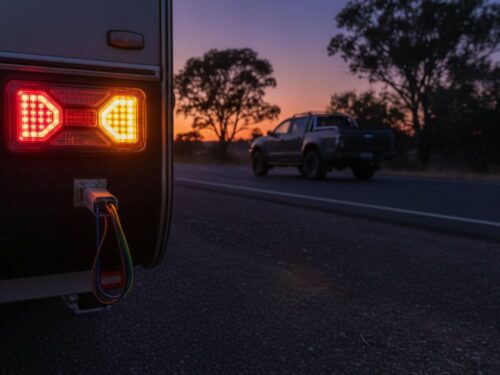
Your rear lighting setup is the primary communication tool with other drivers. Every trailer requires a pair of stop lamps, tail lamps, and rear direction indicators. Stop and tail lamps must be red, while indicators must be amber to prevent confusion. You must also install a white registration plate lamp that makes the plate clearly legible from 20 metres away. Rear retro-reflectors are another essential requirement. These must be red, non-triangular, and positioned within 400mm of the trailer’s outer edge. If you’re upgrading your setup, investing in reliable trailer parts ensures your housing and wiring stand up to harsh Australian environments.
Side and Front Marker Requirements
Trailer dimensions determine when additional markers become necessary. For trailers wider than 1.6 metres, front position lamps are required. These must emit a clear white light. If your trailer exceeds 6 metres in length, side marker lamps are mandatory to outline the vehicle’s profile. These markers must show amber toward the front and red toward the rear. For heavy-duty or tandem trailers exceeding 2.1 metres in width, clearance lights are necessary. Mount these as high as practical to indicate the total width and height of the load. Specialized setups often require specific caravan parts to maintain compliance on wider chassis and ensure you’re seen from every angle.
Height and Visibility Standards
Standardized mounting heights ensure lights remain in the line of sight for other motorists. Most rear lamps must sit between 350mm and 1500mm above the ground. If the structure of the trailer makes this range impossible, some exceptions allow for a maximum height of 2100mm. Visibility angles are just as important as height. Rear indicators must be visible at an angle of 80 degrees outwards and 45 degrees inwards. This wide field of view allows drivers in adjacent lanes to see your signals clearly. High-quality ADR approved trailer lights are engineered with specific lens patterns to meet these light-spread requirements. Always check your mounting brackets to ensure they don’t obstruct these critical angles. If you’re unsure about your current setup, you can always contact our team for expert advice on choosing the right components for your trailer type.
Submersible LED vs Conventional Bulb Lights
LED technology has replaced the old incandescent bulb for several practical reasons. Most LED units offer a service life of 50,000 hours, whereas standard bulbs rarely exceed 1,000 hours before the filament snaps. This reliability makes ADR approved trailer lights using LED technology the default choice for heavy-duty applications. Low power draw is another win. LEDs use roughly 85% less current than traditional bulbs. This prevents overheating in the wiring harness and protects the sensitive electronics found in modern towing vehicles. To ensure your setup meets legal requirements, consult the Australian Design Rule 13/00 for specific installation and performance criteria.
The cost-benefit analysis favors LED in the long run. A high-quality LED kit might cost A$80, while a basic bulb set is A$25. However, the labor and downtime spent replacing blown bulbs on a long haul make the initial investment in LED much cheaper over the trailer’s life. Professionals don’t have time to fix lights every few months. They choose gear that lasts.
The Advantages of Marine-Grade LED Lighting
Boating environments demand higher protection. IP67 rated lights handle temporary immersion during a launch. IP68 units are better for deep boat ramps because they withstand continuous submersion. Look for epoxy-sealed housings that block salt water from reaching the circuit board. This sealing prevents the “wicking” effect where water travels up the wires. For reliable solutions, check our range of boat trailer parts designed for harsh coastal conditions. These units are built to survive the corrosive Australian salt air without failing.
Why Conventional Bulbs are Phasing Out
Corrugated roads kill incandescent bulbs quickly. The thin tungsten filament cannot handle constant vibration on unsealed tracks. Maintenance is a constant chore with bulb-based systems. You have to clean corroded terminals and replace glass housings that crack from heat stress. Bulbs reach high temperatures and can melt plastic housings over time; this leads to water ingress and total circuit failure. LEDs remain cool to the touch, which preserves the integrity of the light lens and housing for years. Switching to ADR approved trailer lights with LED internals eliminates these common failure points.
Installation and Wiring for Reliable Performance
Reliable performance starts with the backbone of your lighting system. You can buy high-quality ADR approved trailer lights, but poor wiring leads to failure on the road. Always use tinned copper wiring for every connection. Standard copper wire oxidizes quickly when exposed to moisture, especially in coastal environments. Tinned copper resists this corrosion, ensuring your lights maintain consistent brightness for years. It’s a small investment that prevents the frustration of intermittent flickering during a haul.
Choosing between a 7-pin and 12-pin plug depends on your specific trailer requirements. A standard 7-pin flat or round plug handles basic lighting functions like indicators, brakes, and tail lights. If you’re towing a caravan with electric brakes, internal batteries, or a fridge, you’ll need the extra capacity of a 12-pin plug. Secure all cables to the trailer chassis every 300mm to 400mm. Use UV-stabilized cable ties or galvanised P-clips to prevent sagging. Loose wires snag on road debris or chafe against sharp steel edges, causing short circuits.
Common DIY mistakes often involve using “scotch locks” or quick-splice connectors. These are prone to failure because they pierce the insulation and allow moisture to rot the wire from the inside. Always strip, twist, and solder your connections or use high-quality crimp terminals. Getting the job done right the first time saves hours of troubleshooting later.
Standard Australian Wiring Patterns
Consistency is vital for safety and compliance. Australian trailers follow a specific colour code for 7-pin plugs to ensure compatibility across different vehicles. You can find detailed diagrams for these layouts by visiting this reference on trailer plug wiring. Ensure your white earth wire is bolted directly to a clean, unpainted section of the chassis. A solid earth connection is critical; approximately 85% of trailer lighting issues stem from a poor ground.
Protecting Your Connections
- Inspect the trailer plug for bent or corroded pins.
- Verify both indicators and stop lights function independently.
- Check that marker lights illuminate with the vehicle headlamps.
- Confirm the earth connection is tight and free of rust.
If you need heavy-duty components for your next build, shop our range of reliable trailer parts today.
Ensuring Long-Term Compliance and Safety
Maintaining your lighting system is just as critical as the initial installation. Australian roads subject equipment to constant vibration and harsh debris. Perform a full walk-around check before every trip. Ensure all indicators, brake lights, and clearance lamps function without flickering. Look for loose wiring or corroded terminals that cause voltage drops. These issues often lead to dim output that fails roadside inspections.
Water ingress is a primary cause of failure in non-sealed units. Check for internal condensation or droplets behind the lens. If you spot moisture, the seal has failed. UV degradation also compromises safety over time. Plastic lenses that appear yellow, chalky, or opaque reduce light output below legal requirements. Check these components every six months to ensure they still meet the standards for ADR approved trailer lights.
Clean your lenses regularly to maintain maximum visibility. Use a soft microfibre cloth and mild soapy water. Don’t use harsh chemicals, petrol-based cleaners, or stiff brushes. These cause micro-scratches that lead to permanent clouding. If an LED unit fails or a lens cracks, stop repairing and start replacing. Modern ADR approved trailer lights are typically sealed units. Attempting to glue a cracked housing rarely restores the waterproof rating and leaves the internal circuitry vulnerable.
Dealing with Environmental Hazards
Dust and mud buildup significantly impact light output and legal compliance. A thick layer of dry bulldust can reduce visibility by 50 percent or more. This creates a safety risk for following drivers. Extreme UV exposure in Australia breaks down the chemical bonds in standard plastics, leading to brittle housings. You must replace cracked lenses immediately because they allow moisture to reach the electronics and cause a short circuit.
Sourcing Quality ADR Approved Components
Reliable gear keeps your vehicle on the road and your business moving. If you need help identifying the right components for your specific trailer setup, contact Superior Trailer Parts for technical support. Our team provides the practical knowledge required to keep your equipment compliant and safe for the long haul.
Upgrade Your Trailer for Australian Road Standards
Superior Trailer Parts is Australian Owned and Operated, focusing on durable components that handle local conditions. We provide expert technical advice to help you find the right heavy-duty or marine-grade lighting for your setup. With nationwide shipping on all quality components, you can get back on the road quickly with gear you can trust. Check out our range of reliable lighting solutions today.
Shop ADR Approved LED Trailer Lights Australia-Wide
Get your trailer ready for the long haul with parts built for performance.
Frequently Asked Questions
What does ADR approved mean for trailer lights?
ADR approved trailer lights meet the national standards set by the Australian Design Rules for vehicle safety and performance. These regulations, specifically ADR 13/00 and ADR 6/00, dictate the exact brightness, beam pattern, and placement required for road legality. Check for a compliance mark or “E-mark” on the lens to verify the product meets these rigorous testing requirements. This certification ensures your equipment is fit for purpose on any Australian highway.
Is it legal to use non-LED trailer lights in Australia?
Yes, you can legally use traditional incandescent bulb lights on Australian roads. These units must still carry ADR approval to ensure they provide adequate illumination levels. While bulbs are cheaper upfront, many owners switch to LED options because they offer 50,000 hours of life compared to the 1,000 hours typical of standard filaments. This choice improves reliability and reduces maintenance costs over the trailer’s lifespan.
Can I mix LED and bulb lights on the same trailer?
You can technically mix light types, but it’s not recommended for reliable performance. LED units draw significantly less current than incandescent bulbs, which often triggers “blown bulb” warnings on modern vehicle dashboards. For consistent brightness and electrical stability, install matching pairs of ADR approved trailer lights across the entire rear assembly. This ensures the vehicle’s electrical system recognizes the load correctly and operates without error.
How do I know if my trailer lights are fully submersible?
Check the product specifications for an IP67 or IP68 waterproof rating. An IP67 rating means the light can withstand immersion in water up to 1 metre deep for 30 minutes. High-quality marine-grade lights use resin-filled or sonic-welded housings to prevent salt water from corroding the internal circuit boards. Always verify these ratings before using your trailer for boat launching to prevent premature electrical failure.
What are the mandatory light colours for Australian trailers?
Australian regulations require specific colours for different functions to maintain road safety. You must use red for tail and brake lights, amber for indicators, and white for number plate and reverse lights. Ensure your indicators are visible from an 80-degree angle to the side to comply with ADR 6/00 standards. Using incorrect colours is a breach of vehicle standards and can result in fines or registration failure.
Do I need side marker lights on a small 6×4 box trailer?
Side marker lights aren’t mandatory for trailers under 6 metres in length. However, if your trailer exceeds 2.1 metres in width, you must install front and rear clearance lights. Most standard 6×4 box trailers fall below these dimensions, so side markers remain optional but recommended for improved night visibility. Check your specific trailer width to ensure you meet the legal requirements for clearance lighting.
Why are my LED trailer lights flickering when connected to the car?
Flickering occurs because modern vehicle computers send small electrical pulses to check for blown bulbs. Because LEDs have low resistance, they react to these pulses by strobing or flashing. Resolve this issue by installing a load resistor or a dedicated LED wiring loom to simulate the power draw of a standard bulb. This simple fix ensures your lighting system communicates correctly with the car’s CANbus electronics.
What is the maximum height for mounting trailer tail lights?
Mount your tail lights at a maximum height of 1.5 metres from the ground. If the trailer structure makes this impossible, the limit extends to 2.1 metres. Maintain a minimum height of 350mm to ensure the lights are visible to other drivers and compliant with ADR 13/00 mounting rules. Proper placement is essential for passing safety inspections and ensuring your trailer is visible in heavy traffic.