Your productivity on-site depends on equipment that performs every time the hoist goes up. Manual unloading is a physical drain and a massive bottleneck for any serious operation. When you are sourcing custom tipper trailers, the priority must shift from the initial cost to the engineering underneath the chassis. It’s about ensuring your hydraulic system won’t fail under a full load of wet soil or blue metal when you are miles from the workshop.
Navigating legal ATM limits and towing capacities often feels like a minefield for many operators. You need equipment that complies with the latest Australian Design Rules and the ROVER registration system to remain legally compliant on the road. Discover the essential technical specifications, safety standards, and performance factors required to select a reliable hydraulic tipper trailer. We will review how components like 50mm square axles and electric drum brakes provide the durability needed for professional bulk material handling and long-term equipment life.
Key Takeaways
- Learn how hydraulic lifting mechanisms improve site efficiency by reducing manual unloading time in the construction and landscaping sectors.
- Understand the technical definitions of ATM and GTM to ensure your trailer remains legally compliant and within safe payload limits.
- Identify the stability and load distribution advantages of tandem axle configurations for long-distance hauls and heavy-duty commercial use.
- Master essential maintenance routines, including hydraulic seal inspections and pivot point greasing, to prevent equipment failure.
- Discover why high-quality components like 50mm square axles are critical when selecting custom tipper trailers qld for harsh regional conditions.
Advantages of Hydraulic Tipper Trailers for Professional Transport
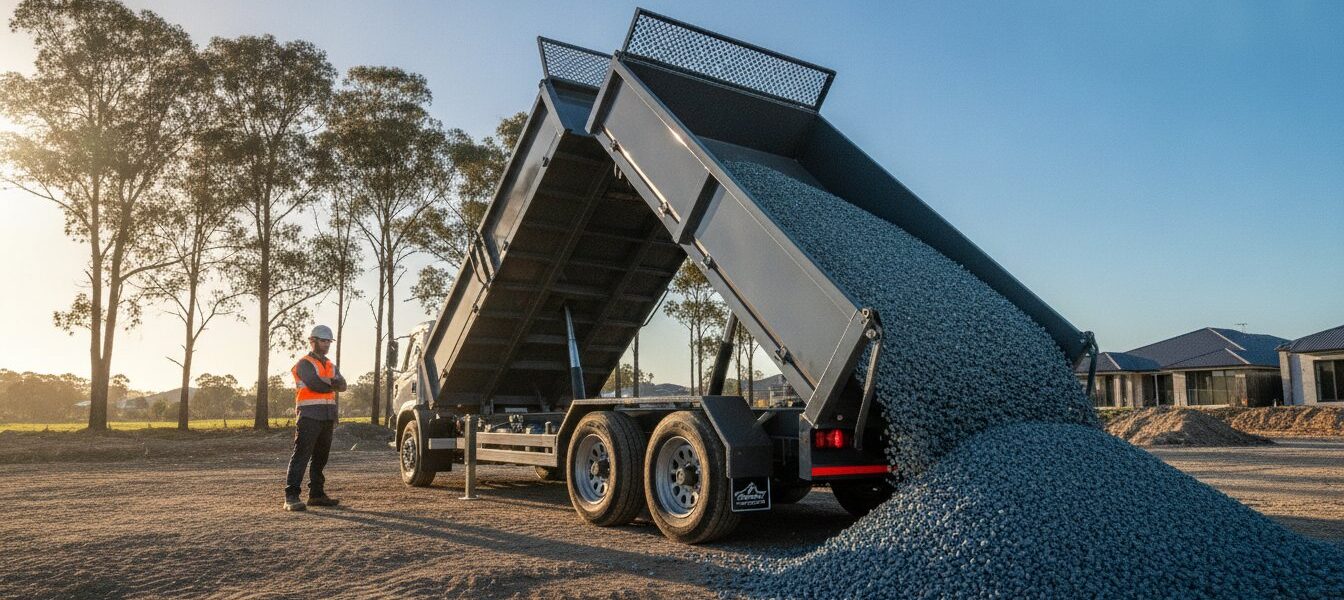
A hydraulic tipper trailer is a specialised heavy-duty transport unit equipped with a battery-powered hydraulic ram system. This mechanism allows the trailer bed to incline, using gravity to discharge bulk materials without physical intervention. Unlike standard box trailers that require shovel work, hydraulic tipper trailers eliminate the manual labour traditionally associated with unloading. For professionals sourcing custom tipper trailers qld, the choice of materials is critical. High-tensile steel frames combined with hot-dipped galvanisation ensure the chassis survives the abrasive nature of gravel and the corrosive effects of Queensland’s humid environment. This combination of mechanical power and structural resilience turns a simple haulage tool into a high-performance asset.
Primary Use Cases in the Australian Trade Sector
Efficiency and ROI for Small Businesses
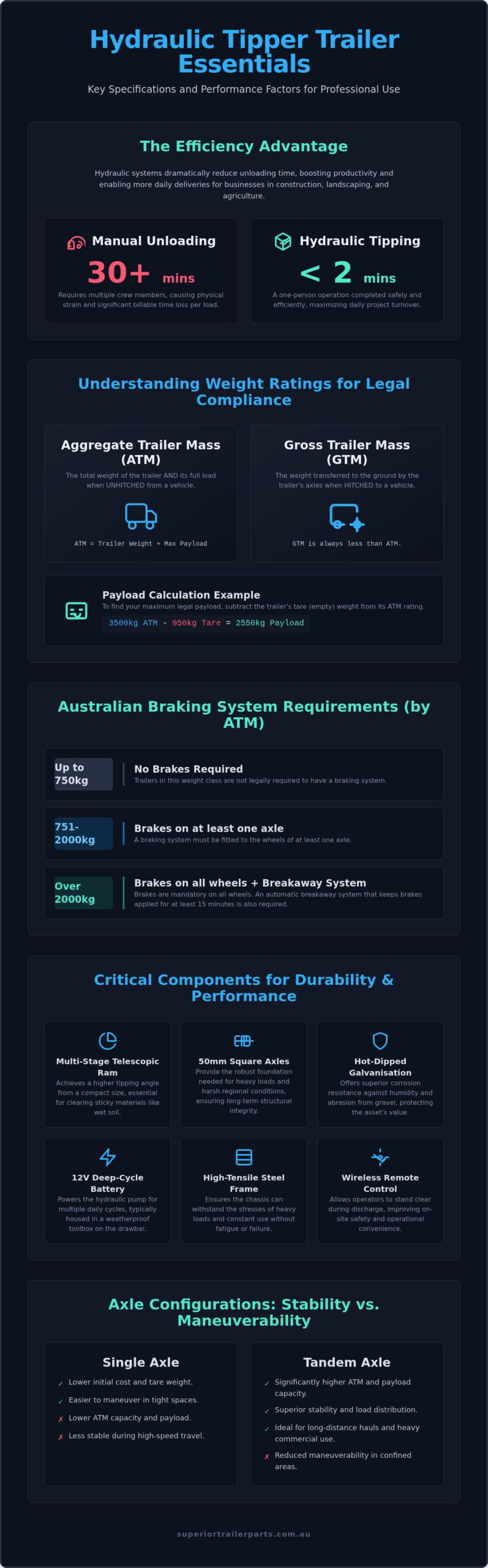
The financial argument for a hydraulic system is centered on labour reduction. If a two-person crew spends thirty minutes manually shoveling mulch, that is one hour of billable time lost per load. A hydraulic tipper trailer completes the same task in under two minutes. This efficiency directly impacts project timelines and allows for more daily deliveries. Reliability is the other half of the ROI equation. Investing in a unit with robust components ensures the trailer remains operational under heavy load cycles. Hot-dipped galvanised finishes protect the asset’s resale value by preventing structural rust. This makes it a sound long-term investment for any Queensland trade business looking to scale their operations without increasing headcount.
Technical Specifications: ATM, GTM, and Hydraulic Capacity Explained
Understanding weight ratings is the first step in selecting custom tipper trailers qld. Aggregate Trailer Mass (ATM) is the total weight of the trailer and its load when it’s not hitched to a vehicle. Gross Trailer Mass (GTM) is the weight transmitted to the ground through the trailer’s axles when hitched. To find your effective payload, subtract the trailer’s tare weight from the ATM. If you have a 3500kg ATM trailer with a tare of 950kg, your legal payload is 2550kg. Never exceed the towing capacity of your vehicle. A trailer rated for 3.5 tonnes requires a vehicle with a matching or higher braked towing capacity to remain legal and safe on Queensland roads.
Weight Ratings and Legal Compliance
Australian regulations demand specific braking configurations based on weight. Any trailer over 750kg ATM requires a braking system on at least one axle. Once you exceed 2000kg, the law requires brakes on all wheels and an automatic breakaway system. This system must keep the brakes applied for at least 15 minutes if the trailer becomes detached. Every trailer must have a durable VIN plate. This plate lists the manufacturer, VIN, and ATM. You can source replacement trailer parts and high-performance braking components to maintain your fleet’s compliance and ensure every unit meets the latest safety standards.
Hydraulic System Components and Performance
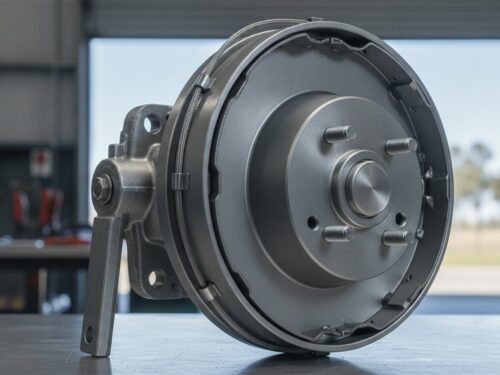
The hydraulic ram is the heart of the tipping mechanism. Multi-stage telescopic rams allow for a higher tipping angle from a shorter closed height. This is vital for clearing sticky materials like wet clay or heavy soil. Power usually comes from a 12V deep-cycle battery housed in a weatherproof toolbox on the drawbar. A standard pump setup should handle multiple daily cycles without failure. Wireless remotes are now a standard feature for many custom tipper trailers qld, allowing operators to stand clear of the trailer during discharge. Safety is managed through pressure relief valves that prevent system over-pressurisation and fuses that protect the electrical circuit from surges. For trailers in the 3500kg range, using robust components like 50mm square axles and 10 inch electric drum brakes ensures the mechanical platform can support the hydraulic force during operation.
Comparing Single Axle and Tandem Axle Tipper Configurations
Choosing between a single or tandem axle setup for custom tipper trailers qld involves more than just selecting a bed size. The axle configuration dictates how the trailer handles under load and how it interacts with the towing vehicle. Single axle units excel in tight worksites where space is limited and sharp turns are frequent. Tandem axle trailers, however, offer a level of stability that a single axle cannot match, especially when the trailer bed is fully loaded with high-density materials like road base or wet sand. This stability is critical for preventing the trailer from swaying, a dangerous occurrence that can lead to loss of vehicle control on regional Queensland roads.
Load distribution is another key factor. In a tandem setup, the weight is spread across four contact points. This reduces the downward force on each individual tyre and axle, which helps prevent premature suspension failure. While tandem axles experience more tyre scrub during tight turns, they offer a smoother ride over uneven terrain. This is because the rocker roller suspension systems common in tandem units allow the wheels to move independently, absorbing shocks that would otherwise be transferred directly to the trailer frame and the tow hitch. This mechanical advantage ensures the equipment remains durable even when navigating rough site access tracks.
Single Axle Hydraulic Tippers
Single axle hydraulic tippers are the go-to choice for residential garden maintenance and light-duty landscaping. These trailers usually fall into the 750kg to 1800kg ATM category. Their smaller footprint makes them easy to store and simple to reverse into narrow driveways. Because they have fewer moving parts, maintenance costs are lower over the equipment’s lifespan. However, they are limited by their payload capacity. If your work involves hauling heavy machinery or large volumes of aggregate, a single axle may become a bottleneck, requiring multiple trips and increasing fuel costs for the business.
Tandem Axle Heavy-Duty Tippers
For commercial operators, tandem axles are the standard for any unit with an ATM rating between 2000kg and 4500kg. The dual-axle design is engineered for extreme duty. It provides the necessary structural support for a 10×5 tandem axle hydraulic tipper trailer to operate safely on civil construction sites. Braking performance is significantly improved because the stopping force is applied to four wheels rather than two. Implementing high-quality electric drum brakes ensures that even at a full 3500kg capacity, the trailer remains under total control. This configuration also tracks better behind the tow vehicle, making long-distance hauls on highways much safer and less fatiguing for the driver.
Maintenance and Safety Standards for Australian Tipper Trailers
Preventative maintenance is the difference between a profitable workday and a costly roadside breakdown. For owners of custom tipper trailers qld, the harsh local environment makes routine inspections a necessity. Check hydraulic fluid levels every month to ensure the pump operates at peak efficiency. Use only the manufacturer-recommended oil grade to avoid damaging the internal valves. Inspect the hydraulic ram seals for any signs of weeping or moisture. A minor leak often signals an impending seal failure that could cause the trailer bed to drop unexpectedly under load. This isn’t just an equipment issue; it’s a serious site safety hazard.
Greasing is another critical task that many operators overlook. Apply high-pressure grease to all pivot points, tailgate hinges, and the main tipping pin every 50 hours of operation. In dusty regional areas or coastal Queensland locations, grit and salt air accelerate metal-on-metal wear. Regular lubrication prevents these components from seizing. Structural integrity must also be monitored. Inspect the chassis and drawbar welds for stress fractures, particularly near the suspension mounting points. If you frequently haul maximum ATM loads, these areas endure significant fatigue and require a keen eye during your pre-start checks.
Hydraulic System Care and Troubleshooting
The electrical system powers your productivity. Keep the deep-cycle battery terminals clean and free from corrosion. Corroded connections cause voltage drops, which force the pump motor to work harder and run hotter. If the tipping mechanism feels sluggish, check the battery charge level first. When the trailer is idle for extended periods, store it with the hydraulic ram fully retracted. This protects the polished chrome surface from pitting and environmental damage. Always check the pressure relief valve and safety fuses if the pump runs but the bed fails to lift. These components are designed to fail first to protect the more expensive pump and motor assembly.
Braking and Suspension Maintenance
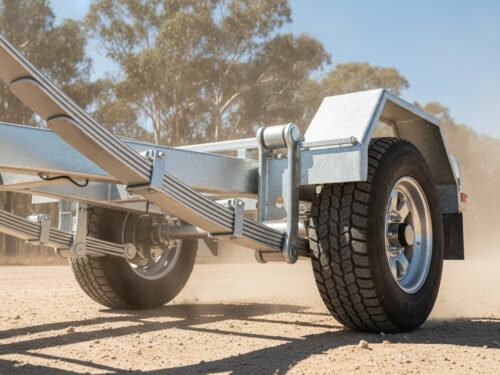
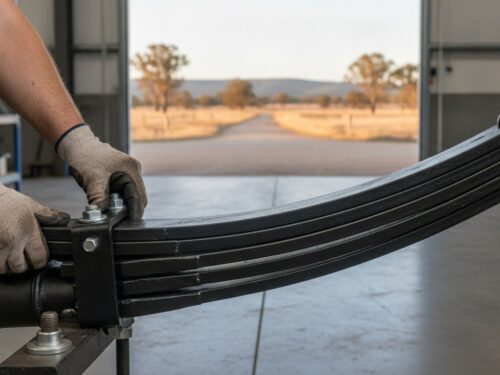
Heavy-duty hauling puts extreme pressure on the trailer’s undercarriage. Inspect leaf springs for any signs of flattening, shifting, or cracked leaves. Check the shackle bolts and bushes for excessive play; worn bushes can lead to poor tracking and increased tyre wear. Electric brakes require regular adjustment to compensate for shoe wear, especially when the trailer is used for heavy soil or gravel transport. After a long haul, feel the wheel hubs for excessive heat. A hub that is too hot to touch usually indicates a bearing failure or a dragging brake shoe. Ensure your equipment remains safe and compliant by sourcing professional-grade trailer parts for all your routine replacement needs.
Selecting Your Custom Tipper Trailer from Superior Trailer Parts
Superior Trailer Parts provides transport solutions designed for the toughest site conditions. Our 10×5 Tandem Axle Hydraulic Tipper Trailer is the flagship model for commercial fleets and trade professionals. When you invest in custom tipper trailers qld, you aren’t just buying a frame and a hoist. You are buying an integrated system of high-performance components. We use 50mm square axles and 10 inch electric drum brakes as standard to ensure the mechanical platform can handle a 3500kg ATM with ease. Being Australian-owned and operated since 2014, we engineer our units to meet Australian Design Rules (ADR) and withstand the specific stresses of regional haulage.
Standard Features of Professional Build Tippers
Durability starts with the finish. Every tipper chassis undergoes a hot-dipped galvanisation process to provide maximum corrosion resistance. This is essential for trailers exposed to coastal salt air or abrasive materials like wet sand and mulch. The load bed features heavy-duty checker plate floors and reinforced sides. These materials resist the impacts of heavy aggregate being dropped into the bed. To ensure reliable discharge, we integrate high-capacity hydraulic pumps and multi-stage rams. These systems provide consistent power for multiple daily tipping cycles without losing pressure or speed.
Customisation and Technical Support
Every transport requirement is unique. We offer access to a wide range of specialised couplings and parts, including poly block off-road couplings and weight distribution hitches. This allows you to tailor your custom tipper trailers qld to your specific towing vehicle and terrain. Our team provides expert advice to help you stay within your vehicle’s Gross Combination Mass (GCM) limits. If you have technical questions regarding axle configurations or braking systems, contact us directly for professional guidance. We stand behind every unit we sell with local accountability and deep industry knowledge.
Optimize Your Fleet with Professional Haulage Solutions
Superior Trailer Parts provides a reliable mechanical foundation through ADR compliant engineering and heavy-duty 50mm square axles. Our commitment to quality ensures your equipment handles the abrasive conditions of regional worksites without structural failure. We offer nationwide shipping across Australia to keep your operations moving regardless of your location. It’s time to build a more efficient business with hardware that is engineered to perform and built to last.
View our range of heavy-duty hydraulic tipper trailers to find the right configuration for your next project.
Frequently Asked Questions
What is the maximum ATM for a hydraulic tipper trailer?
The maximum Aggregate Trailer Mass (ATM) for a standard light trailer in Australia is 4.5 tonnes. Most commercial tandem models are rated at 3500kg ATM to match the maximum braked towing capacity of common Australian work vehicles. If you require a trailer with a higher rating, it must comply with heavy vehicle standards and different registration requirements under the ROVER system.
Do I need electric brakes for a hydraulic tipper trailer?
You must have an efficient braking system on all wheels if the trailer has a Gross Trailer Mass (GTM) over 2000kg. Australian Design Rules also require an automatic breakaway system for trailers in this weight class. This system ensures the brakes remain applied for at least 15 minutes if the trailer detaches from the vehicle. For trailers between 750kg and 2000kg, a single axle braking system is sufficient.
How often should I service the hydraulic system on my trailer?
Service your hydraulic system every six to twelve months depending on your daily workload. Professional operators should check the hydraulic fluid levels monthly and inspect the ram seals for weeping after every major project. Frequent greasing of pivot points and hinges is necessary for custom tipper trailers qld to prevent seizing in dusty or humid regional environments.
Can I tow a 3500kg hydraulic tipper with a standard ute?
You can only tow a 3500kg trailer if your vehicle’s manufacturer specifies a braked towing capacity of at least 3500kg. You must also verify your Gross Combination Mass (GCM) to ensure the combined weight of the loaded vehicle and trailer stays within legal limits. Exceeding these ratings is illegal and compromises the braking and handling performance of your vehicle.
What is the difference between a 1-way and 3-way tipper trailer?
A 1-way tipper discharges its load exclusively through the rear tailgate. A 3-way tipper uses a multi-directional hoist and pivot system to dump materials to the left, right, or rear. While 3-way models provide better access in narrow urban streets, the standard 1-way rear-tip configuration is generally more robust for heavy-duty construction and civil works.
Why is hot-dipped galvanising important for tipper trailers?
Hot-dipped galvanising creates a metallurgical bond between the zinc and the steel to prevent rust and corrosion. This is critical for trailers hauling wet soil, mulch, or waste materials that trap moisture against the metal. Unlike paint, the galvanising process protects the inside of the hollow chassis sections; this ensures long-term structural integrity in harsh Australian climates.
Can I operate the hydraulic tip while the trailer is attached to the vehicle?
You can operate the tipping mechanism while the trailer is hitched; however, the unit must be on level ground. Tipping on an uneven surface shifts the centre of gravity and can cause the trailer to tip over or damage the vehicle’s tow bar. Always ensure the park brake is engaged and bystanders are clear of the exclusion zone before activating the hoist.
What type of battery is best for a hydraulic trailer power pack?
A 12V deep-cycle AGM battery is the standard choice for powering a hydraulic pump. These batteries are designed for deep discharge cycles and are more resilient than standard starting batteries. To maintain performance, use a dedicated charging circuit from the tow vehicle or an external mains charger to keep the battery topped up between jobs.