A trailer jack is a critical safety component, not just a convenience tool for your driveway. Many owners treat it as an afterthought until a seized internal screw or a buckled frame makes hitching impossible. If you’ve ever struggled to crank a heavy load or worried about your trailer shifting while unhitched, you understand the importance of reliable hardware. Australian conditions are notoriously hard on moving parts. Salt air and red dust quickly turn a budget component into a mechanical liability.
You’ll learn how to choose, install, and maintain the right trailer jack to ensure safe hitching and reliable performance in this article. We explain the vital difference between ATM and tongue weight ratings so you never exceed your equipment’s physical limits. We also provide a clear breakdown of manual, hydraulic, and electric options alongside practical steps to prevent corrosion. Following these technical standards ensures effortless operation and long-term stability for your trailer in any environment.
Key Takeaways
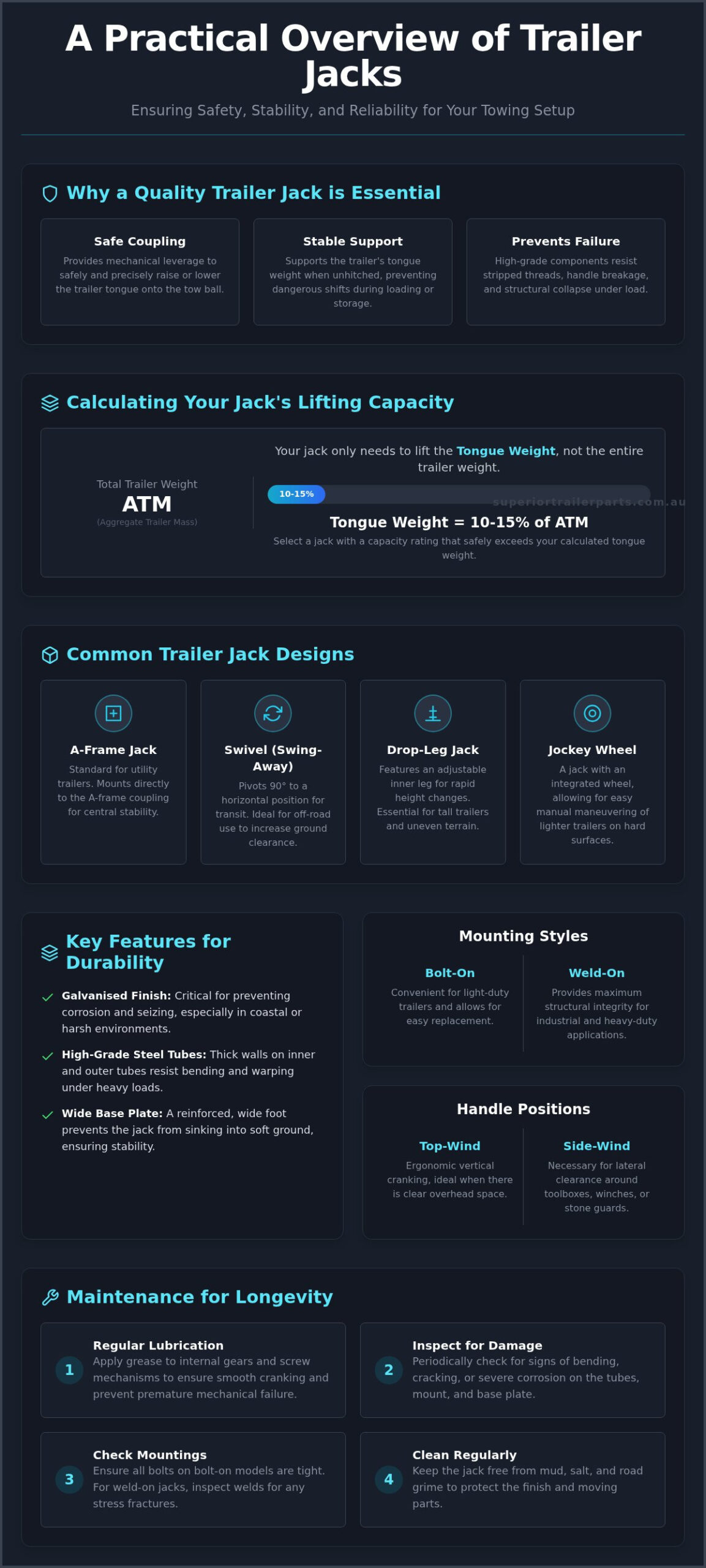
- Calculate your tongue weight as 10-15% of the total ATM to determine the correct lifting capacity for your hardware.
- Prioritise galvanised or heavy-duty finishes to prevent corrosion and seizing in harsh Australian coastal environments.
- Select a swivel-mount design for off-road trailers to increase ground clearance and prevent the assembly from dragging.
- Choose a high-quality trailer jack to ensure reliable mechanical leverage and stable support when the trailer is unhitched.
- Maintain internal components with regular lubrication to ensure smooth cranking and prevent premature mechanical failure.
What is a Trailer Jack and Why is Quality Essential?
A trailer jack is a fundamental piece of hardware for any towing setup. It provides the mechanical leverage required to raise and lower the trailer tongue. This function is vital for the safe coupling and uncoupling of the trailer from the tow vehicle. Without a functional jack, aligning a heavy coupling with a tow ball becomes a dangerous and physically demanding task. High-quality Trailer components and jacks ensure the tongue stays at the correct height for a secure connection every time.
Reliability is the primary concern for industrial and transport operators. A jack must support the trailer’s tongue weight while it’s unhitched and stored. This is especially important during loading. If you add weight to an unhitched trailer, the jack must maintain total stability. Inferior components often fail under these stresses. Common failure points include stripped internal threads, handle breakage, or complete structural collapse. Investing in professional-grade hardware prevents these risks and protects your equipment from unnecessary damage.
The Difference Between a Trailer Jack and a Jockey Wheel
Operators often use these terms interchangeably, but they serve different purposes. A jockey wheel includes a wheel at the base. This design allows you to manoeuvre small trailers by hand on flat, hard surfaces. It’s a standard feature on boat trailers and light box trailers. A fixed trailer jack typically features a flat base plate. It’s built for trailers where manual mobility isn’t a priority. Heavier applications, like tandem axle trailers, often require a heavy-duty drop-leg jack. These provide a larger lifting capacity and a more stable footprint for industrial loads.
Key Components of a Reliable Jack
Understanding the anatomy of a jack helps you identify quality. Start with the inner and outer tubes. These should be made from high-grade steel with significant wall thickness. Thicker tubes resist bending and warping when the trailer is parked on uneven ground. The gearbox and handle mechanism are also critical. Top-wind jacks allow for an ergonomic vertical cranking motion. Side-wind mechanisms are useful when you need more clearance above the A-frame. Finally, check the foot. A wide, reinforced base plate ensures the jack won’t sink into soft Australian soil or gravel. For those upgrading their hardware, exploring specialised couplings and parts is a logical next step to ensure total system compatibility.
Exploring Different Trailer Jack Types and Designs
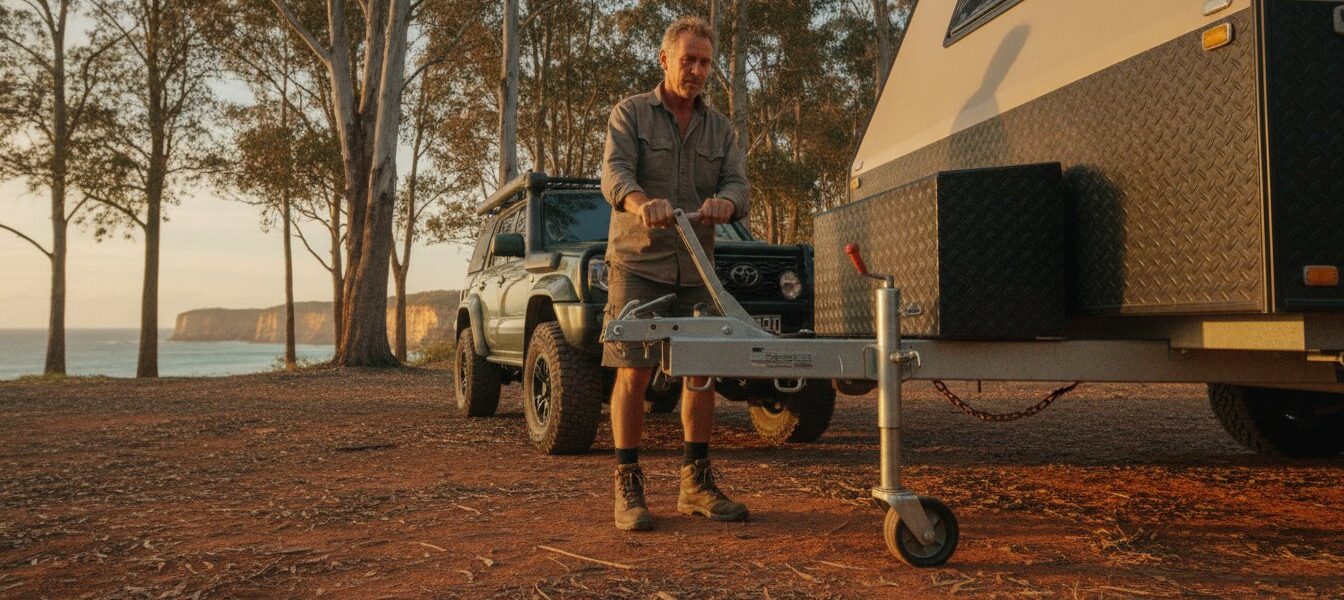
Selecting a trailer jack requires matching the mechanical design to your specific trailer frame. A-frame jacks are the industry standard for most utility and box trailers. They install directly into the triangular section of the frame, providing a centralised lift point for maximum stability. For trailers with low ground clearance or those used in off-road environments, swivel or swing-away designs are superior. These jacks pivot 90 degrees and lock parallel to the frame when not in use. This prevents the foot from dragging on rocks or steep driveway transitions during transit.
Heavy-duty applications often require more than a standard screw mechanism. Drop-leg jacks feature a secondary inner leg held by a heavy-duty pin. This allows for rapid height adjustment before you even start cranking. It’s an essential time-saving feature for tall trailers or when working on uneven terrain. For commercial operators handling maximum loads, hydraulic jacks are the preferred choice. They use fluid pressure to lift the tongue with minimal physical effort. Learning how to use a hitch jack correctly involves understanding these mechanical advantages to ensure safety and efficiency.
Mounting Styles: Bolt-On vs Weld-On
The way you attach the hardware determines its long-term durability. Bolt-on jacks are convenient for light-duty box trailers. They allow for quick replacement if the unit becomes damaged or worn over time. When installing these, always inspect your galvanised U-bolts and mounting plates for signs of stress or corrosion. Weld-on jacks provide maximum structural integrity. They’re the standard for industrial trailers where the jack is a permanent, non-negotiable part of the frame. If you’re unsure which mounting style fits your chassis, you can contact us for technical advice.
Handle Positions: Side-Wind vs Top-Wind
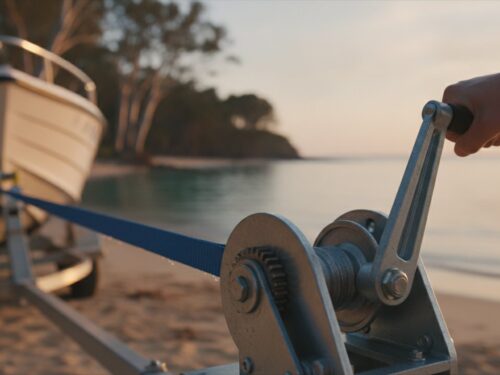
Ergonomics play a major role in daily operation. Top-wind handles are simple and effective for standard A-frames where there’s plenty of overhead space. However, if your trailer has a large toolbox, a stone guard, or a winch, a side-wind handle is often necessary. It provides the lateral clearance needed to crank without hitting obstructions. The internal gear ratio also matters. A higher ratio makes lifting heavy loads significantly easier but requires more turns. Lower ratios are faster but demand more physical strength from the operator. Choose the configuration that matches your physical capability and the frequency of use.
Key Features for Durability in Harsh Environments
Australia’s diverse climate demands specific hardware choices. A standard trailer jack might survive in a dry regional shed for decades. However, that same component will likely seize within months if used regularly at a coastal boat ramp. Corrosion is the primary cause of mechanical failure in these environments. It attacks the structural integrity of the tubes and the precision of the internal gears. Choosing the right finish is the first step in ensuring your equipment remains operational for the long term.
Zinc plating offers a basic level of protection. It involves a thin layer of zinc applied to the steel surface. This finish is suitable for trailers stored in dry, inland areas where salt exposure is non-existent. It’s a cost-effective solution for standard box trailers kept under cover. However, it lacks the thickness required to withstand constant moisture or salt spray. For boat trailers and equipment exposed to salt air, hot-dip galvanisation is essential. This process involves submerging the steel in molten zinc to create a thick, metallurgical bond. This barrier protects both the interior and exterior surfaces from oxidation.
For premium marine applications, stainless steel components offer the highest level of resistance. While the initial investment is higher, stainless steel provides total immunity to rust in high-salinity environments. It’s an excellent choice for professional operators who require maximum reliability. Regardless of the material, the durability of the internal mechanism depends on how well it’s shielded from the elements. Sealing the gearbox and using weather-resistant caps on top-wind models helps prevent water ingress.
Material Finishes and Longevity
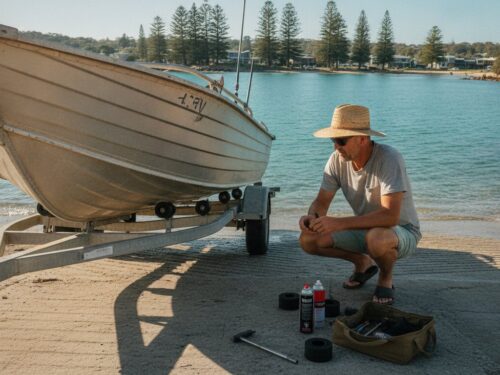
Selecting galvanised finishes is critical for boat trailer parts that face frequent submersion or salt spray. You can identify internal gear corrosion by a gritty feel when cranking or the appearance of orange-tinted grease near the handle. To prevent this, look for hardware with integrated service points. Grease nipples allow for the direct injection of lubricant into the internal screw and gear assembly to displace moisture and reduce friction. Regular servicing ensures the trailer jack doesn’t become a liability during a launch or retrieval.
Load Ratings: Static vs Lifting Capacity
Confusion between static and lifting capacity often leads to dangerous equipment failure. Static capacity refers to the weight the jack can support when stationary and locked. This is the “holding” strength of the unit. Lifting capacity is the maximum weight the internal gears can actually crank upward. These numbers are rarely the same. A jack might have a 2,000kg static rating but only a 450kg lifting capacity. Always select a unit where the lifting capacity exceeds your trailer’s tongue weight. This ensures the mechanism operates within its designed safety margins and reduces the physical effort required to hitch your load.
Step-by-Step Selection Guide for Your Trailer
Selecting a trailer jack requires more than a quick glance at a weight rating. You must follow a logical process to ensure the hardware matches your trailer’s physical dimensions and operational needs. Start by identifying your Aggregate Trailer Mass (ATM). This is the total weight of the trailer and its maximum load. While the ATM tells you the total burden on the axles, the jack only supports the tongue weight. This is typically 10% to 15% of the total loaded trailer weight. Don’t guess these figures. Use a weighbridge or a dedicated ball weight scale to get an accurate measurement before purchasing any components.
Once you know the weight, measure the required lift height. Level your trailer on flat ground and measure from the bottom of the coupling to the ground. Your jack must be able to retract enough to clear the ground during transit and extend high enough to lift the coupling off the tow ball. Finally, check your drawbar size. Australian trailers typically use 50mm, 75mm, or 100mm steel sections. Ensure the mounting bracket or U-bolts are compatible with these dimensions. If you need help matching components to your frame, you can browse our professional trailer hardware for detailed specifications.
Understanding Weight Distribution
If you use weight distribution hitches, your jack plays a specific role in the setup process. You often need to lift the coupled trailer and the rear of the tow vehicle simultaneously to tension the spring bars. This adds significant stress to the internal gears. Tongue weight is the downward force exerted by the trailer coupling on the hitch. Never buy a jack rated exactly at your tongue weight. We recommend a 20% safety margin to account for dynamic loads and uneven ground. This extra capacity ensures the mechanism doesn’t bind when you’re under pressure to hitch up quickly.
Measuring for Correct Clearance
Clearance issues are a common cause of jack damage. Measure the retracted height to ensure the foot or wheel sits well above the road surface when you’re towing. This is vital for off-road trailers where approach and departure angles matter. Conversely, check the extended height to ensure you can level the trailer on sloping campsites or boat ramps. For those using jockey wheels, wheel diameter is a key factor. Larger wheels (200mm or more) are better for soft ground or gravel. Smaller wheels are sufficient for hard concrete but tend to sink in the dirt. Choosing the right trailer jack configuration prevents the frustration of a bogged or damaged tongue assembly.
Reliable Trailer Components and Support
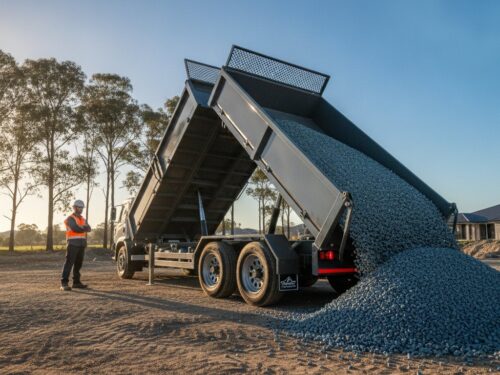
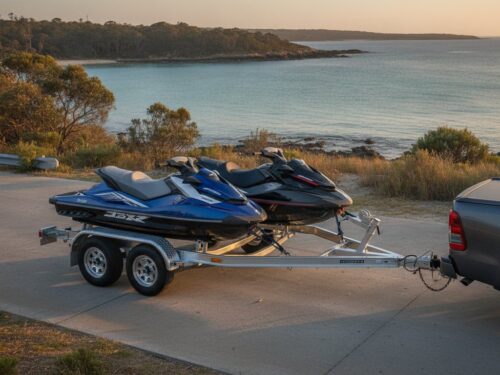
Superior Trailer Parts provides a comprehensive range of hardware for all trailer types. Our inventory includes everything from trailer axles to specialised marine components. We focus on high-durability parts designed to withstand the rigours of the Australian climate. Whether you operate a single jet ski trailer or a tandem axle tipper, the hardware must be resilient. Accessing expert advice ensures you select the correct weight-rated trailer jack for your specific application. This prevents premature wear and ensures the safety of your towing setup.
Our commitment to quality extends beyond the point of sale. We position ourselves as a technical resource for the transport sector. Every component we supply meets strict standards for strength and fit. This is essential for professional fleet managers and individual owners who value performance over marketing rhetoric. Selecting the right hardware is only half the battle. You must also implement a consistent care routine to ensure your equipment survives the dust, heat, and moisture of regional Australia.
This focus on reliability and expert maintenance is a principle that extends to all critical property systems; for those looking for specialized infrastructure support, you can discover Texas Septic Solutions for expert septic system installation and comprehensive repair services.
Maintenance Tips for Long-Term Performance
Maintenance is the key to long-term performance and safety. Regularly lubricate the internal screw thread and pivot points with high-quality grease to prevent binding. Check mounting bolts and U-bolts for tightness after long trips or heavy use. Vibrations from corrugated roads can loosen even the most secure fittings over time. Inspect the outer tube for signs of structural bending or fatigue. If the trailer jack becomes difficult to operate despite regular lubrication, the internal mechanism may be compromised. Replacing a worn unit before it fails is a standard safety practice for responsible operators.
Nationwide Shipping and Technical Expertise
We offer reliable shipping for trailer parts across all Australian cities. Our team understands the specific requirements for box trailers and heavy-duty tippers. This technical knowledge allows us to recommend hardware that fits your specific chassis and load requirements. We stand behind our products as a locally owned and operated specialist. If you need assistance with technical specifications or have bulk trade enquiries, you can contact us for direct support. We provide the expertise needed to keep your trailer moving safely and efficiently.
Secure Your Load with Professional Grade Hardware
Matching a trailer jack to your specific tongue weight and environmental exposure ensures your towing setup remains safe and functional. We’ve reviewed why hot-dip galvanisation is vital for coastal regions and why you should always maintain a 20% safety margin in lifting capacity. These technical decisions prevent mechanical binding and ensure hitching remains a hassle-free process. Consistent maintenance, particularly internal lubrication and U-bolt inspections, protects your equipment from the abrasive Australian elements.
Superior Trailer Parts is an Australian-owned independent specialist. We supply heavy-duty components built for local conditions and offer nationwide shipping across Australia to support your transport needs. Browse Our Full Range of Durable Trailer Parts to find reliable solutions for your box trailer, boat trailer, or commercial tipper. Making the right hardware choice today guarantees stability and performance for the long haul.
Frequently Asked Questions
Is a jockey wheel the same thing as a trailer jack?
No, they serve different primary roles despite looking similar. A jockey wheel includes a wheel for manual manoeuvring on flat surfaces and is common on lighter trailers. A trailer jack usually features a fixed foot and is designed for higher static loads and vertical lifting where horizontal movement isn’t required. Choose a jack if stability and heavy lifting capacity are your main priorities for industrial or transport applications.
How much weight should my trailer jack be able to lift?
Your jack must be rated to lift the trailer’s tongue weight, not the total Aggregate Trailer Mass (ATM). Tongue weight is usually 10% to 15% of the fully loaded trailer weight. We recommend selecting a unit with a lifting capacity that includes a 20% safety margin above your measured tongue weight. This prevents the internal gears from binding when you’re working on uneven ground or under heavy load.
Can I replace a weld-on jack with a bolt-on model?
Yes, you can replace a weld-on model with a bolt-on version if the drawbar dimensions are compatible. You’ll need to grind off the old weld-on bracket and clean the steel surface to prevent rust. Ensure the new bolt-on bracket matches your drawbar width, which is typically 50mm, 75mm, or 100mm. Use high-tensile bolts or galvanised U-bolts to ensure a secure and permanent fit to the frame.
What happens if I exceed the lifting capacity of my trailer jack?
Exceeding the rated lifting capacity leads to immediate mechanical failure or dangerous structural collapses. The internal screw threads can strip; the handle or gearbox might shear off entirely. This often happens when operators try to lift a coupled vehicle to tension a weight distribution hitch. Always use hardware that exceeds your specific load requirements to maintain safety for yourself and your equipment.
How do I prevent my trailer jack from rusting?
Prevent rust by choosing hot-dip galvanised hardware and maintaining a strict lubrication schedule. Apply marine-grade grease to the internal screw and all pivot points through the integrated grease nipples. Rinse the outer and inner tubes with fresh water after exposure to salt air or mud. For maximum protection in coastal areas, consider stainless steel components or specialized coatings that provide a thicker barrier against oxidation.
What is the best type of jack for a boat trailer?
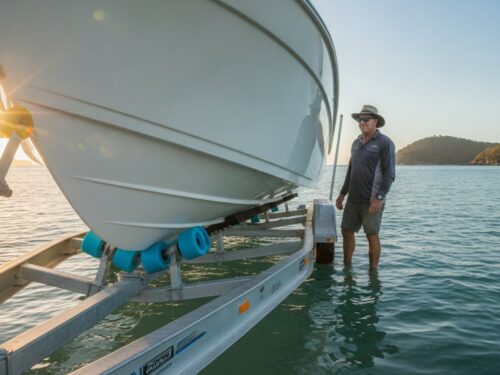
A hot-dip galvanised swivel jack is the best choice for a boat trailer due to its corrosion resistance and clearance. The galvanised finish resists salt-water damage, while the swivel design allows you to pivot the trailer jack out of the way during transit. This prevents the foot from dragging on boat ramps or steep driveways. Ensure the unit has a sealed gearbox to keep salt and sand away from the internal gears.
Can I use a trailer jack to level my caravan for long periods?
No, you shouldn’t rely solely on a jack for long-term levelling. While the jack can raise the tongue to the correct height, it isn’t designed to provide the lateral stability needed for a parked caravan. Use dedicated stabiliser legs and wheel chocks to secure the load once you’ve reached the desired level. This prevents the jack from bending and ensures the caravan won’t shift unexpectedly while in use.
How often should I grease my trailer jack?
Grease your jack at least every six months or more frequently if you tow in wet or dusty conditions. Use the integrated grease nipple to pump lubricant into the internal screw assembly until you feel slight resistance. Regular lubrication reduces friction, prevents internal rust, and ensures the handle turns smoothly. Check the mounting bolts for tightness during the same service interval to ensure the entire assembly remains secure.