Your trailer suspension is the only thing standing between a successful haul and a costly roadside failure on a corrugated Australian backroad. It’s a heavy responsibility for a few pieces of steel. You likely understand the frustration of dealing with premature spring failure or the confusion of distinguishing between slipper and eye-to-eye styles when browsing for parts. Finding the exact measurements for a replacement often feels like guesswork when you need to get back on the road quickly.
You’ll learn how to select, measure, and maintain 5 leaf eye to eye springs to ensure your trailer suspension handles Australian loads reliably. This information helps you identify the correct load rating for your Aggregate Trailer Mass and secure a durable replacement that fits your existing hardware. We provide a clear look at the technical specifications and installation requirements needed to maintain a high-performing trailer. Understanding these components ensures your equipment remains resilient under pressure.
Key Takeaways
- Understand how the five-leaf design provides essential shock absorption and load support for medium-duty Australian trailers.
- Identify the correct load capacity for your setup, noting that standard 5 leaf eye to eye springs typically support 600kg per individual spring.
- Learn why eye to eye configurations offer a quieter, more controlled ride compared to traditional slipper spring systems.
- Follow a precise two-step process to measure eye-to-eye distance and camber to ensure a perfect replacement fit.
- Ensure long-term suspension durability by pairing your springs with high-quality shackle bolts and Australian-standard U-bolt kits.
What are 5 Leaf Eye to Eye Springs?
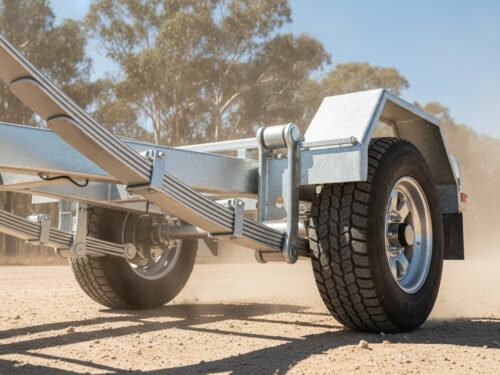
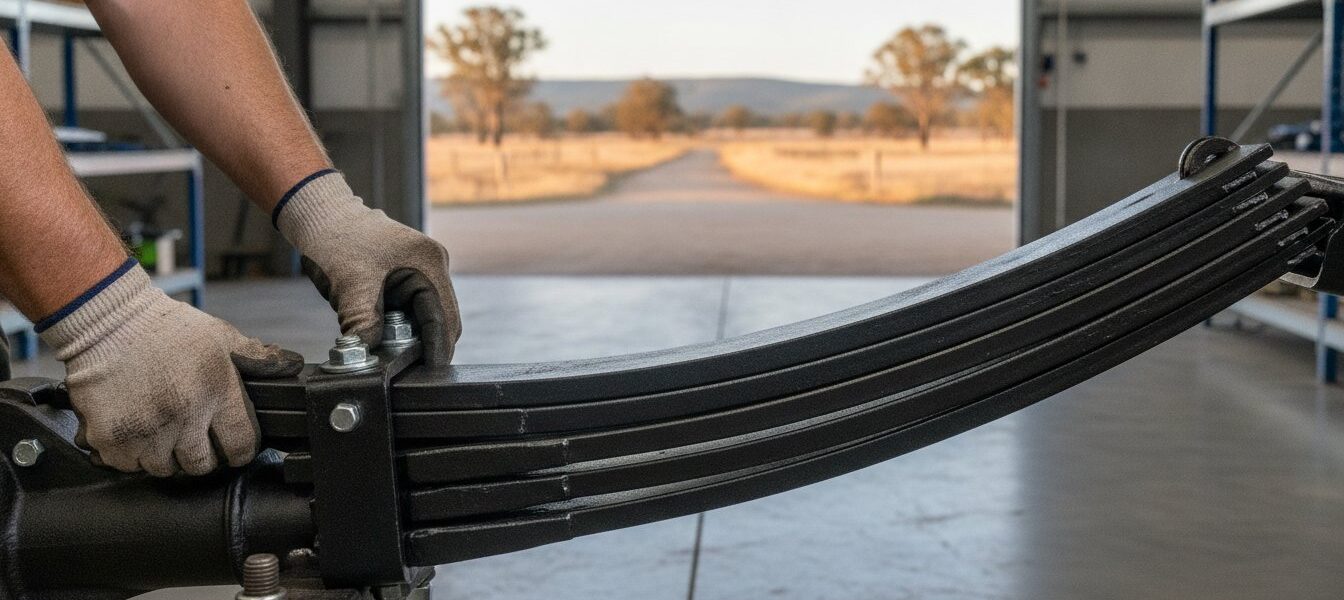
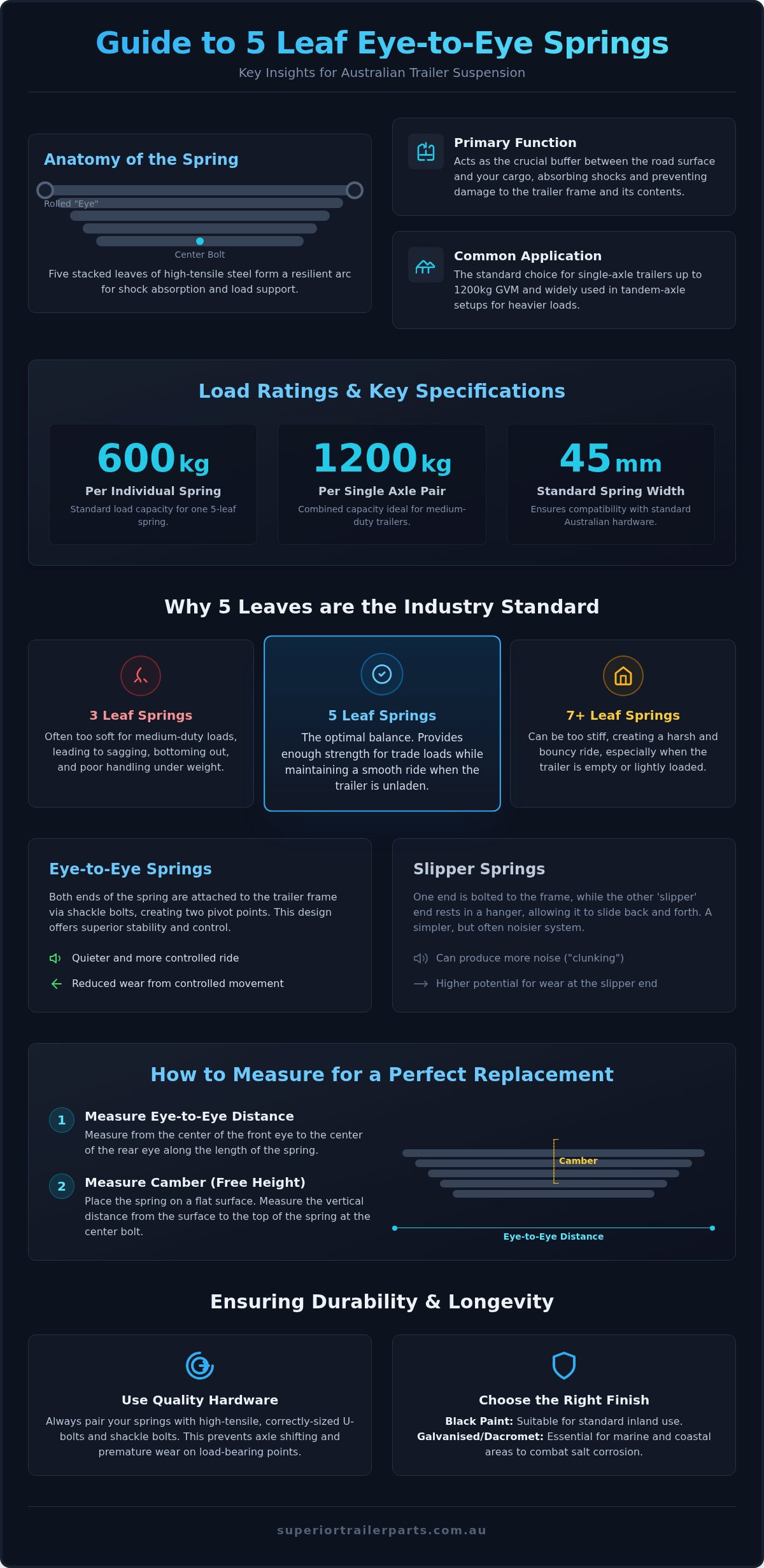
A 5 leaf eye to eye spring is a heavy-duty suspension component designed for the rigours of Australian towing. It consists of five individual high-tensile steel leaves stacked together to form a resilient arc. Both ends of the spring feature rolled “eyes” that allow for secure mounting to the trailer frame. These 5 leaf eye to eye springs act as the primary buffer between the road surface and your cargo. They provide essential shock absorption by flexing under weight, which protects both the trailer frame and the load from vibration damage.
This suspension style is a standard choice for single axle trailers with a Gross Vehicle Mass (GVM) up to 1200kg. They are also frequently used in tandem axle configurations for heavier applications. To understand the basic mechanics behind this design, you can read about What is a Leaf Spring? on Wikipedia. The mechanical design uses shackle bolts and hangers to secure both ends of the spring to the trailer. This creates a pivot point that allows the spring to expand and contract as it encounters bumps or changes in load weight.
The Anatomy of a Multi-Leaf Spring
The construction of these leaf springs follows a specific hierarchy for maximum durability. The primary leaf sits at the top of the stack. It is the longest leaf and provides the structural eyes used for mounting. Beneath this primary layer, the four supporting leaves are progressively shorter. This graduated design provides increasing resistance as the trailer load increases. A high-tensile centre bolt passes through the middle of the stack to keep the leaves aligned during travel. This alignment is critical for maintaining the integrity of the suspension under heavy braking or cornering. These springs are highly compatible with 39mm round and 40mm square axles commonly found on Australian box trailers.
Why 5 Leaves are the Industry Standard
Choosing a five-leaf configuration offers a practical balance between flexibility and strength. A 3 leaf spring is often too soft for medium-duty trade loads, leading to sagging and poor handling. Conversely, 7 or 8 leaf alternatives can create a harsh, bouncy ride when the trailer is unladen. The 5 leaf design serves as a versatile middle ground. It maintains stability on the highway without sacrificing the ride quality needed for lighter hauls. Each individual spring carries a standard rating of 600kg, which provides a total capacity of 1200kg for a single axle pair. This rating makes it the benchmark for most general-purpose trailers in the Australian market.
Installation requires specific hardware to ensure safety. You must use high-quality galvanised U-bolts to secure the spring to the axle seat. Using the correct hardware prevents the axle from shifting, which is a common cause of uneven tyre wear and trailer sway. Always inspect the shackle bolts for signs of wear, as these are the primary load-bearing points for the entire suspension system.
Load Ratings and Technical Specifications
Selecting the right suspension starts with understanding the numbers. Most 5 leaf eye to eye springs in the Australian market carry a standard rating of 600kg per spring. When you install them as a pair on a single axle, you achieve a total suspension capacity of 1200kg. This specific rating aligns with the requirements for medium-duty trailers, such as standard 7×4 or 8×5 box trailers. It’s a reliable setup that balances load-bearing strength with enough flexibility to prevent the trailer from bouncing when empty.
The physical build is just as important as the weight limit. These springs are manufactured from high-tensile spring steel. This material is chosen for its ability to return to its original shape after significant compression on rough roads. In Australia, the standard width for these components is 45mm. This width ensures compatibility with standard hangers and shackle bolts. You can choose between different finishes based on your environment. Standard black paint works well for inland use, while galvanised or Dacromet coatings are necessary for marine applications where salt air is a constant factor.
Calculating Your Required Capacity
You shouldn’t just guess your trailer’s needs. Start by checking your trailer’s Gross Vehicle Mass (GVM) on the compliance plate. Subtract the weight of the empty trailer, known as the tare weight, to find your maximum payload. However, you must account for dynamic loading. When your trailer hits a pothole at highway speeds, the force exerted on the springs is much higher than the static weight of the load. We recommend a safety margin of 10 to 20 percent to handle these sudden stresses. Your spring capacity must also stay in sync with your trailer axles to prevent a single point of failure in the system.
Corrosion Protection for Longevity
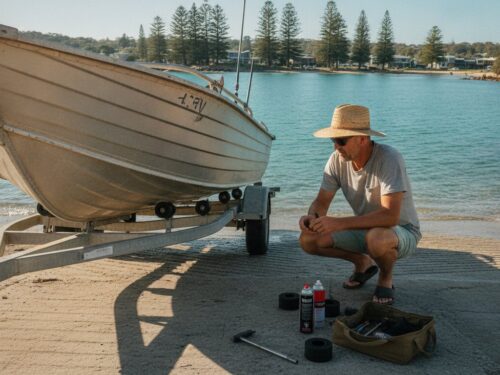
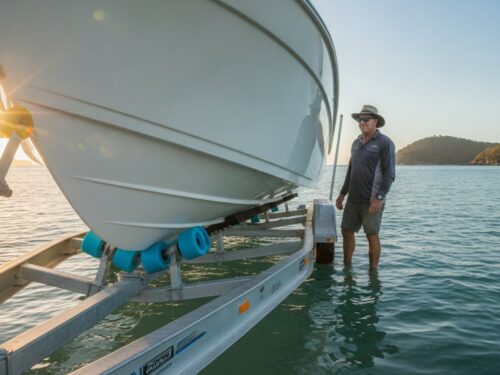
The environment where you tow dictates the finish you need. Painted finishes are cost-effective and provide sufficient protection for dry-land box trailers stored undercover. If you’re heading to the boat ramp, painted steel won’t last. Salt water causes rapid oxidation and leaf pack swelling, which eventually leads to snapped leaves. For boat trailers or jet ski trailers, always opt for galvanised or Dacromet-coated springs. These treatments provide a sacrificial layer that resists rust in harsh coastal conditions.
Maintaining your suspension involves more than just picking the right finish. Regularly rinse your leaf packs with fresh water after trips to the coast. You should also apply a suitable lubricant to the shackle bolts and bushes. This reduces friction and prevents the steel from binding or squeaking. If you need to upgrade your current setup, you can view our range of 5 leaf eye to eye springs to find a durable match for your trailer.
Eye to Eye vs Slipper Springs: Which is Better?
Choosing between eye-to-eye and slipper springs depends on your trailer’s primary use and your maintenance budget. While both designs support weight, 5 leaf eye to eye springs offer a more sophisticated mechanical solution for varied Australian road conditions. The fundamental difference lies in how the rear of the spring interacts with the trailer frame. A slipper spring has one eye at the front and a flat tail at the back that slips inside a metal hanger. In contrast, eye-to-eye springs are secured at both ends using shackle bolts and hangers. This shackle setup allows the spring to move in a controlled arc, providing superior load distribution across the chassis.
Noise and vibration are the most noticeable differences during a trip. Because slipper springs rely on a sliding tail, they often produce a distinct clunking sound as the metal tail moves against the wear plate. This metal-on-metal contact transfers road vibration directly into the trailer frame and your cargo. Shackle systems are significantly quieter. The use of nylon or brass bushings in the eyes dampens the impact of road bumps. While 5 leaf eye to eye springs require more individual components like shackle bolts and bushes, they protect the structural integrity of your trailer over the long term.
Maintenance requirements also vary between the two styles. Eye-to-eye springs have more moving parts that eventually require replacement. You’ll need to inspect the bushings and shackle bolts for wear every few thousand kilometres. Slipper springs are simpler and often cheaper to manufacture, but they are harsher on the trailer frame. The constant sliding action can eventually wear through the rear hanger if it isn’t monitored. For most professional or frequent users, the extra maintenance of an eye-to-eye system is a fair trade for a smoother ride and better frame protection.
Advantages of the Eye to Eye Design
One major benefit of this design is the reduced vibration transfer to the trailer frame and cargo. The dual-pivot points allow the spring to absorb energy more efficiently than a slipper tail. This setup makes it easier to replace individual components like shackle bolts and bushes without replacing the entire hanger. These springs perform better for trailers used at highway speeds, where stability and predictable handling are critical for safety.
When to Choose Slipper Springs Instead
There are specific scenarios where slipper springs are the more practical choice. They are ideal for low-speed, light-duty applications where initial cost is the primary factor. Garden trailers or small utility trailers that rarely leave suburban streets often use 4 leaf slipper springs because they are easier to install. These systems have fewer moving parts to seize up if the trailer sits idle for long periods in a backyard. However, for anything carrying significant weight over long distances, the eye-to-eye configuration remains the industry preference.
How to Measure and Select Replacement Springs
Precision is the most important factor when ordering 5 leaf eye to eye springs. If your measurements are off by even a few millimetres, the shackle bolts will not align with the hangers on your trailer frame. You must measure your springs while they are uncompressed to get an accurate reading. Follow these four steps to identify the correct replacement part for your setup.
- Step 1: Measure the “eye to eye” distance. This is the straight-line measurement taken from the centre of one bolt hole to the centre of the other. Do not follow the curve of the steel.
- Step 2: Measure the “camber” or arc height. Lay the spring flat on a surface and measure the vertical distance from the centre of the eyes down to the top of the main leaf.
- Step 3: Confirm the width of the leaves. While most Australian trailers use a 45mm standard, some older or imported models may vary.
- Step 4: Count the number of leaves. For this specific suspension class, you should see five individual steel leaves stacked together to ensure you maintain the 600kg-per-spring capacity discussed in previous sections.
Common Measurement Pitfalls
Measuring a worn-out spring often leads to errors. As springs age and fatigue, they tend to flatten out, which makes the eye-to-eye distance appear longer than it was originally. If your old springs are missing or too distorted to measure, you must measure the distance between the hangers welded to the trailer frame instead. You also need to verify the bush size. Australian shackle bolts are typically 1/2 inch or 9/16 inch. Ensure the nylon or brass bushes in your new springs match your existing hardware to prevent excessive play in the suspension.
Identifying Signs of Spring Fatigue
You should inspect your suspension regularly for physical damage. Look for visible cracks in the steel or leaves that have rusted through, as these are immediate safety risks. If your trailer sits noticeably lower on one side or “bottoms out” when hitting small bumps, the springs are no longer providing adequate support. A noticeable loss of camber indicates the steel has lost its tempered memory and can no longer rebound to its original shape. When this happens, the suspension cannot effectively manage the dynamic loads of highway travel. If your inspection reveals these issues, you can order replacement 5 leaf eye to eye springs to restore your trailer’s load capacity and safety.
Always replace springs in pairs to ensure even load distribution across the axle. Installing a new spring on one side while leaving a fatigued spring on the other will cause the trailer to lean and lead to uneven tyre wear. This simple practice maintains the structural balance of your trailer and extends the life of your axles and bearings.
Sourcing Quality Suspension Parts in Australia
The springs are only one part of the assembly. You must prioritise high-quality shackle bolts and U-bolt kits to ensure the entire system remains secure. These fasteners take the brunt of the mechanical stress during towing. Using grade-rated hardware prevents the axle from shifting and keeps the spring pack tightly compressed. If you’re performing a full suspension overhaul, consider how your springs interact with your braking system and axles. A balanced setup ensures that every component works in unison to provide predictable handling on the highway.
Accessing professional-grade hardware shouldn’t be a hurdle for fleet managers or individual owners. Nationwide shipping ensures you can secure reliable parts regardless of your location. Whether you’re in a metropolitan hub or a remote regional area, getting the right suspension gear delivered quickly keeps your downtime to a minimum. Combining new 5 leaf eye to eye springs with a fresh set of shackle pins and bushes is the most efficient way to restore original towing performance and prevent future roadside issues.
The Superior Trailer Parts Advantage
We maintain an extensive stock of suspension components ready for immediate dispatch. This availability is critical for trade professionals who can’t afford to have a trailer off the road for long periods. Our team provides expert technical support to help you verify fitment before you buy. We ensure our kits include high-quality bushings and hardware that meet industrial standards. This commitment to quality ensures that your replacement parts fit correctly the first time without the need for modifications.
Next Steps for Your Trailer Project
Start your project by conducting a thorough audit of your current suspension for wear and tear. Look for signs of fatigue, such as oval-shaped bolt holes or thinning leaves, which we discussed in the measurement section. Check your trailer’s GVM to confirm that 5-leaf springs meet your specific load requirements. Once you’ve identified your needs, you can visit the Superior Trailer Parts shop to browse the range. Taking these steps now prevents mechanical failures and ensures your trailer remains a reliable tool for years to come.
Ensure Your Trailer’s Long-Term Reliability
Maintaining a safe trailer depends on selecting the right components for the specific demands of your load. You’ve learned how to match individual spring ratings to your trailer’s GVM and why precise measurement is the only way to avoid costly installation delays. Choosing 5 leaf eye to eye springs provides the essential stability and shock absorption required for varied Australian road conditions. Investing in high-tensile steel and correct shackle hardware protects your trailer frame from the structural stress of heavy hauling over long distances.
Superior Trailer Parts is a proudly Australian owned and operated specialist. We provide reliable nationwide shipping across the country and offer expert technical support to ensure you verify fitment before you buy. Don’t risk a mechanical failure with fatigued or undersized suspension gear that isn’t up to the task. Browse our range of 5 leaf eye to eye springs and suspension kits to secure a durable replacement today. It’s the most efficient way to get your trailer back in peak condition for your next haul.
Frequently Asked Questions
How much weight can a 5 leaf eye to eye spring hold?
Standard 5 leaf eye to eye springs typically support 600kg per individual spring. When installed as a pair on a single axle, this provides a total load capacity of 1200kg. Always check the manufacturer’s specific rating, as variations in leaf thickness can alter the final capacity. You must ensure your axle, hubs, and tyres are also rated to handle the intended weight to maintain safety and compliance on Australian roads.
What is the difference between eye to eye and slipper trailer springs?
The primary difference is the mounting method at the rear of the spring. Eye to eye springs use shackle bolts at both ends to allow a controlled pivot during travel. Slipper springs feature a single eye at the front and a tail that slides through a rear hanger. The eye to eye design offers a quieter ride and better load distribution, while slipper springs are a simpler, more economical choice for light duty utility trailers.
Do I need to replace both trailer springs at the same time?
You should always replace trailer springs in pairs. Installing a single new spring alongside an old, fatigued one causes uneven load distribution and an off-centre ride height. This imbalance leads to accelerated tyre wear and unpredictable handling. Replacing both sides ensures that the suspension reacts consistently to road bumps and maintains the structural integrity of your trailer frame during transit. It’s the only way to ensure the axle remains level.
How do I know if my trailer springs are worn out?
Look for visible cracks in the steel leaves or heavy corrosion that has thinned the metal. A clear sign of failure is a loss of camber, where the spring has flattened out and no longer rebounds to its original arc. If your trailer sits noticeably lower on one side or bottoms out on small bumps, the tempered memory of the steel is likely gone. Regular inspections help you catch these issues before a leaf snaps.
Are 5 leaf springs suitable for boat trailers?
Yes, 5 leaf eye to eye springs are suitable for boat trailers if they feature a corrosion-resistant finish. Saltwater environments cause rapid oxidation on standard painted steel, leading to leaf failure. You must select galvanised or Dacromet-coated springs to prevent rust from weakening the metal stack. Pairing these with galvanised U-bolts and shackle hardware will extend the life of your marine suspension and ensure reliable performance during every trip to the boat ramp.
What size shackle bolts do I need for a 5 leaf eye to eye spring?
Most Australian eye to eye springs require either 1/2 inch or 9/16 inch shackle bolts. The correct size depends on the inner diameter of the nylon or brass bushes pressed into the spring eyes. You must measure your existing hangers or shackle plates to confirm which bolt diameter fits your trailer frame. Using the wrong size bolt creates excessive play, leading to noise and accelerated wear on the mounting hardware and hangers.
Can I upgrade from 4 leaf to 5 leaf springs on my existing trailer?
You can upgrade to 5 leaf springs if the eye-to-eye length and leaf width match your existing hangers. This upgrade is a common way to increase the load capacity of a trailer that is currently under-sprung or sagging. Measure the distance between your hanger centres carefully before purchasing. Ensure your axle, coupling, and frame are also rated for the higher weight capacity to maintain compliance with relevant Australian towing standards and safety requirements.
Why is my trailer bouncing too much with new springs?
Excessive bouncing usually indicates that the springs are too stiff for the current load. If you’re towing an empty trailer or a load significantly lighter than the 1200kg rating, the suspension won’t compress enough to absorb road shocks. This stiffness causes the trailer to skip over bumps rather than absorbing them. Check that your tyre pressure is correct for the weight you’re carrying, as over-inflated tyres also contribute to a harsh and bouncy ride.