Complexity is the enemy of reliability when you’re hauling a load across the Australian interior. Many trailer owners struggle with the high maintenance demands of hydraulic systems or the high cost of complex electric setups. If your trailer falls within the 751kg to 2000kg Gross Trailer Mass range, you need a solution that balances legal compliance with mechanical simplicity. Installing 9 inch mechanical drum brakes is the most direct way to achieve this. It keeps your trailer safe without the need for expensive or sensitive components.
We know that meeting Australian Design Rules shouldn’t be a headache. You need a durable braking system that is easy to install and simple to service. This article explains the benefits, technical specifications, and upkeep requirements for these dependable units. You’ll learn how they fit common 39mm round or 45mm square axles and what’s required to keep your trailer legal on the road. We also cover essential components like backing plates and cable kits to help you manage long-term maintenance costs effectively.
Key Takeaways
- Learn why 9 inch mechanical drum brakes are the standard choice for reliable, cable-actuated stopping power on trailers with an ATM under 2000kg.
- Identify critical technical specifications including standard 9-inch internal diameters and common wheel bolt patterns like Ford, HT, or HQ.
- Compare the simplicity and cost-efficiency of mechanical systems against more complex electric or hydraulic alternatives.
- Understand the practical steps for mounting backing plates and routing cables to ensure ADR compliance and operational safety.
- Discover how to source durable components and replacement parts to maintain your braking system and reduce long-term costs.
Understanding 9 Inch Mechanical Drum Brakes
Mechanical braking systems are the standard for light-duty trailers across Australia. A 9 inch mechanical drum brakes setup provides a cable-actuated method for slowing down your load without the need for complex electronics or fluid lines. These systems are specifically engineered for trailers with an Aggregate Trailer Mass (ATM) between 750kg and 2000kg. Because they are cost-effective and easy to maintain, they remain the preferred choice for single axle box trailers and small boat trailers. The design relies on a basic mechanical advantage, using a lever to expand brake shoes against the inside of a spinning drum. It’s a straightforward, reliable solution for everyday towing needs.
How Mechanical Drum Brakes Function
The system operates through an over-ride coupling mounted at the front of the trailer. When the towing vehicle brakes, the trailer’s momentum pushes the coupling head inward. This movement pulls a steel brake cable connected to a lever on the backing plate. Understanding how drum brakes work is essential for any owner; the lever rotates a cam or pushes a slider that forces the brake shoes outward. These shoes then press against the internal surface of the drum, creating the friction necessary to decelerate the trailer. It is a reactive system that matches braking force to the trailer’s weight and speed. This physical connection ensures the brakes engage whenever the trailer pushes against the tow vehicle, providing consistent performance without external power sources.
Key Components of the System
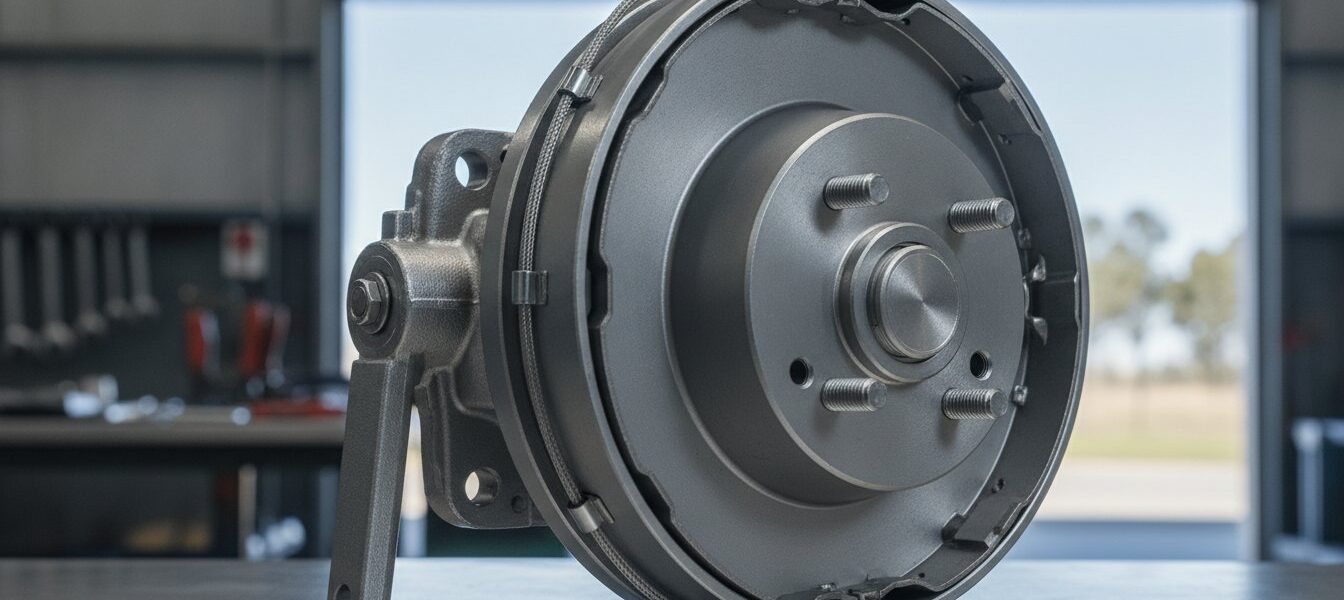
The physical hardware of 9 inch mechanical drum brakes is designed for durability in harsh conditions. The backing plate serves as the foundation, housing the internal hardware and bolting directly to the axle flange. Inside, you’ll find the brake shoes, which feature friction material bonded to a metal frame. Heavy-duty springs hold these shoes in place and retract them when the cable tension is released. An adjuster mechanism allows you to maintain the correct gap between the shoe and the drum as the friction material wears down over time. The drum itself often integrates the wheel hub and is available in various bolt patterns to suit different trailer wheels. These units are compatible with standard 39mm round or 40mm square axles commonly found on Australian trailers. Using high-quality components ensures the system resists the dust and grit found on regional roads, extending the life of the braking surface.
Technical Specifications and ADR Compliance
The 9 inch mechanical drum brakes system is defined by its internal drum diameter. This 9-inch dimension provides a substantial surface area for the brake shoes to generate friction without excessive heat buildup during standard use. Fitment depends heavily on your wheel choice. Most Australian trailers use standard bolt patterns like Ford (5-stud), HT (Holden Early), or HQ (Holden Late). Matching these patterns correctly is the first step in ensuring a secure and safe installation. Using high-grade castings for the drum ensures longevity and resistance to warping under load, even when the trailer is regularly used at its maximum capacity.
Safety on Australian roads is governed by strict standards. All braking systems must align with the Australian Design Rule 38/05. This regulation ensures that trailer brakes are capable of slowing a vehicle effectively under various load conditions. Mechanical over-ride systems are specifically recognized for their reliability in the light-to-medium weight category. They provide a fail-safe method of braking that does not rely on the vehicle’s electrical system, making them a robust choice for regional travel where conditions can be unpredictable.
Load Ratings and Axle Compatibility
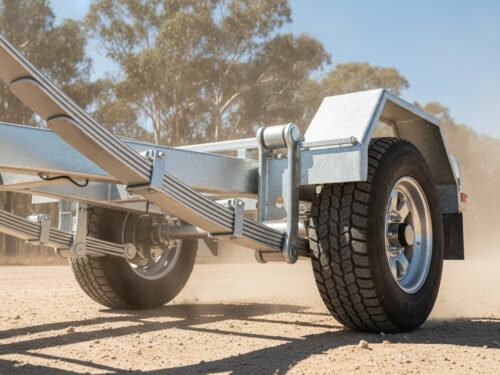
Load capacity is a critical factor when selecting hardware. For trailers with a Gross Trailer Mass (GTM) between 751kg and 2000kg, these brakes are typically paired with 39mm round axles or 40mm square axles. While 39mm axles are common for lighter box trailers, moving to 45mm square axles provides additional rigidity for heavier loads within the same legal weight bracket. A single axle setup with 9-inch drums is the most frequent configuration for trailers approaching the 1.5-tonne mark. This combination offers a balance of strength and weight that keeps the trailer manageable on the road. If you are building a new trailer, you can view our range of axles to ensure your new braking system has the perfect foundation.
Legal Requirements for Australian Trailers
Legally, any trailer with a GTM exceeding 750kg must have a functional braking system. For trailers between 751kg and 2000kg, an “efficient” braking system is required on at least one axle. Mechanical over-ride drum brakes satisfy this requirement because they don’t require a power source from the towing vehicle. However, once a trailer exceeds 2000kg GTM, regulations shift to mandate power-operated brakes and breakaway systems. This makes the 9-inch mechanical drum the peak choice for owners wanting to avoid the complexity of electric controllers while staying fully compliant. It simplifies the registration process and ensures your equipment meets local safety standards without unnecessary overhead. Choosing ADR-compliant components is the only way to guarantee your trailer remains road-legal across all Australian states.
Mechanical vs Electric vs Hydraulic Brakes
Choosing the right braking system depends on your trailer’s weight and how you intend to use it. Mechanical systems are the most budget-friendly and straightforward option for light-duty applications. While electric brakes rely on magnets and complex wiring, 9 inch mechanical drum brakes use a physical cable connection. Hydraulic systems use fluid pressure to activate calipers or cylinders, which provides high stopping power but increases the risk of leaks. For most owners of trailers under 2000kg, the mechanical option offers the best balance of cost and reliability. It eliminates the need for expensive vehicle modifications while providing dependable performance on both highways and regional tracks.
Installation complexity varies significantly between these three types. Electric systems require a dedicated brake controller inside the towing vehicle and extensive wiring across the trailer chassis. Hydraulic systems involve bending and flaring metal lines, followed by a meticulous bleeding process to remove air. In contrast, mechanical setups only require the mounting of the backing plate and the routing of a steel cable. This simplicity reduces the time spent in the workshop and minimizes the number of points where the system can fail. Compliance with Australian Design Rule 38/05 is achievable with all three types, but mechanical systems remain the most accessible for DIY builders and small fleet operators.
Why Choose Mechanical Over Electric?
The primary advantage of a mechanical system is that it doesn’t require an in-car brake controller. This makes your trailer “plug and play” with any suitable towing vehicle. Reliability in wet environments is another major factor. Submerging electric components in salt water often leads to corrosion and electrical shorts, which is why mechanical drums are a staple for boat trailer parts. They continue to function even after repeated immersion. For a deeper look at these differences, see our Trailer Brakes and Calipers: Selection and Maintenance Guide.
Limitations of Mechanical Systems
Mechanical brakes have specific boundaries you must respect. They offer less modulation control than electric units, which can be adjusted from the dashboard to suit changing road conditions. You’re also bound by the 2000kg ATM legal ceiling for over-ride systems in Australia. Beyond this weight, you must upgrade to power-actuated brakes. Cables also stretch over time. This means you’ll need to perform regular manual adjustments to ensure the shoes maintain the correct distance from the drum surface. Despite these limits, they remain the most practical solution for standard box trailers and light marine haulers.
Installation and Maintenance Procedures
Properly installing 9 inch mechanical drum brakes starts with the backing plate. These plates are side-specific, so you must ensure the brake lever faces the front of the trailer. Bolt the backing plate assembly directly to the axle flange using high-tensile hardware. Once the plate is secure, slide the drum over the shoes and onto the spindle. You’ll need to seat the bearings and tighten the spindle nut until there’s no play in the hub, then back it off slightly so the drum spins freely. This physical foundation is the most critical part of the setup.
Routing the brake cable requires a clear path from the over-ride coupling to the levers on each backing plate. Use cable pulleys or guides to maintain a straight pull. Avoid sharp bends or tight zip ties that can cause the cable to bind or rub against the chassis. When you connect the cable to the coupling lever, set the initial tension so there’s about 10mm of slack. This prevents the brakes from engaging prematurely while you’re driving on uneven roads. Before you hit the highway, jack up the trailer and spin each wheel. Have an assistant engage the handbrake or compress the coupling to verify that both wheels lock simultaneously and release completely.
Adjusting Your Drum Brakes
Achieving the correct shoe-to-drum clearance is vital for stopping power. Locate the star wheel adjuster through the slot at the bottom of the backing plate. Use a brake adjustment tool or a flat-head screwdriver to turn the wheel until you feel the shoes touch the drum. Back the adjuster off a few clicks until the wheel spins with only a faint “hiss” of contact. If the wheel stops quickly after a spin, you have “brake drag,” which will overheat the hub and glaze the shoes. Apply a small amount of high-temperature grease to the lever pivot points and the adjuster screw during this process. Keep all lubricants away from the friction material and the internal drum surface.
Routine Inspection Checklist
A reliable braking system needs regular oversight to handle Australian road conditions. Perform a thorough inspection at least once a year or every 10,000 kilometres. Check the brake shoes for even wear; replace them if the friction material is thinner than 1.5mm. Look inside the drum for deep scoring or blue discolouration, which indicates excessive heat. Inspect the entire length of the brake cable for rust, fraying, or flattened sections. Finally, ensure your couplings and parts are moving freely without excessive play or grit buildup. If you find worn components during your inspection, you can order replacement 9-inch mechanical parts to restore your trailer’s safety.
Quality Braking Solutions from Superior Trailer Parts
Our Range of Mechanical Brake Components
Our inventory covers the most common configurations found on Australian roads. We supply hub-drum assemblies in standard stud patterns, including Ford, HT, and HQ, ensuring compatibility with your existing wheels. These units are designed to pair seamlessly with our 39mm round and 40mm square axles. For those operating in harsh marine environments, we provide galvanised options that offer superior resistance to salt water corrosion. These are the preferred choice for boat trailer parts where durability is non-negotiable. To ensure you select the correct axle and brake combination for your specific weight requirements, you can refer to our Trailer Axles: The Australian Buyer’s Guide.
Why Buy From an Australian Specialist?
Choosing an Australian specialist means you’re investing in products built for local conditions. Regional roads present unique challenges, from extreme temperature fluctuations to constant vibration on corrugated tracks. We’ve been Australian-owned and operated since 2014, and we understand the practical needs of local trailer builders and fleet managers. Our 9 inch mechanical drum brakes are designed to meet Australian Design Rules, giving you confidence in your trailer’s legal compliance and safety. We don’t just sell parts; we provide a comprehensive resource for technical knowledge and industry support. With nationwide shipping available for all trailer parts, we ensure that high-quality hardware is accessible to every workshop and DIY builder in the country. This logistical reliability is backed by our commitment to honest service and technical expertise. If you’re unsure about fitment or need advice on a custom build, contact us today to speak with a specialist who understands the trade.
Secure Your Trailer with Reliable Braking
Choosing the right hardware is about more than just checking a box. It’s about ensuring your load stays secure and your trailer remains road-legal across every state. We’ve discussed how 9 inch mechanical drum brakes provide a cost-effective, cable-actuated solution that avoids the complexity of electric or hydraulic systems. These components are the standard for light-duty reliability; they are especially effective when paired with 39mm or 45mm axles. By following a regular inspection schedule and using ADR-compliant parts, you’ll reduce long-term maintenance costs and prevent unexpected downtime on the road.
Just as you prioritise the security of your trailer’s cargo with high-quality components, many Western Australians look for similar reliability when protecting their wealth; VIP Vaults & Bullion Exchange Perth offers professional bullion trading services for those looking to invest in precious metals.
As an Australian-owned and operated specialist, we stand behind the durability of every component we supply. We offer nationwide shipping to get your trailer back in service quickly. You don’t have to navigate complex legal requirements alone when you have access to expert technical support and quality hardware. Shop 9 Inch Mechanical Drum Brakes at Superior Trailer Parts to find the right fit for your next build or repair. Get your gear sorted and hit the road with confidence.
Frequently Asked Questions
Do 9 inch mechanical drum brakes require a brake controller in the car?
No, 9 inch mechanical drum brakes don’t require an in-car brake controller. These systems operate via an over-ride coupling that physically pulls the brake cable when the tow vehicle decelerates. This makes the trailer compatible with any vehicle capable of towing the load. It’s a major advantage for fleet managers or owners who use multiple tow vehicles for the same trailer.
What is the maximum trailer weight for mechanical over-ride brakes in Australia?
The maximum Gross Trailer Mass (GTM) for trailers using mechanical over-ride brakes is 2000kg. Once a trailer exceeds this weight, Australian regulations mandate the use of power-operated brakes and a breakaway system. For trailers between 751kg and 2000kg, mechanical drum brakes are a fully compliant and efficient solution that meets all national road safety standards.
How often should I adjust the cables on my mechanical trailer brakes?
You should inspect and adjust your brake cables every 10,000 kilometres or during your annual service. Steel cables can stretch over time, which increases the travel needed at the coupling before the brakes engage. Regular adjustment ensures the shoes maintain the correct clearance from the drum and provide immediate stopping power when the tow vehicle slows down.
Can I use 9 inch mechanical drum brakes on a boat trailer?
Yes, you can use these brakes on boat trailers, provided you choose galvanised components. Saltwater environments are aggressive, so using galvanised drums and backing plates helps prevent premature rust and seizing. Mechanical systems are often preferred for marine use because they lack the sensitive magnets and electrical wiring found in electric braking systems that often fail after submersion.
What is the difference between Ford and HT stud patterns on brake drums?
The difference lies in the Pitch Circle Diameter (PCD) and the specific stud spacing. Ford patterns typically use a 5-stud configuration with a 114.3mm PCD, while HT patterns follow early Holden specifications with a different measurement. Always measure your wheel’s stud pattern or check the existing hub markings before ordering new drums to ensure a secure fit for your wheels.
Why are my mechanical brakes sticking or not releasing properly?
Sticking brakes are usually caused by excessive cable tension, rusted cables, or a lack of lubrication on the lever pivot points. If the cable doesn’t slide freely within its housing, the shoes won’t retract from the drum surface. Check that the over-ride coupling is greased and moving freely. You should also verify that the return springs inside the drum haven’t lost tension.
Are mechanical drum brakes better than mechanical disc brakes?
Mechanical drum brakes generally provide superior handbrake performance compared to mechanical discs. The internal shoe design offers a larger surface area for holding a stationary load on an incline. While disc brakes dissipate heat more effectively during long descents, drums are a robust and low-maintenance choice for standard box trailers and light-duty marine haulers across regional Australia.
Can I upgrade my unbraked trailer to 9 inch mechanical drum brakes?
Yes, you can upgrade an unbraked trailer if your axle has the correct four-bolt mounting flanges welded behind the hubs. If your current 39mm round or 45mm square axle lacks these flanges, you’ll need to replace the axle assembly. Adding a braking system is a practical way to increase your trailer’s legal GTM from 750kg up to the 2000kg limit.