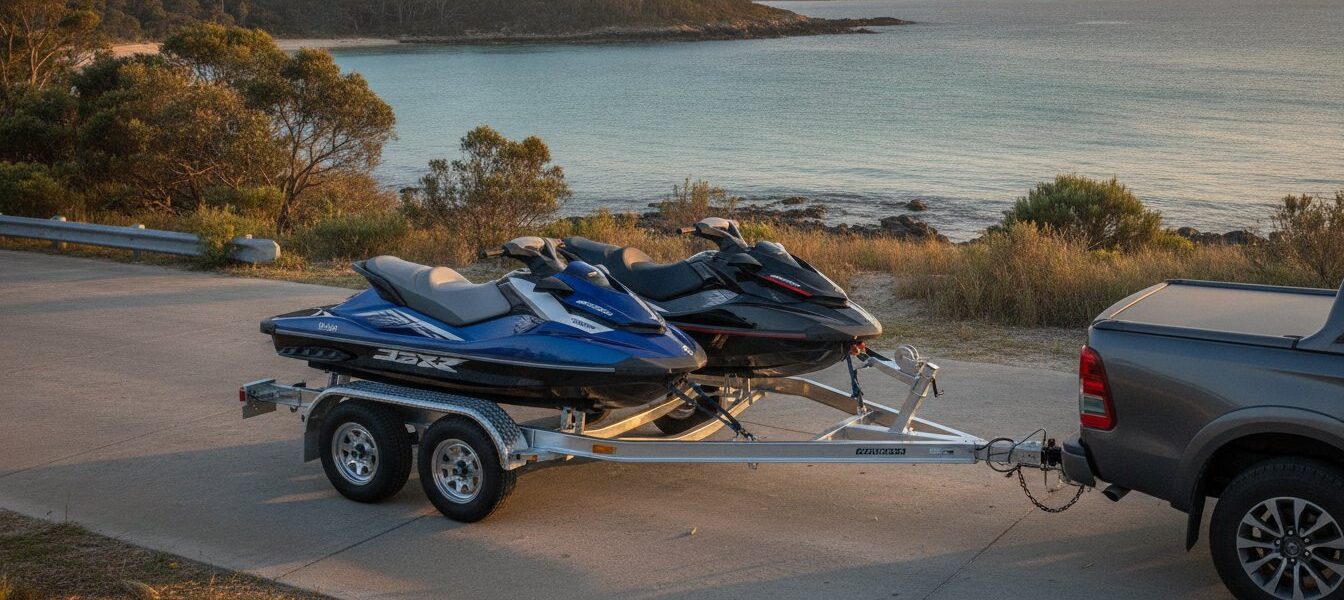
A standard dual jet ski setup with two three-seater PWCs and fuel will almost always exceed the 750kg legal threshold for unbraked towing. This makes high-performance dual jet ski trailers a matter of safety and legal compliance rather than just convenience. You’ve invested heavily in your watercraft. Putting them on a flimsy or non-compliant frame is a gamble you don’t need to take. The Australian coastline is notoriously harsh on equipment, and a sub-par trailer will fail long before the skis do.
Most riders agree that the frustration of a seized axle or a rusted frame can ruin a weekend faster than bad weather. You need a transport solution that handles the weight of two large machines while resisting the relentless effects of saltwater corrosion. This article explains how to select a double PWC trailer that meets Australian Design Rules and protects your investment. We will examine critical specifications like 1450kg ATM ratings, galvanised chassis construction, and the specific braking requirements necessary to keep your load stable and legal on the highway. You will also learn maintenance routines to ensure your rollers and LED lights continue to perform season after season.
Key Takeaways
- Understand how consolidating two watercraft onto a single towing unit improves fuel efficiency and reduces overall registration costs.
- Learn to calculate Aggregate Trailer Mass (ATM) to ensure your dual jet ski trailers meet Australian legal braking requirements for heavy loads.
- Identify essential marine-grade components, such as Dacromet-coated leaf springs and hot-dip galvanised frames, to resist saltwater corrosion.
- Master efficient launching and retrieving techniques designed for wider trailer frames to save time and maintain safety at busy boat ramps.
- Recognise why ADR compliance and high-quality manufacturing standards are non-negotiable for protecting your investment in harsh marine environments.
The Advantages of Dual Jet Ski Trailers for Multi-Ski Owners
Owning multiple personal watercraft often leads to logistical headaches. Maintaining two separate trailers doubles your workload and your costs. Switching to dual jet ski trailers streamlines your operations immediately. You consolidate two watercraft into a single towing unit. This reduction in mechanical complexity allows you to focus on the water rather than the driveway. One trailer means one registration fee and one insurance policy. Maintenance schedules become simpler. You only need to service one set of submersible LED lights, one coupling, and one braking system. For owners of large 3-seater skis, a single heavy-duty chassis provides the necessary structural integrity without the clutter of multiple rigs. Modern boat trailer designs have evolved to support these high-capacity loads safely while keeping the overall footprint manageable.
Logistics and Storage Efficiency
Driveway and garage space is a premium commodity for most homeowners. A dual setup occupies a single footprint, freeing up room for other vehicles or gear. The hook-up process is faster and more reliable. You connect one 50mm ball coupling and one trailer plug. Both skis are ready for the water at the same time. This ensures your group hits the water together. It eliminates the frustration of one ski being stranded while you retrieve a second trailer from the car park.
Towing Performance and Stability
Stability is a primary concern when hauling expensive gear. A wider wheel track creates a more planted feel on the highway. It effectively reduces sway caused by crosswinds or passing heavy vehicles. These dual jet ski trailers often feature a longer drawbar. This design choice makes reversing at the boat ramp much more predictable. A longer distance between the hitch and the trailer axle slows down the pivot rate. You get more time to correct your line. The aerodynamic profile of two skis side-by-side also offers a more balanced weight distribution across the axle, protecting your tyres and bearings from uneven wear.
Technical Specifications and Weight Ratings
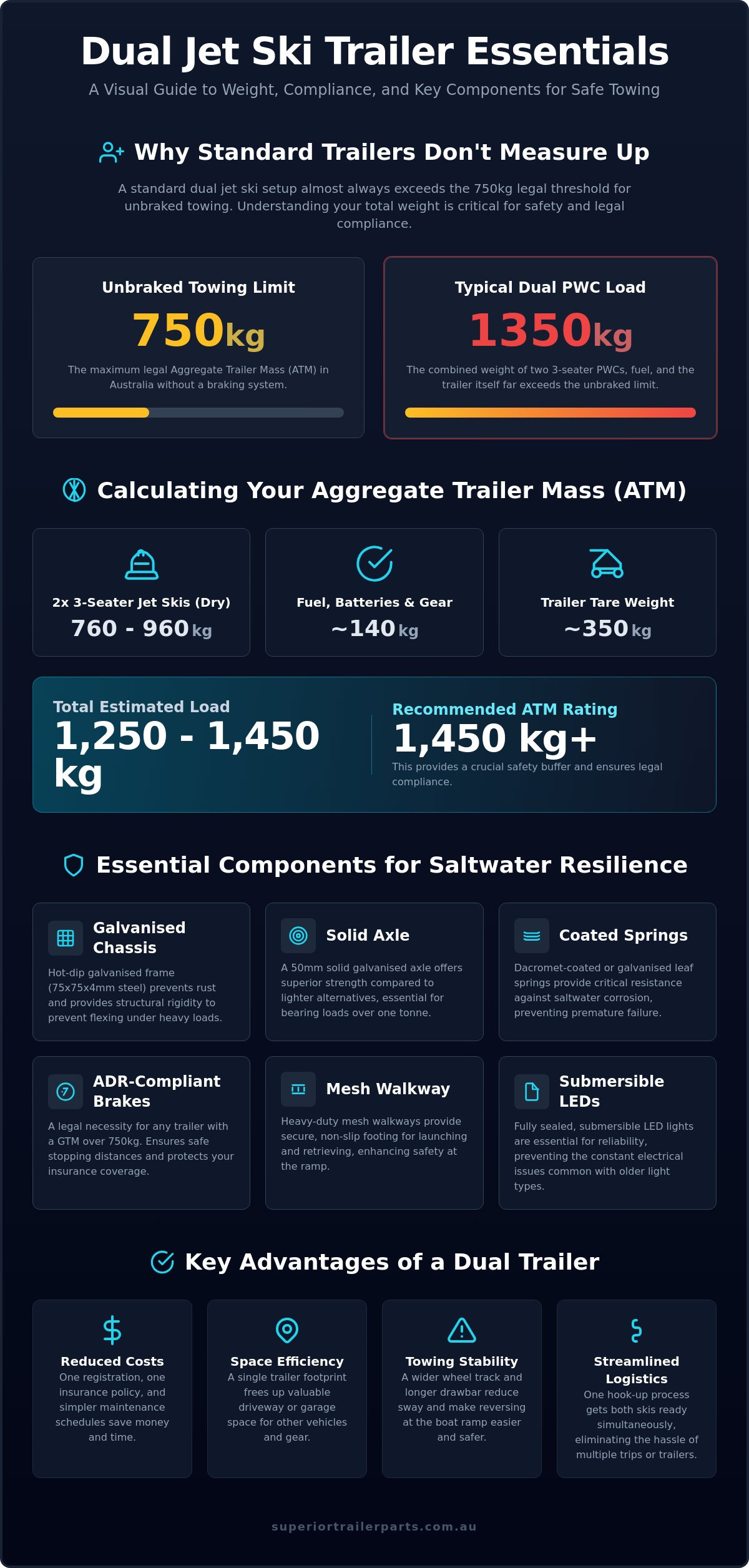
Understanding weight ratings is the first step in choosing dual jet ski trailers. Aggregate Trailer Mass (ATM) represents the total weight of the trailer and its load when it isn’t hitched to a vehicle. In Australia, any trailer with a Gross Trailer Mass over 750kg must have a functional braking system. Two modern 3-seater jet skis often weigh between 380kg and 480kg each. When you add 140 litres of fuel, batteries, and riding gear, the weight increases rapidly. A typical dual setup will sit between 1,200kg and 1,350kg. This is why a 1450kg ATM rating is the benchmark. It provides a safety buffer that prevents overloading and ensures you remain compliant with Australian Design Rules.
Calculating your specific load is straightforward. Start with the dry weight of both skis. Add approximately 0.75kg for every litre of fuel capacity. Include the weight of the trailer itself, which is usually around 350kg for a heavy-duty dual frame. If your total exceeds 750kg, you legally require brakes. Ignoring these limits puts your insurance at risk and compromises your stopping distance on the road.
Chassis Engineering and Material Thickness
Chassis rigidity is vital for a trailer carrying over a tonne of equipment. High-quality frames use 75 x 75 x 4mm steel to construct the main chassis. This thickness prevents the frame from flexing during high-speed highway travel or on uneven boat ramps. Flexing causes metal fatigue and eventually cracks the welds. High-stress points occur where the drawbar meets the main frame and around the spring hangers. Heavy-duty mesh walkways are another essential feature. They provide secure footing for the operator. You won’t slip while winching the skis or adjusting tie-down straps.
Axle and Hub Selection for Heavy Loads
The axle bears the brunt of the load and the environment. A 50mm solid galvanised axle is the correct choice for this weight class. It offers superior strength compared to lighter 40mm or 45mm alternatives. For maximum reliability, look for Ford stud patterns and SL bearing kits. These components are widely available and built for higher load capacities. You can learn more about selecting trailer axles to ensure your setup is matched to your specific PWC models. Using high-quality boat trailer parts ensures your hubs and bearings survive repeated submersion in saltwater.
Marine-Grade Components for Saltwater Resilience
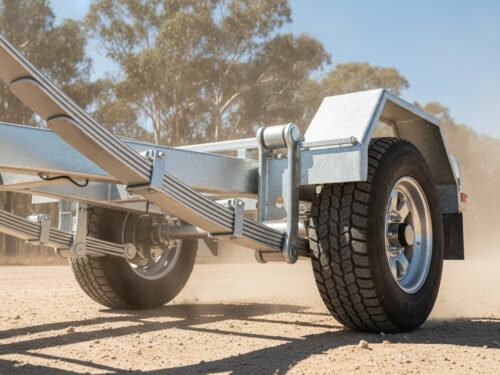
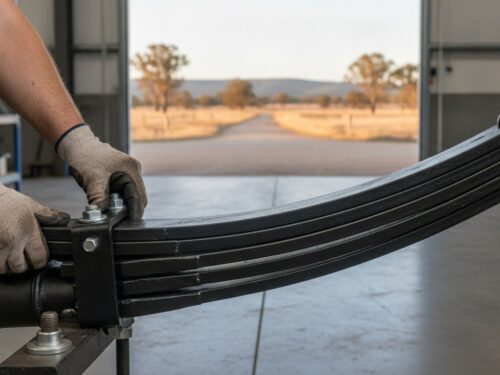
Saltwater environments in Australia demand specific hardware standards. Standard trailer components often fail within a single season due to rapid oxidation. High-performance dual jet ski trailers must utilise materials that withstand constant immersion. Dacromet marine coating on parabolic leaf springs is a non-negotiable requirement. This finish provides a barrier against high-salinity water that standard zinc plating cannot match. It prevents the springs from becoming brittle and snapping under the weight of two large 3-seater skis. Using galvanised U-bolts and stainless steel fasteners further extends the life of your suspension system.
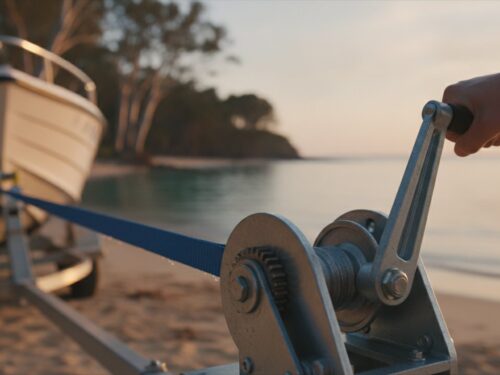
Winching systems also require attention. Manual boat winches are the standard for dual setups because they are reliable and easy to maintain. Some users prefer electric upgrades for convenience. However, manual winches don’t require battery maintenance or complex wiring. They work every time you hit the ramp. Ensure your winches are rated for the weight of your specific PWC models to prevent gear failure during retrieval.
Wobble Rollers and Hull Support
Hull protection depends on the number of contact points. A configuration of 28 wobble rollers is the ideal setup for modern heavy PWCs. This high count ensures the weight is distributed across the hull rather than concentrated on a few points. Concentrated pressure can lead to hull stress or permanent deformation. You must adjust the roller height to match your specific craft. Sea-Doo hulls often have different strakes and profiles compared to Yamaha models. Take the time to explore our range of boat trailer parts to find adjustable brackets that allow for a precision fit.
Electrical Systems and Submersible Lighting
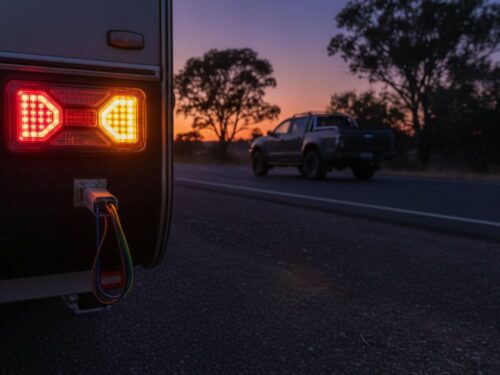
Electrical failure is the most common trailer problem. Traditional wiring relies on crimped joins that eventually corrode. Plug-and-play LED harness systems solve this issue by using sealed connectors. These systems are 100% water-tight and designed for total submersion. LED tail lights are superior to bulb-based lights because they lack filaments that break during vibrations. They also draw less power from your tow vehicle. Ensure your trailer plug matches your vehicle’s socket. Most modern Australian tow bars use a 7-pin flat plug. Some heavy-duty vehicles require a 7-pin round adapter. Using a high-quality trailer plug adapter ensures a reliable connection for your indicators and brake lights.
Safe Towing and Launching Procedures
Operating dual jet ski trailers requires a specific skill set due to the increased width and weight. Most dual setups are wider than the tow vehicle. You must rely heavily on your side mirrors to monitor the trailer’s position within the lane. When reversing at the boat ramp, the longer drawbar provides more control, but you must still account for the wider wheel track to avoid hitting kerbs or other trailers. If you’re towing only one ski, position it on the side that maintains the best balance. Be aware that your tongue weight will change significantly in this scenario. Always aim for a tow ball download of approximately 10% of the total loaded trailer weight to maintain highway stability and prevent trailer sway.
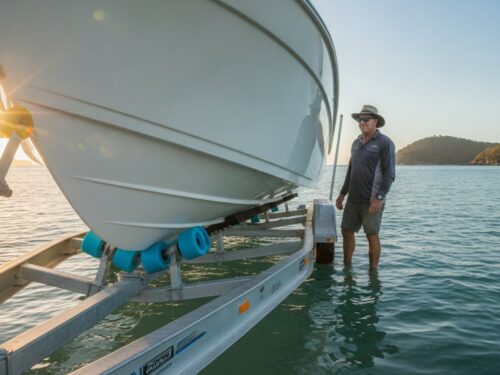
Efficiency at the ramp is a matter of courtesy and safety. Complete your pre-launch checks in the rigging area, not on the ramp. This includes removing tie-down straps, checking the bungs, and ensuring your gear is loaded. When retrieving, use the 28 wobble rollers to guide the skis onto the trailer. The rollers should do the work. You shouldn’t need to winch against excessive friction. If you need to replace worn components before your next trip, view our range of dual jet ski trailers and heavy-duty parts.
Weight Distribution and Balance
Proper balance prevents trailer sway and reduces stress on your vehicle’s suspension. Position both skis so the centre of gravity sits slightly forward of the axle. Secure each craft using high-tensile tie-down straps at the bow and stern. Ensure the straps are tight enough to prevent lateral movement. They shouldn’t be so tight that they damage the hull. For more information on stopping this heavy load safely, see our guide to trailer brakes and calipers. Correct weight distribution ensures your 50mm solid galvanised axles and tyres wear evenly over time.
Maintenance for Longevity
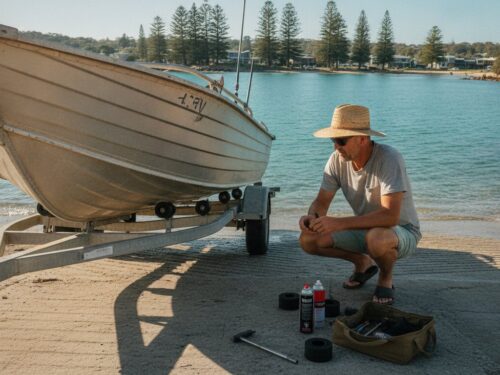
Saltwater is the primary enemy of your trailer’s lifespan. Follow the rinse and repeat rule after every trip. Flush the entire chassis, including the inside of the 75x75mm box sections, with fresh water. Pay close attention to the Dacromet-coated leaf springs and the brake components. Inspect the marine seals on your hubs for leaks. Ensure the bearing grease remains clean and free of water contamination. New trailers require a break-in check. Tighten your galvanised U-bolts after the first 500km of towing to account for initial settling. This simple step prevents the axle from shifting on the springs during travel.
Quality Manufacturing and ADR Compliance
Hot-dip galvanisation is the industry standard for marine trailers. Unlike standard paint, which only coats the surface, hot-dip galvanisation involves submerging the entire 75x75x4mm chassis into molten zinc. This process creates a metallurgical bond that protects both the internal and external surfaces of the steel. For dual jet ski trailers, this level of protection is vital. The wider frame and additional cross-members create more surface area where salt can hide. A trailer that’s only painted will begin to rust from the inside out within months of its first launch. Proper galvanisation ensures the structural integrity of the frame remains intact despite repeated exposure to saltwater.
Compliance with Australian Design Rules (ADR) is a legal requirement for road safety. Every trailer on Australian roads must meet specific standards regarding lighting, safety chains, and couplings. High-quality manufacturing ensures that your 50mm ball coupling and safety chains meet AS 4177.4 standards. Local assembly and the use of Australian-made mudguards provide an additional layer of quality control. You get a product built to withstand the specific heat and UV conditions found in the Australian climate. Buying a compliant trailer protects your insurance coverage and ensures the safety of other road users.
Finish Options: Galvanised vs Powder Coated
Applying powder coating over a hot-dip galvanised frame provides a superior level of durability. The galvanised layer provides the primary corrosion resistance. The powder coating adds a secondary barrier that’s highly resistant to UV rays and physical scratches. This dual-layer approach is effective for preventing stone chips from reaching the raw steel. You can choose different colour options to match your PWC or tow vehicle. This finish ensures your trailer looks professional while maintaining its structural integrity for years. View our full jet ski trailer range to see the available configurations.
The Superior Trailer Parts Difference
We focus on heavy-duty engineering and industrial-grade hardware. Our dual trailers feature 50mm galvanised axles and 28 adjustable wobble rollers as standard equipment. We don’t cut corners on material thickness or component quality. This commitment to “built tough” manufacturing means you spend less time fixing your trailer and more time on the water. We provide technical support and have replacement parts available across Australia. If you need a transport solution that handles the weight of two large 3-seater skis without compromise, we can help. Contact us for expert advice on your next trailer.
Secure Your Investment on the Road
Superior Trailer Parts offers industrial-grade engineering designed for the working person and the recreational rider alike. We provide nationwide shipping across Australia to get your heavy-duty hardware to you quickly. Browse our heavy-duty dual jet ski trailers today to find a setup that meets Australian Design Rules. Proper maintenance and quality components keep your equipment ready for the next tide. Build it once and build it right to ensure your time on the water is never cut short by mechanical failure.
Frequently Asked Questions
Do I need brakes on a dual jet ski trailer?
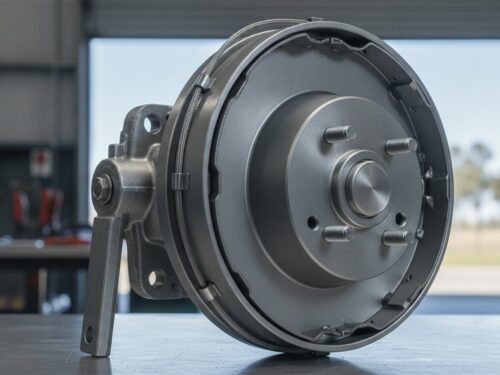
Yes, you almost certainly need a braking system for this setup. Australian law requires any trailer with a Gross Trailer Mass over 750kg to be fitted with functional brakes. Since two 3-seater skis, a full tank of fuel, and the trailer itself easily exceed 1,200kg, 9-inch mechanical drum brakes or hydraulic disc kits are a legal and safety requirement. Always check your compliance plate to ensure your dual jet ski trailers meet these standards before hitting the road.
Will a double jet ski trailer fit in a standard garage?
It depends on your specific door width, but most dual setups are approximately 2.5 metres wide. This is often wider than a standard 2.4-metre single garage door. Measure your entry point carefully before purchase. You might need a double garage or a dedicated carport to house the unit safely without risking damage to the mudguards or the skis themselves.
Can I tow a dual trailer with a standard SUV or do I need a 4WD?
You can tow most dual setups with a standard SUV, provided the vehicle’s braked towing capacity exceeds 1,500kg. Always check your vehicle’s manufacturer specifications for the maximum tow ball download and total towing weight. While a 4WD offers better traction on slippery boat ramps, it isn’t strictly necessary for highway travel as long as your weight distribution is correct.
How many rollers should a dual jet ski trailer have?
A high-performance dual trailer should ideally feature 28 adjustable wobble rollers. This configuration provides 14 contact points per hull, ensuring the weight of a heavy 3-seater PWC is distributed evenly across the frame. Proper hull support prevents stress fractures in the fibreglass and makes launching and retrieving much easier at the ramp. It also ensures the craft stays stable during high-speed transit.
What is the difference between ATM and GTM for PWC trailers?
Aggregate Trailer Mass (ATM) is the total weight of the trailer and its load when it’s not connected to a tow vehicle. Gross Trailer Mass (GTM) is the weight transmitted to the ground by the trailer axles when it is hitched. For legal compliance, you must ensure your total load doesn’t exceed the 1,450kg ATM rating stamped on your trailer’s compliance plate. This prevents overloading your 50mm solid galvanised axles.
How often should I service the wheel bearings on my marine trailer?
Service your wheel bearings every six to twelve months depending on how often you submerge the trailer in saltwater. Check the grease levels before any long-distance trip. If you notice any noise, vibration, or heat coming from the hubs, replace the SL bearing kits immediately. Regular maintenance prevents the bearings from seizing and protects your dual jet ski trailers from roadside failures.
Can I carry two different brands of jet skis on the same trailer?
Yes, you can carry different brands of skis simultaneously. The 28 wobble rollers are fully adjustable to accommodate various hull shapes, such as the different profiles of Sea-Doo and Yamaha models. You simply need to adjust the height and angle of the roller brackets to ensure both craft sit level and secure on the 75x75mm chassis. This versatility is a key advantage of a high-quality tandem setup.
Is a galvanised trailer better than an aluminium one for saltwater?
Hot-dip galvanised steel is the preferred choice for heavy-duty marine use because of its superior structural rigidity. While aluminium is lighter, a 75x75x4mm galvanised steel frame offers the strength needed for a 1,450kg ATM rating. Adding a powder-coated finish over the galvanising provides the ultimate barrier against UV damage and saltwater corrosion, ensuring the chassis lasts for years in harsh Australian conditions.