A single set of worn-out keel rollers can cause more damage to your boat hull in ten seconds at the ramp than a season of heavy chop on the water. When these components fail, they don’t just make the job harder; they actively compromise the integrity of your vessel. Most owners realize too late that a flat-spotted or cracked roller is the primary cause of hull scarring and difficult retrievals.
It’s frustrating to fight your trailer every time you want to head home. Reliability and performance are the priorities for any serious boat owner who values their equipment. This article explains how to select the right keel rollers to protect your boat hull and ensure smooth launching and retrieving. We will examine the technical differences between poly, nylon, and rubber materials, provide sizing specifications for various loads, and outline the maintenance steps needed to keep your trailer hardware in peak condition.
Key Takeaways
- Identify why keel rollers are the critical load-bearing components for your boat’s backbone and how they prevent permanent hull deformation.
- Select the right material—polyurethane, nylon, or rubber—based on your hull type and the specific environmental conditions at your local ramp.
- Learn to balance your trailer setup by using keel support for weight and wobble rollers for lateral stability during transport.
- Master the measurement and maintenance routines required to prevent flat-spotting, cracking, and seized hardware.
- Source heavy-duty marine components designed to withstand harsh Australian saltwater and high UV exposure for long-term reliability.
Understanding Keel Rollers and Their Role in Hull Support
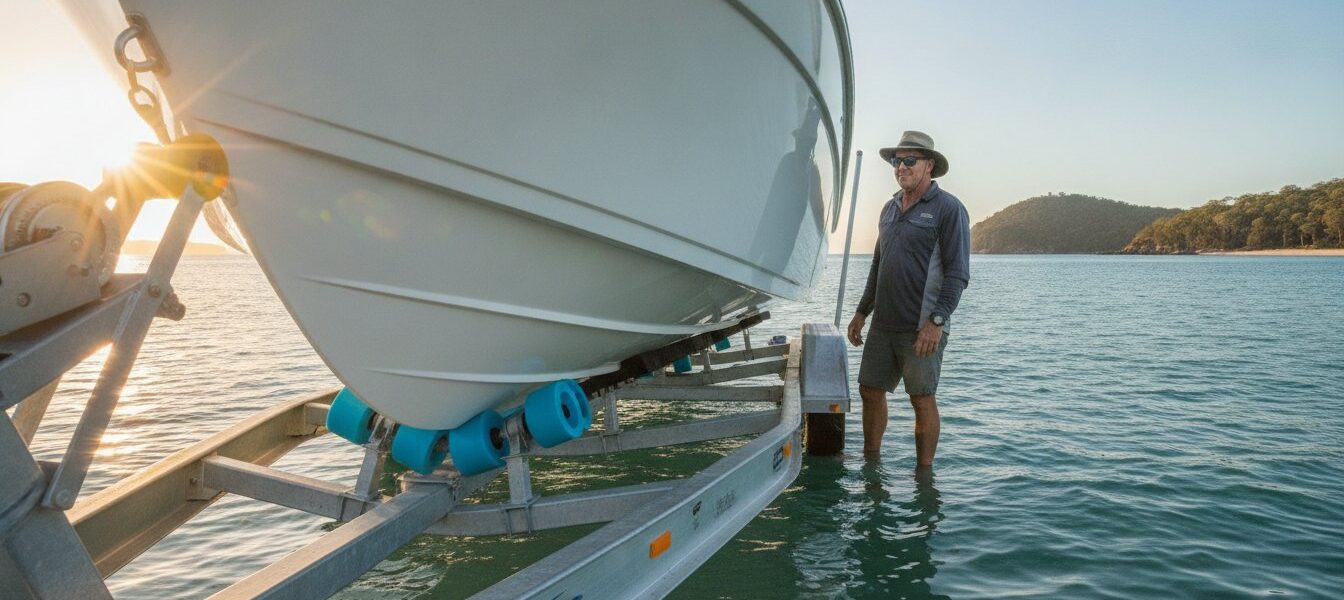
Keel rollers serve as the primary load-bearing components for boat trailers. They are positioned along the centre of the trailer frame to support the heaviest part of the vessel: the keel. While many owners focus on the aesthetics of their boat, the mechanics of the Trailer (vehicle) and its support systems are what ensure the hull remains intact over years of use. Properly functioning rollers prevent the hull from making contact with the metal trailer cross-members, which would otherwise cause structural damage or deep gouges in the gelcoat or aluminium.
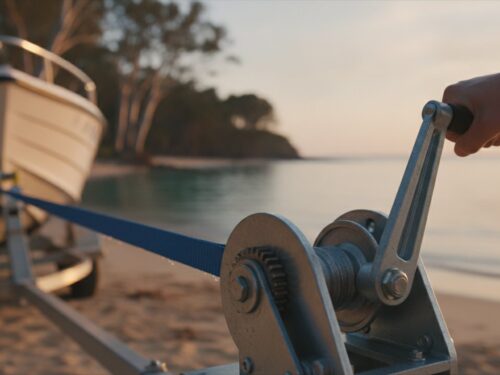
In a standard configuration, these rollers are the first point of contact during retrieval. They take the initial impact as the boat moves from the water onto the trailer bed. By providing a rolling surface rather than a fixed bunk, they significantly reduce the physical effort required to winch the boat into position. For those sourcing high-quality boat trailer parts, understanding how these rollers interact with the hull is the first step toward a safer towing experience.
Why Keel Support is Non-Negotiable
The keel acts as the backbone of a boat. It is engineered to withstand significant pressure; this makes it the ideal contact point for trailer support. If you rely solely on side supports or wobble rollers, you risk “point loading.” This occurs when the weight of the boat is concentrated on thinner sections of the hull, potentially leading to stress fractures or permanent deformation. High-quality keel rollers distribute this weight effectively along the strongest part of the vessel. They also facilitate a smooth transition from the water to the trailer during retrieval, reducing the strain on your winch and cable. Efficiency at the ramp depends on these rollers spinning freely under load without binding or flat-spotting.
Anatomy of a Keel Roller Assembly
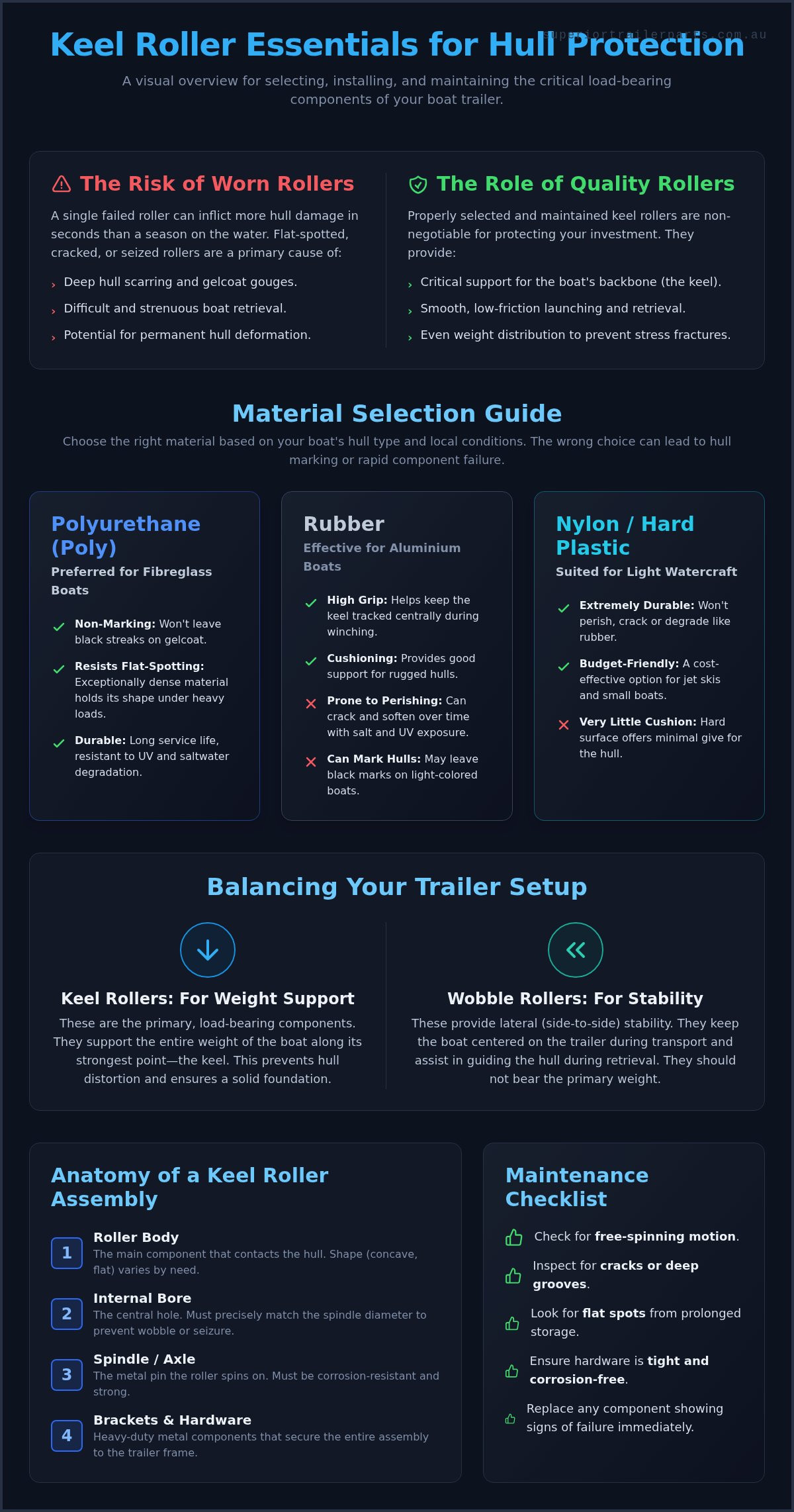
A standard assembly consists of several critical parts that must work in unison to protect your investment. The roller body is the most visible component. These come in various shapes, such as concave designs that help centre the boat automatically or flat rollers for specific hull configurations. The internal bore is the hole diameter that must match your spindle size precisely. If the bore is too large, the roller will wobble and wear unevenly; if it is too tight, it will seize. Finally, the assembly is secured by heavy-duty brackets and spindles. These metal components must be robust enough to hold the weight of the boat without bending under the pressure of transport or the friction of launching. Every part of the keel rollers assembly must be rated for the specific weight of your boat to ensure long-term durability.
Material Selection: Polyurethane, Rubber, and Nylon
Selecting the right material for your trailer components isn’t just about price; it’s about hull compatibility. The Australian sun and high-salinity coastal environments are brutal on synthetic materials. If you choose the wrong material, you risk permanent staining on a fibreglass hull or rapid disintegration of the roller itself. High-quality keel rollers must balance structural rigidity with enough surface “give” to protect the vessel’s finish. Avoid cheap, unbranded plastics. These often lack UV stabilisers and will become brittle and shatter under the weight of your boat after only a few months of exposure.
Polyurethane (Poly) Rollers
Polyurethane is the preferred choice for fibreglass boats. It’s a non-marking material, so it won’t leave stubborn black streaks on your gelcoat during launching or retrieval. These rollers are exceptionally dense. This density allows them to resist “flat-spotting,” a common issue where the weight of a heavy boat permanently deforms the roller shape during storage. You’ll generally identify these by their bright red, blue, or yellow colours. They offer a long service life and maintain their structural integrity even under heavy loads.
Rubber and Hard Plastic Rollers
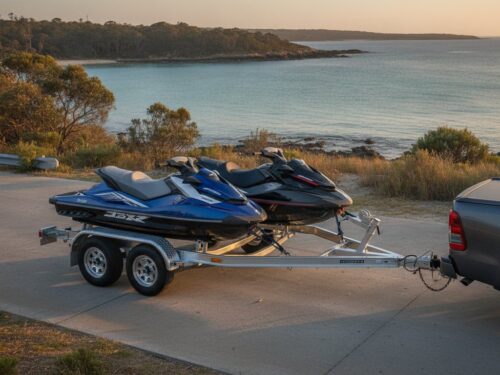
Rubber rollers are a traditional and effective choice for aluminium boats, or “tinnies.” Aluminium hulls are rugged and don’t require the non-marking properties of poly. Rubber provides a higher level of grip, which helps keep the keel tracked centrally as you winch the boat up. However, rubber is prone to perishing. Over time, salt and UV exposure cause the material to crack and soften. Hard plastic or nylon rollers, often seen in blue, are budget-friendly alternatives. These are best suited for lighter watercraft like jet skis. They are extremely durable and won’t perish like rubber, but they offer very little cushion for the hull.
Regularly inspecting your hardware is a core part of effective trailer maintenance tips. Look for signs of surface hardening or deep grooves that indicate the material is failing. If your rollers no longer spin freely or show visible cracks, they are likely damaging your boat every time you hit the ramp. You can find a variety of heavy-duty boat trailer parts designed for these exact conditions to ensure your setup remains reliable and your hull stays protected.
Keel Rollers vs. Wobble Rollers: Balancing the Load
Understanding the mechanical distinction between support and stability is vital for any trailer setup. Keel rollers and wobble rollers are often discussed together, but they perform entirely different roles. Using one to do the job of the other is a common mistake that leads to hull damage and difficult ramp experiences. A well-engineered trailer uses a combination of both to ensure the boat remains secure during high-speed transport and moves effortlessly during launching.
If your trailer setup is unbalanced, you risk “hooking” the hull. This occurs when too much weight is placed on the side supports rather than the keel. Over time, the pressure causes the hull to indent or deform, which can permanently affect the boat’s performance on the water. Proper alignment ensures the weight sits where the boat is strongest. For a broader look at how these components fit into your total setup, review our resource on essential boat trailer parts.
The Structural Role of the Keel Roller
Keel rollers are the foundation of your trailer’s support system. They are positioned along the centreline to provide a direct path for the boat’s backbone. The keel is the thickest and most rigid part of any vessel, designed by manufacturers to carry the primary load. In a standard setup, keel rollers should carry up to 80% of the boat’s total mass. This central alignment is also what keeps the boat straight as you winch it out of the water. The keel roller is the primary weight-bearing component that supports the heaviest structural point of the vessel.
The Stabilising Role of the Wobble Roller
Wobble rollers do not exist to carry the heavy lifting of the boat’s mass. Their primary function is lateral stability. They prevent the boat from tipping or rocking from side to side while you are driving. These rollers are designed to pivot, allowing them to adapt to the specific deadrise and shape of your hull. By spreading a small portion of the load across a wider surface area of the hull sides, they keep the vessel snug against the trailer frame. You cannot rely on wobble rollers alone for heavy vessels. Doing so places immense stress on the thinner sections of the hull, which are not designed for concentrated point loading. Use them as stabilisers, not as the primary foundation.
Achieving the correct balance requires careful adjustment of the bracket heights. The keel should sit firmly on the central rollers, while the wobble rollers should be adjusted until they make firm contact with the sides without lifting the keel off its primary support. This creates a friction-free launch and a secure ride on the road.
Sizing, Fitment, and Maintenance Requirements
Precision measurement is the only way to ensure your trailer remains functional and safe. Ordering the wrong size for your keel rollers causes unnecessary downtime and can lead to uneven weight distribution across the frame. A roller that is too narrow for its bracket will slide laterally, while one that is too wide simply won’t fit. Before you purchase replacements, you must verify three specific dimensions to guarantee a professional fitment.
How to Measure for Replacement Rollers
Start by measuring the overall width of the roller body. Standard Australian sizes typically include 4 inch (approx. 100mm), 6 inch (150mm), and 8 inch (200mm) options. Next, determine the bore size. This is the internal diameter of the hole where the spindle passes through. Common diameters are 17mm, 20mm, and 22mm. Use a vernier caliper for the most accurate result. Finally, measure the gap between the bracket arms. There should be a small amount of clearance to allow the roller to spin freely, but not so much that the spindle is under excessive leverage stress.
Ongoing Maintenance Checklist
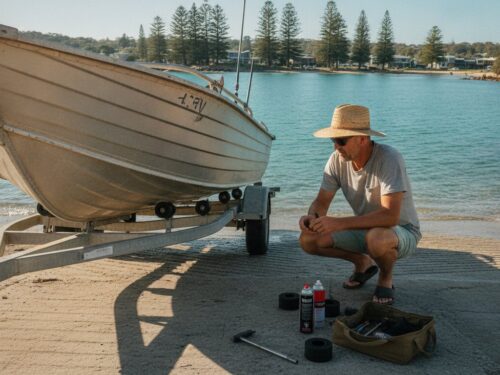
Saltwater is inherently destructive to marine hardware. A thorough freshwater washdown is required after every launch to prevent salt crystals from causing abrasive wear inside the bore. Check the condition of your spindles and split pins during every service. If a spindle shows signs of heavy corrosion or bending, replace it immediately. Lubrication is also vital. Apply a high-quality marine-grade grease to the spindles to ensure the keel rollers spin without resistance. A seized roller creates immense friction against the hull during retrieval, which can damage the gelcoat and strain your winch.
Inspect your rollers for physical signs of failure. Look for deep cracks, flat spots, or uneven wear patterns that suggest the boat isn’t sitting level. If you find damage, it’s time to upgrade to hardware that can handle the pressure. You can browse our full range of heavy-duty boat trailer parts to find the exact dimensions required for your specific trailer setup.
Corrosion is a constant threat in the marine sector. Always opt for galvanised or stainless steel spindles and brackets to extend the life of your assembly. These materials withstand harsh coastal conditions better than standard zinc-plated alternatives. Keeping your hardware in top condition ensures a smooth, hassle-free transition from the road to the water every time you head out.
Sourcing Reliable Marine Hardware in Australia
Maintaining a boat trailer requires more than technical knowledge; it requires access to components built for the specific demands of the Australian coastline. High-quality keel rollers are only effective if they are manufactured from materials that resist UV degradation and saltwater corrosion. Superior Trailer Parts stocks a comprehensive range of rollers designed for everything from light aluminium tinnies to heavy-duty fibreglass offshore vessels. Our inventory is selected for its durability and resilience, ensuring that your trailer remains a reliable asset rather than a liability at the ramp.
The Superior Advantage
Choosing an Australian-owned and operated specialist gives you access to expert advice grounded in local experience. We understand the harsh conditions your trailer must endure. Our team provides direct access to high-quality boat trailer parts that meet rigorous standards for strength and fitment. Beyond rollers, we maintain a deep inventory of essential hardware to support your entire trailer system. This includes heavy-duty axles for load management and galvanised u-bolts for secure component mounting. Sourcing your hardware from a single, dependable specialist ensures that every part of your assembly works in unison to protect your boat hull.
Ordering and Delivery
Efficiency is critical when you need to get back on the water. We have designed a simple online ordering process that serves both individual boat owners and professional fleet managers. Our inventory management system ensures that popular sizes of keel rollers are ready for immediate dispatch. We provide reliable nationwide shipping across Australia, ensuring you receive the parts you need regardless of your location. This broad accessibility removes the guesswork from sourcing marine hardware in regional areas.
If you’re unsure about technical specifications or bore sizes, our team is available to provide technical assistance. We help identify the correct fitment for your specific trailer frame and boat weight. Whether you’re performing a routine service or undertaking a large-scale trailer build, we position ourselves as a comprehensive resource for industry knowledge. Contact us to discuss your requirements and ensure your vessel has the proper hull support it deserves for long-term transport safety.
Protect Your Investment with Reliable Hull Support
Selecting the correct hardware is the most effective way to prevent permanent hull damage and ensure your time at the ramp is spent launching instead of struggling. Durable keel rollers act as the foundation of your trailer support system; provided you match the material to your hull type and maintain the spindles with regular lubrication. Remember to balance the load so the keel carries the weight while side rollers provide stability. This configuration protects the structural integrity of your vessel during both high-speed transport and retrieval.
Browse our full range of high-quality Keel Rollers to upgrade your trailer today. Proper support ensures your boat stays in peak condition for years of reliable service on the water.
Frequently Asked Questions
What is the best material for keel rollers on a fibreglass boat?
Polyurethane is the most effective material for fibreglass hulls because it is non-marking and exceptionally dense. This material won’t leave stubborn black streaks on your gelcoat during retrieval. It also resists deformation under heavy loads much better than standard rubber. For owners of premium fibreglass vessels, polyurethane provides the best balance of hull protection and long-term durability in harsh marine environments.
How many keel rollers does my boat trailer actually need?
Most trailers require one keel roller for every 1 to 1.5 metres of boat length to ensure adequate support along the backbone. For a 5-metre boat, a setup with four to five rollers along the centreline is standard. Heavier vessels or those with specific hull designs may require closer spacing to prevent point loading. Always ensure the rollers are positioned to support the heaviest structural points of the keel.
Can I use rubber rollers on a trailer for an aluminium boat?
You can certainly use rubber rollers on aluminium boats as they provide excellent grip and are a cost-effective support solution. Aluminium hulls are rugged and don’t have a sensitive gelcoat finish, so the marking properties of rubber are not a concern. You must monitor the condition of the rubber regularly. Replace these rollers if they begin to perish or crack from UV exposure to maintain proper support.
How do I measure the bore size of a trailer roller?
Measure the internal diameter of the roller hole or the thickness of the existing spindle using a vernier caliper for accuracy. Standard bore sizes in the Australian market are typically 17mm, 20mm, or 22mm. A precise measurement is vital to ensure the roller spins freely without excessive wobbling on the spindle. If the bore is too large, the roller will wear unevenly and compromise the stability of the boat.
Why are my keel rollers developing flat spots?
Flat spots develop when the weight of a heavy boat sits on a soft roller material for an extended period without moving. This is a common failure in rubber or low-quality plastic components. Upgrading to high-density polyurethane keel rollers can significantly reduce this risk. Polyurethane has superior structural memory and resists permanent deformation even when supporting heavy vessels during long-term storage in the off-season.
Should I replace the spindle when I replace the roller?
Replace the spindle if you notice any signs of corrosion, bending, or deep scoring on the metal surface. A damaged or rusted spindle will cause a new roller to wear prematurely or seize up entirely. Inspecting all mounting hardware during every roller change is a standard maintenance practice. Installing fresh galvanised or stainless steel spindles ensures the entire assembly remains reliable and functional for years to come.
Do keel rollers need to be greased or lubricated?
You should apply a high-quality marine-grade grease to the spindles to ensure the rollers spin freely under the weight of the boat. This lubrication reduces friction during the launching and retrieval process, making your winch work less. Regular grease application also creates a protective barrier against saltwater. This prevents the spindle from corroding and seizing inside the internal bore of the roller assembly.
What is the difference between a self-centering roller and a standard keel roller?
Self-centering rollers feature a tapered or V-shaped grooved design that automatically guides the boat keel toward the centre of the trailer. Standard keel rollers are usually straight or only slightly concave. Self-centering options are highly beneficial when launching or retrieving in windy conditions or strong cross-currents. They simplify the alignment process and reduce the risk of the hull making contact with the trailer frame during retrieval.