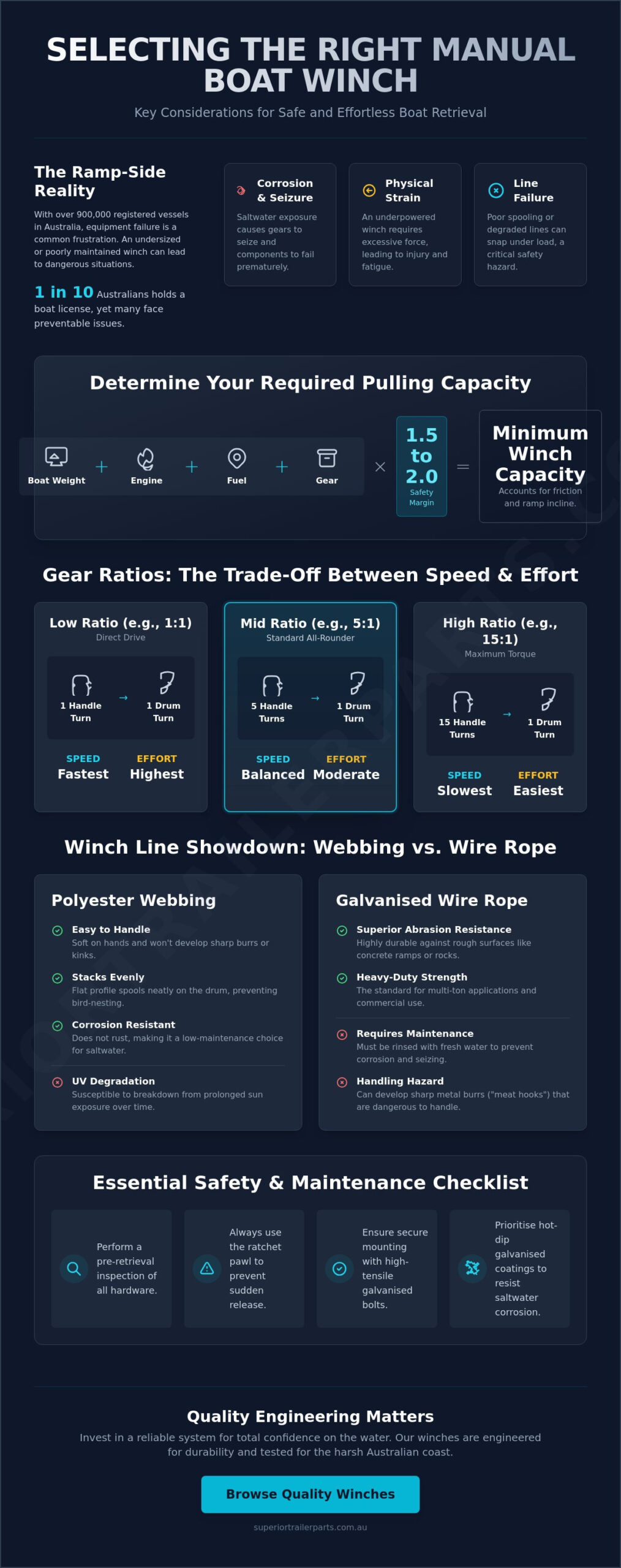
One in ten Australians holds a boat license, yet many of those 2.5 million operators struggle with equipment that fails under pressure. If you’re searching for a manual boat winch for sale, you need hardware that handles the load without failing at the ramp. Physical strain from an underpowered setup is a frequent problem. Saltwater corrosion often seizes gears; poor spooling leads to cables snapping or bird-nesting on the drum. With over 900,000 registered vessels in Australia, the demand for durable recovery gear is high. Most boats sit under six meters, but even small crafts require a winch capacity of 1.5 to 2 times their total weight.
You deserve a reliable system that makes boat retrieval effortless after a long day on the water. We’ll show you how to select the correct gear ratio and capacity to ensure reliable boat retrieval every time. This article breaks down the technical specifications and maintenance routines required to keep your hardware rust-free and your winch line safe. By understanding the mechanical advantage of your gear, you can launch and retrieve with total confidence.
Key Takeaways
- Calculate the required pulling capacity and gear ratio based on your boat’s total weight to prevent mechanical failure and reduce physical effort.
- Evaluate the strengths of galvanised wire, polyester webbing, and synthetic ropes to improve handling and safety during high-tension loads.
- Ensure a secure fit by using high-tensile galvanised hardware and standard mounting plates when installing a manual boat winch for sale.
- Implement a strict pre-retrieval inspection and use the ratchet pawl correctly to protect the operator and the winch line from sudden failure.
- Prioritise hot-dip galvanised coatings and quality engineering to resist saltwater corrosion and protect the long-term integrity of your trailer setup.
Mechanical Advantage: Understanding Gear Ratios and Pulling Capacity
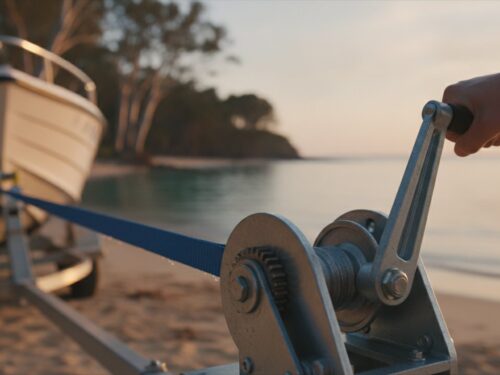
A winch is a mechanical device designed to increase your pulling power through leverage. The gear ratio defines this mechanical advantage. It represents the number of handle rotations required to complete one full revolution of the drum. If you’re browsing a manual boat winch for sale, these numbers determine your success at the ramp. A 1:1 ratio provides direct drive. One turn of the handle equals one turn of the drum. This setup is fast but offers no mechanical assistance. Conversely, a 15:1 ratio provides significant torque. It allows a single person to move a heavy cruiser with minimal physical effort.
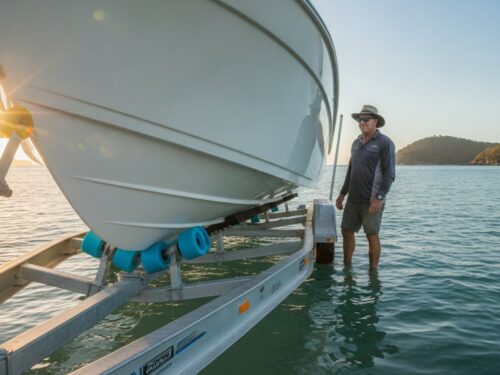
You must distinguish between “dead lift” and “rolling” weight. A dead lift involves lifting a load vertically against gravity. Rolling weight refers to pulling a boat onto a trailer where boat trailer parts like rollers support the mass. Rolling a boat is easier than lifting it, but friction and ramp steepness add resistance. Multi-speed winches solve the problem of efficiency. They feature two or three gear sets. You use the high-speed gear to take up slack line quickly. You then switch to the low gear for the final, high-torque pull as the boat exits the water and moves up the incline.
Calculating Your Required Pulling Capacity
Many operators follow a 2:1 rule for rolling loads on well-maintained trailers. This suggests a winch can handle a boat twice its rated capacity. However, a safer industry standard requires a pulling capacity of at least 1.5 to 2 times the total weight of the boat, engine, and fuel. This margin accounts for the added resistance of steep boat ramps or high-friction bunk trailers. Always define your capacity based on the fully loaded weight of the vessel. Don’t underestimate the load by forgetting batteries, full fuel tanks, and water-logged gear. Choosing a manual boat winch for sale with a higher rating ensures the hardware isn’t stressed to its breaking point.
The Trade-off Between Speed and Effort
Selecting the Best Winch Line for Australian Marine Conditions
The winch line is the only link between your trailer and your vessel. In the harsh Australian environment, UV radiation and salt spray degrade materials faster than in cooler climates. Choosing the wrong line leads to catastrophic failure at the ramp. While Understanding Gear Ratios helps you manage the physical load, the line material determines the safety and longevity of the system. You must balance strength, ease of handling, and resistance to the elements.
Drum width is a critical limiting factor for any manual boat winch for sale. Every winch drum has a specific volume capacity. If you choose a line that is too thick or too long, it will bunch up and jam against the winch frame. This “bird-nesting” prevents smooth retrieval and can damage the gears. Always match the line diameter to the manufacturer’s specifications for the drum size. A properly spooled line ensures consistent tension and prevents the line from burying itself under heavy loads. For those maintaining their own gear, sourcing quality boat trailer parts ensures your winch and line work as a unified system.
Webbing vs. Wire Rope: Pros and Cons
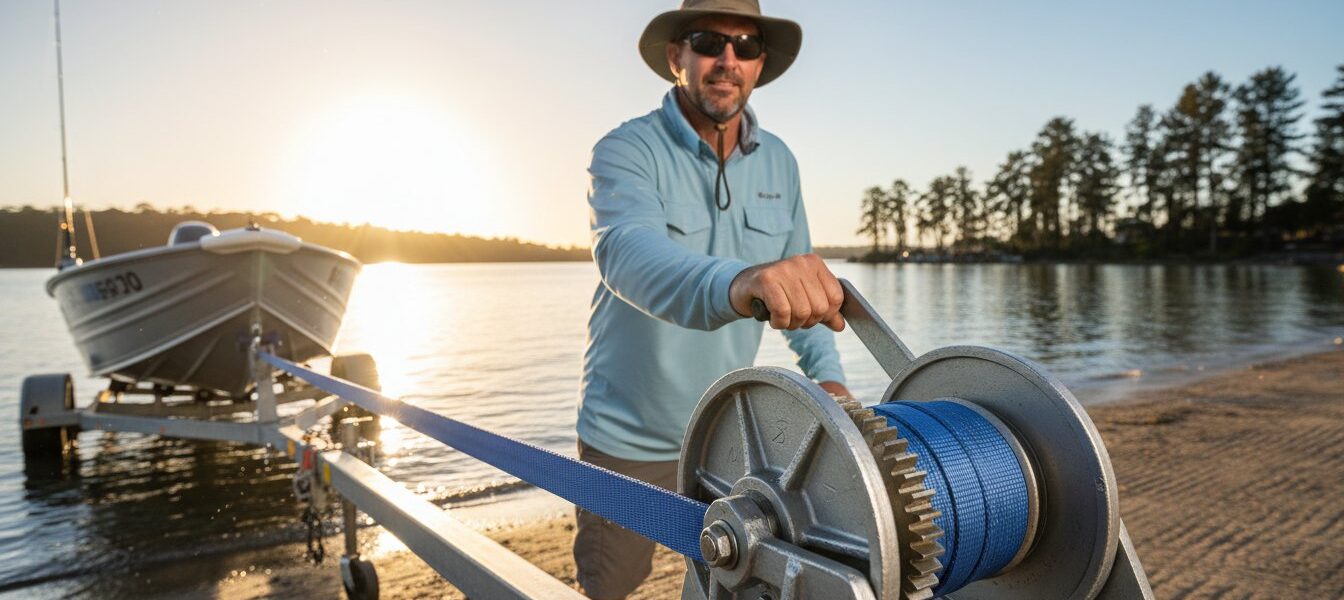
Polyester webbing is the preferred choice for most recreational boaters. It is flat, stacks evenly on the drum, and does not rust. Webbing is easy on the hands and doesn’t develop sharp burrs. However, it is susceptible to UV degradation over time. Galvanised wire rope remains the standard for heavy-duty, multi-ton applications. It offers superior abrasion resistance against rocks or concrete ramps. The downside is maintenance. You must rinse wire rope with fresh water and check for “meat hooks,” which are broken strands that can cause serious hand injuries. If you see signs of corrosion or fraying, replace the line immediately.
The Rise of Synthetic Dyneema Lines
Synthetic lines, often made from Dyneema, are an increasingly popular upgrade. These ropes offer a higher weight-to-strength ratio than steel cable while remaining floatable and soft. The primary safety benefit is the lack of “snap-back” energy. If a steel cable snaps under tension, it recoils with lethal force. A synthetic line simply loses tension and drops. You must inspect synthetic lines for internal heat damage caused by friction. Fraying on the outer sheath is a sign that the line’s structural integrity is compromised. Keep these lines clean of sand and grit, as internal abrasion can weaken the fibers from the inside out.
Mounting and Hardware: Ensuring a Secure Fit to Your Trailer
A winch is only as strong as its connection to the trailer frame. When you purchase a manual boat winch for sale, you must ensure the mounting plate aligns with your existing trailer setup. Most manual winches feature a universal three-bolt or two-bolt pattern. These standard hole patterns allow for quick installation on most winch posts. If the holes do not match, avoid drilling new holes into the winch base. This compromises the structural integrity of the hardware. Instead, use a dedicated mounting adapter or replace the winch post to ensure a secure fit.
The winch post height and angle are equally important for a safe retrieval. The line should pull horizontally or at a slight upward angle toward the boat’s bow eye. This positioning ensures the boat stays locked against the bow roller during transport. If the winch is mounted too low, the line will pull the bow downward, putting unnecessary stress on the trailer frame. While industrial standards like OSHA Safety Regulations for Winches focus on commercial cargo, the principles of hardware integrity and defect reporting apply to recreational trailer safety. Check all mounting points for cracks or rust before every trip.
Hardware Specifications for Heavy Loads
Never use standard hardware store bolts for a winch mount. You require high-tensile, Grade 5 or Grade 8 fasteners. These bolts handle the extreme shear forces generated during boat retrieval. In marine environments, all hardware must be hot-dip galvanised to resist saltwater corrosion. galvanised U-bolts are critical for winch post stability. They provide a high-strength clamping force that secures the post to the trailer tongue. If you are working with a lighter trailer frame, install backing plates. These plates distribute the load across a wider surface area, preventing the bolts from pulling through the trailer’s steel under heavy tension.
Aligning the Winch for a Straight Pull
Proper alignment prevents uneven line stacking. When setting up a manual boat winch for sale, ensure the drum is perfectly perpendicular to the boat’s keel. If the winch is mounted off-centre, the line will bunch on one side of the drum. This causes binding and can lead to the line jamming against the winch frame. The bow roller acts as a guide, keeping the line centered as it feeds onto the drum. Inspect your boat trailer parts regularly for signs of wear. A seized bow roller or a bent winch post will cause the line to chafe and eventually snap. Ensure all moving parts are lubricated and the rollers turn freely to facilitate a smooth, straight pull every time.
Operating Procedures and Safety Protocols for Boat Retrieval
Retrieval is the most high-pressure phase of your boating day. High tension creates stored energy that can fail without warning if the equipment is neglected. Every operator needs a strict protocol. Before you hook the boat, perform a visual check of the entire system. Look for frayed lines, cracked gears, or loose mounting bolts. If you find a defect, do not proceed. When you are looking for a manual boat winch for sale, safety features and build quality should be your first priority. Replacing a damaged unit is far cheaper than repairing a hull or dealing with an injury.
The ratchet pawl, often called the “clicker,” is your primary safety mechanism. It allows the drum to rotate in one direction while preventing it from spinning backward. Never disable this feature during retrieval. The sound of the clicker confirms the gear is locked. If the handle slips or the operator loses grip, the pawl catches the load instantly. Stand to the side of the winch post; never stand directly behind the drum or over the line. Staying out of the “snap-back” zone is a non-negotiable safety rule for everyone at the ramp.
Step-by-Step Retrieval Guide
Consistency prevents accidents. Follow these steps for every retrieval:
- Engage the ratchet pawl to the “pull” position before the line takes any weight.
- Maintain constant tension on the line by hand as you begin the pull. This ensures the first few wraps on the drum are tight and even.
- Crank the handle with a steady, consistent motion. Avoid jerky movements that create unnecessary shock loads on the gears.
- Secure the bow eye with a secondary safety chain once the boat is fully seated against the bow roller.
Common Mistakes to Avoid at the Ramp
A common error is using the winch as the sole tie-down during road transport. Winch lines are designed for pulling, not for resisting the vertical and lateral forces of a moving trailer. Road vibrations can cause the ratchet to fail or the line to stretch over time. Always use dedicated tie-down straps at the transom. For the best security, inspect our range of boat trailer parts to find high-tensile safety chains and straps that meet Australian conditions.
Never release the ratchet pawl while the line is under load. If you need to lower the boat back into the water, use the handle to unwind the line while maintaining a firm, two-handed grip. Look for “hooking” on the gear teeth, where the metal becomes pointed or thin. This indicates significant wear and imminent failure. If you notice this, replace the winch immediately. A reliable winch is the foundation of a safe trailer setup; don’t compromise on the hardware that holds your vessel.
Why Quality Engineering Matters for Your Boat Trailer Setup
A boat trailer is a collection of interconnected systems. If one part fails, the others suffer. A high-quality winch extends the life of your vessel by ensuring controlled movement during retrieval. When you look for a manual boat winch for sale, you aren’t just buying a handle and a drum. You’re investing in the structural integrity of your entire transport setup. Precision gears reduce vibration and shock loads. This protection reaches from the bow eye down to the trailer axles, which must support the weight as the boat settles onto the frame. Proper mechanical synergy between the winch, axles, and rollers prevents the hull from sustaining impact damage during the final stage of loading.
Corrosion Resistance in Saltwater Environments
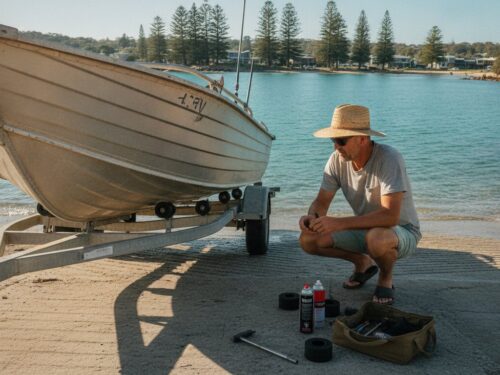
Saltwater is the primary enemy of mechanical hardware. Internal components made from stainless steel or high-grade alloys resist the seizing that plagues cheaper units. Hot-dip galvanised coatings provide a sacrificial layer of protection against rust. This is essential for the winch frame and handle. Apply marine-grade grease to the gear assembly at least twice a year to maintain smooth operation. For a full system overhaul, check your essential boat trailer parts to ensure every roller, bolt, and bracket is fit for purpose. Durable hardware prevents the mid-season breakdowns that keep you off the water.
Upgrading Your Retrieval System
Standard single-speed winches work well for light tinnies and jet skis. As boat size increases, the physical demand on the operator grows. It’s time to move to a multi-speed winch when you find yourself straining at the ramp. Multi-speed units provide the torque needed for the final pull without sacrificing speed during the initial take-up. Regular inspections of the entire trailer parts assembly are necessary to spot wear before it leads to failure. Check the winch line for UV damage and the gears for tooth thinning.
If you’re unsure which gear ratio fits your specific boat and trailer combination, reach out to a specialist. Visit our contact page for technical support and expert advice. Choosing a reliable manual boat winch for sale ensures that your day on the water ends with a hassle-free retrieval rather than a mechanical emergency. We stand behind our products because we understand the harsh conditions Australian boaters face every day. Quality engineering is the difference between a quick launch and a ruined weekend.
Secure Your Load with Professional Retrieval Gear
Selecting the right hardware is the final step in ensuring a safe and efficient day on the water. You now understand how gear ratios dictate pulling power and why high-tensile galvanised fasteners are non-negotiable for trailer stability. Maintaining your winch line and gears protects your vessel from the corrosive effects of the Australian coast. Consistent inspections ensure that your equipment remains a reliable asset rather than a liability at the ramp. Proper mechanical advantage makes the difference between a struggling retrieval and a smooth launch.
If your current setup shows signs of gear wear or cable fraying, it’s time to find a reliable manual boat winch for sale that meets your specific weight requirements. We are Australian owned and operated, providing nationwide shipping on all components designed for harsh marine conditions. Our hardware is built to withstand the rigours of frequent saltwater exposure and heavy loads. Browse our range of heavy-duty manual boat winches to upgrade your trailer today. Investing in quality engineering ensures your boat stays secure and your retrievals remain effortless. Get back on the water with the confidence that your gear won’t let you down.
Frequently Asked Questions
How do I calculate the capacity needed for my manual boat winch?
Calculate your winch capacity by multiplying the total weight of your boat, engine, fuel, and gear by 1.5 or 2. This safety margin accounts for the added resistance of steep ramps and friction from trailer rollers. If your fully loaded vessel weighs 1000kg, you should look for a manual boat winch for sale rated for at least 1500kg. Using an underpowered winch leads to premature gear failure and excessive physical strain.
What is the difference between a 1:1 and a 5:1 gear ratio?
A 1:1 ratio is a direct drive where one handle turn equals one drum rotation, while a 5:1 ratio requires five turns for every one rotation. The 1:1 setup is designed for speed when retrieving very light boats or taking up slack line. A 5:1 ratio provides a mechanical advantage that makes it five times easier to pull the load. Most multi-speed winches allow you to switch between these ratios depending on the weight of the boat.
Is webbing better than steel cable for a boat trailer winch?
Webbing is generally superior for recreational trailers because it is rust-proof and stacks flat on the drum without tangling. It is safer to handle and doesn’t develop sharp burrs that can cause hand injuries. Steel cable is more durable for heavy-duty applications where the line might rub against abrasive surfaces like concrete ramps. For most users, webbing or synthetic rope provides the best balance of safety and longevity in marine environments.
Why is my winch making a loud clicking noise during retrieval?
The clicking noise is the ratchet pawl engaging the gear teeth to prevent the drum from spinning backward. This is a critical safety feature that locks the load in place if you lose your grip on the handle. If your winch stops clicking during retrieval, the pawl spring may be broken or the mechanism could be seized with salt. Inspect the pawl immediately and do not use the winch until the locking mechanism is functional.
How often should I lubricate the gears on my manual winch?
Lubricate your winch gears at least twice a year using high-quality marine-grade grease. If you launch in saltwater frequently, you should clean and grease the moving parts every three months. Always rinse the winch with fresh water after every trip to remove salt spray. Apply grease to the main gear teeth, the drive shaft bushings, and the ratchet pawl pivot point to ensure smooth operation and prevent corrosion.
Can I replace the wire cable on my winch with synthetic rope?
You can replace wire cable with synthetic rope as long as the winch drum is smooth and free of burrs. Steel cables often leave sharp gouges on the drum that will shred synthetic fibers under tension. Sand down any rough spots or install a new drum before switching materials. Ensure the synthetic rope has a breaking strain that matches or exceeds the original manufacturer’s specifications for your winch capacity.
What mounting bolt grade should I use for a 1000kg winch?
Use Grade 8 high-tensile, galvanised bolts for any winch rated for 1000kg or more. Standard mild steel bolts lack the shear strength required to handle the forces generated during a heavy retrieval. When you purchase a manual boat winch for sale, ensure you use at least three bolts to secure the mounting plate to the winch post. Always use galvanised washers and nyloc nuts to prevent the hardware from vibrating loose during road transport.
Should I leave the winch ratchet engaged while driving?
Leave the ratchet engaged during transport, but do not rely on the winch as your primary tie-down. The winch is designed for pulling loads, not for resisting the constant vertical bouncing of a boat on the road. This pressure can strip the gears or snap the winch line over time. Always use secondary safety chains at the bow and heavy-duty transom straps to secure the boat firmly to the trailer frame.