Your boat trailer’s wobble rollers are more than just plastic wheels; they are a precision-engineered suspension system for your hull. Choosing the wrong set leads to permanent hull marking or a seized assembly that makes launching a nightmare. In the harsh Australian sun and salt, standard rubber often fails. This leaves you struggling at the boat ramp while your hull takes the brunt of the friction.
Most boaties agree that trailer maintenance is often overlooked until something breaks. You want a trailer that performs reliably every time it hits the water. This article explains how to select, install, and maintain the right wobble rollers to protect your boat and ensure effortless launching. We’ll clarify the common confusion between 20mm and 22mm bore sizes and examine why UV-stabilised polyurethane is the standard for durability. You’ll gain the technical knowledge needed to keep your trailer rolling smoothly for years.
Key Takeaways
- Pivoting action conforms to your hull to distribute weight evenly and prevent structural pressure points.
- Polyurethane is the preferred material for Australian marine environments because it resists UV damage and salt corrosion better than rubber.
- Correct measurement of bore sizes, typically 20mm or 22mm, ensures a secure fit for your wobble rollers and prevents spindle wear.
- A hybrid setup using keel rollers for weight and wobble rollers for balance provides the most stable launching platform.
- Regular inspections for flat spots and seizing can prevent permanent hull marking and ensure a smooth transition into the water.
Understanding the Role of Wobble Rollers in Boat Launching
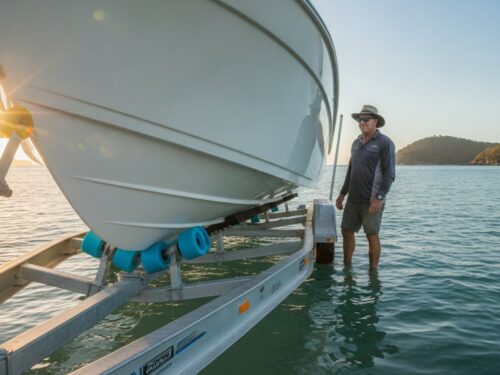
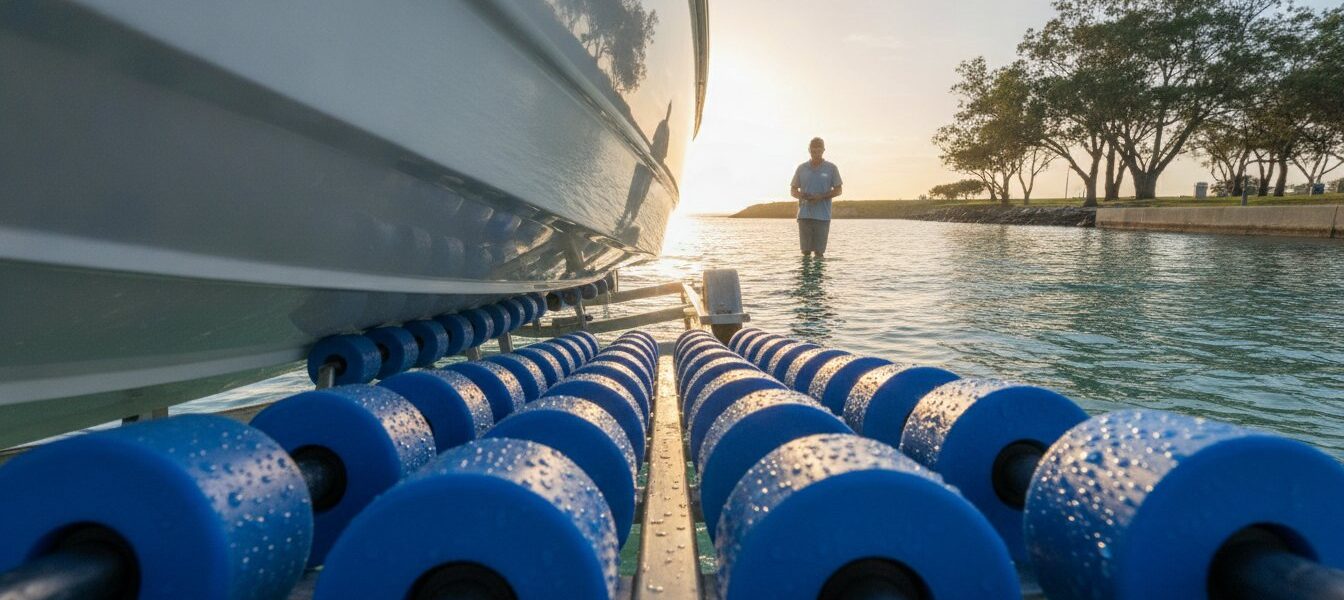
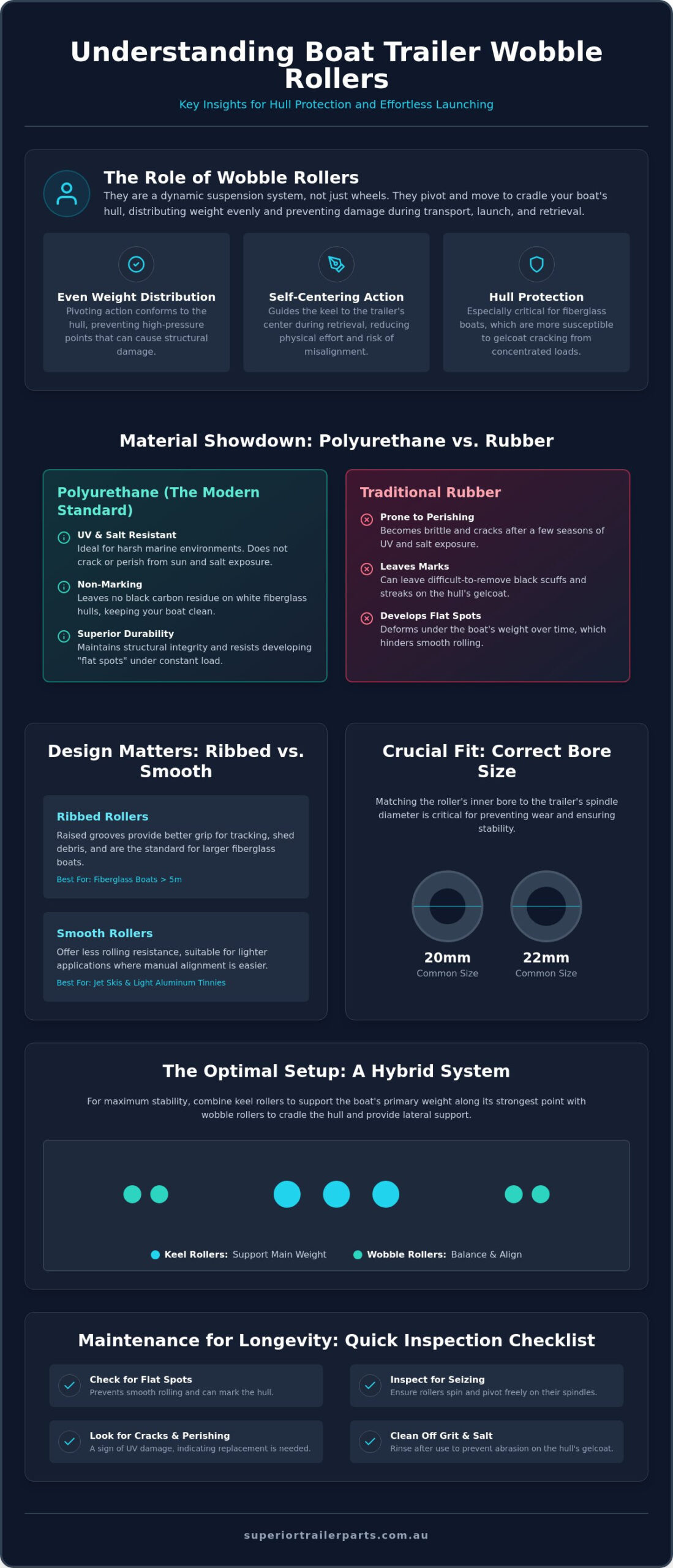
Wobble rollers serve as the primary interface between your boat’s hull and the trailer frame. Unlike a rigid fixed roller, a wobble roller is a pivoting unit designed to move with the contours of the vessel. This flexibility is essential for maintaining constant contact as the boat moves. Understanding Boat trailer basics helps clarify why this pivoting action is superior to static support. While fixed rollers only provide a single point of contact, wobble rollers distribute the weight of the craft across a broader surface area. This reduces localized pressure and prevents structural stress during transport.
The Mechanics of the Pivot
Each roller sits on a spindle attached to a pivoting bracket. This assembly allows the roller to tilt vertically or horizontally. When you back your trailer down a ramp, the angle of the boat relative to the trailer changes constantly. The pivot mechanism compensates for these shifts immediately. It ensures the rollers don’t dig into the hull or lose contact. This movement significantly reduces friction during the launch and retrieval process. The pivot point is the critical factor in hull alignment during high-speed retrieval.
Why Fiberglass Boats Require Wobble Support
Fiberglass hulls require a high level of care compared to heavy-duty aluminium boats. Aluminium is rigid and handles concentrated loads well. Fiberglass is more susceptible to deformation and gelcoat cracking if weight isn’t managed correctly. Using multiple wobble rollers creates a cradle effect that protects the integrity of the fiberglass. This setup is particularly effective for self-centering. As you winch the boat up, the rollers guide the keel toward the center of the trailer automatically. This reduces the physical effort required and minimizes the risk of the boat shifting off-center. For owners seeking reliable boat trailer parts, these pivoting units are indispensable for long-term hull protection. They ensure the weight is spread across the internal stringers of the boat, which are the strongest parts of the vessel’s structure.
Comparing Materials and Designs for Maximum Hull Protection
Material choice determines how long your trailer stays operational between maintenance cycles. In Australia, the combination of high UV indices and constant salt spray quickly degrades inferior components. While rubber was once the standard, modern boat trailers rely on advanced polymers to prevent hull damage and ensure longevity. Choosing the correct material prevents the frustration of seized rollers and the expense of hull repairs. High-quality wobble rollers must withstand the weight of the vessel without deforming over time.
Polyurethane vs Rubber: The Durability Debate
Traditional rubber rollers often perish within a few seasons of exposure. They become brittle, crack, and eventually develop flat spots under the boat’s weight. A significant drawback is the black carbon residue they leave on white fiberglass hulls, which is difficult to remove. High-quality poly rollers eliminate this issue. Polyurethane is non-marking and chemically resistant to salt and fuel grime. It maintains its structural integrity even under constant pressure. If you need a reliable replacement, you can browse our range of boat trailer parts to find UV-stabilised options that won’t perish in the sun.
Ribbed vs Smooth Rollers
Design choice is just as important as material. Ribbed rollers feature a series of raised grooves across the surface. These ribs grip the hull as the boat moves, providing better tracking during winching. This ensures the boat stays straight, even in crosswinds or strong currents at the ramp. Ribbing also allows water and debris to shed away from the contact point, reducing the chance of grit scratching the gelcoat.
Smooth rollers are typically used for lighter applications. They work well for single jet ski trailers where the weight load is lower and tracking is easier to manage manually. Smooth surfaces offer less rolling resistance for smaller hulls but lack the centering assistance provided by ribbed alternatives. For larger fiberglass boats, the ribbed design is the industry standard for safety and performance. Use the following criteria when selecting your design:
- Ribbed: Best for fiberglass boats over 5 metres and heavy-duty winching.
- Smooth: Suitable for jet skis and lightweight aluminium tinnies.
- Polyurethane: Essential for non-marking requirements and UV resistance.
- PVC: A budget-friendly alternative for trailers stored indoors away from direct sunlight.
Selecting the right material ensures your trailer remains a tool rather than a liability. Polyurethane offers the best balance of strength and protection for the modern boater. It’s a utilitarian choice that pays for itself through reduced maintenance and zero hull damage.
Evaluating Wobble Rollers Against Traditional Keel Support
Setting up a trailer requires a balance between weight support and ease of movement. A hybrid approach is the standard for most Australian boaties. In this configuration, keel rollers bear the majority of the vessel’s vertical dead weight. The wobble rollers act as lateral stabilizers. They keep the hull upright and prevent it from tipping during the winching process. This combination ensures the trailer remains stable during highway travel and functional at the ramp.
If you are converting a standard box trailer for marine use, the setup requirements differ significantly from a dedicated boat trailer. Dedicated trailers feature specific mounting points and cross-members designed for roller banks. A conversion often requires additional adjustable brackets to ensure the rollers align with the hull’s internal stringers. Larger vessels, particularly those over 6 metres, rely heavily on multi-roller banks. These systems use clusters of four or more rollers to spread the load across a wider area. This prevents the hull deformation that can occur when a heavy boat rests on too few contact points.
The Weight Distribution Framework
The keel is the strongest part of any boat structure. It’s built to carry the primary load. When you position your keel rollers correctly, they take the strain off the trailer frame and the boat’s sides. The job of the wobble roller is to provide guidance and balance. They ensure the boat centers itself as it moves forward onto the trailer. For a broader look at trailer components, check out our range of boat trailer parts. This balance prevents the hull from resting solely on its sides, which leads to structural fatigue over time.
Launching in Shallow Water
Shallow ramps present a challenge for trailers using carpeted bunks or skids. Bunks rely on sliding friction. If the water isn’t deep enough to float the boat off the trailer, the friction of the wet carpet makes launching difficult. Wobble rollers solve this by allowing the boat to roll off the trailer even at low angles. This reduces the force required from both the winch and the tow vehicle.
Solo operators find this system particularly useful at busy Australian boat ramps. It allows for a faster, more controlled launch without needing a second person to push the boat off. The mechanical advantage of a rolling surface over a sliding one is undeniable in low-tide conditions. While skids are cheaper and simpler, they don’t offer the same efficiency or hull protection during shallow water transitions. Using a rolling system minimizes the time your vehicle spends backed into salt water, which helps prevent long-term corrosion on your own axle and brakes.
Selecting and Replacing Rollers for Optimal Performance
Precision fitment prevents mechanical failure at the boat ramp. Buying the wrong size leads to excessive play in the assembly or a roller that simply won’t slide onto the spindle. Before ordering replacement wobble rollers, you must verify the dimensions of your existing hardware. Most Australian trailers use standardized components, but variations in spindle thickness and bracket width are common. A utilitarian approach to measurement ensures you get the right parts the first time.
Compatibility with your bracket type is also a factor. Single roller brackets are standard for lightweight setups, while twin or quad assemblies are necessary for heavier fiberglass hulls. These multi-roller banks require consistent sizing across all units to ensure the load is balanced. If one roller is a different diameter or bore size, it creates an uneven pressure point on the hull. This often leads to the tracking issues discussed in previous sections.
Measuring Your Hardware Correctly
Use a set of vernier calipers for the most accurate reading of your spindle diameter. This measurement determines the required bore size of the roller. In the Australian market, the internal diameter is typically either 20mm or 22mm. A 20mm roller won’t fit a 22mm spindle, and a 22mm roller on a 20mm spindle will vibrate and wear prematurely. Follow these steps for a precise fit:
- Measure the spindle diameter at the point where the roller sits.
- Check the spindle length from the bracket base to the split pin hole.
- Ensure there is enough clearance for galvanized washers on both sides of the roller.
- Always check for spindle corrosion before installing new rollers; a pitted or rusted spindle will shred the internal bore of a new poly roller.
Installation Steps for a Secure Fit
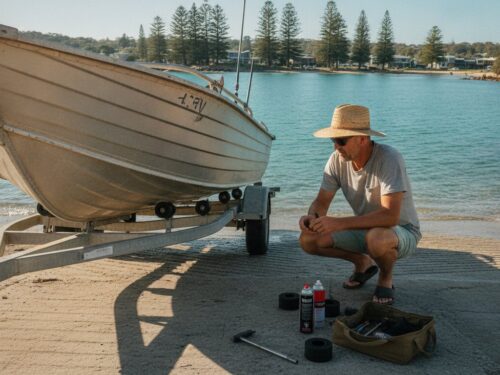
DIY roller replacement is straightforward if you have the right tools. You’ll need a pair of heavy-duty pliers for split pins and a wire brush to clean the spindles. Start by removing the old split pins and rusted washers. If the old roller is seized, you may need to use a lubricant to slide it off. Once the spindle is bare, use the wire brush to remove salt crust and surface rust until the metal is smooth.
Apply a thin layer of marine-grade grease to the spindle to ensure smooth rotation. Slide the new roller on, followed by a fresh galvanized washer. Secure the assembly with a new stainless steel or galvanized split pin. If you’re unsure about the specific configuration for your trailer, Contact Superior Trailer Parts for technical fitment advice. For those ready to perform a full refresh, you can find the correct wobble rollers and hardware in our online store.
Maintaining Your Trailer Setup for Long-Term Durability
Identifying and Fixing Flat Spots
Leaving a boat on a trailer for several months without movement can lead to roller deformation. The constant weight of the vessel compresses the material at a single contact point, creating a permanent flat spot. You’ll notice this as a distinct thumping sensation when winching the boat during launch or retrieval. To prevent this, rotate the rollers slightly or move the boat an inch forward during long-term storage. If a flat spot is severe enough to hinder rotation, the roller must be replaced.
The Saltwater Rinse Routine
Effective cleaning requires flushing the internal bore of the roller, not just the outside. Saltwater penetrates the gap between the roller and the spindle where it stays trapped. For frequent boaties, upgrading to stainless steel spindles is a practical investment to prevent rust-jacking that binds the assembly. You can find essential spares in our range of boat trailer parts. Consistent rinsing prevents saltwater crystallization from seizing the assembly and ensures your wobble rollers remain reliable for years.
Optimise Your Trailer for Reliable Launching
High-performance trailer setups depend on the quality of every individual component. Choosing UV-stabilised polyurethane ensures your hull remains free from marks while resisting the intense Australian sun and salt spray. You must prioritise precision fitment by matching bore sizes to your spindles to prevent mechanical play or seizing. Regular maintenance, including thorough internal rinsing and rotating the rollers during long-term storage, keeps your system operational for years. These simple steps transform a difficult launch into an effortless process.
Superior Trailer Parts provides heavy-duty components designed specifically for harsh local conditions. We offer specialist marine trailer expertise to help you select the exact configuration for your fiberglass or aluminium hull. With nationwide shipping across Australia, you can secure the replacement parts you need without delay. Browse our range of high-quality wobble rollers and boat trailer parts to upgrade your trailer today. Investing in durable hardware ensures your boat remains protected and your time on the water remains the priority.
Frequently Asked Questions
What is the difference between a 20mm and 22mm bore wobble roller?
Bore size refers to the internal diameter of the roller. A 20mm bore is designed for standard 19mm to 20mm spindles. A 22mm bore fits larger diameter spindles. If you use a 22mm roller on a 20mm spindle, the assembly will vibrate and wear out quickly. Always measure your spindle with calipers before ordering to ensure a tight, professional fit.
How many wobble rollers does my boat trailer actually need?
Load distribution determines the quantity. Most trailers for boats under 5 metres use between 12 and 24 rollers. Larger fiberglass vessels may require 32 to 48 units to protect the hull stringers. The goal is to have enough wobble rollers to support the weight without creating high-pressure points. Check your trailer manufacturer’s specifications for the recommended configuration for your specific ATM.
Should I choose ribbed or smooth wobble rollers for a fiberglass hull?
Ribbed rollers are the standard choice for fiberglass. The raised grooves grip the hull during retrieval, which is essential for self-centering in wind or current. This design also creates channels for water and sand to escape. Smooth rollers lack this tracking assistance and are better suited for lightweight applications where manual alignment is easy.
Can I use wobble rollers on a jet ski trailer?
You can definitely use them for a PWC. Many single jet ski trailers benefit from a roller setup because it reduces the physical effort required at the ramp. They allow the jet ski to roll off the trailer in shallow water where bunks would create too much friction. This is a practical upgrade for solo riders who want a faster launch.
How often should boat trailer rollers be replaced in Australia?
There is no fixed timeline, but seasonal inspections are vital. The Australian sun and salt are aggressive on trailer components. You should check for flat spots, seized bores, or deep cracks every six months. Most high-quality polyurethane rollers last several seasons if you rinse them properly and store the trailer out of direct sunlight.
Why are my polyurethane rollers turning yellow or fading?
Discolouration is caused by UV radiation. Even UV-stabilised polyurethane can yellow or fade after prolonged exposure to the sun. This is usually a cosmetic issue and doesn’t mean the roller has failed. However, if the material feels brittle or begins to flake, the structural integrity is compromised and you should install new wobble rollers immediately.
Do I need to grease my wobble rollers?
Applying a light coat of marine-grade grease to the spindle is best practice. This prevents salt crystals from binding the roller to the galvanized steel. Don’t use standard automotive grease, as it will wash away quickly in salt water. A specialized marine lubricant stays in place longer and ensures the pivoting action remains smooth throughout the season.
Can wobble rollers be used with aluminium boats?
They are an excellent choice for aluminium hulls. While aluminium boats are often paired with plastic skids, rollers offer a significant reduction in friction. This makes winching the boat much easier and reduces strain on your trailer’s winch and cable. They provide a more modern, efficient launching experience compared to traditional timber or plastic bunks.