Would you trust a five-year-old trailer frame that hasn’t been treated for saltwater exposure to hold two tonnes of boat at 100km/h? A replacement galvanised trailer frame for a 6-metre boat often exceeds A$4,500, making neglect a very expensive mistake. Rust proofing a boat trailer is the only way to prevent salt from compromising your structural integrity and turning your weekend into a roadside disaster. It’s a tough job, but it’s essential for any boatie who values their safety and their wallet.
We agree that fighting corrosion feels like a losing battle when you’re launching in salt every weekend. This article teaches you the professional methods for protecting your trailer frame and heavy-duty components from the harsh Australian marine environment. You’ll get a clear maintenance schedule and expert advice on which products actually work on local boat ramps. We’ll show you how to extend the life of your axles and springs so they remain reliable for the long haul.
Key Takeaways
- Identify why standard hot-dip galvanisation has limits in harsh saltwater environments and how to spot early signs of marine oxidation.
- Learn the mandatory preparation steps for rust proofing a boat trailer, focusing on deep-cleaning techniques that ensure proper sealant adhesion.
- Evaluate the performance of oil, wax, and hard coating barriers to select the right marine-grade protection for your specific towing needs.
- Discover specialized methods for treating high-failure mechanical components, including multi-leaf springs and axles where salt often remains trapped.
- Establish a practical post-launch maintenance routine and annual inspection schedule to maintain structural integrity and road safety under Australian conditions.
Understanding Marine Corrosion and Trailer Galvanisation
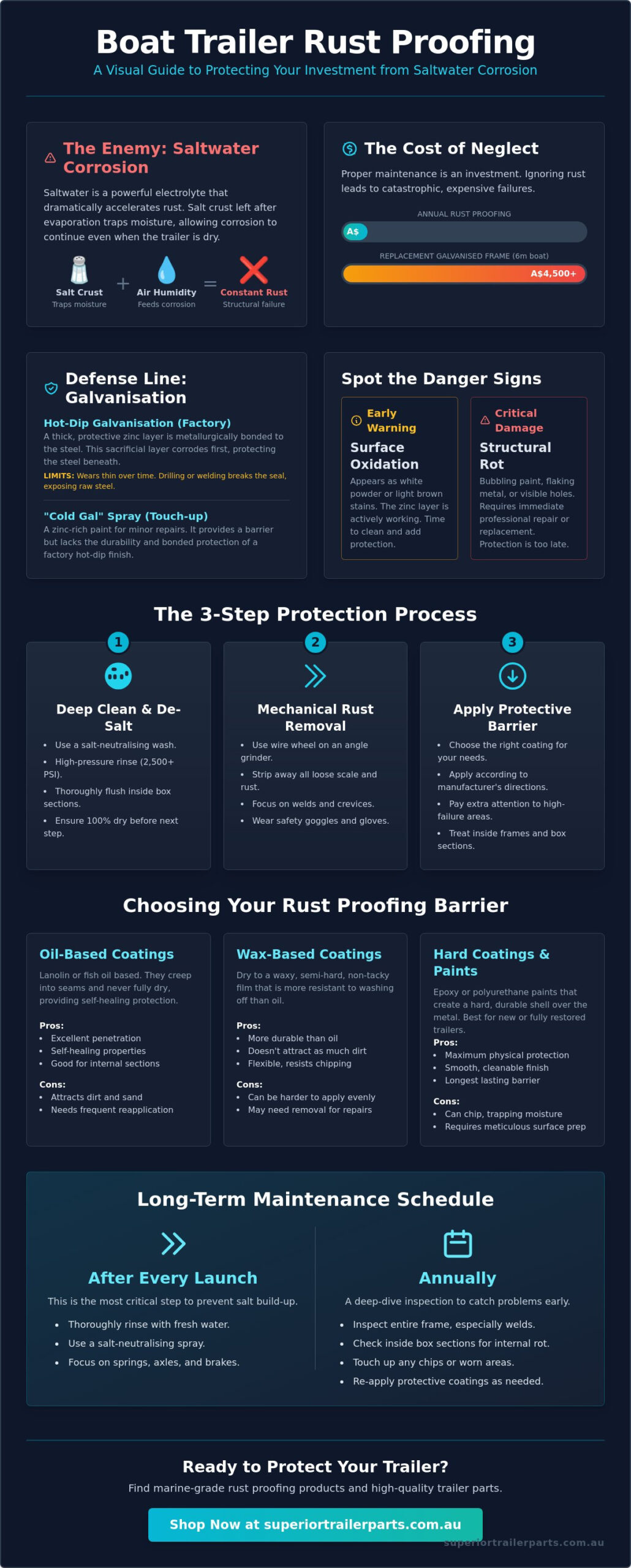
Saltwater is the greatest enemy of any boat trailer. It acts as a powerful electrolyte that accelerates the electrochemical process of oxidation. When steel meets saltwater, the sodium chloride speeds up the breakdown of the metal, turning it into iron oxide. This reaction happens much faster than it does in freshwater environments. Effective rust proofing a boat trailer starts with knowing how salt behaves on metal surfaces.
Why Saltwater is the Primary Threat
The damage doesn’t stop when you pull the trailer out of the water. As the water evaporates, it leaves behind a thick salt crust. This crust is hygroscopic, meaning it pulls moisture directly from the air. This keeps the steel damp and corroding even when the trailer looks dry. Electrolysis is the process where an electrical current, often generated between two dissimilar metals in saltwater, causes the more reactive metal to deteriorate rapidly. Without a barrier, your trailer frame will lose its structural integrity within a few seasons of heavy use at Australian boat ramps.
The Role of Galvanised Coatings
Most quality boat trailer parts and frames undergo hot-dip galvanisation. This process provides Cathodic Protection by bonding a sacrificial zinc layer to the steel at roughly 450 degrees Celsius. The zinc corrodes instead of the steel. However, this protection has limits. Saltwater eventually wears the zinc thin, especially in high-friction areas.
Any modification made after the galvanising process creates a weak point. Drilling holes for new brackets or welding repairs destroys the zinc seal and exposes raw steel to the elements. These spots will rust almost immediately. It’s also vital to distinguish between factory galvanising and “cold gal” sprays. Factory dipping creates a metallurgical bond with the steel. Cold gal is essentially a zinc-rich paint used for touch-ups. It’s a useful maintenance tool, but it doesn’t offer the same long-term resilience as the original factory finish.
Identifying Rust Traps and Structural Damage
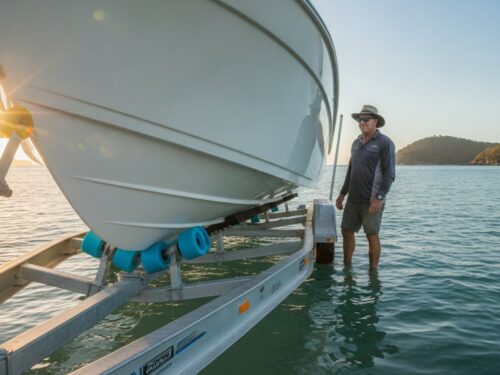
Trailer design dictates where rust will start. Box sections are common rust traps because they are hollow. Saltwater enters the tube, sits in the bottom, and eats the steel from the inside out. C-channel frames are easier to rinse, but they still have crevices around spring hangers and cross-members where salt accumulates.
- Surface Oxidation: This appears as white powder or light brown staining. It is usually cosmetic but indicates the zinc layer is working hard.
- Structural Rot: This is identified by bubbling paint, flaking metal, or visible holes. If the steel is delaminating, rust proofing a boat trailer is no longer the priority; the trailer likely needs major structural repair or replacement.
Regular inspections are mandatory. Focus on the welds and the underside of the frame. Catching oxidation early prevents a total trailer failure on the highway.
Preparing the Trailer Surface for Protection
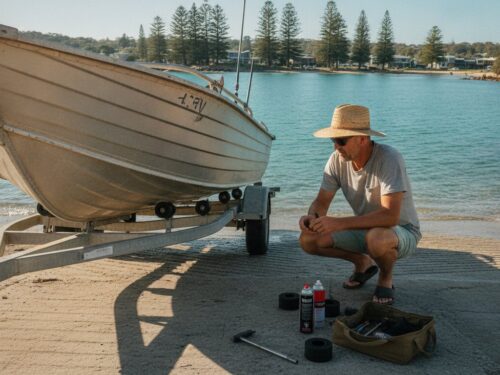
Effective rust proofing a boat trailer starts with a clean foundation. Applying sealants over salt, grease, or loose scale is a waste of time and money. The coating won’t stick, and corrosion will continue to spread underneath the new layer. You must remove all contaminants to ensure proper chemical adhesion. This process requires a high-pressure washer, wire brushes, and a heavy-duty degreaser. Wear safety goggles and heavy gloves throughout this phase to protect against flying debris and harsh chemicals.
Safety is the first priority when working on the underside of a frame. Support the trailer with rated jack stands on a level concrete surface. Don’t rely on a single jack or the jockey wheel alone. A standard dual-axle boat trailer can weigh over 500kg empty, which is enough to cause serious injury if a support fails. Ensure the trailer is chocked and stable before you begin any mechanical scrubbing.
De-salting and High-Pressure Rinsing
Salt is the primary cause of trailer failure in Australia. Plain water isn’t enough to remove it because salt forms a stubborn ionic bond with the metal. Use a dedicated salt-neutralising wash solution to break this bond effectively. Blast the entire frame with a pressure washer rated at 2,500 PSI or higher. Pay close attention to the inside of box sections and hollow cross-members. These areas trap salt and moisture, leading to internal rot that is hard to see. Flush these sections until the runoff water is clear of debris. The metal must be 100% dry before moving to the next step. Even a small amount of trapped moisture will ruin your efforts when rust proofing a boat trailer.
Mechanical Rust Removal
Use a wire wheel on an angle grinder to strip away loose scale and old paint. This tool is faster and more effective than manual scrubbing for large, accessible areas. For tight corners or around bolt heads, use 80-grit sandpaper to reach the metal surface. You’re looking for clean, bright metal wherever possible. If you encounter deep pitting, use the hammer test. Strike the steel firmly with a ball-peen hammer. A solid frame produces a sharp ringing sound. A dull thud or metal that flakes away indicates the steel is too thin to save. Metal thickness that has dropped below 2mm on main rails usually requires professional repair. Treat any remaining tight rust with a phosphoric acid-based chemical converter to create a stable, primed surface. If your inspection reveals worn rollers or corroded brackets, it’s the right time to install high-quality boat trailer parts to maintain your trailer’s performance and safety.
Selecting the Right Rust Proofing Barriers
Effective rust proofing a boat trailer requires matching the barrier to the specific component. You have three primary choices: oil-based, wax-based, and hard coatings. Oil-based barriers penetrate deep into metal pores and internal box sections. Wax-based products provide a thicker, semi-permanent film that resists wash-off better than oils. Hard coatings, like bitumen or rubberised undercoats, offer maximum physical protection against road debris and stone chips. Choose bitumen for high-impact areas of the main frame, but keep it away from moving parts or fasteners. Don’t apply hard coatings over existing rust, as this accelerates internal decay.
Your application method depends on your tools and the area you’re treating. Aerosol cans work well for quick touch-ups or reaching into small gaps. A professional spray gun provides the most even finish for a full chassis and ensures deep penetration into the frame. Brush-on applications allow for a thicker coat on critical structural points and reduce the mess of overspray in a home garage. For the best results, apply these coatings when the ambient temperature is between 15 and 25 degrees Celsius to ensure proper flow and adhesion.
Lanolin and Fish Oil Sprays
Lanolin is a natural, non-toxic derivative of sheep wool. It’s an excellent choice for eco-conscious boaties because it doesn’t harm marine environments. These soft-film barriers are self-healing. If a stone chips the surface, the oil creeps back over the exposed metal. This property makes them essential for leaf springs and shackle bolts where metal-on-metal friction occurs. You’ll need to re-apply these sprays every six to twelve months. High-pressure salt water spray and road grime eventually strip the soft layer away, so regular inspection is vital. Regularly rust proofing a boat trailer with these penetrants is the only way to combat salt-air exposure in hidden cavities.
Cold Galvanising and Zinc-Rich Paints
When you find scratches or weld points, cold galvanising paint is the standard fix. For effective cathodic protection, the paint must contain at least 90% zinc dust in the dry film. This high purity ensures the zinc sacrifices itself to protect the underlying steel. While hard paints look clean, they carry risks. If the bond fails, moisture gets trapped between the paint and the steel. This often leads to corrosion that remains hidden until the metal structurally fails. Use these paints for surface-level maintenance rather than a substitute for the heavy-duty protection found on genuine boat trailer parts.
Protecting Critical Mechanical Components
Mechanical parts fail long before the trailer frame gives way. Axles, springs, and hubs endure constant submersion in corrosive saltwater. Effective rust proofing a boat trailer requires a targeted approach for these high-stress areas. You must focus on the interfaces where metal meets metal; these spots trap moisture and accelerate oxidation.
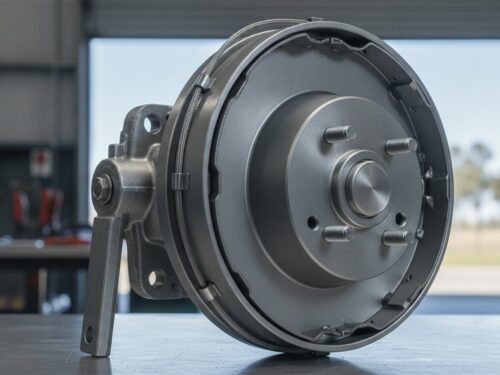
Salt crystals lodge in the small gaps between components. When these crystals dry, they expand and compromise protective coatings. You need to ensure your u-bolts and fasteners are coated with a marine-grade anti-seize or heavy-duty lanolin spray. Be precise during application. Do not let rust proofing agents contaminate brake rotors or drums. Even a small amount of overspray reduces braking efficiency by up to 80 percent, creating a dangerous towing situation on the highway.
Leaf Spring and Hanger Maintenance
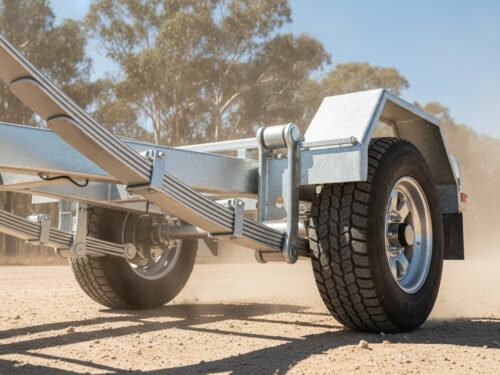
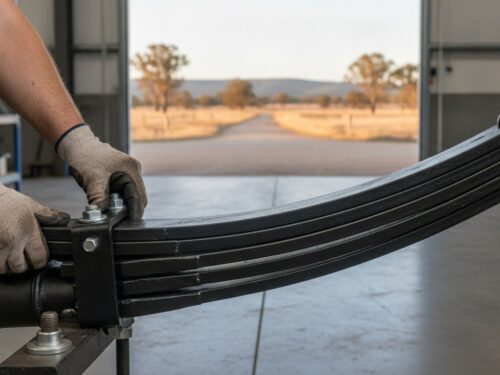
Standard leaf springs require penetrating lubricants rather than hard paints. Hard coatings crack as the spring flexes. This allows salt to sit between the leaves where it cannot be washed away. This leads to pack rust, which forces the leaves apart and weakens the entire stack. Use a high-creep lanolin oil that stays fluid and self-heals over scratches. This keeps the suspension moving freely.
- Frozen Shackles: Inspect shackle bolts for seizing regularly. A frozen shackle stops the suspension from moving. This puts 100 percent of the road vibration directly into the trailer frame, leading to weld failure.
- Replacement Signs: Look for heavy delamination. If the spring thickness has reduced by more than 20 percent due to rust scaling, the component is unsafe for the road.
- Hanger Integrity: Check the weld points on spring hangers. Salt crusts often hide hairline cracks that compromise the trailer’s structural integrity.
Axle and Hub Protection
Protecting trailer axles involves more than a quick rinse after a day at the ramp. The axle beam is highly prone to pitting. Deep pits act as stress concentrators. These can lead to sudden fractures when you hit a pothole under heavy load. Apply a thick layer of cold galvanising spray or a dedicated chassis shield to the entire beam. This is a critical step for Australian boat owners who frequent coastal boat ramps.
Apply heavy-duty marine grease to the rear of the hub seal. This creates a physical barrier against water ingress. If the axle surface where the seal sits becomes scored or rusted, the seal will fail within 50 kilometres of travel. This allows saltwater to destroy your bearings. For trailers showing signs of advanced corrosion, sourcing high-quality boat trailer parts is the only way to ensure safety. Superior Trailer Parts is Australian owned and operated, providing the heavy-duty gear needed for harsh marine environments.
Keep your trailer roadworthy and safe for your next trip. Order genuine boat trailer parts today.
Establishing a Long-Term Maintenance Schedule
Consistent maintenance is the final step in rust proofing a boat trailer for the long haul. You can’t rely on a single application of cold galvanising to last forever. Saltwater is relentless. It finds every microscopic gap in your protection. A disciplined schedule prevents minor surface issues from becoming structural failures that end your weekend early. Establishing a routine ensures your gear remains roadworthy and safe for every launch.
The Post-Saltwater Rinse Protocol
A quick five-minute hose down is often a waste of time. Salt crystals bond to metal surfaces and hide in the crevices of leaf springs and brake assemblies. You need a systematic approach. Use a high-pressure nozzle to blast the inside of the box sections and the back of the hubs. If your trailer has brakes, use a dedicated flushing kit or ‘ears’ to push fresh water through the drums or calipers. This removes salt that a standard hose cannot reach.
Never park a wet trailer in a dark shed. Moisture trapped under a cover or in a garage creates a humid microclimate that accelerates oxidation. Let the trailer sit in the sun until the frame and components are bone dry. This simple habit adds years to the life of your galvanised coating and keeps the rust proofing a boat trailer strategy effective.
Knowing When to Replace vs. Repair
Distinguishing between surface scale and structural rot is vital for safety. Surface rust can be wire-brushed and treated. However, if you see deep pitting or flaking on critical hardware, it is time to buy new components. A rusted u-bolt might only cost A$20 to replace now. If it snaps on the highway, a roadside recovery and axle repair can easily exceed A$2,000. The math is simple: replace the cheap parts early to avoid the expensive failures.
- Check couplings for smooth operation and minimal play in the housing.
- Inspect springs for cracks or significant thinning of the individual leaves.
- Monitor the thickness of the frame at the rear where it submerges most often.
- Look for “bleeding” rust coming from inside the frame rails.
We stock a full range of heavy-duty trailer parts designed for the harsh Australian marine environment. If you are looking at a component and cannot decide if it is safe, contact us for expert advice. Our team understands the mechanical limits of marine gear and can help you identify when a part has reached the end of its service life.
Storage Tips for the Off-Season
How you store the trailer matters as much as how you wash it. Avoid parking on grass or dirt. These surfaces hold moisture and release it directly onto your chassis. Park on concrete or gravel to ensure proper drainage. Before long-term storage, apply a fresh layer of lanolin or a marine-grade corrosion inhibitor to all moving parts and exposed bolt heads. This extra layer protects the metal from salt air even when the boat is not in the water.
Secure Your Trailer Against Australian Saltwater
Saltwater is relentless on steel. Effective rust proofing a boat trailer requires more than a quick rinse after a day on the water. You need a proactive strategy that combines high-quality galvanised barriers with a strict maintenance schedule for your mechanical components. Focus on preparing the surface correctly and using marine-grade coatings that withstand the high salinity of Australian coastal environments. Consistent inspections prevent small chips from becoming structural failures that compromise your safety.
Superior Trailer Parts provides the heavy-duty gear you need to stay on the road and at the ramp. We’re Australian Owned and Operated; we understand exactly how harsh local conditions can be on your equipment. Our team offers expert advice for harsh Australian saltwater conditions to ensure your setup lasts through every season. We provide nationwide shipping on all marine-grade components to get your repairs sorted quickly. Don’t let corrosion cut your fishing trips short when the right parts are a click away.
Shop heavy-duty galvanised boat trailer parts and accessories at Superior Trailer Parts
Keep your gear in top condition and enjoy more time on the water.
Frequently Asked Questions
Can I rust proof a trailer that already has rust?
You can rust proof a trailer with existing corrosion, but you must remove loose scale first. Use a wire brush or abrasive disc to clear surface oxidation before applying a rust converter. Rust proofing a boat trailer over heavy flakes without preparation traps moisture and accelerates metal fatigue. Once the surface is stable, apply a heavy-duty zinc or lanolin barrier to stop further decay.
How often should I re-apply rust-proofing spray to my boat trailer?
Re-apply protective sprays every 6 to 12 months depending on your launch frequency. Boat owners who launch in salt water more than 20 times per year should inspect their coating quarterly. Australian coastal conditions are exceptionally harsh on galvanised steel. Regular maintenance ensures the barrier doesn’t thin out and expose the raw metal to salt spray and humidity.
Is Lanolin better than fish oil for marine trailers?
Lanolin is the superior choice for marine environments because it doesn’t dry out or crack. It remains a tacky, self-healing film that resists being washed off by high-pressure waves. While fish oil is a traditional remedy, it often becomes brittle over time. Lanolin provides better UV resistance and lacks the pungent odour associated with organic fish oils.
Will rust proofing affect my trailer’s braking performance?
Rust proofing will severely degrade braking performance if applied to friction surfaces. Keep all sprays, waxes, and oils away from brake discs, pads, drums, and shoes. Contaminated brake components can lose 80% of their stopping power instantly. Use a dedicated brake cleaner to remove any accidental overspray to keep your trailer safe for Australian roads.
Should I paint over my galvanised trailer frame?
You don’t need to paint a galvanised frame for protection, but you can for aesthetics. Painting requires a specific etch primer because standard paint won’t bond to a fresh zinc surface. Only consider painting if the original galvanising shows signs of white rust or significant wear. Use a high-quality marine-grade topcoat to ensure the finish survives constant submersion.
What is the best way to clean salt out of a box-section trailer frame?
Use a high-pressure hose or a frame flushing kit to rinse internal channels after every trip. Insert the nozzle into the drainage holes and flush until the water runs clear of salt and sand. Salt often settles in the bottom 50mm of box sections where it creates a corrosive sludge. Thorough internal rinsing is a vital part of rust proofing a boat trailer to prevent internal structural failure.
Can I use car undercoating on a boat trailer?
Avoid using bitumen-based car undercoatings on marine trailers. These thick coatings often hide rust and trap saltwater against the steel, causing the frame to rot from the inside out. Car products aren’t designed for the chemical stress of salt water submersion. Stick to lanolin or wax-based marine sprays that allow for easy inspection and re-application.
What are the first signs that a boat trailer is becoming structurally unsafe?
Look for bubbling under the paint, flaking galvanising, or “bleeding” rust coming from internal joints. If you find deep pitting or holes in the box section, the trailer’s integrity is compromised. A 2mm loss in steel thickness can reduce the load capacity of a cross-member by 30%. Inspect all weld points for hairline cracks, as these are the primary failure points under heavy loads.