A poorly packed trailer is a mechanical failure waiting to happen on the highway. Most drivers feel a genuine sense of dread when trailer sway kicks in at high speeds, especially if they are unsure about their tow ball weight or technical ratings. Understanding how to pack a trailer for safe towing is the only way to ensure your vehicle handles predictably and your load remains secure on demanding Australian roads.
We agree that the confusion surrounding acronyms like ATM and GCM can make hitching up feel like guesswork. You will gain a clear understanding of the 60/40 weight rule and how to properly secure different types of cargo for maximum stability. This article explains how to distribute weight to achieve the recommended 10 percent tow ball down weight and ensures your hardware, from the axles to the couplings, is fit for the task.
Key Takeaways
- Lower your center of gravity to maintain stability and prevent rollovers during sudden maneuvers.
- Implement the 60/40 rule to balance your load without compromising your vehicle’s braking or steering performance.
- Discover how to pack a trailer for safe towing by prioritizing rated mechanical tie-down points over unreliable elastic bungees.
- Adapt your packing strategy for different trailer types, including specific balance requirements for tandem-axle setups and boat trailer hardware.
- Conduct a final hardware walk-around to verify coupling integrity and adjust tire pressure for the total loaded mass.
The Physics of Load Distribution and Towing Stability
Towing is not a passive task. It is an active management of physical forces that change the moment you hitch up. Understanding how to pack a trailer for safe towing starts with the center of gravity. This is the theoretical point where the entire weight of your load is concentrated. In a perfectly balanced trailer, this point sits low and slightly forward of the axle. When you ignore this, you invite instability that no amount of driving skill can fix.
High-set loads are a primary cause of trailer rollovers. When you stack heavy items high, you raise the center of gravity. During a turn, centrifugal force pushes the trailer outward. A high center of gravity allows this force to leverage the trailer upward, potentially lifting the inside wheels off the road. Keeping the weight low ensures the trailer remains planted, even during emergency swerves or sharp cornering on uneven regional roads.
Aerodynamics also play a role in how your combination handles. A tall, bulky load increases aerodynamic drag, acting like a sail in a crosswind. This drag puts extra strain on your engine and creates turbulence that can unsettle the trailer. Beyond the wind, improper loading causes immediate and expensive damage to your axles. If the weight is unevenly distributed, one side of the axle or a single set of bearings carries a disproportionate load. This leads to overheating, grease seal failure, and eventually, a seized hub on the side of the highway.
Center of Gravity and Lateral Stability
Stability depends on where the weight sits relative to the trailer’s floor and width. You must place your heaviest items directly on the floor, positioned centrally over the axles. If you place heavy equipment on one side, the trailer will constantly pull in that direction, forcing you to fight the steering wheel. Low-set loads significantly reduce the centrifugal force generated during turns, keeping the trailer’s center of mass within a safe vertical limit. This simple placement strategy is the foundation of lateral stability.
The Mechanics of Trailer Sway
Trailer sway is a pendulum effect that usually starts with a rear-heavy load. When too much weight is placed behind the axle, the trailer develops a high moment of inertia. This means once the trailer starts to swing, its own momentum makes it difficult to stop. This phenomenon is a critical part of towing stability and physics. If the back of the trailer begins to oscillate, it can quickly overpower the tow vehicle’s rear tires. Most uncontrollable sway occurs at speeds above 80 km/h. Knowing how to pack a trailer for safe towing prevents this pendulum motion by ensuring the front of the trailer has enough downward pressure to track straight.
Mastering the 60/40 Rule for Weight Distribution
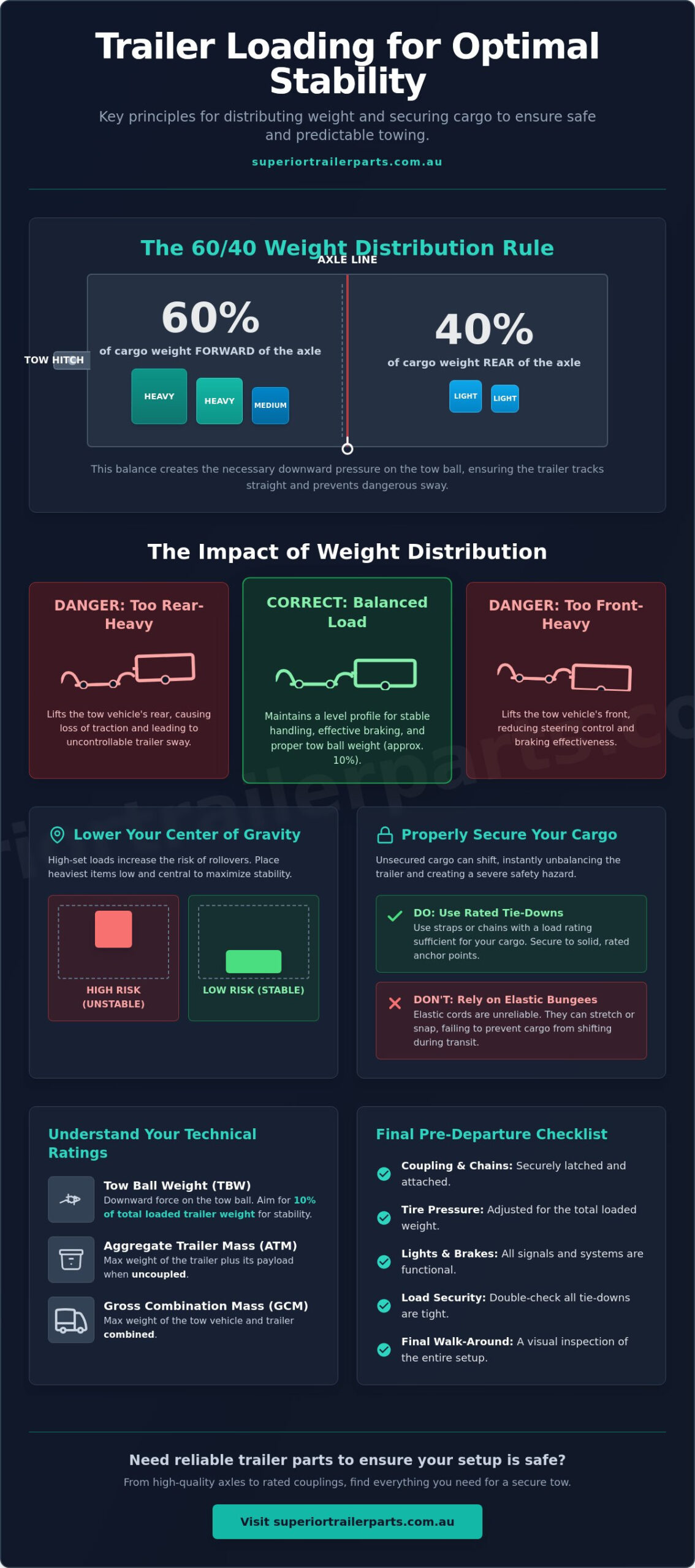
Effective loading is a precise calculation. To ensure stability, apply the 60/40 rule. Place 60 percent of your cargo’s weight in the front half of the trailer, forward of the axle. The remaining 40 percent sits in the rear. This distribution creates the necessary downward pressure on the tow ball. It prevents the trailer from acting like a see-saw, which is vital when operating box trailers on uneven surfaces. This ratio keeps the center of mass ahead of the pivot point, ensuring the trailer tracks straight behind your vehicle.
Front-loading requires caution. While some weight is necessary, excessive front-loading is dangerous. It forces the rear of the tow vehicle down and pivots the front wheels upward. This reduces the contact patch of your steering tires. Your steering feels vague and your braking performance drops significantly. Conversely, rear-loading is a recipe for disaster. It lifts the back wheels of the tow vehicle, stripping away traction. Without weight on the rear tires, the vehicle cannot effectively transfer power or maintain control during a skid. Learning how to pack a trailer for safe towing means finding the balance between these two extremes.
Calculating Tow Ball Weight
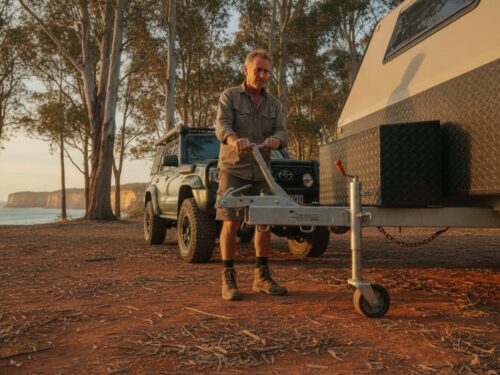
Tow Ball Weight (TBW) is the actual weight the trailer coupling exerts on the tow ball. Aim for a TBW that is roughly 10 percent of your total loaded trailer weight. For light trailers, you can measure this using a standard bathroom scale and a sturdy piece of timber. Simply place the scale under the jockey wheel or a support post to find the downward force. Proper TBW ensures your rear suspension compresses evenly without bottoming out. If your vehicle sags too much, consider a weight distribution hitch to level the load and restore steering geometry.
Understanding ATM and GCM
Technical ratings are legal limits, not suggestions. Aggregate Trailer Mass (ATM) is the total weight of the trailer plus its full payload when uncoupled. Gross Combination Mass (GCM) is the maximum weight of the car and trailer together. Exceeding the ATM is a major cause of couplings and parts failure. Overloaded hardware will fatigue and eventually snap under the stress of highway speeds. Always check your vehicle’s compliance plate and trailer data plate before loading. Keeping your total mass within these limits protects your equipment and ensures your insurance remains valid.
Securing Your Cargo for Australian Road Conditions
Australian roads are unforgiving. Corrugations, potholes, and sudden braking events test every connection point on your trailer. Relying on the weight of the cargo to keep it in place is a mistake. Friction alone will not prevent a load from shifting during an emergency maneuver. You must use mechanical restraint. This is a core part of how to pack a trailer for safe towing. If a load shifts, your center of gravity changes instantly, often leading to uncontrollable sway.
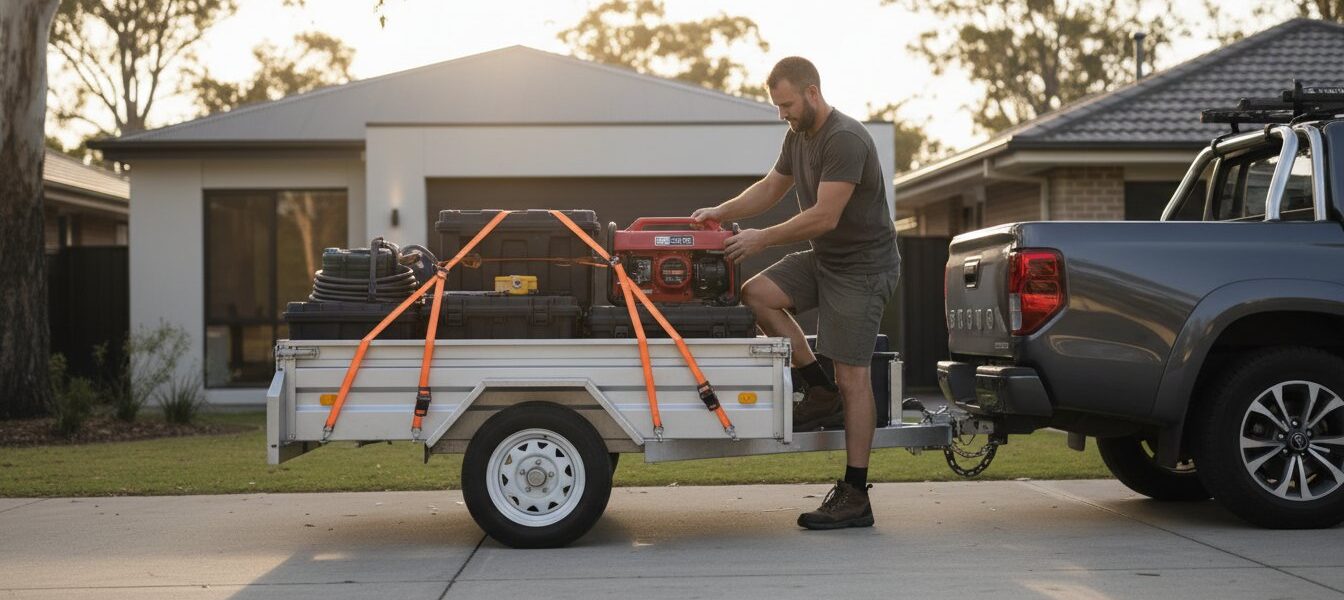
Load restraint must meet specific force requirements to be effective. Your tie-downs must withstand 80 percent of the load’s weight in a forward direction to handle heavy braking. They must also manage 50 percent of the weight in rearward and sideways directions, plus 20 percent upward for vertical bumps. Using elastic bungees is insufficient for these forces. Bungees are designed for light tarpaulins, not heavy cargo. Always use rated ratchet straps that match or exceed the mass of the item you are securing.
The structural integrity of the trailer itself is equally important. Heavy loads put immense stress on the chassis and suspension components. Critical parts like u-bolts must be tightened to specification and inspected for fatigue regularly. If your u-bolts are stretched or corroded, the axle can shift under the load. This movement renders even the most perfectly secured cargo unstable and dangerous. Maintain your hardware to ensure the trailer remains a rigid, reliable platform.
Tie-Down Techniques and Hardware
Secure your cargo with precision. For tall or bulky items, use an ‘X’ pattern with your straps. This technique prevents lateral movement and keeps the item centered over the axle. Ensure your anchor points are bolted directly to the trailer frame. Anchor points fastened only to thin floorboards will pull through under high tension during a collision or sharp turn. Always check your straps for frays or UV damage before every trip. A single compromised strap can cause a total load failure at highway speeds.
Utilising Toolboxes for Weight Management
Organisation aids stability. Small, heavy items like shackles, jacks, and spare parts should never be left loose in the trailer bed. Place these items in mounted toolboxes located at the front of the trailer. This placement supports the 60/40 weight distribution rule by keeping dense weight forward of the axle. A secure toolbox prevents heavy objects from sliding and changing your trailer’s balance mid-journey. Secure loose items within the toolbox using foam inserts or internal dividers to keep the weight static and silent.
Packing Strategies for Different Trailer Types
Every trailer chassis has specific loading requirements. A single-axle box trailer is highly sensitive to small weight shifts. A tandem-axle trailer provides more stability but demands level loading to prevent mechanical fatigue. Learning how to pack a trailer for safe towing requires understanding these mechanical differences. If you treat a tandem-axle trailer like a single-axle unit, you risk uneven component wear and poor handling.
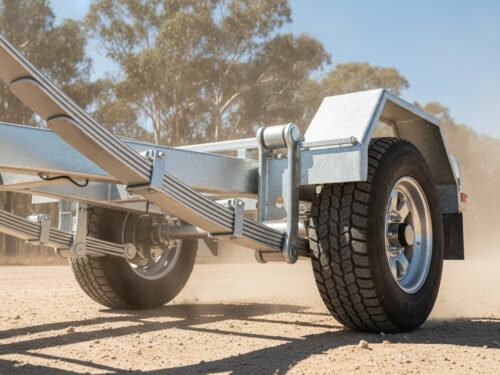
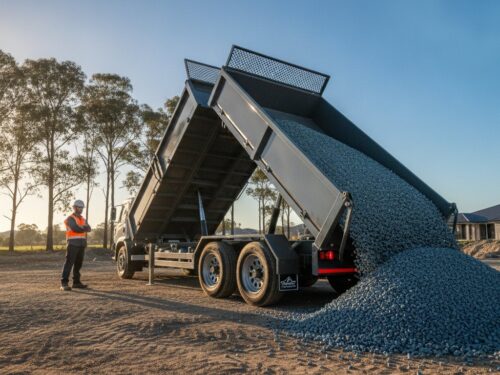
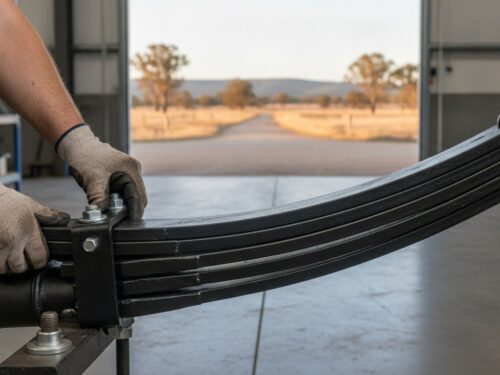
When you load a tandem-axle trailer, the goal is to keep the frame parallel to the road. If the trailer nose is too high, the rear axle carries the bulk of the weight. This causes the tires to scrub or drag sideways during turns, leading to rapid tread wear. It also risks snapping a leaf spring on the overloaded axle. For hydraulic tipper trailers, you must resist the urge to pack weight at the rear for easier dumping. Keep the heaviest materials, such as gravel or soil, centered over the axles. This ensures the hydraulic ram operates within its design limits and the trailer remains stable at highway speeds.
Box and Tandem Axle Trailers
Spread high-volume loads like mulch or green waste evenly. This prevents the trailer from leaning and overloading one side of your suspension. If your trailer is only half full, use internal dividers. Shifting loads are a primary cause of sudden sway. Place the densest items directly over or slightly ahead of the axles to maintain the 60/40 balance. Mastering how to pack a trailer for safe towing involves adapting your technique to the specific trailer frame you are using.
Marine and Jet Ski Trailer Balance
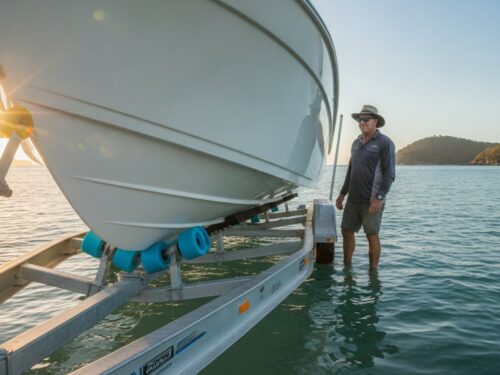
Marine loads present a moving target. Unlike static cargo, boats have fuel and water tanks that change the center of gravity as they empty. Use the winch post to position the hull so the majority of the engine weight is supported by the trailer frame, not the hitch. For jet ski trailers, the heavy engine is located at the rear of the craft. You must winch the ski far enough forward to achieve proper tow ball weight. Check your boat trailer parts, specifically the rollers and skids, to ensure they are adjusted to support the hull’s strongest points.
If you are building or maintaining a specialty trailer, browse our range of high-performance trailer parts to ensure your setup is road-ready.
Pre-Departure Checks and Hardware Maintenance
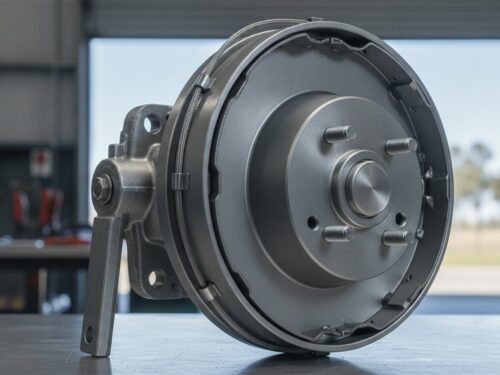
Final checks are non-negotiable. Even when you know how to pack a trailer for safe towing, a mechanical failure at the hitch or axle can be catastrophic. Before you pull out of the driveway, perform a comprehensive walk-around. Your load is now static; your job is to ensure it stays that way under the vibration and stress of the road. Test your brakes for immediate responsiveness. If you feel the trailer pushing the vehicle or grabbing unevenly, stop and inspect the system before hitting highway speeds.
Coupling and Safety Chain Inspection
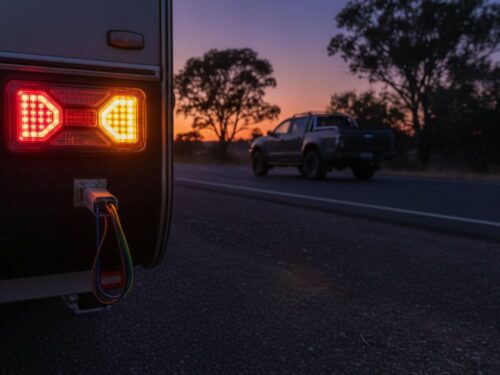
Your coupling is the only thing keeping your trailer attached to your vehicle. Ensure the housing is fully seated and the locking mechanism is engaged on the tow ball. Safety chains provide a vital backup. Cross the chains under the drawbar to create a cradle. If the coupling detaches, this cradle will catch the drawbar and prevent it from digging into the road surface. Finish by checking the trailer plug. Verify that all LED submersible tail lights and indicators are functioning correctly to remain visible to other road users.
The Role of Suspension and Axles in Safety
Suspension components tell the story of your load’s health. Look for flattened leaf springs. This is a clear visual indicator of an overloaded or poorly balanced trailer. Inspect the area around the hub seals for grease leaks. Wetness on the inside of the wheel often signals a failing bearing that could lead to total axles failure mid-journey. If your load is correctly balanced but your vehicle still sags, a weight distribution hitch can help level the combination and restore steering geometry. Maintaining these hard-working parts ensures your trailer remains a reliable tool rather than a liability.
Maintain Stability on Every Journey
Mastering how to pack a trailer for safe towing is a matter of physics and discipline. You now understand that a low center of gravity and the 60/40 weight distribution rule are essential for preventing dangerous sway. Proper load restraint using rated mechanical tie-downs ensures your cargo remains static, even on harsh Australian roads. These steps protect your vehicle, your trailer, and other road users. Consistency in your pre-departure checks will prevent mechanical failures before they start.
Reliability starts with the right hardware. We’re an Australian-owned and operated business specializing in heavy-duty trailer components built for local conditions. From axles and springs to couplings and brakes, we provide the durability you need for a safe haul. Ensure your trailer is road-ready with high-quality parts from Superior Trailer Parts. We offer nationwide shipping across Australia to get you back on the road quickly. Safe towing is a skill that pays off every time you reach your destination. Check your gear, balance your load, and drive with confidence.
Frequently Asked Questions
What is the 60/40 rule for trailer loading?
The 60/40 rule requires placing 60 percent of the cargo weight in the front half of the trailer and 40 percent in the rear. This specific ratio keeps the center of mass ahead of the axle and provides the necessary downward force on the hitch. It is a vital technique for how to pack a trailer for safe towing. This distribution prevents the trailer from acting like a pendulum, which is the primary cause of highway sway.
How do I know if my trailer is too heavy for my car?
Identify your vehicle’s towing capacity by checking the compliance plate located in the door jam or the owner’s manual. You must compare this figure to the trailer’s Aggregate Trailer Mass (ATM). If the loaded trailer weighs more than the car’s rated limit, the setup is unsafe. Overloading puts excessive stress on your transmission and significantly increases your braking distance. Never exceed the lower of the two ratings.
What happens if I put too much weight at the back of the trailer?
Excessive weight at the back of the trailer causes the rear to oscillate, leading to dangerous trailer sway. This imbalance acts as a lever that lifts the back of the tow vehicle. It reduces traction on your rear tires and can make steering unpredictable. At highway speeds, this often results in a total loss of control. Always prioritize placing heavier items toward the front to maintain a stable connection.
How tight should my ratchet straps be when securing a load?
Ratchet straps should be tight enough to eliminate all movement and slightly compress the cargo’s suspension or padding. You don’t want the straps to be loose enough to vibrate, but you must avoid bending the trailer’s rails. Check the tension by pulling on the webbing; it should feel rigid. Always re-tighten your straps after a few kilometers of driving because loads often settle and create slack during transit.
Do I need a weight distribution hitch for a box trailer?
Most small box trailers don’t require a weight distribution hitch if they are loaded correctly. However, you need one if a heavy load causes the rear of your vehicle to sag. This hitch redistributes the tow ball weight across the vehicle’s front and rear axles. It levels the combination and restores steering control. Use one for tandem-axle trailers or when the tow ball weight exceeds 10 percent of the total mass.
How often should I check my trailer load during a long trip?
Inspect your load after the first 50 kilometers and then at every subsequent stop. Road vibrations and wind resistance can cause straps to stretch or items to shift. A quick walk-around ensures the coupling is still locked and the safety chains are secure. Checking your gear frequently is an essential habit for how to pack a trailer for safe towing over long distances. It prevents small issues from becoming road hazards.
Can I use a rope to tie down a heavy load on a trailer?
You shouldn’t use rope to secure heavy loads because it lacks a certified load rating and stretches under tension. Rope can also fray quickly when it rubs against the trailer’s metal edges. Use rated ratchet straps or transport chains instead. These tools are designed to withstand specific forces and provide a mechanical lock that won’t slip. Rated straps ensure your cargo stays fixed during sudden stops or sharp turns.
Is it better to have more weight on the tow ball or less?
Aim for a positive downward weight that is roughly 10 percent of the total trailer mass. Too little weight on the tow ball causes the trailer to wander and sway. Conversely, too much weight overloads your car’s rear suspension and lifts the front tires off the road. This reduces your ability to steer and brake effectively. Finding the middle ground keeps the combination level and ensures predictable handling at all speeds.