Saving money on your trailer setup is a poor trade if it results in a non-compliant rig that fails a roadside inspection or fails on the highway. You likely understand that staying within the 2,000kg GTM limit is critical for safety, yet the decision regarding mechanical vs electric trailer brakes remains a source of constant technical confusion. It’s frustrating to deal with jerky braking or the uncertainty of whether your vehicle requires an expensive car-side controller installation.
Cut through the jargon to find a durable braking solution that suits Australian road conditions. Understand the exact legal requirements under the Australian Design Rules (ADR) and the performance factors that dictate which system provides the best longevity for your gear. This comparison covers maintenance schedules, installation complexity, and the specific hardware required to keep your trailer safe and compliant on every trip.
Key Takeaways
- Understand Australian GTM standards and the 750kg threshold to ensure your heavy-duty trailer remains legal and compliant.
- Evaluate the simplicity of mechanical overrun systems and how dampeners reduce jerky movement during deceleration.
- Compare mechanical vs electric trailer brakes to determine which system offers the precision and control required for larger loads.
- Identify essential maintenance tasks, from cable adjustments to magnet inspections, to guarantee long-term hardware reliability.
- Follow a practical selection process to assess your vehicle’s towing capacity and choose the right braking hardware for your setup.
Australian Trailer Braking Standards and Legal Requirements
Towing in Australia requires strict adherence to the Vehicle Standards Bulletin 1 (VSB1). The primary metric for compliance is Gross Trailer Mass (GTM). This represents the weight transmitted to the ground by the trailer tyres when it’s hitched to a towing vehicle and loaded to capacity. Understanding GTM is vital because it dictates which braking hardware you must install to remain road legal.
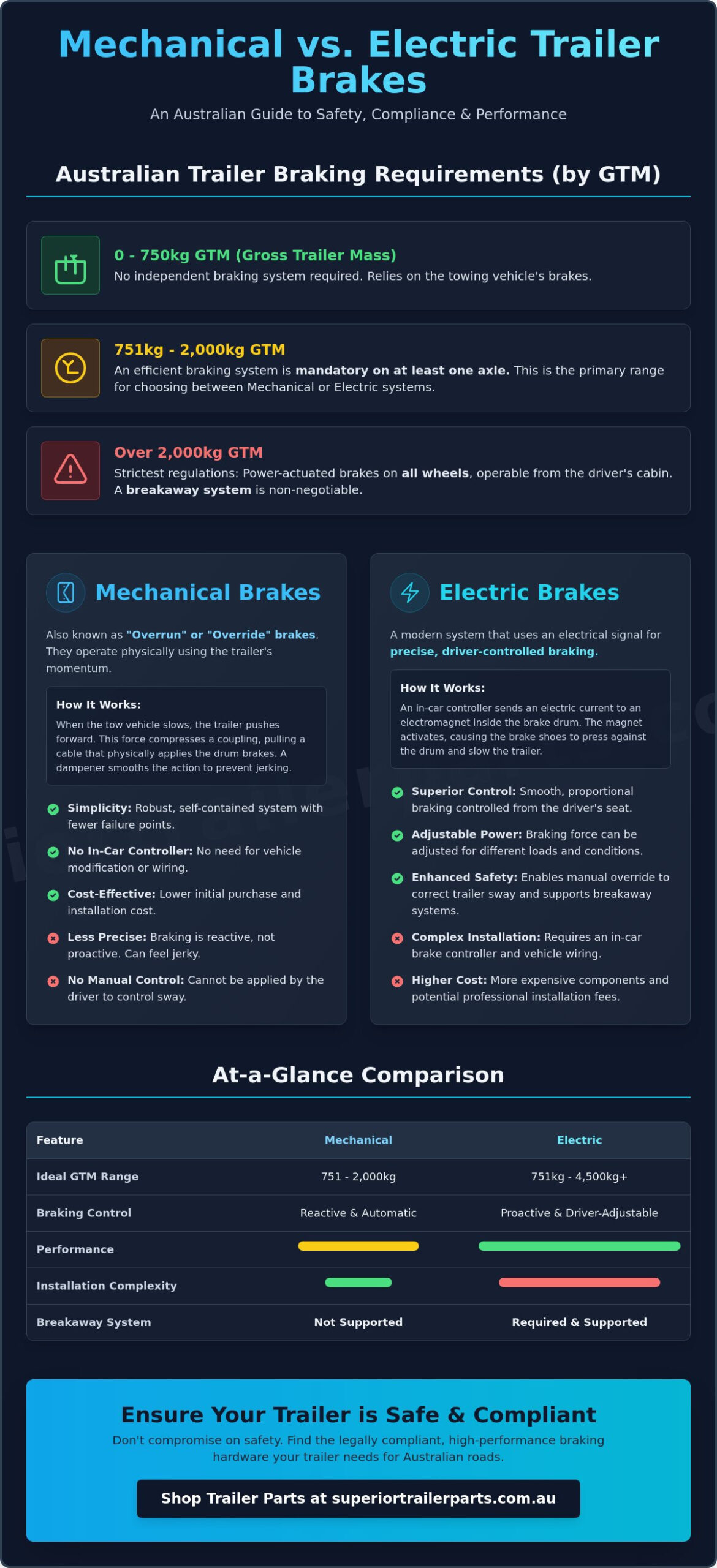
Trailers with a GTM of 750kg or less don’t require an independent braking system. These unbraked units rely entirely on the towing vehicle’s brakes for stopping power. Once a trailer exceeds the 750kg threshold, Australian law requires an efficient braking system on at least one axle. For trailers between 750kg and 2,000kg GTM, owners often weigh up the pros and cons of mechanical vs electric trailer brakes. Mechanical override systems are a common choice for smaller heavy-duty single axle box trailers because they’re cost-effective and don’t require an in-car controller. However, they lack the precision and driver-controlled modulation found in electric setups.
Trailers exceeding 2,000kg GTM face much stricter regulations. These heavy-duty trailers must have brakes on all wheels. The system must be power-actuated and allow the driver to operate the brakes directly from the cabin. Most Australian operators utilise an Electric friction brake system to meet these standards. This allows for manual override from the driver’s seat, which is essential for correcting trailer sway or managing momentum on steep descents.
Understanding ADR 38/05 and Trailer Compliance
Australian Design Rule (ADR) 38/05 sets the technical foundation for trailer braking performance. Every trailer must feature a metal compliance plate that clearly lists its GTM and Aggregate Trailer Mass (ATM). If your trailer’s weight exceeds the rating on this plate, it is legally unroadworthy. Safety chains are also a mandatory part of trailer compliance. Trailers under 2,500kg GTM require at least one rated chain, while those over 2,500kg must have two. Always ensure your couplings and parts are rated to match the trailer’s maximum capacity.
Breakaway Systems for Heavy-Duty Trailers
A breakaway system is a non-negotiable legal requirement for any trailer over 2,000kg GTM. This safety device acts as a final fail-safe. If the trailer becomes detached from the vehicle while in motion, the breakaway system automatically engages the trailer brakes and holds them for a minimum of 15 minutes. Electric brakes facilitate this through an on-board battery kit. Mechanical systems cannot satisfy this requirement on their own. You must perform regular battery maintenance to ensure the system is functional. A flat or faulty breakaway battery renders your trailer non-compliant and puts other road users at risk.
Mechanical Overrun Braking Systems: Simplicity and Utility
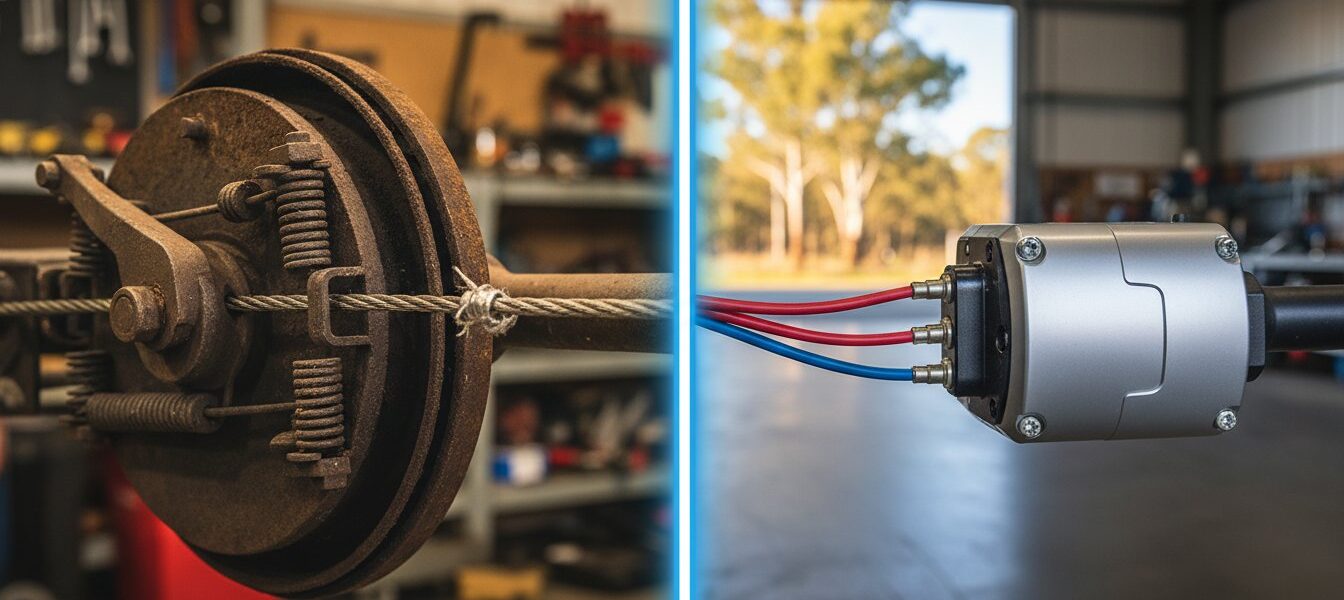
Mechanical overrun brakes, often called over-ride brakes, operate on a basic physical principle. When the tow vehicle decelerates, the momentum of the trailer pushes against the tow ball. This force compresses a sliding shaft within the coupling, which pulls a mechanical cable or activates a lever to apply the trailer brakes. It’s a self-contained system that requires no electrical connection to the vehicle’s braking circuit. This makes it a highly reliable choice for trailers with a Gross Trailer Mass (GTM) between 750kg and 2,000kg.
The hydraulic dampener is a vital component in this assembly. It regulates the sliding movement to prevent the trailer from “shunting” or jerking against the tow bar. Without a functional dampener, the braking action feels aggressive and unpredictable. While these systems are perfect for light-duty box trailers and marine applications, they have clear limits. In heavy-duty or off-road scenarios, the inability to manually trigger the brakes from the cab is a disadvantage. When evaluating mechanical vs electric trailer brakes, remember that mechanical systems rely entirely on the tow vehicle’s deceleration to function.
Compliance is straightforward with these systems. Under the Australian Design Rule 38/05, trailers within the specified weight range must maintain effective braking performance. Mechanical overrun systems meet these requirements without the need for expensive in-car controllers or complex wiring harnesses.
9 Inch Mechanical Drum Brakes: The Industry Standard
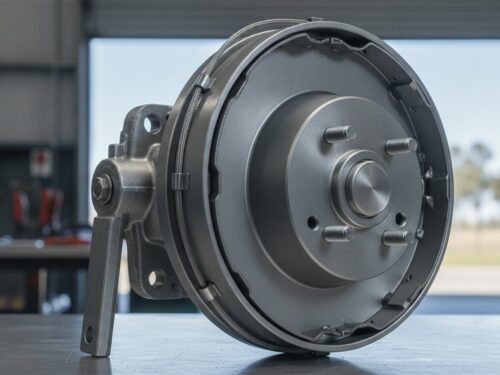
The 9 inch mechanical drum brake is the backbone of the Australian trailer industry. This assembly uses a simple internal lever to push the brake shoes against the drum. Cable tension is the most critical factor for performance. Loose cables lead to delayed braking, while over-tightened cables cause the shoes to drag and glaze. While mechanical discs are popular for boat trailers due to easier cleaning, drums provide superior surface area for handbrake engagement. This makes drums the preferred choice for trailers parked on inclines.
Selecting the Right Over-ride Coupling
Choosing between 4 hole over-ride couplings and fixed hitches depends entirely on your trailer’s GTM. An over-ride coupling uses a spring-loaded drawbar to activate the brake cable. Maintenance is simple but essential. Grease the grease nipples on the sliding head every 5,000 kilometres to ensure smooth operation. Check the adjustment bolt regularly to take up any slack in the cable. For those building a new setup, our heavy-duty single axle box trailers come standard with high-quality mechanical components built for Australian conditions.
Electric Trailer Brakes: Precision and Heavy-Duty Control
Electric systems provide superior stopping power for heavy loads. Unlike cable-operated systems, electric brakes use an electromagnet mounted on an actuating arm inside the drum. When you apply the tow vehicle’s brakes, an electrical current flows to this magnet. The magnet energises and grabs the rotating inner face of the brake drum. This movement pulls the lever and forces the brake shoes outward to create friction. It’s a reliable, high-performance method for managing significant momentum on the road.
You must install an in-car electronic brake controller to operate these units. This device regulates the specific voltage sent to the trailer magnets. When comparing mechanical vs electric trailer brakes, the electric option offers unmatched adjustability. Drivers can fine-tune the braking intensity from the dashboard to suit the trailer’s current weight. Modern proportional controllers use internal accelerometers to detect how fast the tow vehicle is slowing down. They apply a matching amount of pressure to the trailer brakes instantly. This results in smooth, synchronized deceleration and prevents the trailer from pushing the car during sudden stops. This level of control is a hallmark of various types of trailer brakes used in heavy-duty applications.
The manual override feature is a critical safety tool for any driver. If the trailer begins to sway due to wind or road conditions, you can apply the trailer brakes independently using a lever or button on the controller. This action creates tension that pulls the trailer back into a straight line behind the vehicle without needing to brake the tow vehicle itself.
10 Inch Electric Drum Brakes for Tandem Axles
In Australia, trailers with a Gross Trailer Mass (GTM) exceeding 2,000kg require brakes on all wheels. High-quality 10 inch electric drum brakes are the standard choice for these heavy-duty setups. They offer the surface area and heat dissipation needed for long descents. These units are built for direct compatibility with 45mm and 50mm square axles, which are the backbone of most tandem axle car trailers and horse floats. You must use thick-gauge wiring for the installation. Thin wires cause voltage drops, which weaken the magnet pull and reduce your overall braking force.
Brake Controllers and Tow Vehicle Integration
The trailer plug acts as the vital communication link between your vehicle and the braking system. Proportional systems are the preferred choice for most owners because they provide a variable response based on your actual braking force. Time-delayed systems are an alternative, but they apply a pre-set amount of power after a short lag, which can feel jerky under light braking.
Troubleshooting often points to grounding issues. The white wire in the trailer plug must have a clean, solid connection to the chassis to complete the circuit. If your brakes feel weak or work intermittently, check for corrosion in the plug terminals or frayed wires near the axle. Maintaining these electrical connections is essential for safety when weighing up mechanical vs electric trailer brakes for long-distance hauling. Consistent voltage ensures the magnets perform exactly as expected every time you hit the pedal.
Comparison: Performance, Maintenance, and Long-Term Reliability
Choosing between mechanical vs electric trailer brakes involves evaluating stopping power and control across different terrains. Mechanical systems rely on the trailer’s momentum to compress a sliding coupling. This creates a slight lag and can feel reactive rather than proactive. Electric systems use an electromagnet to engage the shoes instantly. This signal comes from the tow vehicle’s brake controller. On steep descents through the Great Dividing Range, electric brakes allow you to manually adjust the bias. This prevents the trailer from pushing the vehicle on slippery or loose surfaces.
Maintenance requirements differ between the two systems. Mechanical brakes use galvanised cables that require regular tensioning. You should inspect these cables every 5,000 kilometres to ensure they haven’t stretched. The debate between mechanical vs electric trailer brakes often centres on this upkeep. Electric brakes don’t have cables to snap, but you must check the magnets and wiring. Australian heat can make wire insulation brittle over time. Dust ingress from unsealed roads also impacts both systems. You must clean and lubricate mechanical pivot points to prevent seizing in harsh Outback conditions.
Braking Feel and Towing Comfort
Mechanical couplings are known for a distinct “clunk” in stop-start traffic. This noise occurs as the sliding shaft moves to engage the brakes. It can be jarring for passengers and adds stress to the tow hitch. Electric brakes provide a much smoother experience. They distribute braking force evenly across tandem axle setups. This balanced approach prevents “shunting” and reduces uneven tyre wear on the tow vehicle. You get a more controlled, stable feel at highway speeds.
Durability in Marine and Off-Road Environments
Mechanical brakes often struggle with corrosion in boat trailer applications. Saltwater gets trapped inside cable housings and return springs. Even galvanised components will eventually seize if you don’t flush them thoroughly after every ramp launch. Sealed electric assemblies protect the magnets from some debris, but they aren’t designed for constant submersion. For salt water applications, hydraulic disc brake kits provide the best resistance to corrosion and eliminate the need for vulnerable cables or magnets.
Contact our team for expert advice on selecting the right braking components for your trailer.
Selecting the Best Braking Hardware for Your Trailer
Choosing between mechanical vs electric trailer brakes depends on your specific hauling requirements and Australian legal standards. Follow this four-step process to secure the right hardware for your build.
- Step 1: Determine your GTM. In Australia, trailers with a Gross Trailer Mass (GTM) over 750kg must have brakes. If your GTM exceeds 2,000kg, you are legally required to have brakes on all wheels and a breakaway system. This usually necessitates an electric setup.
- Step 2: Check your tow vehicle. Electric brakes require an in-car controller to function. If your vehicle isn’t equipped with one, mechanical override brakes offer a cost-effective solution for trailers under the 2,000kg threshold.
- Step 3: Select hardware based on load. Standard 9-inch mechanical brakes are reliable for light to medium loads. Heavier applications benefit from 10-inch electric brakes because they offer better heat dissipation and stopping power.
- Step 4: Match your components. Your braking system must align with your axle profile. Always use high-quality U-bolt kits to ensure the entire assembly remains fixed under heavy stress.
Building for Longevity with Quality Components
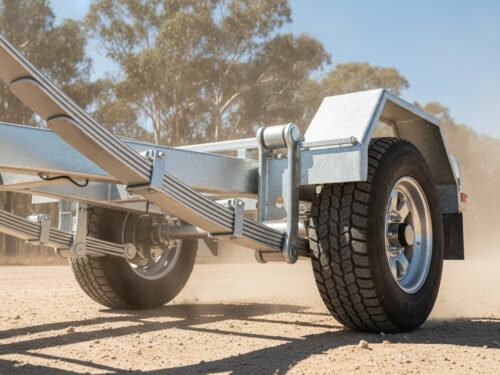
Durability starts with genuine, Australian-tested trailer parts designed for our harsh road conditions. Don’t wait for a failure to inspect your hardware. Check your brake shoes for thinning linings and inspect electric magnets for signs of uneven wear or scoring. If the magnet face is no longer flat, it’s time for a replacement. Your suspension system also plays a critical role. Ensure your leaf springs are rated to match your braking capacity. A mismatched suspension causes the trailer to bounce; this leads to inconsistent braking performance and increased wear on your tyres.
Expert Advice for Your Next Trailer Project
Superior Trailer Parts provides heavy-duty components for DIY builders and commercial fleet managers across the country. We understand the technical demands of mechanical vs electric trailer brakes and stock the gear you need to stay on the road. We offer fast, Australia-wide shipping on all essential hardware. Whether you’re building a new box trailer or refurbishing a tandem axle setup, we have the stock available now. Contact our team for expert advice on your braking setup to ensure your project meets all safety standards.
Secure Your Load with the Right Braking Setup
Choosing between mechanical vs electric trailer brakes depends on your Gross Trailer Mass (GTM) and towing requirements. ADR regulations mandate functional brakes for any trailer exceeding 750kg GTM. Mechanical overrun systems offer a simple, reliable solution for trailers up to 2,000kg. If your load exceeds the 2,000kg limit, ADR 38/05 requires brakes on all wheels and an independent breakaway system. This makes electric brakes the industry standard for heavy-duty control and legal compliance.
Superior Trailer Parts is an Australian Owned and Operated specialist. We supply genuine, galvanised components designed for harsh environments. Our team provides expert technical support to ensure your trailer meets ADR compliance standards. We offer nationwide shipping on all components to keep your project moving forward. Get the right hardware to keep your equipment safe on the road.
Browse our range of heavy-duty trailer braking systems
Frequently Asked Questions
Is a brake controller required for all trailers with electric brakes?
Yes, you must install an in-car electric brake controller to operate any trailer fitted with electric brakes. This device regulates the power sent to the trailer magnets when you hit the brake pedal. Without a controller, the trailer brakes won’t engage. Australian regulations require this setup to ensure the vehicle and trailer stop as a single unit. It provides the driver with manual override capability for emergency situations.
What is the maximum weight a trailer can be without any brakes in Australia?
Trailers in Australia can have a maximum Gross Trailer Mass (GTM) of 750kg before brakes become a legal requirement. This limit is defined under the Vehicle Standards Bulletin 1 (VSB1) regulations. If your loaded trailer exceeds 750kg, you must install an efficient braking system. Most single-axle box trailers fall under this limit, but always check your compliance plate to ensure you stay within legal safety margins and avoid heavy fines.
Can I convert my existing mechanical brakes to an electric system?
You can convert your mechanical overrun brakes to an electric system by replacing the backing plates and drums. This upgrade often requires new hubs and a 12V wiring loom to power the magnets. When comparing mechanical vs electric trailer brakes for a conversion, remember that electric systems offer more refined control from the driver seat. Our range of heavy-duty electric brake kits makes this a straightforward DIY project for most trailer owners.
Are mechanical overrun brakes better for boat trailers than electric ones?
Mechanical overrun brakes are generally superior for boat trailers because they lack sensitive electrical components that fail in salt water. Submerging electric magnets leads to rapid corrosion and short circuits. Using a galvanised mechanical setup ensures longevity and reliable performance at the boat ramp. For trailers over 2,000kg GTM, you’ll need to consider electric-hydraulic systems to meet Australian safety standards. This allows you to maintain marine-grade durability while satisfying heavy-duty braking requirements.
How often should I adjust the cables on my mechanical braking system?
Adjust your mechanical brake cables every 5,000 kilometres or every 6 months to compensate for cable stretch and shoe wear. Mechanical systems rely on physical tension, so loose cables will significantly reduce your stopping power. Check the adjustment nut at the base of the coupling to ensure there’s no excessive slack. Regular maintenance prevents the brakes from dragging or failing to engage during heavy braking events on Australian roads.
Why do electric brakes sometimes hum when the vehicle is stationary?
A humming sound from your electric brakes usually indicates that the brake controller is sending a small electrical current to the magnets. This often happens when the brake pedal is depressed while stationary or if the controller has a diagnostic feature. It’s a normal operational sound for many heavy-duty systems. If the humming is constant without the pedal being pushed, check your wiring for a potential short circuit or a faulty brake controller unit.
What is the difference between 9-inch and 10-inch trailer brake drums?
The main difference between these sizes is the braking surface area and the load rating of the axle. Most mechanical overrun systems use 9-inch drums, while 10-inch drums are the standard for electric brakes rated up to 1,600kg per axle. Choosing the right size is critical for fitment with your specific backing plates and wheel rims. The 10-inch drums provide greater heat dissipation, which is vital for heavy-duty towing applications.
Do I need a breakaway system if I have mechanical brakes?
You don’t need a breakaway system for mechanical brakes because these systems are limited to trailers under 2,000kg GTM. Australian law only mandates breakaway systems for trailers with a GTM exceeding 2,000kg. Since mechanical overrun systems cannot legally exceed this weight limit, a breakaway kit isn’t required. Always ensure your safety chains are in good condition to provide a secondary connection between the vehicle and trailer in case of a coupling failure.