A seized bearing isn’t bad luck; it’s the predictable result of thermal and chemical stress. You’ve likely felt that spike of anxiety while checking your hubs during a roadside stop in a remote area. The prospect of a bearing failure and the high cost of axle repairs is enough to keep any driver on edge. Understanding what causes trailer wheel bearing failure is the first step toward preventing a total axle seizure and ensuring your equipment stays in service.
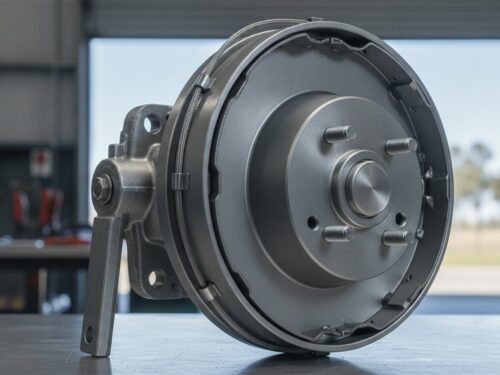
We’ll identify the primary stressors and maintenance oversights that lead to failure so your trailer remains safe and operational on Australian roads. You’ll learn about the specific environmental triggers that compromise grease, the physics of mechanical breakdown, and how to select higher-quality replacement parts. We’ll also examine how documented safety management systems help you stay compliant with current regulations and avoid the mechanical downtime that stalls your productivity. Proper maintenance isn’t just about safety; it’s about protecting your investment in hardware like 50mm square axles and electric drum brakes.
Key Takeaways
- Understand how inner and outer races interact to manage the heavy radial and axial loads placed on your trailer axles.
- Identify how water ingress and fine grit create an abrasive paste, which is a primary factor in what causes trailer wheel bearing failure.
- Learn the mechanical risks of improper castle nut torque and how overloading causes permanent “brinelling” on precision surfaces.
- Master the “hand-on-hub” test and listen for specific growling noises to detect early warning signs before a bearing seizes.
- Implement a proactive 10,000km maintenance schedule and use components like pressurized hub caps to ensure long-term equipment durability.
Mechanical Fundamentals of Trailer Wheel Bearing Failure
A trailer wheel bearing isn’t just a simple ring of steel; it’s a precision-engineered assembly. Its primary job is to manage two distinct types of stress: radial loads, which is the vertical weight of your cargo, and axial loads, which are the side-to-side forces generated during turns. In the transport industry, Tapered roller bearings are the standard because they handle these combined forces more effectively than standard ball bearings. The assembly consists of an inner race, an outer race, and a set of rollers held in a cage. When these components work correctly, friction is minimal and rotation is seamless.
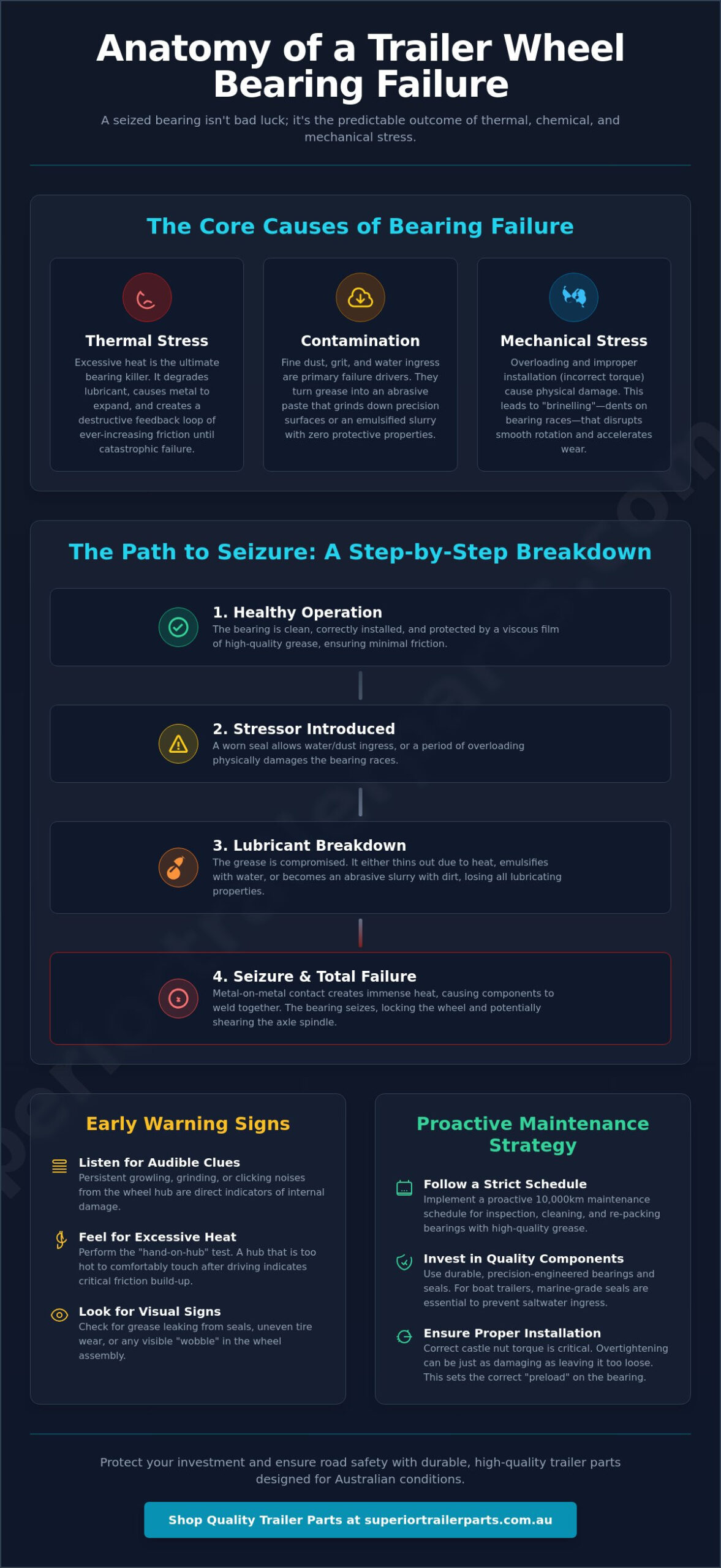
Mechanical failure begins when the heat generated by friction exceeds the thermal capacity of your lubricant. This breakdown is the fundamental answer to what causes trailer wheel bearing failure. Once the grease loses its viscosity or burns away, the metal surfaces make direct contact. This creates a destructive cycle where friction increases heat, and heat further destroys the remaining lubricant.
The Role of the Bearing in Trailer Dynamics
Bearings serve as the critical bridge between your stationary axles and the rotating wheels. They transfer the static weight of the trailer through the hub assembly while allowing for high-speed rotation. The hub acts as a protective housing, keeping grease in and keeping road contaminants out. To function properly, the assembly requires specific tension. Bearing preload is the controlled application of axial force to ensure the rollers maintain constant contact with the races, preventing vibration and uneven wear. Without this stability, the rollers will bounce within the cage, causing rapid structural fatigue and eventual failure.
Why Heat is the Ultimate Bearing Killer
Heat is the primary catalyst for mechanical destruction. As a bearing operates, friction naturally generates warmth. If the grease is contaminated or insufficient, this heat causes the metal components to expand at different rates. This expansion reduces the internal clearances, creating even more friction in a feedback loop. Eventually, the lubricant thins or carbonizes, leading to metal-on-metal contact.
At this stage, the bearing reaches the “point of no return.” The steel becomes so hot it begins to soften or “weld” itself to the races. This is a seizure event. A seized bearing can shear the spindle or lock the wheel entirely, leading to dangerous roadside breakdowns. Understanding these mechanical limits is essential for anyone running heavy loads on 45mm or 50mm square axles. Preventing failure requires high-quality grease and a professional approach to installation and maintenance.
Contamination and Lubrication Breakdown in Australian Conditions
Australia’s environment is notoriously aggressive toward mechanical systems. While mechanical stress plays a role, environmental contamination is a primary driver in what causes trailer wheel bearing failure. Fine red dust and moisture don’t just sit on the surface; they penetrate the hub and transform your lubricant into a destructive slurry. This contamination quickly negates the precision engineering of your bearing assembly.
When water enters the hub, it causes the grease to emulsify. This process turns the lubricant into a milky substance that cannot maintain a protective film between the rollers and races. In the outback, fine dust and grit act as an abrasive paste. This mixture grinds away at the metal surfaces, leading to rapid pitting and heat build-up. The grease fails. The metal grinds. Failure follows.
High ambient temperatures in Australia pose a unique challenge often overlooked in standard maintenance. Standard greases have a specific drop point where the oil separates from the thickener. In extreme heat, the grease’s viscosity drops significantly. It becomes too thin to stay packed within the bearing cage. This leads to bleeding, where the oil leaks out of the seals and leaves behind a dry, useless soap base that offers zero protection.
Water Ingress and the Saltwater Factor
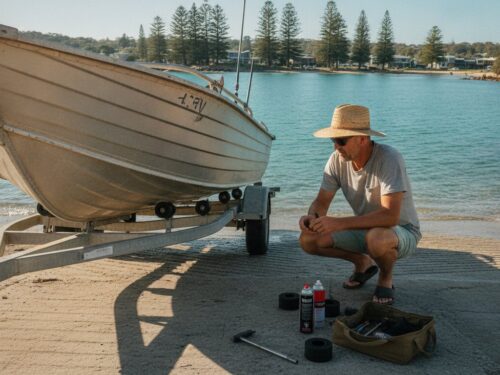
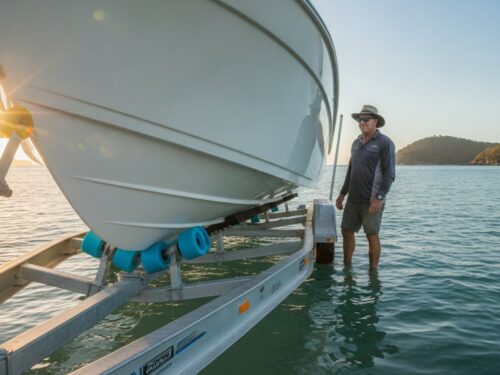
The saltwater vacuum is a common failure point for boat owners. After a long drive, your hubs are hot. Backing them into cold water creates an immediate pressure drop inside the hub. This vacuum sucks water directly past standard seals. Once inside, saltwater triggers a rapid chemical reaction. It causes oxidation and rust on the steel races almost immediately. To combat this, you need specialized boat trailer parts, such as marine-grade seals, designed to withstand these pressure changes and keep the core dry.
Lubricant Degradation and Grease Selection
Choosing the right grease is critical for longevity. Lithium-complex greases are excellent for high-temperature road use, but marine-grade greases offer better water resistance. Never mix different grease types. Incompatible thickeners can react chemically, causing the grease to harden or liquefy completely. Look for signs of carbonisation. This appears as black, burnt-smelling flakes, indicating the grease has reached its thermal limit. If you find your hubs are running hot or the grease looks milky, it is time to inspect your axles and seals before a total failure occurs.
Installation Errors and the Impact of Overloading
Human error during assembly is a frequent contributor to what causes trailer wheel bearing failure. Precision is required when setting the tension on the castle nut. If you overtighten the nut, you eliminate the internal clearance needed for the lubricant to circulate. This creates immediate metal-on-metal friction and rapid heat buildup. Conversely, an undertightened nut allows the hub to move laterally on the spindle. This play causes shock loading, where the rollers hammer against the races every time you hit a bump, leading to structural fatigue and cracked cages.
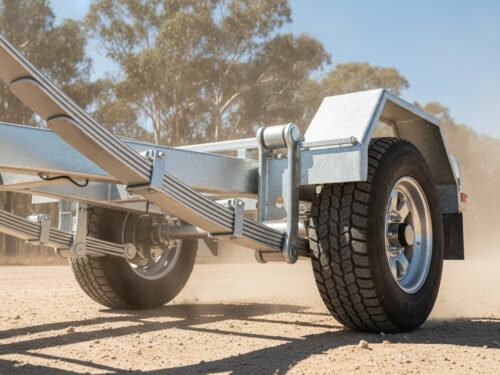
Overloading is the other silent killer of trailer components. When a trailer carries weight beyond its rating, the rollers are pressed into the races with extreme force. This creates “brinelling,” or permanent microscopic indentations. These dents disrupt the smooth path of the rollers, causing vibration and eventually leading to a complete mechanical breakdown. Axle selection plays a role here too. A lighter 40mm square axle will flex more under pressure than a heavy duty 50mm square axle. This flex pulls the bearings out of their parallel alignment, forcing the rollers to ride on their edges rather than their full surface area, which drastically reduces the life of the part.
Always use matched components during a replacement. Mixing a new bearing cone with a worn cup is a common mistake that leads to early failure. The wear patterns won’t align, creating localized hot spots that accelerate wear. Stick to high-quality, matched sets to ensure the load is distributed evenly across the entire assembly. This attention to detail prevents the “rumbled” hub syndrome that often precedes a roadside seizure.
The Critical Nature of Bearing Preload
Setting the correct preload is a balance of feel and mechanical logic. Tighten the castle nut while rotating the hub to seat the bearings firmly against the races. Once seated, back the nut off slightly until the hub spins freely but has no perceptible lateral movement. Lock this position with a new split pin. A split pin is a vital safety component; never reuse an old one that has lost its structural integrity or tension.
Exceeding Axle and Bearing Load Ratings
Your bearing capacity is directly tied to the diameter and strength of your hardware. For example, trailer axles are rated for specific maximum weights that the bearings must support. Exceeding these limits forces the rollers to operate outside their design parameters, leading to rapid heat spikes. Uneven load distribution is another risk. If your cargo isn’t centered, one bearing set carries the brunt of the weight, leading to premature failure on one side while the other remains intact.
Detecting the Early Warning Signs of Bearing Wear
Catching a failing bearing before it seizes saves your axle and your schedule. While we’ve discussed what causes trailer wheel bearing failure, identifying the symptoms in the field is a separate skill. A primary indicator is a low-frequency “growling” or “rumbled” sound. This noise typically changes pitch as your speed increases. It signals that the smooth surface of the rollers or races has been compromised by pitting or “brinelling,” causing the components to vibrate rather than glide.
The “hand-on-hub” test is a reliable diagnostic tool during long hauls. Every time you stop for fuel, safely touch the hub of each wheel. A properly functioning hub should be warm but never painful to touch. If one hub is significantly hotter than the others, the bearing is likely experiencing excessive friction. This heat is a direct symptom of what causes trailer wheel bearing failure, indicating that the lubricant has failed and metal-on-metal contact is occurring. This heat is often the final warning before the metal reaches its thermal limit and welds itself to the spindle.
Audible and Visual Cues from the Hub
Distinguishing between mechanical issues is vital. Brake drag usually produces a constant high-pitched squeal, whereas bearing failure sounds deeper and more rhythmic. Check the rear of the wheel for visual evidence. If you see grease splattered on the inside of the rim, the rear seal has failed. This leak allows the lubricant to escape and lets contaminants in. If you detect a burnt smell or see smoke, pull over immediately. The grease has carbonized, and the bearing is in the process of seizing.
Physical Inspection and Temperature Monitoring
For a more precise diagnosis, use an infrared thermometer. Aim it at the hub center; a temperature difference of more than 20 degrees Celsius between wheels on the same axle indicates a problem. You should also jack up the trailer to check for physical “play.” Grasp the tire at the top and bottom and try to rock it. In a tapered roller setup, a tiny amount of movement is normal, but anything more than a millimeter suggests the races are worn or the preload is incorrect. If you find excessive movement, inspect your trailer parts for signs of heat damage or metal fatigue.
If your inspection reveals grit or metal shavings in the dust cap grease, the bearing is already failing. Don’t risk a breakdown on a remote road. If you’re unsure about the condition of your hubs, contact us for technical advice on selecting the right replacement components for your specific trailer setup.
Maintenance Strategies and Selecting Durable Replacement Components
A proactive maintenance schedule is the only way to counteract what causes trailer wheel bearing failure. Mechanical reliability depends on consistent attention to the condition of your grease and hardware. You should establish a standard service interval of every 10,000km or 12 months, whichever comes first. For those frequently using boat ramps or traversing dusty tracks, this interval should be shorter. Pressurized hub caps provide a significant advantage by keeping the internal hub under slight positive pressure. This pressure prevents the vacuum effect from pulling moisture past the seals during submersion or heavy rain.
Establishing a Routine Service Schedule
Trailers that sit idle for long periods require special attention. Moisture can condense inside the hub, leading to internal corrosion even without road use. Don’t just pump new grease into the nipple and call it a day. Use a “clean and inspect” methodology. Remove the old grease entirely to check the races for pitting or discoloration. New trailers also need a break-in check. Components often seat themselves during the first 1,000km of travel. This can alter your bearing preload and lead to instability if not adjusted promptly.
Choosing High-Quality Replacement Parts
The market is flooded with budget bearings that lack the hardening required for heavy industrial use. Investing in premium brands pays off in longevity and reduced downtime. You can find high-quality trailer parts and hub kits designed to withstand the harsh Australian climate. The seal is the most important part of the bearing kit because it serves as the primary defense against the environmental contaminants that lead to mechanical breakdown. High-quality seals maintain their shape under thermal stress. This ensures your grease stays in and road grime stays out. Understanding what causes trailer wheel bearing failure allows you to make informed decisions about the hardware you trust on the road.
Secure Your Journey with Proactive Maintenance
Mechanical reliability on the road is the direct result of disciplined maintenance and high-quality hardware. You now understand that heat, contamination, and improper preload are the core factors in what causes trailer wheel bearing failure. Addressing these stressors before they lead to a roadside breakdown ensures your trailer remains a reliable asset. Regular “hand-on-hub” checks and the use of matched bearing sets are your best defense against expensive axle repairs and unexpected downtime.
Superior Trailer Parts has been Australian-owned and operated since 2014. We specialize in providing hardware engineered to endure the harsh conditions of the Australian environment. Whether you need components for 50mm square axles or specialized marine seals, we offer nationwide shipping on all axle and bearing components to get you back on the road quickly. Find high-quality replacement trailer bearings and hub kits through our online store today. Proper preparation and quality parts give you the peace of mind needed for any long-distance haul. Drive safe and keep your equipment in peak condition.
Frequently Asked Questions
How often should I grease my trailer wheel bearings?
Service your trailer wheel bearings every 10,000km or every 12 months. If you frequently submerge your trailer at boat ramps or drive in heavy dust, increase this frequency to every six months. Regular maintenance ensures the lubricant remains effective and free from the contaminants that lead to mechanical wear.
What is the best type of grease for boat trailer bearings?
Use a high-quality marine-grade grease with a lithium-complex or calcium-sulfonate base. These greases are specifically formulated to resist water washout and emulsification. Standard automotive grease breaks down quickly when submerged, leaving your bearings unprotected against rust and friction during the tow home.
Can I drive with a noisy wheel bearing?
Stop driving immediately if you hear a growling or rumbling noise from your hubs. Noise is a clear indicator that the rollers or races are already pitted or structurally compromised. Continuing to drive on a damaged bearing will lead to a total wheel lockup, a sheared spindle, or a dangerous roadside fire.
How do I know if my trailer bearings are too tight?
Check the hub temperature and rotation to determine if the tension is too high. A correctly adjusted hub should spin freely with no resistance when turned by hand. If the hub feels hot to the touch after a short drive, the castle nut likely has too much preload, which prevents the grease from circulating.
What causes trailer bearings to overheat on the highway?
Insufficient lubrication and excessive preload are the primary factors that cause hubs to overheat at high speeds. This is a common example of what causes trailer wheel bearing failure during long-distance hauls. High speeds increase the thermal load on the grease, and if the lubricant is degraded, the metal components expand and seize.
Should I replace bearings on both sides if only one is failing?
Replace the bearings on both sides of the axle to ensure uniform performance. Bearings on the same axle have typically endured the same load stress and environmental conditions. If one side has failed, the other side is likely nearing the end of its service life and should be renewed to prevent a second breakdown.
Is it better to repair a bearing or replace the entire hub?
Replace the bearing set including the cones and cups unless the hub itself shows signs of damage. If the bearing has spun inside the hub, it will score the internal bore and prevent a new race from seating properly. In these cases, you must replace the entire hub to maintain the structural integrity of the axle assembly.